


What to do when bespoke suit doesn't project leadership?
For over two decades in the luxury fashion and executive image consulting world, I've had the privilege of guiding countless leaders, from boardroom titans to burgeoning entrepreneurs. One common scenario I've observed, which often perplexes even the most astute individuals, is the investment in a magnificent bespoke suit that, paradoxically, fails to project the very leadership and authority it was intended to convey.
The problem isn't always with the suit itself – often, the fabric is exquisite, the craftsmanship impeccable. The true dilemma lies in a disconnect between the garment and the individual's presence, an oversight of the subtle cues that transform mere clothing into a powerful statement of leadership. It's about more than just measurements; it's about the message.
In this definitive guide, I will share my accumulated wisdom, offering not just insights but actionable frameworks and expert strategies to ensure your bespoke suit serves as a true extension of your leadership. We'll delve into the nuances of executive presence, the often-overlooked aspects of tailoring, and the strategic styling choices that collectively elevate your image from merely well-dressed to undeniably authoritative.
The Unseen Language of Leadership Attire
A bespoke suit is a significant investment, a symbol of personal achievement and discerning taste. Yet, its power isn't inherent in the price tag or the label; it resides in its ability to communicate. I've seen countless individuals pour resources into luxurious garments, only to find them fall flat because they miss the unspoken language of leadership attire.
Clothes, especially a bespoke suit, are a non-verbal amplifier. They speak volumes before you utter a single word. A suit that projects leadership isn't just about looking good; it's about looking authoritative, trustworthy, and capable of commanding a room. It telegraphs competence, confidence, and a certain gravitas that resonates with those around you.
When your bespoke suit doesn't project leadership, it signals a miscommunication. Perhaps it's sending a message of comfort over command, trendiness over timelessness, or even affluence over influence. Our goal is to align the sartorial message with your leadership aspirations.
Beyond the Seams: Understanding Your Personal Brand & Archetype
Before we even consider a single stitch, the most critical step is introspection. A suit is a uniform, but for a leader, it's a personalized uniform that must align with their unique personal brand and leadership archetype. Without this foundational understanding, even the finest bespoke garment can feel incongruous.
Defining Your Leadership Persona
Are you the visionary disruptor, the pragmatic strategist, the empathetic mentor, or the unyielding negotiator? Each archetype carries a different energy, and your attire should subtly reinforce it. A suit for a creative visionary might feature softer lines and interesting textures, while a suit for a corporate titan demands sharp, unyielding structure.
- Self-Assessment: Take time to truly define your leadership style. What are your core values? How do you want to be perceived by your team, clients, and competitors?
- Gather Feedback: Ask trusted colleagues, mentors, or even close friends how they perceive your current professional image. Be open to candid observations.
- Identify Role Models: Who are the leaders you admire, sartorially and professionally? Analyze what their attire communicates and how it aligns with their actions.
This deep dive into your personal brand ensures that your suit is not just a piece of clothing, but an authentic extension of your professional identity. As marketing guru Seth Godin often says, "People do not buy goods and services. They buy relations, stories and magic." Your suit tells a story.
The Fit Fallacy: When 'Perfect' Isn't Powerful
We're often told that bespoke means a "perfect fit." While true for comfort, a fit that projects leadership has nuanced differences. It's not just about conforming to your body; it's about enhancing your silhouette to convey strength and authority. I've seen many bespoke suits that fit perfectly for casual wear but lack the crispness required for true executive presence.
The subtle tension in the fabric, the way a lapel lays, or the break of the trousers – these are not arbitrary details. They are silent cues that communicate discipline, precision, and command. A suit that is too relaxed, too tight, or too baggy, regardless of its bespoke origins, can undermine your authoritative message.
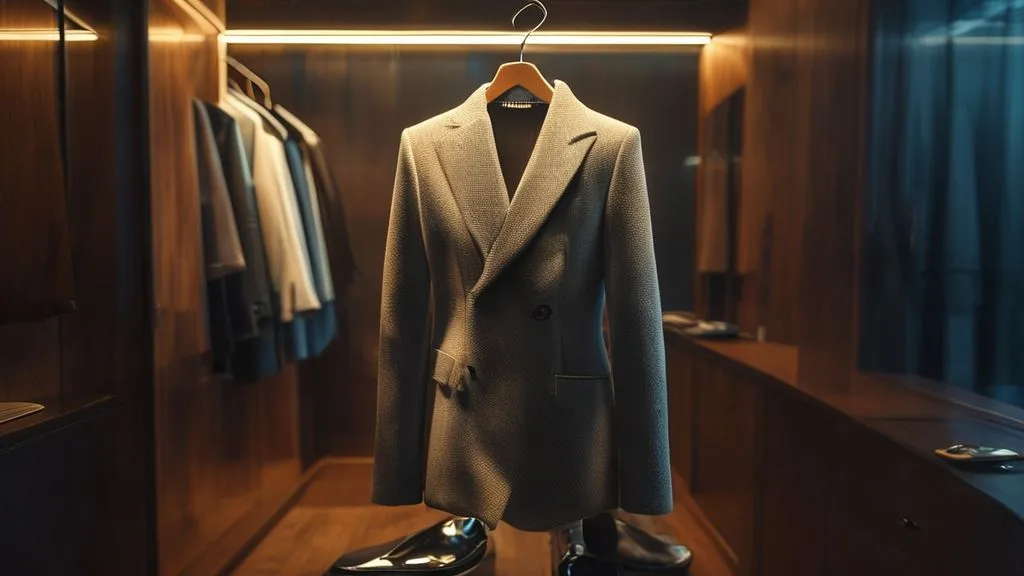
- Shoulder Definition: The shoulders of your suit jacket are paramount. They should sit precisely at the edge of your natural shoulder, creating a clean, strong line. No wrinkles, no overhang. This broadcasts stability.
- Lapel Roll and Width: A proper lapel should roll smoothly to the first button. The width of the lapel should be proportionate to your build and face. Wider lapels (but not excessively so) often convey a classic, powerful aesthetic, whereas overly narrow lapels can appear trendy or less commanding.
- Jacket Length and Waist Suppression: The jacket should cover your seat and the crotch area of your trousers. Crucially, the waist should be subtly suppressed to create an inverted V-shape, subtly emphasizing your chest and shoulders. This creates a powerful, athletic, and authoritative silhouette.
- Trouser Break: For a leadership aesthetic, I generally recommend a minimal break or no break at all for trousers. This creates a clean, elongated line, avoiding the sloppiness of excess fabric pooling at the ankles.
Color, Fabric, and Pattern: The Silent Power Brokers
Beyond fit, the choices of color, fabric, and pattern are incredibly potent. They are the silent power brokers that dictate the suit's overall gravitas and the message it sends. Missteps here can dilute even the most perfectly fitted bespoke garment.
Strategic Choices for Impact
Certain colors inherently carry more authority. Navy and charcoal grey are the undisputed champions for business leadership, offering versatility and gravitas. Black, while formal, can sometimes be too stark or associated with service industries if not worn with absolute precision.
- Power Colors: Prioritize deep navy and rich charcoal grey. These colors are universally recognized as professional and authoritative. They convey stability, intelligence, and trustworthiness.
- Fabric Weight and Drape: Opt for fabrics with a good weight and drape. Worsted wools, particularly in a Super 100s to Super 130s range, offer excellent drape and wrinkle resistance. A heavier fabric often feels more substantial and luxurious, contributing to a sense of solidity and importance.
- Pattern Prudence: Subtle patterns like a faint pinstripe or a sharkskin weave can add depth and sophistication without being distracting. Avoid overly bold plaids or checks for critical leadership contexts, as they can sometimes project a more casual or fashionable image rather than one of unassailable authority.
- Seasonal Considerations: While wool is versatile, consider variations. A breathable, high-twist wool for warmer climates still retains structure, whereas a flannel or heavier tweed can convey warmth and gravitas in cooler settings.
"The most powerful statements in leadership attire are often the most subtle. It's not about shouting for attention, but about commanding respect through understated excellence."
The Accessories Arsenal: Refining Your Message
A bespoke suit is the canvas, but your accessories are the brushstrokes that define the masterpiece. They are small details that carry immense weight in refining your message and projecting leadership. Overlooking them, or making incongruent choices, can significantly detract from your suit's intended impact.
Curating Accessories for Authority
Every accessory, from your tie to your watch, contributes to the overall narrative of your executive presence. They are opportunities to showcase attention to detail, personal discernment, and a commitment to excellence.
- The Power Tie: A solid silk tie in a deep, rich color (navy, burgundy, forest green) or a subtle pattern (small dots, repp stripe) is a leadership staple. The knot should be firm and proportionate to your collar. Avoid novelty ties or overly shiny fabrics.
- Pocket Square Poise: A well-folded pocket square adds a touch of elegance and personality. For leadership, a classic white linen square with a straight presidential fold is always appropriate. Silk squares with subtle patterns can be used, but ensure they complement, not compete with, your tie and suit.
- Watch Wisdom: Your watch is more than a timepiece; it's a statement. A classic dress watch with a leather strap or a sophisticated metal bracelet is ideal. Avoid overly sporty or ostentatious watches in formal leadership settings.
- Shoe Savvy: High-quality, polished leather dress shoes are non-negotiable. Oxfords or monk straps in black or dark brown are the gold standard. They should be immaculate – scuffed or worn shoes instantly undermine your authority.
- Cufflinks and Belts: Match your metals (e.g., silver cufflinks with a silver watch buckle). Your belt should match your shoes in color and leather type. These details demonstrate a cohesive approach to your personal presentation.
Case Study: How Marcus Transformed His Boardroom Presence
Marcus, a senior VP in finance, invested in a stunning bespoke suit. Yet, he often felt overlooked in high-stakes meetings. During our consultation, I quickly identified the issue: his accessories. His ties were often too loud, his shoes worn, and his watch more suited for a weekend than a boardroom. We worked on curating a precise accessory arsenal, focusing on classic, high-quality pieces. By simply swapping his vibrant ties for solid navy and burgundy silk, investing in two pairs of impeccably polished Oxfords, and selecting a timeless dress watch, Marcus reported a profound shift. Colleagues began approaching him differently, acknowledging his insights more readily. He felt more confident, and that confidence radiated, amplifying the power of his bespoke suit.
Posture and Presence: Wearing the Suit, Not Letting it Wear You
Even the most perfectly tailored bespoke suit will fail to project leadership if the wearer doesn't carry themselves with commensurate authority. Your physical presence – posture, gait, and non-verbal cues – is paramount. It's about wearing the suit, rather than letting the suit wear you.
Think of the suit as armor. It empowers you, but you must inhabit it with strength and intention. According to extensive research on non-verbal communication, including studies cited by Harvard Business Review, body language accounts for a significant portion of how we are perceived. A strong posture signals confidence, competence, and reliability.
- Stand Tall: Imagine a string pulling you gently upwards from the crown of your head. Shoulders back and down, chest slightly out, stomach gently engaged. This creates an open, confident stance.
- Purposeful Movement: Walk with intent. Avoid shuffling or hurried steps. Each stride should be measured, conveying a sense of purpose and control.
- Open Gestures: When speaking, use open hand gestures that are deliberate and controlled. Avoid fidgeting, crossed arms, or hands in pockets, which can signal nervousness or closed-off communication.
- Eye Contact: Maintain confident, consistent eye contact. It signals honesty, engagement, and authority.
- Conscious Breathing: Deep, calm breathing can regulate your nervous system and project a sense of composure, even under pressure.
"Your bespoke suit is a powerful tool, but your posture is the hand that wields it. A commanding presence elevates the garment from mere fabric to a statement of unshakeable authority."
When to Seek Expert Guidance: The Image Consultant's Edge
It's a common misconception that self-awareness is enough. While introspection is vital, we all have blind spots. Recognizing when to seek expert guidance is a mark of true leadership. An experienced image consultant, particularly one specializing in executive presence and luxury fashion, offers an objective, trained eye that can identify subtle nuances you might miss.
A seasoned consultant doesn't just tell you what to wear; they help you craft an authentic, powerful visual brand that aligns with your career goals. They understand the psychology of perception, the intricate details of tailoring, and the art of non-verbal communication. As Forbes often highlights, investing in your personal brand is an investment in your career trajectory.
Consider engaging an expert if:
- You've invested in bespoke but still feel your image isn't aligning with your ambitions.
- You're transitioning into a higher leadership role and need to recalibrate your presence.
- You receive inconsistent feedback about your professional image.
- You want to ensure every aspect of your appearance is working synergistically to convey leadership.
The Long Game: Continuous Refinement of Your Executive Image
Projecting leadership through your attire is not a one-time fix; it's an ongoing journey of refinement. As your career evolves, so too should your image. What was appropriate for a mid-level manager may not be sufficient for a C-suite executive. The world of leadership is dynamic, and your visual communication must adapt.
Regularly assess your wardrobe. Do your suits still fit perfectly? Are your accessories current yet timeless? Are you staying true to your authentic leadership persona while subtly evolving with your role and the industry? This continuous attention to detail underscores your commitment to excellence in all aspects, including your personal brand.
Remember, your bespoke suit is a powerful asset in your leadership arsenal. Treat it with the respect it deserves, and it will, in turn, command respect for you.
Frequently Asked Questions (FAQ)
Question: Can a ready-to-wear suit project leadership as effectively as a bespoke one? While a bespoke suit offers unparalleled fit and customization, a high-quality, impeccably tailored ready-to-wear (RTW) suit can certainly project leadership. The key is in the tailoring; even an RTW suit must be altered by a skilled tailor to achieve a near-bespoke fit that enhances your silhouette and conveys authority. The fabric quality and classic styling are also crucial.
Question: How do I know if my suit is sending the wrong message? Look for subtle cues. Are you consistently underestimated or overlooked in meetings? Do people perceive you as less experienced than you are? Is your presence failing to command attention? Ask trusted mentors for honest feedback. Sometimes, the issue isn't the suit's quality, but its messaging. For example, a suit that's too trendy or overly casual can undermine authority in a formal setting.
Question: Is projecting leadership just about the suit, or are there other factors? Absolutely not. The suit is a powerful component, but it's part of a holistic executive presence. This includes your communication skills (verbal and non-verbal), your professional reputation, your competence, and your emotional intelligence. The suit amplifies your message; it doesn't create it in a vacuum. It's about congruence: your attire should align with and reinforce your inner leadership qualities.
Question: What's the biggest mistake people make with bespoke suits when aiming for leadership? The biggest mistake is often a singular focus on luxury or 'perfect fit' for comfort, without considering the strategic message. A bespoke suit is meant to be a tool for influence. If it's too flashy, too casual, or simply doesn't enhance the wearer's authoritative posture, it misses its mark. It's about subtle power, not overt display.
Question: How do I balance my personal style with professional authority in my suit choices? This is an art, not a science. The key is to infuse your personal style through subtle, refined choices rather than overt statements. This could be in the texture of the fabric, the lining of the jacket, the unique but classic pattern of a tie, or the choice of a specific accessory. Your personal style should elevate, not detract from, your professional authority. Think of it as adding a signature, not a splash.
Recommended Reading
- The Frustrating Truth: Why Does Seamless Activewear Roll Down During Workouts?
- Unveiling the Secrets: Understanding Avant Garde Haute Couture Construction
- Unveiling the Science: How Performance Fabrics Master Body Temperature Control
- 7 Proven Strategies: Attracting Luxury Buyers for Bespoke Footwear?
- Unlock Summer Style: How to Choose Breathable Streetwear for Ultimate Comfort
Key Takeaways and Final Thoughts
- Your bespoke suit is more than clothing; it's a strategic communication tool for leadership.
- Align your suit's message with your unique personal brand and leadership archetype.
- Beyond comfort, ensure your suit's fit enhances an authoritative silhouette, particularly in the shoulders and waist.
- Choose power colors (navy, charcoal) and substantial fabrics, with patterns that add sophistication without distraction.
- Master your accessories – ties, pocket squares, watches, and shoes – as they refine your leadership message.
- Cultivate a commanding posture and presence; your body language amplifies or negates your suit's impact.
- Don't hesitate to seek expert guidance from an image consultant to identify blind spots and refine your executive image.
In the competitive arena of leadership, every detail counts. Your bespoke suit, when meticulously aligned with your personal brand and worn with unwavering confidence, becomes an undeniable asset. It's not just about looking good; it's about embodying the authority, trust, and vision that define true leadership. Invest not just in the suit, but in the understanding of how it can powerfully project the leader you are, and the leader you aspire to be.

Your email address will not be published. Required fields are marked *