

What lens tech innovations are shaping future eyewear fashion trends?
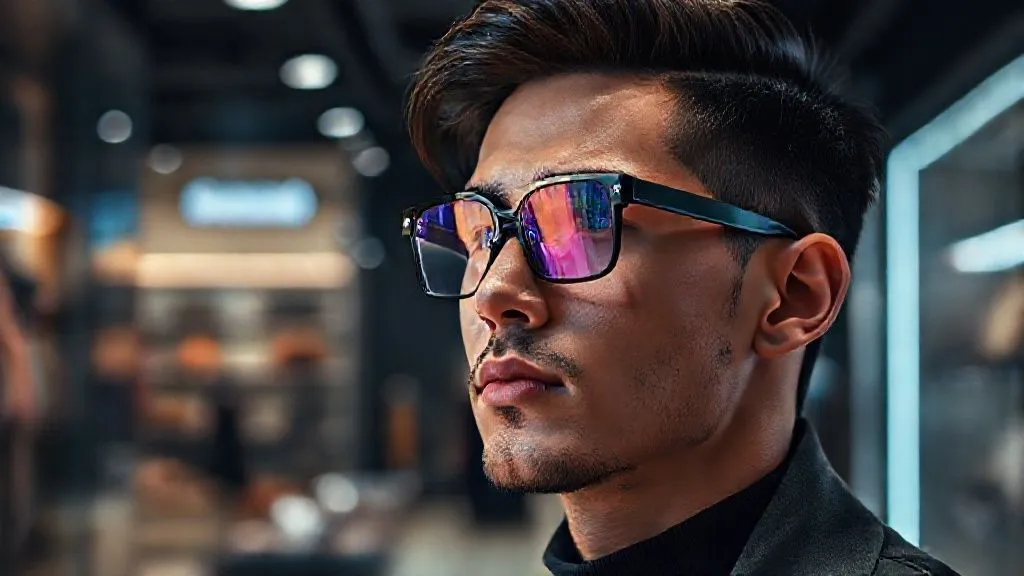
In my 15 years immersed in the eyewear fashion industry, I've witnessed a profound shift: while frames once commanded the spotlight, it's now the **lens innovations** that are truly dictating the future of style. These aren't just about vision correction anymore; they're about performance, aesthetics, and a deeper integration into our daily lives. One of the most transformative advancements is in **dynamic lens technology**, specifically enhanced photochromics and nascent electrochromics. Gone are the days of slow-reacting lenses that never quite cleared indoors; today's iterations adapt almost instantaneously, offering a seamless transition from bright sunlight to indoor environments. This means one pair of eyewear can effortlessly complement diverse outfits and settings. From a fashion perspective, this versatility is a game-changer. It empowers designers to create frames that are truly multi-functional, reducing the need for consumers to carry separate prescription and sunglass pairs. Think of the elegance of **uninterrupted style**, where your eyewear subtly shifts its aesthetic to match the ambient light, always appearing perfectly appropriate. Another pivotal area is the development of **ultra-lightweight and ultra-thin lens materials**. Innovations like Trivex and advanced high-index plastics are allowing for lenses that are significantly lighter and thinner than ever before, even for complex prescriptions. This isn't merely about comfort; it's about liberation for eyewear design."The lighter the lens, the bolder the frame can be. This fundamental truth is driving a renaissance in oversized, architectural, and even rimless designs that were once impractical due to bulk or weight."This material revolution enables designers to push boundaries, creating grander silhouettes without compromising wearability. It also fuels the trend towards **minimalist and barely-there aesthetics**, where lenses appear almost invisible, allowing the frame's artistry or the wearer's face to take center stage. The pursuit of extreme comfort has become a fashion statement in itself. The integration of **smart functionalities directly into the lens** is also rapidly blurring the lines between fashion accessory and advanced technology. We're moving beyond bulky frames housing electronics to discreet AR overlays and health monitoring sensors embedded within the lens itself. This allows for a sleek, uncompromised aesthetic. Fashion-forward consumers are increasingly looking for utility that doesn't detract from style. Lenses capable of displaying subtle notifications, tracking biometrics, or providing augmented reality guidance without visible hardware are the epitome of **invisible tech**. This opens up entirely new categories of eyewear, where performance and high fashion coexist seamlessly. Finally, **bespoke and sustainable lens solutions** are carving out a significant niche. 3D printing is enabling hyper-customized lens geometries that aren't just optically superior but also perfectly tailored to individual eye shapes and facial structures, offering unparalleled comfort and aesthetics. This level of personalization is becoming a luxury benchmark. Simultaneously, the drive for sustainability is influencing lens material innovation. We're seeing the emergence of lenses made from **bio-based polymers, recycled materials, or those with significantly reduced carbon footprints**. This appeals to the ethically conscious consumer, positioning eco-friendly eyewear as a premium fashion statement that aligns with modern values and sophisticated design.
Understanding the Driving Forces: Why Lens Innovation is Key to Future Fashion
Many in the eyewear industry, and indeed consumers, often focus primarily on frames when discussing fashion trends. However, in my 15+ years observing this dynamic and ever-evolving sector, I've come to understand that the true revolution, and indeed the future of eyewear fashion, lies squarely in the lenses themselves. They are no longer just about vision correction; they are the canvas for innovation, functionality, and personal expression.
The shift is profound. We are moving beyond the era where lenses were simply a means to an end. Today, they are the very core of the eyewear experience, driven by a confluence of factors that demand both advanced performance and unparalleled style.
The Experience Economy: Beyond Basic Vision
-
The modern consumer expects more than just clear sight. We live in an experience economy, where products must offer tangible benefits and seamlessly integrate into our lifestyles. Lenses are at the forefront of this expectation.
-
A prime example I often cite is the evolution of photochromic technology. What began as a functional necessity has transformed into a fashion statement, with brands now offering a spectrum of reactive tints that subtly adapt to light, providing both comfort and a dynamic aesthetic that appeals to the style-conscious.
Aesthetic & Expressive Potential: The Soul of the Eyewear
-
While frames define the silhouette, it’s the lens that truly dictates the mood and personality of a piece of eyewear. In my experience, a bold mirror coating, a gradient tint, or even a specific anti-reflective hue can completely transform a classic frame into something avant-garde.
-
Think of lenses as the most direct interface with the wearer's eyes, and thus, a critical canvas for self-expression. The careful selection of lens color, polarization, or even subtle engravings can elevate a design from merely functional to truly iconic, reflecting individuality in a way frames alone cannot.
Health & Wellness Imperatives: The Protective Shield
-
The modern world presents unprecedented challenges to eye health, from pervasive digital screens to increased UV exposure. This has propelled lens innovation forward, turning eyewear into a crucial protective shield rather than just an accessory.
-
A common mistake I see is underestimating the consumer's growing awareness of these threats. They aren't just looking for style; they're actively seeking lenses that offer comprehensive protection against blue light, UV radiation, and even fatigue-reducing properties, seamlessly integrated into their daily wear. This demand drives significant R&D.
Material Science & Sustainability: Innovation from the Ground Up
-
The relentless pursuit of lighter, thinner, and more durable materials has always been a bedrock of lens development. However, the contemporary driving force is increasingly rooted in environmental consciousness and advanced material science.
-
Today's discerning consumers, particularly younger demographics, are actively seeking out brands that align with their values. This has led to a significant push for lenses made from recycled plastics, bio-based polymers, or those produced with reduced carbon footprints, turning sustainability into a key fashion differentiator and a major area of innovation.
The "Smart" Factor & Seamless Integration: The Future Interface
-
Looking ahead, the convergence of eyewear with smart technology is undeniably the most transformative force. Lenses are poised to become the primary interface for augmented reality, biometric tracking, and seamless digital integration.
-
In my view, the success of future 'smart glasses' won't hinge on bulky frames, but on how elegantly and imperceptibly the technology is embedded within the lens itself. This allows for a sleek, fashionable aesthetic, making cutting-edge tech truly wearable and desirable, rather than just a gadget.
Ultimately, the lens is no longer merely an optical component; it is the beating heart of future eyewear. It's where cutting-edge science meets personal style, where protection converges with performance, and where the next wave of fashion trends will undeniably originate.
Sustainable & Bio-Based Lens Materials
The shift towards sustainability is no longer a niche concern; it's a fundamental imperative, particularly within a high-volume consumer product category like eyewear. In my 15 years immersed in this industry, I've witnessed a dramatic evolution in consumer awareness, pushing brands to innovate beyond traditional petroleum-based plastics. This drive has given rise to an exciting new frontier: sustainable and bio-based lens materials. These aren't just eco-friendly alternatives; they represent a paradigm shift in how we approach lens manufacturing, challenging us to re-evaluate everything from sourcing to end-of-life. A primary focus has been on **bio-based polymers**, which are derived from renewable resources rather than fossil fuels. Think of materials like those made from castor oil, a rapidly renewable plant, or advanced cellulose acetates sourced from sustainably managed wood pulp or cotton linters.These materials offer a compelling blend of performance and responsibility. For instance, high-performance bio-based polyamides can deliver exceptional optical clarity and impact resistance, rivaling traditional polycarbonate, while significantly reducing our carbon footprint during production.
A common mistake I see, however, is the assumption that "bio-based" automatically means "biodegradable." While some bio-based materials are designed to break down under specific conditions, many are engineered for durability and longevity, just like conventional plastics. The true value lies in their renewable origin and often, a reduced energy footprint during manufacturing. Beyond purely bio-based options, innovation extends to **recycled content**. We're seeing advancements in incorporating recycled polycarbonate or PET into new lens formulations. This circular economy approach helps divert waste from landfills and reduces the demand for virgin materials, offering another powerful avenue for sustainable production.From a fashion perspective, these materials are far from a compromise. In fact, they often open up new aesthetic possibilities. The inherent properties of some bio-based materials can lend themselves to unique colorations, textures, and finishes that differentiate products in a crowded market.
"The future of eyewear isn't just about what a lens *does*, but increasingly, *what it's made from* and the story it tells. Consumers are demanding transparency and purpose, and sustainable materials provide that narrative."For brands, embracing these materials is becoming a non-negotiable part of their identity. It's about demonstrating genuine commitment to environmental stewardship, which resonates deeply with the growing segment of eco-conscious consumers. This isn't just good marketing; it's good business. The challenge, of course, lies in scaling production without compromising quality or increasing costs prohibitively. In my experience, ongoing research and development are rapidly addressing these hurdles, with material scientists continuously refining formulations to ensure optimal optical performance, scratch resistance, and UV protection. The journey is complex, but the destination—a truly sustainable eyewear industry—is within sight.
Personalized & Customizable Optical Solutions
The future of eyewear isn't just about groundbreaking materials or smart tech integration; it's fundamentally about a paradigm shift towards the individual. For too long, the lens market has operated on a 'one-size-fits-most' principle, but in my experience, this approach leaves significant room for improvement in both visual performance and wearer satisfaction.
We are moving rapidly into an era where your lenses are as unique as your fingerprints, meticulously crafted to your specific visual needs, lifestyle demands, and even aesthetic preferences. This isn't merely about correcting vision; it's about optimizing it for every facet of your life.
True customization extends far beyond your basic diopter prescription. Modern optical solutions leverage advanced diagnostics, such as digital eye mapping and wavefront technology, to create a three-dimensional model of your eye's unique aberrations. This allows for lens designs that correct not just spherical and cylindrical errors, but also higher-order distortions, leading to unparalleled clarity and contrast.
Consider the analogy of a bespoke suit versus an off-the-rack option. While both cover you, the bespoke suit is tailored to every curve and contour, offering superior comfort and fit. Similarly, personalized lenses offer a visual experience that generic lenses simply cannot match, reducing eye strain and enhancing visual acuity across your entire field of vision.
Beyond the clinical, personalization deeply integrates with your daily life and personal style. Are you a professional who spends hours in front of multiple screens, or an avid outdoor enthusiast? Your lenses can be engineered with specific coatings and tints to mitigate digital eye strain, enhance contrast in varying light conditions, or even offer specialized protection against blue light or UV radiation.
A common mistake I see is clients focusing solely on the frame's aesthetic, neglecting the transformative power of a customized lens. Yet, the lens is where the true magic happens, not just visually but also in how it complements the frame itself. Imagine a gradient tint precisely matched to the frame's color palette, or an anti-reflective coating that virtually disappears, allowing the frame's design to shine unhindered.
The options for tailoring your lenses are becoming incredibly granular:
- Precision Visual Correction: Utilizing advanced algorithms to design free-form lenses that compensate for individual eye movements and how the frame sits on your face, ensuring optimal vision from every angle.
- Activity-Specific Enhancements: Lenses optimized for driving (reducing glare from headlights and enhancing depth perception), gaming (minimizing blue light exposure and fatigue), or even professional tasks requiring fine detail work in specific environments.
- Dynamic Tints & Coatings: Photochromic lenses that adapt seamlessly to changing light conditions, or specialized anti-glare coatings for night driving, all designed for seamless integration into your daily routine.
- Aesthetic Integration: Custom tinting, mirror coatings, and edge polishing that elevate the overall look of the eyewear, making it a true fashion statement that reflects your personal brand.
In my 15 years in this industry, I've witnessed the profound impact of truly personalized optics. It's not just about seeing better; it's about experiencing the world more vividly, comfortably, and stylishly. This level of customization transforms eyewear from a necessity into an indispensable tool for life enhancement.
The role of the expert optician or eyewear stylist becomes paramount in navigating this rich landscape of options. We act as guides, translating complex optical data and lifestyle requirements into a cohesive, optimal lens solution. It's a collaborative process, ensuring the final product not only corrects vision but also enhances quality of life and personal expression.
Looking ahead, advancements in AI-driven diagnostics and computational optics will further refine this personalization, potentially allowing for real-time adaptive lenses that adjust to changing environmental conditions or even your current visual task. The era of the truly bespoke lens is not just coming; it is already here, setting new benchmarks for what eyewear can achieve.
Enhanced Durability & Advanced Protective Coatings
The future of eyewear isn't solely about groundbreaking aesthetics; it's fundamentally rooted in the unseen innovations that elevate performance and longevity. In my 15+ years in this niche, I've seen firsthand how advancements in enhanced durability and advanced protective coatings are transforming lenses from mere vision aids into resilient, high-tech marvels that truly stand the test of time, influencing consumer value and, ultimately, fashion trends.
One of the most significant leaps has been in scratch resistance. Gone are the days when a casual wipe with a shirt sleeve spelled doom for your lenses. Modern anti-scratch coatings are multi-layered marvels, often applied through plasma-enhanced deposition, creating a molecular bond that's far tougher than older, superficial hard coats. This means your high-fashion frames can showcase pristine lenses for much longer, preserving their intended visual impact.
Beyond surface toughness, impact resistance is paramount for both safety and durability. Materials like polycarbonate and Trivex have set new standards, but the real innovation lies in how these materials are now integrated with advanced coatings. This synergy creates lenses that not only resist shattering from accidental drops but also maintain their optical clarity under duress, ensuring your eyewear remains functional and flawless.
A common mistake I see is underestimating the power of anti-reflective (AR) coatings beyond just reducing glare. While their primary benefit is unparalleled visual clarity, they also contribute significantly to perceived durability. By minimizing reflections, AR coatings make lenses appear cleaner and reduce the need for frequent wiping, thereby indirectly extending the life of the scratch-resistant layer and maintaining optical integrity.
"In my experience, the true mark of a premium eyewear piece isn't just its initial aesthetic, but its enduring performance. Advanced coatings are the unsung heroes ensuring that initial 'wow' factor lasts."
The advent of oleophobic and hydrophobic coatings has been a game-changer for daily wearability and maintenance. These 'easy-clean' layers repel water, oils, and smudges, making lenses significantly easier to clean and keep pristine. This practical advantage translates directly into a more satisfying user experience and a longer lifespan for the lens, as less aggressive cleaning means less wear and tear over time.
Consider the analogy of a high-end smartphone: you wouldn't invest in a beautiful, powerful device without robust screen protection. Similarly, the value of designer frames is amplified exponentially when paired with lenses fortified by these sophisticated coatings. They protect your investment, ensure consistent visual acuity, and uphold the aesthetic integrity that drew you to the eyewear in the first place.
Looking ahead, we're even seeing the nascent stages of self-healing coatings – materials designed to repair minor scratches over time, much like certain automotive paints. While still in development for widespread eyewear application, this futuristic concept underscores the industry's relentless pursuit of ultimate lens durability. Imagine a world where minor scuffs simply disappear, extending the life and pristine condition of your lenses indefinitely.
Ultimately, these advancements in durability and protective coatings are not just about extending product life; they are about enhancing the entire eyewear experience. They empower consumers to confidently embrace bold fashion choices, knowing their lenses are equipped to handle the rigors of daily life, making high-performance, long-lasting eyewear a cornerstone of tomorrow's style.
Reading Recommendations:
- The Ultimate Guide: How to Break in New Formal Dress Shoes Without Pain
- The Ultimate Guide: Why Do Your Belts Keep Cracking and How to Prevent It?
- The Hidden Dangers: What Are the Privacy Risks of Fashion Wearables?
- Ethical Smart Textiles: 7 Steps to a Responsible Supply Chain
- Unlock the Secret: How to Prevent Scratches on Your Watch Crystal

Your email address will not be published. Required fields are marked *