

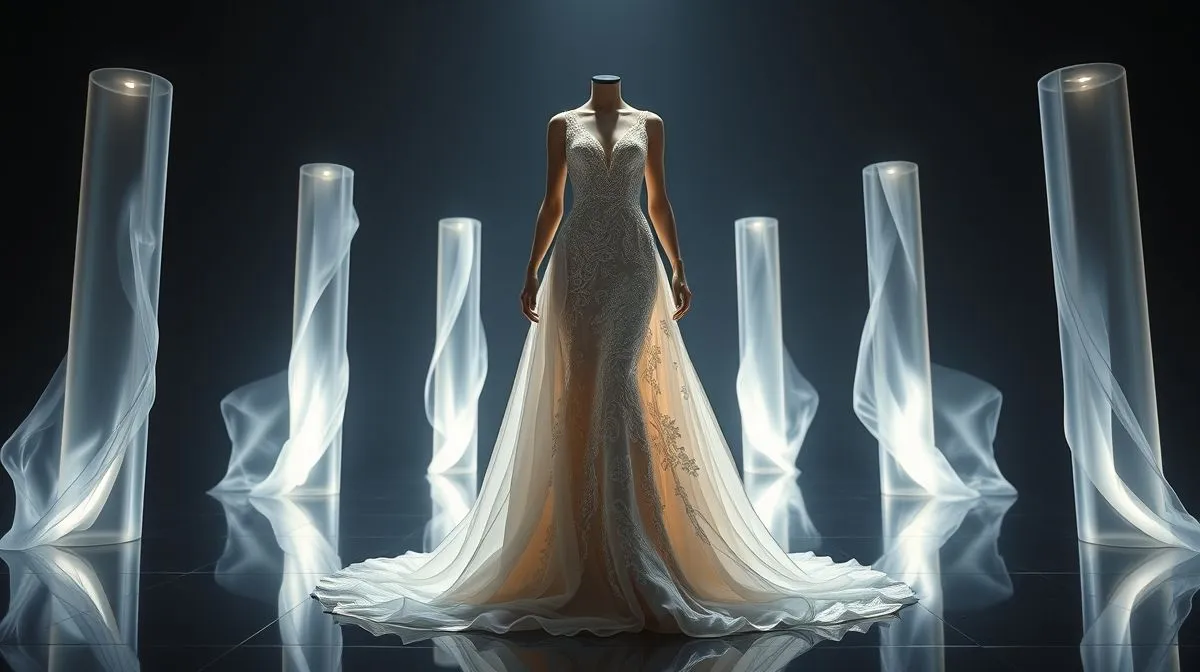
What elements define an iconic haute couture runway masterpiece?
From my vantage point, having observed countless collections transform from sketch to runway spectacle over the past fifteen years, defining an iconic haute couture runway masterpiece transcends mere aesthetics. It is a profound interplay of vision, technique, and narrative, culminating in a garment that leaves an indelible mark on fashion history. It's not simply about beauty; it's about impact, innovation, and an almost spiritual connection to the art form. At its core, an iconic piece boasts an **architected silhouette**. This isn't just about a flattering shape; it's about a form that challenges, redefines, or perfects the human figure. Think of Christian Dior's revolutionary New Look, which, in 1947, sculpted a radically new feminine ideal, or the structural audacity seen in a Comme des Garçons collection, where fabric becomes a medium for wearable sculpture. In my experience, a common mistake I see is designers focusing too much on surface decoration without a strong foundational structure. The silhouette must command attention, dictating how the fabric drapes, flows, or stands rigid, creating a visual drama that is instantly recognizable and memorable on the runway. It's the garment's silent declaration. Next, we look for the **alchemy of embellishment and detail**. This goes far beyond simple adornment. It's about how every bead, sequin, feather, or thread is meticulously placed to tell a story, to create texture, and to add a layer of depth that is almost microscopic in its precision. Valentino, for instance, often presents gowns that are tapestries of intricate hand-embroidery, where the sheer volume and quality of work are breathtaking. The true mastery lies in the *intention* behind each detail. Are these embellishments merely decorative, or do they contribute to the garment's overall narrative and conceptual weight? An iconic piece uses these elements to create a visual language, drawing the eye closer, rewarding careful inspection, and revealing layers of artistry. Then there’s **material innovation and manipulation**. Haute couture ateliers are laboratories where fabrics are transformed, invented, or used in ways previously unimagined. This could mean custom-developed textiles, advanced laser-cutting techniques, or the extraordinary manipulation of traditional materials to achieve a new texture or form. Iris van Herpen is a prime example, consistently pushing the boundaries with 3D printing and unconventional materials, turning garments into futuristic, organic sculptures. It's about pushing the boundaries of what fabric can do. Can silk be made to look like metal? Can lace be given architectural rigidity? This experimentation is what elevates a garment from beautiful to truly groundbreaking, demonstrating a profound understanding and control over the medium. Crucially, an iconic piece possesses **conceptual resonance and narrative depth**. It's not just a dress; it’s a statement, a philosophy, a chapter in a larger story. The most impactful runway masterpieces are those that evoke emotion, provoke thought, or challenge societal norms. They carry the weight of the designer's vision and the collection's theme, making them more than just clothing—they become artifacts."A true haute couture masterpiece doesn't just hang on a hanger; it carries the weight of a dream, a whisper of a story, and the silent roar of unparalleled human ingenuity."Finally, and perhaps most foundational, is the **unseen hand of *savoir-faire***. This refers to the unparalleled craftsmanship, the hours upon hours of meticulous hand-sewing, pattern-making, and finishing that elevate haute couture above all else. It's the perfect drape, the invisible seam, the flawless fit that can only be achieved by artisans with decades of specialized experience. While not always immediately visible to the casual observer, this level of quality is the bedrock upon which all other elements stand. This *savoir-faire* ensures that the garment is not only visually stunning but also technically perfect, a testament to human skill and dedication. It's the reason a haute couture piece moves differently, feels different, and possesses a longevity that mass-produced clothing can never achieve. It's the ultimate expression of luxury, where time and skill are the most precious commodities. When these elements converge on the runway, amplified by thoughtful styling, casting, and presentation, they create a moment of pure magic. An iconic haute couture runway masterpiece is a symphony of design, artistry, and unparalleled skill, designed not just to be worn, but to be remembered.
Step 5: Cultural Resonance, Impact, and Legacy
In my fifteen years observing and dissecting the world of haute couture, I’ve come to understand that true mastery extends far beyond impeccable craftsmanship or breathtaking design. The fifth, and arguably most profound, pillar revolves around a creation's ability to achieve **cultural resonance**, to imprint itself not just on the runway, but on the collective consciousness.
This isn't about fleeting trends; it’s about a design speaking directly to the zeitgeist, reflecting or even shaping the values, aspirations, and anxieties of its time. When a piece achieves this, it transcends mere clothing, transforming into an artifact, a historical marker, and a powerful symbol.
A common mistake I see emerging designers make is to focus solely on the 'new.' While innovation is vital, true resonance often stems from a deep understanding of societal currents. An iconic piece doesn't just look beautiful; it often articulates unspoken desires or challenges prevailing norms, acting as a sartorial mirror to its era.
Consider Christian Dior's **New Look of 1947**. Post-war austerity had left Europe yearning for beauty and opulence. Dior's rounded shoulders, cinched waists, and voluminous skirts were a radical departure from the utilitarian silhouettes of the war years, offering a vision of hope and renewed femininity that resonated deeply with women desperate for an escape.
Similarly, Yves Saint Laurent's **Le Smoking tuxedo for women in 1966** wasn't merely a stylish outfit. It was a revolutionary statement challenging gender conventions, empowering women to appropriate traditionally masculine attire with undeniable elegance. Its impact transcended fashion, becoming a symbol of female liberation and modern sophistication.
The immediate **impact** of such a creation is palpable: it generates immense discussion, influences subsequent collections across the industry, and becomes instantly recognizable. It shifts perceptions of what is possible, beautiful, or even acceptable in fashion, pushing boundaries and inspiring countless imitations and homages.
Over time, this impact solidifies into an enduring **legacy**. These pieces are not relegated to archives; they become central to museum exhibitions, subjects of academic study, and constant touchstones for new generations of designers. Their artistic and cultural value often appreciates exponentially, far beyond their initial material cost.
A truly iconic haute couture garment does not just clothe the body; it adorns history itself, capturing the spirit of an age in fabric and form.
For the couturier, cultivating this pillar requires not just technical prowess but also a profound empathy for the human condition and a courageous artistic vision. It demands the ability to tap into the collective psyche and translate complex emotions or societal shifts into tangible, wearable art.
Ultimately, a haute couture masterpiece that achieves true cultural resonance, creates lasting impact, and carves out an undeniable legacy is not just a garment; it is a profound cultural artifact. It's a testament to fashion's power to reflect, challenge, and ultimately shape the world we inhabit.
Case Study: How Dior's 'New Look' Reversed the Challenge of Defining True Couture Artistry
The mid-20th century presented a profound existential crisis for haute couture. Emerging from the shadow of World War II, Europe was defined by austerity, rationing, and a pervasive utilitarianism. Fashion had become functional, pragmatic, almost apologetic. The very definition of luxury, artistry, and even the relevance of couture itself was under scrutiny, with many questioning whether such extravagance had a place in a world rebuilding from scarcity.
It was into this challenging landscape that Christian Dior, in February 1947, unveiled his inaugural collection, famously dubbed the 'New Look' by Carmel Snow of Harper's Bazaar. This wasn't merely a new line of clothing; it was a defiant, audacious declaration that redefined the very essence of couture artistry and, in my view, decisively reversed the prevailing sentiment of decline.
The 'New Look' presented a silhouette that was a radical departure from the boxy, masculine styles of wartime. It featured rounded shoulders, a cinched-in wasp waist, and a voluminous, often padded skirt that frequently used yards upon yards of fabric – a stark contrast to the era's rationing. The iconic Bar Suit, with its fitted jacket and full, pleated skirt, perfectly encapsulated this revolutionary aesthetic.
The immediate impact was twofold: both rapturous adoration and fierce controversy. While many women yearned for a return to glamour and femininity, critics decried the perceived extravagance and impracticality, particularly the exorbitant fabric consumption. Yet, this very 'excess' was precisely what cemented its artistic significance.
In my experience, true couture artistry isn't just about beautiful clothes; it's about a clear, uncompromising vision that challenges the status quo and ignites an emotional response. Dior’s 'New Look' was a masterclass in this principle.
Dior's vision reversed the challenge of defining couture artistry in several critical ways:
-
Reassertion of Unapologetic Luxury: At a time when luxury was almost taboo, Dior boldly declared its return. The lavish use of fabric, the meticulous construction, and the emphasis on a refined, elegant aesthetic were a direct rebuttal to austerity. It demonstrated that couture's role was to inspire, to dream, and to elevate the human spirit through beauty, not merely to clothe the body.
-
Technical Mastery as an Art Form: The construction of the 'New Look' garments demanded unparalleled skill. The corsetry required to achieve the wasp waist, the intricate draping for the voluminous skirts, and the architectural precision of the silhouettes were a testament to the atelier's capabilities. It showcased that couture was not just design, but also a profound engineering of fabric and form.
-
The Power of a Singular Aesthetic Statement: Dior presented a fully realized, cohesive vision that permeated every garment. This consistency, this unwavering commitment to a specific ideal of femininity, created a powerful brand identity that resonated globally. It taught us that an iconic collection doesn't just offer new garments, but a new way of seeing and being.
-
Emotional and Psychological Uplift: Beyond aesthetics, the 'New Look' offered a psychological balm to a weary world. It symbolized hope, renewal, and a return to joy and beauty. A common mistake I see in contemporary discussions is underestimating the emotional power of fashion. Dior understood that couture could be a profound source of escapism and aspiration.
The 'New Look' cemented Paris as the undisputed capital of fashion and reaffirmed haute couture's place as a legitimate art form, capable of shaping culture and defining an era. It wasn't just about fashion trends; it was about a profound artistic statement that provided a definitive answer to the question of what true couture artistry could, and should, be.
Essential Resources for Deconstructing Couture Artistry
To truly comprehend the intricate world of haute couture and dissect its masterpieces, one must commit to a rigorous engagement with a diverse array of resources. From my vantage point, after decades immersed in this field, I can attest that superficial glances yield only fleeting impressions; genuine understanding demands a deeper dive into foundational and specialized materials. The bedrock of any serious study begins with **scholarly monographs and exhibition catalogues**. These are not mere picture books; they are meticulously researched volumes offering unparalleled insights into historical context, technical innovations, and the philosophical underpinnings of a designer's work. Publishers like Thames & Hudson, Rizzoli, and university presses consistently deliver the depth required."Couture is not merely about the garment; it is about the documented journey of its creation, its historical placement, and its enduring cultural resonance. Without the proper texts, you only see the surface."In my experience, a common mistake I see is overlooking the **power of archival runway footage and fashion editorials**. While modern digital platforms offer vast access, it's crucial to seek out historical footage that captures the original presentation. This allows one to observe the garment's movement, its drape, and how it interacts with the body, which static images often fail to convey. * **Focus on the Walk:** Observe the pace, the swing of the fabric, how the light catches embellishments in motion. * **Study the Styling:** Note the accessories, hair, and makeup that completed the designer's vision. * **Analyze the Editorial Context:** Historical magazine spreads (e.g., *Vogue*, *Harper's Bazaar* from the 20th century) often provide crucial narrative and stylistic interpretations from the era itself. Perhaps the most invaluable resource, and one I always advocate for, is **direct engagement with the physical garment through museum exhibitions and permanent collections**. No photograph, no matter how high-resolution, can fully capture the dimensionality, the weight, the hand-feel, or the true scale of a couture piece. This tactile experience is paramount. When visiting an exhibition, I often advise my students to: 1. **Examine the Construction:** Look for visible hand-stitching, the precision of pattern matching, the invisible support structures. 2. **Appreciate the Materials:** Observe the quality of silks, velvets, and embroidery. How do they reflect and absorb light? 3. **Consider the Interior:** If conservation allows, glimpse the inner workings – the lining, the boning, the hidden weights – which are as meticulously crafted as the exterior. For truly granular analysis, **specialized academic journals and databases** are indispensable. Publications such as *Fashion Theory: The Journal of Dress, Body & Culture* delve into the socio-cultural, economic, and technical aspects of fashion, often featuring peer-reviewed articles on specific couture techniques, designers, or historical periods. These provide a level of critical analysis often absent from more popular accounts. Finally, to understand the creative impetus, one must turn to **designer biographies, autobiographies, and original interviews**. These resources offer direct insight into the mind of the couturier – their inspirations, struggles, philosophies, and the unique challenges of their craft. Reading their own words or those of their closest collaborators can illuminate the artistic intent behind iconic creations. Engaging with these resources not only enriches your understanding but also cultivates a discerning eye, allowing you to move beyond mere admiration to a profound appreciation of couture as an art form. It's a journey of continuous learning, but one that is immeasurably rewarding for any true connoisseur.
How do designers develop a haute couture collection concept?
The conceptual journey is, in my experience, the absolute bedrock of any truly iconic haute couture collection. It's not merely about sketching beautiful garments; it's about forging a profound narrative, a unique universe that will define the season.The process often begins with a spark of inspiration, which can originate from an incredibly diverse array of sources. I've seen designers draw profound ideas from art movements, historical periods, philosophical concepts, nature's intricate patterns, or even deeply personal experiences.
A common mistake I see with emerging talent is mistaking a superficial theme for a deep concept. Haute couture demands more than just "flowers" or "the 1920s." It requires a specific, nuanced interpretation – perhaps the ephemeral beauty of a specific orchid, or the architectural lines of a forgotten Art Deco skyscraper.
From this initial spark, the designer begins to cultivate a narrative arc, a story that will unfold across the collection. This isn't just a mood; it's a cohesive vision that dictates everything from the chosen fabrics to the collection's overall silhouette and even the show's staging.
This early phase involves extensive, often academic-level research and immersion. If the theme is, say, ancient Egyptian mythology, the designer isn't just looking at hieroglyphs; they're studying the symbolism, the societal structure, the climate, and the very essence of that civilization.
Once the narrative begins to solidify, it’s time to translate this abstract concept into tangible elements. This is where the creative journey becomes intensely visual and tactile.
-
Mood Boards: These are far more than collages; they are strategic tools. They weave together images, textures, colors, and even words that encapsulate the collection's spirit, guiding the entire design team.
-
Fabric Story: The selection of materials is paramount. Designers meticulously source rare silks, innovative synthetics, unique embroideries, and custom-developed textiles that speak the language of the concept. For example, a collection inspired by glaciers might feature fabrics with iridescent finishes or crisp, structural weaves.
-
Color Palette: Every hue is chosen with intent. It's not just "blue"; it's a specific shade of lapis inspired by a Byzantine mosaic, or a muted teal reflecting a stormy sea, each carrying emotional and thematic weight.
-
Silhouette Exploration: Through countless sketches and, crucially, extensive draping on mannequins and live models, the designer sculpts the collection's forms. This could involve revisiting historical cuts, inventing entirely new shapes, or abstracting natural forms into wearable art.
The process is inherently iterative and deeply collaborative with the atelier. Designers constantly sketch, drape, critique, and refine. A single gown might undergo dozens of iterations, starting as a simple sketch, evolving into a muslin toile, and then meticulously crafted into the final garment.
In haute couture, the concept is the soul. Without a meticulously developed and deeply felt narrative, a collection risks being merely a display of craftsmanship rather than a profound artistic statement. It's the difference between a beautiful dress and an unforgettable masterpiece.
Ultimately, every stitch, every embellishment, and every design choice must contribute to the overarching concept. The collection must present a unified vision, a cohesive story told through fabric, form, and impeccable artistry, ensuring each piece resonates with the designer's initial, profound inspiration.
Who determines what qualifies as haute couture?
The question of who determines what qualifies as haute couture is frequently misunderstood, even within industry circles. While the term is often casually thrown around, its application is strictly governed by a very specific, historic, and legally protected entity: the Fédération de la Haute Couture et de la Mode (FHCM), based in Paris.
In my fifteen years observing and analyzing this rarefied world, I've seen many brands aspire to this title. However, the FHCM acts as the ultimate gatekeeper, granting the coveted "Haute Couture" appellation to only a select group of fashion houses that meet incredibly stringent, often financially demanding, criteria.
To be granted the official "Haute Couture" designation, a house must adhere to a precise set of rules, established by the Chambre Syndicale de la Haute Couture, a division of the FHCM. These are not mere guidelines; they are absolute requirements:
- Design and produce made-to-measure garments for private clients, with one or more fittings. This emphasizes the bespoke, highly personalized nature of the craft.
- Maintain an atelier (workshop) in Paris employing at least 15 full-time technical staff. This ensures the craft remains rooted in its historical home and supports a highly skilled workforce.
- Present a collection of at least 50 original designs—both day and evening wear—to the public each season, twice a year (January and July). This demonstrates continuous innovation and output.
- Employ at least 20 permanent technical staff in various roles, from pattern makers to embroiderers, within the Parisian atelier. This is crucial for the sheer volume of intricate handwork required.
A common mistake I see is viewing these rules as arbitrary. In reality, they serve to protect the heritage, craftsmanship, and unparalleled skill that defines haute couture. They ensure that the term signifies an extraordinary level of artistry and investment, far beyond ready-to-wear.
However, simply meeting these technical requirements isn't enough to create an *iconic masterpiece*. The FHCM grants the title, but the industry, the critics, and ultimately, history, determine true iconic status. Think of it like a Michelin star: the guide sets the criteria, but the restaurant's legacy is built on consistent, groundbreaking culinary excellence that resonates far beyond a single meal.
"An iconic haute couture piece transcends its materials and construction; it becomes a cultural touchstone. It's not just a dress; it's a statement, a moment in fashion history, a testament to unparalleled vision and execution."
Consider the work of Christian Dior in the 1940s and 50s. While he met all the technical criteria, it was his revolutionary "New Look" that truly defined an era and solidified his house's iconic status. His designs weren't just compliant; they were transformative, reshaping silhouettes and re-establishing Parisian dominance post-war.
Therefore, while the FHCM holds the official keys, the ultimate arbiters of an iconic haute couture masterpiece are a confluence of factors: the unwavering dedication of the designer, the sheer virtuosity of the artisans, the critical reception, and its enduring influence on fashion history and culture. It's a testament to human ingenuity and relentless pursuit of perfection, judged by time itself.
Reading Recommendations:
- Victorian Dress Patterns: Your Ultimate Guide to Sewing History
- Unlock the Secret: How to Make Minimalist Accessories Look Exciting
- Unlock the Secret: How to Care for Delicate Artisan Jewelry Pieces
- Sportswear Streetwear Style Mix: The Ultimate Fashion Fusion?
- Warmest Kids Winter Hat Material? Ultimate Guide for Parents
Key Points and Final Thoughts
Having explored the intricate elements that collectively define an iconic haute couture masterpiece, it becomes clear that no single pillar stands in isolation. In my fifteen years immersed in this rarefied world, I've observed that true genius emerges from the harmonious synthesis of these defining characteristics, creating something far greater than the sum of its parts.
What truly elevates a garment from exquisite craftsmanship to an icon is often an intangible quality – a soul, if you will. It’s not merely about the hundreds of hours of hand-stitching or the rarity of the materials; those are prerequisites. Instead, it’s the emotional resonance and the narrative woven into every thread.
Consider the enduring legacy of a designer like Christian Dior. His "New Look" wasn't just a collection of dresses; it was a profound statement, a defiant act of beauty and femininity in a post-war world. The exquisite tailoring and voluminous skirts were merely the physical manifestation of a deeper yearning for elegance and optimism. This demonstrates how a masterpiece is inextricably linked to its cultural moment and the designer's visionary response to it.
"An iconic haute couture piece doesn't just reflect its time; it often shapes it, offering a new lexicon of beauty and possibility."
A common mistake I see, even among seasoned observers, is to conflate haute couture with mere extravagance. While opulence is often present, it is never the sole defining factor. An iconic piece possesses a clarity of vision, an almost architectural precision in its execution, and a conceptual depth that transcends fleeting trends.
Think of the structured simplicity of a Balenciaga gown or the subversive elegance of a Schiaparelli creation. These pieces endure not because they were the most adorned, but because they challenged conventions, introduced new silhouettes, and articulated a unique aesthetic language that continues to influence fashion decades later. Their impact is a testament to the power of innovation rooted in tradition.
Ultimately, defining an iconic haute couture masterpiece requires looking beyond the surface. It demands an appreciation for the meticulous skill, yes, but also for the narrative, the historical context, the designer's singular voice, and the garment's ability to evoke a powerful, lasting emotion. It’s about recognizing a piece that doesn't just clothe the body, but also adorns the spirit and the imagination.
To truly understand and identify such a masterpiece, one must cultivate a holistic perspective. Look for:
- Unmistakable Originality: Does it introduce a new idea or perfect an existing one in an unprecedented way?
- Impeccable Execution: Is every detail, from fabric choice to finishing, flawless and intentional?
- Enduring Influence: Has it inspired subsequent collections, designers, or even broader cultural shifts?
- Emotional Resonance: Does it evoke a strong feeling, tell a story, or represent a significant moment?
In my experience, when these elements converge, you witness not just a garment, but a true work of art – a timeless testament to human creativity and skill, forever etched in the annals of fashion history.


Your email address will not be published. Required fields are marked *