


Urgent: how to select formal wear for a high-stakes client pitch?
For over two decades in the menswear industry, I've observed countless scenarios where a deal hung not just on the brilliance of a proposal, but on the silent language spoken by the presenter's attire. I've witnessed seasoned professionals, armed with groundbreaking ideas, inadvertently undermine their own credibility with a wrinkled shirt or an ill-fitting suit. Conversely, I've seen quieter individuals command the room simply because their appearance conveyed an unwavering attention to detail and respect for the occasion.
The pressure of a high-stakes client pitch is immense. You're not just selling a product or service; you're selling yourself, your team, and your company's competence. The anxiety of getting it right, from your opening line to your closing statement, is often compounded by the silent question: 'Am I dressed appropriately? Does my appearance project the authority and trustworthiness required?' This isn't vanity; it's strategic thinking.
This guide isn't about rigid fashion rules; it's about a strategic framework for selecting formal wear that acts as an extension of your professional capabilities. I'll provide you with actionable insights, drawing from my extensive experience, to ensure your attire amplifies your message, instills confidence, and ultimately, helps you secure that critical deal. We'll delve into the psychology, the practicalities, and the often-overlooked details that separate a good impression from an unforgettable one.
The Psychology of First Impressions: Why Your Attire Matters
In the blink of an eye, often within the first seven seconds of meeting someone, our brains make complex judgments about their competence, trustworthiness, and social standing. This rapid assessment, largely unconscious, is heavily influenced by visual cues – and your clothing is arguably the most potent of these signals.
Your attire communicates volumes before you even utter a word. It tells your client if you respect their time, if you understand the gravity of the meeting, and if you possess the meticulousness necessary for their business. A well-chosen formal ensemble doesn't just make you look good; it subtly primes your audience to perceive you as more capable and reliable. According to a study published by the Association for Psychological Science, these initial judgments are surprisingly enduring and can shape subsequent interactions.
"Your clothes are the first thing people see, and they form an immediate, often subconscious, opinion. In high-stakes environments, this non-verbal communication can be as critical as your verbal pitch."
Projecting an image of competence and authority isn't about ostentation; it's about deliberate choices that align with the message you want to convey. When you dress with purpose, you signal professionalism and attention to detail, qualities that are universally valued in business. This isn't superficial; it's foundational to building rapport and trust from the outset.

Decoding the Dress Code: Understanding Your Client's Culture
The term 'formal wear' isn't a monolithic concept. What constitutes appropriate formal attire can vary dramatically between industries, companies, and even geographical regions. Showing up in a three-piece suit to a tech startup known for its casual ethos might be as detrimental as arriving underdressed at a traditional financial institution.
Your primary objective is to demonstrate respect and understanding of your client's environment. This means moving beyond generic rules and delving into the specifics of their corporate culture. Are they a centuries-old law firm, a cutting-edge creative agency, or a burgeoning biotech company? Each has its unwritten sartorial language, and your ability to decipher it speaks volumes about your preparedness.
Researching Your Client: Beyond the Website
To truly understand the client's dress code, you need to become a sartorial detective. Here are some actionable steps:
- Scrutinize their Website & Social Media: Look at photos of their leadership team, employees, and events. Do they wear suits, blazers, or open collars?
- LinkedIn Reconnaissance: Check the profiles of the individuals you'll be meeting. Their profile pictures often provide clues about their typical work attire.
- Ask Your Point of Contact: If appropriate and you have a good relationship, a simple, polite question like, "What's the typical attire for client meetings at your firm?" can save you a lot of guesswork.
- Industry Norms: Research the general dress expectations for their specific industry. Finance and law are typically more formal than creative or tech fields.
"The biggest mistake is assuming 'formal' means one thing. It's about aligning your presentation with your client's expectations, signaling that you're already part of their world."
Once you've gathered this intelligence, you can make an informed decision. When in doubt, it's generally safer to err on the side of being slightly more dressed up than your client, but not so much that you appear out of touch or overdressed. It's a delicate balance, but one that masterful professionals learn to strike.
| Client Culture | Appropriate Attire | Risk of Underdressing | Risk of Overdressing |
|---|---|---|---|
| Traditional Finance/Law | Business Formal (Dark suit, tie, dress shoes) | High | Low |
| Corporate Tech/Consulting | Business Professional (Suit or sport coat, dress shirt, optional tie) | Medium | Low |
| Creative/Startup | Smart Casual (Blazer, neat trousers, collared shirt) | Medium | High |
The Foundation: The Impeccable Suit
When it comes to high-stakes client pitches, the suit remains the undisputed cornerstone of formal menswear. It's a universal symbol of professionalism, authority, and seriousness. However, not all suits are created equal, and the nuances of your choice can significantly impact the message you send.
For these critical meetings, I always recommend sticking to dark, conservative colors: charcoal grey or navy blue. These colors are universally flattering, project gravitas, and are less distracting than lighter shades or bolder patterns. A solid color or a very subtle pinstripe is always a safe and effective choice. Avoid anything too flashy or trendy; timeless elegance is your goal.
The single most crucial aspect of your suit, beyond color, is its fit. An ill-fitting suit, regardless of its brand or price, will undermine your entire presentation. Shoulders should sit perfectly, sleeves should show a quarter to a half-inch of shirt cuff, and trousers should have a slight break over your shoes. Investing in proper tailoring is not an option; it's a necessity. It transforms an ordinary garment into a bespoke statement of your attention to detail.
Fabric and Weave: Subtle Signals of Quality
The fabric of your suit quietly communicates its quality. For formal business wear, wool is king. Look for worsted wools with a 'Super' number between 100s and 120s – this indicates a fine, durable, and comfortable fabric that drapes beautifully. Avoid synthetic blends, as they tend to look cheaper, wrinkle easily, and don't breathe as well.
"A perfectly tailored suit in a classic dark wool isn't just clothing; it's an investment in your personal brand and a powerful non-verbal assertion of your professionalism."
Case Study: The Tailor's Edge in Securing a Deal
I recall a client, a young entrepreneur named Mark, who was pitching for a multi-million dollar venture capital investment. He had a brilliant business plan but was struggling to command the respect of seasoned investors. His suits, while expensive, were off-the-rack and slightly too large, making him appear less polished than his peers. I advised him to invest in tailoring for his best navy suit. We spent an afternoon with a master tailor, ensuring every seam and hem was perfect. At his next pitch, dressed in his newly tailored suit, Mark reported a palpable shift in the room's dynamic. The investors listened more intently, asked more pointed questions, and ultimately, offered him the funding. He later told me, "The suit didn't change my pitch, but it changed how they *heard* my pitch."
The Supporting Cast: Shirt, Tie, and Accessories
Once you have the foundation of an impeccable suit, the supporting elements – your shirt, tie, and accessories – come into play. These pieces offer opportunities to add polish and personality, but always within the bounds of professionalism.
The Shirt: Crispness and Color
Your shirt should be crisp, impeccably ironed, and perfectly fitted. For high-stakes pitches, a classic white or light blue dress shirt is always the safest and most professional choice. Avoid bold patterns, dark colors, or anything that might draw attention away from your face or your message. 100% cotton is preferred for its breathability and refined appearance.
- Collar Type: A semi-spread or point collar is generally suitable for most suit and tie combinations. Ensure the collar points lie flat under your lapels.
- Cuffs: Barrel cuffs with two buttons are standard. French cuffs with subtle cufflinks can add an extra touch of sophistication, but ensure they are not overly flashy.
- Fit: The shirt should fit snugly but comfortably, without gaping at the buttons or excessive fabric billowing around the waist.
The Tie: Your Statement Piece
The tie is where you can inject a touch of personal style, but discretion is key. Opt for a silk tie in a classic pattern (solid, subtle stripes, or small paisleys) and a conservative color that complements your suit and shirt. Burgundy, navy, or a muted grey are excellent choices. The tie's width should be proportionate to your suit lapels, typically between 2.75 and 3.25 inches.
"Your tie knot should be neat, symmetrical, and appropriately sized for your collar. A well-executed Four-in-Hand or Half-Windsor knot speaks volumes about your attention to detail."
Beyond the Basics: Pockets, Belts, and Shoes
- Pocket Square: A crisp white linen pocket square, folded simply (e.g., a presidential fold), adds a touch of elegance without being distracting. It should complement, not match, your tie exactly.
- Belt: Your belt should always match your shoes in color and leather type. A slim, classic leather belt is ideal.
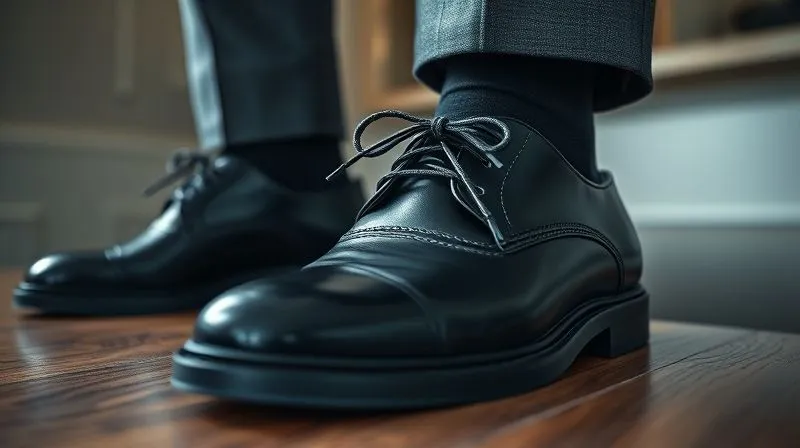
- Shoes: This is non-negotiable. Invest in high-quality, polished leather dress shoes – oxfords or derbies are the gold standard. Black or dark brown are the most versatile. Ensure they are impeccably clean and shined. Scuffed or worn shoes can instantly negate the effort you put into the rest of your outfit.
- Socks: Ensure your socks are dark, long enough to cover your calves when seated, and match your trousers or shoes. Avoid novelty socks.
Grooming: The Often-Overlooked Pillar of Professionalism
Even the most expensive, perfectly tailored suit can be sabotaged by poor grooming. Your personal presentation extends far beyond your clothes, encompassing every aspect of your appearance. Grooming is a silent testament to your self-care and discipline, qualities that clients inherently look for in a business partner.
Hair: Neatness and Style
Your hair should be clean, neatly styled, and off your face. Opt for a conservative haircut that suits your face shape and is well-maintained. Avoid overly trendy or distracting styles. If you use product, ensure it's subtle and keeps your hair in place without looking greasy or stiff.
Facial Hair: Precision Matters
Whether you prefer to be clean-shaven or sport a beard, precision is paramount. If you're clean-shaven, ensure you have a fresh, close shave. If you have facial hair, it must be meticulously trimmed, well-groomed, and free of stray hairs. A scruffy or unkempt beard can convey a lack of attention to detail and undermine your professional image.
Hands and Nails: The Finer Details
Your hands will be visible during handshakes and when gesturing during your presentation. Ensure your nails are clean and neatly trimmed. Avoid chipped polish if you wear it. A subtle, clean look is always best. This small detail often goes unnoticed when done correctly, but becomes glaringly obvious when neglected.
"Grooming is the ultimate differentiator. It signals respect for yourself and, by extension, for the people you're meeting. It’s the invisible polish that completes your professional ensemble."
Don't forget the subtle elements: fresh breath, a light touch of deodorant (not cologne), and ensuring you don't carry strong scents from food or smoke. These details might seem minor, but they contribute significantly to the overall impression you make.
The Power of Confidence: Carrying Your Attire
While impeccable formal wear sets the stage, it's your confidence that truly performs. Clothing is a tool, a powerful enhancer, but it's your demeanor, your posture, and your genuine self-assurance that ultimately seals the deal. A perfectly dressed individual who lacks confidence will struggle, whereas a confident individual, even in slightly less perfect attire, can still shine.
Confidence manifests in various ways: a firm handshake, steady eye contact, an open and engaging posture, and a clear, articulate voice. These non-verbal cues work in tandem with your clothing to project an image of capability and self-possession. As renowned social psychologist Amy Cuddy's research, often discussed in forums like Harvard Business Review, suggests, even adopting 'power poses' can internally boost feelings of confidence, which then translates externally.
Pre-Pitch Routine: Mental and Physical Preparation
To ensure you carry your attire with the confidence it deserves, integrate these steps into your pre-pitch routine:
- Practice Your Pitch: Rehearse until you're fluent and comfortable, not just with the content but also with your delivery.
- Visualize Success: Mentally walk through the pitch, imagining yourself confident, articulate, and successful.
- Deep Breathing: Before entering the room, take a few slow, deep breaths to calm your nerves and center yourself.
- Power Stance: Stand tall with your shoulders back and chest out for a few minutes before the meeting to physically embody confidence.
- Check Your Reflection: Take one final look in a mirror. Not just for your clothes, but for your overall posture and expression.

Common Pitfalls and How to Avoid Them
Even with the best intentions, certain mistakes can undermine your efforts to present a polished, professional image. Recognizing these common pitfalls is the first step to avoiding them, ensuring your formal wear selection truly supports your high-stakes client pitch.
Ill-Fitting Clothes: The Biggest Blunder
This cannot be stressed enough. A suit that is too big makes you look sloppy and unkempt, diminishing your authority. A suit that is too tight restricts movement and looks uncomfortable, distracting both you and your client. Always, always prioritize fit. If it doesn't fit off the rack, get it tailored. This small investment pays dividends in confidence and perception.
Ignoring Industry Norms: A Sign of Disrespect
As discussed, blindly adhering to a generic idea of 'formal' without researching your client's specific culture is a critical error. It suggests a lack of thoroughness and respect for their unique environment. Always do your homework to ensure your attire is appropriate and shows you understand their world. An article by Forbes Coaches Council emphasizes the importance of aligning your personal brand, including attire, with your professional goals and audience.
Over-Accessorizing: Less is More
While accessories can add polish, too many or overly flashy items can detract from your professional image. Avoid excessive jewelry, loud tie patterns, or novelty items. Your goal is to project competence and seriousness, not to make a fashion statement. A classic watch, a simple tie, and a subtle pocket square are typically all you need.
Wrinkles and Stains: Unforgivable Details
Before you leave for your pitch, conduct a thorough inspection of your entire outfit. A wrinkled shirt, a stray thread, or a forgotten stain can instantly undermine your meticulous planning. Ensure everything is clean, pressed, and in perfect condition. This shows an unwavering attention to detail that clients will extrapolate to your work ethic.
"Meticulousness in appearance reflects meticulousness in business. Don't let a minor oversight derail a major opportunity."
Remember, the goal is to present a cohesive, polished image that supports your message, not distracts from it. Eliminating these common mistakes ensures your attire works for you, not against you.
Frequently Asked Questions (FAQ)
Is it always best to overdress rather than underdress for a high-stakes pitch? While erring on the side of formality is generally safer, there's a fine line. Overdressing significantly for a genuinely casual environment can make you seem out of touch or even arrogant. The key is to be slightly more polished than the expected norm, showing respect, but not so much that you create a cultural disconnect. Research is always your best guide.
What if the client's industry is known for being very casual (e.g., a tech start-up)? Even in casual industries, a high-stakes pitch still requires elevated professionalism. 'Casual' for them likely doesn't mean jeans and a t-shirt for a critical meeting. Consider 'smart casual' or 'business professional' without a tie. A well-fitted blazer, crisp collared shirt (perhaps a subtle pattern), tailored trousers (not jeans), and polished loafers or smart dress shoes would be appropriate. The goal is to show you understand their culture but respect the importance of the meeting.
Should I wear a watch? If so, what kind? Yes, a watch is a classic and appropriate accessory. Opt for a classic dress watch with a leather strap (matching your belt and shoes) or a simple metal bracelet. Avoid oversized, sporty, or overly flashy watches. It should be understated and elegant, signaling punctuality and attention to detail without drawing undue attention.
How do I ensure my suit doesn't look 'stuffy' or old-fashioned? The key is modern tailoring and fit. An updated, slimmer (but not tight) cut, contemporary lapel width, and proper length will prevent a suit from looking dated. Focus on quality fabric, classic dark colors, and pair it with a crisp, well-fitting shirt and a modern (but still conservative) tie. Avoid pleated trousers or oversized shoulder pads, which are hallmarks of older styles.
What's the one non-negotiable item for a high-stakes pitch? While many elements are crucial, the single non-negotiable is a perfectly fitted, dark suit. It forms the foundation of your professional image and immediately communicates seriousness and respect. All other elements build upon this cornerstone, but without it, your entire presentation is on shaky ground. For additional insights on crafting a winning pitch, explore resources like McKinsey & Company's insights on the art of the pitch, where professional presentation is a key component.
Recommended Reading
- Fashion's Power: How Does It Empower Women at Work?
- Unlock All-Day Comfort: The Ultimate Guide to Business Casual Shoes for Men Who Stand
- 5 Expert Strategies: Wear Smart Accessories Without Looking Inappropriate
- The Ultimate Guide: How to Properly Break In New Men's Running Shoes
- 7 Steps: Accurately Appraise Rare Vintage Designer Pieces for Insurance
Main Points and Final Considerations
Navigating the complexities of formal wear for a high-stakes client pitch can feel daunting, but by approaching it strategically, you transform a potential source of anxiety into a powerful asset. Remember, your attire is not merely clothing; it's a critical component of your non-verbal communication, a silent yet potent amplifier of your professional message.
- Research is paramount: Always understand your client's culture and industry norms to tailor your attire appropriately.
- Fit above all: A perfectly tailored suit in a dark, classic color is your strongest foundation.
- Details matter: From your crisp shirt and subtle tie to polished shoes and impeccable grooming, every element contributes to the overall impression.
- Confidence is key: Your attire empowers you, but it's your confident demeanor that truly captivates and persuades.
- Avoid common pitfalls: Ill-fitting clothes, ignoring norms, over-accessorizing, and neglected details can undermine your efforts.
As a seasoned veteran in this field, I can unequivocally state that the effort you put into your presentation, including your formal wear, is never wasted. It reflects a commitment to excellence that clients will instinctively trust. Approach your next high-stakes pitch not just with a brilliant proposal, but with an image that powerfully communicates your competence, respect, and unwavering professionalism. Go forth, present with confidence, and secure that deal.





Your email address will not be published. Required fields are marked *