

Stylist's Guide: Stop Colored Contacts Looking Fake on Clients?
For over 15 years in the dynamic world of fashion and beauty, specializing in eyewear, I've witnessed the transformative power of colored contact lenses. When done right, they can elevate a client's entire look, adding depth, intrigue, and a touch of effortless glamour. However, I’ve also seen the all-too-common pitfall: colored contacts that scream "fake," undermining a carefully curated style and leaving clients feeling self-conscious.
The problem isn't just about selecting a pretty color; it’s a nuanced interplay of optics, anatomy, and artistry. Clients often come to us with a vision, perhaps inspired by social media, only to be disappointed when the reality looks stark, unnatural, or simply... off. This disconnect can damage confidence and reflect poorly on a stylist's ability to deliver truly personalized, high-quality results.
In this definitive stylist's guide, I will share my accumulated expertise and practical frameworks to master the art of natural-looking colored contacts. We’ll delve into the science of the eye, advanced color theory, precise selection techniques, and crucial consultation strategies. By the end, you'll possess the tools to confidently advise your clients and ensure their colored contacts enhance, rather than detract from, their natural beauty, making that 'fake' look a thing of the past.
Understanding the Anatomy of a Natural Gaze
Achieving a natural look starts with respecting the eye's inherent complexity. It's not just a flat canvas; it's a three-dimensional marvel with subtle variations that contribute to its unique allure. Ignoring these anatomical nuances is often the primary reason colored contacts look artificial.
The Limbal Ring: Your First Clue
The limbal ring is the dark, outermost edge of the iris, the colored part of the eye. It naturally darkens and thickens in youth and tends to fade with age. A prominent limbal ring is often associated with attractiveness and vitality. Many colored contacts fail to replicate this natural feature or create one that is disproportionate, leading to an obvious artificiality.
When selecting lenses, I always prioritize those that either preserve the client’s natural limbal ring or subtly enhance it with a soft, diffused edge. A harsh, thick, or overly dark limbal ring on a lens can instantly give away its artificial nature, especially in direct light.
Pupil Dynamics: The Unsung Hero
The pupil, the black center of the eye, constantly dilates and constricts in response to light and emotion. This dynamic movement is crucial for a natural gaze. Many colored contacts have a fixed, uncolored pupil hole that can look too large or too small for the client's actual pupil, especially in varying light conditions.
If the lens's pupil hole is too small, it can partially obscure the pupil, creating a 'tunnel vision' effect or an unnatural halo around the pupil. If it's too large, the client's natural eye color will be visible around the edges of the pupil hole, creating an obvious ring of their original color, which is a dead giveaway for fake contacts. I've found that lenses with a slightly feathered or blended pupil hole edge tend to look more realistic.
The Color Theory for Eyes: Beyond Basic Hues
Just as with hair or makeup, successful colored contact lens styling hinges on a deep understanding of color theory, specifically how it interacts with individual skin tones, hair colors, and natural eye pigments. It's rarely about picking a vivid blue because the client likes blue; it's about harmony.
Warm vs. Cool Undertones: A Foundation
A client's skin undertone is paramount. Warm undertones (peachy, golden, yellow) typically harmonize with warmer eye colors like hazel, warm browns, greens with gold flecks, and certain amber shades. Cool undertones (pink, blue, red) often complement cooler eye colors such as blues, greys, violets, and cool greens. Misaligning these can create a jarring, unnatural contrast.
To determine undertone, I often check the client's wrist veins: blue/purple veins indicate cool, green veins indicate warm, and a mix or difficulty discerning suggests neutral. This simple test provides a powerful starting point for color selection.
Layering Color: The Subtlety of Blending
Natural eyes aren't a single, flat color. They possess depth, flecks, and variations. The most realistic colored contacts mimic this by using multiple tones and intricate patterns. My approach involves considering the client’s natural eye color as a base layer upon which the contact lens will overlay its effect.
For instance, if a client has light brown eyes and wants to go green, a lens with a translucent green base interwoven with subtle yellow or brown flecks will look far more authentic than a solid, opaque green. It allows the natural eye color to peek through, creating depth and dimension.
Expert Tip: Always consider how the chosen lens color will interact with the client's hair color and typical makeup palette. A harmonious overall look is key to preventing the contacts from standing out as artificial.
Selecting the Right Lens: It's All in the Details
This is where technical knowledge meets artistic intuition. The market is saturated with colored contacts, but not all are created equal in terms of realism. Knowing what to look for in lens design can make all the difference.
Pattern Perfection: Radial vs. Dot Matrix
The pattern printed on the lens is crucial. Many inexpensive or poorly designed lenses use a simple, repetitive radial pattern that looks pixelated or obviously printed. The most natural-looking lenses employ a sophisticated dot matrix pattern, often with varying densities and colors, designed to mimic the intricate fibers of the human iris.
I advise stylists to look for lenses where the pattern radiates subtly from the pupil outward, with irregular flecks and lines, rather than uniform stripes. This mimicry of natural iris stroma is essential for depth.
Opacity Matters: Translucent vs. Opaque
Colored contacts come in varying degrees of opacity. Enhancement tints are translucent and designed to intensify a client’s natural eye color, making them ideal for subtle changes or for those with lighter eyes seeking a deeper hue. Opaque lenses, on the other hand, completely cover the natural eye color and are used for dramatic color changes.
While opaque lenses offer the most dramatic transformation, they are also the most challenging to make look natural. For clients seeking a significant color shift, I lean towards opaque lenses that incorporate multiple tones and a soft limbal ring to avoid a flat, doll-like appearance. For a truly natural shift, enhancement tints are often the superior choice.
Diameter and Fit: The Goldilocks Zone
The overall diameter of the lens (DIA) and its base curve (BC) are critical for both comfort and aesthetics. A lens that is too large can extend beyond the iris onto the sclera (the white part of the eye), giving a 'bug-eyed' or 'doll-eye' effect. One that is too small can expose the natural iris around the edges, creating a halo effect.
The ideal diameter should closely match the client's natural iris diameter. I always recommend trying on lenses to ensure the fit is not only comfortable but also visually proportionate. A proper fit is also essential for oxygen flow and eye health. According to the American Academy of Ophthalmology, improper fit can lead to serious eye complications.
- Measure the Iris: If possible, use a ruler or a contact lens fitting tool to get an approximate measurement of the client's natural iris diameter.
- Consider Eye Shape: Almond-shaped eyes might benefit from slightly larger diameters for an enlarging effect, while rounder eyes might look best with lenses that closely match their natural iris.
- Test in Varied Lighting: Have the client try on lenses in both natural daylight and artificial indoor lighting to assess how the color and size appear under different conditions.
- Observe Limbal Ring Integration: Ensure the limbal ring of the lens aligns seamlessly with or subtly enhances the client's natural limbal ring, avoiding any harsh lines.
- Check Pupil Hole Alignment: Verify that the pupil hole of the lens perfectly frames the client's pupil, without exposing their natural iris color around the edges or encroaching on the pupil itself.
The Client Consultation: Unlocking Their True Desires
A successful consultation is where we bridge the gap between a client's aspirations and realistic, natural outcomes. It’s not just about showing them samples; it’s about deep listening and expert guidance. This is crucial to prevent the 'fake' look by addressing expectations upfront.
Beyond 'Blue': Eliciting Specific Preferences
Clients often articulate their desires vaguely: "I want blue eyes" or "Something green." As stylists, our role is to drill down. What kind of blue? A vibrant sapphire, a muted slate, or an oceanic turquoise? What mood are they trying to convey? Is it for a special event or daily wear? Understanding the underlying motivation helps immensely.
I often use visual aids, showing a range of subtle variations within a single color family, and discussing how different shades can evoke different feelings or complement various styles. This helps to calibrate their expectations towards realism rather than fantasy.
Managing Expectations: The Power of Realistic Advice
Sometimes, a client's desired color simply won't look natural with their existing features. It's our professional duty to gently guide them towards a more harmonious choice. This isn't about crushing their dreams; it's about delivering a result that genuinely enhances their beauty. For example, a very dark-eyed client aiming for a translucent light blue might be disappointed by the muted outcome. An opaque lens would be needed for such a drastic change, but then we must consider the risk of it looking artificial.
I explain the "why" behind my recommendations, using analogies about how foundation shades work with skin tones. Transparency builds trust. As Harvard Business Review often emphasizes, trust is the cornerstone of any lasting client relationship.
| Consultation Step | Stylist Action | Client Benefit |
|---|---|---|
| Initial Inquiry & Goal Setting | Ask open-ended questions about desired look, occasion, inspiration. | Feels heard, clarifies vision. |
| Natural Feature Assessment | Evaluate skin undertone, hair color, natural eye color, pupil size, limbal ring. | Personalized, informed recommendations. |
| Lens Selection & Trial | Present tailored options, explain features (pattern, opacity), facilitate trials in various lights. | Visualizes outcome, makes confident choice. |
| Education & Aftercare | Provide clear instructions on hygiene, insertion, removal, and maintenance. | Ensures comfort, safety, and longevity of lenses. |
Application & Aftercare: The Often-Overlooked Steps
Even the most perfectly chosen colored contacts can look off if not applied correctly or maintained poorly. As stylists, while we don't directly handle lens application for clients, we must educate them on best practices. This ensures the lens sits correctly and the eye remains healthy, which is vital for a natural appearance.
Hygiene First: A Non-Negotiable
I cannot stress this enough: impeccable hygiene is paramount. Clients must wash their hands thoroughly with soap and water and dry them with a lint-free towel before touching their lenses. Contaminated lenses can lead to eye infections, discomfort, and a red, irritated eye – which will make any colored contact look incredibly fake and unpleasant.
Educate clients on using only approved contact lens solution for cleaning and storage, never tap water or saliva. This protects their eye health and preserves the integrity and comfort of the lens.
Proper Insertion: Avoiding the 'Pop-Out' Look
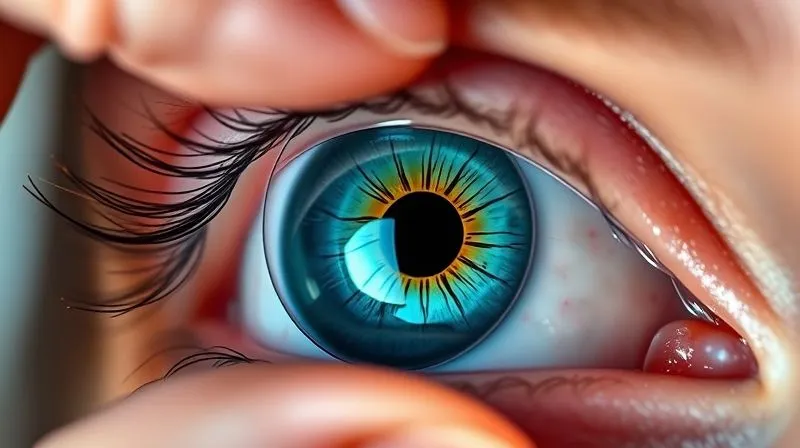
A lens that isn't properly centered on the iris can shift, revealing the natural eye color underneath or creating a noticeable edge. This is a classic reason why colored contacts look fake on clients. I advise clients to practice in front of a mirror, ensuring the lens is cupped correctly on their finger and gently placed directly onto the iris. A few blinks usually help it settle.
A well-fitting lens, as discussed earlier, is less prone to shifting. If a client consistently struggles with lens movement, it's a strong indicator that the base curve or diameter of the lens might be incorrect for their eye.
Maintenance for Longevity and Comfort
Daily disposable lenses are often the most hygienic and comfortable option, requiring no cleaning. For two-week or monthly lenses, clients must adhere to a strict cleaning and storage regimen. Lenses that are dirty, scratched, or past their expiration date will not only look unnatural but can also cause significant eye irritation and potential damage.
Regular replacement according to the manufacturer's schedule is crucial. A well-maintained lens retains its intended color vibrancy and pattern integrity, contributing to a consistently natural aesthetic.
Lighting & Makeup: The Environmental Impact
The perception of colored contacts is incredibly sensitive to external factors, particularly lighting and the surrounding makeup. What looks subtle in one environment can appear garish in another. This is a critical area where a stylist's guidance can prevent disappointment and achieve a truly harmonious look.
Natural vs. Artificial Light: A Dramatic Difference
I always encourage clients to test their chosen lenses in various lighting conditions before committing. Natural daylight, especially indirect sunlight, offers the most accurate representation of how the eyes will appear. Fluorescent lights can often make colored contacts look dull or unnaturally bright, while warm incandescent lights can alter their perceived hue.
My personal trick: Have clients step outside near a window, then move into a room with artificial light, and finally, look in a dimly lit area. This reveals how the pupil size changes and how the lens interacts with different light spectra, providing a comprehensive view of the final effect. This is paramount to prevent colored contacts looking fake on clients.
"The most convincing colored contact lens isn't just about the lens itself, but how it dances with the light around it. A truly natural gaze is a symphony of subtle reflections and shadows, not a static color."
Makeup Artistry: Enhancing, Not Overpowering
Makeup can be a powerful ally in making colored contacts look more natural, or it can inadvertently draw attention to their artificiality. The goal is to enhance the eyes, allowing the new color to shine without competing with heavy liners or overly dramatic eyeshadows.
For vibrant lens colors, I often recommend softer, more neutral eye makeup palettes that complement the new eye color without clashing. Earthy tones, subtle browns, and soft golds can work wonders. A thin, well-applied eyeliner can define the lash line without overpowering the iris. Avoid heavy black kohl liners that can create a stark contrast and highlight the lens's edge.
Consider the overall facial harmony. If the eyes are now a striking blue, ensure the brows are well-groomed and the skin is even-toned to provide a balanced canvas. The objective is an integrated, effortless beauty.
Advanced Techniques & Troubleshooting: My Pro Secrets
Even with the best preparation, challenges can arise. Here, I share some of my advanced strategies for achieving unparalleled realism and troubleshooting common issues that contribute to colored contacts looking fake.
The 'Layering' Illusion: For Depth and Realism
For clients with very dark eyes who desire a lighter, more vibrant color, a single opaque lens can sometimes appear flat. My advanced technique involves suggesting lenses that are specifically designed with multiple layers of color and texture. Some premium brands offer lenses that have a dark base, followed by an intermediate translucent color, and then a lighter, more intricate pattern on top. This multi-dimensional approach mimics the natural structure of the iris, creating an illusion of depth that a single-pigment lens cannot.
This method is particularly effective for achieving realistic greens or blues on dark brown eyes, as it prevents the 'sticker' effect that often plagues single-layer opaque lenses. It's about building complexity, much like an oil painting.
Case Study: How Maya Fixed Her Client's 'Emerald Envy'
Maya, a celebrity stylist, faced a challenge with a new client, an actress, who insisted on "vibrant emerald green" contacts for a red carpet event. The actress had naturally dark brown eyes, and the initial lenses she brought were a solid, opaque green with a stark limbal ring. In direct light, they looked undeniably fake, almost cartoonish, completely undermining her sophisticated look.
Maya immediately recognized the issue: lack of depth and an unnatural pupil hole. She engaged the client in a detailed consultation, explaining the nuances of natural eye anatomy and color layering. Maya then sourced a premium brand's multi-tonal green lens. This lens featured a subtle, dark green limbal ring that blended into a softer, semi-translucent emerald pattern with flecks of gold and a finely feathered pupil hole. The key was the gradual transition and the incorporation of the client's own dark brown eye color peeking through subtly.
The result was astounding. The actress's eyes transformed into a captivating, deep emerald that looked entirely natural, sparkling with depth and dimension under the red carpet lights. She received rave reviews for her "stunning, unique eye color," and Maya cemented her reputation for achieving flawless, natural enhancements. This experience underscored that to stop colored contacts looking fake on clients, one must embrace subtlety and anatomical accuracy.
Building Your Portfolio: Showcasing Natural Transformations
As a stylist, your portfolio is your silent salesperson. When it comes to colored contacts, showcasing truly natural, stunning transformations is key to attracting more clients who seek that sophisticated, believable enhancement. This is how you demonstrate your mastery and build trust.
Capturing Authenticity: Photography for Contacts
Good photography is paramount. Avoid harsh direct flash, which can flatten the eye color and highlight any artificiality. Instead, utilize natural, diffused lighting. Shoot close-ups of the eyes, but also include wider shots that show the contacts in the context of the client's entire face and style. Focus on capturing the sparkle and depth that the lenses provide when chosen and styled correctly.
Ensure your photos are high-resolution and unedited in ways that might misrepresent the contact lens's true appearance. Authenticity builds credibility.
Leveraging Before-and-Afters
The most compelling evidence of your expertise is a well-executed before-and-after series. Take clear, well-lit photos of the client's natural eyes, and then follow up with shots of them wearing the chosen contacts, styled with appropriate makeup and lighting. This visually demonstrates the transformation and the natural integration of the lenses.
Remember to get client consent for all photos. A strong portfolio, rich with examples of truly natural colored contact lens transformations, will distinguish you as an expert in a crowded field. It’s the ultimate answer to the question: 'Stylist's guide: stop colored contacts looking fake on clients?' – by showing them how it's done right.
Frequently Asked Questions (FAQ)
Q: Can colored contacts truly look 100% natural, even on very dark eyes? A: While achieving a '100% natural' look on very dark eyes aiming for a drastic light color shift is challenging, it is absolutely possible to achieve highly convincing and beautiful results. The key lies in selecting multi-tonal, opaque lenses with intricate patterns, soft limbal rings, and feathered pupil holes. Paired with correct color matching to skin tone and appropriate makeup, the transformation can be incredibly realistic and enhance the client's overall appearance significantly. It’s about creating an illusion of depth and natural variation, rather than a flat, artificial color.
Q: How do I know if a colored contact lens is a good quality, natural-looking one? A: Good quality, natural-looking lenses often come from reputable brands known for advanced manufacturing processes. Look for lenses that feature multi-tonal designs, a sophisticated dot matrix pattern (rather than simple radial lines), a soft, diffused limbal ring, and a pupil hole that blends subtly. Read reviews, look at unedited client photos, and prioritize lenses that offer a range of diameters and base curves for a precise fit. Always consult with an optometrist for recommendations on safe and high-quality brands.
Q: My client has light eyes and wants a subtle enhancement. What should I recommend? A: For light-eyed clients seeking subtle enhancement, I highly recommend 'enhancement tint' lenses. These are translucent and designed to deepen or subtly shift their natural eye color without completely obscuring it. For example, a light blue-eyed client might choose an enhancement tint to achieve a deeper ocean blue, or a light green-eyed client might go for a more vibrant emerald. They offer the most natural results because they allow the client's natural eye patterns and flecks to show through, adding depth rather than replacing color.
Q: What are the biggest mistakes stylists make when choosing colored contacts for clients? A: The most common mistakes include ignoring the client's natural eye anatomy (especially pupil size and limbal ring), selecting lenses with a flat, single-color opaque pigment, choosing a color that clashes severely with the client's skin undertone, and failing to consider how the lenses will look in various lighting conditions. Another major oversight is not managing client expectations realistically, promising a look that is unachievable or will appear unnatural. These are all reasons why colored contacts often end up looking fake.
Q: How important is eye health when recommending colored contacts? A: Eye health is paramount and non-negotiable. As stylists, while we focus on aesthetics, we must emphasize that colored contacts are medical devices. Clients should always obtain a prescription from an optometrist or ophthalmologist, even for plano (non-corrective) lenses, to ensure proper fit and material safety. Improperly fitted or unhygienic lenses can lead to severe eye infections, corneal abrasions, and even permanent vision loss. Always advise clients to prioritize comfort, hygiene, and regular eye check-ups. You can find more information on contact lens safety from organizations like the Centers for Disease Control and Prevention (CDC).
Key Takeaways and Final Thoughts
- Master the Anatomy: Understand the limbal ring and pupil dynamics for a truly natural look.
- Embrace Color Theory: Align lens color with skin undertones, hair, and natural eye color for harmony.
- Detail-Oriented Selection: Prioritize intricate patterns, appropriate opacity, and precise diameter.
- Consultation is Key: Elicit specific client desires and manage expectations with expert, realistic advice.
- Educate on Care: Emphasize hygiene and proper application for comfort, safety, and aesthetic integrity.
- Consider Environment: Assess how lenses appear in various lighting and complement with subtle makeup.
- Build Your Expertise: Use advanced techniques and showcase natural transformations in your portfolio.
The journey to mastering natural-looking colored contacts is one of continuous learning, keen observation, and empathetic client guidance. By applying the principles I've shared in this stylist's guide, you're not just preventing colored contacts looking fake on clients; you're elevating your craft, building client trust, and transforming gazes into captivating works of art. Remember, true beauty lies in enhancement that feels authentic, and with these tools, you are well-equipped to deliver exactly that. Keep experimenting, keep refining, and watch your clients' confidence soar.
Recommended Reading
- The Hidden Dangers: What Are the Privacy Risks of Fashion Wearables?
- Travel Smart: 7 Odor-Proof Activewear Picks for Men That Look Sharp
- Liquidate Slow-Moving Footwear: 7 Urgent Strategies for Profit
- 5 Breakthrough Strategies: Gripping Flexible Fabrics with Fashion Robots
- 5 Ethical Pillars: Reinterpreting Iconic Designer Legacies Responsibly




Your email address will not be published. Required fields are marked *