

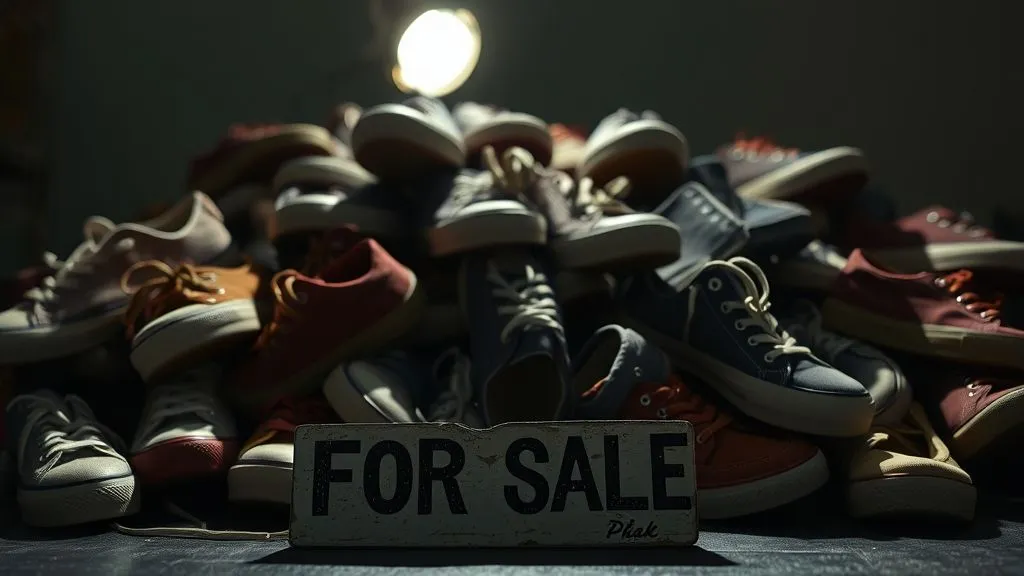
Urgent: How to Liquidate Slow-Moving Casual Footwear Inventory?
For over two decades in the dynamic world of fashion and footwear, I've witnessed countless businesses, from budding startups to established giants, grapple with a common, insidious challenge: slow-moving inventory. It's a silent killer of cash flow, a drain on valuable warehouse space, and a constant source of anxiety for retailers. I've seen promising collections turn into financial burdens simply because a few styles didn't resonate as expected, or market trends shifted with unexpected speed.
The problem of dead stock, especially in casual footwear, isn't just about unsold shoes; it's about frozen capital that could be fueling new collections, marketing campaigns, or operational improvements. It ties up resources, incurs holding costs, and diminishes your brand's perceived freshness. The longer those boxes sit, the heavier their financial weight becomes, eroding your margins and impacting your ability to innovate.
In this definitive guide, I'm going to share the battle-tested strategies and expert insights I've gathered over the years to tackle this very problem. We'll explore not just how to move those stubborn shoes, but how to do it strategically, preserving brand value where possible, and recovering as much capital as you can. My aim is to provide you with actionable frameworks, real-world case studies, and a mentor's perspective to help you navigate this urgent situation and emerge stronger.
Diagnosing the Root Cause: Why is Your Footwear Not Moving?
Before we dive into liquidation strategies, it's crucial to understand why your casual footwear became slow-moving in the first place. My experience tells me that hasty reactions without understanding the root cause often lead to repeating the same mistakes. A thorough diagnosis is the first step towards a sustainable solution.
Market Misalignment & Trend Shifts
One of the most common culprits is a disconnect between your product and current market demand. Fashion is fickle, and casual footwear trends, especially, can pivot rapidly. What was popular last season might be passé today. Did your buying decisions align with emerging styles, or were they based on past successes that no longer hold true? This can also include issues like incorrect sizing curves for your target demographic.
Pricing & Perceived Value Issues
Sometimes, the problem isn't the shoe itself, but its price point relative to its perceived value. Is your pricing too high compared to competitors offering similar styles, or does the quality not justify the cost in the customer's mind? Conversely, if it's priced too low, it might be perceived as cheap or undesirable. Understanding your customer's willingness to pay and their value perception is paramount.
Ineffective Marketing & Visibility
Even the perfect shoe at the perfect price won't sell if no one knows about it. Has your marketing strategy effectively reached your target audience for these specific styles? Is the product photography compelling? Are the descriptions engaging? Lack of visibility, poor product presentation, or targeting the wrong demographic can all contribute to inventory stagnation.
Strategy 1: The Aggressive Markdown & Flash Sale Blitz
When time is of the essence and cash recovery is paramount, an aggressive markdown strategy combined with a flash sale can be incredibly effective. I've seen this approach clear significant inventory in a matter of days, though it requires careful planning to minimize margin erosion.
The goal here isn't profit maximization; it's capital recovery and freeing up space. Think of it as a controlled burn to prevent a larger forest fire. Transparency with your customers about the 'last chance' or 'final stock' nature of the sale can also create urgency.
- Segment Your Stock: Identify the specific casual footwear styles that are truly dead stock. Don't mix them with popular items unless it's part of a bundling strategy (which we'll discuss next).
- Determine Markdown Tiers: Start with a significant discount (e.g., 40-50% off) for a short period. If stock remains, escalate to 60-70% off. The final tier might be 75% or even 80% off. Be prepared to go deep.
- Create Urgency with Time Limits: Flash sales thrive on scarcity and urgency. Announce a sale that lasts only 24, 48, or 72 hours. Use countdown timers prominently on your website and in marketing communications.
- Leverage All Channels: Promote the flash sale across email, social media (paid and organic), website banners, and in-store signage. Consider retargeting ads for customers who previously viewed these items.
- Clear Communication: Be explicit about 'all sales final' policies for deeply discounted items to manage customer expectations and returns.
"Sometimes, in the world of retail, the best profit isn't made from a sale, but from preventing a bigger loss by swiftly liquidating slow-moving inventory. It's about optimizing for cash flow, not just margin on every single unit."
Strategy 2: Strategic Bundling & Cross-Promotion
One of my favorite methods for moving stubborn inventory without resorting to drastic price cuts on individual items is strategic bundling. This approach leverages the appeal of your best-sellers to lift the sales of slow-moving casual footwear. It's about creating perceived value and solving a complete problem for the customer.
The psychology here is powerful: customers feel they're getting a great deal on a package, even if one component wouldn't have sold on its own. It also helps you clear multiple items from your inventory simultaneously, improving your inventory turnover rate.
- Identify Complementary Products: Pair your slow-moving shoes with related, faster-selling items. Think socks, shoelaces, shoe care kits, insoles, or even apparel like t-shirts or shorts that complete a casual outfit.
- Create Themed Bundles: Develop attractive bundle names that suggest a lifestyle or specific use. For example, a 'Weekend Explorer Pack' could include casual hiking shoes, performance socks, and a water bottle.
- Offer a Perceived Discount: Price the bundle slightly lower than the sum of its individual components. The discount doesn't have to be massive, but it needs to be clear that buying the bundle is a better deal.
- 'Buy One, Get One' (BOGO) Offers: A classic for a reason. Offer 'Buy a popular sneaker, get a slow-moving casual shoe for 50% off' or 'Buy any casual shoe, get a pair of socks free.'
- Showcase the Bundle: Use compelling photography that displays all items in the bundle together, ideally in an aspirational context. Clearly list the savings on the product page.
Case Study: 'SoleMate' Bundles Revive 'Stride' Footwear
A small, independent boutique, 'Stride Footwear', faced stagnation with a specific line of canvas sneakers – a classic style that had been overshadowed by newer trends. Instead of deep discounting them individually, I advised them to implement a bundling strategy. They created 'SoleMate' bundles, pairing the slow-moving canvas sneakers with popular branded athletic socks and a premium shoe cleaning kit. The bundle was priced to offer a 20% saving compared to buying items separately.
The results were impressive: within six weeks, 'Stride Footwear' saw a 40% increase in sales for the slow-moving canvas line, moving over 150 units. This not only cleared inventory but also introduced customers to new complementary products like the shoe cleaning kit, boosting overall average order value and customer satisfaction. It was a win-win that preserved brand value.
Strategy 3: Leverage Wholesale & Liquidation Channels
Sometimes, the best approach for urgent liquidation of slow-moving casual footwear inventory is to move it out of your direct-to-consumer pipeline entirely. This involves engaging with business-to-business (B2B) channels like wholesalers, discount retailers, or dedicated liquidation companies. While margins will be significantly lower, these channels offer speed and volume, which can be critical when space and cash flow are tight.
I've guided many businesses through this, and the key is understanding the different types of partners and managing expectations regarding pricing. It's about making a strategic decision to cut your losses and reinvest.
Connecting with Liquidators & Discount Retailers
Professional liquidators specialize in buying excess inventory in bulk, often at a fraction of the original cost. They then resell it through their own channels, which might include outlet stores, online marketplaces, or even international markets. While the price per unit will be low, they offer quick, large-volume purchases. Discount retailers (e.g., off-price chains) can also be excellent partners, as they have a business model built around offering branded goods at lower prices. They might offer slightly better terms than pure liquidators, but often have stricter quality and brand guidelines.
Bulk Sales to International Markets
What's slow-moving in one market might be a hot commodity in another, particularly in emerging economies where fashion cycles can differ. Exploring international wholesalers or distributors who specialize in importing excess stock can open up new avenues. This often requires navigating customs and logistics, but the potential for better recovery rates than domestic liquidators can make it worthwhile. Harvard Business Review often highlights the benefits of diversified sales channels in inventory management.
| Channel | Pros | Cons | Recovery Rate |
|---|---|---|---|
| Direct-to-Consumer (DTC) Sale | Highest potential margin, brand control | Slowest, highest marketing cost, risk of brand dilution | High |
| Discount Retailer (B2B) | Volume sales, less brand dilution than liquidator | Lower margins, brand quality requirements | Medium |
| Professional Liquidator (B2B) | Fastest volume sale, clears space quickly | Lowest margins, no brand control | Low |
| International Wholesaler (B2B) | Potential for better margins than liquidator, new market reach | Complex logistics, customs, longer sales cycle | Medium-High |
Strategy 4: Innovative Marketing & Storytelling
Sometimes, the issue isn't the product itself, but the narrative around it. I've often seen brands successfully reposition slow-moving casual footwear through creative marketing and compelling storytelling. This strategy aims to reignite interest and create a new perception of value, rather than just slashing prices. It's about shifting the focus from 'old stock' to 'unique opportunity' or 'timeless style.'
This approach requires a deep understanding of your brand's voice and your customer's aspirations. It’s about creating a desire where none existed before, or reminding customers why they should value a particular style.
User-Generated Content Campaigns
Encourage customers who have purchased the slow-moving styles (perhaps from an earlier, non-discounted sale) to share photos or videos of themselves wearing the shoes. Run a contest or offer incentives for the best content. Authentic user-generated content (UGC) is incredibly powerful for building trust and demonstrating how the shoes look in real life, away from stylized studio shots. Forbes frequently highlights the impact of UGC in modern marketing.
Limited Edition & 'Last Chance' Narratives
Reframe the narrative around the slow-moving stock. Instead of 'old inventory,' position it as 'The Heritage Collection' or 'Classic Re-Release.' For truly dead stock, create a 'Last Chance to Own' campaign, emphasizing scarcity and the impending discontinuation of the style. This creates a sense of exclusivity and urgency, encouraging customers to act before it's gone forever. Use evocative language and high-quality visuals to support this narrative.
- Develop a Unique Hashtag: Create a memorable and brand-relevant hashtag for your UGC campaign (e.g., #MyCasualKicks, #FootwearStories).
- Offer Clear Incentives: This could be a discount on their next purchase, a gift card, or a feature on your brand's social media channels.
- Set Up an Easy Submission Process: Make it simple for customers to submit their content, whether through tagging, direct upload, or a dedicated landing page.
- Amplify the Best Content: Share the most engaging UGC across your social media platforms, email newsletters, and even on your product pages. This not only promotes the shoes but also builds community.

Strategy 5: Donation, Upcycling, & Corporate Social Responsibility
While not a direct revenue-generating strategy, donating or exploring upcycling options for your slow-moving casual footwear inventory can offer significant benefits, both tangible and intangible. In my experience, a strong Corporate Social Responsibility (CSR) initiative can enhance brand reputation, provide tax write-offs, and clear inventory responsibly. It demonstrates a commitment to ethical business practices, which is increasingly valued by today's consumers.
Partnering with Charities
Many charities accept new or gently used footwear donations. Organizations focused on homelessness, disaster relief, or providing aid to underserved communities are often in need of shoes. This not only helps those in need but also positions your brand as socially conscious. Crucially, in many regions, these donations can be tax-deductible, turning a potential loss into a financial benefit. Ensure you keep meticulous records for tax purposes and choose reputable charities.
Exploring Upcycling Initiatives
For inventory that is truly unsellable or has minor defects, consider upcycling or repurposing. Can components of the shoes (soles, laces, uppers) be salvaged and used in new product lines or creative projects? While this might seem niche, some innovative brands partner with artists or designers to transform dead stock into unique, limited-edition items. This not only prevents waste but can also generate positive PR and appeal to environmentally conscious consumers. Deloitte's reports on the fashion industry often highlight the growing importance of sustainability.
"Beyond immediate profit, responsible inventory management, including ethical liquidation, builds brand integrity and customer loyalty. It shows you care about more than just the bottom line, which resonates deeply with modern consumers."
Strategy 6: Data-Driven Decision Making for Future Prevention
The best way to handle slow-moving casual footwear inventory is to prevent it in the first place. This is where data-driven decision-making comes in. Having worked with countless brands, I've seen that those who consistently analyze their sales data, inventory turnover, and market trends are far less likely to face urgent liquidation scenarios. It's about proactive management, not just reactive firefighting.
Embracing analytics allows you to move from guesswork to informed strategy, optimizing your buying, merchandising, and marketing efforts to better align with demand. This is the cornerstone of sustainable growth in a competitive market.
Analyzing Sales Velocity & Inventory Turnover
Regularly track the sales velocity of each SKU – how quickly it sells over a given period. Also, monitor your inventory turnover rate, which measures how many times inventory is sold and replaced over a period. Low sales velocity and turnover are red flags indicating potential slow-movers. Set thresholds for these metrics and implement automated alerts when stock falls below them, prompting early intervention.
Predictive Analytics & Trend Forecasting
Invest in tools or expertise that can help with predictive analytics. By analyzing historical sales data, web traffic, social media trends, and broader economic indicators, you can forecast demand more accurately. This allows for smarter buying decisions, reducing the risk of overstocking. Staying attuned to fashion trend reports and consumer sentiment is also crucial. The National Retail Federation provides valuable insights into leveraging data in retail.
| Metric | Definition | Target |
|---|---|---|
| Sell-Through Rate (STR) | Percentage of inventory sold vs. received | High (e.g., >80%) |
| Inventory Turnover Rate (ITR) | Number of times inventory is sold/replaced in a period | High (e.g., 4-6x per year) |
| Gross Margin Return on Investment (GMROI) | Gross margin earned for every dollar invested in inventory | High (e.g., >200%) |
| Days Inventory Outstanding (DIO) | Average number of days to convert inventory into sales | Low |

Frequently Asked Questions (FAQ)
What's the fastest way to liquidate footwear without destroying brand value? The fastest way is often through aggressive flash sales combined with strategic bundling. To protect brand value, focus on 'limited edition' or 'last chance' narratives, and utilize off-price channels that don't directly compete with your full-price offerings. Avoid publicly devaluing your brand with constant, deep discounts on your main sales channels.
Should I use a professional liquidator, and what are the costs? You should consider a professional liquidator when you need to clear a large volume of stock quickly, when holding costs are significant, or when other methods have failed. The 'cost' is primarily in the significantly reduced per-unit price you'll receive (often 10-30% of wholesale). Liquidators handle logistics, making it a hands-off process, but be prepared for low recovery rates. Always get multiple quotes and understand their distribution channels to avoid direct brand competition.
How do I prevent slow-moving inventory in the future? Prevention is key. Implement robust inventory management software, closely monitor sales velocity and sell-through rates, and use predictive analytics for buying. Foster strong relationships with suppliers for flexible ordering, and conduct regular market research to stay ahead of trends. Diversify your product offerings and test new styles with smaller buys before committing to large orders.
Can I use social media effectively for urgent liquidation? Absolutely. Social media is ideal for creating urgency. Use Instagram and Facebook Stories with countdown stickers, run targeted ads to warm audiences (e.g., website visitors), and create engaging posts highlighting the 'limited time' or 'final stock' nature of the sale. Influencer collaborations, even with micro-influencers, can also quickly amplify your message for specific styles.
What legal considerations are there for deep discounts or donations? For deep discounts, ensure your advertised 'original price' is genuine and verifiable to comply with advertising standards. Clearly state 'all sales final' policies. For donations, ensure you receive proper documentation from the charity for tax purposes. Consult with a tax professional to understand the specific write-off benefits in your region. Always adhere to any contractual agreements with manufacturers or distributors regarding resale restrictions.
Key Takeaways and Final Thoughts
Navigating the challenge of slow-moving casual footwear inventory is a rite of passage for many in our industry. It's a problem that demands decisive, strategic action, not panic. I've seen firsthand how a proactive, multi-pronged approach can turn a looming financial burden into a valuable learning experience and an opportunity to free up capital.
- Diagnose Before You Act: Understand the root cause to prevent future occurrences.
- Embrace Aggressive Markdowns: Don't be afraid to cut deep for rapid cash recovery when necessary.
- Leverage Bundling: Create perceived value by pairing slow-movers with popular items.
- Explore B2B Channels: Utilize liquidators or wholesalers for volume clearance, understanding the trade-off in margin.
- Reframe with Storytelling: Innovative marketing can breathe new life into stagnant stock.
- Consider CSR: Donations and upcycling offer brand benefits and tax advantages.
- Prioritize Prevention: Implement data-driven strategies to minimize future dead stock.
Remember, every challenge in retail is an opportunity for growth and refinement. By applying these strategies, you're not just clearing inventory; you're optimizing your business for greater agility and profitability. Don't let slow-moving casual footwear inventory define your season. Take control, act decisively, and pave the way for your next successful collection. As marketing guru Seth Godin often reminds us, the market rewards those who are willing to adapt and innovate. Your ability to urgently liquidate slow-moving casual footwear inventory effectively will be a testament to your resilience and strategic acumen.
Recommended Reading
- Supplier Fails? 7 Steps for Haute Couture Fabric Crisis Management
- 7 Steps: Verify Sustainable Jewelry Material Sourcing Claims Effectively
- Why Does Your Expensive Tailored Suit Scream 'Unprofessional'? 7 Hidden Flaws
- The Ultimate Guide: How to Style a Slip Dress for Every Occasion
- 5 Pillars: Choosing Sustainable Luxury Belts for High-End Client Styling



Your email address will not be published. Required fields are marked *