

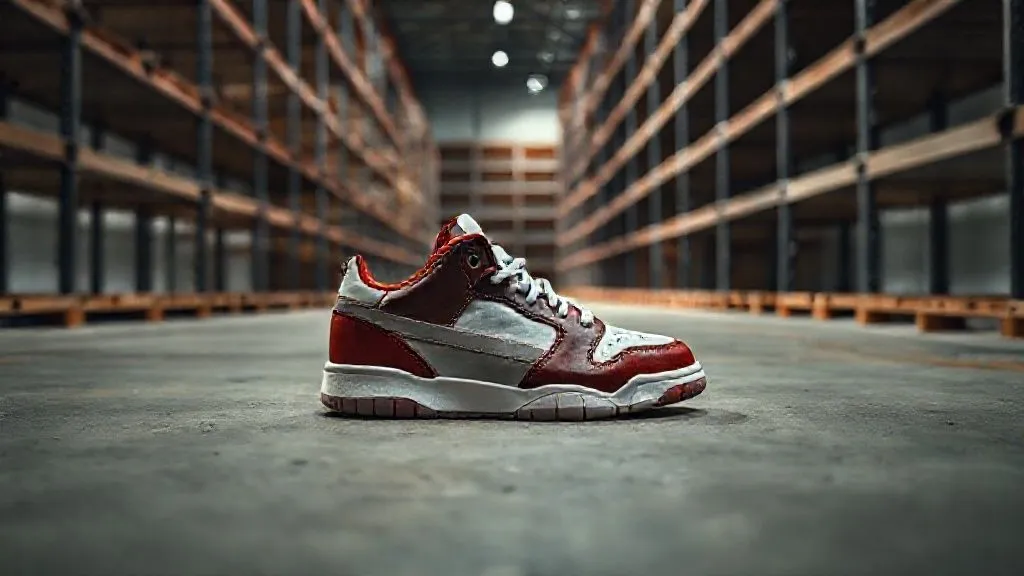
Minimizing Financial Loss from Unsold Hyped Sneaker Inventory?
For over 15 years in the cutthroat world of streetwear and sneaker culture, I've witnessed countless entrepreneurs, from ambitious individual resellers to established boutiques, ride the exhilarating wave of hype, only to crash hard against the rocks of unsold inventory. It's a tale as old as the industry itself, yet one that continues to catch even seasoned players off guard.
The allure of a quick flip, the promise of astronomical margins on a limited-edition drop, often blinds us to the brutal reality: the sneaker market is fickle, trends are fleeting, and what's 'hyped' today can be 'deadstock' tomorrow. This isn't just about lost profit; it's about tied-up capital, storage costs, brand devaluation, and ultimately, the erosion of a dream. The question isn't if you'll face unsold inventory, but how effectively you can navigate the fallout.
In this definitive guide, I'll draw upon my extensive experience to provide a robust framework for minimizing financial loss from unsold hyped sneaker inventory. We'll delve into proactive market intelligence, strategic sourcing, dynamic pricing, and innovative liquidation channels, all supported by actionable steps, a realistic case study, and insights from industry leaders. My goal is to equip you with the knowledge to transform potential losses into strategic learning, ensuring your sneaker business not only survives but thrives in this unpredictable landscape.
Understanding the "Hype Cycle" and its Pitfalls
The sneaker industry operates on a unique rhythm, a pulsating 'hype cycle' driven by scarcity, celebrity endorsements, and social media virality. As an industry specialist, I've seen this cycle both create overnight millionaires and leave others drowning in unsellable stock. Understanding its mechanics is the first critical step in minimizing financial loss from unsold hyped sneaker inventory.
The Anatomy of Sneaker Hype
Hype isn't accidental; it's meticulously engineered. It begins with whispers, leaks, and cryptic social media posts, building anticipation months before a drop. Then comes the official announcement, often tied to a cultural moment or a high-profile collaboration, followed by limited distribution channels – raffles, shock drops, exclusive boutique releases. The scarcity fuels demand, creating a secondary market where prices can skyrocket. But here’s the rub: this engineered scarcity often masks the true, sustainable demand.
Why Hype Can Turn Toxic for Inventory
The intoxicating rush of a successful flip can lead to irrational exuberance. Retailers, eager to capitalize, over-order or speculate heavily on projected resale values. They might secure allocations based on past successes, only for the market sentiment to shift. A slight change in trend, an oversupply by a major manufacturer, or even a sudden economic downturn can instantly deflate the bubble. What was once a 'must-have' becomes a 'can't-move-it.' I've witnessed countless businesses fall into this trap, holding vast quantities of stock that, while once desirable, now sit gathering dust, eating into precious capital and storage space. The perceived value plummets, and the cost of holding that inventory begins to outweigh any potential future profit, making minimizing financial loss from unsold hyped sneaker inventory an urgent concern.
Proactive Market Intelligence: Beyond the Hype Blogs
Relying solely on social media buzz or industry gossip for inventory decisions is a recipe for disaster. True market intelligence goes deeper, employing data-driven analysis to predict demand and identify genuine trends versus fleeting fads. This is where your financial resilience truly begins.
Leveraging Data Analytics for Demand Forecasting
In my experience, the most successful players use a blend of quantitative and qualitative data. Quantitative data involves tracking historical sales, secondary market prices (StockX, GOAT, etc.), search trends (Google Trends), and social media engagement metrics. Qualitative data comes from understanding community sentiment, listening to forum discussions, and tracking influencer activity. Combining these gives you a far clearer picture.
- Track Resale Price vs. Retail Price: Monitor the immediate aftermarket performance of similar releases. A shoe selling for only 10-20% over retail might not have the long-term staying power you expect.
- Analyze Search Volume & Social Mentions: Spikes in search queries for a specific model or significant social media chatter can indicate genuine interest, but also identify potential saturation points.
- Monitor Release Calendars & Competitor Stock: Understand the broader market. If multiple highly anticipated drops are scheduled concurrently, demand might be fragmented.
- Segment Your Audience Data: Understand what your specific customer base truly wants, not just what the general market is hyping.
According to a study by Deloitte, retailers who leverage advanced analytics for demand forecasting can improve forecast accuracy by 20-30%, directly impacting inventory efficiency. This precision is invaluable when trying to minimize financial loss from unsold hyped sneaker inventory.

Understanding Micro-Trends and Niche Markets
Beyond the mainstream hype, there are vibrant micro-trends and niche communities. Perhaps a specific silhouette is gaining traction in a regional market, or a particular colorway is beloved by a dedicated sub-group. These smaller, more stable demands can offer safer inventory bets than chasing the next global blockbuster. Diversifying your inventory to include these steady performers alongside a calculated risk on hype can stabilize your overall financial health.
"The biggest risk is not taking any risk... In a world that's changing really quickly, the only strategy that is guaranteed to fail is not taking risks." - Mark Zuckerberg. While true, smart risk mitigation is key, especially in high-volatility markets like hyped sneakers.
Strategic Sourcing and Allocation: The Art of Precision Buys
Once you have a clearer picture of demand, the next challenge is acquiring the right stock in the right quantities. Over-ordering is the primary culprit behind unsold inventory. This requires discipline and a willingness to walk away from deals that don't align with your data.
Pre-Orders and Reservation Systems
One of the most effective ways to mitigate risk is to shift some of it onto the consumer. Implementing a robust pre-order or reservation system for highly anticipated drops allows you to gauge genuine demand before committing significant capital. This isn't always feasible for every retailer or every drop, but where possible, it's a powerful tool.
- Gated Access for Loyal Customers: Offer early pre-order access to your most loyal customers. This rewards them and gives you an initial demand signal.
- Deposit-Based Reservations: Require a non-refundable deposit for reservations. This filters out speculative buyers and confirms serious intent.
- Limited Pre-Order Windows: Create urgency with short pre-order periods, ensuring quick commitment.
Diversifying Your Supply Chains and Allocation Strategy
Don't put all your eggs in one basket. Relying on a single distributor or a single type of allocation (e.g., only raffles) can leave you vulnerable. Explore different sourcing avenues: direct-to-consumer programs from brands, trusted wholesale accounts, and even selective buying from reputable individual sellers for certain highly limited items. Furthermore, be strategic about how you allocate your budget across different hype tiers. A sensible approach might be to allocate a smaller percentage of your capital to ultra-hyped, high-risk items, and a larger portion to consistently performing, moderately hyped releases.
| Strategy | Risk Mitigation | Best For |
|---|---|---|
| Pre-Order System | Confirms demand before capital commitment | High-hype, limited releases |
| Diversified Sourcing | Reduces reliance on single channel, access to varied stock | Consistent inventory flow, niche finds |
| Dynamic Allocation | Balances risk across hype tiers | Overall portfolio health |
Dynamic Pricing Strategies for Shifting Markets
The price you set for a hyped sneaker isn't static. It's a living entity that needs to adapt to market conditions. Holding onto a declining asset at its original price is a surefire way to guarantee financial loss. Dynamic pricing is about flexibility and speed.
Implementing Algorithm-Driven Pricing
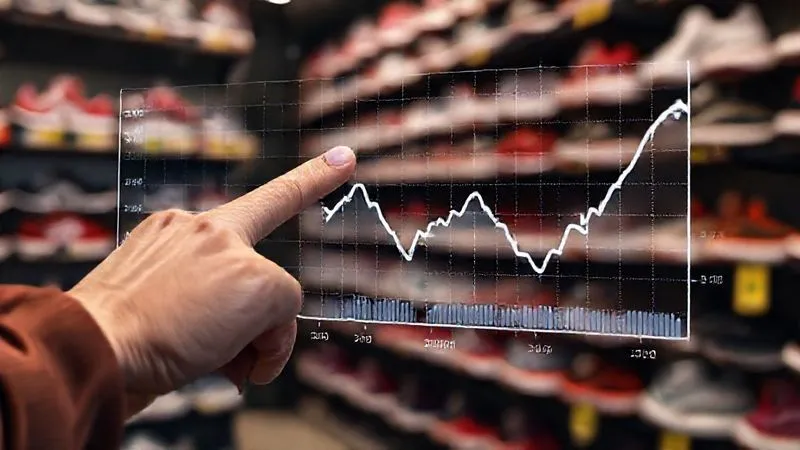
For larger operations, consider tools or developing algorithms that monitor real-time market data (resale platforms, competitor pricing, inventory levels) and adjust your prices accordingly. This isn't about panic selling; it's about intelligent adaptation. If a shoe's resale value is trending down, a small, early price adjustment can prevent a much larger write-off later.
For smaller businesses, this might mean manually checking key platforms daily or weekly and being prepared to lower prices proactively. The goal is to find the equilibrium point where you move stock without incurring excessive losses. Remember, the cost of holding unsold inventory (storage, insurance, opportunity cost) can quickly outweigh a slight reduction in selling price.
The Power of Flash Sales and Bundles
When you identify stock that's moving slowly, don't be afraid to create urgency. Flash sales, limited-time discounts, or bundling less popular items with a moderately hyped sneaker can stimulate sales. The key is to position these as exclusive opportunities, not desperate attempts to clear stock. For instance, offering a 'mystery box' where one item is guaranteed to be a desirable (but perhaps slightly older) hyped sneaker, bundled with other accessories or apparel, can be very effective.
"Price is what you pay. Value is what you get." - Warren Buffett. Your challenge is to redefine the value proposition for your unsold inventory, even if it means adjusting the price.
Effective Liquidation Channels: Turning Deadstock into Dollars
Despite best efforts, you will inevitably face unsold inventory. The true mark of an experienced specialist is not avoiding deadstock entirely, but having a robust strategy for minimizing financial loss from unsold hyped sneaker inventory when it occurs. Think of liquidation not as failure, but as a strategic pivot.
Consignment vs. Direct Sale Platforms
You have options when it comes to offloading deadstock. Consignment platforms (like certain sections of GOAT or local boutiques) allow you to list items without upfront costs, taking a percentage only upon sale. This preserves capital but can mean slower sales and higher fees. Direct sale platforms (eBay, StockX, Facebook Marketplace) offer quicker transactions but require more active management and often higher selling fees or shipping costs. Evaluate each item's potential value, urgency, and the associated costs before choosing a channel. For lower-value items, direct sales might be more efficient; for higher-value, slower movers, consignment offers less risk.
International Markets and Niche Buyers
Don't limit yourself to your immediate geographical market. What's 'deadstock' in North America might be highly sought-after in parts of Asia, Europe, or other emerging markets where trends and availability differ. Explore international shipping options or work with global consignment partners. Similarly, consider niche buyers – collectors looking for specific sizes, vintage enthusiasts, or even customizers who might repurpose the sneakers.
Case Study: How "Sole Savvy" Reduced Deadstock by 40%
Sole Savvy, a mid-sized sneaker boutique, found itself with significant capital tied up in a wave of hyped releases that underperformed in their local market. Instead of slashing prices across the board, their owner, Marcus, implemented a multi-pronged liquidation strategy. First, he identified the top 20% of his deadstock by original value and listed them on international consignment platforms, targeting markets where those models still held appeal. For the next 30%, he ran targeted flash sales on his website, bundling them with popular apparel items or offering free expedited shipping. The remaining 50% of lower-value, older deadstock was offered to a local sneaker customizer at a deep discount, who then transformed them into unique pieces, creating a win-win. By strategically segmenting his inventory and utilizing diverse channels, Sole Savvy managed to reduce their deadstock by 40% within three months, freeing up capital and avoiding massive write-offs.
This example perfectly illustrates that minimizing financial loss from unsold hyped sneaker inventory requires creativity and a flexible approach.
Harvard Business Review emphasizes that effective inventory management is a continuous process of adaptation, not a one-time fix.Building Community and Brand Loyalty: A Long-Term Shield
While the immediate focus is on moving unsold stock, a long-term strategy involves building a resilient business that can better withstand market fluctuations. A strong community and loyal customer base are your best defense against the capriciousness of hype.
Exclusive Member Drops and Early Access
Reward your loyal customers. Offer them exclusive access to certain releases, early purchasing windows, or members-only discounts. This fosters a sense of belonging and ensures a dedicated audience for your products. When you have a release that might not be a blockbuster, your community is more likely to support you, providing a baseline of demand.
Engaging Content and Storytelling
Don't just sell shoes; sell a story, a lifestyle, a culture. Create engaging content – blog posts, videos, social media campaigns – that resonate with your audience. Share the history of a shoe, the inspiration behind a collaboration, or the personal stories of collectors. This deepens engagement and builds brand affinity, making your customers less susceptible to fleeting trends and more loyal to your curation.
Financial Prudence: Setting Realistic Expectations and Budgets
At the end of the day, minimizing financial loss from unsold hyped sneaker inventory boils down to sound financial management. It’s not just about what you sell, but how you manage your capital and understand your true costs.
Calculating True Holding Costs
Many entrepreneurs underestimate the true cost of holding inventory. It's not just the purchase price. Consider:
- Storage Costs: Rent for warehouse space, shelving, climate control.
- Insurance: Protecting your valuable assets.
- Opportunity Cost: The capital tied up in deadstock could be invested elsewhere, earning returns.
- Depreciation/Devaluation: The market value of hyped sneakers can drop rapidly.
- Labor Costs: Time spent managing, moving, and eventually liquidating unsold stock.
By accurately calculating these costs, you can make more informed decisions about when to hold and when to liquidate. Sometimes, taking a smaller loss early is financially smarter than holding out for a mythical rebound.
Establishing a "Loss Mitigation" Fund
Consider setting aside a small percentage of your profits into a dedicated 'loss mitigation' or 'deadstock buffer' fund. This fund can be used to absorb the costs associated with liquidating underperforming inventory, allowing you to act swiftly without impacting your core operating budget. It's a proactive measure that recognizes the inherent volatility of the hyped sneaker market.

The Future of Sneaker Retail: Adaptability and Innovation
The sneaker market is constantly evolving. Staying ahead of the curve means embracing innovation and being adaptable. The strategies for minimizing financial loss from unsold hyped sneaker inventory today might look different tomorrow.
Web3, NFTs, and Digital Collectibles
The rise of Web3, NFTs, and digital collectibles presents both new challenges and opportunities. Virtual sneakers and digital assets might reduce the physical inventory burden, while also creating new avenues for brands to engage with consumers and for collectors to display their passion. Understanding this emerging landscape is crucial for future-proofing your business.
Sustainable Practices and Upcycling
Consumers are increasingly demanding sustainability. Embracing eco-friendly practices, exploring upcycling programs for deadstock materials, or partnering with artists for custom reworkings can not only reduce waste but also create unique, desirable products that resonate with a conscious consumer base. This transforms a potential liability into a brand-building asset.
Forbes highlights how AI and emerging technologies are reshaping retail, underscoring the need for constant adaptation.Frequently Asked Questions (FAQ)
Q: What's the biggest mistake retailers make with hyped sneaker inventory? The biggest mistake I've observed is emotional buying and failing to differentiate between genuine, sustainable demand and manufactured, fleeting hype. Retailers often over-commit based on fear of missing out (FOMO) rather than solid data, leading to an abundance of unsold stock when the hype inevitably deflates.
Q: How can small businesses compete with larger retailers for hyped drops without incurring huge risks? Small businesses should focus on niche markets, building strong local communities, and leveraging pre-order systems. Instead of trying to out-muscle large retailers for every major drop, selectively target releases that resonate deeply with your specific audience. Consignment models and strategic partnerships can also help mitigate upfront capital risk.
Q: Is it ever better to hold onto deadstock sneakers for a potential future rebound? While some ultra-rare sneakers do appreciate over time, this is the exception, not the rule. Holding costs (storage, insurance, opportunity cost of capital) often outweigh potential future gains for most deadstock. In my experience, it's generally better to take a calculated loss early, free up capital, and reinvest in current, liquid inventory. Assess each item individually, but err on the side of swift liquidation for the majority.
Q: How do I accurately forecast demand in such a volatile market? Accurate forecasting requires a multi-faceted approach. Combine historical sales data, real-time secondary market prices, social media sentiment analysis, and search trend data. Importantly, don't just look at global trends; understand the specific demand within your customer base. Tools for predictive analytics can significantly enhance accuracy, but human insight and market intuition remain vital.
Q: What role does brand reputation play in managing unsold inventory? A strong brand reputation and loyal customer base are invaluable assets. Customers are more likely to trust your curation, participate in your pre-orders, and even accept well-executed flash sales if they have a positive relationship with your brand. Conversely, a reputation for constantly having 'fire sales' can devalue your brand over time. Transparency and integrity in your pricing and sales strategies are key.
Key Takeaways and Final Thoughts
- Data is Your Compass: Move beyond intuition. Leverage market intelligence, analytics, and community sentiment to inform every inventory decision.
- Precision Sourcing: Over-ordering is your enemy. Use pre-orders, diversified supply chains, and strategic allocation to acquire exactly what you need.
- Dynamic Adaptation: The market is fluid. Be prepared to adjust pricing swiftly and utilize diverse liquidation channels to minimize losses.
- Community as Currency: Build loyalty. A strong customer base provides a stable demand foundation, buffering against market volatility.
- Financial Discipline: Understand your true costs. Proactive budgeting and a clear understanding of holding costs are crucial for long-term health.
The world of hyped sneakers will always be thrilling, unpredictable, and ripe with opportunity. But it's also a landscape fraught with potential pitfalls for the unwary. By adopting these expert strategies for minimizing financial loss from unsold hyped sneaker inventory, you're not just reacting to problems; you're building a resilient, adaptable, and ultimately more profitable business. Embrace the challenge, stay informed, and always be ready to pivot. Your success in this dynamic industry depends on it.
Recommended Reading
- 7 Steps: Pivot Your Fashion Blog to Lifestyle Without Losing Readers?
- Mastering Authentication: 5 Steps to Profitable Luxury Vintage Resale
- Location Crisis? 7 Steps When Your Fashion Shoot Venue Fails
- 7 Steps: Translate Abstract Script Themes to Conceptual Costume Design
- 7 Strategies to Drastically Cut Returns from AI Fashion Recommendations





Your email address will not be published. Required fields are marked *