

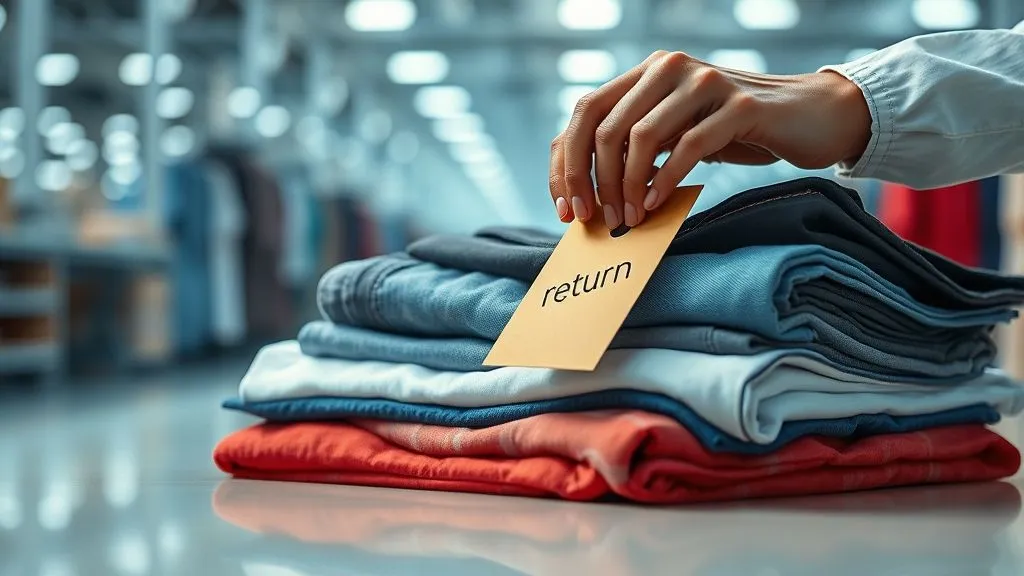
How to lower returns from AI-personalized fashion recommendations?
For over two decades in the dynamic world of fashion technology, I've witnessed firsthand the transformative power of AI in personalizing the shopping experience. Yet, I've also observed a persistent, costly challenge: the frustratingly high rate of returns, even from seemingly "perfect" AI recommendations.
Many retailers pour resources into sophisticated AI engines, only to find their efforts undermined by customers sending back items that looked great on screen but failed in reality. This isn't just about lost sales; it erodes customer trust, inflates operational costs, and ultimately hinders the very promise of personalized fashion.
In this definitive guide, I'll share seven battle-tested strategies to not just mitigate, but drastically lower returns from your AI-personalized fashion recommendations. We'll delve into actionable frameworks, real-world insights, and expert advice to turn your AI into a true revenue driver, not a returns generator.
Elevating Data Quality: The Unsung Hero of Accurate AI
In my experience, the biggest culprit behind poor AI recommendations and subsequent high returns isn't the AI algorithm itself; it's the data feeding it. Garbage in, garbage out – this adage holds profoundly true in personalized fashion, where nuances in fabric, fit, and personal style are paramount.
Many companies rush to implement AI without a robust strategy for data collection, cleaning, and enrichment. Without accurate, comprehensive data on customer preferences, product attributes, and historical interactions, even the most advanced AI will struggle to deliver truly relevant suggestions, leading directly to higher return rates.
"Data is the new oil, but only if it's refined. Unrefined data is just a messy, unusable resource that pollutes your AI."
Actionable Steps for Data Excellence:
- Standardize Product Attributes: Go beyond basic descriptions. Detail fabric composition, stretch, drape, weight, transparency, and specific fit nuances (e.g., "slim fit," "relaxed fit," "true to size"). Use consistent, granular terminology across your entire catalog.
- Enhance Customer Profiles: Collect not just purchase history, but also browsing behavior, wish lists, items saved, returns data, and explicit feedback on fit and style. Consider integrating external data like social media style preferences (with consent) or demographic insights to build a holistic view.
- Leverage User-Generated Content (UGC): Photos and reviews from other customers wearing the garments provide invaluable real-world context on fit, color, and how an item looks on diverse body types. Actively solicit and integrate this data, as it often provides more truth than studio shots.
- Implement Rigorous Data Cleaning Protocols: Regularly audit your product data for inconsistencies, missing values, and outdated information. Automated tools can help, but human oversight is crucial for subjective fashion attributes to ensure accuracy.
- Integrate Returns Data Deeply: Every return is a data point. Categorize return reasons meticulously (e.g., "doesn't fit - too tight in shoulders," "color inaccurate - much brighter than pictured," "material not as expected - too stiff"). This granular feedback is gold for refining AI and preventing future mismatches.

Beyond Aesthetics: Integrating Fit, Fabric, and Feel into Recommendations
AI fashion recommendations often excel at visual matching – "if you like this, you'll like that." However, a garment's true appeal extends far beyond its visual aesthetic. Fit, fabric texture, and how an item feels when worn are paramount, and often overlooked by basic recommendation engines, leading to significant disappointment and returns.
I've seen countless instances where a customer loved the look of a dress online, only to return it because the fabric felt scratchy or the fit was completely off for their body type. Addressing these tactile and dimensional aspects is critical for reducing returns and enhancing customer satisfaction.
Advanced Personalization Dimensions:
To truly lower returns from AI-personalized fashion recommendations, your AI needs to understand and predict these non-visual factors:
- Precise Fit Prediction: This is perhaps the most significant factor in returns. Implement advanced sizing tools that go beyond generic size charts. Virtual try-on technologies, 3D body scanning data, and AI-powered fit algorithms that learn from aggregated customer measurements and returns data are essential. According to a Harvard Business Review article, poor fit is a primary driver of returns in e-commerce, underscoring its importance.
- Fabric & Material Intelligence: Customers care deeply about how a fabric drapes, its breathability, stretch, and hand-feel. Tag products with detailed material properties and use natural language processing (NLP) on customer reviews to extract nuanced insights about material satisfaction and dissatisfaction.
- Occasion & Lifestyle Context: A beautiful dress perfect for a formal event might be completely inappropriate for a casual weekend. AI should infer or explicitly ask about the customer's intended use or lifestyle to refine recommendations, ensuring functional relevance.
- Brand-Specific Sizing Nuances: Different brands have different sizing philosophies. Your AI should learn and account for these variations, for example, recommending a "medium" from Brand A but a "large" from Brand B for the same customer, based on historical data.
Case Study: StyleSense's Fit Revolution
Case Study: How StyleSense Reduced Returns by 22% with Enhanced Fit Prediction
StyleSense, a fast-growing online fashion retailer, was grappling with a 25% overall return rate, with "poor fit" cited in over 60% of cases. They realized their AI, while great at style matching, was failing on the most fundamental aspect of apparel. By integrating a sophisticated AI-powered fit prediction tool that used customer-provided measurements, historical purchase data, and detailed garment schematics, they transformed their approach.
The tool not only recommended sizes but also provided a "confidence score" for the fit and highlighted potential areas of concern (e.g., "might be snug in the shoulders"). Within six months, StyleSense saw their overall return rate drop to 19.5%, directly attributing a 22% reduction in fit-related returns to this initiative. Customer satisfaction scores also significantly improved, demonstrating the tangible impact of addressing fit head-on.
The Power of Visual Personalization: Enhancing Virtual Try-On and Styling
While data quality and fit are foundational, the visual presentation of recommended items is equally crucial. Customers need to envision themselves in the clothing realistically. Generic product images, even high-quality ones, often fall short of providing a realistic representation on a diverse range of body types, leading to unmet expectations.
This is where advanced visual personalization technologies, particularly virtual try-on (VTO) and AI-driven styling, come into play. They bridge the gap between a static image and a dynamic, personalized experience, significantly boosting purchase confidence and reducing the likelihood of returns.
Leveraging Advanced Visual Tools:
- Sophisticated Virtual Try-On (VTO): Move beyond simple overlays. Implement VTO solutions that use 3D body models or augmented reality (AR) to realistically drape garments onto a customer's avatar or live camera feed. The key is accuracy in how the fabric falls, stretches, and moves, simulating a true fitting room experience.
- AI-Generated Model Imagery: For products without specific model shots, use AI to generate diverse model images wearing the garment. This helps customers see the item on body types similar to their own, addressing a major blind spot in online shopping and fostering greater inclusivity.
- Personalized Styling Suggestions: Beyond recommending individual items, AI can suggest complete outfits based on a customer's existing wardrobe, style preferences, and occasion. This adds value, helps customers visualize how new pieces integrate into their life, and reduces "what to wear with it" returns.
- Dynamic Product Photography: Utilize interactive 360-degree views, zoom functions, and videos that showcase fabric movement and texture. High-definition detail can reveal nuances that static images cannot, mitigating surprises upon delivery.
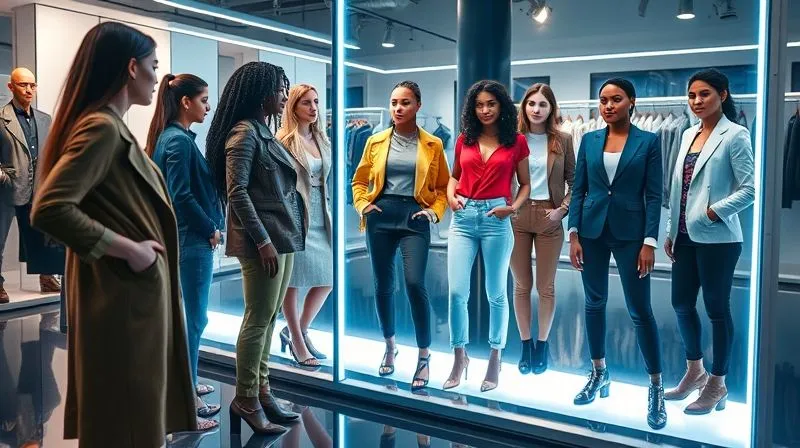
"The ability to 'see' yourself in an outfit before buying it is the closest online retail can get to the fitting room experience. It’s a game-changer for reducing buyer's remorse and boosting satisfaction."
Closing the Feedback Loop: Learning from Every Return
Every returned item is a valuable, albeit costly, data point. Many retailers treat returns as a transactional inconvenience, failing to extract the rich insights they offer. To truly lower returns from AI-personalized fashion recommendations, you must establish a robust feedback loop that feeds return reasons directly back into your AI algorithms and product development.
I've often seen companies collect return reasons but never truly analyze them at scale or integrate them into their recommendation logic. This is a critical missed opportunity that perpetuates the same mistakes and prevents the AI from learning and improving.
Strategies for a Powerful Returns Feedback Loop:
- Granular Return Reason Collection: Move beyond generic "doesn't fit." Provide specific options like "too tight in waist," "too long in arm," "color darker than expected," "fabric too thin," "style not flattering on me." Allow for open-text comments to capture unique insights.
- AI-Powered Sentiment Analysis: Apply NLP to customer comments and reviews (including return feedback) to identify recurring themes and underlying issues related to fit, quality, or style accuracy. This can uncover systemic problems that manual analysis might miss.
- Integrate Returns Data into Recommendation Algorithms: Your AI should learn from negative signals as much as positive ones. If an item is frequently returned for "too small," the AI should adjust its recommendations for similar products to suggest a larger size for customers with similar profiles, or flag potential sizing issues.
- Cross-Functional Collaboration: Ensure that insights from returns data are shared not just with your AI team, but also with merchandising, product design, and marketing. This allows for product improvements, more accurate product descriptions, and better campaign targeting.
- Personalized Post-Return Communication: Use the return reason to personalize future recommendations. If a customer returned an item because the "color was off," the AI should prioritize recommendations with verified color accuracy or offer more visual context to prevent similar issues.
Impact of Returns Data on AI Performance:
Analyzing return reasons can pinpoint specific weaknesses in your recommendation engine or product descriptions. Here's a simplified view of how granular data can inform AI adjustments:
| Return Reason Category | Action for AI | Impact |
|---|---|---|
| Fit (e.g., Too Small) | Adjust sizing recommendations for similar products; cross-reference with body scan data if available. | Reduces fit-related returns |
| Color/Appearance Inaccurate | Prioritize items with multiple customer photos; flag products needing better lighting/photography. | Improves visual accuracy perception |
| Material/Quality Disappointing | Refine product descriptions; integrate more customer reviews on material feel; de-prioritize similar low-rated materials. | Enhances material expectation alignment |
| Style Not As Expected | Review customer style profiles; enhance preference learning from explicit feedback/browsing patterns. | Boosts style relevance |
Proactive Post-Purchase Engagement: Guiding the Customer Journey
The customer journey doesn't end at checkout; it extends through delivery, initial try-on, and potential post-purchase support. Many returns can be prevented with proactive communication and assistance, transforming potential dissatisfaction into satisfaction. This is a crucial, yet often underestimated, step in reducing returns from AI recommendations.
I've seen retailers lose customers not because the product was inherently bad, but because they felt unsupported or confused after the purchase. A little proactive engagement can go a long way in ensuring the AI's recommendation truly sticks and the customer feels valued.
Key Strategies for Post-Purchase Retention:
- Detailed Sizing & Styling Guides: Include clear, easy-to-understand guides with every order confirmation. If a customer bought a dress, suggest accessories or provide tips on how to style it for different occasions, adding value beyond the product itself.
- "How to Care" Instructions: Often, returns are due to perceived quality issues that are actually a lack of proper care. Provide detailed washing, drying, and storage instructions specific to the garment's material to ensure longevity and satisfaction.
- Personalized Fit Check-ins: For high-value items or customers with a history of fit-related returns, send a personalized email a few days after delivery asking about the fit and offering immediate assistance (e.g., "Need a different size? We're here to help!").
- Easy Exchange Options: Make exchanges as frictionless as possible. Sometimes a customer just needs a different size or color of the same item, not a full return. Highlight exchange benefits over returns to retain the sale and customer.
- Prompt Customer Service: Ensure your customer service team is well-informed about AI recommendations and can provide expert advice. Empower them to troubleshoot fit issues, suggest styling alternatives, or facilitate exchanges quickly, turning a potential return into a positive interaction.
Human-in-the-Loop: Blending AI with Expert Styling
While AI is incredibly powerful, it still lacks the nuanced understanding, empathy, and creative flair of a human stylist. In my view, the most successful personalized fashion experiences don't rely solely on machines; they strategically integrate human expertise to refine recommendations and build deeper, more meaningful customer relationships.
This "human-in-the-loop" approach can act as a critical filter, catching potential AI missteps and adding a layer of authenticity that boosts customer confidence, ultimately leading to fewer returns and greater loyalty. It's about augmenting human intelligence, not replacing it.
Implementing a Hybrid AI + Human Model:
- AI-Powered Stylist Tools: Equip human stylists with AI tools that provide initial recommendations, preference analysis, and inventory insights. This allows stylists to be more efficient, focusing their expertise on the subjective, creative aspects and complex customer needs.
- Curated AI Selections: For premium services or high-value customers, allow human stylists to review and refine AI-generated recommendations before they are presented to the customer. They can spot inconsistencies, inject unique style propositions, or suggest more daring, yet appropriate, options.
- Personalized Consultation Services: Offer optional virtual or in-person consultations with stylists. The AI can pre-populate the stylist with the customer's profile and preferences, making the consultation highly efficient, targeted, and deeply personal.
- Feedback Integration from Stylists: Human stylists gather invaluable qualitative feedback during interactions. This feedback should be systematically captured and fed back into the AI to improve its understanding of nuanced preferences, especially those difficult for algorithms to grasp.
- Hybrid Recommendation Models: Develop models where AI handles the heavy lifting of data analysis and pattern recognition, but human stylists provide the final "seal of approval" or inject unique, unexpected options that AI might miss, creating a truly bespoke experience.
As fashion guru Seth Godin often says, "People don't buy goods and services. They buy relations, stories, and magic." A human touch adds that indispensable magic to AI-driven personalization, further helping to lower returns from AI-personalized fashion recommendations.
A/B Testing and Iterative Optimization: The Path to Continuous Improvement
The journey to lower returns from AI-personalized fashion recommendations is not a one-time fix; it's an ongoing process of experimentation, learning, and refinement. What works for one segment of your audience or one product category might not work for another. Continuous A/B testing and iterative optimization are essential for sustained success.
I've seen companies implement an AI system, launch it, and then assume their work is done. This static approach inevitably leads to diminishing returns and missed opportunities for improvement. The fashion landscape, customer preferences, and even body shapes evolve, and your AI must evolve with them.
Establishing a Culture of Continuous Optimization:
- Define Clear Metrics: Beyond just the overall return rate, track specific return reasons, customer satisfaction scores related to recommendations, conversion rates of recommended items, and average order value. This provides a holistic view of impact.
- Isolate Variables for A/B Testing: Test different recommendation algorithms, variations in product presentation (e.g., more model images vs. VTO), different phrasing in product descriptions, and varying levels of human intervention. Test one change at a time to clearly identify its impact.
- Segment Your Audience: A/B test strategies across different customer segments (e.g., new customers vs. loyal, different age groups, different style preferences) to identify what resonates best with each, ensuring highly targeted improvements.
- Analyze Results Rigorously: Don't just look at the overall return rate. Dive into which specific recommendations or product types saw a change in returns. Use statistical significance to validate your findings and ensure decisions are data-driven.
- Implement Learnings Systematically: Once a successful test is identified, integrate those learnings back into your AI model, product data strategy, or customer experience protocols. This ensures continuous improvement across the entire customer journey.
- Stay Abreast of Tech Advancements: The field of AI and fashion tech is constantly evolving. Regularly research new fit technologies, recommendation algorithms, and visual personalization tools. Keep your systems modern and competitive to maintain an edge.
According to a Deloitte study on AI in retail, continuous optimization is key to unlocking the full potential of AI-driven personalization, particularly in managing returns. It's an investment that pays dividends.
Frequently Asked Questions (FAQ)
Q: Is it possible to eliminate returns entirely with AI? A: While the goal is to significantly reduce returns, eliminating them entirely is an unrealistic expectation in fashion retail. Fashion is highly subjective, and factors like personal fit preferences, perceived color differences, and even mood can influence a return. The aim of AI is to minimize preventable returns by improving accuracy and managing expectations, not to achieve zero returns.
Q: How quickly can I expect to see a reduction in returns after implementing these strategies? A: The timeline varies depending on your current systems, data quality, and the scale of implementation. You might see initial improvements within 3-6 months, especially from quick wins like enhanced data quality or more granular return reason collection. More complex integrations like advanced virtual try-on or sophisticated fit prediction might take 9-18 months to show their full impact as the AI learns and optimizes over time.
Q: What's the most impactful strategy for a smaller retailer with limited resources? A: For smaller retailers, I'd recommend starting with foundational data quality improvements and a robust feedback loop. Focus on meticulously categorizing return reasons and using that data to refine your product descriptions and basic recommendation rules. Leveraging user-generated content effectively can also provide significant value without requiring massive tech investments. These steps offer high ROI for relatively low cost.
Q: How do I measure the ROI of investing in advanced AI fit prediction or VTO? A: Measuring ROI involves tracking several key metrics. The most direct is the reduction in return rates and associated costs (shipping, processing, restocking). Also, monitor improvements in conversion rates for recommended items, average order value, customer lifetime value (CLV), and customer satisfaction scores. A comprehensive analysis will show the financial and brand benefits, going beyond just immediate cost savings.
Q: Won't adding more data collection points annoy customers? A: This is a valid concern. The key is transparency and perceived value. Clearly explain "why" you're asking for information (e.g., "Help us find your perfect fit!"). Make data entry easy, optional where possible, and gamified. When customers see that providing data leads to genuinely better recommendations and fewer returns for them, they are far more willing to share. Focus on a seamless, low-friction experience that benefits them directly.
Key Takeaways and Final Thoughts
Navigating the complexities of AI-personalized fashion recommendations to lower returns is a multifaceted challenge, but one that offers immense rewards. By adopting a holistic, data-driven, and customer-centric approach, you can transform your returns problem into a powerful engine for customer satisfaction and profitability.
- Data is Paramount: Invest in superior data quality, going beyond basic attributes to include fit, fabric, and granular return reasons for a more intelligent AI.
- Embrace Advanced Visuals: Leverage virtual try-on and AI-generated imagery to help customers truly visualize products on themselves, reducing uncertainty.
- Close the Loop: Learn from every return and feed those insights directly back into your AI and product strategy for continuous improvement.
- Proactive Engagement: Guide customers post-purchase with helpful information and easy exchange options to prevent preventable returns.
- Human Touch Matters: Blend AI's efficiency with human stylists' empathy and expertise to create truly personalized and trustworthy experiences.
- Iterate Constantly: A/B test and optimize relentlessly; the fashion landscape is always changing, and your AI must evolve with it.
The future of fashion retail isn't just about making recommendations; it's about making the right recommendations that delight customers and build lasting loyalty. By implementing these strategies, you're not just lowering returns; you're building a more intelligent, responsive, and ultimately more successful fashion business. It's time to make your AI work for you, not against your bottom line, and forge stronger connections with your customers.
Recommended Reading
- 7 Ways to Spot True Luxury Investment Pieces vs. Overrated Trends
- Unlock Hidden Gems: Your Guide to Scouting Unique Fashion Photography Locations
- Unlock the Secret: Tips for Long-Lasting Professional Stage Makeup?
- 7 Essential Strategies: Differentiate Your New Womenswear Accessories Brand
- 7 Proven Strategies: Halting Fast Fashion's Replication of Couture Designs




Your email address will not be published. Required fields are marked *