

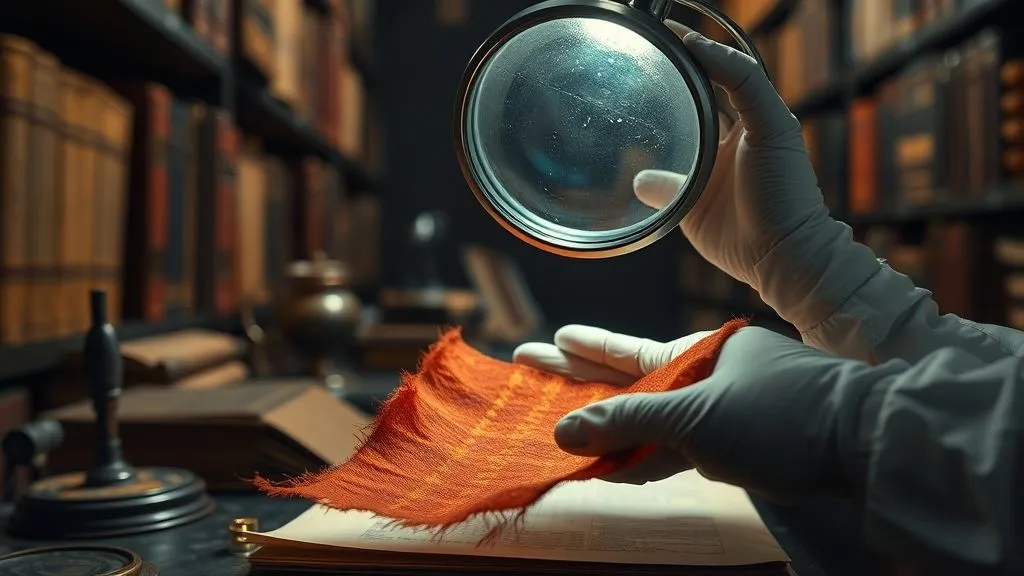
How to Verify Obscure 18th-Century Fabric Dyes for Costume Accuracy?
For over two decades in the demanding world of costume design, I've witnessed the profound impact—and occasional embarrassment—that historical inaccuracy can inflict on a production. One of the most persistent and challenging hurdles we face isn't the cut of a gown or the style of a wig, but the subtle, yet critical, nuance of color: specifically, how to verify obscure 18th-century fabric dyes for costume accuracy.
The problem is pervasive. You’re tasked with recreating a garment from a portrait, a diary entry, or a museum piece, and the exact shade, the very soul of the fabric, eludes you. The records are scarce, the original textiles are faded, and the temptation to 'interpret' can be overwhelming. This isn't just about getting a color 'close enough'; it's about honoring the past, understanding the social, economic, and chemical realities that shaped the clothes of the era.
In this definitive guide, I will share the strategies, both traditional and cutting-edge, that I and my colleagues employ to navigate this complex landscape. We’ll delve into the foundational knowledge of 18th-century dyeing, explore meticulous archival research, hone your visual analysis skills, and embrace the precision of modern scientific techniques. You'll learn not just what to look for, but how to build a robust methodology to achieve unparalleled authenticity in your historical costume work.
Understanding the 18th-Century Dye Landscape: A Foundation
Before we can verify, we must first understand the canvas upon which 18th-century dyers worked. The era was a fascinating crossroads of ancient traditions and burgeoning scientific inquiry, impacting everything from the availability of color to its social significance.
The Shift from Natural to Early Synthetic
The 18th century was predominantly an era of natural dyes. Madder for reds, indigo for blues, weld and fustic for yellows, cochineal for vibrant crimsons, and various barks, nuts, and insects formed the primary palette. However, the seeds of synthetic dyes were being sown. Prussian blue, discovered in the early 1700s, was one of the first synthetic pigments to gain widespread use, offering a depth of blue previously difficult to achieve with indigo alone. Understanding this transition is crucial, as it broadens the spectrum of possibilities for your research.
Common Dye Sources and Their Limitations
Each natural dye came with its own set of characteristics and limitations. Indigo, for example, required a complex fermentation vat process and could produce a range from pale sky blue to deep navy. Madder's reds varied based on the mordant used – alum for brick reds, iron for purplish-browns. These dyes were often fugitive, meaning they faded with light exposure, and their stability varied. Pigments like vermilion (mercuric sulfide) or lead white, while not true dyes, were used in paints and printing on textiles, and their presence can complicate analysis. Knowing these inherent properties helps manage expectations and interpret faded samples.
Understanding the palette of the past is not just about color; it's about chemistry, economy, and social status. A vibrant scarlet from cochineal was a mark of immense wealth, while more subdued earth tones might indicate practicality or regional availability.
Archival Deep Dive: Unearthing Primary Sources
My first port of call for any challenging dye verification is always the archives. This is where the true stories of color are hidden, waiting to be rediscovered by those willing to dig.
Consulting Period Texts and Dye Books
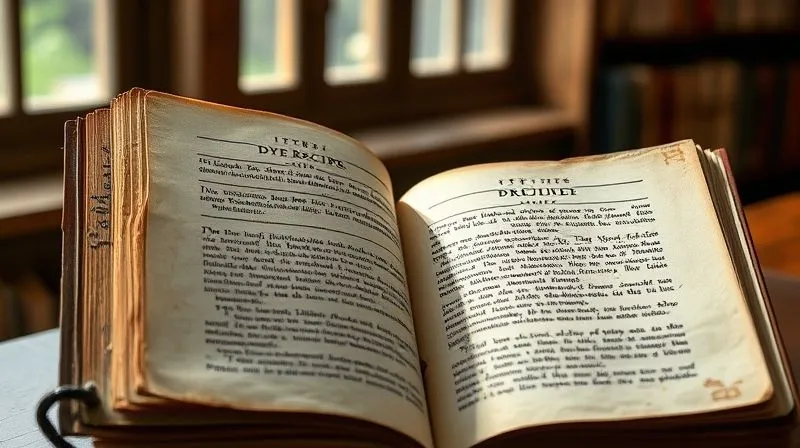
The 18th century saw a rise in printed technical manuals, including those dedicated to dyeing. Works like Diderot's Encyclopédie, with its detailed plates and descriptions of industrial processes, or specialized dye recipe books from England, France, or Germany, are invaluable. These texts often provide precise instructions for preparing dyes, mordants, and even the types of fibers they were used on. They can reveal not just the colors achieved, but the specific processes that influenced their final appearance and durability. For example, a recipe might specify repeated dips in an indigo vat to achieve a deeper blue, or the addition of iron salts to madder to shift its hue.
Local guild records, merchant ledgers, and even personal correspondence can offer clues about what dyes were available, imported, or favored in certain regions or by specific social classes. These documents provide a socio-economic context that enriches our understanding of period color choices.
Examining Museum Collections and Inventories
Museums are treasure troves. Institutions like the Victoria and Albert Museum or the Metropolitan Museum of Art hold vast collections of 18th-century textiles and garments. While direct physical analysis might be restricted, careful visual study of well-preserved examples, combined with their provenance and conservation reports, can offer crucial comparative data. Many museums also have detailed digital archives accessible online, which can be a starting point for identifying similar pieces and their known dye compositions. Additionally, looking at inventories from estates or textile merchants can indicate the prevalence and perceived value of certain dyed fabrics.
Visual Analysis: The Art of Observation
Beyond the written word, the most immediate tool at our disposal is our own trained eye. Visual analysis, while subjective, forms the critical first layer of verification.
Training Your Eye: Color Theory and Historical Palettes
Developing an acute sense of historical color is paramount. This involves immersing yourself in period art, studying fashion plates, and observing how colors interact in authentic 18th-century contexts. Understand that the 'red' of the 18th century was not a single, standardized hue. It encompassed madder reds, cochineal crimsons, and even some early synthetic approximations. Learn to identify the subtle undertones – the blue in a green, the yellow in a red – that characterize natural dyes.
Challenges of Fading and Patina
The biggest challenge in visual analysis is the inevitable fading and degradation of historical textiles. Exposure to light, air, and pollutants over centuries changes colors dramatically. What appears to be a dull brown today might have been a vibrant purple in the 1700s. Look for areas of less exposure, such as under seams, in folds, or where garments were lined, to get a glimpse of the original color. Consider the fabric's overall patina and how age has altered its appearance.
- Step 1: Compare against verified swatches. If possible, obtain or create historically accurate dye swatches to compare side-by-side with your target color. This helps calibrate your eye.
- Step 2: Observe color undertones. Natural dyes often have complex undertones. For instance, an indigo blue might have a slight reddish cast, while a woad blue could lean greener.
- Step 3: Analyze texture and weave for dye penetration. Examine how evenly the dye has penetrated the fibers. Natural dyes, especially early ones, might show more variation or unevenness compared to modern synthetic dyes.
Scientific Scrutiny: Modern Techniques for Ancient Colors
While invaluable, visual and archival research can only take us so far. For definitive answers, especially concerning obscure dyes, we must turn to scientific analysis. This is where the real magic happens, transforming guesswork into verifiable data.
Non-Destructive vs. Destructive Analysis
The first consideration is always the sample itself. Is it a priceless museum artifact or a small, expendable fiber from a reproduction? Non-destructive techniques are preferred for valuable originals, as they leave the sample intact. These include micro-spectrophotometry and X-ray fluorescence (XRF). Destructive analysis, such as High-Performance Liquid Chromatography (HPLC), requires a tiny sample to be taken, but offers the most precise identification of organic dye molecules.
Key Analytical Methods: HPLC, FTIR, and Micro-Spectrophotometry
- High-Performance Liquid Chromatography (HPLC): This is the gold standard for identifying organic dyes. A minuscule fiber sample is extracted, the dye molecules are separated, and their unique chemical 'fingerprint' is identified against a database of known historical dyes. HPLC can distinguish between different types of madder, cochineal, or indigo, even in complex mixtures.
- Fourier-Transform Infrared Spectroscopy (FTIR): FTIR provides information about the chemical bonds present in a material. While not always able to pinpoint a specific dye, it can differentiate between major dye classes (e.g., flavonoid yellows vs. anthraquinone reds) and identify mordants. It's often non-destructive when performed on the surface.
- Micro-Spectrophotometry: This non-destructive technique measures the reflectance or transmittance spectrum of a single fiber. It's excellent for color matching and identifying broad categories of dyes based on their spectral signatures, and for quantifying color changes due to fading.
- Raman Spectroscopy: Another powerful non-destructive technique, Raman can identify specific pigments and, in some cases, organic dyes by analyzing molecular vibrations. It's particularly useful for identifying inorganic pigments used in textile printing.
Access to these labs can be challenging, but many textile conservation departments in major museums or university chemistry departments offer such services or can recommend specialists. For instance, research conducted at institutions like the Getty Conservation Institute often publishes findings on historical dye analysis, showcasing the depth of these methods.
Building a Reference Library: Your Personal Dye Database
Over my career, I've found that one of the most powerful tools is a meticulously curated personal reference library. This isn't just a collection of books; it's a living archive of color.
Creating a Physical Swatch Collection
This is where theory meets practice. Begin by dyeing your own samples using historically accurate methods and natural dyes. Create swatches of madder (with various mordants), indigo, weld, cochineal, fustic, logwood, etc., on different fiber types (linen, wool, silk). Document everything: dye source, mordant, fiber, date, and any known historical context. Label them meticulously. This physical library becomes your tangible benchmark for visual comparison and understanding the nuances of how these dyes behave.
Digital Documentation and Metadata
Complement your physical swatches with a digital database. Photograph each swatch under consistent lighting conditions. Record all associated metadata: scientific analysis results (if available), historical references, and even notes on the dye's lightfastness over time. This digital archive allows for quick searches and comparisons, especially when working remotely or sharing information with a team. I often include high-resolution scans of period fabric samples, noting any visible signs of fading or degradation.
| Dye Source | 18th-C Use | Verification Method | Notes |
|---|---|---|---|
| Madder | Reds, Oranges, Pinks | HPLC, Visual | Common, wide range of shades based on mordant and region |
| Indigo | Blues | FTIR, Visual | Varying intensity, often combined with yellow dyes for greens |
| Cochineal | Crimson, Scarlet | HPLC, Micro-Spectro | Expensive, high status, characteristic purplish undertone |
| Weld | Bright Yellows | HPLC, Visual | Excellent lightfastness, often used with indigo for greens |
| Logwood | Purples, Blacks | HPLC, FTIR | Can be fugitive, often used with iron mordants |
Collaborating with Experts: The Power of the Network
No costume designer is an island. The most intricate dye verification challenges often require a multidisciplinary approach, drawing on the knowledge of specialists in various fields.
When to Consult a Textile Conservator
Textile conservators are paramount when dealing with original historical garments. They possess an intimate understanding of fabric degradation, dye stability, and the ethical considerations of handling delicate artifacts. They can advise on the feasibility of sampling, interpret scientific results in a historical context, and guide you on best practices for visual examination without causing damage. Their expertise ensures that any interaction with historical textiles is respectful and informed.
Engaging with Academic Historians and Chemists
Academic historians specializing in material culture or 18th-century trade can provide invaluable context for dye availability, regional preferences, and socio-economic factors influencing color use. Textile chemists, on the other hand, are the experts in the molecular structure of dyes. They can perform the detailed analyses (HPLC, FTIR) and interpret the complex scientific data, identifying specific dye compounds and their degradation products. I've often found myself on the phone with a university chemist, discussing the nuances of an HPLC chromatogram, and those conversations are always enlightening.
Case Study: The 'Veridian Veil' Project
I once consulted on a period drama requiring an extremely specific shade of green for a noblewoman's veil, documented only vaguely in a letter from 1762. The letter described it as a 'veridian green, like the moss on ancient stones.' Traditional research yielded no definitive dye combination that perfectly matched this poetic description. By collaborating with a textile chemist, we performed micro-analysis on a tiny fiber from a verified period garment in a similar, albeit faded, shade found in a private collection. The results pointed to a rare combination of weld (for yellow) and indigo (for blue), applied in specific ratios, and then subtly modified with a very dilute iron mordant to achieve that 'mossy' undertone. This allowed us to recreate the exact hue and luminosity, bringing unparalleled authenticity to the costume. This project underscored the critical role of interdisciplinary collaboration in solving seemingly intractable historical dye mysteries.
Addressing Ethical Considerations and Limitations
As experts in historical accuracy, we carry a significant responsibility. Our pursuit of authentic dyes must always be tempered by ethical considerations and an acknowledgment of inherent limitations.
Replicating vs. Authenticating
It's crucial to distinguish between replicating a historical dye and authenticating an existing historical textile. When replicating for a costume, we aim for the closest possible match, using modern materials and methods informed by historical research. When authenticating an original, our goal is to understand its true composition without compromising its integrity. The former allows for creative interpretation within historical parameters; the latter demands rigorous scientific and archival fidelity.
The Imperfection of Historical Records
We must accept that historical records are often incomplete, subjective, or even misleading. Dye recipes were often guarded secrets, passed down orally or written in coded language. Colors were described poetically rather than scientifically. Furthermore, the raw materials themselves varied greatly by region and season. This means that sometimes, absolute certainty is impossible. Our role is to build the strongest possible case using all available evidence, acknowledging where gaps exist.
Integrating Research into Costume Design Practice
All this meticulous research culminates in the practical application: bringing the verified colors to life on stage or screen. This integration requires a systematic approach.
From Research to Dye Bath: Practical Application
Once you have identified the likely dye source and method, the next step is replication. This involves sourcing appropriate natural dyes (or their modern, historically accurate equivalents), understanding mordanting techniques, and conducting test swatches on your chosen fabrics. Remember that modern fibers and water sources can react differently than 18th-century ones, so iterative testing is essential. Document every step, every ratio, every immersion time. This iterative process of testing, comparing, and refining is where the art of dyeing truly meets the science of historical accuracy.
Educating Your Team on Historical Accuracy
A costume designer rarely works alone. It's vital to communicate your findings and the rationale behind your color choices to your entire team – drapers, cutters, dyers, and even the director. Explain the historical significance of a particular shade or the challenges involved in achieving it. This fosters a shared understanding and appreciation for the level of authenticity you are striving for, ensuring everyone is working towards the same meticulously researched vision.
| Research Phase | Outcome | Impact on Design |
|---|---|---|
| Archival Deep Dive | Primary sources, dye recipes, social context | Informed color palette, material choices, understanding of status |
| Scientific Analysis | Chemical composition of dyes, mordants | Accurate dye replication, material sourcing, understanding of lightfastness |
| Visual Comparison | Color matching, aging effects, undertone identification | Refined shades, weathering details, visual authenticity |
| Expert Collaboration | Interdisciplinary insights, validated findings | Confidence in choices, solutions to complex problems, enhanced credibility |
Frequently Asked Questions (FAQ)
How do I start if I have no access to a specialized lab for scientific analysis? Begin with thorough archival research and visual analysis. Many historical institutions have digitized resources. Reach out to university textile or chemistry departments; some may offer pro-bono advice or services for research projects, especially if there's an academic interest. Building your own physical dye swatch library is also a powerful, accessible first step.
What if the original fabric is too degraded for reliable analysis? This is a common challenge. In such cases, you rely heavily on indirect evidence. Look for less exposed areas of the fabric, compare it with contemporary descriptions and paintings, and cross-reference with known dye capabilities of the era. Scientific analysis might still yield results for residual dye molecules, even in a degraded state, but requires careful interpretation. Sometimes, the 'obscure' nature means accepting a degree of educated estimation, supported by the strongest possible contextual evidence.
Are there any common misconceptions about 18th-century dyes? Absolutely. A major one is believing that all 18th-century colors were dull or muted; vibrant colors were achievable, though often expensive. Another is assuming a dye always produced a single hue; mordants and dye bath conditions created a spectrum of shades. Also, the idea that 'natural' automatically equals 'eco-friendly' in the historical context overlooks the often toxic mordants (like heavy metals) used.
How much 'artistic license' is acceptable when historical accuracy is paramount? This is a nuanced question. My rule of thumb is to allow artistic license for elements that would not have been historically significant or noticeable (e.g., the exact shade of an undergarment lining). For elements that define character, status, or period, such as the color of a main gown or a prominent uniform, accuracy is paramount. Always aim for an 'informed' license, where any deviation is a conscious, justified choice rather than an oversight.
What's the biggest mistake costume designers make regarding historical dyes? The biggest mistake is underestimating the complexity and significance of color. Treating 18th-century colors as interchangeable with modern hues, or relying solely on a single visual reference without deeper research, often leads to an anachronistic feel. It strips the costume of its authenticity and the story it could tell about the wearer's life, wealth, and world.
Key Takeaways and Final Thoughts
- Foundational Knowledge is Key: Understand the 18th-century dye landscape, including natural sources, early synthetics, and their inherent characteristics.
- Prioritize Primary Sources: Dive deep into archival texts, dye manuals, and museum inventories for contextual and specific information.
- Cultivate Your Eye: Develop a keen visual sense for historical palettes, acknowledging the effects of fading and degradation.
- Embrace Scientific Methods: Utilize non-destructive and destructive analytical techniques like HPLC and micro-spectrophotometry for definitive dye identification.
- Build a Comprehensive Reference: Create both physical and digital libraries of historically accurate dye swatches and their metadata.
- Collaborate Broadly: Leverage the expertise of textile conservators, academic historians, and chemists to overcome complex challenges.
- Act Ethically and Acknowledge Limitations: Balance the pursuit of accuracy with respect for historical artifacts and an understanding of incomplete records.
- Integrate Research into Practice: Systematically apply your findings to dye replication and educate your team for a cohesive, authentic vision.
Verifying obscure 18th-century fabric dyes for costume accuracy is a journey of meticulous research, scientific inquiry, and artistic interpretation. It's a challenging but deeply rewarding pursuit that elevates your work from mere costume creation to genuine historical recreation. By following these expert-level strategies, you're not just choosing a color; you're resurrecting a piece of history, honoring the past, and bringing unparalleled authenticity to your designs. Embrace the challenge, and let the vibrant, complex history of color guide your craft.
Recommended Reading
- Verifying Vintage: 7 Steps to Prove Genuine Sustainability Claims
- The Unseen Culprit: Why Does Your Activewear Still Smell After Washing?
- 7 Steps to Ensure Structural Integrity for Large-Scale Wearable Art Jewelry
- Fashion Affiliate Slump? 7 Steps to Recover Commissions Post-Update
- Boost Textile Recycling: 7 Proven Ways to Incentivize Garment Returns


Your email address will not be published. Required fields are marked *