

How to Stop Toddler Outfit Returns from Poor Online Sizing Guides?
For over 15 years in the bustling world of kids' fashion, I've witnessed firsthand the profound joy a perfectly fitted outfit brings to both child and parent. Conversely, I've also seen the silent frustration and significant financial drain caused by ill-fitting garments, especially when it comes to our littlest customers. The stakes are uniquely high in toddler fashion; comfort, safety, and healthy development are paramount, making sizing accuracy not just a convenience, but a necessity.
The online realm, while offering unparalleled convenience and choice, has unfortunately amplified a critical pain point for both retailers and parents: the relentless cycle of toddler outfit returns. This issue stems almost invariably from inadequate, confusing, or poorly implemented online sizing guides. The 'guesswork' involved in buying clothes for rapidly growing, uniquely shaped toddlers without the benefit of a physical try-on leads to dissatisfaction, costly logistics, and ultimately, eroded brand trust.
Today, I’m not just sharing observations; I’m offering a definitive framework, honed through years of industry experience and countless hours analyzing consumer behavior and operational inefficiencies. This guide is packed with actionable strategies, real-world insights, and data-driven approaches designed to fundamentally transform how you approach sizing, drastically reducing those costly returns and fostering unwavering customer loyalty. Let's tackle how to stop toddler outfit returns from poor online sizing guides, once and for all.
Understanding the Root Cause: Why Toddler Sizing is Uniquely Challenging
Before we dive into solutions, it's crucial to grasp why toddler sizing is a beast of its own. Unlike adult apparel, where body shapes tend to stabilize, toddlers are in a state of constant, often unpredictable growth. A child can literally outgrow a size in a matter of weeks, making consistent sizing a moving target. Furthermore, there are significant variations in body proportions among children of the same age, and a lack of universal sizing standards across brands exacerbates the confusion.
Parents often rely on age labels, which are notoriously unreliable. A 2T from one brand might be equivalent to an 18-24 months from another, or even a 3T from a third. This discrepancy, coupled with the inability to physically measure or try on garments online, forces parents into a guessing game. The result? They often order multiple sizes, intending to return the ones that don't fit, or they make a single purchase based on flawed information, leading to an inevitable return. This isn't just an inconvenience; it's a significant operational cost and a barrier to customer satisfaction.
"In the world of kids' fashion, trust is built not just on style, but on the invisible promise of a perfect fit. When that promise is broken by poor sizing, the entire customer relationship is jeopardized." - Industry Veteran Insight
Strategy 1: Revolutionizing Your Size Charts with Data-Driven Precision
The days of basic age-to-size charts are long gone. To truly address how to stop toddler outfit returns from poor online sizing guides, you must move beyond generic recommendations and embrace a multi-dimensional, data-informed approach. This means collecting and analyzing far more granular data points than just age.
Implementing a Multi-Dimensional Sizing Approach
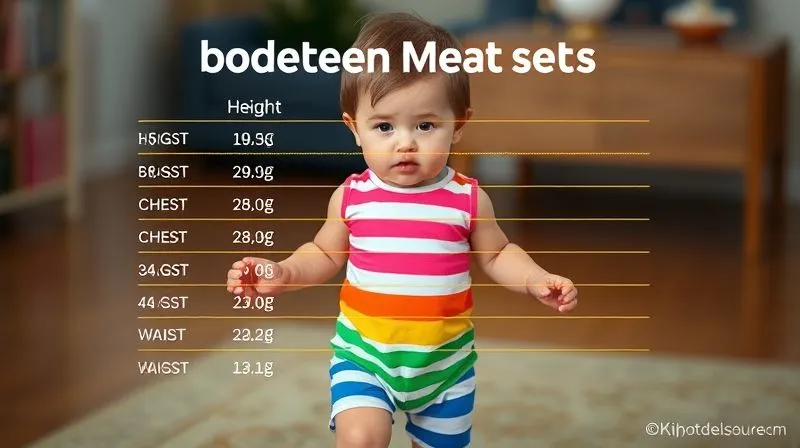
Your size charts need to be comprehensive, reflecting the various dimensions of a growing toddler. I've found that combining several key metrics provides a far more accurate guide:
- Height and Weight Ranges: These are paramount. Toddlers gain height and weight rapidly and often disproportionately. Provide clear ranges for both.
- Key Body Measurements: Include chest, waist, hip, and even inseam measurements. Parents are often willing to take these if given clear instructions.
- Age-Based Guidelines (with caveats): While age shouldn't be the primary determinant, it can serve as a secondary reference point, always with a disclaimer about individual variation.
- Average Body Type Indicators: Consider offering guidance for 'slender,' 'average,' and 'chubby' body types if your designs cater to these variations.
- Garment-Specific Measurements: For certain items like outerwear or dresses, actual garment measurements (e.g., sleeve length, total length) can be invaluable.
According to a recent study by the National Retail Federation, accurate sizing information is one of the top three factors influencing online purchase decisions for apparel. Generic charts simply won't cut it anymore. By providing detailed, actionable data, you empower parents to make informed choices, significantly reducing the likelihood of a size-related return.
| Age Range | Height (in) | Weight (lbs) | Chest (in) | Waist (in) | Common Size Label |
|---|---|---|---|---|---|
| 12-18 Months | 29-31 | 22-27 | 18.5-19.5 | 18-19 | 18M |
| 18-24 Months | 31-33 | 27-30 | 19.5-20.5 | 19-20 | 24M/2T |
| 2-3 Years | 33-36 | 30-33 | 20.5-21.5 | 20-20.5 | 3T |
| 3-4 Years | 36-39 | 33-36 | 21.5-22.5 | 20.5-21 | 4T |
This multi-dimensional approach, while requiring more initial effort, pays dividends in reduced returns and enhanced customer satisfaction. It transforms a guessing game into a confident decision.
Strategy 2: Empowering Parents with Visual and Interactive Sizing Tools
Even the most detailed size charts can be daunting. The next step in addressing how to stop toddler outfit returns from poor online sizing guides is to make the sizing process engaging and intuitive. This is where visual and interactive tools become indispensable, bridging the gap between a flat chart and a three-dimensional child.
Leveraging AR for a 'Virtual Try-On' Experience
Augmented Reality (AR) isn't just a gimmick; it's a powerful solution for sizing. Imagine a parent being able to 'virtually try on' an outfit on their child using their smartphone camera. While full 3D rendering for every garment might be complex, simpler AR overlays can provide immense value.
Case Study: How 'TinyThreads Co.' Slashed Returns with AR
TinyThreads Co., a mid-sized online retailer specializing in organic toddler wear, faced a persistent 25% return rate, with sizing issues being the primary culprit. Traditional size charts and static images weren't cutting it. Inspired by advancements in AR, they invested in a browser-based AR tool that allowed parents to either upload a photo of their child or use a live camera feed to see how a selected outfit would 'fit' on a standard toddler model, with visual cues indicating snugness or looseness. This wasn't a perfect 3D simulation, but a clever overlay that conveyed scale and proportion.
Within six months of launching this feature, TinyThreads Co. saw its return rate due to sizing drop by a remarkable 15 percentage points to 10%. Their conversion rates for items utilizing the AR tool increased by 7%, and customer satisfaction scores, particularly regarding sizing confidence, soared. The investment paid for itself within a year, demonstrating that empowering parents with confidence through innovative visual tools directly impacts the bottom line and is a powerful answer to how to stop toddler outfit returns from poor online sizing guides.
"Giving parents a visual reference, even a simple one, transforms their buying confidence from a hesitant guess to an informed decision. This is where technology truly serves the customer." - Retail Innovation Expert
Beyond AR, consider short, engaging video guides demonstrating how different sizes look on toddlers of varying builds. High-quality product photos showing children of different sizes wearing the same garment can also be incredibly helpful. The goal is to provide as much visual context as possible, reducing the need for imagination and increasing accuracy.

Strategy 3: Harnessing Customer Feedback for Continuous Sizing Improvement
Your customers are your best resource for improving sizing accuracy. They are on the front lines, experiencing your products firsthand. Establishing robust feedback loops is not just good customer service; it's a critical data collection strategy to understand and refine your sizing guides.
Building a Robust Feedback Loop System
To truly understand how to stop toddler outfit returns from poor online sizing guides, you need to listen actively and systematically:
- Post-Purchase Sizing Surveys: After an order is delivered, send a short, targeted survey asking about the fit. Did it run true to size, small, or large? Was the sizing chart helpful? What were their child's measurements?
- Return Reason Analysis: Deeply analyze return data. Categorize sizing issues (e.g., 'too small - chest,' 'too long - pants'). Look for patterns across specific garments, sizes, or even fabric types.
- Product Reviews for Sizing Comments: Encourage customers to leave detailed reviews, specifically prompting them to comment on fit. Monitor these reviews for recurring themes.
- Direct Customer Service Feedback: Ensure your customer service team is trained to log detailed sizing feedback from calls and emails. This qualitative data is invaluable.
- A/B Test Sizing Guide Variations: If you have enough traffic, experiment with different ways of presenting sizing information (e.g., metric vs. imperial, graphical vs. tabular) and measure their impact on return rates.
As customer experience guru Shep Hyken often emphasizes, "Customer feedback is a gift." It's raw, unfiltered insight into where your sizing guides are failing. By meticulously collecting and analyzing this data, you can identify specific garments or categories that consistently cause sizing issues, allowing you to make targeted adjustments to your size charts, product descriptions, or even your design specifications.
"The most powerful data for future improvement often comes from past dissatisfaction. Embrace returns not as failures, but as invaluable lessons in precision." - Fashion Analytics Specialist
Strategy 4: Standardizing Measurement Protocols and Education
Even with the best size chart, if parents aren't measuring correctly, returns will persist. Part of the solution for how to stop toddler outfit returns from poor online sizing guides lies in educating your customers on how to accurately measure their own child. This requires clear, unambiguous guidance.
Creating Comprehensive 'How-to-Measure' Guides
Don't assume parents know how to measure a wriggly toddler. Provide step-by-step instructions that are easy to follow:
- Visual Aids are Key: Use clear diagrams or, better yet, short video tutorials demonstrating exactly where and how to measure (e.g., around the fullest part of the chest, from the crotch to the ankle for inseam).
- Tools Required: Specify that a soft measuring tape is needed.
- Tips for Measuring a Toddler: Offer practical advice, like measuring while the child is asleep or distracted, or having them stand still against a wall.
- Common Pitfalls: Highlight common mistakes, such as pulling the tape too tight or measuring over bulky clothing.
- Contextual Placement: Ensure these guides are easily accessible from every product page, ideally with a prominent 'Find My Size' button next to the size selection dropdown.
By investing in educating your customers, you empower them with the tools and knowledge to confidently select the correct size. This proactive approach significantly reduces sizing errors at the point of purchase. Think of it as providing a mini-masterclass in toddler apparel measurement.
Strategy 5: The Power of Product Descriptions and Fit Notes
Product descriptions are often overlooked as a crucial sizing tool. Beyond fabric composition and care instructions, a well-crafted product description can provide vital context about fit, helping parents make informed decisions and directly impacting how to stop toddler outfit returns from poor online sizing guides.
Crafting Descriptive Fit Notes for Every Garment
Every garment has a unique cut and fit. Your descriptions should reflect this:
- 'True to Size' vs. 'Runs Small/Large': If your garment deviates from standard sizing expectations, state it clearly. For example, "This sweater runs slightly large for a relaxed fit; consider sizing down if between sizes."
- Fit Style: Describe the intended fit – is it 'slim fit,' 'relaxed fit,' 'oversized,' 'snug,' or 'loose'?
- Stretch and Fabric Properties: Mention if the fabric has significant stretch, which can accommodate a wider range of body types or offer more growing room. "Made from a super-stretchy cotton blend, offering comfort and flexibility."
- Garment Dimensions: For key items, provide actual garment measurements for a specific size (e.g., "Size 2T has a chest circumference of 20 inches and a total length of 14 inches").
- Model Information: If using models, state the model's age, height, weight, and the size they are wearing, along with how it fits them.
Managing customer expectations through precise and honest product descriptions is paramount. If a garment is designed to be oversized, say so. If it's a slim fit, communicate that. This transparency builds trust and helps parents visualize how the clothing will look on their child. A detailed description acts as a virtual fitting room assistant, guiding the customer to the right choice.
"Clarity in description is kindness to the customer. Ambiguity in sizing is a direct pathway to returns." - E-commerce Merchandising Guru
Strategy 6: Implementing a "Compare to Previous Purchase" Feature
For returning customers, leveraging their past purchase history can be an incredibly powerful tool for personalized sizing recommendations. This strategy directly addresses how to stop toddler outfit returns from poor online sizing guides by using known data points.
Personalizing the Sizing Experience
Imagine a feature that suggests a size based on what a customer previously bought and how they rated its fit:
- Data Collection: Store customer purchase history, including the size ordered and, crucially, a post-purchase fit rating (e.g., 'perfect fit,' 'a little small,' 'too large').
- Algorithmic Recommendations: Develop a simple algorithm that compares the measurements/fit of a newly viewed item with previously purchased items. If a customer bought a 'Size 2T' t-shirt that fit 'perfectly,' and a new t-shirt has similar dimensions, recommend 'Size 2T.' If the new item is known to run smaller, suggest 'Size 3T.'
- User Interface Integration: Display this recommendation prominently on the product page for logged-in users. For example, "Based on your past purchase of the 'Sunshine Romper' (Size 18M, perfect fit), we recommend Size 2T for this item."
- Feedback Loop for Recommendations: Allow users to confirm or adjust the recommendation, further refining the algorithm over time.
This personalized approach significantly enhances the shopping experience, making it feel tailored and intelligent. It reduces the cognitive load on the parent and leverages their own history to build confidence in their purchase decision. This is a sophisticated yet highly effective method for how to stop toddler outfit returns from poor online sizing guides.
A study by Deloitte highlights that personalized shopping experiences lead to higher customer satisfaction and loyalty. Leveraging purchase history for sizing is a prime example of this.
| Item Purchased | Size Ordered | Fit Rating (User) | Recommended Size for New Item |
|---|---|---|---|
| Sunshine Romper | 18M | Perfect Fit | 2T |
| Cozy Fleece Jacket | 2T | A Little Small | 3T |
| Playtime Jeans | 3T | Too Large | 2T |
Strategy 7: The Role of Fabric and Design in Mitigating Sizing Issues
Sometimes, the best solution to how to stop toddler outfit returns from poor online sizing guides isn't just about better information, but about smarter product design. Certain fabric choices and design features can inherently reduce sizing discrepancies and increase the longevity of a garment.
Designing for Flexibility and Longevity
Consider these design elements to make your toddler outfits more forgiving and adaptable:
- Stretch Fabrics: Materials with a good percentage of elastane or spandex offer more give, accommodating slight variations in a child's measurements and allowing for longer wear as they grow.
- Adjustable Features: Think elastic waistbands with drawstrings, adjustable shoulder straps with multiple buttonholes, or roll-up cuffs and hems. These features allow parents to customize the fit.
- 'Grow-With-Me' Designs: Some innovative designs incorporate elements that allow the garment to adapt as the child grows, such as extendable pant legs or snap closures that offer multiple length options.
- Relaxed Fits: For play clothes, a slightly more relaxed fit can be both comfortable for the child and more forgiving on sizing, reducing the precision needed.
- Layering Pieces: Designing versatile layering pieces can also help, as they don't require as exact a fit as a standalone garment.
Leading children's wear designer Stella McCartney often champions sustainable and adaptable design, which naturally includes features that make garments last longer and fit a wider range of body types. This approach not only helps with how to stop toddler outfit returns from poor online sizing guides but also aligns with eco-conscious consumer values by promoting longer garment life.
"Smart design isn't just about aesthetics; it's about solving real-world problems. For toddler wear, that means designing for growth, movement, and the inevitable variability of a child's shape." - Sustainable Fashion Advocate
Frequently Asked Questions (FAQ)
How often should I update my sizing guides? I recommend reviewing and potentially updating your sizing guides at least once a year, or whenever you introduce significant new product lines or make changes to your manufacturing processes. More importantly, continuously analyze your return data and customer feedback; if you see recurring sizing issues, update immediately. It's an ongoing process, not a one-time fix.
Is investing in AR/VR for sizing worth the cost for a small business? For a small business, a full-blown AR/VR solution might be cost-prohibitive initially. However, there are increasingly affordable, browser-based AR tools or even simple video-based sizing guides that can offer similar benefits without the hefty investment. Start small, measure the impact, and scale up as your business grows and your budget allows. The key is to find a visual solution that empowers your customers.
What's the biggest mistake retailers make with toddler sizing? The single biggest mistake is relying too heavily on age as the primary sizing determinant and failing to provide comprehensive body measurements. Toddlers' growth varies wildly, and a 2-year-old can be significantly different in height and weight from another. Ignoring this variability and not providing detailed measurement guidance is a guaranteed path to high return rates.
How can I handle international sizing discrepancies? International sizing is a complex beast. The best approach is to provide a universal size chart that includes measurements in both imperial (inches, pounds) and metric (cm, kg) systems. Additionally, offer a conversion guide to common international sizing standards (e.g., EU, UK, AU) but always emphasize that actual measurements are the most reliable. Partnering with a global sizing solution provider can also be beneficial.
Beyond sizing, what other factors contribute to returns in kids' fashion? While sizing is a major factor, other contributors include inaccurate color representation online, poor fabric quality or feel (which can't be assessed online), discomfort due to design flaws (e.g., scratchy tags, restrictive seams), and simply a change of mind or child's preference. Addressing these factors in product descriptions and quality control is also crucial for overall return reduction.
Key Takeaways and Final Thoughts
Navigating the complexities of toddler outfit sizing in the online retail space can feel like an uphill battle, but it's a battle that can absolutely be won. As I’ve outlined, the solution to how to stop toddler outfit returns from poor online sizing guides isn't a single magic bullet, but a multi-faceted approach combining data, technology, clear communication, and thoughtful design. It requires a commitment to understanding your customer's unique challenges and a willingness to innovate.
- Embrace Data: Move beyond age-based sizing to multi-dimensional charts incorporating height, weight, and key body measurements.
- Empower Visually: Leverage AR, video guides, and detailed product photography to give parents confidence.
- Listen Actively: Implement robust feedback loops through surveys, return analysis, and customer service insights.
- Educate Your Customers: Provide clear, visual 'how-to-measure' guides.
- Optimize Descriptions: Use detailed fit notes and garment dimensions to set accurate expectations.
- Personalize: Utilize past purchase history for tailored sizing recommendations.
- Design Smart: Incorporate stretch fabrics, adjustable features, and 'grow-with-me' designs.
By implementing these strategies, you're not just reducing return rates; you're building a stronger, more trustworthy brand. You're transforming a point of frustration into a seamless, satisfying shopping experience for parents, ensuring their little ones are dressed comfortably and stylishly. The investment in these areas will pay dividends not only in cost savings but, more importantly, in invaluable customer loyalty and advocacy. Let's make ill-fitting toddler clothes a problem of the past.
Recommended Reading
- The Future of Fashion: How Advanced Materials Will Reshape Clothing Design
- 7 Design Secrets: How Eyewear Frames Become Cultural Icons
- Unleash Your Potential: How Compression Clothing Enhances Athletic Performance
- Unlock Your Dream: How to Get Your Fashion Editorial Published Now!
- 7 Toughest Fabrics: How to Select for Kids' Extreme Playwear




Your email address will not be published. Required fields are marked *