

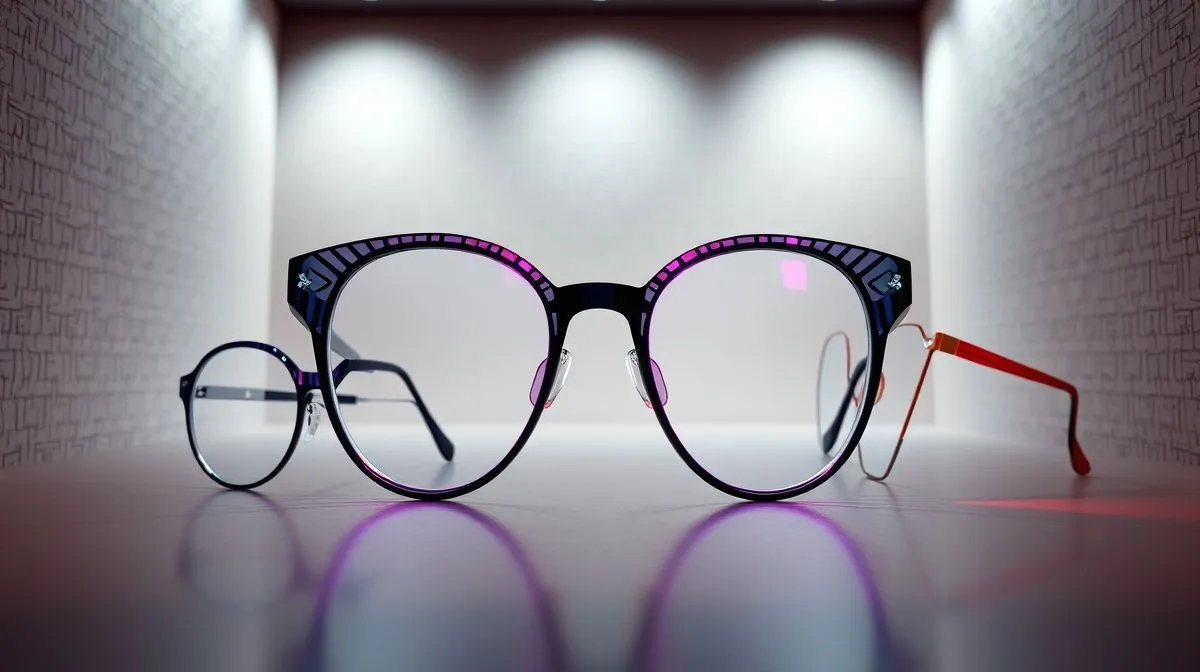
What Design Principles Ensure New Eyewear Frames Become Cultural Icons?
From my vantage point, having navigated the intricate currents of eyewear design for over fifteen years, the journey from a concept sketch to a bona fide cultural icon is rarely accidental. It’s a deliberate alchemy of vision, foresight, and adherence to foundational design principles that transcend fleeting trends.
In my experience, a common mistake designers make is focusing solely on immediate fashionability. True icons possess an inherent **timeless versatility**, allowing them to gracefully adapt to changing styles and eras without losing their core identity.
-
Adaptable Silhouettes: Consider the enduring appeal of the Aviator or Wayfarer. Their fundamental shapes are classic, yet subtle variations in size, color, and material allow them to be continuously reinterpreted, appealing to new generations while retaining their heritage.
-
Neutral Yet Distinct: The design must be distinctive enough to stand out, yet neutral enough not to clash with diverse personal styles. This delicate balance requires a deep understanding of facial anatomy, aesthetic psychology, and cultural shifts.
“An iconic frame doesn't just sit on a face; it becomes an extension of the wearer's narrative, a silent testament to their personal style and the era they inhabit.”
Another crucial principle is the development of a **distinctive form language and signature elements**. Icons are instantly recognizable, often by a subtle curve, a unique hinge, or a particular proportion that sets them apart from the myriad of other frames.
Take for instance, Persol’s Meflecto system – those flexible stems with integrated metal cylinders. This wasn't just a comfort innovation; it became a unique visual signature, instantly identifying the brand and contributing to its legendary status. Similarly, brands like Cutler and Gross have forged iconic status through their unapologetically bold, architectural shapes that project a distinct personality.
Beyond aesthetics, **ergonomic excellence and the wearer experience** are non-negotiable. An uncomfortable frame, no matter how visually striking, will never achieve iconic status because it simply won't be worn consistently enough to embed itself in the cultural consciousness.
I always emphasize the "wearability factor" during design reviews. This encompasses everything from precise weight distribution and temple pressure to bridge fit and lens curvature. The frame must feel like a natural extension of the face, not a cumbersome accessory that demands constant adjustment.
Furthermore, **material innovation and impeccable craftsmanship** elevate a design from merely good to truly legendary. The tactile experience, the way light plays on the surface, and the inherent durability all contribute to a perceived value that resonates deeply with discerning consumers.
-
Pioneering Materials: Companies like LINDBERG have achieved icon status through their pioneering use of ultra-lightweight titanium, revolutionizing comfort and minimalist aesthetics while creating a distinct visual identity.
-
Artisanal Finishes: The meticulous hand-polishing of premium acetate, the precision of a laser-etched detail, or the seamless integration of diverse materials all contribute to a sense of luxury and longevity that defines an icon.
Finally, and perhaps most powerfully, is the principle of **cultural resonance and narrative depth**. Iconic frames often become intertwined with a broader cultural moment, a significant figure, or a particular subculture, largely because their design implicitly supports such adoption.
When Audrey Hepburn donned oversized cat-eye frames, or John Lennon embraced his perfectly round spectacles, those designs transcended mere fashion. Their inherent simplicity or bold statement allowed them to become powerful symbols, embodying a spirit of elegance, rebellion, or intellectualism that resonated far beyond their initial purpose. The design provided the perfect canvas for cultural appropriation and symbolism.
In essence, creating an eyewear icon is about designing a product that is not only visually appealing but also intrinsically functional, exceptionally crafted, and deeply connected to the human experience. It’s about building a legacy, one perfectly balanced frame at a time.
What role does celebrity endorsement play in creating iconic eyewear?
In my over 15 years within the eyewear fashion industry, I've observed that celebrity endorsement is far more than just a famous face wearing a product. It's a complex alchemy, a powerful catalyst that transforms a well-designed frame into a cultural touchstone, imbuing it with a narrative and aspiration that transcends mere utility.
At its core, celebrity endorsement leverages the concept of the "halo effect." When a beloved or influential figure adopts a particular frame, their personal brand – their style, charisma, and public persona – is instantly transferred to the eyewear. This creates an immediate, subconscious association in the public mind, elevating the frame beyond its material components.
A common mistake I see brands make is assuming any celebrity will do. The most successful endorsements are those where there’s a genuine, almost organic, alignment between the celebrity's identity and the frame's aesthetic. It’s not just about visibility; it’s about authenticity and resonance.
Consider the classic case of the Ray-Ban Wayfarer. While already a popular design, its true ascent to iconic status was irrevocably tied to Tom Cruise in *Risky Business*. He didn't just wear them; they became an integral part of his rebellious, youthful character, an essential prop that defined a moment in cinematic and fashion history.
"An iconic frame isn't just seen; it's experienced through the lens of a persona, becoming an extension of their character and, by proxy, our own aspirations."
This phenomenon isn't limited to film. Steve McQueen's unwavering preference for his folding Persol 714s in his personal life and on screen made them synonymous with his rugged, sophisticated charm. It wasn't a paid campaign; it was a genuine choice that spoke volumes, turning the frames into a symbol of effortless cool that endures to this day.
The mechanisms through which celebrity endorsements forge iconic eyewear are multifaceted:
- Aspirational Association: Fans desire to emulate their idols, seeing the eyewear as a tangible link to their admired style or success.
- Cultural Narrative Building: Celebrities, particularly in film or music, embed frames into broader cultural stories, making them symbols of an era or movement.
- Instant Validation: A celebrity's choice provides immediate social proof and credibility, signalling that the frame is fashionable, desirable, or groundbreaking.
- Global Reach and Exposure: Celebrities offer unparalleled visibility, propelling a frame into the public consciousness far more rapidly and widely than traditional advertising.
In my experience, the enduring power of these endorsements lies in their ability to transcend fleeting trends. John Lennon's round spectacles, for instance, became an inseparable part of his identity and the counter-culture movement he represented. They weren't just glasses; they were a statement, a symbol of intellect and peace that resonates decades later.
For a frame to become truly iconic through celebrity association, it often requires a confluence of factors: the right design, the right celebrity, the right cultural moment, and often, a powerful narrative context, whether it's a film, a musical movement, or a defining personal style.
Can a brand intentionally design an 'icon,' or is it organic?
In my experience, spanning over fifteen years within the intricate world of eyewear fashion, the question of whether an icon is intentionally designed or organically born is one of the most frequently debated, and frankly, misunderstood. From my vantage point, having witnessed countless launches and the rise and fall of trends, the truth is a nuanced blend: **iconic status is almost always the result of intentional design and strategic groundwork, which then enables and facilitates organic cultural adoption.** A common mistake I see emerging brands make is believing that an icon simply "happens." While serendipity certainly plays a role in solidifying a frame's place in history, it's rarely the sole catalyst. **True icons are forged from a deliberate vision, meticulous craftsmanship, and a deep understanding of both aesthetics and utility.** Consider the foundational elements that brands *can* control, which lay the essential groundwork for iconic potential: * **Design Purity and Innovation:** This isn't just about being trendy; it's about creating a form that is inherently balanced, often challenging existing norms, and possessing a timeless aesthetic. Think of the **Ray-Ban Wayfarer's revolutionary trapezoidal shape** or the **Aviator's functional teardrop lens** – both radical departures that offered both style and purpose. * **Uncompromising Quality and Craftsmanship:** An icon must endure. It's built to last, both physically and aesthetically. Brands like Persol, with their patented Meflecto system and artisanal production, exemplify this. Their frames are not just objects; they are engineering marvels designed for comfort and longevity. * **Strategic Storytelling and Positioning:** Before a frame becomes an icon, it's a product with a narrative. Brands intentionally craft this story, associating their designs with specific lifestyles, values, or aspirations. This initial positioning sets the stage, giving the frame a soul before it's even touched by popular culture. * **Controlled Distribution and Accessibility:** Initially, a brand might control distribution to create desirability and an aura of exclusivity. However, for true iconic status, a design eventually needs to be widely accessible enough to be adopted by diverse groups, yet distinct enough to retain its allure. However, even with the most impeccable intentional design, the journey to becoming a cultural icon requires an unpredictable, organic leap. This is where the frame transcends mere product and becomes a symbol. * **Cultural Adoption and the Zeitgeist:** This is the magic. When a design resonates with a broader cultural moment, a specific subculture, or a dominant societal mood, it begins its organic ascent. The Wayfarer, for instance, became synonymous with rebellion and cool through its association with rock stars and movie stars – a fusion of intentional design meeting the perfect cultural wave. * **Unforeseen Endorsements and Celebrity:** While a brand might strategically place its frames with influencers, true organic endorsement happens when a prominent figure genuinely adopts a style, making it their signature. Think of **Steve McQueen and his Persol 714s**, which cemented that model's legendary status far beyond any marketing campaign. * **Longevity and Adaptability:** An icon isn't a one-hit wonder. It must demonstrate an ability to transcend fleeting trends, remaining relevant and desirable across decades, even generations. Its design must be versatile enough to be reinterpreted and embraced by different eras without losing its core identity."To intentionally design for iconic status is to plant a meticulously chosen seed in fertile ground, providing it with the best care. The resulting towering tree, however, its branches reaching for the sky and offering shade to many, is ultimately a testament to organic growth, sustained by its inherent strength and the elements around it."In essence, brands provide the blueprint, the materials, and the initial push. They design with intent, aiming for timelessness, quality, and a compelling narrative. But the ultimate elevation to "icon" happens when that meticulously crafted design is embraced, reinterpreted, and woven into the fabric of popular culture by the people themselves. It's a symbiotic relationship where design excellence meets cultural resonance, creating something far greater than the sum of its parts.
How important is comfort and durability for a frame to become a cultural icon?
In my fifteen years navigating the intricate world of eyewear design, one truth has become undeniably clear: while aesthetics may spark initial interest, it's comfort and durability that truly forge a frame's path to becoming a cultural icon. These aren't just desirable traits; they are fundamental prerequisites for a frame to transcend mere fashion and embed itself into our collective consciousness. Think of it this way: a frame, no matter how visually striking or fashion-forward, will languish in its case if it causes discomfort. People simply won't wear something that pinches, slips, or feels heavy for extended periods, and repeated, consistent wear is absolutely essential for cultural permeation. Achieving true comfort is an art, involving meticulous attention to details often overlooked by the casual observer. This includes precise weight distribution across the nose and ears, ergonomically sculpted nose pads that distribute pressure evenly, and temple arms designed to contour without creating pressure points behind the ears or on the temples. It's akin to a beautifully designed but uncomfortable pair of shoes – no matter how stunning, if they cripple your feet after an hour, they're relegated to the back of the closet. An iconic frame, by contrast, feels like an extension of the wearer, almost disappearing on the face while simultaneously making a bold statement. Equally critical, yet often underestimated, is durability. For a frame to transcend fleeting trends and embed itself into the cultural consciousness, it must be built to last, enduring the rigors of daily life without faltering. This isn't merely about resisting breakage; it encompasses everything from the integrity and stability of the frame material, be it high-grade acetate or aerospace-grade titanium, to the resilience of the hinge mechanisms and the secure mounting of the lenses. A frame that constantly needs repair or falls apart quickly erodes consumer trust and brand reputation. Consider the enduring legacy of the Ray-Ban Wayfarer. Part of its iconic status stems directly from its robust construction. Users expect their Wayfarers to withstand drops, sit comfortably on their head, and maintain their shape for years, embodying a tangible sense of quality that fosters deep, lasting loyalty. Ultimately, comfort and durability aren't standalone features; they are the invisible backbone supporting the visible artistry. An iconic frame achieves a perfect synthesis where its aesthetic appeal is amplified exponentially by its wearability and longevity. A frame becomes a cultural icon not just because it looks good, but because it’s *worn consistently* across various settings and *endures through time*. This repeated exposure, often by influential figures and in pivotal cultural moments, allows it to become deeply ingrained in our visual language and collective memory. A common mistake I see among emerging designers is prioritizing superficial styling over these fundamental engineering principles. They chase the immediate 'wow' factor without adequately considering the long-term 'wear' factor."True eyewear artistry lies in designing a frame that not only captivates the eye but also respects the wearer's daily experience, becoming a trusted companion rather than just an accessory."
Reading Recommendations:
- 7 Pillars: How to Maintain Luxury Footwear Exclusivity Online
- Unlock Your Glow: How to Choose Statement Earrings for Your Face Shape
- Safeguarding Biometrics: 7 Pillars for Secure Personalized Fashion
- Beyond the Shine: How to Identify Truly Sustainable Jewelry Brands Now
- Unlock the Secret: How to Care for Contemporary Jewelry Materials?
Key Points and Final Thoughts
The journey from a mere sketch to a cultural icon in eyewear is rarely linear, but rather a complex interplay of vision, execution, and serendipitous timing. What we've explored throughout this article converges on a fundamental truth: truly iconic frames transcend utility to become a part of our collective narrative. In my experience, the most enduring designs are those that possess a clear and authentic story. They aren't just aesthetically pleasing; they resonate because they embody a particular spirit, an era, or even a philosophy. This intangible quality is often what transforms a popular frame into a lasting legend, making it far more than just an accessory. A common mistake I see brands make is chasing fleeting trends without anchoring their designs in a deep understanding of their own identity or the broader cultural landscape. While trend awareness is crucial, **true iconography stems from a confident, original voice** that can speak to the present while hinting at timelessness. It's about setting trends, not merely following them. The tactile experience and inherent quality of a frame are also non-negotiable. Icons are built on trust – trust in their durability, comfort, and the craftsmanship that brings them to life. This means meticulous attention to materials, hinges, and the overall structural integrity, ensuring that the form factor can withstand the test of time and repeated wear."An iconic frame doesn't just hold lenses; it frames a moment, a movement, a persona. It's a silent communicator of identity, crafted with an understanding of both human form and human spirit."For brands and designers aspiring to create the next cultural icon, consider these actionable insights: * **Cultivate Authenticity:** Don't just design a frame; design a narrative. What story does it tell? What emotion does it evoke? Authenticity is the bedrock of lasting appeal. * **Prioritize Craftsmanship:** Invest in superior materials and manufacturing processes. The longevity and comfort of a frame contribute significantly to its perceived value and potential for iconic status. * **Understand Cultural Currents:** Iconic eyewear often emerges when a design perfectly captures or even shapes the prevailing zeitgeist. Stay attuned to socio-cultural shifts, not just fashion cycles. * **Embrace Iteration, Not Just Innovation:** Sometimes, an icon isn't born from a completely new idea, but from a masterful refinement of existing forms, pushing boundaries in subtle yet impactful ways. * **Foster Strategic Visibility:** While not the sole factor, thoughtful placement and endorsement can accelerate a frame's journey to iconic status. Think about the cultural figures who embody your design's essence. Ultimately, the creation of an eyewear icon is a testament to visionary design coupled with a profound understanding of human connection and cultural aspiration. It's about crafting something that people don't just wear, but *feel* and *believe* in, making it an indelible part of their personal and the wider world's story.



Your email address will not be published. Required fields are marked *