


How to Maintain Brand Exclusivity for Luxury Footwear Online?
For over two decades in the luxury footwear industry, I've had a front-row seat to its dramatic evolution. From the hushed elegance of bespoke ateliers to the rapid-fire clicks of e-commerce, one fundamental challenge has always persisted: how do you preserve the sacred aura of exclusivity when the digital realm pushes for boundless accessibility? I’ve seen brands, even established ones, stumble when they treat their online presence as merely another sales channel, failing to understand its unique demands.
The paradox is undeniable: the internet offers unparalleled reach, but this very omnipresence can, if not managed meticulously, dilute the very essence of what makes luxury, luxury – its rarity, its craftsmanship, its aspirational allure. Counterfeits proliferate, unauthorized resellers erode pricing, and the curated experience that defines high-end retail often gets lost in the digital noise. This isn't just about sales; it's about the erosion of brand integrity and long-term value.
In this definitive guide, I will share the frameworks and actionable insights I’ve cultivated over years of navigating this complex landscape. We'll dissect the core principles that enable luxury footwear brands to not just survive, but thrive online, ensuring their digital footprint enhances, rather than diminishes, their coveted exclusivity. Prepare to transform your approach to digital luxury.
Understanding the Digital Paradox: Reach vs. Rarity
The digital age has fundamentally reshaped consumer expectations and market dynamics. For luxury footwear, this presents a unique tightrope walk. On one hand, the internet offers unprecedented global reach, allowing brands to connect directly with discerning clients who might never step into a physical boutique. On the other hand, this very accessibility risks diluting the perception of rarity and the bespoke experience that define luxury.
The Allure and The Abyss of Digital Expansion
Expanding online seems like a no-brainer for growth. However, without careful strategic planning, it can inadvertently expose a luxury brand to significant vulnerabilities. The curated environment of a high-end boutique, with its personalized service and intimate atmosphere, is incredibly difficult to replicate in a universally accessible digital space. This is where many brands falter, focusing solely on transactions rather than experiences.
The Counterfeit Scourge: A Constant Threat
One of the most insidious threats to luxury footwear exclusivity online is the proliferation of counterfeit products. These not only steal revenue but, more critically, erode brand reputation and consumer trust. When a potential customer encounters a convincing fake, their perception of the authentic brand's value can be permanently damaged.
Discounting: A Slippery Slope to Devaluation
The digital marketplace is often characterized by aggressive pricing and promotional activities. For luxury brands, participating in this race to the bottom is a death knell for exclusivity. Once a brand is perceived as regularly discounted, its aspirational value diminishes, making it incredibly difficult to reclaim its premium positioning. As a Deloitte report on the global luxury market highlights, maintaining price integrity is paramount.
Pillar 1: Curated Digital Brand Experience (Website & E-commerce)
Your e-commerce platform isn't just a storefront; it's your flagship digital boutique. It must reflect the same level of luxury, craftsmanship, and exclusivity as your physical locations, or even surpass them with unique digital advantages.
Crafting an Immersive Digital Atelier
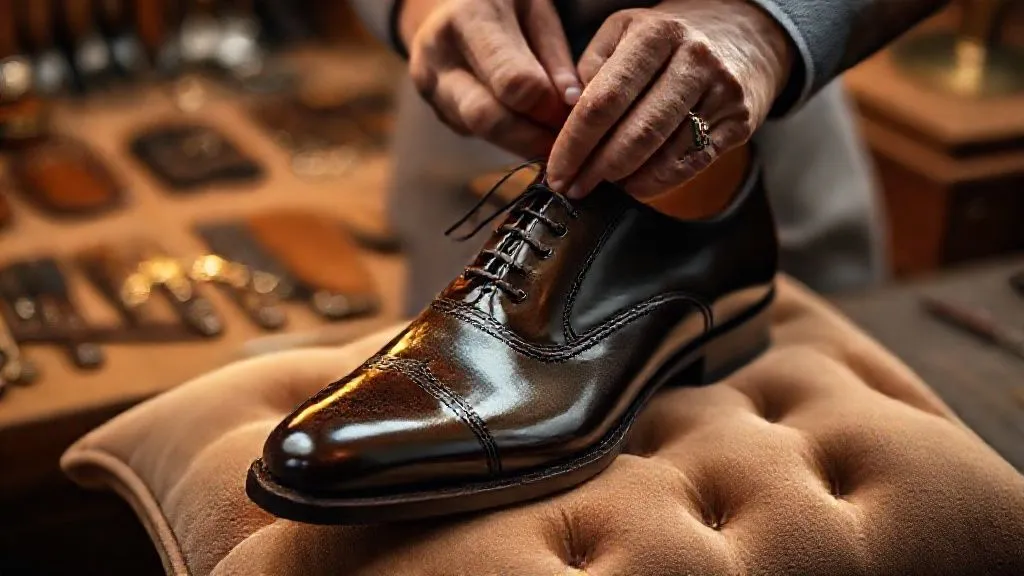
Every element of your website, from navigation to imagery, must exude luxury. Think of it as a meticulously designed digital gallery. High-resolution, cinematic photography and videography are non-negotiable, showcasing the intricate details, materials, and artistry of each shoe. User experience should be seamless, intuitive, and visually stunning, mirroring the effortless elegance of your brand.
- High-Fidelity Visuals: Invest in professional photography and 360-degree views that highlight texture, stitching, and silhouette.
- Compelling Storytelling: Integrate narratives about the artisans, the heritage, and the inspiration behind each collection.
- Virtual Try-On & Personalization Tools: Leverage AR/AI to allow customers to 'try on' shoes virtually, enhancing engagement and reducing returns.
- Exclusive Digital Content: Offer behind-the-scenes videos, interviews with designers, or lookbooks exclusive to your site.
The Power of Scarcity & Drop Culture
Luxury thrives on desire, and desire is often fueled by scarcity. In the digital realm, this translates into strategic releases and limited availability. I've often seen brands overproduce, flooding the market and inadvertently undermining their own prestige.
"True luxury isn't about widespread availability; it's about curated access and the thrill of acquiring something rare and special."
- Implement Waitlists: For highly anticipated collections or limited runs, allow customers to sign up for waitlists, building anticipation.
- Limited Edition Drops: Release exclusive capsule collections or unique colorways in strictly limited quantities, announced only to your most loyal customers or through specific digital channels.
- Scheduled Releases: Adopt a 'drop' model for new lines, creating a sense of urgency and excitement, similar to exclusive art sales.
Pillar 2: Mastering the Art of Direct-to-Consumer (DTC) Exclusivity
In today's landscape, a robust Direct-to-Consumer strategy isn't just an option for luxury footwear; it's a necessity for maintaining control over your brand narrative, customer relationships, and, crucially, your exclusivity.
Why DTC is Non-Negotiable for Luxury
When you sell through third-party retailers, you cede a degree of control over pricing, presentation, and the customer experience. DTC, however, allows you to dictate every aspect of the journey, ensuring it aligns perfectly with your brand's luxury positioning. It enables you to capture valuable customer data directly, fostering deeper relationships and enabling hyper-personalization.
Building a First-Party Relationship
The goal of DTC isn't just to make a sale; it's to cultivate a loyal, lifelong client. This means moving beyond transactional interactions to building genuine relationships. Every touchpoint, from initial website visit to post-purchase follow-up, should be designed to reinforce the brand's values and make the customer feel valued and part of an exclusive community.
Case Study: Atelier Lumière's DTC Transformation
Atelier Lumière, a fictional but highly realistic luxury women's heel brand, was struggling with brand dilution due to widespread distribution through various online marketplaces. Their elegant designs were getting lost amidst generic products, and price matching was becoming a problem. By implementing a strict DTC-first strategy, they dramatically cut down on third-party retailers and invested heavily in their own e-commerce platform and personalized customer service via dedicated online stylists. They launched 'The Lumière Collective,' an invite-only loyalty program offering early access to new collections and virtual design consultations. This resulted in a 40% increase in average order value and a significant boost in customer lifetime value within 18 months, solidifying their exclusive positioning.
Exclusive Access Programs
DTC enables you to reward loyalty with true exclusivity. These programs should offer tangible, desirable benefits that are not available to the general public.
- Tiered Loyalty Programs: Create exclusive tiers (e.g., Silver, Gold, Platinum) with escalating benefits like early access to new collections, private virtual trunk shows, or bespoke customization options.
- Member-Only Collections: Design specific collections or limited-edition items available only to members of your loyalty program.
- Personalized Concierge Service: Offer a dedicated online stylist or client advisor for your top-tier customers, providing a highly personalized shopping experience.
Pillar 3: Strategic Distribution & Channel Control
While DTC is powerful, for some luxury brands, selective retail partnerships remain important. The key is extreme discernment and rigorous control over where and how your products are sold.
Selective Retail Partnerships: Quality Over Quantity
If you choose to partner with retailers, they must be meticulously selected. Opt for a limited number of high-end department stores or luxury multi-brand boutiques that align perfectly with your brand's image and values. These partners should offer an elevated shopping experience that complements, rather than detracts from, your own brand narrative. I've always advocated for fewer, stronger relationships over a broad, diluted presence.
- Rigorous Vetting: Assess potential partners on their customer service, store aesthetics, digital presence, and existing brand portfolio.
- Strict Contractual Agreements: Include clauses that control pricing, visual merchandising standards, and online presentation.
- Co-Branded Experiences: Collaborate on exclusive capsule collections or in-store events that elevate both brands.
Combating Gray Market Sales and Unauthorized Resellers
The gray market, where genuine products are sold through unauthorized channels, is a significant threat to luxury pricing integrity and exclusivity. These sellers often undercut official pricing, creating a perception of widespread discounting.
- Digital Monitoring Services: Employ AI-powered tools to constantly scan online marketplaces for unauthorized listings and enforce takedown notices.
- Legal Action: Be prepared to take swift legal action against persistent gray market sellers. As World Trademark Review often highlights, a strong legal stance is crucial for brand protection.
- Traceability Measures: Implement internal tracking systems (e.g., unique serial numbers per product) to identify the source of gray market diversions.
Pillar 4: Leveraging Technology for Authenticity & Trust
In the digital age, trust is the ultimate currency. Luxury footwear brands must leverage cutting-edge technology to assure customers of authenticity, provenance, and the ethical sourcing of their products.
Blockchain & NFTs: The New Guardians of Provenance
Blockchain technology, often associated with cryptocurrencies, offers an immutable, transparent ledger that can revolutionize luxury authenticity. By linking a physical product to a unique digital token (NFT), brands can provide verifiable proof of ownership and a complete history of the item.
- Verifiable Ownership: Customers can instantly verify the authenticity and ownership history of their luxury footwear.
- Traceability: Track the shoe's journey from raw materials to the final product, highlighting ethical sourcing and craftsmanship.
- Anti-Counterfeit: Makes it extremely difficult to create convincing fakes, as their digital twin would not exist or would be easily disproven.
- Enhanced Resale Value: Provenance verified by blockchain can maintain and even increase an item's value on the secondary market.
Advanced Anti-Counterfeiting Measures
Beyond blockchain, a multi-layered approach to anti-counterfeiting is essential. This combines physical security features with digital monitoring.
- NFC Tags & QR Codes: Embed unique, scannable NFC tags or QR codes within the product or its packaging, linking to a secure authentication platform.
- Hidden Serial Numbers & Micro-Etchings: Incorporate discreet, tamper-proof identifiers that are difficult for counterfeiters to replicate.
- AI-Powered Image Recognition: Utilize AI to scan online marketplaces for suspicious product images and automatically flag potential fakes.
Pillar 5: Storytelling & Brand Narrative in the Digital Age
Luxury is built on narrative. It's not just about the product itself, but the dream, the aspiration, and the heritage it represents. In the digital realm, this storytelling must be even more compelling and consistent.
Beyond the Product: Selling the Dream
Your online presence should evoke emotion, convey heritage, and immerse the customer in your brand's universe. Don't just show shoes; show the skilled hands that craft them, the inspiration behind their design, and the lifestyle they embody. This emotional connection is a powerful barrier against dilution.
Crafting a Consistent, Aspirational Narrative
Every piece of content, every social media post, and every email must speak in a unified, authentic brand voice. Inconsistency creates confusion and erodes trust. Luxury thrives on a clear, unwavering identity.
"In the digital noise, your brand's story is your most potent differentiator. It's what connects with the soul of your customer, not just their wallet."
- Artisan Videos: Share short documentaries or behind-the-scenes glimpses into your workshops, highlighting the craftsmanship and dedication.
- Heritage & Legacy Content: Explore your brand's history, iconic designs, and the figures who shaped its journey.
- Sustainability & Ethical Sourcing: If applicable, tell the story of your commitment to responsible practices, which resonates deeply with modern luxury consumers.
- Influencer Collaborations: Partner with a select few, highly discerning influencers who genuinely embody your brand's values, ensuring authenticity.
Pillar 6: Personalized Engagement & Community Building
Exclusivity isn't just about who *can't* buy your products; it's also about who *can*, and how you make them feel. Building a loyal, engaged community online is paramount for sustained exclusivity.
From Transaction to Relationship
The digital space allows for unprecedented levels of personalization. Use the data you collect (ethically and transparently) to tailor communications, product recommendations, and even unique digital experiences. A personalized touch elevates the online experience from a mere purchase to a valued interaction.
Building a Loyal Digital Tribe
Luxury customers aren't just buying a product; they're buying into a lifestyle, a community. Your online channels should foster a sense of belonging among your most valued clients. As marketing guru Seth Godin often says, "People like us do things like this." You want to cultivate a 'people like us' mentality around your brand.
- Virtual Private Events: Host exclusive online previews of new collections, virtual styling sessions, or Q&A sessions with designers, accessible only to a select group of clients.
- Private Online Forums/Groups: Create a members-only digital space where loyal customers can connect, share experiences, and receive privileged information.
- Bespoke Digital Consultations: Offer one-on-one video consultations with brand experts for styling advice or custom orders.
- Surprise & Delight: Send personalized digital gifts, early access codes, or handwritten notes (digitally) to show appreciation.
Pillar 7: Data-Driven Insights for Sustained Exclusivity
In the digital world, data is your most powerful tool for understanding your customer, identifying threats, and refining your exclusivity strategy. It's not about big data for its own sake, but smart data for strategic advantage.
Analytics: Your Compass in the Digital Ocean
Beyond basic sales figures, delve into your website analytics, CRM data, and social media insights. Understand customer behavior patterns, identify your most valuable clients, and track brand sentiment. This allows you to make informed decisions that protect your brand's prestige.
Identifying & Nurturing Your True Clientele
Not all customers are equal, especially in luxury. Data allows you to segment your audience and focus your most exclusive efforts on those who truly embody your brand's ideal customer profile and contribute significantly to your brand's long-term value. This is about nurturing the relationships that matter most.
- CRM Deep Dive: Analyze purchase history, engagement levels, and demographic data within your Customer Relationship Management system to identify your VIP clients.
- Behavioral Segmentation: Group customers based on their online behavior (e.g., frequent visitors, high-value purchasers, those who engage with exclusive content).
- Predictive Analytics: Use data to anticipate future trends, identify potential brand dilution risks, and forecast demand for exclusive products.
- Feedback Loops: Actively solicit feedback from your most valued customers through private surveys or focus groups to refine your digital luxury experience.
Frequently Asked Questions (FAQ)
Question? Can luxury brands truly thrive without traditional retail channels?
Answer: While traditional retail still holds significant value for experiential luxury, it's increasingly possible for luxury brands to thrive predominantly online. The key is replicating and even enhancing the 'luxury experience' through impeccable digital design, personalized service, exclusive digital content, and robust anti-counterfeiting measures. Brands like MatchesFashion (though a retailer, it set the standard for digital luxury) and even some direct-to-consumer luxury jewelry brands have shown this is achievable, provided the digital strategy is as meticulously curated as a physical boutique. It requires a fundamental shift in mindset from transactional selling to relationship building in the digital sphere.
Question? How do you balance digital accessibility with luxury's inherent exclusivity?
Answer: This is the core paradox. The balance is achieved not by limiting access to your website, but by controlling what is accessible and how it is presented. Offer broad access to your brand story and aspirational content, but reserve certain collections, unique services, or personalized consultations for an exclusive clientele. Implement 'digital velvet ropes' like invitation-only sections, loyalty tiers, and limited-edition drops. The goal is to make the brand discoverable but the most coveted items or experiences feel uniquely earned or privileged, rather than universally available.
Question? What's the biggest mistake luxury footwear brands make online?
Answer: In my experience, the biggest mistake is treating the online channel as a mere extension of physical retail, or worse, as a discount bin. They fail to invest sufficiently in a bespoke digital experience, neglecting the visual fidelity, storytelling, and personalized service that define luxury. This often leads to brand dilution, price erosion, and a loss of prestige. Another common error is not actively combating counterfeits and gray market sales, which directly undermine exclusivity.
Question? Is it possible to recover exclusivity once it's been diluted online?
Answer: It's incredibly challenging but not impossible. It requires a significant, long-term strategic overhaul. This typically involves drastically cutting down on widespread distribution, re-investing in direct-to-consumer channels, elevating digital storytelling, implementing strict anti-counterfeiting measures, and potentially even re-launching with limited, highly curated collections. Rebuilding trust and perception takes time, consistent effort, and a clear, unwavering commitment to rarity and quality. It's often a painful, costly process, which underscores the importance of maintaining exclusivity from the outset.
Question? What role does sustainability play in modern luxury exclusivity?
Answer: Sustainability has become an integral component of modern luxury exclusivity. Today's discerning luxury consumer isn't just buying a product; they're buying into a brand's values. Ethical sourcing, transparent supply chains, and environmental responsibility are no longer 'nice-to-haves' but expectations. Brands that can genuinely demonstrate their commitment to sustainability, and integrate it authentically into their storytelling, enhance their exclusivity by appealing to a more conscious and discerning clientele. It adds another layer of 'rare value' beyond just material and craftsmanship.
Recommended Reading
- Unlock the Future: Can Robots Slash Waste in Fashion Manufacturing?
- Bespoke Jewelry Design: Your Ultimate Guide to Getting Started
- Safeguard Digital Fashion: 5 Blockchain Strategies for Design Rights
- Unveiling the Secrets: How Couturiers Achieve Haute Couture Precision
- The Ultimate Secret: How to Spot Fake Logomania Streetwear Brands Instantly!
Key Takeaways and Final Thoughts
Maintaining brand exclusivity for luxury footwear online is not a passive endeavor; it's a dynamic, multi-faceted strategy that requires continuous vigilance and innovation. From my vantage point, having navigated the intricate pathways of this industry for years, I can confidently say that the brands that will thrive are those that embrace the digital realm not as a threat, but as an opportunity to redefine and elevate luxury.
- Curate Your Digital Atelier: Your website is your flagship; make it an immersive, high-fidelity experience.
- Embrace DTC Power: Own your customer relationships and control your brand narrative.
- Control Your Channels: Be highly selective with partners and aggressive against gray market threats.
- Leverage Tech for Trust: Use blockchain and advanced anti-counterfeiting for verifiable authenticity.
- Master the Narrative: Tell your brand's story with consistency and emotional depth.
- Build Community: Foster exclusive engagement and personalization with your most valued clients.
- Be Data-Driven: Use insights to refine your strategy and nurture your true clientele.
The digital landscape is ever-evolving, but the core principles of luxury endure: craftsmanship, rarity, and an unparalleled experience. By meticulously applying these seven pillars, you won't just safeguard your brand's exclusivity online; you'll forge deeper connections with your clientele, build enduring value, and ensure your luxury footwear brand continues to command the prestige it deserves. The future of luxury is digital, but its soul remains exclusive.


Your email address will not be published. Required fields are marked *