

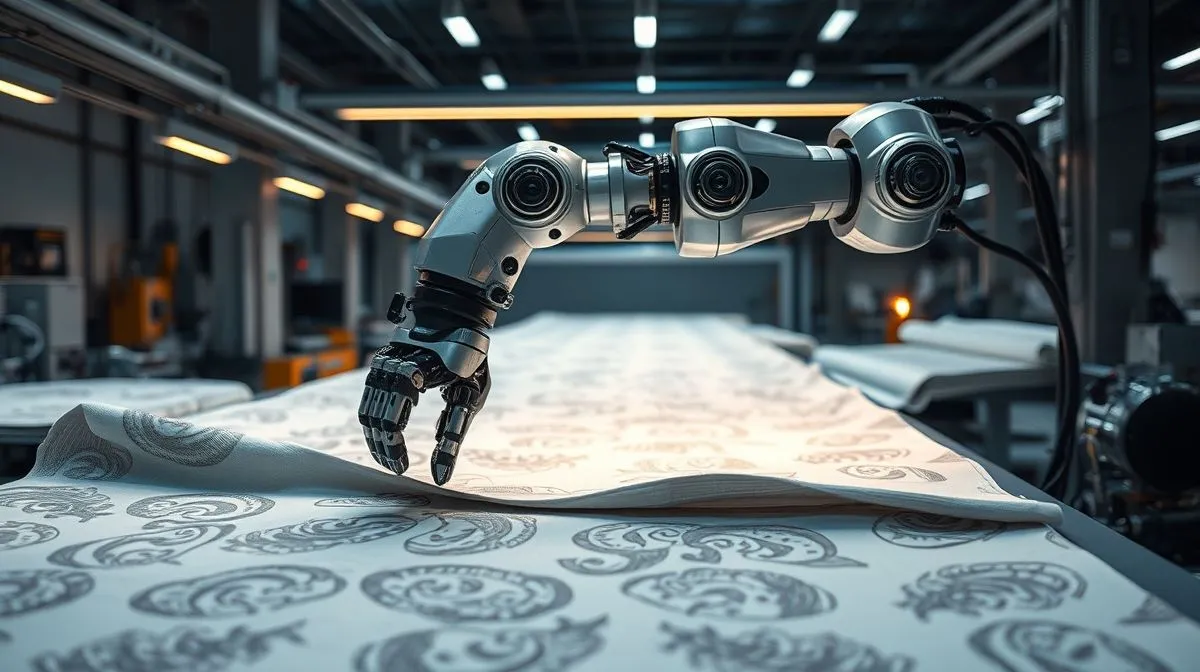
Can Robots Reduce Waste in Fashion Manufacturing? The Definitive Guide
Imagine a world where the clothes we wear don't come at the expense of our planet. A future where every stitch, every cut, and every textile choice is made with sustainability at its core. For decades, the fashion industry has grappled with an immense waste problem, a silent crisis unfolding across landfills and polluting our natural resources.
The question isn't just about what we wear, but how it's made. The traditional linear model of 'take-make-dispose' has led to colossal amounts of textile waste, inefficient resource use, and a significant carbon footprint. This unsustainable cycle demands a radical transformation, and the answer, surprisingly, might lie in the very heart of technological advancement: robotics.
This article delves deep into how robotics and advanced automation are poised to revolutionize fashion manufacturing, offering tangible solutions to drastically reduce waste. By the end of this comprehensive guide, you will understand the intricate ways robots are contributing to a more sustainable, efficient, and ethical fashion future, and precisely how they can reduce waste in fashion manufacturing.
The Unseen Cost of Fast Fashion: A Waste Crisis
Before exploring the solutions, it's crucial to grasp the magnitude of the problem. The fashion industry is notoriously one of the most polluting sectors globally, with textile waste being a monumental issue.
Scale of the Problem
- Each year, millions of tons of textile waste end up in landfills, with a significant portion being pre-consumer waste from manufacturing.
- Fabric offcuts, miscut pieces, and unsold inventory contribute to a staggering amount of material loss.
- Estimates suggest that up to 15-20% of fabric is wasted during the cutting process alone in traditional manufacturing.
This waste isn't just about discarded fabric; it represents wasted water, energy, dyes, and human labor embedded in its creation.
Environmental Impact
The environmental repercussions of fashion waste are far-reaching. Landfilled textiles can take hundreds of years to decompose, releasing methane, a potent greenhouse gas, into the atmosphere. Synthetic fabrics, in particular, shed microplastics that pollute waterways and oceans.
Furthermore, the demand for new materials places immense pressure on natural resources, from cotton fields requiring vast amounts of water and pesticides to petroleum-based synthetics. The entire lifecycle, from raw material extraction to disposal, contributes significantly to climate change and environmental degradation. The urgency to adopt sustainable practices, therefore, cannot be overstated.
Robotics: A New Dawn for Sustainable Manufacturing
The integration of robotics in fashion manufacturing offers a beacon of hope, promising unprecedented levels of precision, efficiency, and waste reduction. Unlike human operators, robots can perform repetitive tasks with unwavering accuracy, minimizing errors and material waste.
Precision Cutting and Zero-Waste Design
One of the most significant areas where robots can reduce waste in fashion manufacturing is in the cutting room. Traditional manual or semi-automated cutting often results in significant fabric waste due to human error, limitations in pattern nesting, and the need for buffer zones.
- Automated Nesting Software: Advanced algorithms optimize pattern placement on fabric rolls, minimizing gaps and maximizing material utilization. Robots execute these patterns with millimeter-level precision.
- Laser and Knife Cutting Robots: These systems can cut complex shapes with extreme accuracy, reducing offcuts and enabling designs that were previously too intricate or wasteful to produce.
- On-Demand Production: By enabling efficient small-batch or even one-off production, robotics reduce the need for overproduction, a major cause of unsold inventory waste.
This precision allows for 'zero-waste' or 'near-zero-waste' design principles to be implemented effectively, where every piece of fabric is accounted for and utilized.
Automation in Fabric Handling and Assembly
Beyond cutting, robots are transforming other stages of garment production. Fabric handling, which can be delicate and prone to damage, benefits immensely from robotic precision.
- Automated Fabric Spreading: Robots can precisely spread multiple layers of fabric, ensuring consistent tension and alignment, which is crucial for accurate cutting and sewing.
- Robotic Sewing Cells: While still evolving, robots equipped with advanced vision systems and grippers are increasingly capable of handling flexible materials like fabric for tasks like sewing, hemming, and attaching components. This reduces errors and rework, saving materials.
- Material Handling and Logistics: Automated guided vehicles (AGVs) and robotic arms can efficiently move materials between workstations, reducing transit damage and optimizing workflow, which indirectly contributes to less waste from mishandling.
By streamlining these processes, robots ensure that materials are handled optimally from start to finish, reducing potential waste points.
Predictive Analytics and Inventory Management
While not direct robotic applications, AI and machine learning, which often complement robotic systems, play a vital role in waste reduction through intelligent inventory management.
- Demand Forecasting: AI algorithms analyze vast datasets to predict consumer demand with higher accuracy, helping manufacturers produce quantities that align more closely with market needs.
- Optimized Production Scheduling: Robots integrated with smart factory systems can adapt production schedules in real-time based on demand fluctuations, minimizing overproduction and the accumulation of unsold stock.
- Material Traceability: Digital systems powered by AI can track materials from source to finished product, identifying inefficiencies and waste hotspots in the supply chain.
This data-driven approach means less excess inventory, which is a significant source of waste in the fashion industry.
Specific Robotic Applications Making a Difference
Let's look at some concrete examples of how robotic technology is being applied to tackle waste head-on in fashion manufacturing.
Automated Fabric Cutting Systems
These systems are perhaps the most mature and impactful robotic applications in waste reduction. Companies like Lectra and Gerber Technology have long offered highly sophisticated automated cutting machines. The latest iterations integrate AI-powered nesting software that can achieve material utilization rates exceeding 95%.
For instance, a traditional cutting process might leave large gaps between pattern pieces. Robotic cutting, combined with intelligent nesting, arranges patterns like a complex jigsaw puzzle, often sharing cut lines between adjacent pieces, drastically reducing scrap fabric. This precision not only saves material but also reduces the labor required for manual marking and cutting, improving overall efficiency.
Robotic Sewing and Assembly
Sewing flexible materials like fabric has historically been a challenge for robots due to the material's pliability. However, advancements in robotic vision, haptic feedback, and specialized grippers are changing this. Companies like Softwear Automation are developing fully automated sewing lines that can produce garments with minimal human intervention.
These robotic sewing cells offer incredible consistency, reducing errors that would typically lead to discarded or 'seconds' garments. By maintaining uniform stitch quality and precise seam alignment, they minimize defects, ensuring a higher yield of sellable products and less material waste from reworks.
AI-Powered Quality Control and Defect Reduction
Before garments even reach the consumer, defects in fabric or stitching can lead to products being discarded or downgraded. Robotic systems equipped with high-resolution cameras and AI algorithms can inspect fabrics and finished garments with unparalleled speed and accuracy.
These systems can detect subtle flaws like misweaves, stains, or incorrect stitching that might be missed by the human eye. Early detection means issues can be addressed before significant material is wasted, or even prevent defective fabric from entering the production line altogether. This proactive approach significantly reduces the amount of material that ends up as waste due to quality control failures.
Textile Recycling and Upcycling Robots
The lifecycle of a garment doesn't end when it leaves the factory. Post-consumer waste is another major environmental challenge. Robotics and automation are emerging as key players in developing circular economy solutions.
- Automated Sorting: Robots with advanced sensors can rapidly sort discarded textiles by fiber composition, color, and quality, a crucial step for effective recycling.
- Textile Disassembly: Research is ongoing into robots capable of automatically deconstructing garments, removing zippers, buttons, and other non-textile components to facilitate pure fiber recycling.
- Fiber-to-Fiber Recycling: While complex, automated systems are being developed to process old textiles back into new fibers, closing the loop and reducing the need for virgin materials.
These innovations hold the promise of transforming textile waste from a liability into a valuable resource, significantly reducing landfill burden.
Beyond Waste Reduction: Broader Benefits of Robotics in Fashion
While waste reduction is a primary driver, the adoption of robotics in fashion manufacturing brings a host of other benefits that contribute to a more sustainable and ethical industry.
Enhanced Efficiency and Productivity
Robots can operate 24/7 with consistent performance, leading to higher throughput and faster production cycles. This efficiency translates into lower production costs per unit and the ability to respond more quickly to market demands, reducing the need for large, speculative inventories that often become waste.
According to a report by McKinsey & Company, automation in apparel manufacturing can lead to productivity gains of up to 40% in some areas, directly impacting material utilization and operational waste. This not only makes the process more sustainable but also more economically viable.
Improved Worker Safety
Many tasks in traditional fashion manufacturing, such as repetitive cutting, heavy lifting, or operating dangerous machinery, pose risks to human workers. Robots can take over these hazardous or ergonomically challenging roles, creating a safer work environment.
By reducing workplace injuries and health issues, companies can maintain a more stable and healthy workforce, contributing to ethical production practices. This also reduces downtime and errors associated with human fatigue, further preventing waste.
Localized Production and Reduced Supply Chain Emissions
The high efficiency and lower labor costs associated with robotics can make it economically feasible to bring manufacturing closer to consumer markets. This trend towards 'reshoring' or 'nearshoring' production has significant environmental benefits.
- Reduced Transportation Emissions: Shorter supply chains mean less fuel consumed for shipping raw materials and finished goods globally.
- Faster Response Times: Localized production allows for quicker reactions to fashion trends, reducing the risk of overproduction and unsold inventory.
- Enhanced Transparency: Shorter supply chains are often more transparent, making it easier to monitor and verify sustainable practices.
This shift in geographical manufacturing models is a powerful way for robots to reduce waste in fashion manufacturing, not just in the factory but across the entire value chain.
Challenges and the Road Ahead for Robotic Integration
While the promise of robotics is immense, their widespread adoption in fashion manufacturing isn't without its hurdles. Understanding these challenges is key to charting a realistic path forward.
Initial Investment and Training
Implementing advanced robotic systems requires a substantial upfront capital investment. Small and medium-sized enterprises (SMEs) in particular may find this prohibitive. Beyond the hardware, there's also the cost of software integration, customization, and training for the workforce.
Companies need to conduct thorough cost-benefit analyses, considering the long-term savings from waste reduction, increased efficiency, and improved sustainability credentials. Government incentives and financing programs could play a crucial role in supporting wider adoption.
Adapting Legacy Systems
Many existing fashion factories operate with legacy machinery and workflows. Integrating new robotic systems into these established environments can be complex, requiring significant re-engineering of production lines and digital infrastructure. Interoperability between different systems is a common challenge.
A phased approach, starting with automation of specific high-waste areas like cutting, might be a more practical strategy for many companies rather than a complete overhaul.
The Human Element: Reskilling the Workforce
The introduction of robots will undoubtedly change the nature of jobs in fashion manufacturing. While some manual tasks may be automated, new roles will emerge in areas like robot programming, maintenance, data analysis, and system oversight.
Investing in workforce training and reskilling programs is vital to ensure a smooth transition and to avoid job displacement. The goal should be to augment human capabilities with robotic assistance, creating higher-skilled, safer, and more fulfilling roles, rather than simply replacing workers. This human-robot collaboration is crucial for successful integration.
Case Studies and Early Adopters: Glimpses of the Future
Several pioneering companies and initiatives are already demonstrating how robots can reduce waste in fashion manufacturing, offering inspiring examples for the industry.
Brands Pioneering Robotic Solutions
Major sportswear brands, known for their scale and innovation, are at the forefront. For example, Nike has invested heavily in automation, including robotic solutions for assembly and material handling, aiming to reduce waste and improve efficiency in their manufacturing processes. Their 'Flyknit' technology, while not purely robotic, is a testament to precision manufacturing that minimizes material waste by knitting entire shoe uppers from yarn, rather than cutting from fabric sheets.
Similarly, Adidas has explored automated 'Speedfactories' that leverage robotics and digital manufacturing to produce highly customized footwear closer to market, significantly reducing lead times and potential for unsold inventory.
Innovative Startups Leading the Charge
Smaller, agile startups are also making significant strides. Companies like Sewbo, which developed a method to stiffen fabrics temporarily to allow robots to handle them more easily, are tackling fundamental challenges in robotic garment assembly. Others are focusing on automated textile recycling or developing AI-powered design tools that incorporate waste reduction principles from the outset.
These innovators are not just building machines; they are rethinking the entire production paradigm, pushing the boundaries of what's possible in sustainable fashion manufacturing. Their efforts demonstrate the practical application of how robots can reduce waste in fashion manufacturing across various stages.
The Future Landscape: A Circular Fashion Economy Driven by Robots
The ultimate vision for robotics in fashion extends beyond simply making existing processes more efficient. It's about enabling a fundamental shift towards a truly circular economy, where waste is designed out of the system.
From Linear to Circular Models
Robotics are key enablers for a circular fashion model, which prioritizes reuse, repair, and recycling over disposal. By facilitating highly precise manufacturing, enabling on-demand production, and improving the efficiency of recycling processes, robots contribute to a closed-loop system where resources are kept in use for as long as possible. The Ellen MacArthur Foundation emphasizes the importance of design for circularity, and robotics provide the tools to execute such designs effectively. Learn more about circular economy in fashion here.
This includes developing garments that are easier to disassemble for recycling, or even creating new materials from recycled content through automated processes. The shift from a linear 'take-make-dispose' model to a regenerative circular one is paramount, and robots are indispensable tools in this transition.
The Role of AI and Machine Learning
The true power of robotics is amplified when combined with Artificial Intelligence and Machine Learning. AI-driven design tools can optimize patterns for minimal waste before they even reach the cutting table. Machine learning algorithms can continuously improve robotic precision and efficiency by analyzing performance data.
Furthermore, AI can facilitate predictive maintenance for robotic systems, minimizing downtime and ensuring continuous, waste-reducing operations. The synergy between AI and robotics creates intelligent manufacturing ecosystems that are not only efficient but also inherently sustainable. According to a report from the World Economic Forum, advanced manufacturing technologies like AI and robotics are critical for achieving sustainability goals across industries. Explore future of jobs and technology's role.
Frequently Asked Questions (FAQ)
Are robots replacing human jobs in fashion manufacturing? While robots automate some repetitive tasks, they also create new, higher-skilled jobs in programming, maintenance, and oversight. The goal is often human-robot collaboration, improving safety and efficiency rather than outright replacement.
How expensive is it for fashion companies to adopt robotics? The initial investment can be substantial, but the long-term benefits in waste reduction, efficiency, and productivity often lead to a strong return on investment. Costs vary widely depending on the level of automation and specific applications.
Can robots handle all types of fabrics? Handling flexible materials like fabric is challenging, but advancements in vision systems, grippers, and material manipulation techniques are making robots increasingly capable of working with various fabric types, from delicate silks to rigid denims.
What's the biggest challenge for robots in fashion? The primary challenge is the inherent variability and flexibility of textile materials, which are difficult for robots to manipulate compared to rigid components. However, ongoing research is rapidly overcoming these limitations.
Is robotic fashion manufacturing truly sustainable? Yes, by significantly reducing material waste, optimizing resource use, enabling localized production, and supporting circular economy initiatives, robotic fashion manufacturing offers a path towards a far more sustainable industry.
Recommended Reading
- Best Leggings for Sweaty Workouts: Ultimate Comfort & Performance
- Haute Couture Consultations: Ask These Questions!
- Draping Dreams: Best Fabric for Textile Art Costumes REVEALED!
- Warmest Kids Winter Hat Material? Ultimate Guide for Parents
- 1950s Dresses: Which Neckline Flatters You Most? Find Out!
Conclusion
The question, 'Can robots reduce waste in fashion manufacturing?' is no longer a matter of 'if,' but 'how much' and 'how quickly.' From precision cutting and automated assembly to intelligent inventory management and advanced recycling, robotics are proving to be transformative tools in the fight against textile waste. While challenges remain, particularly in investment and workforce adaptation, the benefits of embracing these technologies for a more sustainable, efficient, and ethical fashion industry are undeniable. By harnessing the power of automation, we can move closer to a future where fashion is synonymous with innovation and environmental responsibility, stitching a healthier planet, one garment at a time.





Your email address will not be published. Required fields are marked *