


How to Select Stylish Frames for High-Prescription Progressive Lens Wearers?
For over two decades in the dynamic world of eyewear fashion and vision care, I've witnessed countless individuals struggle with a specific, deeply frustrating dilemma: how to combine the necessity of high-prescription progressive lenses with a genuine desire for stylish, flattering frames. It's a common misconception that a strong prescription means sacrificing personal style, forcing wearers into bulky, unflattering options.
The pain point is palpable: you need the seamless vision correction that progressive lenses offer, but the thickness and weight of high-power lenses can feel like a design limitation. This often leads to a compromise, where functionality trumps fashion, leaving many feeling self-conscious or simply uninspired by their eyewear choice. The fear of 'coke bottle' lenses or frames that overwhelm your face is very real.
But I'm here to tell you that this compromise is entirely unnecessary. In this definitive guide, I'll share my insider knowledge, actionable frameworks, and expert insights drawn from years on the front lines of optical fashion. You'll learn precisely how to select stylish frames for high-prescription progressive lens wearers, transforming your eyewear from a functional necessity into a powerful fashion statement that truly reflects your unique personality.
Understanding Progressive Lenses and High Prescriptions
Before we dive into frame selection, it's crucial to grasp what we're working with. Progressive lenses, often called 'no-line bifocals,' offer a seamless transition from distance vision at the top, through intermediate vision in the middle, to near vision at the bottom. This innovative design eliminates the visible line of traditional bifocals, providing a more natural and youthful appearance.
However, when you combine this intricate lens design with a high prescription – meaning significant refractive error, whether it's high myopia (nearsightedness), hyperopia (farsightedness), or astigmatism – the lens material itself becomes thicker. This increased thickness, especially at the edges for myopia or in the center for hyperopia, is the primary challenge we aim to overcome with smart frame choices.
"The magic of progressive lenses lies in their invisible power. Our goal is to ensure that power remains invisible, not just in the lens line, but in the overall aesthetic of your chosen frame."
The Challenge of Lens Thickness
High prescriptions inherently lead to thicker lenses. For myopic individuals, the edges of the lenses are thicker, while for hyperopic individuals, the center is thicker. This can result in lenses that protrude from the frame, create visual distortion in the periphery, or simply add unwanted weight and bulk. Furthermore, the progressive corridor – the pathway of vision correction – requires a certain vertical depth within the lens, which impacts the minimum frame height you can comfortably wear.
The Frame's Blueprint: Size, Shape, and Material Matters
The frame itself is your canvas. Choosing the right blueprint is the first, most critical step in ensuring your high-prescription progressive lenses look sleek and sophisticated, not thick and heavy.
1. The Golden Ratio of Frame Size
Size is paramount. Oversized frames, while fashionable for some prescriptions, can exacerbate the appearance of thickness for high-power lenses. My advice? Think proportional, not necessarily small. The frame should ideally hug your face, with the temples aligning horizontally with your eyes.
- Measure Your Pupillary Distance (PD): This helps determine the ideal center for your lenses. A good optician will factor this into frame selection to minimize lens thickness.
- Match Frame Width to Face Width: The frame should not extend significantly beyond your temples. A narrower frame keeps the lens edges closer to the optical center, reducing visible thickness.
- Consider Vertical Depth: Progressive lenses require a minimum vertical depth (typically 28-32mm) for the corridors. Too shallow a frame and you'll compromise the effectiveness of your progressive zones.
- Bridge Fit is Key: A well-fitting bridge ensures the frames sit correctly on your nose, preventing slippage and keeping your eyes centered within the optical sweet spot of the lenses.
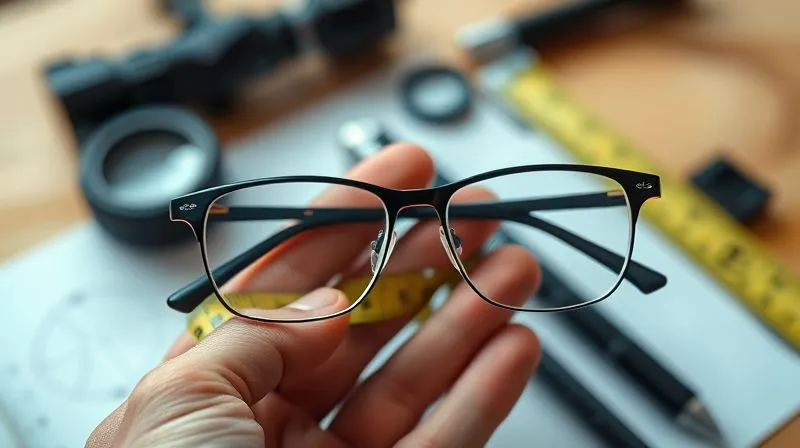
2. Strategic Frame Shapes for Progressive Lenses
Certain frame shapes are inherently more forgiving for high prescriptions and progressive lenses. Avoid overly exaggerated or highly curved frames, as these can introduce additional distortion and thickness challenges.
- Rectangular or "Soft Square": These classic shapes offer ample vertical depth without being overly wide. Their straight lines often make lens edges less noticeable.
- Oval or Modified Oval: Similar to rectangular, these provide sufficient height for the progressive corridor and blend well with many face shapes.
- "Pantos" or "Teardrop" Shapes: These retro-inspired frames, slightly wider at the top and narrower at the bottom, can work well if chosen carefully, offering good vertical space.
- Avoid "Cat-Eye" (Extreme): While some subtle cat-eye shapes can work, very exaggerated upward curves can make lens insertion challenging and highlight thickness at the outer edges for high minus prescriptions.
3. Materials That Make a Difference
The material of your frame plays a significant role in both aesthetics and comfort. Lighter, stronger materials can help offset the potential weight of high-prescription lenses.
| Material | Pros | Cons |
|---|---|---|
| Titanium | Extremely lightweight, strong, hypoallergenic, sleek appearance. | Can be more expensive. |
| Acetate (Thin Profile) | Rich colors, durable, can be molded into thinner profiles, classic aesthetic. | Can be heavier if not chosen carefully. |
| Stainless Steel | Durable, lightweight, corrosion-resistant, affordable, minimalist look. | Less flexible than titanium. |
| TR90 (Grilamid) | Ultra-lightweight, flexible, durable, impact-resistant, great for active lifestyles. | Less luxurious feel than metal or high-quality acetate. |
In my experience, titanium and thin-profile acetate frames are often the champions for high-prescription wearers. They offer a refined look without adding unnecessary bulk or weight.
Optimizing Lens Aesthetics: High-Index and Coatings
The frame is only half the equation. The lens material and coatings are equally vital in minimizing thickness and maximizing visual clarity.
High-Index Lenses: Your First Line of Defense
This is non-negotiable for high prescriptions. High-index lens materials are denser, allowing them to bend light more efficiently than standard plastic lenses. This means a thinner, lighter lens for the same prescription power. The higher the index number (e.g., 1.67, 1.74), the thinner the lens will be.
While high-index lenses come at a higher cost, the investment is well worth it for the aesthetic and comfort benefits. They significantly reduce the 'bug-eye' effect often associated with high plus prescriptions and minimize the noticeable edge thickness in high minus prescriptions. According to All About Vision, high-index lenses are particularly recommended for prescriptions exceeding +/- 2.00 diopters.
Anti-Reflective Coatings: The Unsung Hero
An anti-reflective (AR) coating is not just about reducing glare for improved vision; it's a powerful aesthetic tool. By minimizing reflections on the lens surface, AR coatings make your lenses appear virtually invisible, allowing your eyes to be seen clearly. This effectively reduces the visual perception of lens thickness and eliminates distracting light bounces that can draw attention to the lenses themselves.
Face Shape Harmony: Matching Frames to Your Features
Once you understand the technical aspects, it's time to consider how frames interact with your unique facial features. A frame that harmonizes with your face shape creates balance and enhances your natural beauty, distracting from any potential lens thickness.
Case Study: Eleanor's Frame Transformation
Eleanor, a 48-year-old marketing executive, came to me with a -7.00 progressive prescription. She loved oversized, round frames but found they made her lenses look incredibly thick and her eyes appear smaller. After discussing her needs, we opted for a slightly narrower, soft rectangular titanium frame in a deep sapphire blue that complemented her cool undertones. We also ensured she had 1.74 high-index lenses with a premium AR coating. The result? Her lenses were significantly thinner, the frame proportioned perfectly to her face, and her eyes appeared larger and more vibrant. She felt confident, stylish, and, most importantly, saw perfectly.
Here’s a quick guide to common face shapes and suitable frame suggestions:
- Oval Face: You're lucky! Most frame shapes work well. Experiment with soft rectangles, almond, or walnut shapes.
- Round Face: Opt for angular frames like rectangular or square to add definition and elongate your face.
- Square Face: Choose rounder or oval frames to soften strong jawlines and angular features.
- Heart-Shaped Face: Frames that are wider at the bottom or have delicate detailing can balance a broader forehead. Think aviator styles or slightly upswept shapes.
- Oblong Face: Taller frames, like deeper squares or larger vintage-inspired shapes, can add width and shorten the appearance of your face.

Color, Texture, and Personal Branding
Don't underestimate the power of color and texture to elevate your look and draw attention to your eyes, rather than your lenses. These elements are crucial for personal branding through eyewear.
Beyond Black: Embracing Color
While black frames are a timeless classic, exploring a wider spectrum of colors can be incredibly liberating. For high prescriptions, a slightly lighter or translucent frame color can sometimes make the lens edges less noticeable than a stark, opaque black frame. Consider:
- Neutrals with a Twist: Think deep blues, forest greens, rich browns, or even sophisticated grays.
- Translucent or "Crystal" Frames: These can be remarkably effective in camouflaging lens thickness, as they allow light to pass through, reducing the visual impact of the lens edge.
- Subtle Two-Tone or Gradient Frames: A darker top fading to a lighter bottom can be very flattering.
Texture and Finish: Adding Sophistication
The finish of your frame – matte, glossy, brushed, or patterned – adds another layer of sophistication. A matte finish can be very chic and often less reflective than a high-gloss frame, which can sometimes draw attention to the periphery. As fashion expert Tim Gunn often says, "Make it work!" – meaning adapt trends to your personal needs and body (or face) type.
"Your eyewear is an extension of your personality. Don't let a high prescription dictate your style; instead, use smart choices to make your frames a statement of confidence."
For more insights into current eyewear trends and how to adapt them, I often refer to industry publications like Vogue Eyewear, which consistently highlights innovative designs and materials.
The Importance of an Experienced Optician
This cannot be stressed enough: your optician is your most valuable ally. For high-prescription progressive lens wearers, their expertise is not just helpful; it's absolutely critical.
Why a Specialist is Non-Negotiable
An experienced optician understands the nuances of lens design, material science, and frame fitting. They can:
- Accurately measure your Pupillary Distance (PD), segment height, and fitting cross, which are vital for optimal progressive lens performance.
- Recommend appropriate high-index lens materials and coatings based on your prescription and lifestyle.
- Advise on frame size and shape that will best accommodate your progressive lenses and minimize thickness.
- Perform precise frame adjustments to ensure comfort, stability, and correct optical alignment.
- Troubleshoot any vision issues or discomfort you might experience.
When selecting your optician, don't hesitate to ask these questions:
- "How much experience do you have fitting high-prescription progressive lenses?" Look for someone who specializes or has extensive experience.
- "Can you show me frame options that specifically minimize lens thickness for my prescription?" A good optician will have specific recommendations.
- "What high-index lens materials and anti-reflective coatings do you recommend for my needs?" They should be able to explain the benefits clearly.
- "What is your process for taking measurements for progressive lenses?" Ensure they use precise digital measurements.
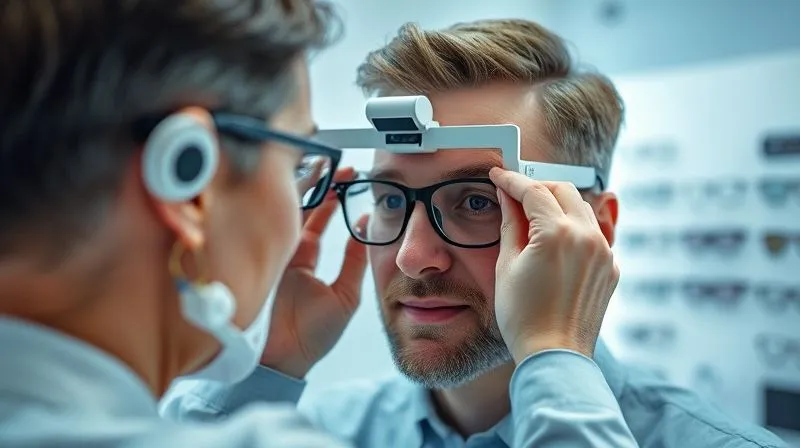
Practical Tips for Progressive Lens Frame Fitting
Beyond the initial selection, the fitting process is where the magic truly happens. Even the most perfectly chosen frame can underperform if not fitted correctly.
Understanding the Progressive Corridor
The progressive corridor is the zone within the lens that transitions from distance to near vision. It needs adequate vertical space. If the frame is too shallow, or if the fitting height is incorrect, you might find yourself tipping your head excessively or struggling to find the reading zone. This is why a minimum frame height (typically 28-32mm from the bottom of the frame to the center of the pupil) is often recommended.
Nose Pads and Bridge Fit
For high prescriptions, adjustable nose pads are often a blessing. They allow your optician to fine-tune how the frame sits on your face, ensuring the optical center of the lens is perfectly aligned with your pupil. This also helps distribute the weight of potentially heavier lenses more comfortably. A poor bridge fit can cause the glasses to slide down, constantly shifting your progressive zones out of alignment.
| Fitting Aspect | Importance for Progressives | Actionable Tip |
|---|---|---|
| Pupillary Distance (PD) | Critical for horizontal lens centering, impacts perceived thickness. | Ensure digital PD measurement for accuracy. |
| Segment Height (SH) | Determines vertical placement of progressive zones. | Optician must measure from lower eyelid to frame bottom while wearing frame. |
| Pantoscopic Tilt | Angle of frame relative to face, affects clarity through zones. | Should be adjusted for optimal vision and comfort. |
| Vertex Distance | Distance from lens to eye, impacts effective power and field of view. | Adjust frame temples for consistent distance; especially important for high prescriptions. |
Proper fitting ensures not just comfort, but also optimal visual performance and the best aesthetic presentation of your high-prescription progressive lenses. For more detailed information on eyewear fitting standards, I recommend consulting resources from professional organizations like the American Optometric Association.
Avoiding Common Pitfalls and Misconceptions
Even with all this knowledge, there are still a few traps that high-prescription progressive lens wearers can fall into. Let's address them directly.
Myth vs. Reality: Frame Size and Lens Thickness
Myth: "Smaller frames always make lenses look thinner."
Reality: While a very small frame can help, it's about proportionality and strategic design. A frame that is too small for your face can look awkward, and if it's too shallow, it won't accommodate the progressive corridor effectively. The key is a frame that is appropriately sized for your face and allows for proper lens placement, combined with high-index materials.
Don't Sacrifice Comfort for Style
It's easy to get swept up in the latest trends, but remember that your glasses are a daily companion. A frame might look stunning, but if it pinches your nose, slips constantly, or causes pressure points, you won't wear it. Comfort directly impacts how well you adapt to and utilize your progressive lenses. Always prioritize a comfortable, stable fit. Your optician can help adjust virtually any frame to fit better, but starting with a comfortable base is essential.

Frequently Asked Questions (FAQ)
Q: Can I wear rimless or semi-rimless frames with a high prescription and progressive lenses? A: While challenging, it's often possible with modern high-index lenses. Rimless frames expose the lens edge entirely, so it's crucial to use the highest index material available (e.g., 1.74) to minimize thickness and edge chipping. An experienced optician will also recommend a durable lens material like Trivex or polycarbonate for safety and a robust edge polish. It's a style choice that requires careful consideration and expert consultation to ensure durability and aesthetic appeal.
Q: Will my eyes look smaller or larger with high-prescription progressive lenses? A: High minus (nearsighted) prescriptions can make your eyes appear smaller, while high plus (farsighted) prescriptions can make them look larger. This effect is minimized significantly with high-index lenses, which are flatter and cause less magnification/minification. Anti-reflective coatings also help by reducing reflections that can distort eye appearance. Choosing frames that proportionally complement your face rather than overwhelming it also plays a crucial role.
Q: How often should I update my frames if my prescription changes? A: It's not always necessary to get new frames with every prescription change, especially if your current frames are in good condition and still align with your style. However, if your prescription changes significantly (e.g., a jump of +/- 1.00 diopter or more), it's highly recommended to consult your optician. A substantial change might warrant a different frame to optimize lens thickness, weight distribution, and progressive corridor placement.
Q: Are certain frame colors better at hiding lens thickness? A: Yes, generally, frames with slightly lighter, more translucent, or matte finishes can be more forgiving. Opaque, dark, glossy frames can sometimes create a sharper contrast with the lens edge, making thickness more apparent. However, a well-chosen dark frame with high-index lenses and an AR coating can still look incredibly sleek. It's about the overall package rather than just one element.
Q: Can I use my existing frames for new high-prescription progressive lenses? A: Potentially, yes, but with caveats. The frames must be in excellent condition, structurally sound, and, most importantly, have sufficient vertical depth to accommodate the progressive lens design. Your optician will need to assess the frame's integrity and dimensions to determine if it's suitable. Sometimes, the cost of new lenses in old frames might be close to a new complete pair, making a fresh start a better investment.
Key Takeaways and Final Thoughts
- Prioritize High-Index Lenses: This is your most powerful tool for minimizing lens thickness and weight.
- Choose Proportional Frames: Opt for frames that are appropriately sized for your face and provide adequate vertical depth for progressive zones.
- Embrace Strategic Shapes & Materials: Rectangular, oval, or soft square shapes in lightweight materials like titanium or thin acetate are often ideal.
- Don't Skip Coatings: Anti-reflective coatings are essential for aesthetics and visual clarity.
- Consult an Expert Optician: Their knowledge and precise measurements are invaluable for a successful outcome.
- Balance Style with Comfort: Your eyewear should feel as good as it looks.
Selecting stylish frames for high-prescription progressive lens wearers is not a challenge to be endured, but an opportunity for sophisticated self-expression. By applying these expert strategies, you can confidently choose eyewear that not only provides impeccable vision but also enhances your personal style, turning a perceived limitation into a fashion asset. Remember, your glasses are the first thing people notice about your face – make them count!
Recommended Reading
- Unlock the Magic: How to Integrate Animatronics into Creature Costumes Seamlessly
- 7 Steps to Ethically Source Sustainable Luxury Fabrics for Bespoke Suits
- 7 Essential Formal Shoes for Your High-Stakes Interview Success
- 7 Actionable Steps: How to Reduce Frequent Returns of Performance Athletic Shoes?
- Revitalize Luxury: What to Do When Accessory Sales Decline from Sameness?


Your email address will not be published. Required fields are marked *