

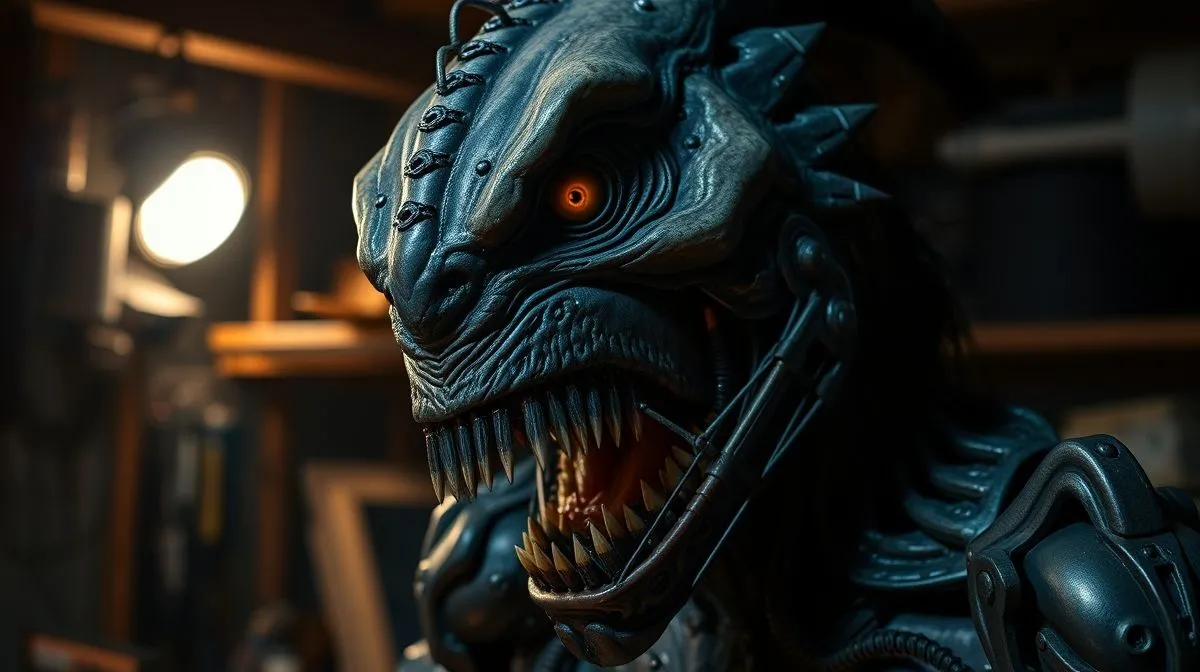
How to Integrate Animatronics into Creature Costumes: Bringing Visions to Life
Have you ever watched a film or a live performance where a creature seemed impossibly real, its eyes blinking, its mouth snarling, or its limbs moving with a fluidity that defied a simple human inside? That sense of wonder, that suspension of disbelief, often stems from the masterful application of animatronics. It's the secret ingredient that transforms a static costume into a living, breathing entity.
The challenge for many aspiring creature designers and practical effects artists lies not just in sculpting a fantastic form, but in imbuing it with lifelike motion. How do you take the intricate mechanisms of robotics and seamlessly weave them into fabric, foam, and fur, ensuring the performer's comfort and the illusion's integrity? This is the complex question that often stumps even experienced creators.
This comprehensive guide will demystify the intricate process of how to integrate animatronics into creature costumes. From initial conceptualization and system selection to the nuanced challenges of fabrication, programming, and maintenance, you will learn the essential principles and practical techniques required to bring your most fantastical creature visions to astonishing life.
The Art and Science of Animatronic Creature Costumes
Integrating animatronics into creature costumes is a fascinating blend of artistic vision and engineering precision. It's where the sculptor's eye meets the roboticist's brain, resulting in creations that blur the line between fantasy and reality.
Defining Animatronics in Costume Design
At its core, animatronics refers to the use of robotic devices to emulate a living being, often for entertainment purposes. When applied to creature costumes, it involves embedding mechanical components within the costume structure to control specific movements of the creature's features. This can range from simple eye blinks and ear twitches to complex facial expressions and limb articulation.
Unlike traditional puppetry, where an external operator manipulates the creature, animatronic costumes often allow the performer inside to control the movements directly, or they can be pre-programmed or remote-controlled. This direct control enhances the performer's ability to emote and react in real-time, creating a more dynamic and believable character.
Why Animatronics Elevate Creature Performance
The primary benefit of integrating animatronics is the unparalleled level of realism and expressiveness it brings. A static mask, no matter how beautifully sculpted, cannot convey emotion or intent in the same way a blinking eye or a snarling lip can. Animatronics adds layers of nuance that:
- Enhance believability: Small, subtle movements make a creature feel truly alive.
- Increase audience engagement: Dynamic expressions capture attention and evoke stronger emotional responses.
- Expand storytelling possibilities: Characters can convey fear, anger, curiosity, or joy without relying solely on body language.
- Provide greater control: Performers or remote operators can fine-tune movements for specific scenes or interactions.
The iconic creatures from films like *Jurassic Park* owe their enduring impact not just to their design, but to the seamless blend of animatronics and practical effects that made them feel tangible and terrifyingly present. To learn more about the history and impact of animatronics, consult the Wikipedia page on Animatronics.
Conceptualization and Design: Laying the Groundwork
Before any wires are cut or servos are mounted, the most critical phase is conceptualization. This stage defines the creature's personality, its intended movements, and how those movements will be achieved mechanically.
Vision to Blueprint: Initial Sketches and Movement Goals
Every great animatronic creature begins with a clear vision. Start by sketching your creature from multiple angles. Crucially, identify which parts of the creature need to move and how. Will its eyes blink? Its jaw open? Its ears swivel? Will it breathe? Each desired movement must be meticulously planned.
Consider the emotional range required. A creature designed for terror might need rapid, jerky movements and wide, snapping jaws, while a gentle giant might require slow, deliberate blinks and soft, expressive eye movements. Translate these artistic goals into concrete mechanical requirements.
Choosing the Right Creature: Anatomy and Scale Considerations
Not all creatures are equally suited for animatronic integration. Creatures with distinct facial features, articulated limbs, or large expressive elements are often ideal candidates. Consider the creature's scale relative to the human performer. A large, quadrupedal creature might require a performer on stilts or a complex internal harness, impacting where animatronic components can be placed.
The inherent anatomy of your creature will dictate the type and size of animatronic mechanisms you can use. For instance, a creature with a long, slender neck might be challenging for complex head movements without significant counterweights or external support.
Material Selection for Durability and Aesthetics
The choice of materials is paramount. The outer skin of the costume must be flexible enough to allow for movement without tearing or bunching unnaturally. Materials like silicone, latex, flexible foams, and certain fabrics are excellent choices. The internal armature must be lightweight yet strong enough to support the animatronic components and resist the stresses of movement.
Common internal materials include:
- Aluminum: Lightweight and strong, ideal for armatures.
- Carbon Fiber: Offers exceptional strength-to-weight ratio for critical structural elements.
- PVC or ABS Plastic: Useful for housing electronics or creating basic supports.
- High-density Foam: For shaping and padding, often sculpted over the armature.
Remember that the materials must not only look good but also withstand the rigors of performance and the internal friction of moving parts. Durability is key for longevity.
Core Animatronic Systems: The Mechanics Behind the Magic
The heart of any animatronic creature lies in its internal mechanical systems. Understanding the different types of actuators and their applications is crucial for effective integration.
Pneumatics: Powering Dynamic Movements
Pneumatic systems use compressed air to generate powerful, rapid movements. They are excellent for sudden, impactful actions like jaw snaps, aggressive head turns, or rapid limb extensions. Their advantages include:
- High Force Output: Can move heavy components quickly.
- Speed: Ideal for sudden, dramatic effects.
- Simplicity: Relatively straightforward to set up for basic ON/OFF movements.
However, pneumatics require an air compressor, air tanks, and solenoid valves, which can add significant bulk and weight to a costume. They are also less precise for nuanced, subtle movements compared to other systems. For a deeper dive into how pneumatic systems operate, consider resources like Britannica's explanation of Pneumatics.
Servos and Actuators: Precision and Control
Servo motors are the workhorses of precise animatronic movements. They allow for controlled angular or linear motion, making them perfect for delicate actions like eye blinks, eyebrow raises, or subtle facial twitches. They are controlled electronically, allowing for highly programmable and repeatable movements.
- Precision: Excellent for fine, detailed movements.
- Programmability: Movements can be pre-programmed or controlled in real-time with great accuracy.
- Compact Size: Smaller servos are ideal for intricate facial features.
Linear actuators, which provide push-pull motion, are also vital for actions like mouth opening/closing or limb extension. These systems require a more complex electronic control setup, including microcontrollers (like Arduino or Raspberry Pi) and motor drivers.
Cable-Driven Systems: Simple Yet Effective
Sometimes, the simplest solutions are the most effective. Cable-driven systems involve running thin, strong cables from a point of manipulation (often near the performer's hand or head) to the feature being moved. These are entirely mechanical and require no power source.
- Lightweight: Adds minimal weight to the costume.
- Reliable: Fewer points of failure as there are no electronics.
- Intuitive Control: Direct manipulation by the performer.
Cable systems are fantastic for basic jaw movements, ear wiggles, or even finger articulation on large hands. Their limitation is the lack of complex, independent movement and the need for a direct physical connection to the control point.
Power Sources and Control Electronics
Every animatronic system requires power. Batteries (LiPo, NiMH) are common choices for their portability. The voltage and capacity must match the requirements of your motors and electronics. Control boards, such as custom PCBs or off-the-shelf microcontrollers, act as the brain, translating input from joysticks, potentiometers, or pre-programmed sequences into motor commands.
Wiring must be meticulously planned and executed, ensuring proper insulation, strain relief, and accessibility for troubleshooting. Overheating can be a concern, so adequate ventilation for electronics is vital, especially in a confined costume environment.
Seamless Integration: The Fabrication Process
Once the systems are chosen, the real work of integration begins. This is where the mechanical components are physically incorporated into the costume's structure, ensuring functionality without compromising aesthetics or performer comfort.
Building the Substructure: Armatures and Frames
The animatronic components cannot simply be glued to the costume's exterior. They need a robust internal framework, or armature, to which they can be securely mounted. This armature is often made of lightweight aluminum, rigid foam, or carbon fiber, carefully shaped to fit the creature's internal anatomy and the performer's body.
The armature provides stability, transfers forces, and protects the delicate electronics from external impacts. It's also the foundation upon which the external skin will be built, ensuring that movements are fluid and natural.
Mounting Animatronic Components Securely
Each servo, actuator, or pneumatic cylinder must be mounted firmly to the armature. Loose components will lead to jerky, unreliable movements and potential damage. Custom brackets, often 3D-printed or fabricated from aluminum, are typically used. Consider:
- Accessibility: Can you reach the component for maintenance or repair?
- Clearance: Are there any obstructions to its full range of motion?
- Vibration Damping: Use rubber grommets or soft mounts where appropriate to reduce noise and wear.
Wiring must be routed cleanly and secured to prevent snagging or damage during movement. Leave enough slack in the wires to accommodate the full range of motion without putting stress on connections.
Skinning and Detailing: Hiding the Tech
This is where the magic truly happens – making the animatronics disappear. The external skin of the costume must be applied over the armature and mechanisms in a way that allows full movement without revealing the underlying technology. This often involves:
- Creating flexible joints in the skin where movement occurs (e.g., around the jaw, eyes).
- Using stretchable materials or strategically placed fabric folds to accommodate motion.
- Careful sculpting and layering of foam, latex, or silicone to blend the moving parts seamlessly into the creature's anatomy.
The goal is to create an organic, living appearance, where the movements seem to come from the creature itself, not from hidden machinery. This requires patience and a keen eye for detail.
Ergonomics and Performer Comfort
A crucial, yet often overlooked, aspect is the comfort and safety of the performer inside. An animatronic costume can be heavy, hot, and restrictive. Proper ergonomic design is essential:
- Weight Distribution: Balance the weight evenly across the performer's body to prevent strain.
- Ventilation: Integrate fans or cooling systems to prevent overheating.
- Visibility: Ensure the performer has adequate sightlines, possibly through hidden cameras and internal monitors.
- Movement Freedom: Design the internal harness and animatronic placement to allow the performer as much natural movement as possible.
- Emergency Access: Include quick-release mechanisms for emergencies.
Ignoring ergonomics can lead to performer fatigue, injury, and ultimately, a less convincing performance. For more on ergonomic principles in design, refer to resources like the OSHA Ergonomics Guidelines.
Programming and Control: Bringing it to Life
With the hardware in place, the next step is to program and control the animatronics, giving the creature its unique personality and lifelike actions.
Manual vs. Automated Control Systems
There are two primary approaches to controlling animatronics within costumes:
- Manual Control: The performer inside uses joysticks, buttons, or even head/body movements (via accelerometers or gyroscopes) to directly control the animatronics. This offers real-time responsiveness and improvisation.
- Automated/Pre-programmed Control: Movements are pre-recorded or programmed into a sequence, often triggered by cues or a remote operator. This ensures consistent, repeatable movements, ideal for theatrical productions or specific film shots.
Many advanced costumes use a hybrid approach, allowing performers manual control over key expressions while automated sequences handle more complex or repetitive actions.
Refining Movement: Calibration and Testing
Initial programming rarely yields perfect results. Extensive calibration and testing are required. This involves:
- Adjusting Speed and Torque: Fine-tuning motor settings to achieve desired movement speed and power.
- Defining Movement Ranges: Ensuring servos don't over-rotate or actuators don't over-extend, which can damage the costume or mechanisms.
- Timing Sequences: Synchronizing multiple movements for natural, fluid actions (e.g., eyes blink, then head turns).
- Performing Under Conditions: Testing the costume in the actual environment it will be used in (lighting, sound, space) to identify unforeseen issues.
This iterative process of testing, adjusting, and re-testing is crucial for achieving truly convincing animatronic performance.
Troubleshooting Common Animatronic Issues
Even with meticulous planning, issues will arise. Common problems include:
- Jittery Movements: Often due to loose connections, insufficient power, or motor calibration issues.
- Overheating: Poor ventilation or motors working too hard.
- Battery Drain: Inefficient power usage or too many high-draw components.
- Mechanical Binding: Parts of the costume or internal components are rubbing or catching.
- Signal Interference: External electronics or poor shielding affecting control signals.
A systematic approach to troubleshooting, checking connections, power, and mechanical clearances, is essential for rapid problem resolution.
Safety, Maintenance, and Longevity
An animatronic costume is a significant investment of time and resources. Ensuring its longevity and safe operation is paramount.
Prioritizing Performer and Audience Safety
Safety must always be the top priority. This includes:
- Emergency Shut-off: Easy-to-access kill switches for immediate power cut-off.
- No Pinch Points: Design the costume so that no moving parts can pinch or trap the performer or anyone interacting with the creature.
- Heat Management: Effective cooling systems to prevent heat exhaustion for the performer.
- Structural Integrity: Regular checks of the armature and mounting points to ensure they remain secure.
- Electrical Safety: Properly insulated wiring and fusing to prevent shorts or electrical hazards.
Regular safety briefings for performers and crew are also vital to ensure everyone understands the costume's limitations and emergency procedures.
Routine Maintenance for Extended Lifespan
Like any complex machinery, animatronic costumes require regular maintenance to ensure optimal performance and extend their lifespan. This includes:
- Lubrication: Applying appropriate lubricants to moving parts to reduce friction and wear.
- Battery Management: Proper charging, discharging, and storage of batteries.
- Wiring Inspection: Checking for frayed wires, loose connections, or damaged insulation.
- Component Checks: Inspecting servos, actuators, and pneumatic cylinders for signs of wear or damage.
- Cleaning: Keeping the internal mechanisms free of dust, debris, and costume materials.
A detailed maintenance log can help track issues and scheduled servicing, ensuring the costume remains in top condition for years.
Storage and Transportation Considerations
When not in use, animatronic costumes need careful storage. They should be stored in a clean, dry environment, preferably in custom-built cases that protect them from impacts, dust, and temperature fluctuations. During transportation, mechanisms should be locked down or braced to prevent damage from movement.
Proper storage and transport prevent unnecessary wear and tear, ensuring that your incredible animatronic creature costume is always ready for its next performance.
Case Studies and Inspiration
Looking at successful examples can provide immense inspiration and practical insights.
Iconic Animatronic Costumes in Film and Entertainment
The history of film and theme park entertainment is rich with examples of groundbreaking animatronic costumes:
- The Xenomorph (Alien): Early animatronic heads and suits brought this creature to terrifying life, especially the inner jaw mechanism.
- The Skeksis (The Dark Crystal): Jim Henson's Creature Shop pioneered complex cable-controlled and animatronic puppets and costumes, with multiple puppeteers often operating a single character.
- The Dinosaurs (Jurassic Park): While many were full-scale animatronic puppets, smaller raptor suits and the T-Rex head often featured complex animatronics to convey their ferocity and intelligence.
These examples highlight the power of animatronics to create characters that feel truly present and formidable.
Pushing Boundaries: Future Trends in Wearable Animatronics
The field of wearable animatronics is constantly evolving. Future trends include:
- Soft Robotics: Utilizing flexible, compliant materials to create more organic and safer movements.
- Miniaturization: Smaller, more powerful components allowing for more intricate details and lighter costumes.
- Advanced Sensors: Integration of more sophisticated sensors for real-time environmental interaction and autonomous reactions.
- Haptic Feedback: Allowing the performer to 'feel' the creature's movements or interactions with its environment.
- AI Integration: More complex pre-programmed behaviors and adaptive responses based on performance data.
As technology advances, the possibilities for bringing creature costumes to life will only become more limitless, blurring the lines between performer and character.
Frequently Asked Questions (FAQ)
What is the average cost to integrate animatronics into a creature costume? The cost varies wildly depending on complexity, materials, and professional labor. A basic animatronic head might start at a few thousand dollars, while a full creature suit with extensive animatronics can easily run into tens or hundreds of thousands.
How long does it take to build an animatronic creature costume? From concept to completion, it can take anywhere from a few months for a relatively simple project to over a year for highly complex, film-quality creatures. Design, fabrication, and programming all require significant time.
Can a single person operate a complex animatronic costume? While some simpler costumes are designed for single-person operation, highly complex creature suits with extensive animatronics often require multiple operators – one inside the suit for movement, and others outside controlling specific animatronic features via remote.
What are the biggest challenges in wearable animatronics? The primary challenges include managing weight and bulk, ensuring performer comfort and safety, power management (battery life), heat dissipation, and achieving seamless, natural-looking movements while hiding the mechanics.
Is it possible to learn animatronics for costume design without a formal engineering background? Absolutely! While an engineering background is helpful, many successful animatronic artists are self-taught or come from artistic backgrounds. There are numerous online courses, workshops, and communities dedicated to teaching the necessary skills in electronics, mechanics, and fabrication.
Recommended Reading
- The Ultimate Guide: How to Choose Comfortable Fabrics for Kids Wear
- Cracking the Code: What Are the Secrets to Streetwear Influencer Success?
- The Ultimate Guide: How to Properly Fit a Men's Formal Dress Shirt?
- Ultimate Guide: Best Men's Skincare Routine for Sensitive Skin
- Unlock the Secrets: How to Care for Delicate Antique Pearl Jewelry
Conclusion
The journey of how to integrate animatronics into creature costumes is a challenging yet incredibly rewarding endeavor. It demands a unique blend of artistic vision, engineering prowess, and an unwavering commitment to detail. By understanding the core principles of design, selecting the right mechanical systems, meticulously fabricating the internal structure, and diligently programming and testing movements, you can transcend the limitations of static costumes.
The ability to imbue a creature with lifelike motion transforms it from a mere prop into a character that breathes, emotes, and truly interacts with its world. This mastery of wearable animatronics not only pushes the boundaries of practical effects but also unlocks new dimensions of storytelling and immersive entertainment. Embrace the challenge, innovate with passion, and prepare to bring your most fantastical creations to astonishing, dynamic life.



Your email address will not be published. Required fields are marked *