

Introduction: How to seamlessly integrate tech into fabric without aesthetic compromise?
For over 15 years, navigating the dynamic intersection of fashion and technology, I've witnessed countless innovations that promised to revolutionize how we dress. Yet, a persistent challenge has always loomed large: the inherent friction between the sleek, flowing elegance of fashion and the often rigid, bulky, and visually intrusive nature of electronics. I’ve seen prototypes that delivered incredible functionality but looked like something out of a sci-fi movie prop closet, utterly failing to capture the consumer's desire for style and subtlety.
The problem is clear: integrating cutting-edge technology into textiles often comes at a steep aesthetic cost. We've all seen early attempts at 'smart clothing' that featured visible wires, awkward sensor pads, or stiff, unyielding fabrics that sacrificed comfort and drape for functionality. This compromise isn't just a minor design flaw; it's a fundamental barrier to mass adoption, preventing smart clothing from moving beyond niche markets into everyday wardrobes. Consumers demand both intelligence and elegance, and anything less simply won't cut it.
But what if I told you that this compromise is no longer a necessary evil? In my experience, the industry has matured significantly, and with the right mindset, materials, and methodologies, it is entirely possible to achieve true seamlessness. This article isn't just a theoretical discussion; it's a deep dive into the actionable frameworks, cutting-edge materials, and expert insights that I've gathered and applied over my career to truly integrate tech without sacrificing an ounce of aesthetic appeal. We're going to explore how to make technology disappear into the very fabric of fashion, enhancing functionality while preserving, and even elevating, design integrity.
The Foundational Mindset: Design-First, Tech-Second (But Always Together)
The biggest mistake I've seen in early smart clothing ventures was approaching the problem from a tech-first perspective. Engineers would develop a cool sensor or a flexible circuit, and then hand it over to designers with the instruction, 'Now, make it look good.' This almost always leads to compromises. My philosophy, honed over years, is to invert this: start with the design vision and then engineer the technology to fit that vision, ensuring functionality and aesthetics are co-created from day one.
Collaborative Design Sprints: Breaking Down Silos
True seamless integration begins with breaking down the traditional silos between fashion designers, textile engineers, and electronics specialists. I advocate for intense, collaborative design sprints where these teams work side-by-side from the initial concept phase. This isn't just about sharing ideas; it's about mutual education and empathetic understanding of each other's constraints and possibilities. Designers learn about the limitations of current battery technology, while engineers grasp the critical importance of drape, hand-feel, and garment construction.
During these sprints, the question isn't 'How can we add this tech?' but 'How can this garment achieve X function while retaining its inherent beauty and comfort?' This shifts the focus from 'adding' to 'integrating,' making the technology an intrinsic part of the fabric's identity, not an external appendage. Regular physical prototyping, even with rudimentary tech, helps visualize potential aesthetic clashes early on.

Key Insight: "Aesthetics aren't a luxury; they're the language of fashion. Technology must learn to speak it fluently, not as a foreign dialect, but as an integral part of its expression."
Mastering Material Science for Invisible Integration
The fabric itself is the ultimate canvas and, increasingly, the conduit for smart capabilities. The evolution of material science is perhaps the single most critical factor in achieving true aesthetic seamlessness. We're moving beyond merely attaching tech to fabric; we're embedding it, weaving it, and even growing it into the very fibers.
Advanced Yarns and Conductive Fibers
One of the most exciting advancements is the development of truly smart yarns. These aren't just conductive threads; they are fibers engineered to perform specific functions while maintaining the tactile and visual properties of traditional textiles. Imagine a silk yarn that can conduct electricity or a cotton blend that can sense temperature changes without any visible wires.
- Research Novel Conductive Polymers and Coatings: Explore new materials like graphene-infused fibers, silver-coated yarns, or carbon nanotubes that offer high conductivity and flexibility without compromising the fabric's hand-feel or drape.
- Test for Washability and Durability: A key aesthetic compromise is damage from washing. The integrated tech must withstand repeated laundering cycles without degradation of performance or appearance. This requires rigorous testing of encapsulation and material resilience.
- Integrate During Weaving/Knitting, Not as an Add-on: The most seamless approach is to integrate conductive or sensing elements during the actual textile manufacturing process. This means co-spinning, co-weaving, or co-knitting smart fibers directly into the garment structure, making them an indistinguishable part of the fabric itself.
Smart Material Encapsulation and Subtlety
Even with advanced yarns, some components (like micro-controllers or small battery cells) still need to be discreetly managed. The art here lies in sophisticated encapsulation techniques that hide these elements within the fabric layers, making them imperceptible to the eye and touch.
This could involve multi-layered textiles where the tech is sandwiched between soft, comfortable inner and outer layers. Advanced bonding techniques, rather than stitching, can create smooth surfaces that don't reveal the underlying electronics. The goal is to ensure the garment maintains its intended silhouette, drape, and feel, even with integrated components.
Case Study: How 'Chameleon Wear' Achieved Invisible Power
Chameleon Wear, a fictional high-end activewear brand, faced the classic dilemma: how to power biometric sensors in their performance leggings without bulky battery packs. Their solution involved developing ultra-thin, flexible solid-state batteries, approximately 0.5mm thick, which were then laminated between two layers of a proprietary stretch-knit fabric. The battery cells were segmented and distributed strategically along the inner waistband and calf areas, leveraging the garment's natural stretch and avoiding areas of high friction or noticeable bulk.
Furthermore, they integrated inductive charging coils directly into the fabric, allowing the leggings to be charged wirelessly by simply placing them on a charging mat. This eliminated the need for charging ports or visible cables, preserving the sleek, minimalist aesthetic. The end result was a pair of leggings that looked and felt like premium activewear, yet offered advanced biometric tracking and seamless power management, demonstrating how 'seamless integration' can be a core product feature, not an afterthought.
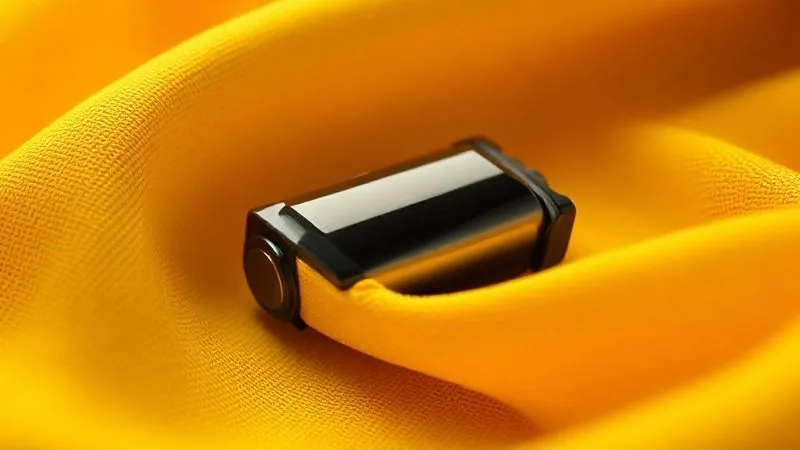
Miniaturization and Flexible Electronics: The Stealth Approach
The relentless march of miniaturization in electronics is a fashion technologist's best friend. Smaller, thinner, and more flexible components are inherently easier to hide and integrate without disrupting a garment's aesthetic.
Chip-on-Flex and Printed Electronics
Traditional rigid circuit boards are anathema to fashion. The solution lies in flexible electronics. Technologies like 'chip-on-flex' allow tiny microchips to be mounted directly onto thin, flexible substrates that can bend and conform to the body's contours or the fabric's movement. Even more advanced are printed electronics, where conductive inks and semiconductor materials are directly printed onto textile substrates, creating circuits that are literally part of the fabric itself.
- Design Components for Minimal Footprint: Work with electronics engineers to demand the smallest possible components. Every millimeter saved reduces the aesthetic impact.
- Utilize Stretchable Conductive Inks and Polymers: For areas requiring flexibility, employ inks that can stretch and contract with the fabric without breaking the circuit. This is crucial for maintaining both functionality and the garment's natural elasticity.
- Ensure Components Can Withstand Garment Movement: All integrated electronics must be designed to endure the stresses of bending, stretching, and everyday wear without fracturing or detaching. This often involves robust encapsulation and strategic placement.
According to a recent report by Grand View Research, the global flexible electronics market is projected to reach over $300 billion by 2028, driven significantly by wearable tech. This growth underscores the industry's commitment to making electronics more adaptable to diverse form factors, including textiles.
Strategic Placement and Ergonomic Design
Where you place the technology within a garment is just as critical as the technology itself. Poor placement can lead to discomfort, visible bulges, or premature wear and tear. Smart placement considers both the garment's design lines and the wearer's anatomy.
Zonal Integration and Load Distribution
I always advise my clients to think about 'zonal integration.' Identify areas of the garment that naturally offer protection or concealment, or those that experience less stress during movement. For instance, inner seams, cuffs, or the lining of a jacket are often ideal for housing smaller sensors or wiring, as they are less prone to stretching and less visible.
Furthermore, distribute the 'load' of technology. Instead of one large battery pack, consider several smaller, interconnected flexible cells spread across a wider area. This reduces localized bulk and allows the garment to maintain its natural drape and flow. The goal is to make the technology's presence imperceptible, both visually and tactilely.
| Placement Zone | Integration Strategy |
|---|---|
| Low-Stress Areas (e.g., inner seams, cuffs, collar stand) | Optimal for small sensors, thin wiring, and discreet LED indicators. Minimal impact on fabric drape and comfort. |
| High-Flex Areas (e.g., elbows, knees, shoulders) | Avoid rigid components entirely. Utilize stretchable electronics, inductive power transfer, or re-route circuits to less mobile areas. Focus on extreme flexibility. |
| Garment Interior (e.g., lining, hidden pockets, interlining) | Suitable for larger components like main processing units, flexible power banks, or communication modules, provided they are discreetly padded and conform to body contours. Ideal for heat dissipation. |
Biometric Mapping for Comfort and Function
For smart clothing designed to monitor biometrics, the placement of sensors is crucial for accuracy and comfort. This requires a deep understanding of human anatomy and movement. Body mapping helps identify optimal points for sensor contact that are both effective for data collection and unobtrusive for the wearer. For example, heart rate sensors are best placed over major arteries, but these locations must also be areas where the fabric naturally sits close to the skin without requiring excessive tension or rigid components.
Consider the garment's natural fit and how it moves with the body. A sensor placed in an area that constantly rubs or shifts will not only be inaccurate but also uncomfortable. Ergonomic design ensures that the tech enhances the garment's functionality without detracting from the wearer's experience or the garment's aesthetic integrity.
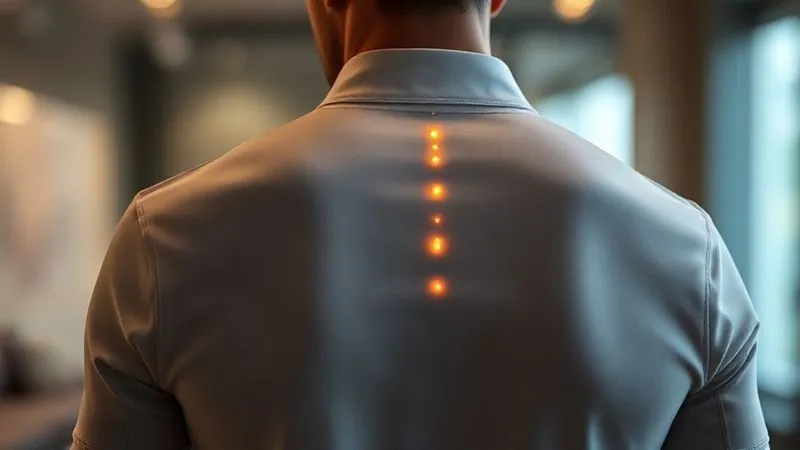
Powering the Future: Invisible Energy Solutions
Batteries have historically been the Achilles' heel of smart clothing, being bulky, rigid, and requiring visible charging ports. Overcoming this is paramount for aesthetic integration.
Energy Harvesting and Self-Powering Fabrics
The ultimate goal is to eliminate traditional batteries altogether. Energy harvesting technologies are becoming increasingly viable for low-power applications. Imagine a shirt that powers its own sensors using the wearer's kinetic energy, or a jacket that charges itself from ambient light. Thermoelectric generators convert body heat into electricity, while triboelectric nanogenerators (TENGs) harness energy from movement and friction.
These technologies, when integrated directly into the fabric, can create truly self-sufficient garments, removing the need for external power sources or charging cables. As innovators like Professor John Rogers at Northwestern University have demonstrated, micro-scale energy harvesting can power low-consumption devices directly from the body's movement or ambient light, paving the way for truly 'always-on' smart clothing without visible power sources.
Inductive Charging and Wireless Power
For devices that still require more power than can be harvested, wireless charging offers an elegant solution. Inductive charging coils can be seamlessly integrated into the garment's lining or interlining, allowing the wearer to simply place the item on a charging mat, much like charging a smartphone. This eliminates the need for unsightly ports or exposed wiring, maintaining the garment's clean lines.
The development of 'power fabrics' that can wirelessly transmit energy across a garment's surface is also on the horizon, promising a future where any component placed on the fabric can be powered without direct connections.
The Aesthetics of Interactivity: UI/UX in Smart Clothing
Seamless integration isn't just about hiding components; it's also about how the wearer interacts with the technology without disrupting the garment's aesthetic or the flow of their daily life. The user interface and user experience (UI/UX) must be as invisible and intuitive as the technology itself.
Discreet Indicators and Haptic Feedback
Forget flashing lights and loud beeps. Smart clothing demands subtle, integrated feedback mechanisms. Tiny, almost invisible LEDs, strategically placed within seams or behind fabric layers, can provide visual cues without drawing attention. Haptic feedback – gentle vibrations – can communicate alerts or information discreetly, felt only by the wearer. This allows the garment to provide valuable input without making its technological capabilities overtly visible.
The goal is to create an interaction that feels natural and integrated, like an extension of the garment itself, rather than a separate device. Think of a subtle vibration in the cuff indicating a new message, or a gentle warmth in the collar signaling a weather change.
Voice and Gesture Control: Hands-Free Elegance
For more complex interactions, voice and gesture control offer hands-free solutions that maintain aesthetic integrity. Microphones can be hidden within the garment's structure, allowing for voice commands. Similarly, embedded sensors can detect subtle gestures – a flick of the wrist, a tap on the sleeve – to control functions without the need for visible buttons or screens.
The goal, as frequently articulated by UX pioneers like the Nielsen Norman Group, is to make technology disappear into the background of daily life, becoming an intuitive extension rather than a separate device. When interaction becomes so natural that it's almost unconscious, the technology truly becomes seamless.
The Ethical Imperative: Sustainability and Longevity
Achieving aesthetic seamlessness in smart clothing isn't just about current design; it's also about the long-term impact and viability of these garments. As an industry specialist, I've seen firsthand how short-sighted design can lead to rapid obsolescence and environmental waste. True integration must consider sustainability and longevity as core design principles.
Circular Design Principles for Smart Textiles
Integrating tech into fabric without aesthetic compromise also means designing for the entire lifecycle of the garment. This includes considerations for repair, upgradeability, and ultimately, responsible end-of-life management. If a smart garment cannot be easily repaired or its tech components upgraded, it quickly becomes obsolete, leading to fashion waste that is even harder to recycle due to mixed materials.
Embrace circular design principles: design for disassembly, modularity, and material recovery. This ensures that while the tech is hidden, it's not permanently fused in a way that prevents recycling or component replacement. This approach not only extends the life of the garment but also allows for aesthetic updates without discarding the entire smart system.
Durability, Washability, and Maintenance
A beautiful garment with hidden tech is only truly seamless if it can withstand the rigors of everyday life, including washing and cleaning. Integrated electronics must be robustly protected against moisture, detergents, and mechanical stress. This requires advanced encapsulation techniques and rigorous testing.
Furthermore, maintenance should be simple. If a smart garment requires specialist cleaning or complex care, its aesthetic appeal quickly diminishes due to impracticality. The ultimate goal is a smart garment that can be cared for just like any other piece of clothing, offering both intelligence and effortless wearability.
| Design Principle | Benefit for Aesthetics/Longevity |
|---|---|
| Modular Components | Allows for easy upgrades and repairs of tech elements (e.g., battery, sensor module), extending garment life without discarding the entire item. Preserves original design by only replacing the tech, not the fabric. |
| Bio-Integrated & Recyclable Materials | Reduces environmental footprint, often results in softer and more breathable textiles, enhancing comfort and aesthetic appeal. Facilitates end-of-life recycling and material recovery. |
| Standardized, Concealed Connectors | Facilitates repair and replacement of tech elements by technicians, minimizing waste and maintaining garment integrity without visible ports or bulky attachments. |
Frequently Asked Questions (FAQ)
Question: How does washability affect integrated tech, and what are the current solutions? Washability is one of the most critical challenges. Early smart garments often failed due to water damage or component degradation. Modern solutions involve robust encapsulation using waterproof and flexible polymers, direct integration of conductive yarns that are inherently water-resistant (like silver-coated fibers), and modular designs where sensitive components can be easily removed before washing. Advanced textile coatings also play a role in protecting embedded electronics.
Question: What are the biggest challenges in scaling production of aesthetically integrated smart clothing? Scaling presents several hurdles. Firstly, the specialized manufacturing processes for weaving or printing electronics into textiles are often slower and more complex than traditional garment production. Secondly, quality control for both textile and electronic components simultaneously requires new testing protocols. Lastly, ensuring consistency in the aesthetic integration across thousands of units while maintaining functionality is a significant engineering and design challenge that requires sophisticated automation and precision.
Question: Is wireless power safe for everyday wear when integrated into clothing? Yes, generally. Wireless power for wearables typically operates at very low power levels and frequencies similar to those used in common consumer electronics (like smartphone charging pads). These adhere to strict international safety standards (e.g., ICNIRP guidelines) regarding electromagnetic field (EMF) exposure. When properly designed and integrated, wireless power systems in clothing are considered safe for continuous, everyday wear, emitting far less energy than a typical mobile phone.
Question: How do designers and engineers truly collaborate effectively to achieve seamlessness? Effective collaboration moves beyond mere communication. It involves shared physical workspaces, joint training sessions where each discipline learns the basics of the other, and iterative prototyping where both teams provide immediate feedback. Crucially, it requires a 'design language' that both can understand, translating technical specs into aesthetic implications and vice versa. Empathy for each other's domain and a shared vision from the project's inception are paramount.
Question: What's the future of invisible tech in high fashion and haute couture? The future is incredibly exciting. High fashion, with its emphasis on innovation and pushing boundaries, is a natural playground for invisible tech. We'll see bespoke garments with embedded sensors that adapt to the wearer's mood or environment, fabrics that change color or texture on command, and interactive elements that are virtually undetectable until activated. Haute couture will likely lead the way in showcasing truly 'living' garments that blur the lines between textile and technology, where the tech is not just hidden, but an integral part of the garment's artistic expression.
Key Takeaways and Final Thoughts
The journey to seamlessly integrate technology into fabric without aesthetic compromise is complex, but it's a journey the fashion technology industry is rapidly conquering. As I've outlined, it demands a fundamental shift in mindset, a deep dive into advanced material science, meticulous attention to component miniaturization and placement, innovative power solutions, and an intuitive approach to user interaction. It's about making technology disappear, not just to hide it, but to elevate the garment's inherent beauty and the wearer's experience.
- Design-First Philosophy: Begin with aesthetic vision, co-creating with tech from day one.
- Material Innovation: Leverage smart yarns and advanced encapsulation for invisibility.
- Miniaturization & Flexibility: Embrace chip-on-flex and printed electronics.
- Strategic Placement: Utilize zonal integration and ergonomic design for comfort and discretion.
- Invisible Power: Explore energy harvesting and wireless charging to eliminate bulky batteries.
- Subtle Interaction: Implement discreet feedback and hands-free controls for intuitive UX.
- Sustainability: Design for longevity, repairability, and circularity.
The era of bulky, Frankensteinian smart clothing is rapidly fading. We are on the cusp of a truly integrated future where our garments are not just beautiful, but intelligently responsive, enhancing our lives in ways that are both profound and utterly imperceptible. By committing to these principles, we can unlock the true potential of smart clothing, moving beyond novelty to create fashion that is as intelligent as it is elegant, forever changing how we perceive and interact with our wardrobes. The future of fashion is smart, subtle, and stunningly seamless.
Recommended Reading
- How to Safeguard Luxury Drops: 5 Strategies Against Brand Erosion
- 7 Essential Urgent Repair Methods for Priceless Haute Couture Textiles
- Authenticating Pre-1900 Garments: 7 Expert Steps to Resolve Disputes
- Future Eyewear: 5 Lens Innovations Shaping Tomorrow's Fashion Trends
- 7 Steps: Advise Clients on Glasses for Their Personal Brand?




Your email address will not be published. Required fields are marked *