

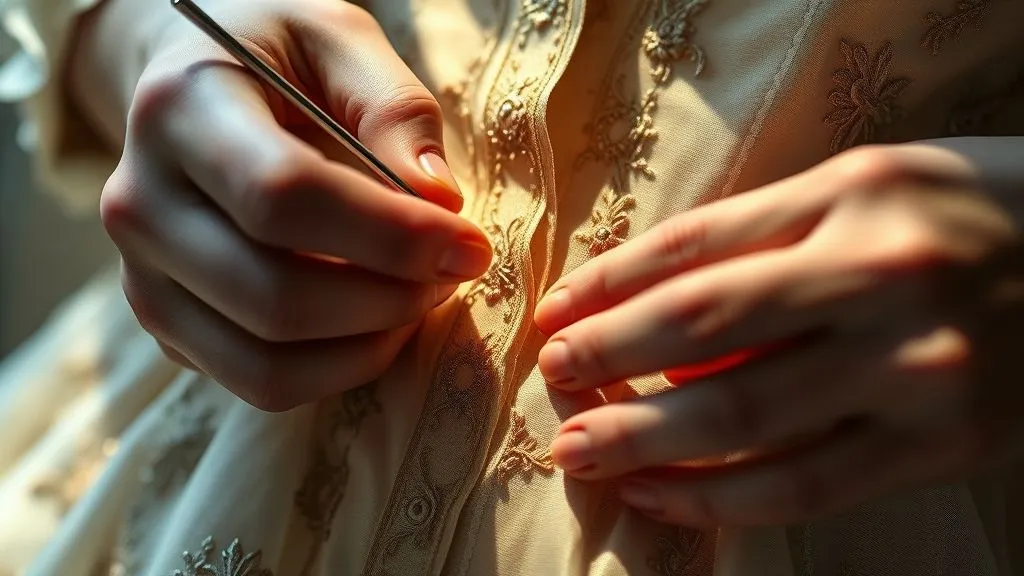
Urgent Repair Methods for Irreplaceable Haute Couture Textiles?
For over three decades immersed in the ethereal world of haute couture and exquisite textiles, I've witnessed the profound emotional and historical weight a single stitch can carry. There's a particular dread that washes over a collector, an archivist, or even a designer when an irreplaceable haute couture garment suffers unexpected damage.
Unlike ready-to-wear, these aren't just clothes; they are wearable art, historical artifacts, and testaments to unparalleled craftsmanship. A torn seam, a snagged embellishment, or a sudden stain can feel like an irreparable tragedy, threatening the very legacy of a masterpiece. The urgency isn't just about aesthetics; it's about preserving an artistic vision and a piece of history.
In this definitive guide, I will share my accumulated wisdom on navigating these critical moments. We'll delve into the immediate, expert-level urgent repair methods for irreplaceable haute couture textiles, exploring not just techniques but also the philosophy of conservation, essential tools, and when to recognize the absolute necessity of professional intervention. Prepare to gain actionable frameworks and insights that empower you to protect these precious creations.
The Golden Rule: Immediate Assessment and Stabilization
When damage strikes an irreplaceable haute couture textile, the very first response is unequivocally critical. I've personally witnessed moments of panic lead to well-meaning but ultimately detrimental actions. My immediate counsel, cultivated over decades in this niche, is to prioritize stabilization and prevent any further deterioration, often by doing less, not more, initially. Your primary objective here isn't to 'fix' but to 'contain' and 'understand'.
Step 1: Halt Further Damage and Establish a Safe Zone
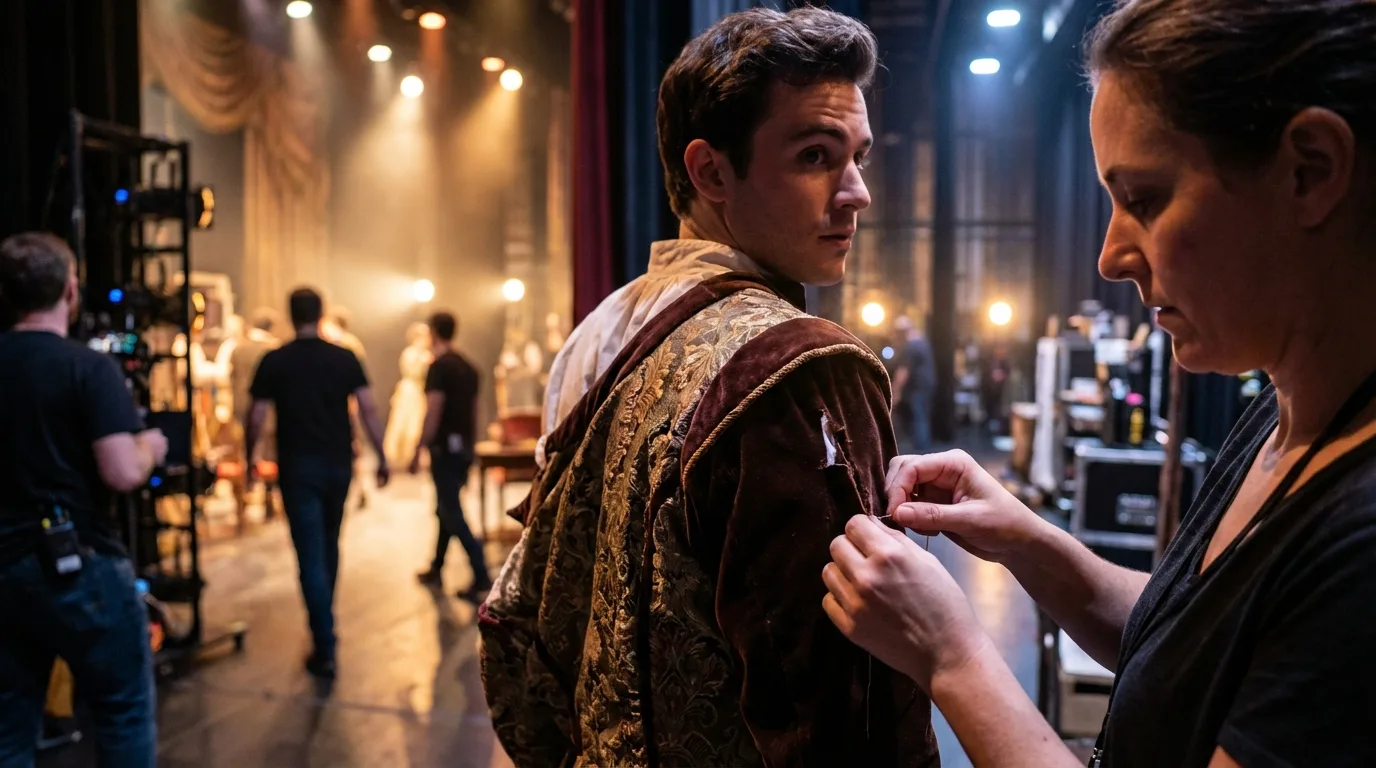
- Isolate the Garment with Utmost Care: Gently, and I mean with the reverence you'd afford a fragile artifact, remove the damaged item from its current environment. Avoid any pulling, stretching, or unnecessary manipulation of the damaged area. If it's hanging, gently lay it flat on a clean, stable surface (like an acid-free board covered with a clean cotton sheet). If it’s on a person, guide them to carefully remove it without exacerbating the tear or stain.
- Conduct a Meticulous Damage Assessment: Before even contemplating a repair, you must understand the full extent and nature of the damage. Is it a clean tear, a jagged rip, a snag, a fresh liquid spill, a dried stain, a detached embellishment, or a more insidious structural failure like fabric degradation or insect damage? The exact type and location of the damage will profoundly dictate the immediate next steps.
- Document Everything with Precision: This step cannot be overstated. Before any intervention, take detailed, high-resolution photographs from multiple angles. Capture close-ups of the damage and wider shots showing its context on the garment. This photographic evidence serves as an indispensable record for potential professional conservators, for insurance purposes, and for your own understanding of the damage's initial state. Use a ruler in some shots to provide scale.
This initial assessment phase is where the experienced eye truly comes into play. You're not just observing a rip; you're meticulously evaluating the fabric's specific weave (plain, twill, satin), the direction of the tear (along the warp, weft, or bias), the presence of underlying interlinings, and its proximity to critical design elements like seams, darts, or elaborate embroidery. A detailed understanding at this juncture can save the garment from further harm down the line.
"In haute couture conservation, the most effective 'urgent repair' often begins with a moment of calm, meticulous observation, and the courageous decision to pause before acting. Haste is the enemy of preservation."
The Philosophy of Minimal Intervention: Preserving Originality
My philosophy, a cornerstone of ethical textile conservation and echoed by leading institutions globally, centers on the principle of minimal intervention. This isn't just a guideline; it's a sacred pact with the garment's history and artistic integrity. It means any repair, especially an urgent one, must be:
- Reversible: It can be undone without causing further harm to the original textile.
- Compatible: Uses materials that have similar physical and chemical properties to the original.
- Inconspicuous: As visually unobtrusive as possible, without altering the garment's original aesthetic intent or structural integrity.
The ultimate goal is not to 'fix' it in a way that erases the incident or introduces new, potentially damaging elements, but rather to stabilize, support, and reintegrate the damaged area respectfully. This approach ensures the garment's longevity and historical accuracy.
Understanding Reversibility and Material Compatibility in Practice
A reversible repair is critical because it acknowledges that future, more advanced conservation techniques may emerge, or a different approach might be deemed superior. Your urgent repair should never preclude future, more definitive treatments. For instance, using a fine, un-dyed silk thread for a temporary repair is reversible; using superglue is not.
Compatibility, on the other hand, prevents new stresses. Using a stiff, heavy cotton thread on a fine silk chiffon, for example, would cause differential shrinkage or tension, leading to puckering or new tears over time. Similarly, an adhesive that discolors or stiffens will permanently alter the fabric's hand and appearance. As the Victoria and Albert Museum's conservation department consistently emphasizes, understanding material science is paramount.
- Why Reversibility is Non-Negotiable: It safeguards the garment's future, maintains its historical accuracy for researchers, and crucially, avoids irreversible damage from well-intentioned but misguided interventions.
- Why Material Compatibility is Your Ally: It ensures long-term stability, prevents the introduction of new stresses or chemical reactions, and maintains the garment's original drape, feel, and aesthetic harmony.
This principle is paramount. I've encountered numerous pieces where initial, aggressive, or incompatible repairs caused more long-term damage than the original incident. Think of it as a temporary splint for a broken bone – it stabilizes, but the bone's true healing requires specialized, non-damaging care. This mindful approach respects the artifact's journey and ensures its continued existence.
| Intervention Type | Description | Pros | Cons |
|---|---|---|---|
| Reversible Conservation Stitching | Temporary support using fine, unwaxed silk threads, easily removable. | Absolutely safe, introduces no new damage, maintains original fabric integrity, preserves historical value. | Not a permanent structural repair, requires significant skill and patience, may be slightly visible upon close inspection. |
| Conservation-Grade Adhesive Repair | Using select, pH-neutral, reversible adhesives (e.g., BEVA 371) for specific non-structural tears or detached embellishments. | Can be quick for specific issues, offers strong localized bond, potentially less visible than stitching for some applications. | Less universally reversible than stitching, requires precise application, potential for slight stiffness or sheen changes, must be applied by experienced hands. |
| Underlying Patching (Non-Adhesive) | Stabilizing a damaged area with a piece of sheer, conservation-grade fabric (e.g., silk crepeline) secured with fine, reversible stitching. | Adds structural integrity, distributes stress, fully reversible if stitches are removed, maintains fabric breathability. | May slightly alter drape or hand of very fine fabrics, requires careful material matching and meticulous stitching, can be time-consuming. |
Essential Toolkit for Emergency Couture Repair
You simply cannot perform urgent, precise, and respectful repairs on haute couture textiles without the right tools. Forget your everyday sewing kit; haute couture demands surgical precision and specialized instruments. Investing in a dedicated, high-quality toolkit is not an extravagance; it is an absolute necessity for anyone serious about the preservation of these precious creations.
The Indispensable Instruments and Materials:
- Ultra-Fine Needles: Specifically, you'll need very thin, sharp needles. My preference is for Sharps or Milliners in sizes 10-12. These are designed to pass through delicate fabrics with minimal disruption, preventing snags and larger needle holes. A selection of curved needles can also be invaluable for reaching awkward areas or working from the back of an embellished piece.
- Unwaxed Silk Thread: This is your workhorse. Fine, unwaxed silk thread (such as Gütterman silk thread) is superior to cotton or polyester. It is exceptionally strong for its fineness, has minimal stretch, and is less abrasive, reducing the risk of cutting or damaging delicate original fibers. Maintain a palette of neutral colors – ecru, light grey, black, and white – along with a few colors that frequently appear in your collection.
- Fine-Tipped Tweezers: Non-magnetic, surgical-grade tweezers are indispensable for manipulating individual threads, repositioning tiny embellishments, or carefully aligning torn fabric edges. Precision is key.
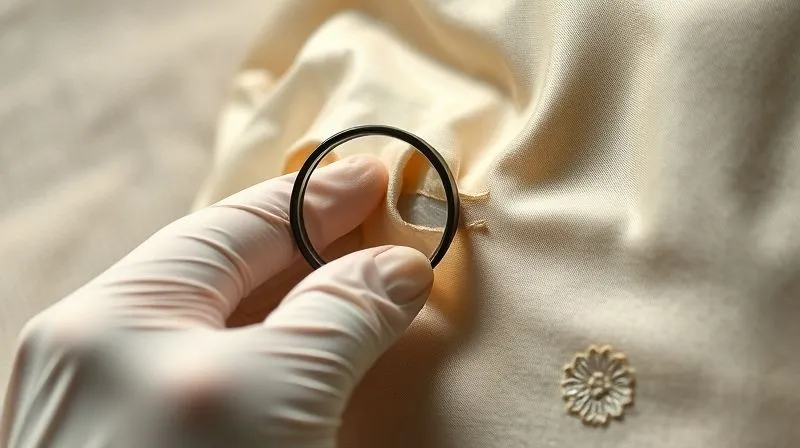
- Magnification Tools: A head-mounted magnifier (like those used by jewelers or surgeons) or a high-quality jeweler's loupe is absolutely indispensable. Working on haute couture often involves details invisible to the naked eye. This allows for meticulous placement of stitches and identification of minute damage.
- Conservation-Grade Stabilization Materials: Always have a supply of acid-free tissue paper for padding and protection, conservation-grade polyester film (Mylar) for temporary support, and soft, clean cotton cloths (like old bed sheets, washed without fabric softener) for blotting or creating a clean work surface.
- Micro-Scissors: Extremely sharp, small scissors with fine points are crucial for precise thread cutting without risking damage to the surrounding fabric. Embroidery scissors are often suitable, but ensure they are kept razor-sharp.
- pH-Neutral, Reversible Adhesives (Use with Extreme Caution): If, and only if, absolutely necessary for a non-structural embellishment or a very specific, small repair where stitching is impossible, use only conservation-grade, reversible adhesives like BEVA 371 or Paraloid B-72. These must be applied sparingly with a micro-applicator (e.g., a toothpick or a very fine brush). Always, always test on an inconspicuous area first, and understand the reversibility limitations.
- Weight Bags/Lead Shot Bags: Small, fabric-covered bags filled with lead shot or sand can be gently placed on either side of a tear to hold fabric edges in place without pinning, which can cause further damage.
Remember, the quality, cleanliness, and sharpness of your tools directly impact the quality and safety of your repair. Skimping on these essentials is a false economy that can easily lead to further damage, turning a minor incident into a major conservation challenge. Treat your tools with the same respect you show your haute couture.
Emergency Stitching Techniques: Beyond the Basic Mend
Standard sewing techniques, while suitable for everyday garments, are often far too robust, visible, or structurally aggressive for haute couture. When dealing with irreplaceable textiles, we require methods that are almost invisible, entirely supportive, and deeply respectful of the original textile's integrity. These are not typically permanent solutions but rather critical stabilization steps designed to prevent further damage until a professional conservator can perform a more comprehensive treatment.
1. The Conservation Stitch (La Point de Conservation): Your First Line of Defense
This is, in my experience, the paramount technique for stabilizing tears, snags, or areas of weakness in woven and even some knitted fabrics. It's a series of tiny, meticulously placed running stitches that bridge the gap without pulling the fabric out of alignment or introducing excessive tension. The fundamental principle is to work from the back of the garment where possible, using a thread color that blends seamlessly or is slightly lighter than the original fabric. Each stitch should be no more than 1-2 millimeters long, catching only a few threads of the original fabric, forming a delicate, supportive web across the tear, much like a spider's silk.
- Precise Edge Alignment: Begin by carefully bringing the torn edges together. This is where your tweezers and magnification become invaluable. Ensure the fabric weave or pattern aligns as perfectly as possible. Use small, fabric-covered weights or, if absolutely necessary, fine entomological pins placed outside the repair area to hold the edges in perfect registration.
- Underlying Support (Crucial for Fragile Fabrics): For extremely delicate or severely degraded fabrics (e.g., antique silks, fine lace), I strongly recommend placing a small piece of sheer, conservation-grade silk crepeline or fine polyester net fabric underneath the tear. This provides a stable, transparent base for your stitches, distributing tension and offering additional support without altering the garment's drape. This support layer should extend slightly beyond the damaged area.
- Meticulous Micro-Stitching: Using your ultra-fine needle and matching silk thread, begin making tiny, barely visible stitches across the tear. Alternate sides, creating a 'ladder' or 'cross-hatch' effect. The key is to catch only a few threads of the original fabric with each stitch, ensuring the thread lies flat against the fabric and does not pull, pucker, or create tension. The stitches should be parallel to the fabric's grain, if possible.
- Secure Ends with Discretion: Finish by running the thread back through a few stitches on the reverse side, or by creating a tiny, hidden knot within the fabric layers. Avoid bulky knots that could create pressure points or distort the fabric.
This method doesn't join the fabric in a traditional, load-bearing seam but rather supports the torn edges, preventing further fraying and holding them in their original configuration. It's a testament to the adage, "less is more." According to the Victoria and Albert Museum's renowned textile conservation guidelines, such minimal intervention stitching is consistently preferred for historical and highly valuable garments, as it respects the artifact's integrity.
2. The Hairline Couched Stitch: For Linear Delicacy
For very fine, linear tears or splits, particularly prevalent in delicate silks, satins, or chiffons, a couched stitch can be remarkably effective. This technique involves laying one or more strands of matching silk thread directly along the torn edge or across the split. These 'couching' threads are then secured with even tinier stitches that pass through the fabric at regular intervals. It acts as a delicate, flexible 'splint' for the tear, offering support without direct tension on the torn edges. The couching threads should match the garment's color and texture as closely as possible.
3. Netting or Tulle Support: When Degradation is Widespread
For larger, more extensive areas of severe degradation, multiple small holes (e.g., from insect damage or general aging), or areas of extreme fragility, a sheer, fine netting (such as silk organza, silk crepeline, or conservation-grade nylon tulle) can be carefully placed behind the damaged area. This support layer is then secured with tiny, perimeter stitches, blending into the original fabric. This provides crucial overall structural support without attempting to mend each individual hole, which would be impossible or damaging. This strategic approach maintains the garment's original drape and aesthetic, a technique I've seen successfully employed by institutions like the Metropolitan Museum of Art's Costume Institute for the most fragile historical pieces.
Addressing Tears and Rips in Diverse Delicate Fabrics
The specific characteristics of the haute couture fabric in question profoundly dictate the appropriate repair strategy. A tear in a robust, structured brocade presents a vastly different challenge than a rip in a bias-cut silk chiffon or a sheer organza. Haute couture frequently utilizes an astonishing array of materials – from gossamer organza and ethereal georgette to intricate laces, delicate velvets, and complex weaves – each demanding an almost surgical level of care and a tailored approach to urgent repair.
Tailored Techniques for Specific Fabric Types:
- Silks and Chiffons: These luxurious yet incredibly fragile fabrics demand the lightest touch. Their fine, slippery nature makes them prone to fraying and distortion. Often, a combination of the conservation stitch, applied with extreme precision, coupled with an underlying patch of sheer, conservation-grade silk crepeline, is the safest and most effective urgent repair. Adhesives are almost universally discouraged here due to their potential for stiffening the fabric, causing discoloration, or altering the delicate drape. The goal is to support the tear without compromising the fabric's ethereal quality.
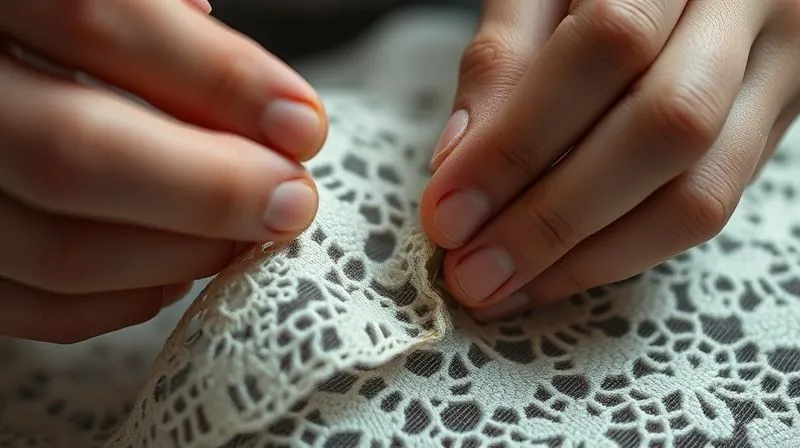
- Lace and Netting: Mending lace is not merely a repair; it is an art form in itself, requiring exceptional patience and skill. For urgent stabilization of minor damage, carefully re-integrating broken threads with an ultra-fine needle and matching thread (often a single ply of silk embroidery floss, meticulously separated) can mask minor damage and prevent further unraveling. For larger areas where the lace pattern is disrupted, a small, meticulously chosen piece of antique or matching lace can be painstakingly appliquéd from the back, blending into the original pattern with invisible stitches. This requires an understanding of lace construction.
- Velvets and Pile Fabrics: Tears in velvet are particularly challenging due to the directional pile. The key here is to carefully align the pile and use the conservation stitch from the back, ensuring the stitches do not flatten or disrupt the pile on the front. A very fine, underlying silk patch can provide stability. For crushed pile, gentle steaming (from a safe distance, not touching the fabric) can sometimes help lift the pile, but this carries significant risk and should only be attempted by an expert.
- Embroidered or Beaded Fabrics: These pieces are often the heaviest and most complex, making tears especially problematic as the weight of the embellishments can exacerbate the damage. Any repair must first prioritize stabilizing the base fabric. This might involve a tiny, almost invisible patch of identical fabric secured underneath the embroidery before attempting to re-stitch any loose or detached embellishments. The repair must support both the fabric and the decorative elements without adding bulk or disrupting the design.
My unwavering advice here is always to prioritize the integrity and long-term preservation of the original fabric over achieving an 'invisible' mend at all costs. An expertly executed, slightly visible conservation repair that respects the garment's history and materials is infinitely preferable to an aggressive, poorly executed one that causes irreversible harm. This is where true expertise shines – in knowing what can be done and, more importantly, what should not be attempted.
Saving Embellishments: Beads, Sequins, and Appliqués
Haute couture is synonymous with breathtaking, intricate embellishments – the shimmering cascade of beads, the sparkle of hand-sewn sequins, the three-dimensional artistry of appliqués. When these become detached or damaged, the garment loses a piece of its soul, its intended sparkle and narrative. Urgent repairs in this domain are frequently about re-securing what's loose before it's lost forever, preventing a minor issue from becoming a catastrophic loss.
Methodical Steps for Re-Attaching Loose Embellishments:
- Identify the Original Attachment Method: This is paramount. Were beads sewn individually, in delicate strands, or applied with a specific type of adhesive? Were sequins stitched flat, cupped, or overlapping? Understanding the original couture technique is vital to mimicking it respectfully. Examine intact sections of the embellishment for clues.
- Select Matching Thread or Monofilament: For beads and sequins, a strong, ultra-fine polyester or nylon monofilament thread (often referred to as 'invisible thread,' though it's important to choose a high-quality, non-yellowing type) is often ideal. Alternatively, a matching silk thread, carefully selected for color and fineness, can be used. The goal is strength and discretion.
- Secure from the Back (where possible): Wherever feasible, guide your needle and thread from the back of the fabric, ensuring that the securing stitches are entirely hidden or minimally visible on the front. This preserves the pristine appearance of the embellishment. For individual beads, use a backstitch or a tiny loop stitch to secure each one. For strands, follow the original stitch pattern.
- For Lifting Appliqués: If an appliqué is lifting at the edges, use tiny, almost invisible 'slip stitches' (also known as ladder stitches) around its perimeter to carefully re-secure it to the base fabric. If the appliqué itself is torn or damaged, the conservation stitch can be applied to its individual components before re-attachment to stabilize its integrity. Ensure the thread matches the appliqué itself, not just the base fabric.
I distinctly recall a client's irreplaceable Chanel jacket from the 1960s, a masterpiece adorned with thousands of tiny glass beads and intricate ribbon embroidery. A significant section of the beading had begun to detach due to age and handling, threatening a cascade of bead loss. My immediate advice was to place the jacket flat, photograph the area exhaustively, and then, using fine tweezers, a head-mounted magnifying glass, and a single ply of matching silk thread, meticulously re-stitch each loose bead back into its original position. This involved mimicking the original couture technique of individual bead attachment, ensuring each was secure but not overly tight. This small, urgent, and precise intervention prevented further disintegration and preserved the jacket's incredible craftsmanship. It was a painstaking process, but absolutely necessary.
Stain Mitigation and Fabric Discoloration: A Race Against Time
Stains are, arguably, the most distressing form of damage to haute couture, as they often penetrate the very fibers and can cause irreversible alteration. Urgent intervention here is a delicate balance of containment and gentle first aid, never aggressive cleaning. The wrong action can set a stain permanently or damage the fabric beyond repair.
The Immediate Stain Protocol: Gentle First Aid, Not Aggressive Intervention:
- The Golden Rule: Do NOT Rub or Scrub: This is the cardinal sin of stain removal on delicate textiles. Rubbing will not only spread the stain, making it larger and more diffuse, but it will also push the staining agent deeper into the fibers, potentially damaging the fabric's weave or pile, and making professional removal far more difficult or impossible.
- Blot, Don't Wipe: Instead of rubbing, use a clean, white, highly absorbent cloth (pure cotton or linen, free of dyes or fabric softeners) to gently blot the stain. Work from the outside of the stain inwards. This helps to draw the staining agent out of the fabric rather than spreading it. Change your blotting cloth frequently to a clean section.
- Identify the Stain (if possible): Knowing whether the stain is oil-based (e.g., makeup, grease), water-based (e.g., wine, coffee, juice), or protein-based (e.g., blood, food) can inform the next (extremely gentle and cautious) steps. However, for haute couture, this identification is primarily for professional conservators.
- For Water-Based Stains (Extreme Caution): For very robust, non-silk, non-rayon fabrics (rare in haute couture), a tiny amount of distilled water gently blotted onto a fresh stain might sometimes help lift it. However, for silk, velvet, or any delicate couture fabric, using water is incredibly risky as it can cause water marks, rings, or alter the fabric's finish. Generally, this is not recommended for urgent DIY on haute couture.
- For Oil-Based Stains (Limited DIY): For fresh oil-based stains, a tiny sprinkle of a pure absorbent powder like cornstarch or talcum powder can sometimes absorb some of the oil. Apply gently, let it sit for a few minutes (no more than 15-20), then gently brush off with a very soft brush (like a clean makeup brush). Again, this is a very limited urgent intervention and carries risks.
A Critical Warning: Never, under any circumstances, use harsh chemicals, commercial stain removers, household detergents, or attempt to machine wash or aggressively hand wash an haute couture garment. The risk of permanent damage, irreversible color loss, fabric degradation, or distorting the garment's structure is simply too high. For the vast majority of stains on haute couture, especially on delicate silks, velvets, heavily embellished pieces, or historic textiles, the most urgent and effective 'method' is to gently blot, stabilize the garment, and immediately seek the advice and services of a professional textile conservator. As ICOM-CC (International Council of Museums – Committee for Conservation) guidelines consistently emphasize, true preservation often means knowing precisely when not to act aggressively and to defer to specialized expertise.
When to Call the Experts: Professional Conservation vs. DIY Limits
While the urgent methods I've outlined can provide crucial stabilization and mitigate immediate risks, they are rarely definitive, long-term solutions for truly irreplaceable haute couture. A critical aspect of being a responsible custodian of these treasures is recognizing your own limitations and understanding precisely when to defer to specialized expertise. Knowing when to call in a professional is not a failure; it is, in fact, the ultimate act of preservation and respect for the garment.
Recognizing the Absolute Need for Professional Intervention:
- Complex or Extensive Damage: Large, jagged tears, significant structural failures (e.g., disintegration of a bodice lining), extensive fraying, or damage affecting multiple layers of fabric and embellishments are beyond the scope of urgent DIY. These require comprehensive, integrated repair strategies.
- High Value or Historic Pieces: Any garment with significant historical, monetary, or profound sentimental value should, without exception, be handled by a professional textile conservator. The risks of irreversible damage from amateur intervention are simply too great to gamble with.
- Unknown or Extremely Delicate Fabrics: If you are unsure about the fabric composition, its age, or its inherent resilience (e.g., highly degraded antique silk, fragile lace, or unusual synthetic blends), defer to an expert. They possess the knowledge to identify materials and understand their unique vulnerabilities.
- Dye Bleeding or Significant Color Loss: These are complex chemical issues that require specialized knowledge of dyestuffs, pH levels, and controlled restoration techniques. Attempting to fix these at home will almost certainly exacerbate the problem.
- Deep-Set or Unknown Stains: Especially on delicate or embellished fabrics. While urgent blotting can help, deep-set stains require professional analysis and targeted, often proprietary, cleaning methods that minimize risk to the surrounding textile.
- Pest Damage: If you suspect active insect infestation (moth larvae, carpet beetles), a professional conservator can provide safe, effective fumigation or freezing treatments without damaging the garment.
A professional textile conservator possesses an unparalleled combination of specialized tools, conservation-grade materials, and, most importantly, an in-depth knowledge of textile science, historical construction techniques, and ethical conservation practices. They can perform intricate reweaving, precise dye matching, and highly controlled wet or dry cleaning with minimal risk to the garment. Their expertise extends to understanding the long-term effects of materials and environmental factors. My advice is always to consult with a reputable conservator even for what might appear to be minor damage on truly irreplaceable pieces. Their initial assessment alone is an invaluable investment, providing clarity and a safe path forward. As marketing guru Seth Godin often says about specialized skills, "The cost of not doing it right the first time is often far greater than the cost of doing it right." This applies profoundly to haute couture conservation.
Case Study: The Duchess's Silk Organza Gown
A few years ago, I consulted on a truly exquisite 1930s silk organza evening gown belonging to a prominent private collector. The gown, renowned for its ethereal drape and delicate hand-painted floral motifs, suffered a 6-inch linear tear along the bias during transit. The collector, understandably distraught, initially considered a local tailor.
My urgent advice was to immediately halt any DIY attempts, gently lay the gown flat on an acid-free board, and cover the tear with a piece of Mylar to prevent further fraying. We then documented the damage extensively. Within 24 hours, the gown was carefully transported to a specialist textile conservator. The conservator, using ultra-fine silk crepeline as an underlying support and employing a microscopic conservation stitch, meticulously reintegrated the torn edges. The repair was virtually invisible, preserving the gown's original silhouette and the integrity of the hand-painted design. This resulted in the gown retaining its significant historical and market value, a testament to timely, expert intervention over panicked amateur repair.
Preventative Measures: The Ultimate "Urgent Repair" Strategy
Ultimately, the most effective and least stressful 'urgent repair' is, without a doubt, prevention. Proactive, meticulous care in storage, handling, and environmental control dramatically reduces the risk of damage, making emergency interventions less frequent and less severe. Think of it as investing in the longevity of your haute couture collection, safeguarding it from the silent threats of time and environment.
Comprehensive Preventative Strategies for Long-Term Preservation:
- Optimal Storage Solutions: Never store haute couture garments in standard plastic dry cleaning bags, which trap moisture and off-gas chemicals that can degrade textiles. Instead, use breathable, acid-free garment bags made of cotton or Tyvek. For heavier pieces, use padded hangers that distribute weight evenly, preventing stress on shoulders. For very delicate or heavily embellished garments, or those with a complex structure, flat storage in acid-free tissue paper-lined archival boxes is often preferable. Ensure garments are clean before storage.
- Controlled Environmental Conditions: This is paramount. Maintain a stable temperature (ideally around 18-20°C or 65-68°F) and consistent humidity (45-55% Relative Humidity). Fluctuations in temperature and humidity cause fibers to expand and contract, leading to stress and degradation, and create ideal conditions for mold growth. Avoid direct sunlight, which causes irreversible fading and fiber weakening.
- Meticulous Handling Protocols: Always handle haute couture garments with clean hands. For extremely fragile or historic items, wear clean, unpowdered cotton gloves to prevent the transfer of oils, dirt, and acids from your skin. When lifting garments, support them from multiple points, especially for heavy, embellished pieces, to distribute the weight and prevent strain on delicate seams or fabric. Never pull or tug.
- Regular, Proactive Inspection: Periodically inspect your garments – at least once every six months, or more frequently for highly valued pieces. Look for early signs of damage such as loose threads, nascent tears, faint stains, changes in fabric texture, or any evidence of insect activity (e.g., tiny holes, frass, or casings). Early detection allows for proactive, non-urgent intervention, often preventing minor issues from escalating.
- Vigilant Pest Control: Implement non-toxic pest control measures. Use natural repellents like cedar blocks or sachets of dried lavender, but never place them directly on the fabric. Ensure storage areas are meticulously clean, regularly vacuumed, and free of food particles or dust, which can attract pests. Monitor for signs of moths, carpet beetles, or silverfish.
- Minimize Wear: While haute couture is meant to be worn, recognize that each wearing introduces stress and potential for damage. For truly irreplaceable pieces, consider limiting their exposure and handling.
These preventative practices, while requiring diligence, form the bedrock of long-term preservation. A garment that is properly stored, regularly inspected, and handled with care is far less likely to require a stressful, urgent, and potentially risky repair. For further reading on best practices in textile care and conservation, I highly recommend resources from institutions like the National Archives' conservation guidance on textiles and other leading archival bodies.
Frequently Asked Questions (FAQ)
Q: Can I use superglue for a detached embellishment in an emergency? A: Absolutely not. Superglue (cyanoacrylate) is irreversible, discolors over time, becomes brittle, and can permanently damage delicate haute couture fabrics. It will also make professional conservation impossible or significantly more challenging. Always avoid non-conservation grade adhesives.
Q: What if I don't have matching silk thread for an urgent repair? A: If an exact match isn't available, opt for the finest, unwaxed silk thread you have in a neutral color (ecru, very light grey) that is less visible. The goal is stabilization, not invisible mending at this stage. Prioritize fineness and strength over perfect color match for urgent intervention.
Q: How quickly do I need to act on a stain on haute couture? A: Immediately. The fresher the stain, the higher the chance of successful mitigation. However, 'acting' means gentle blotting and professional consultation, not aggressive DIY cleaning. For delicate fabrics, even water can cause a water mark or ring, so extreme caution is paramount.
Q: Is it ever okay to machine wash or dry clean haute couture for urgent cleaning? A: Almost never. Haute couture garments are constructed with specific, often delicate, materials and techniques not designed for conventional cleaning methods. Dry cleaning solvents can damage embellishments, dyes, and interlinings. Machine washing is out of the question. Always consult a specialist couture cleaner or textile conservator.
Q: What's the biggest mistake people make when attempting urgent repairs on valuable textiles? A: The biggest mistake is acting impulsively without proper assessment, knowledge, or appropriate tools. This often leads to using incorrect materials (e.g., wrong thread, aggressive adhesives) or techniques (e.g., rubbing stains, pulling tears), resulting in irreversible damage that diminishes the garment's value and integrity far more than the original incident. Patience and informed restraint are your best allies.
Key Takeaways and Final Thoughts
Navigating the unexpected damage to an irreplaceable haute couture textile can be daunting, but with the right knowledge and a disciplined approach, you can significantly mitigate further harm and preserve its legacy. Let's recap the critical principles for urgent repair methods for irreplaceable haute couture textiles:
- Prioritize Stabilization: Your first action should always be to halt further damage and meticulously document the incident.
- Embrace Minimal Intervention: Any urgent repair should be reversible, compatible with original materials, and as discreet as possible.
- Equip Yourself Wisely: Invest in fine, specialized tools and conservation-grade materials.
- Master Basic Conservation Stitches: Learn techniques like the conservation stitch for delicate, supportive mending.
- Know When to Step Back: Recognize the limits of DIY and when professional textile conservators are indispensable.
- Practice Prevention: The best urgent repair is proactive care and proper storage.
The world of haute couture is a testament to human artistry and dedication. Each garment tells a story, and as custodians of these treasures, we bear the responsibility of ensuring their survival for future generations. By understanding and applying these urgent repair methods, you are not just mending fabric; you are safeguarding art, history, and an enduring legacy of unparalleled craftsmanship. Approach each challenge with respect, precision, and the knowledge that you are contributing to the preservation of beauty.
Recommended Reading
- Best Activewear for CrossFit Beginners: Crush Your First WOD!
- 5 Proven Ways to Slash Eyewear Returns: A Guide for Optical Retailers
- How to Maintain Creative Integrity with Restrictive Fashion Briefs
- 7 Crucial Steps: How to Verify Ethical Labor in Slow Fashion Supply Chains
- 7 Pro Lighting & Makeup Secrets for Diverse Skin Tones in Studio



Your email address will not be published. Required fields are marked *