

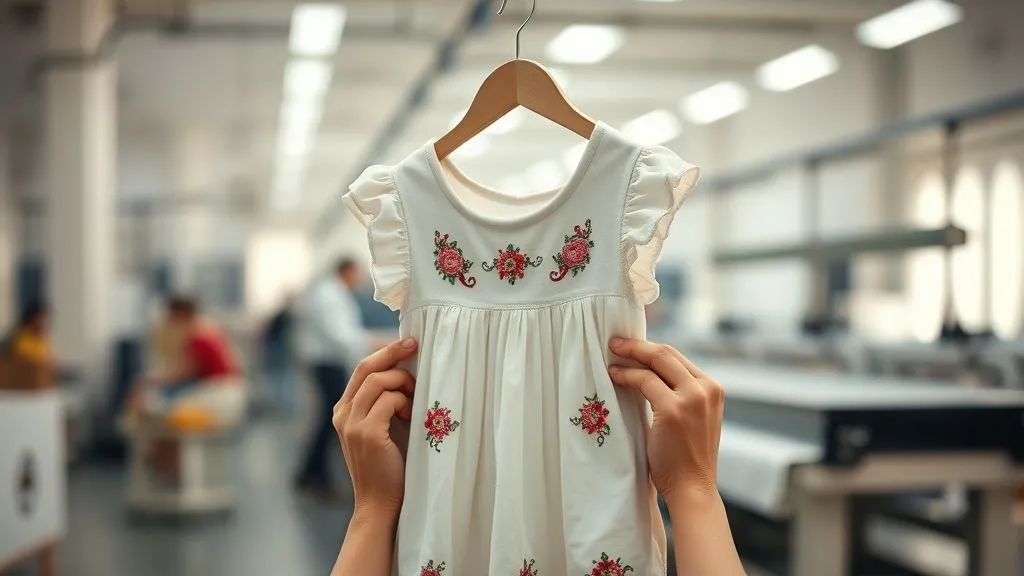
How to scale unique kids fashion production without losing brand identity?
For over two decades in the vibrant, often unpredictable world of kids' fashion, I've witnessed countless brands bloom with incredible creativity, only to wilt under the pressure of growth. The dream of expanding from a beloved boutique concept to a recognizable brand often clashes head-on with the harsh realities of mass production. It's a classic conundrum: how do you maintain that bespoke magic, that unique spark, when you need to produce hundreds, even thousands, of garments?
Many entrepreneurs, eager to meet demand, find themselves compromising on materials, diluting design aesthetics, or losing the personal touch that defined their brand in the first place. This isn't just a logistical hurdle; it's an existential threat to the very soul of a kids' fashion brand that thrives on distinctiveness. The fear of becoming 'just another label' is palpable, and rightly so, as the market is saturated with generic offerings.
But I'm here to tell you that scaling doesn't have to mean sacrificing your brand's unique identity. In this definitive guide, I'll share actionable frameworks, insights gleaned from years of industry experience, and proven strategies to help you navigate the complexities of expansion. We'll explore how to scale unique kids fashion production without losing brand identity, ensuring your brand's DNA remains intact and even strengthens with every step forward.
Understanding Your Brand DNA: The Non-Negotiable Core
Defining Your Unique Aesthetic and Values
Before you even think about scaling, you must have an ironclad understanding of what makes your brand truly unique. This isn't just about your logo or color palette; it's about the emotional resonance, the story you tell, and the values you embody. Is it whimsical playfulness, eco-conscious comfort, or perhaps sophisticated mini-me styles? Document this core essence meticulously.
I always advise my clients to create a 'Brand Bible' – a comprehensive document detailing everything from preferred fabric textures and print styles to ethical sourcing mandates and target demographic psychographics. This Bible becomes your north star, guiding every design decision and production choice.
The Role of Storytelling in Brand Preservation
Children's fashion is inherently emotional. Parents aren't just buying clothes; they're buying dreams, comfort, and memories. Your brand's story – why you started, what inspires your designs, the journey of your materials – is a powerful tool for maintaining identity as you grow. This narrative should be woven into your marketing, packaging, and even the tags on your garments.
When you share your story authentically, customers feel a deeper connection, making them more loyal and forgiving of the inevitable complexities that come with scaling. It transforms a transaction into a relationship, bolstering your brand identity against dilution.
Scaling isn't about doing more of the same; it's about doing more of what makes you uniquely you, more efficiently and effectively. Your brand DNA is your blueprint for this growth.
Strategic Sourcing and Ethical Manufacturing Partnerships
The backbone of scaling unique kids fashion production without losing brand identity lies in the strength and alignment of your supply chain. This is where many brands falter, opting for the cheapest option rather than the most compatible. I've seen this mistake lead to devastating quality issues and a complete erosion of brand integrity.
Vetting Suppliers for Quality and Alignment
Your suppliers are an extension of your brand. When I'm advising clients, I emphasize rigorous due diligence. Look beyond price. Assess their commitment to quality, their production capabilities, and crucially, their understanding of your specific aesthetic and ethical standards. Do they have experience with the specialized fabrics or unique embellishments your designs require?
Consider conducting site visits, requesting samples from multiple production runs, and speaking with their other clients. A supplier who truly understands and respects your brand vision is invaluable, even if they aren't the absolute lowest bid. This investment pays dividends in consistency and quality.
Building Long-Term Relationships with Artisans and Factories
In the niche of unique kids fashion, you often rely on specialized skills – hand embroidery, intricate pattern-making, sustainable dyeing techniques. These are not commodities. Cultivating strong, long-term relationships with artisans and factories ensures continuity of skill, fosters innovation, and allows for direct communication regarding design nuances.
Treat your manufacturing partners as collaborators. Share your brand vision, involve them in problem-solving, and provide clear, consistent feedback. This collaborative approach is essential for maintaining the unique characteristics of your designs as volumes increase.
- Define Clear Specifications: Provide detailed tech packs, material specifications, and acceptable quality benchmarks for every single design element.
- Start Small, Grow Together: Begin with smaller pilot runs to test the partnership and production capabilities before committing to large orders.
- Regular Communication: Establish a consistent communication cadence, including scheduled check-ins and immediate feedback loops.
- Ethical Audits: Implement regular ethical and sustainability audits to ensure your partners align with your brand's values, especially crucial in kids' wear.
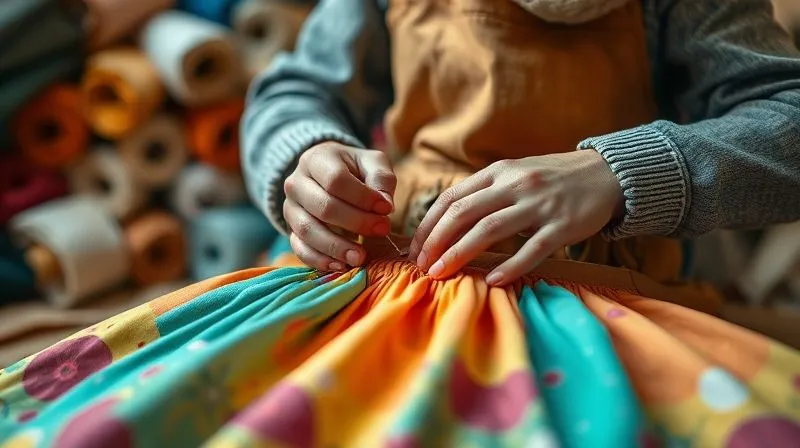
Design for Scalability: Balancing Uniqueness with Production Efficiency
This is where the art of design meets the science of manufacturing. Many unique designs, while beautiful in a small batch, become prohibitively expensive or complex to produce at scale. The key is to design with scalability in mind from the outset, without sacrificing your distinctive aesthetic.
Modular Design Principles
I often guide designers to think in terms of modularity. Can certain unique elements be applied across a range of basic silhouettes? Can a signature print be adapted to different garment types? This approach allows for creative versatility and brand recognition while simplifying pattern-making and cutting processes, which significantly aids in how to scale unique kids fashion production without losing brand identity.
For example, a unique appliqué or a specific type of embroidery might be your signature. Instead of designing entirely new complex garments for each collection, focus on how these signature elements can elevate simpler, more cost-effective base designs. This maintains uniqueness while streamlining production.
Material Innovation and Selection
The choice of materials is paramount. While you might love a rare, hand-woven silk for a limited edition, consider durable, ethically sourced alternatives that can be consistently procured in larger quantities without compromising feel or appearance. Research innovative fabrics that offer unique textures or sustainable properties that align with your brand values.
Explore blends that mimic the luxurious feel of natural fibers but offer better durability and care instructions for busy parents. As children's fashion demands comfort and resilience, smart material choices are not just about cost but also about product integrity and customer satisfaction.
Case Study: "Whimsical Wonders" Scales with Smart Design
Whimsical Wonders, a boutique kids' fashion brand known for its intricate hand-painted motifs and sustainable fabrics, faced a bottleneck. Their unique designs were labor-intensive, limiting production to small batches. By implementing a modular design strategy, they identified their signature hand-painted elements and adapted them into digital prints for base fabrics, reserving hand-painting for specific accent pieces or premium collections. They also shifted from a rare organic cotton to a certified organic cotton blend that offered similar softness but was more readily available at scale. This approach allowed them to increase production by 400% within a year, expand into new markets, and crucially, maintain their brand identity as a sustainable, art-inspired label. Their average customer acquisition cost dropped by 15% due to increased brand recognition and availability.
| Design Approach | Characteristics | Production Volume | Brand Identity Risk |
|---|---|---|---|
| Boutique (Pre-Scale) | Fully bespoke, rare materials, high labor cost | Very Low | Low (but limited reach) |
| Scaled (Post-Strategy) | Modular elements, accessible premium materials, optimized labor | High | Managed (through strategic design) |
Implementing Robust Quality Control and Consistency Protocols
Quality control isn't just a final check; it's a continuous process that needs to be embedded at every stage of production. For unique kids fashion, where parents expect durability, safety, and aesthetic perfection, this becomes even more critical. Losing consistency is a direct path to eroding brand identity and customer trust.
From Prototype to Production: A Multi-Stage Inspection Process
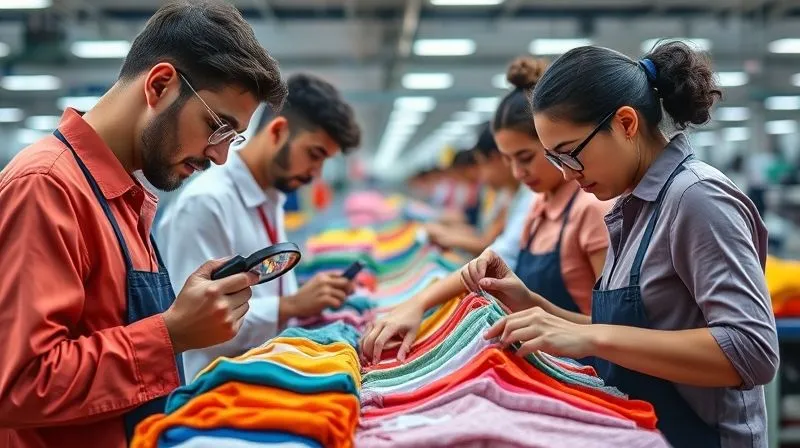
I advocate for a 'no compromise' approach to quality. This means establishing clear quality gates: raw material inspection, in-line production checks (e.g., stitching, print alignment), mid-production audits, and a thorough final inspection before packaging. Each stage should have defined criteria and a clear escalation process for non-conformities.
This multi-stage approach ensures that potential issues are caught early, reducing waste and preventing substandard products from reaching your customers. It's about proactive problem-solving, not reactive damage control. This diligence reinforces your brand's commitment to excellence.
Empowering Your Production Team
Your production team, whether in-house or at a partner factory, needs to be fully invested in your brand's quality standards. Provide comprehensive training, clear visual aids (like 'golden samples' that exemplify perfect quality), and regular feedback. Empower them to flag issues and suggest improvements.
When staff feel valued and understand their role in upholding the brand's reputation, they become your frontline guardians of quality. This human element is irreplaceable, especially when dealing with the intricate details that define unique kids' styles.
Consistency is the silent promise your brand makes. When you scale, that promise must be louder and clearer than ever, communicated through every stitch and seam.
Leveraging Technology for Design, Production, and Inventory Management
In today's fast-paced fashion industry, technology is no longer a luxury but a necessity for efficient scaling. For unique kids fashion, it's the tool that helps you maintain precision, consistency, and traceability across a growing operation. Embracing the right tech can be the difference between chaotic growth and controlled expansion.
CAD/CAM for Precision and Consistency
Computer-Aided Design (CAD) and Computer-Aided Manufacturing (CAM) systems are transformative. They allow for precise pattern creation, grading across different sizes, and accurate cutting, minimizing material waste and ensuring design consistency. This is particularly vital for maintaining the specific proportions and fit that define your unique kids' styles.
From digital pattern making to 3D garment visualization, CAD/CAM tools streamline the design-to-production workflow, reducing lead times and errors. They enable you to iterate designs rapidly and communicate exact specifications to manufacturers globally, ensuring that what you envision is what gets produced.
ERP Systems for Streamlined Operations
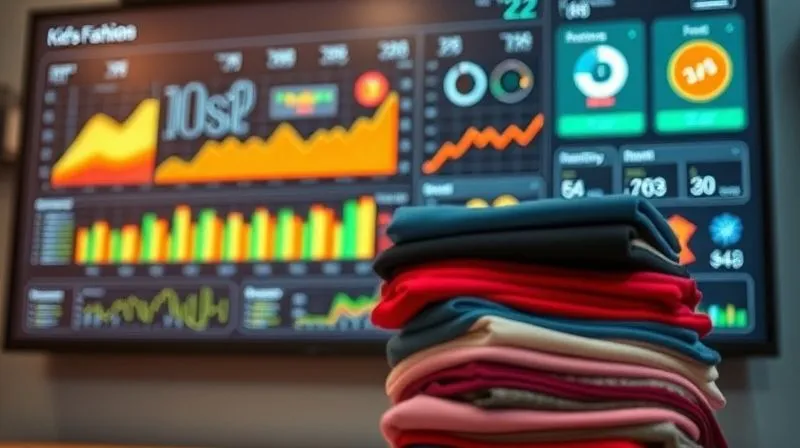
An Enterprise Resource Planning (ERP) system integrates all facets of your operation – from inventory management and order processing to supply chain coordination and financial accounting. For a growing kids' fashion brand, an ERP provides a single source of truth, giving you real-time visibility into your production, sales, and stock levels.
This centralized data management is crucial for making informed decisions, optimizing resource allocation, and preventing stockouts or overproduction, all of which are critical for sustainable growth. As Forbes highlights, leveraging technology effectively is key to modern supply chain resilience. Read more on Forbes about technology's role in supply chain efficiency.
| Technology | Benefit for Uniqueness | Benefit for Scale |
|---|---|---|
| CAD/CAM | Precise pattern grading, 3D visualization, maintains design integrity | Reduces errors, speeds up prototyping, optimizes material use |
| ERP System | Ensures consistent material sourcing, tracks quality control | Real-time inventory, optimized production scheduling, streamlined operations |
Cultivating Your Community: Engaging Customers in Your Growth Story
Your customers are your biggest advocates and a vital source of feedback. As you scale, it's easy to become detached from the community that first embraced your unique vision. Actively engaging them in your growth story is paramount for maintaining loyalty and brand identity.
Co-creation and Feedback Loops
Invite your most loyal customers to be part of your journey. This could involve surveys on new design ideas, polls on colorways, or even small 'beta' groups for new collections. This not only makes them feel valued but also provides invaluable insights that can guide your design and production choices, ensuring your unique styles continue to resonate with your target audience.
Establishing clear feedback channels – through social media, dedicated email addresses, or online forums – demonstrates that you're listening. This active engagement strengthens your brand community and helps you adapt your offerings while staying true to your core aesthetic.
Transparent Communication About Production
In an era of conscious consumerism, transparency is a powerful differentiator. Be open about your scaling journey, your ethical sourcing practices, and the challenges you face. Share behind-the-scenes content of your production process, highlighting the craftsmanship and care that goes into each garment.
This transparency builds trust and reinforces your brand values. As Harvard Business Review emphasizes, authentic engagement drives loyalty. When customers understand the effort behind your unique kids' styles, they become more invested in your brand's success.
Navigating Intellectual Property and Design Protection
As your unique kids fashion brand gains traction and begins to scale, protecting your intellectual property (IP) becomes absolutely crucial. Your original designs are your most valuable assets, and without proper protection, they can be easily copied, undermining your brand identity and market position.
Safeguarding Your Originality
I've seen too many promising brands suffer due to lack of IP protection. Registering your unique designs, patterns, and even specific garment features (where applicable) through design patents, copyrights, or trademarks is a proactive measure. This establishes legal ownership and provides recourse against infringement.
Beyond formal registration, maintaining meticulous records of your design process – from initial sketches to final prototypes – can serve as evidence of originality. Educate your team and manufacturing partners about the importance of confidentiality and IP protection, incorporating non-disclosure agreements (NDAs) where necessary.
Legal Frameworks for Design Rights
Understanding the legal landscape for design rights in your operating territories and key export markets is vital. Different countries have varying laws regarding design registration and enforcement. Consult with an IP lawyer specializing in fashion to develop a robust protection strategy tailored to your brand's unique assets.
Organizations like the World Intellectual Property Organization (WIPO) offer resources and international registration systems that can simplify the process for brands with a global reach. Explore WIPO's resources on industrial designs for more information.
Your unique designs are not just creative expressions; they are proprietary assets. Protect them vigorously, for they are the visual language of your brand identity.
The Financial Blueprint: Investing in Sustainable Growth
Scaling unique kids fashion production requires smart financial planning and strategic investment. It's not just about securing capital, but about allocating it effectively to support growth without compromising the integrity of your brand or its unique offerings. This is where many creative entrepreneurs, myself included, often need to sharpen their business acumen.
Smart Capital Allocation
When expanding, you'll need capital for increased raw material purchases, larger production runs, technology investments, and potentially new hires. Prioritize investments that directly support your brand's unique selling propositions. For instance, if sustainable materials are key, ensure your budget allows for their continued sourcing, even if they come at a premium.
Avoid the temptation to cut corners on core elements that define your brand. A small saving on a critical fabric or a skilled artisan's fee can have disproportionately negative impacts on product quality and customer perception, ultimately undermining your efforts to scale unique kids fashion production without losing brand identity.
Understanding Unit Economics at Scale
As production volumes increase, your unit costs should ideally decrease due to economies of scale. However, for unique kids fashion, certain specialized elements might not see significant cost reductions. It's crucial to understand the true cost of each garment, factoring in design complexity, material sourcing, labor, quality control, and shipping.
Analyze your profit margins at different production volumes. This detailed financial understanding allows you to set appropriate pricing, negotiate better terms with suppliers, and make informed decisions about which unique elements are truly sustainable at scale. This data-driven approach ensures your growth is not just fast, but also profitable and enduring. The Business of Fashion offers valuable insights on building sustainable financial models.
Frequently Asked Questions (FAQ)
Q: How can I ensure my unique designs aren't copied by manufacturers when scaling? A: Beyond legal protection like design patents and trademarks, implement strict non-disclosure agreements (NDAs) with all manufacturing partners and key personnel. Clearly communicate the proprietary nature of your designs and conduct regular audits of your partners' facilities. Building strong, trusting relationships based on mutual respect and shared values also significantly reduces the risk.
Q: Is it possible to scale unique kids fashion production while maintaining ethical and sustainable practices? A: Absolutely, and in today's market, it's becoming a differentiator. It requires upfront investment in vetting suppliers for ethical labor and environmental certifications (e.g., GOTS, Fair Trade). Prioritize transparency in your supply chain and be prepared to pay a premium for partners who align with your values. Communicate these efforts to your customers; they value it.
Q: How do I manage increased inventory and logistics when I scale? A: This is where technology becomes indispensable. Invest in a robust ERP system that can track inventory in real-time across multiple locations, manage order fulfillment, and optimize shipping. Consider third-party logistics (3PL) providers who specialize in fashion to handle warehousing and distribution efficiently, allowing you to focus on design and brand development.
Q: What if scaling means higher prices for my unique products? Will customers still buy? A: Not necessarily. Strategic sourcing and design for scalability can actually optimize costs. If prices do increase due to maintaining quality or ethical standards, transparency is key. Educate your customers on the 'why' – the value of sustainable materials, artisan craftsmanship, or fair labor. Your loyal customers, who value your unique identity, are often willing to pay for genuine quality and values.
Q: How do I keep my creative team motivated and aligned with the brand's unique vision during rapid growth? A: Maintain clear communication of the Brand Bible and its core tenets. Involve your creative team in strategic discussions about scalability challenges and solutions. Foster a culture where their unique contributions are valued, and provide opportunities for professional development. Regular brainstorming sessions focused on 'how to innovate within our identity' can keep the creative spark alive.
Key Takeaways and Final Thoughts
- Anchor to Your Brand DNA: Your unique identity is your greatest asset; define it rigorously and let it guide every decision.
- Forge Strategic Partnerships: Work with suppliers and manufacturers who understand and respect your vision, prioritizing quality and ethics over mere cost.
- Design Smart for Scale: Embrace modularity and innovative materials to maintain uniqueness while optimizing production efficiency.
- Implement Robust Quality Control: Consistency in quality is non-negotiable for preserving brand trust and reputation.
- Leverage Technology: Utilize CAD/CAM and ERP systems to enhance precision, streamline operations, and gain critical insights.
- Engage Your Community: Involve customers in your growth story through transparency and feedback, fostering loyalty.
- Protect Your IP: Safeguard your unique designs through legal frameworks to prevent dilution and infringement.
- Plan Your Finances Wisely: Invest strategically to support sustainable growth, understanding the true unit economics of your unique products.
Scaling a unique kids fashion brand is undeniably challenging, a tightrope walk between artistic integrity and commercial viability. But as I've seen time and again, it is absolutely achievable. By approaching growth with a clear vision, strategic planning, and an unwavering commitment to your brand's core identity, you can expand your reach without losing your soul. Embrace these strategies, trust your instincts, and continue to create the magic that makes your brand truly special. The world needs more unique, thoughtfully produced kids' fashion, and your journey proves it can be done.
Recommended Reading
- 7 Proven Ways to Diversify Your Fashion Blog Income Beyond Ads & Affiliates
- Achieving High-Performance Fabrics: 7 Eco-Friendly Material Strategies
- Textile Robots & New Fabrics: 7 Strategies to Bridge the Adaptation Gap
- 5 Menswear Secrets: Project Executive Presence & Command Respect
- Bridesmaid Dress Disaster? 7 Steps When Wrong Sizes Arrive on Your Big Day




Your email address will not be published. Required fields are marked *