

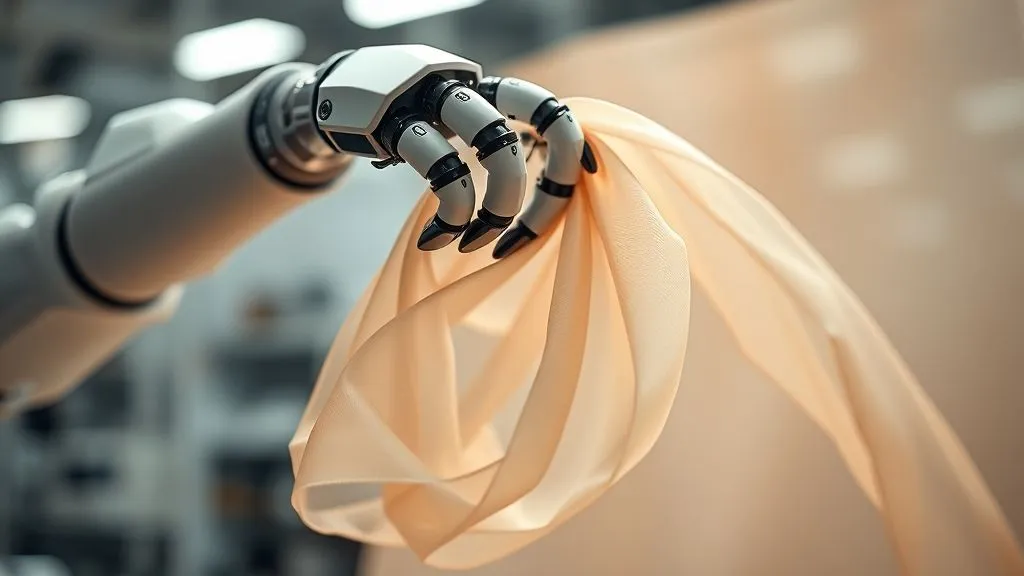
What to do when textile robots can't adapt to new fabric types?
For over two decades in fashion technology, I've witnessed firsthand the incredible advancements and the equally frustrating roadblocks that emerge when innovation meets the factory floor. One challenge, in particular, consistently surfaces: the moment your state-of-the-art textile robots hit a snag, literally, when confronted with a new fabric type. It’s a scenario I’ve seen countless times, and it can bring even the most efficient production lines to a grinding halt.
The problem isn't just about a robot struggling to grip or stitch; it's about the erosion of efficiency, the accumulation of waste, and the stark realization that your significant investment in automation isn't delivering the agility you need. In an industry increasingly driven by rapid trend cycles, customization, and the demand for sustainable, diverse materials, the inability of your robotic systems to adapt quickly to novel textiles is no longer a minor inconvenience – it's a critical vulnerability.
But fear not. In this deep dive, I'm not just going to highlight the pain points. I'm going to share actionable frameworks, cutting-edge strategies, and expert insights drawn from years in the trenches. We'll explore how to proactively address and overcome this adaptation gap, ensuring your textile robots don't just keep pace, but lead the charge in the evolving landscape of fashion manufacturing.
Understanding the Core Challenge: Fabric Variability
At its heart, the difficulty lies in the inherent variability of textiles. Unlike rigid materials, fabrics possess a complex interplay of physical properties: drape, elasticity, thickness, surface friction, porosity, and thermal conductivity, to name a few. These properties dictate how a fabric behaves under tension, compression, heat, and pressure – all factors critical to robotic handling and processing.
Traditional textile robots, often programmed for specific, well-understood fabric types, struggle when these parameters shift. A gripper designed for denim might crush delicate silk, while a sewing head calibrated for cotton might snag stretchy elastane or melt a synthetic blend. The lack of real-time, nuanced perception of these material characteristics is the fundamental limitation.
The Multidimensional Nature of Textile Properties
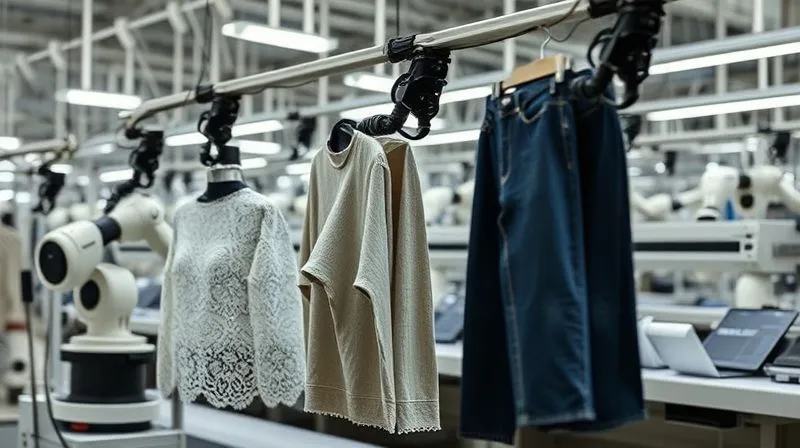
Consider the difference between a thick, stiff upholstery fabric and a fine, slippery chiffon. Their behavior during cutting, seaming, and inspection is vastly different. Even within the same fabric category, variations in weave density, fiber composition, and finishing treatments can present entirely new challenges. For a robot, this isn't just a visual difference; it's a difference in how it needs to apply force, control speed, and predict deformation.
"The future of textile robotics isn't just about faster movements; it's about smarter perception. Robots must 'feel' and 'understand' fabric as a skilled artisan does, but with superhuman precision." - My personal observation from countless factory floor visits.
The Imperative of Advanced Sensor Integration
The first crucial step in overcoming robotic textile adaptation issues is to equip your machines with enhanced sensory capabilities. Just as humans rely on sight and touch, robots need sophisticated sensors to truly 'understand' the fabric they are interacting with. This goes far beyond basic proximity sensors.
Tactile and Force-Torque Sensors
Integrating high-resolution tactile sensors into robotic grippers allows them to 'feel' the fabric's texture, thickness, and even its localized elasticity. Force-torque sensors, on the other hand, provide real-time feedback on the forces being applied, enabling the robot to adjust grip pressure dynamically. This prevents damage to delicate materials and ensures a secure hold on heavier ones.
- Implement High-Resolution Tactile Grippers: Invest in grippers equipped with arrays of micro-sensors that can map the fabric's surface properties. This data is critical for adaptive grip strength and manipulation.
- Action: Research vendors like SynTouch or OptoForce for advanced tactile sensing solutions.
- Benefit: Reduces fabric damage, improves handling of slippery or delicate materials.
- Integrate Force-Torque Sensors at the Wrist: Place these sensors at the robot's wrist joint to measure interaction forces in multiple axes. This allows for precise control during sewing, cutting, or placement tasks.
- Action: Calibrate sensors for various fabric ranges and program dynamic force adjustment algorithms.
- Benefit: Prevents buckling, tearing, or stretching of fabrics during processing.
Vision Systems with Hyperspectral Capabilities
Standard 2D or 3D vision systems are good, but hyperspectral imaging takes fabric perception to another level. These systems can analyze light across a broad spectrum, revealing chemical composition, moisture content, and even microscopic structural details invisible to the human eye. This provides an unprecedented level of data for material identification and quality control.

Leveraging AI and Machine Learning for Fabric Perception
Raw sensor data is only as good as the intelligence that processes it. This is where Artificial Intelligence (AI) and Machine Learning (ML) become indispensable. They are the brains that enable robots to learn from experience and adapt to novel fabrics without extensive re-programming.
Deep Learning for Fabric Classification and Behavior Prediction
By feeding vast datasets of sensor readings (from tactile, force, and vision systems) corresponding to different fabric types and their observed behaviors, deep learning models can be trained to classify new fabrics instantly. More importantly, they can predict how a specific fabric will deform, stretch, or resist manipulation based on its unique sensory fingerprint.
Case Study: Anya Garments' Adaptive Sewing Bots
Anya Garments, a medium-sized apparel manufacturer, faced significant downtime whenever they introduced new seasonal fabric blends, especially those with high stretch or delicate weaves. Their traditional sewing robots required manual adjustments and often resulted in defects. By implementing an AI-driven fabric perception system, integrating tactile and vision sensors with a deep learning model, they achieved a breakthrough.
The robots were trained on a library of hundreds of fabric samples, learning to recognize subtle differences. When a new fabric was introduced, the AI would classify it and automatically adjust parameters like needle speed, stitch tension, and gripper pressure. This resulted in a 40% reduction in fabric-related defects and a 25% increase in production throughput for new product lines within six months. Anya Garments successfully bridged the adaptation gap, proving that investment in AI-driven perception yields tangible ROI.
- Build a Comprehensive Fabric Database: Start collecting detailed sensor data (vision, tactile, force) for every fabric type processed. Tag this data with material composition, thickness, elasticity, and observed handling characteristics.
- Action: Utilize specialized textile testing equipment to augment sensor data with objective material properties.
- Benefit: Creates the foundation for robust ML model training.
- Train Deep Learning Models: Employ convolutional neural networks (CNNs) for vision data and recurrent neural networks (RNNs) for sequential tactile/force data to predict fabric behavior.
- Action: Collaborate with AI specialists or robotics research institutions if in-house expertise is limited.
- Benefit: Enables real-time, autonomous adaptation of robotic parameters.
According to a recent report by Deloitte on the Future of Smart Factories, AI-driven adaptive systems are projected to be a key differentiator for manufacturers seeking agility and resilience.
Modular Robotics & Reconfigurable End-Effectors
One of the most practical solutions for handling diverse fabric types is to embrace modularity in your robotic systems. This means designing robots and their end-effectors (the tools at the end of the arm, like grippers or sewing heads) to be easily swapped or reconfigured.
Quick-Change End-Effectors
Instead of a single, universal gripper that poorly handles many fabrics, invest in a suite of specialized end-effectors designed for different material categories. Think suction grippers for porous fabrics, needle grippers for precise textile manipulation, or soft, compliant grippers for delicate silks. The key is a quick-change mechanism that allows for rapid swapping, minimizing downtime.
Robotic Platforms with Open Architecture
Opt for robotic platforms that offer an open architecture for software and hardware integration. This allows you to easily integrate third-party sensors, custom end-effectors, and your own adaptive control algorithms without being locked into a proprietary system. Flexibility in hardware is as important as intelligence in software.
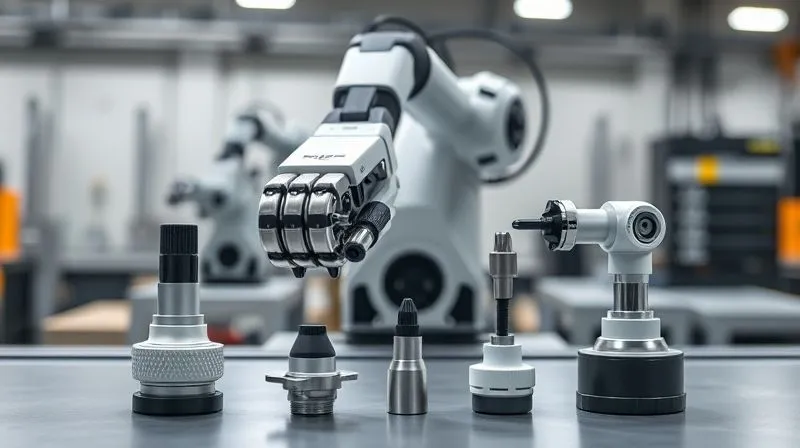
| End-Effector Type | Ideal Fabric Types | Benefit |
|---|---|---|
| Soft Gripper | Silk, Chiffon, Knits | Prevents damage, maintains drape |
| Needle Gripper | Multiple layers, technical textiles | Precise manipulation, high friction |
| Suction Gripper | Non-porous synthetics, leather | Fast handling, minimal contact marks |
| Roller Gripper | Heavy denim, canvas | High grip force, handles bulk |
Data-Driven Material Characterization and Digital Twins
To truly future-proof your robotic operations, you need a robust system for material characterization and the creation of 'digital twins' for your fabrics. This moves beyond reactive adaptation to proactive prediction.
Building a Digital Material Library
Every new fabric introduced into your production should undergo a comprehensive characterization process. This involves measuring its physical properties (tensile strength, shear modulus, bending stiffness, friction coefficients) using specialized lab equipment. This data, coupled with your sensor data, forms a rich digital material library.
Simulation and Digital Twins
With a comprehensive digital material library, you can then create 'digital twins' of your fabrics within a simulation environment. This allows you to test how a robotic system will interact with a new fabric in a virtual space before any physical production begins. You can optimize gripper designs, path planning, and process parameters, significantly reducing trial-and-error on the factory floor.
- Establish a Material Testing Protocol: Develop a standardized procedure for physically testing new fabrics for key mechanical properties relevant to robotic handling.
- Action: Invest in equipment like universal testing machines and drape testers, or partner with textile research labs.
- Benefit: Provides objective, quantitative data for digital models.
- Implement Simulation Software: Utilize advanced robotics simulation software (e.g., Siemens Process Simulate, Dassault Systèmes DELMIA) that can integrate material property data.
- Action: Train engineers to create and run simulations for new fabric-robot interactions.
- Benefit: Drastically reduces physical prototyping time and costs, improves first-pass yield.
"The digital twin isn't just a fancy buzzword; it's the bridge between the physical and virtual worlds, allowing us to predict and optimize before committing resources. For textile robotics, it's a game-changer for fabric adaptation." - My belief in the power of predictive modeling.
Upskilling Your Workforce for Human-Robot Collaboration
Robots don't operate in a vacuum. The success of adaptive robotic systems hinges on the capabilities of the human team supporting them. As robots become more intelligent, the skills required of your workforce must also evolve.
Training for Robotic Oversight and AI Interpretation
Your technicians and engineers need to move beyond simple robot programming to understanding robotic perception, interpreting AI-driven insights, and troubleshooting complex adaptive behaviors. This means training in data analysis, machine learning fundamentals, and advanced sensor diagnostics.
The Role of the 'Robot Whisperer'
I've often referred to this new role as the 'robot whisperer' – an individual who understands both the intricacies of textile materials and the nuances of robotic programming and AI. They can bridge the gap, translating fabric properties into robotic commands and fine-tuning adaptive algorithms. This human-robot collaboration is where true efficiency and innovation emerge.
As Harvard Business Review often highlights, successful AI implementation is less about replacing humans and more about augmenting their capabilities through strategic collaboration.
Strategic Partnerships and Open Innovation
No single company has all the answers, especially in a rapidly evolving field like fashion technology. Strategic partnerships and a commitment to open innovation can accelerate your journey towards truly adaptive textile robotics.
Collaborating with Research Institutions and Startups
Academic institutions and agile startups are often at the forefront of fundamental research in areas like soft robotics, advanced materials science, and AI for manipulation. Partnering with them can provide access to bleeding-edge technologies and expertise that would be costly or impossible to develop in-house.
Participating in Industry Consortia and Standards Bodies
Joining industry groups focused on textile automation and smart manufacturing allows you to share challenges, learn from peers, and contribute to the development of common standards. This collective intelligence can drive solutions that benefit the entire industry, including improved interoperability between different robotic systems and sensor platforms.
For instance, organizations like the International Apparel Federation (IAF) or national textile technology centers are excellent hubs for such collaboration.
The ROI of Adaptation: Why Invest Now?
The question isn't whether you can afford to invest in adaptive textile robotics, but whether you can afford *not* to. The benefits extend far beyond simply handling new fabrics.
Enhanced Agility and Responsiveness
In a market demanding speed and customization, the ability to rapidly switch between fabric types and product lines without extensive retooling is a massive competitive advantage. It allows you to respond to trends, fulfill bespoke orders, and manage smaller batch sizes efficiently.
Reduced Waste and Improved Sustainability
Fewer errors due to fabric incompatibility mean less material waste and reduced energy consumption from rework. This contributes significantly to your sustainability goals, which are increasingly important for consumers and regulatory bodies.
Future-Proofing Your Operations
By building systems that can learn and adapt, you're not just solving today's problems; you're preparing for tomorrow's unknown fabric innovations. This makes your manufacturing infrastructure more resilient and scalable.
Frequently Asked Questions (FAQ)
Q: Is it possible to retrofit existing textile robots with advanced sensors and AI for fabric adaptation? A: Absolutely, in many cases. While a complete overhaul might be prohibitive, integrating new end-effectors with tactile sensors, adding external vision systems, and implementing AI/ML software overlays can significantly enhance the capabilities of existing robotic arms. The feasibility depends on the robot's existing control architecture and its ability to communicate with external systems. It's often a more cost-effective first step than full replacement.
Q: What's the typical learning curve for AI systems to adapt to a completely new fabric type? A: The initial learning curve can vary. If you have a robust fabric database and a well-trained deep learning model, a 'completely new' fabric that shares some characteristics with existing data might be adapted to within hours or days through fine-tuning. For truly novel materials with unprecedented properties, it might require a dedicated 'training phase' where the robot interacts with the material, collecting new data for the AI to learn from, potentially taking a few days to a week. The goal is to minimize this 'cold start' time significantly.
Q: How do I justify the significant investment in advanced sensors and AI to my management? A: Focus on the tangible ROI. Highlight reduced material waste (cost savings), increased production throughput (revenue generation), faster time-to-market for new products (competitive advantage), and improved product quality (brand reputation). Use case studies, even hypothetical ones based on industry benchmarks, to illustrate the potential financial impact. Emphasize future-proofing and agility in a volatile market.
Q: Are there open-source solutions available for AI-driven fabric perception, or do I need proprietary software? A: Both options exist. For core AI development, open-source libraries like TensorFlow and PyTorch are excellent foundations. However, integrating these with specific robotic hardware and industrial control systems often requires specialized expertise or proprietary middleware. Some research institutions publish open-source code for specific fabric manipulation tasks, but a complete, production-ready solution usually involves a combination of open-source tools and custom, proprietary integration or commercial software.
Q: What are the biggest bottlenecks I should anticipate when implementing these adaptive technologies? A: The primary bottlenecks I've observed are data collection and labeling (it's time-consuming to build a quality fabric database), integration challenges (getting different sensors, robots, and AI systems to 'talk' seamlessly), and the need for specialized talent (finding engineers skilled in both robotics and AI, with an understanding of textile science). Overcoming these requires dedicated resources, a clear strategy, and often external partnerships.
Key Takeaways and Final Thoughts
- Embrace Advanced Sensing: Equip your robots with high-resolution tactile, force-torque, and advanced vision systems to 'perceive' fabric properties.
- Leverage AI and ML: Train deep learning models to classify fabrics, predict their behavior, and autonomously adjust robotic parameters.
- Adopt Modularity: Utilize quick-change end-effectors and open-architecture robotic platforms for hardware flexibility.
- Invest in Digital Twins: Characterize materials thoroughly and use simulation to predict robot-fabric interactions before production.
- Upskill Your Team: Train your workforce in AI interpretation and advanced robotics to foster effective human-robot collaboration.
- Seek Partnerships: Collaborate with research institutions and industry peers to access cutting-edge solutions and shared knowledge.
The fashion industry is dynamic, and your manufacturing capabilities must be equally agile. The days of rigid, single-purpose automation are behind us. By strategically investing in advanced perception, AI-driven intelligence, and modular design, you can transform the challenge of fabric adaptation into a powerful competitive advantage. The future of fashion manufacturing belongs to those who can not only automate but also innovate with flexibility and intelligence. It's a journey, but one that promises significant returns for those willing to lead the charge.
Recommended Reading
- Unlock Transparency: 7 Steps to Audit Cruelty-Free Fashion Supply Chains
- 7 Secrets: How Streetwear Brands Keep Bold Prints Timeless?
- 7 Steps to Sustainable Sourcing for Performance Activewear: A Complete Guide
- Unraveling the Fabric: What Challenges Hinder Sustainable Textile Innovation?
- 7 Proven Strategies to Differentiate Your Bridal Brand in a Saturated Market




Your email address will not be published. Required fields are marked *