

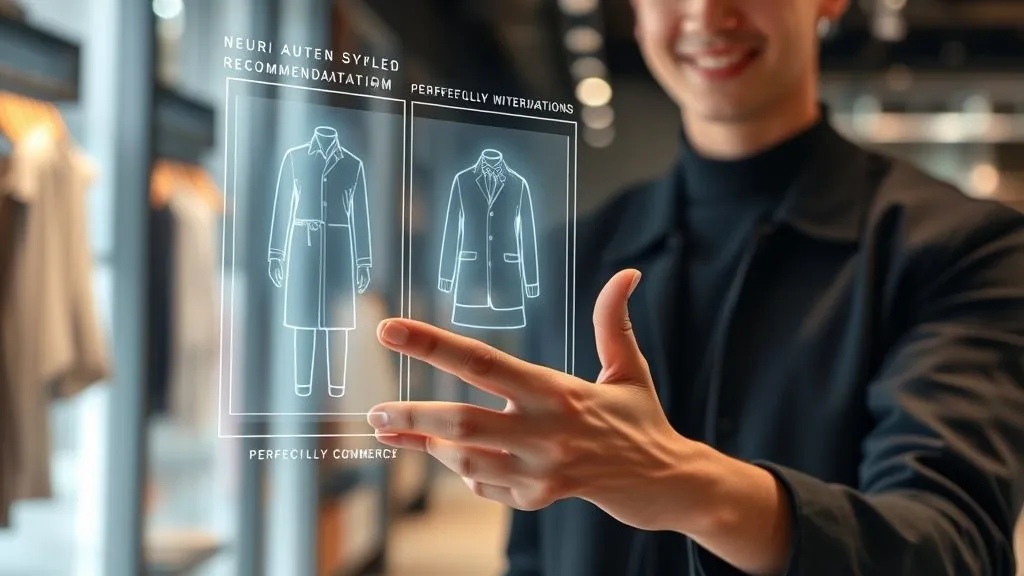
How to reduce fashion e-commerce returns using AI personalization?
For over 15 years in the fashion technology space, I've witnessed countless e-commerce brands grapple with a persistent, profit-eroding problem: returns. It's a silent killer, often accepted as an inevitable cost of doing business online, yet it’s a drain on resources, customer satisfaction, and ultimately, your brand’s reputation. The "buy-to-try" culture, coupled with inconsistent sizing and poor product visualization, has created a return epidemic that digital retailers can no longer afford to ignore.
I've seen ambitious fashion startups falter and established brands bleed margins because they lacked a proactive strategy to tackle this issue. The pain points are palpable: logistical nightmares, restocking costs, environmental impact, and perhaps most damaging, a frustrated customer base whose trust erodes with every ill-fitting garment or misrepresented item. This isn't just about lost sales; it's about a fundamental disconnect between expectation and reality in the online shopping journey.
But what if there was a way to not just manage, but significantly diminish this challenge? In this definitive guide, I’ll reveal exactly how to reduce fashion e-commerce returns using AI personalization. You'll gain actionable frameworks, real-world insights, and a clear roadmap to leverage cutting-edge AI to transform your return rates, boost customer loyalty, and ultimately, secure your competitive edge in the fiercely competitive fashion e-commerce landscape.
The Silent Killer: Why Fashion E-commerce Returns Are So High
The True Cost Beyond Logistics
When we talk about returns, most people immediately think of shipping and restocking fees. However, the true cost runs far deeper. I’ve observed that returns impact everything from warehouse efficiency and labor costs to payment processing fees for refunded transactions. There’s also the environmental footprint of reverse logistics, which a growing number of consumers are becoming keenly aware of, influencing their purchasing decisions.
Beyond the tangible, there’s a significant intangible cost: brand perception. A high return rate can signal issues with product quality, description accuracy, or customer experience. It erodes trust, increases customer acquisition costs – as dissatisfied customers are less likely to return – and can even damage your SEO rankings if "return policy" or "sizing issues" become associated with your brand in search queries. According to a National Retail Federation (NRF) study, the average return rate across all retail in 2022 was 16.6%, with online purchases seeing even higher rates. For fashion, this can easily climb to 25-40%.
Understanding the Core Drivers of Returns
To effectively combat returns, we must first understand their root causes. From my experience, the vast majority of fashion e-commerce returns stem from a few critical areas:
- Poor Fit/Sizing Issues: This is by far the most dominant factor. "It didn't fit" accounts for a significant portion of returns, often due to inconsistent sizing across brands or insufficient information for customers to make an informed decision.
- Misrepresentation (Color/Material): What appears vibrant on screen might look dull in person, or a "luxurious" fabric might feel cheap. Discrepancies between product images/descriptions and reality lead to disappointment.
- Buyer's Remorse/Wardrobing: Sometimes customers simply change their minds, or worse, engage in "wardrobing," where they buy an item to wear once and then return it.
- Damaged/Defective Items: While less common with quality control, it still contributes to returns and severely impacts customer trust.
- Late Delivery: If an item arrives after the occasion it was intended for, it’s often returned, even if the product itself is perfect.

The AI Imperative: Shifting from Reactive to Proactive Solutions
For too long, e-commerce has been reactive – dealing with returns after they happen. The paradigm shift we're seeing now, fueled by artificial intelligence, is about being proactive. AI allows us to anticipate customer needs, personalize the shopping experience to an unprecedented degree, and mitigate the risk of a return long before the "add to cart" button is even clicked.
Beyond Basic Recommendations: The Power of Deep Personalization
Many brands use basic recommendation engines ("customers who bought this also bought..."). While helpful, this is just scratching the surface. Deep AI personalization goes further, leveraging vast datasets – purchase history, browsing behavior, demographic data, even social media activity – to create a truly individualized profile. This profile isn't just about what someone has bought; it's about their style preferences, preferred fit, typical size across brands, color palettes, and even their likelihood to return certain types of items.
In my experience, AI isn't just a tool; it's a strategic partner that enables fashion brands to understand their customers on an intimate level, transforming a generic shopping experience into a tailored journey that minimizes friction and maximizes satisfaction. This deep understanding is the cornerstone of reducing returns.
Strategy 1: Hyper-Accurate Size & Fit Recommendations
This is the "holy grail" of return reduction in fashion. Inconsistent sizing is a plague. AI offers a powerful antidote.
Leveraging Customer Data and Machine Learning
Modern AI systems can analyze millions of data points: historical purchase and return data, product dimensions, customer body measurements (if provided), and even feedback from reviews. Machine learning algorithms can then predict the optimal size for a specific customer and product. This goes beyond a simple "size chart" by taking into account how a particular brand's "medium" might fit differently from another's.
Some advanced solutions integrate with customer profiles, remembering previous purchases and returns to refine recommendations. If a customer consistently returns "true to size" items because they prefer a looser fit, the AI learns this preference and adjusts future suggestions. This is dynamic, real-time learning.
Virtual Try-On and Augmented Reality (AR)
Virtual try-on tools, powered by AI and AR, are game-changers. Imagine a customer "trying on" a dress using their smartphone camera, seeing how it drapes and fits their actual body shape. This technology, while still evolving, provides an unprecedented level of visual confidence before purchase.
It helps customers visualize fit, drape, and even how different colors look on them, significantly reducing the "it didn't look like I thought it would" returns. As the technology matures, I believe this will become a standard expectation for online fashion shopping.
- Collect Granular Data: Implement robust systems to collect detailed product dimensions, customer body measurements (voluntarily), and – crucially – the *reason* for every return.
- Integrate AI Fit Solutions: Partner with specialized AI platforms that offer predictive sizing. These often use complex algorithms that map product dimensions to customer profiles.
- Pilot Virtual Try-On: Start with a select category of products. Gather user feedback and analyze return rates for these specific items compared to non-AR-enabled products.
- Continuously Refine: Use machine learning to constantly improve the accuracy of recommendations based on new purchase and return data.

Strategy 2: Predictive Styling and Curated Product Bundles
Beyond individual items, AI can predict entire outfits and curate personalized product bundles that customers are more likely to keep.
Anticipating Customer Preferences
AI can analyze a customer's past purchases, browsing history, and even publicly available style preferences (e.g., from Pinterest or Instagram, with consent) to suggest not just individual items, but complete looks. This is particularly powerful for cross-selling and up-selling, as it helps customers visualize how new pieces fit into their existing wardrobe or achieve a desired aesthetic. When customers buy an entire "look" that they love, the likelihood of returning individual components decreases significantly.
Case Study: StyleSense AI's Impact on Return Rates
Case Study: How StyleSense AI Revolutionized Returns for 'TrendThreads'
TrendThreads, a mid-sized online fashion retailer, struggled with a 28% overall return rate, particularly for impulse purchases. By implementing StyleSense AI, a predictive styling engine, they began offering customers personalized "complete the look" suggestions and curated bundles based on their individual style profiles and purchase history. The AI learned customer preferences for color, silhouette, and occasion, suggesting items that genuinely complemented their existing wardrobe.
Within six months, TrendThreads observed a remarkable shift. The return rate for items purchased through AI-curated bundles dropped to 12%. Overall, their average return rate decreased by 10 percentage points, from 28% to 18%. This not only saved them significant logistical costs but also saw a 15% increase in average order value (AOV) as customers confidently purchased more items per transaction.
| Metric | Before AI | After AI |
|---|---|---|
| Overall Return Rate | 28% | 18% |
| Return Rate (AI Bundles) | N/A | 12% |
| Average Order Value (AOV) | $85 | $98 |
| Customer Retention | 60% | 72% |
Strategy 3: Dynamic Product Descriptions & Visual Customization
Static product pages are a relic of the past. AI can make them incredibly dynamic and personalized.
AI-Generated Content for Clarity
Imagine product descriptions that automatically highlight features most relevant to an individual customer based on their preferences. For example, if a customer prioritizes sustainability, the AI-powered description might emphasize eco-friendly materials and ethical production. If another customer values comfort, the description would focus on fabric softness and stretch. This ensures the description "speaks" directly to the customer's needs, reducing ambiguity that often leads to returns.
Furthermore, AI can analyze product reviews and FAQs to identify common concerns and proactively address them within the product description, preventing potential misunderstandings before they occur.
Personalized Visuals and 3D Models
Beyond text, AI can personalize visuals. For instance, if a customer frequently buys petite clothing, AI could automatically display images of the garment on a petite model. For a customer interested in plus-size options, the images would adjust accordingly. This "see it on me" approach dramatically improves visualization.
Advanced implementations include interactive 3D models where customers can rotate, zoom, and even customize elements of a garment, providing a far richer understanding of the product than flat images. This level of detail ensures the customer knows exactly what they're getting, reducing the chances of "misrepresentation" returns.
- Implement Natural Language Generation (NLG) Tools: Explore AI tools that can generate dynamic product descriptions based on customer profiles and product attributes.
- Integrate Customer Preference Tags: Allow customers to set preferences (e.g., "sustainable," "comfort," "bold colors") and use these to customize descriptions.
- Develop Dynamic Image Serving: Use AI to serve product images featuring models that best represent the customer's body type or demographic.
- Explore 3D Product Visualization: Invest in 3D scanning and rendering technology to create interactive models for key product lines, enhancing the visual experience.
Strategy 4: Personalized Return Policy Communication
Often, returns happen due to a lack of clarity or a misunderstanding of the return policy. AI can help here too.
Clarity and Transparency Through AI
AI-powered chatbots and virtual assistants can provide instant, personalized answers to return-related questions, eliminating frustration and confusion. Instead of a generic FAQ, a chatbot can tell a customer exactly how many days they have left to return a specific item they purchased, or guide them through the precise steps for their particular order. This level of transparency builds trust and reduces unnecessary returns by ensuring customers fully understand the terms before purchase.
Proactive Engagement with At-Risk Purchases
Imagine an AI system identifying a "high-risk" purchase – perhaps a customer buying an item that historically has a high return rate for their specific demographic, or an item with conflicting reviews regarding sizing. The AI could trigger a personalized email or in-app notification offering additional sizing advice, styling tips, or even a link to a video demonstrating the product’s fit on various body types. This proactive intervention can prevent a return before it even enters the customer’s mind. As Harvard Business Review emphasizes, personalized communication is key to modern customer engagement.
Strategy 5: Harnessing Customer Feedback for Continuous Improvement
Returns aren't just a cost; they're a goldmine of data waiting to be analyzed. AI can unlock these insights.
Sentiment Analysis and NLP for Insights
AI-powered Natural Language Processing (NLP) can analyze the text from return reasons, customer service interactions, and product reviews on a massive scale. Instead of simply categorizing "didn't fit," NLP can delve deeper, identifying patterns like "sleeves too tight," "waist runs small," or "color not as vibrant." This granular feedback is invaluable.
Sentiment analysis can gauge the emotional tone of feedback, highlighting products or processes causing significant customer frustration. This goes beyond quantitative data, providing qualitative insights that human analysis alone would struggle to process efficiently.
Closing the Loop: AI-Driven Product Development
The insights gained from AI analysis of returns shouldn't just sit in a report. They should directly inform product development and merchandising decisions. If AI consistently highlights issues with the fit of a particular fabric blend, that feedback can go directly to design and manufacturing. If a certain color is repeatedly returned because it looks different online, adjustments can be made to product photography or descriptions. This creates a powerful feedback loop where AI not only reduces current returns but also prevents future ones by improving the product itself.
Strategy 6: Combatting Wardrobing and Fraud with Behavioral AI
While most returns are legitimate, a small percentage can be fraudulent or fall under "wardrobing." AI is an effective tool to identify and mitigate these behaviors.
Identifying Suspicious Return Patterns
Behavioral AI can analyze customer purchase and return histories to flag suspicious patterns. This might include:
- Customers who frequently return a high percentage of their purchases, especially after short periods.
- Patterns of buying multiple sizes of the same item and returning all but one (or all of them).
- Items returned with signs of wear, tags removed, or in different packaging.
- Unusual spikes in returns from specific addresses or payment methods.
By identifying these anomalies, AI allows retailers to intervene – perhaps by adjusting return policies for high-risk customers, flagging orders for manual review, or even integrating with fraud detection systems. This protects your margins from exploitation without penalizing genuine customers.
Protecting Your Bottom Line
Implementing AI for fraud detection isn't about creating a hostile environment for customers; it's about safeguarding your business. By accurately identifying and addressing fraudulent returns, you prevent financial losses and ensure that your generous return policies remain sustainable for the majority of your honest customers. This also frees up customer service resources to focus on legitimate inquiries, improving overall service quality.

Strategy 7: The Ethical Considerations and Future of AI in Fashion Returns
As we embrace AI, it's crucial to consider the ethical implications and how they shape the future of fashion e-commerce.
Data Privacy and Transparency
Leveraging customer data for personalization requires a strong commitment to privacy and transparency. Retailers must be clear about what data they collect, how it's used, and ensure compliance with regulations like GDPR and CCPA. Trust is paramount; customers are more likely to share data if they understand the benefit and trust the brand with their information. Ethical AI usage means putting the customer first, ensuring their data enhances their experience, rather than feeling intrusive.
The Evolving Customer Expectation
The future of fashion e-commerce will be defined by hyper-personalization. Customers will increasingly expect bespoke shopping experiences that anticipate their needs and minimize friction. AI will be at the heart of this, not just reducing returns but creating a delightful, intuitive, and highly relevant shopping journey. Brands that fail to adopt these technologies risk being left behind, as customer expectations for personalized service continue to rise.
| Consideration | Ethical Approach | Impact on Returns |
|---|---|---|
| Data Privacy | Transparent data collection, robust security, GDPR/CCPA compliance. | Builds trust, encourages honest feedback, improves data quality for AI. |
| Algorithmic Bias | Diverse training data, regular audits for fairness, human oversight. | Ensures equitable recommendations, avoids alienating customer segments. |
| Customer Control | Opt-in preferences, easy data access/deletion, clear benefits communication. | Empowers customers, increases engagement with personalization features. |
| Environmental Impact | Promote sustainable practices, optimize logistics, reduce "buy-to-try". | Aligns with modern consumer values, reduces waste associated with returns. |
Implementing AI: A Phased Approach to Transformation
Adopting AI doesn't have to be an all-or-nothing endeavor. I always advise a phased approach to ensure smooth integration and measurable results.
Starting Small: Pilot Programs and Metrics
Begin by identifying one or two key areas where returns are highest (e.g., specific product categories, or a particular sizing issue). Implement an AI solution as a pilot program for these areas. This allows you to test the technology, gather data, and refine your approach without disrupting your entire operation. Focus on clear, measurable KPIs: return rate reduction, customer satisfaction scores, and average order value.
Integrating AI with Existing E-commerce Stacks
Modern AI solutions are often designed to integrate seamlessly with existing e-commerce platforms (Shopify, Magento, Salesforce Commerce Cloud, etc.) and ERP systems. Choose solutions that offer robust APIs and clear integration pathways. This minimizes development overhead and ensures that your AI tools can access the necessary data and feed insights back into your operational systems. Collaboration between your tech, merchandising, and customer service teams is crucial here.
For further insights into successful tech integration, I often refer to studies on digital transformation, such as those published by McKinsey & Company, which highlight the importance of strategic, incremental adoption.
- Audit Your Current Return Data: Understand your "why." Categorize returns meticulously to pinpoint the biggest pain points.
- Identify a Pilot Project: Choose a specific product category or customer segment where you believe AI can have the most immediate impact.
- Select an AI Partner/Solution: Research and choose an AI vendor or platform that aligns with your specific needs and budget. Look for proven track records in fashion e-commerce.
- Integrate and Test: Implement the AI solution in your chosen pilot area. Run A/B tests to measure its impact against your control group.
- Analyze and Iterate: Continuously monitor performance metrics. Use the insights to refine the AI models, adjust strategies, and expand the implementation to other areas of your business.
- Train Your Team: Ensure your customer service, merchandising, and marketing teams understand how the AI works and how to leverage its insights.
Frequently Asked Questions (FAQ)
What is the typical ROI for implementing AI personalization to reduce returns? While ROI varies greatly depending on the scale of implementation and your current return rates, I've seen brands achieve significant results, often seeing a positive ROI within 6-12 months. The savings come from reduced logistics costs, lower customer acquisition costs (due to improved satisfaction), increased average order value, and enhanced brand loyalty. Many report return rate reductions of 10-30% or more, which translates directly to millions in saved revenue for larger retailers.
What kind of data do I need to effectively power AI personalization for returns? The more granular, the better! You'll need comprehensive customer purchase history, browsing behavior, return reasons (detailed text is excellent for NLP), product dimensions, customer-provided body measurements (if applicable), and even external data like weather patterns or social media trends if relevant for your product. The quality and volume of your data are directly correlated with the accuracy and effectiveness of your AI models.
Is AI personalization only for large fashion enterprises, or can small businesses leverage it? Absolutely not just for large enterprises! While custom AI solutions can be costly, there are many SaaS (Software as a Service) AI platforms available today that are scalable and affordable for small to medium-sized businesses. These "plug-and-play" solutions offer robust personalization features without requiring extensive in-house data science teams. The key is to start small and choose a solution that fits your current needs and can grow with you.
How long does it typically take to see results after implementing AI for return reduction? You can often start seeing initial positive trends within 3-6 months. The first few months are typically for data ingestion, model training, and initial deployment. As the AI gathers more data and refines its understanding of your customers and products, the improvements become more pronounced. Significant, sustained reductions in return rates often become evident within 6-12 months, with continuous improvement thereafter.
What if my fashion products are unique or custom-made? Can AI still help? Yes, AI can still be incredibly beneficial. For unique or custom products, AI can excel at "preference matching" – understanding a customer's specific aesthetic, material, and fit preferences to guide them through customization options more effectively. It can also analyze feedback on custom orders to identify common design or communication issues that lead to dissatisfaction, improving your design process and customer consultation. The principles of personalized guidance and expectation management remain highly relevant.
Key Takeaways and Final Thoughts
- Fashion e-commerce returns are a multi-faceted problem, costing brands significantly beyond just logistics.
- AI personalization offers a proactive, data-driven solution to drastically reduce return rates by enhancing the customer experience.
- Key strategies include hyper-accurate size/fit recommendations, predictive styling, dynamic product content, personalized return policy communication, and leveraging feedback.
- Behavioral AI can identify and combat wardrobing and fraudulent returns, protecting your bottom line.
- Ethical considerations around data privacy and transparency are paramount for building trust and ensuring sustainable AI adoption.
- A phased, measurable approach to AI implementation is crucial for success, starting with pilot programs and continuous iteration.
The era of accepting high fashion e-commerce returns as an unavoidable cost is over. With AI personalization, retailers now have the power to transform their operations, delight their customers with truly tailored experiences, and significantly boost their profitability. Embrace these strategies, and you’ll not only reduce your return rates but also build a more resilient, customer-centric, and successful fashion e-commerce business for the future. The time to act is now; your bottom line – and your customers – will thank you.
Recommended Reading
- The Ultimate Guide: How to Choose Effective Anti-Aging Eye Cream?
- 9 Steps to Eradicate Razor Burn for a Confident Executive Presence
- Unlock Vintage Appeal: 9 Strategies to Modernize Historical Fashion for Today
- Green Fashion Growth: Scale Ethically, Preserve Your Values
- Unlock Peak Potential: 5 Crucial Factors for Choosing Your Performance Wear




Your email address will not be published. Required fields are marked *