

How to Quickly Identify Moth Larvae Damage in Antique Wool Garments?
For over two decades immersed in the delicate world of vintage fashion and antique textiles, I've witnessed firsthand the joy of discovering a pristine historical garment – and the profound heartbreak of finding it irrevocably damaged. It's a silent threat, often unseen until it's too late: the insidious work of moth larvae.
These tiny, voracious creatures can transform a cherished, centuries-old wool coat or a rare embroidered shawl into a lace-like ruin in a matter of weeks if left unchecked. The challenge for collectors and enthusiasts isn't just knowing what moth damage looks like, but how to quickly identify moth larvae damage in antique wool garments before it escalates from a minor nuisance to a devastating loss.
In this definitive guide, I'll share my seasoned techniques and visual cues, offering you an expert's eye to swiftly detect the earliest signs of infestation. We'll explore everything from microscopic indicators to subtle environmental clues, equipping you with the knowledge to protect your invaluable textile heritage.
Understanding the Enemy: The Common Clothes Moth Lifecycle
To truly combat an enemy, you must understand its nature. The common clothes moth (Tineola bisselliella) is not the fluttering adult you might occasionally see; it's its offspring that pose the real threat to your antique wool.
The Four Stages of Infestation
The lifecycle begins with tiny, off-white eggs, often laid in hidden crevices of wool fibers, virtually invisible to the naked eye. These hatch into the destructive larvae – small, creamy-white caterpillars with brown heads, typically less than half an inch long. It is during this larval stage that they relentlessly consume keratin, the protein found abundantly in wool, silk, fur, and feathers, creating the holes we dread. These larvae prefer dark, undisturbed environments and can feed for several weeks to months, depending on temperature and food availability, growing through several molts.
After several molts, the larvae spin silken pupal cases where they transform into adult moths. These pupal cases are often camouflaged with bits of chewed fabric. Finally, the adult moths emerge; their sole purpose is reproduction, as they do not feed on textiles. They are poor flyers and often scuttle rather than fly. Identifying the presence of larvae or their casings is paramount for early intervention.
As experts at the Smithsonian Institution often emphasize, understanding the life cycle is crucial for effective pest management in textile collections, as intervention during the larval stage is most critical.
The Immediate Visual Cues: What to Look For (and Where)
When I first approach an antique wool garment, my eyes are immediately scanning for specific patterns. Moth larvae don't just eat; they leave a distinct signature.
Pinholes, Tunnels, and Irregular Edges
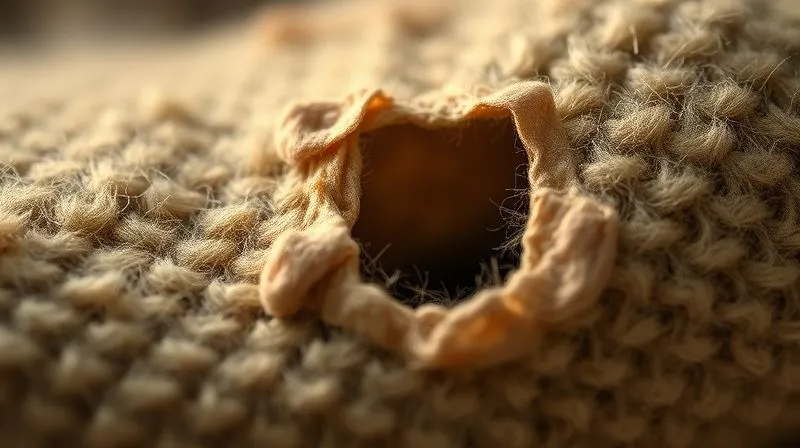
The most obvious sign is damage to the fabric itself. Look for small, irregular holes, often appearing in clusters rather than a single neat perforation. These holes can vary in size from mere pinpricks to larger, ragged openings. Unlike mechanical damage, moth holes tend to have fuzzy, uneven edges where fibers have been chewed away, giving them a 'nibbled' appearance.
Sometimes, especially in thicker wools, you might see surface grazing rather than full holes, where larvae have nibbled only the top layer of fibers, leaving a thinned or bald patch. Also, inspect for tunnels or trails of silk webbing, particularly on the surface or in folds, indicating where larvae have moved and fed while creating protective coverings. These silken threads can be very fine and blend with the fabric, requiring close scrutiny.
Frass and Casings: The Tell-Tale Debris
Beyond the holes, the most definitive proof of active moth larvae is their frass – tiny, sand-like pellets that are essentially moth droppings. These often match the color of the wool they've been consuming, making them incredibly difficult to spot without careful attention. They are typically minute, about the size of a grain of salt, and can accumulate in crevices or underneath the garment.
You may also find silken tubes or casings. These are cocoons or protective tunnels spun by the larvae, often incorporating fragments of the wool itself for camouflage. These tubes can be found attached to the fabric surface or tucked into folds. Sometimes, you'll even find shed larval skins (exuviae) – small, translucent, empty shells left behind as the larvae grow. If you see frass or casings, you have an active infestation that demands immediate attention to protect your antique wool garments.
The Touch and Smell Test: Beyond Sight
While visual inspection is primary, our other senses can offer critical clues, especially when damage is subtle. Trust your instincts, honed by experience, to detect early signs of infestation.
Texture Changes and Weakened Fibers
Gently run your fingers over the wool. Areas with active moth damage may feel thinner, weaker, or even brittle compared to the surrounding fabric. The structural integrity of the fibers is compromised, and you might feel slight irregularities or a 'gritty' texture if frass is present, especially if it has settled into the weave.
In more advanced cases, a light tug on the fabric around a suspected area might reveal how easily the fibers pull apart, confirming significant degradation. This tactile examination is particularly effective for thick, densely woven wools where holes might be harder to spot initially.
Musty or Unpleasant Odors
Moth infestations can sometimes be accompanied by a faint, musty, or slightly unpleasant odor. This isn't always present, but when it is, it's a strong indicator. It can be caused by the larvae themselves, their waste, or the presence of mold attracted to the damp conditions that sometimes favor moth activity, creating a distinct, stagnant smell.
I've often found that a quick, careful sniff of a garment, especially in its folds or lining, can reveal a problem long before visual cues become obvious, serving as an early warning signal for collectors.
Strategic Inspection: Where Moths Love to Hide
Moth larvae are masters of discretion. They prefer dark, undisturbed areas where they can feed without interruption. My inspection process for how to quickly identify moth larvae damage in antique wool garments is systematic and thorough, leaving no crevice unchecked.
- Initial Shake-Out: Gently but firmly shake the garment outdoors. This can dislodge loose frass, casings, or even live larvae, revealing their presence and giving you an immediate indication of a problem.
- Examine Folds and Creases: Moths love the hidden protection offered by collars, cuffs, hems, pleats, and deep folds. Carefully unfold and scrutinize these areas, as they provide both shelter and often undisturbed feeding grounds.
- Lining and Interlinings: Don't neglect the interior. Larvae can burrow through linings to reach the wool or live between layers. Check seams, pockets, and under buttons, as these are frequently overlooked hiding spots.
- Under Arms and Shoulders: Areas that are less disturbed and might have accumulated skin cells or hair (additional food sources) are prime targets. The natural folds and warmth here create an ideal environment for larvae.
- Seams and Stitching: The tiny gaps and protected spaces along seams offer excellent hiding spots where larvae can feed discreetly. Use a magnifying glass here to spot any minute frass or webbing.
- Areas of Staining: Food spills or body oils can attract moths, as these provide extra nutrients. Pay close attention to any stained areas, as they often become initial points of infestation.
This methodical approach significantly increases your chances of early detection. Remember, a quick scan isn't enough for antique pieces; thoroughness is key to preserving these invaluable items.
Differentiating Damage: Moths vs. Carpet Beetles vs. Wear and Tear
A common pitfall for new collectors is misidentifying the cause of damage. While all can harm textiles, their signatures are distinct, and accurate identification dictates the correct response. Understanding these differences is crucial for how to quickly identify moth larvae damage in antique wool garments.
| Damage Type | Hole Characteristics | Debris/Pests | Preferred Areas |
|---|---|---|---|
| Clothes Moth Larvae | Irregular, ragged edges, often with silken webbing or frass nearby. Can be tunnels or surface grazing. | Silken tubes, tiny pellets (frass) matching fabric color, shed larval skins, creamy-white larvae. | Dark, undisturbed areas; folds, seams, under collars. Feed on keratin (wool, silk, fur). |
| Carpet Beetle Larvae | More regular, circular holes, often in patches. Can cause surface abrasion or 'bald' spots. | Small, hard, dark pellets (frass), bristly larvae (often hairy/spiny), shed larval skins (hairy). No silken webbing. | Areas with dust, lint, pet hair; often found on floors, carpets, under furniture, or on fabrics with protein residues. |
| General Wear & Tear | Fraying, thinning, or clean tears along stress points (e.g., elbows, cuffs, buttonholes). Often symmetrical or linear. | None directly associated with wear. May be dust or lint. | High-friction areas, stress points, exposed parts of garments. |
Moth Damage Specifics
As the table highlights, moth damage is uniquely characterized by the presence of silken webbing, tunnels, and the small, irregularly shaped holes with fuzzy edges. The frass is usually soft, irregular, and often blends with the fabric color. These larvae are solely targeting keratin-rich materials, making their presence a direct threat to your wool and silk items.
Carpet Beetle Indicators
Carpet beetle larvae (e.g., varied carpet beetle, black carpet beetle) also feed on keratin but leave different evidence. Their holes are often smaller and more circular, sometimes appearing as 'shot holes', and they do not produce webbing. Instead, you'll find tiny, hard, dark frass pellets that look like fine pepper, and often their distinctive bristly, shed larval skins, which can be quite hairy. They also tend to graze the surface, leaving thin or 'bald' patches rather than deep, irregular holes.
Natural Wear and Tear
Distinguishing from natural wear and tear is usually simpler. Wear occurs at predictable points of friction or stress – elbows, cuffs, buttonholes, seams, or areas where the fabric rubs. These areas thin or tear in a more predictable, often linear fashion, and crucially, lack any associated frass, webbing, or insect activity. Understanding these differences is paramount to proper textile conservation and intervention.
According to conservation guidelines from the American Institute for Conservation (AIC), precise identification of the pest is the first step in effective treatment and preservation strategies for textile collections.
The Magnifying Glass and Light Source: Your Essential Tools
My toolkit for antique textile inspection is surprisingly simple, yet incredibly effective. These two items are non-negotiable for thorough detection of moth larvae damage in antique wool garments.
The Power of Magnification
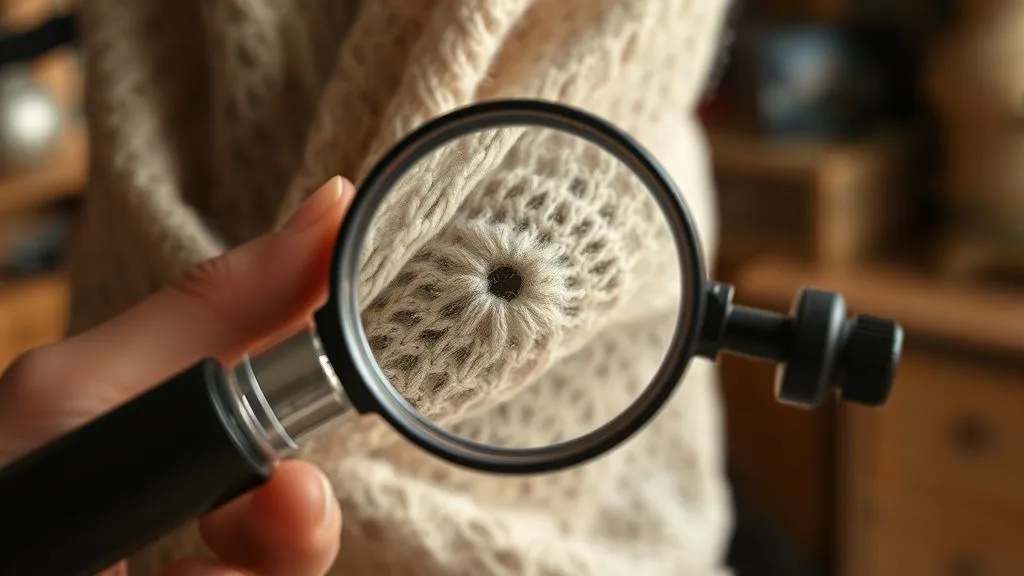
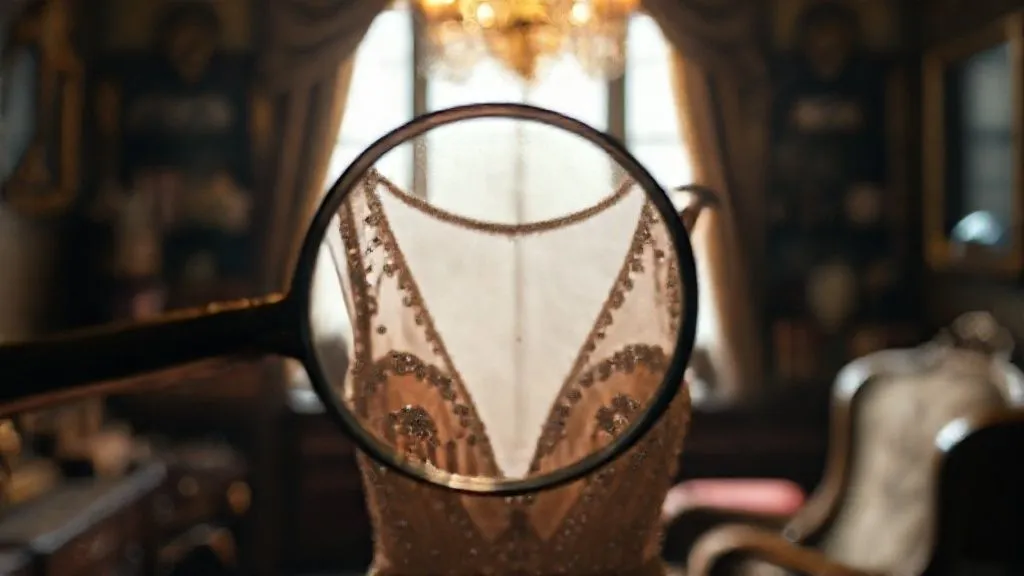
A magnifying glass (at least 10x magnification, a jeweler's loupe is ideal) is your best friend. It allows you to clearly see minute details: the texture of the eaten fibers, individual frass pellets, tiny silken strands, and even the larvae themselves if they are present and still. These details are often invisible to the naked eye, making magnification critical for early detection.
I always recommend a dual-lens magnifier for varying levels of detail, allowing you to switch between wider views and extreme close-ups. Without it, you're essentially guessing when dealing with early-stage damage, missing the subtle clues that scream 'infestation'.
Optimal Lighting Techniques
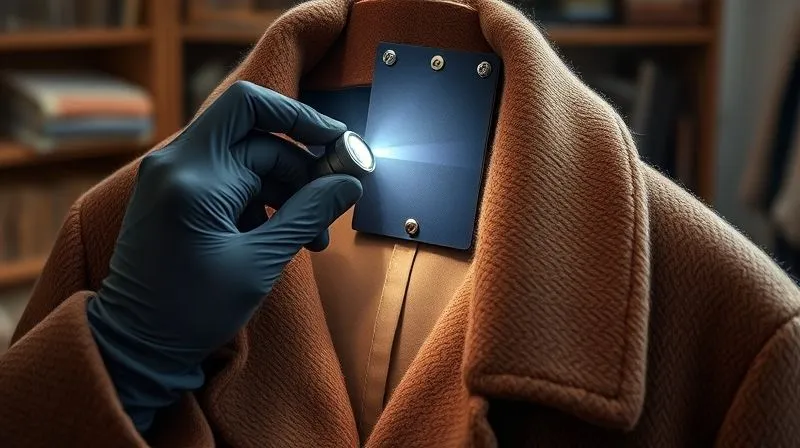
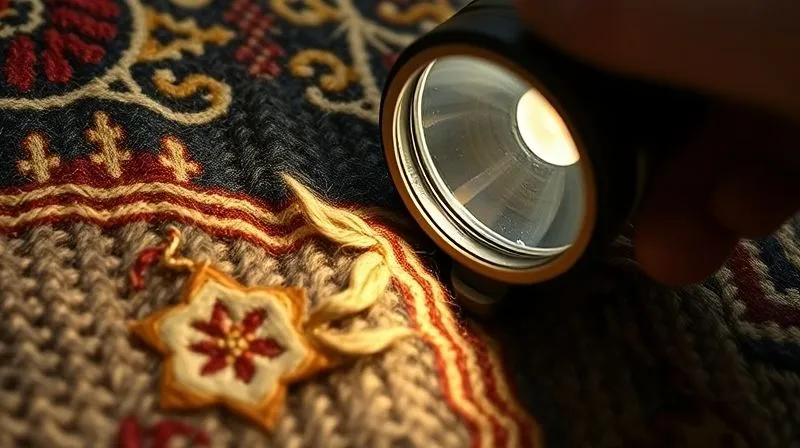
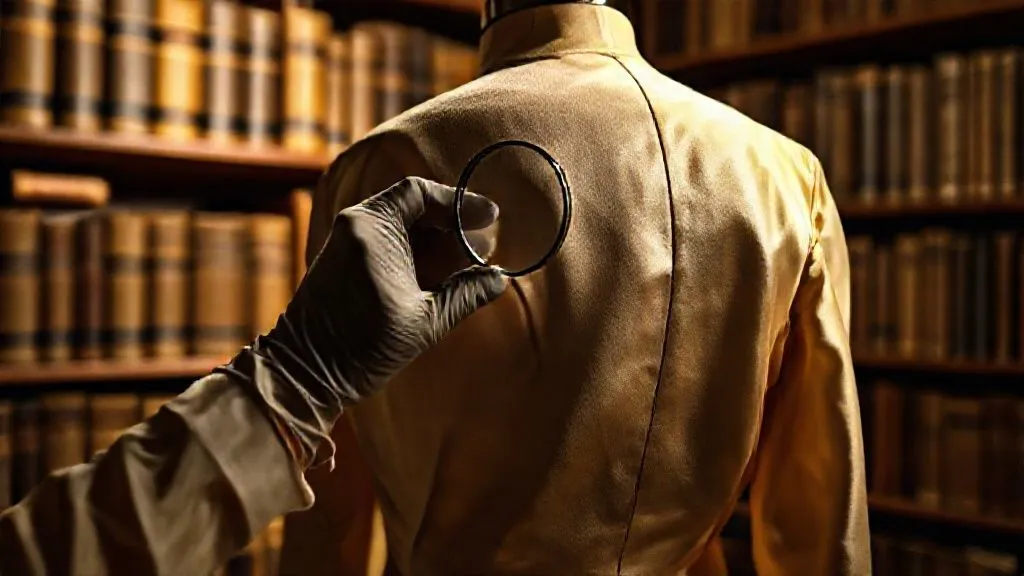
Good lighting is as crucial as magnification. A bright, focused light source (a powerful LED flashlight or headlamp) can reveal shadows and textures that ambient light misses. Shine the light obliquely across the fabric surface; this technique, known as raking light, highlights subtle irregularities, tunnels, and frass that might otherwise be invisible, making them stand out against the fabric's texture.
I've often found that tilting the garment and using a raking light against a dark background can make even the most elusive frass particles stand out, revealing damage that might be camouflaged by the fabric's pattern or color. Always inspect from multiple angles.
Beyond the Garment: Inspecting the Environment
Identifying damage on a garment is only half the battle. If a garment is infested, its immediate surroundings are likely compromised as well. A holistic approach is vital for effective pest management and preventing future moth larvae damage in antique wool garments.
Storage Areas and Adjacent Items
Always inspect the storage area itself: the closet, drawer, trunk, or archival box. Look for frass or webbing on shelves, in corners, and behind furniture. Any other items stored nearby – especially those made of wool, silk, fur, feathers, or even leather – must also be thoroughly checked. Moths aren't confined to a single item; they will spread if conditions are favorable, turning a single infestation into a collection-wide crisis. A 'clean' garment might be re-infested if its environment is not addressed.
Preventative Measures: A Quick Overview
While this article focuses on identification, prevention is the ultimate goal. Regular inspection, proper storage (acid-free boxes, breathable garment bags), maintaining stable temperature and humidity, and diligent cleaning are your best defenses against moth larvae. Vacuuming storage areas frequently and ensuring garments are clean before storage are simple yet powerful deterrents.
The National Park Service's 'Conserve O Gram' series offers excellent, practical advice on integrated pest management for collections, emphasizing environmental control as a key strategy.
| Prevention Strategy | Action | Benefit |
|---|---|---|
| Regular Inspection | Quarterly visual and tactile checks of all susceptible items. | Early detection prevents widespread damage, saving valuable textiles. |
| Proper Storage | Store clean garments in breathable cotton bags or archival boxes, away from light and dust, and off the floor. | Creates a physical barrier against pests and protects from environmental degradation. |
| Environmental Control | Maintain stable temperature (cool, below 70°F) and low humidity (<50%). Vacuum storage areas regularly and thoroughly. | Discourages pest breeding, slows larval development, and prevents growth of mold/mildew. |
| Cleanliness | Ensure garments are thoroughly cleaned (dry-cleaned or hand-washed as appropriate) before storage. Avoid storing food near textiles. | Removes food sources (skin cells, spills) that attract pests and ensures a clean environment. |
Case Study: Eleanor's Silk Brocade Blouse
Let me share a brief but illustrative example from my own experience. A client, Eleanor, brought me a stunning 1920s silk brocade blouse, a family heirloom. She was distraught, having found a few small holes she initially dismissed as old wear, hoping for a simple patch.
Early Detection Saves a Treasure
Upon careful inspection with my magnifying glass and raking light, I quickly spotted not just the irregular holes, but also tiny, almost invisible silken trails on the lining, and a few specks of frass tucked into a seam. It wasn't just 'wear'; it was active moth larvae. Because she brought it to me early, the infestation was localized to that single blouse, and the damage, while present, was not catastrophic.
We were able to isolate the blouse, gently clean it, and implement a targeted freezing treatment to eradicate the larvae, saving the garment from further destruction. Had she waited, or simply patched the holes without addressing the root cause, the entire blouse would have been lost, and potentially other items in her wardrobe would have been infested. This experience truly highlighted the importance of knowing how to quickly identify moth larvae damage in antique wool garments.
"Vigilance is the unsung hero in textile conservation. The moment you suspect something, investigate thoroughly. Procrastination is a collector's worst enemy when it comes to pests."
As textile conservation expert Dr. Sarah Stevens often states, "The most effective pest management strategy is proactive monitoring and rapid response," a principle strongly advocated by institutions like the Victoria and Albert Museum's Textile Conservation department.
Frequently Asked Questions (FAQ)
Q: Can moth larvae damage synthetic fabrics? A: While primarily attracted to natural fibers containing keratin (wool, silk, fur), moth larvae can sometimes chew through synthetics if they are stained with food residues or if they are in the way of reaching a more desirable natural fiber. However, they cannot digest synthetic materials for sustenance, so damage is typically superficial or incidental. Always prioritize inspecting natural fiber items, as these are their true food source.
Q: How quickly can moth larvae destroy a garment? A: The speed of destruction depends on several factors: the number of larvae, the temperature and humidity, and the thickness/type of wool. Under ideal conditions (warm, humid, undisturbed), a significant infestation can cause noticeable and extensive damage to a garment within a few weeks to a couple of months. A single larva can consume a surprising amount of fiber, and with multiple larvae, the damage accelerates dramatically. That's why quick identification and action are paramount.
Q: What's the best immediate action after identifying moth larvae damage? A: The absolute first step is isolation. Immediately place the affected garment in a sealed plastic bag (zip-lock or airtight bin) to prevent further spread to other items. Then, consider a freezing treatment (following proper textile freezing guidelines, typically 72 hours at 0°F/-18°C or below) or professional pest eradication. Do NOT store it back with other items until the problem is completely resolved, and ensure the storage area is also thoroughly cleaned.
Q: Are cedar chests or lavender sachets effective repellents? A: While cedar and lavender contain compounds that can deter *adult* moths from laying eggs, they are generally not effective at killing existing larvae or eggs. Their effectiveness also diminishes over time as their volatile oils dissipate. They should be considered a mild preventative measure, not a solution for an active infestation. For true protection, especially for antique wool garments, regular inspection and proper sealed storage are far more reliable and proven methods.
Q: Can I repair moth holes in antique wool, and should I? A: Many moth holes can be expertly repaired through reweaving, darning, or patching, especially if the damage is localized. The decision to repair depends on the garment's historical value, the extent of the damage, and your desired outcome (e.g., display vs. wear). Always consult a professional textile conservator or reweaver for antique pieces, as improper repairs can decrease value and stability. And crucially, ensure the infestation is completely eradicated before any repair work begins, otherwise, you'll be repairing a garment that will simply be re-damaged.
Key Takeaways and Final Thoughts
Protecting your antique wool garments from moth larvae damage isn't just about preserving fabric; it's about safeguarding history, artistry, and sentimental value. My hope is that this guide empowers you with the confidence and expertise to act decisively and confidently identify moth larvae damage in antique wool garments.
- Be Vigilant: Regular, thorough inspections of your textiles and their storage environments are your primary defense.
- Know the Signs: Look for irregular holes, tell-tale frass, silken tunnels, and areas of weakened or thinned fibers.
- Use Your Tools: A magnifying glass and focused light are indispensable for spotting the minute clues of early infestation.
- Understand the Enemy: Differentiate moth damage from other issues like carpet beetles or wear and tear to ensure correct intervention.
- Act Swiftly: Isolation of affected items and immediate, appropriate treatment are crucial upon detection to prevent further loss.
The antique textile world is a treasure trove, and with a keen eye and proactive approach, you can ensure your cherished wool garments remain pristine for generations to come. Embrace the role of guardian for these fragile pieces of the past, and they will continue to tell their stories, untouched by the silent ravages of time and pests.
Recommended Reading
- 5 Pillars: Updating Heritage Luxury Appeal for Modern Consumers
- Unlock the Secrets: How to Properly Care for Your Luxury Designer Glasses
- 7 Smart Casual Outfits: Crafting Impactful Looks for Male Professionals
- Master Q4 Women's Shoe Trends: How to Avoid Outdated Buys Now
- 7 Steps: Authenticating Vintage Luxury Bags Lacking Provenance

Your email address will not be published. Required fields are marked *