

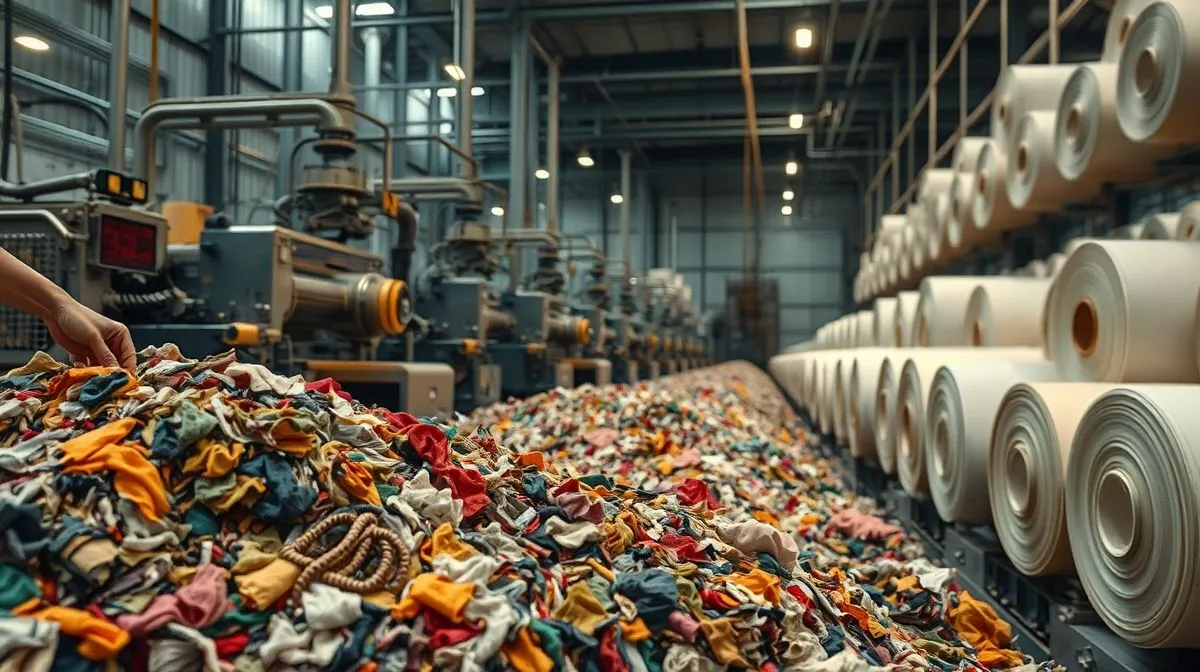
How to profitably scale textile recycling for circular fashion?
For over two decades in the sustainable fashion industry, I've witnessed countless initiatives blossom with incredible potential, only to wither when faced with the daunting challenge of profitability at scale. The promise of a truly circular fashion economy hinges on our ability to effectively close the loop on textiles, yet the economic viability of textile recycling remains a pervasive bottleneck.
Many ambitious brands and innovators grapple with high operational costs, inefficient collection systems, inconsistent material quality, and a lack of robust market demand for recycled content. This often leads to pilot projects that struggle to transition into sustainable, large-scale operations, leaving a significant gap in our collective journey towards genuine textile circularity.
In this deep dive, I'll share my insights and actionable frameworks, drawn from years of experience, on how to navigate these complexities. We'll explore strategic pathways, technological advancements, and collaborative models that are not just environmentally sound, but also economically compelling, offering a clear roadmap for businesses looking to profitably scale textile recycling for circular fashion.
The Unseen Costs: Why Most Recycling Efforts Fail to Scale Profitably
Before we delve into solutions, it's crucial to understand the fundamental hurdles. I've observed that many aspiring circular ventures underestimate the complexity of textile waste streams. Unlike PET bottles or aluminum cans, textiles are a heterogeneous mix of fibers, blends, dyes, and trims, making their deconstruction and revalorization incredibly challenging.
The current global textile recycling rate is shockingly low, with less than 1% of materials being recycled into new clothing, as highlighted by the Ellen MacArthur Foundation. The vast majority still ends up in landfills or incinerators. This isn't just an environmental tragedy; it's a massive missed economic opportunity.
- High Collection and Sorting Costs: Manual sorting is labor-intensive and expensive. Automated solutions are nascent and require significant investment.
- Inconsistent Feedstock Quality: Mixed fibers, contaminants, and varying material conditions make it difficult to produce consistent, high-quality recycled input.
- Technological Limitations: Current mechanical recycling often degrades fiber quality, limiting applications. Chemical recycling is promising but faces scalability and cost challenges.
- Lack of Market Demand: Despite growing consumer interest, mainstream fashion brands are often hesitant to commit to using high percentages of recycled content due to perceived quality issues or price points.
- Fragmented Supply Chains: The linear fashion model is deeply entrenched, and building robust reverse logistics requires significant re-engineering and collaboration.
“Waste is not waste until we waste it.” This profound truth underscores the potential economic value locked within discarded textiles, waiting for innovative, profitable solutions.
Strategy 1: Optimizing Reverse Logistics and Collection Systems
The journey to profitability begins with efficient feedstock acquisition. I've found that haphazard collection systems are often the first profit leak. We need to move beyond sporadic drop-off bins to integrated, consumer-centric models.
The Power of Proximity and Convenience
Consumers are more likely to participate in take-back programs if it's easy. This means leveraging existing retail footprints, partnering with logistics companies, and even exploring smart bins that incentivize participation. Think about the ubiquity of coffee cup recycling in some cities – that's the level of convenience we need for textiles.
Leveraging Digital Platforms for Take-Back Programs
Digital tools can revolutionize reverse logistics. From online platforms that schedule textile pickups to apps that reward consumers for returning garments, technology can streamline the entire process. This also allows for better data collection on material types and quantities, crucial for planning recycling operations.
Case Study: EcoLoop Innovations' Community Hub Model
EcoLoop Innovations, a fictional but realistic startup I've advised, was facing high collection costs due to dispersed textile waste across urban areas. Their initial model relied on pop-up events, which were inefficient. By implementing a new strategy, they partnered with local community centers and laundromats to establish permanent 'EcoHubs' – centralized collection points easily accessible by residents. They integrated a simple QR-code system where consumers could scan their items upon drop-off, receiving loyalty points for future purchases of recycled-content products. This shift, combined with optimized collection routes from these hubs, allowed EcoLoop to reduce their collection costs by 25% within the first year and increase collected textile volume by 40%, proving that convenience and incentives drive participation and profitability.
“The true cost of textile recycling isn't just in processing; it's in the journey of the material from consumer to reprocessor. Optimizing this journey is paramount for profitability.”
Strategy 2: Advancing Sorting and Pre-processing Technologies
Once collected, textiles must be sorted with precision. This is where the magic, and often the bottleneck, happens. Manual sorting is slow, expensive, and prone to human error, leading to inconsistent fiber quality for recycling.
Automated Material Recognition (AMR)
I've seen incredible advancements in AMR technologies, using spectroscopy (NIR, VIS/NIR) and X-ray fluorescence to identify fiber composition, dyes, and even chemical finishes. Investing in these systems, though initially costly, drastically reduces sorting time and improves material purity, which is critical for high-value recycled outputs. According to a recent report by McKinsey & Company, automation in waste management holds the key to significant efficiency gains, reducing operational costs by up to 30% in some cases, directly impacting the profitability of scaling textile recycling.
Fiber Blending and Contaminant Removal
Beyond sorting, pre-processing includes shredding, de-buttoning, and contaminant removal. Innovations in air-jet separation and electrostatic sorting are making it possible to separate different fiber types and remove non-textile components more effectively. This ensures a cleaner, more homogeneous input for the next stage of recycling, leading to higher quality recycled fibers and less waste in the recycling process itself.
Here are actionable steps for implementing advanced sorting:
- Pilot Small-Scale Automation: Start with a single, high-volume material stream (e.g., cotton jeans) to test and refine automated sorting technologies.
- Invest in Data Analytics: Collect data on material inflow and outflow to identify bottlenecks and optimize sorting parameters.
- Collaborate with Tech Providers: Work closely with companies developing AMR and pre-processing solutions to customize systems for your specific waste stream.
- Train Staff: Even with automation, human oversight and maintenance are crucial. Invest in training for technicians to manage and troubleshoot advanced machinery.
Strategy 3: Investing in Next-Gen Recycling Technologies
The core of textile circularity lies in robust recycling technologies. To profitably scale textile recycling for circular fashion, we must move beyond traditional methods and embrace innovation that yields high-quality, market-ready fibers.
Mechanical Recycling: Pushing the Boundaries
Mechanical recycling, while established, often results in shorter fibers, limiting their use to lower-value applications. However, new innovations in mechanical processes, such as improved shredding and carding techniques, are allowing for better fiber length retention and quality. For example, companies are developing specialized defibrillation processes that minimize damage, making mechanically recycled cotton suitable for higher-grade yarns. This can significantly reduce the cost of input materials for spinners.
Chemical Recycling: Unlocking Fiber-to-Fiber Potential
Chemical recycling breaks down textile waste into its molecular components, creating virgin-like fibers. Technologies like solvent-based dissolution (for cellulosic fibers) and depolymerization (for polyesters) are game-changers. While more capital-intensive, they offer the promise of infinite recycling loops without quality degradation. The key to profitability here is achieving economies of scale and reducing the energy footprint of these processes. I've seen a surge in investment in this area, recognizing its potential to truly close the loop on synthetic and cellulosic fibers. For instance, new research published by the Nature journal on sustainable chemistry often highlights breakthroughs in these areas.
Emerging Bio-based Recycling Methods
Beyond mechanical and chemical, enzymatic and biological recycling methods are emerging. These use enzymes or microorganisms to break down textile waste, offering potentially lower energy consumption and less chemical use. While still largely in R&D, they represent a long-term vision for highly sustainable and potentially cost-effective recycling.
“The choice of recycling technology isn't just about environmental impact; it's a critical business decision that determines the quality, marketability, and ultimately, the profitability of your recycled output.”
Strategy 4: Creating Robust Markets for Recycled Content
Even with perfect recycling technology, if there's no demand for the output, profitability remains elusive. Building a strong market for recycled fibers and fabrics is fundamental to scale.
Design for Recyclability (DfR) at the Forefront
I cannot stress this enough: the recycling process begins at the design stage. Brands must design products with their end-of-life in mind. This means favoring mono-materials, avoiding complex blends, and minimizing non-recyclable trims. When designers integrate DfR principles, the cost and complexity of recycling plummet, directly enhancing the profitability of the entire circular system. As marketing guru Seth Godin often says, “Don't find customers for your products, find products for your customers.” Here, it means designing products that inherently feed the circular system.
Brand Commitment and Offtake Agreements
The most powerful driver of demand comes from brands themselves. Long-term offtake agreements, where brands commit to purchasing a certain volume of recycled fibers, provide financial stability and confidence for recyclers to invest in scaling. This de-risks capital expenditure for recycling facilities and fosters innovation. Many leading brands are now setting ambitious targets for recycled content, creating a pull effect in the market. According to a recent Textile Exchange report, the use of recycled polyester and cotton is steadily increasing, signaling a growing industry commitment.
Educating Consumers and Driving Demand
Consumers want sustainable options, but they often lack awareness about the benefits and quality of recycled materials. Effective storytelling about the circular journey of a garment, transparent labeling, and showcasing the performance attributes of recycled fibers can significantly boost consumer acceptance and demand. This allows brands to command a premium, which can then be passed down the value chain to support recycling infrastructure.
Strategy 5: Innovative Business Models and Financial Mechanisms
Profitably scaling textile recycling for circular fashion requires rethinking traditional business models and exploring new financial avenues. The linear 'take-make-dispose' model simply doesn't support circularity.
Extended Producer Responsibility (EPR) Schemes
EPR schemes make producers responsible for the entire lifecycle of their products, including collection and recycling. While often government-mandated, forward-thinking brands can proactively embrace EPR-like principles. By internalizing these costs, brands are incentivized to design for recyclability and invest in recycling infrastructure, ultimately stabilizing the financial landscape for recyclers. I've seen this model effectively drive investment in packaging recycling in Europe, and textiles are next.
Circular Leasing and Rental Models
Shifting from product ownership to service models, like clothing rental or leasing, fundamentally changes the incentive structure. When a brand retains ownership, they have a vested interest in the durability, repairability, and recyclability of their garments. This guarantees a controlled, high-quality stream of textiles returning to them, making recycling far more predictable and profitable. This is a significant paradigm shift that can unlock immense value.
Accessing Green Finance and Impact Investments
The sustainable finance market is booming. Recyclers and circular fashion initiatives can access preferential loans, grants, and impact investments from funds specifically targeting environmental and social returns. Demonstrating clear environmental benefits and a robust business plan can attract significant capital. For instance, the European Investment Bank and various private equity funds are increasingly allocating capital to circular economy projects, as detailed in reports from major financial institutions like the EIB.
“Profitability in circularity isn't about cutting corners; it's about redefining value, embracing shared responsibility, and leveraging innovative financial tools to build a resilient system.”
Strategy 6: Building Cross-Sectoral Partnerships and Policy Advocacy
No single entity can profitably scale textile recycling for circular fashion alone. It requires a symphony of collaboration across industries and proactive engagement with policymakers.
Collaborating Across the Value Chain
I've always advocated for strong partnerships between brands, retailers, sorters, recyclers, technology developers, and even waste management companies. Sharing knowledge, pooling resources, and co-investing in infrastructure can de-risk individual investments and accelerate progress. For example, a consortium of brands could jointly fund a regional textile sorting facility, ensuring a consistent supply of feedstock for multiple recyclers.
Engaging with Policymakers for Supportive Legislation
Government policies play a crucial role in creating a level playing field and incentivizing circularity. This includes advocating for policies like: mandatory recycled content targets, landfill bans on textiles, tax incentives for circular businesses, and funding for R&D in recycling technologies. Proactive engagement with legislative bodies is not just good citizenship; it's a strategic business move that can unlock massive opportunities. The EU's Textile Strategy, for instance, is a testament to the power of policy in driving circularity.
The Role of Industry Alliances
Joining and actively participating in industry alliances (e.g., Textile Exchange, Fashion for Good, Circular Economy Hubs) provides a platform for collective action, sharing best practices, and amplifying advocacy efforts. These alliances can drive standardization, develop shared infrastructure, and collectively address systemic challenges that individual companies cannot tackle alone. I've seen the power of these groups in accelerating the adoption of sustainable practices across the industry.
Strategy 7: Measuring Impact and Communicating Value
To truly profitably scale textile recycling for circular fashion, you must be able to quantify both your environmental and economic impact. Transparency builds trust and attracts investment and customers.
Lifecycle Assessment (LCA) for Transparency
Conducting comprehensive Lifecycle Assessments (LCAs) for your recycled fibers and products allows you to scientifically prove their environmental benefits (e.g., reduced water use, lower carbon emissions) compared to virgin materials. This data is invaluable for marketing, investor relations, and internal optimization. It helps you identify where in your process you can achieve even greater efficiencies, leading to more profitable operations.
Storytelling the Circular Journey
Consumers are increasingly conscious of their environmental footprint. Brands that can authentically tell the story of their circular products – from collection to recycling to new garment – build stronger customer loyalty and differentiate themselves in a crowded market. This narrative isn't just about sustainability; it's about innovation, responsibility, and the future of fashion. It adds perceived value that can justify a price premium.
KPIs for Profitability and Sustainability
Beyond traditional financial metrics, integrate sustainability KPIs into your business reporting. Key metrics I recommend tracking include: Cost Per Ton Recycled, Recycled Content Adoption Rate (by product line), Carbon Emissions Abated per Ton, and Water Saved per Ton. These KPIs provide a holistic view of performance, demonstrating both financial health and environmental contribution, which is crucial for attracting green investment and proving the business case for circularity.
Frequently Asked Questions (FAQ)
Q: What are the biggest economic hurdles in scaling textile recycling? The primary economic hurdles are the high costs associated with inefficient collection and manual sorting, the inconsistent quality of feedstock leading to lower-value outputs, and the significant capital investment required for advanced recycling technologies. Additionally, the fluctuating market demand for recycled fibers and the lack of robust, circular supply chains contribute to profitability challenges.
Q: How can small brands contribute to and benefit from large-scale textile recycling? Small brands can contribute by designing their products for recyclability, participating in collective take-back schemes, and committing to incorporating recycled content into their collections. They benefit by leveraging the infrastructure built by larger players and consortiums, meeting growing consumer demand for sustainable products, and enhancing their brand reputation through genuine circular practices. Collaboration is key for smaller entities.
Q: What role does consumer behavior play in the profitability of textile recycling? Consumer behavior is critical. Their willingness to return used garments, their acceptance of recycled content products (even if slightly different in feel or appearance), and their understanding of the value proposition of circular fashion directly impact the volume of feedstock and the market demand for recycled outputs. Education and incentives are vital to influence this behavior and make recycling initiatives more profitable.
Q: Is chemical recycling truly more sustainable than mechanical, and is it cost-effective? Chemical recycling often produces higher-quality, 'virgin-like' fibers, enabling true fiber-to-fiber circularity without significant quality degradation, which mechanical recycling can struggle with over multiple cycles. This makes it highly sustainable in terms of material purity and endless looping potential. However, it is currently more capital and energy-intensive than mechanical recycling, making cost-effectiveness a challenge at smaller scales. As technologies mature and economies of scale are achieved, its profitability is expected to improve significantly.
Q: How can we ensure the quality of recycled fibers meets industry standards? Ensuring quality requires meticulous sorting and pre-processing to remove contaminants and separate fiber types, followed by advanced recycling technologies that preserve or restore fiber integrity. Strict quality control protocols throughout the recycling process, coupled with collaboration with yarn spinners and fabric mills to understand their specific requirements, are essential. Certification schemes and industry standards also play a crucial role in validating quality and building trust in recycled materials.
Recommended Reading
- Unlock Enduring Professional Impact: 7 Strategic Luxury Fashion Investments
- Scaling Luxury Fashion: 7 Strategies to Preserve Artisan Quality
- Find Your Perfect Look: Which Iconic Eyeglass Frames Suit My Face Shape?
- Is Virtual Try-On Accurate for Clothes? The Surprising Truth!
- The Ultimate Guide: How to Select Durable Fabrics for Active Stage Costumes?
Key Takeaways and Final Thoughts
The journey to profitably scale textile recycling for circular fashion is complex, but entirely achievable. It demands a holistic approach, blending technological innovation with strategic business models and cross-sectoral collaboration. As an industry veteran, I've seen the pendulum swing from awareness to action, and now, it's about making that action economically viable.
- Strategic Investment: Focus capital on automated sorting and advanced recycling technologies that promise high-quality outputs.
- Collaboration is King: Build partnerships across the entire value chain, from collection to design to retail.
- Demand-Side Focus: Design for recyclability and secure long-term offtake agreements to create stable markets for recycled content.
- Innovative Financing: Leverage green finance, EPR schemes, and circular business models to de-risk investment and secure funding.
- Measure & Communicate: Quantify your environmental and economic impact to build trust and attract further investment and consumer loyalty.
The future of fashion is undoubtedly circular. By strategically addressing the profitability challenge, we can unlock the immense potential of textile waste, transforming it from a liability into a valuable resource, and truly build a resilient, sustainable, and profitable fashion industry for generations to come. The time for pilots is over; the era of scalable, profitable circularity is here, and it's within our grasp.



Your email address will not be published. Required fields are marked *