

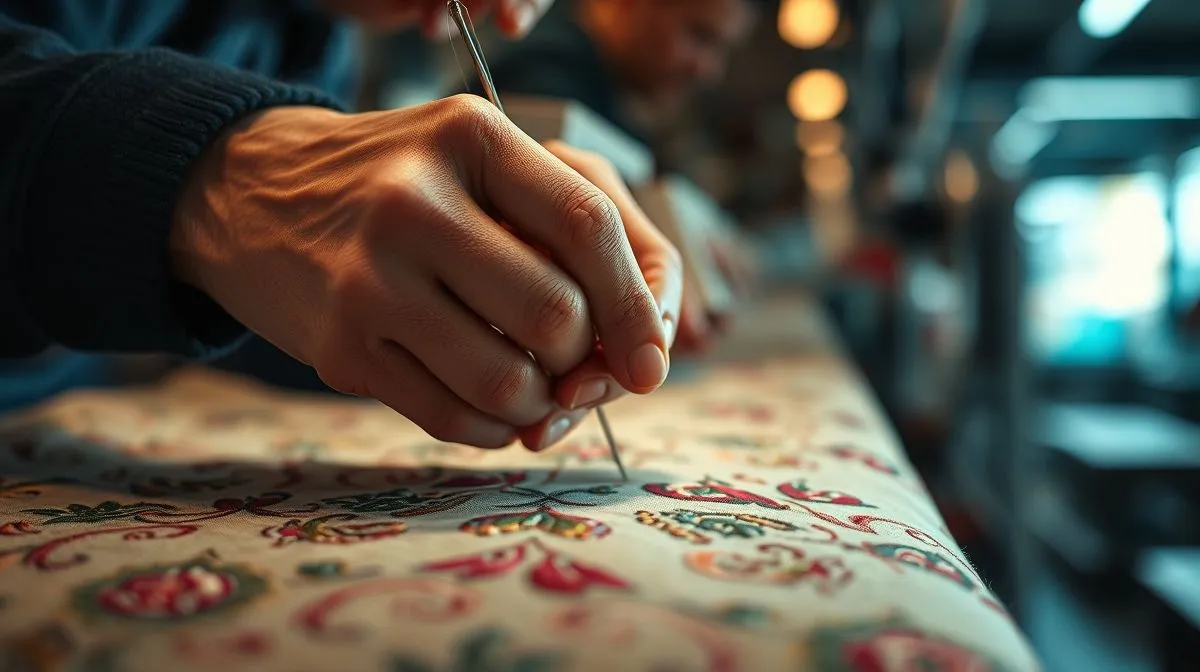
How to preserve artisan quality while scaling luxury fashion production?
For over two decades in the luxury fashion industry, I've witnessed firsthand the exhilarating rise of nascent brands and, equally, the tragic stumble of others. One of the most insidious pitfalls, a silent killer of brand integrity, emerges precisely when a luxury house attempts to scale. The siren song of growth often drowns out the quiet hum of the atelier, threatening the very soul of what makes luxury, luxury: its unparalleled artisan quality.
The challenge is acutely felt: how do you transition from bespoke, handcrafted excellence to increased production volumes without compromising the meticulous detail, the unique touch, or the inherent value that defines artisan quality? This isn't just a logistical puzzle; it's a philosophical tightrope walk that demands a profound understanding of craft, supply chain, and human capital.
In this definitive guide, I will share the frameworks, actionable strategies, and critical insights gleaned from years of navigating this complex terrain. You'll learn how to implement intelligent growth models, leverage technology as an ally, empower your workforce, and meticulously safeguard the artisan spirit, ensuring your brand's expansion amplifies, rather than diminishes, its cherished quality.
The Inherent Tension: Craft vs. Scale – An Industry Veteran’s Perspective
The very essence of luxury fashion is often rooted in rarity, exclusivity, and the human touch. When a brand begins to scale, the initial instinct might be to industrialize, to automate, to standardize. While efficiency gains are undeniable, this path often leads to a dilution of the unique characteristics that captivated discerning clients in the first place.
I've seen countless brands fall into this trap, prioritizing quantity over the nuanced perfection of a handmade stitch or the unique patina of a hand-finished leather. The tension between the slow, deliberate pace of artisanal creation and the rapid demands of a global market is real. However, it's not an insurmountable obstacle; rather, it’s a strategic challenge that, when mastered, can lead to sustainable, authentic growth.
The key lies not in a binary choice between craft and scale, but in a symbiotic relationship where each supports and elevates the other. It's about intelligent growth, not reckless expansion.
“True luxury isn't just about what you buy, but the story behind how it’s made, the hands that touched it, and the values it embodies.” – Industry Expert Insight
Redefining 'Artisan' in a Scaled Context: Beyond the Hand
Many equate 'artisan' solely with a single craftsman toiling in a small workshop. While this image holds a romantic appeal, a modern luxury brand must evolve this definition to encompass a broader, more integrated approach.
Artisan quality, in a scaled context, means:
- Precision Engineering: Utilizing advanced machinery to achieve unparalleled consistency in base components, freeing human artisans to focus on intricate finishing.
- Material Purity: Rigorous selection and sourcing of raw materials, understanding that quality begins at the very first touchpoint.
- Process Mastery: Implementing detailed, standardized processes that ensure every step, whether manual or automated, meets the highest benchmarks.
- Skill Specialization: Employing highly skilled individuals for specific, critical stages of production, where human judgment and dexterity are irreplaceable.
This redefined understanding allows luxury brands to embrace technologies that enhance, rather than diminish, the ultimate quality of the product. It’s about leveraging the best of both worlds.
Strategic Sourcing & Supply Chain Integrity: Protecting the Raw Material Soul
The foundation of artisan quality lies in its raw materials. You cannot create a masterpiece from mediocre ingredients. Scaling requires a robust and trustworthy supply chain that doesn't compromise on material integrity.
- Deep Dive into Supplier Vetting: Go beyond surface-level checks. Visit your suppliers' facilities, understand their ethical practices, and verify their quality control processes.
- Long-Term Partnerships: Cultivate enduring relationships with a select group of high-quality suppliers. This fosters trust, ensures preferential access to premium materials, and allows for collaborative innovation.
- Traceability and Transparency: Implement systems that allow you to trace every component back to its origin. This not only builds consumer trust but also helps identify and rectify quality issues swiftly.
- Sustainable Sourcing: As a luxury brand, your commitment to ethical and sustainable sourcing is paramount. This often goes hand-in-hand with higher quality materials and processes. According to a Deloitte report on the luxury market, sustainability is increasingly a key driver for consumer choice.
Case Study: 'Veridian Leatherworks' – From Boutique to Global
Veridian Leatherworks, a renowned luxury handbag brand, faced immense pressure to scale. Their initial challenge was maintaining the unique supple feel and rich patina of their ethically sourced leathers. Instead of switching to cheaper, mass-produced hides, they invested in a blockchain-based traceability system for their leather supply chain. This allowed them to verify the origin and tanning process of every hide, ensuring consistency and ethical standards even as their orders quadrupled. This commitment not only preserved their signature leather quality but also became a powerful marketing narrative, attracting a new generation of conscious luxury consumers.
Mastering the Manufacturing Process: Blending Technology with Touch
Scaling often means moving beyond the sole artisan's bench. The challenge is to integrate advanced manufacturing techniques without losing the human touch where it matters most.
- Modular Production: Break down the manufacturing process into distinct modules. Some modules can be efficiently handled by precision machinery (e.g., cutting, initial assembly), while others require skilled human intervention (e.g., hand-stitching, intricate embellishments, final finishing).
- Smart Automation: Use automation for repetitive, high-precision tasks that machines can do better or faster than humans, reducing human error and freeing artisans for more complex work. Think laser cutting for absolute precision or robotic arms for consistent adhesive application.
- Bespoke Tooling: Invest in custom tools and jigs that aid artisans in achieving consistent results on complex tasks, rather than replacing their skill.
“Technology should amplify human skill, not replace it entirely. It’s a paintbrush, not a painter.” – Industry Expert Insight
Investing in Human Capital: Training, Retention, and Skill Transfer
Artisan quality is, fundamentally, about people. As you scale, your workforce will grow, and maintaining a consistent level of craftsmanship across a larger team is crucial.
- Rigorous Training Programs: Establish comprehensive, ongoing training programs for all new and existing artisans. These programs should not only teach techniques but also instill the brand's philosophy of quality and attention to detail.
- Mentorship and Apprenticeship: Pair experienced master artisans with junior staff. This facilitates invaluable knowledge transfer and preserves traditional skills that might otherwise be lost.
- Fair Compensation & Culture: Attract and retain top talent by offering competitive wages, excellent working conditions, and a culture that values craftsmanship, innovation, and employee well-being. A happy, respected artisan is a productive artisan.
- Specialization and Empowerment: Allow artisans to specialize in specific areas where their skills truly shine. Empower them to take ownership of their work and contribute to process improvement.
As Harvard Business Review suggests, fostering a culture of craftsmanship requires intentional effort to embed quality and pride into every aspect of an organization.
Rigorous Quality Control: The Unseen Art of Consistency
Scaling introduces more variables, making robust quality control more critical than ever. This isn't just about catching mistakes; it's about preventing them.
- Multi-Stage Inspection: Implement quality checks at every critical stage of the production process, not just at the end. This allows for early detection of issues and reduces waste.
- Digital Traceability: Use digital tools to track each product's journey, from raw material to finished good. This allows for quick identification of bottlenecks or quality deviations.
- Feedback Loops: Establish clear channels for artisans to provide feedback on processes, materials, or tools. Their insights are invaluable for continuous improvement.
- Benchmarking & Audits: Regularly benchmark your product quality against industry leaders and conduct internal and external audits to ensure adherence to your stringent standards.
This proactive approach ensures that every single item leaving your facility, regardless of production volume, meets the exact same, uncompromising standard of artisan quality.
Authentic Storytelling & Brand Narrative: Communicating Uncompromised Quality
As you scale, it’s vital to communicate *how* you are preserving your artisan quality, not just that you are. This builds trust and reinforces your brand's unique value proposition.
- Behind-the-Scenes Content: Share videos and images of your artisans at work, your meticulous sourcing processes, and your advanced quality control measures. Let customers see the dedication that goes into each product.
- Highlighting Craftsmanship: Emphasize the specific artisan techniques used in your products. Educate your audience on what makes your products superior.
- Artisan Spotlights: Introduce your master artisans to your audience. Share their stories, their passion, and their expertise. This humanizes the brand and reinforces the value of their craft.
- Transparency Reports: For truly committed brands, consider issuing annual transparency reports detailing your supply chain, ethical practices, and quality benchmarks.
This narrative isn't just marketing; it's an authentic reflection of your brand's commitment to excellence. As Seth Godin often emphasizes, building a lasting brand is about telling a consistent, compelling story that resonates with your audience.
Embracing Technology as an Enabler, Not a Replacement
The fear that technology will replace human craftsmanship is understandable but often misplaced in luxury. For scaling with quality, technology is an indispensable partner.
- 3D Prototyping and Design: Allows for rapid iteration and precision in design, ensuring perfect fit and form before any physical materials are cut. This reduces waste and refines the artisan's blueprint.
- Data Analytics for Quality Control: Utilize data to identify patterns in defects, predict potential issues, and optimize production processes for consistency.
- Advanced Material Science: Innovations in materials can offer enhanced durability, performance, or aesthetic qualities that complement traditional craftsmanship.
- Supply Chain Management Software: Digital platforms can dramatically improve the efficiency and transparency of your global supply chain, ensuring timely delivery of high-quality components.
By intelligently integrating these technologies, luxury brands can achieve efficiencies and levels of consistency that would be impossible through purely manual processes, while still preserving the critical human touchpoints.
Building a Culture of Craftsmanship: From Atelier to Factory Floor
Ultimately, preserving artisan quality while scaling comes down to embedding a deep respect for craft into your entire organizational culture. This extends beyond the artisans themselves to every employee, from design to marketing to sales.
- Leadership Commitment: Quality must be championed from the very top. Leaders must consistently articulate and demonstrate the brand's unwavering commitment to artisan excellence.
- Cross-Functional Collaboration: Foster an environment where designers, production managers, artisans, and marketing teams collaborate closely. This ensures that design intent translates flawlessly into production and that the story of craftsmanship is authentically communicated.
- Continuous Improvement Mindset: Encourage a culture of learning and refinement. Regular workshops, skill-sharing sessions, and feedback mechanisms should be standard practice.
- Celebrating Milestones: Acknowledge and celebrate the achievements of your artisans and production teams. This reinforces their value and motivates continued excellence.
This holistic approach ensures that 'artisan quality' isn't just a buzzword, but a lived reality throughout your entire luxury fashion enterprise, enabling sustainable growth without compromise.
Frequently Asked Questions (FAQ)
Question? Isn't scaling luxury inherently contradictory to artisan quality?
Answer: Not necessarily. The key is intelligent scaling. True artisan quality prioritizes skill, meticulousness, and premium materials. While traditional luxury often implies small batches, modern scaling can integrate technology and advanced processes to achieve consistent, high-level quality across larger volumes. It's about preserving the *essence* of craftsmanship, not necessarily the exact production method of a century ago. Many luxury brands successfully balance expanded production with rigorous quality control and investment in skilled labor.
Question? How can technology truly help preserve quality without making products feel mass-produced?
Answer: Technology should be seen as an enabler. For instance, precision cutting machines can ensure absolute consistency in initial pattern cutting, freeing artisans to focus their unparalleled skill on intricate hand-finishing, embellishment, or complex assembly steps. Data analytics can identify potential quality issues early in the production cycle, preventing widespread defects. 3D printing can create precise prototypes. When used strategically, technology enhances consistency and efficiency, allowing human artisans to dedicate their time to the truly unique and value-adding aspects of the craft.
Question? What's the biggest risk when trying to scale a luxury brand's production?
Answer: The biggest risk is a short-sighted focus on cost reduction or speed over quality. This often leads to compromising on raw materials, rushing production steps, or underinvesting in skilled labor and training. Such compromises erode brand trust and devalue the luxury proposition. Another significant risk is failing to adapt your supply chain and quality control measures to the increased volume, leading to inconsistent product quality. Maintaining rigorous standards and a consistent brand narrative throughout the growth phase is paramount.
Question? How do you measure 'artisan quality' when it's so subjective?
Answer: While some aspects are subjective, many elements of artisan quality can be objectively measured. This includes consistency of stitching, precision of cuts, durability of materials, uniformity of finishes, and adherence to design specifications. For more qualitative aspects, establishing clear internal benchmarks based on master samples, conducting blind product comparisons, and gathering detailed customer feedback are crucial. The 'feel,' 'hand,' or 'patina' can be assessed through the experience of seasoned quality control experts who understand the nuances of luxury craftsmanship.
Question? Is it possible to scale production without expanding the physical workforce significantly?
Answer: Yes, it is. This is where smart technology integration and process optimization become vital. By automating repetitive tasks, improving workflow efficiency, and empowering existing artisans with better tools and training, a brand can increase output per artisan. Strategic outsourcing of non-core, high-volume components to trusted, quality-vetted partners can also allow the core team to focus on the unique, high-value artisan elements. The goal is not necessarily more hands, but smarter, more efficient hands and processes.
Recommended Reading
- Unlock Your Sparkle: How to Choose Jewelry Trends for Your Personal Style
- Cracking the Code: What Are the Secrets to Streetwear Influencer Success?
- The Secret to Timeless Bridal Style: How to Pick Trends Without Looking Dated Later
- Fashion Blogging: Social Media Style Tips to Explode Your Brand
- Unlock the Secret: How to Care for Contemporary Jewelry Materials?
Key Takeaways and Final Thoughts
- Intelligent Scaling is Possible: Growth doesn't have to mean compromising your brand's soul. It requires strategic planning and a deep commitment to quality at every level.
- Redefine 'Artisan': Embrace a broader definition that includes precision engineering, meticulous sourcing, and specialized human skill, enhanced by technology.
- Invest in People and Process: Your artisans are your most valuable asset. Empower them through training, fair practices, and a culture that values craftsmanship. Implement multi-stage quality checks and robust supply chain management.
- Technology is Your Ally: Leverage automation, data analytics, and advanced materials to enhance consistency and free up human skill for truly artisan tasks.
- Authenticity Sells: Transparently communicate your commitment to quality and the story behind your products. This builds trust and strengthens your brand narrative.
The journey of scaling a luxury fashion brand while safeguarding its artisan quality is undoubtedly complex, demanding foresight, resilience, and an unwavering dedication to excellence. However, as I've observed time and again, those who master this delicate balance don't just grow; they create an enduring legacy, cementing their place as true leaders in the world of luxury. Your brand’s future, rich with heritage and poised for innovation, awaits.




Your email address will not be published. Required fields are marked *