

How to Prevent Dead Stock in Kids' Character Clothing?
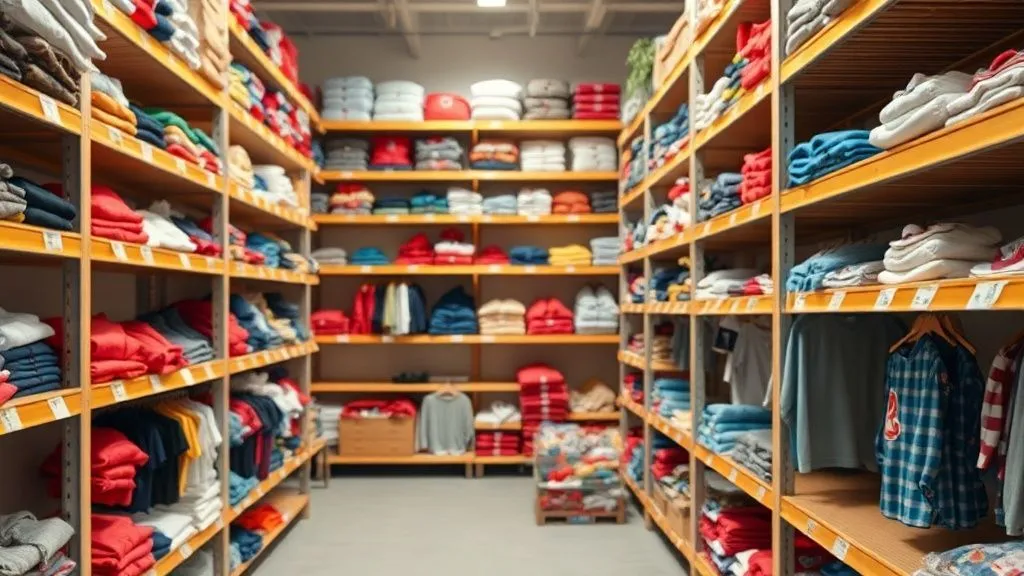
For over two decades in the dynamic world of fashion, particularly within the enchanting, yet often unpredictable, realm of kids' apparel, I've witnessed firsthand the exhilarating highs of a sell-out collection and the crushing lows of a warehouse overflowing with unsold inventory. The stakes are uniquely high in kids' character clothing, where fleeting trends and passionate fan bases can turn yesterday's hero into today's clearance item almost overnight.
This isn't just about lost profits; it's about wasted resources, strained cash flow, and the disheartening reality of perfectly good garments ending up in landfills. The problem of dead stock in kids' character clothing isn't merely an inventory issue; it's a strategic misstep that can cripple even the most enthusiastic ventures.
In this definitive guide, I'll share the actionable frameworks, real-world case studies, and expert insights I've gathered over the years. My goal is to equip you with the knowledge and tools to master the art of demand forecasting and inventory management, ensuring your kids' character clothing line thrives without the burden of dead stock. Let's transform your challenges into opportunities for growth and sustained success.
Understanding the Unique Dynamics of Kids' Character Clothing
Before we dive into prevention, it's crucial to grasp what makes kids' character clothing a special beast. It's not just another segment of the apparel market; it operates under a unique set of influences that can amplify the dead stock problem if not carefully managed.
The Double-Edged Sword of Trends and Licensing
The allure of character clothing lies in its connection to beloved stories and heroes. However, this also means it's heavily influenced by media cycles. A movie release, a new streaming series, or even a popular YouTube phenomenon can ignite demand, but once the hype fades, so does the interest in the merchandise. Licensing agreements often come with minimum order quantities (MOQs) and strict design guidelines, limiting your flexibility to react quickly to shifting consumer preferences.
The Challenge of Sizing and Growth
Kids grow, and they grow fast! This inherent biological factor adds another layer of complexity. Unlike adult clothing, where sizes remain relatively stable, children's sizes are constantly evolving. Buying too much of one size, especially for a character that might only be popular for a season, is a fast track to dead stock.
Parental Purchasing Habits vs. Child Desires
The end-user (the child) often dictates the desire, but the purchaser (the parent) holds the purse strings. Parents are often value-conscious, looking for durability and practicality, while children are driven by immediate emotional connection to a character. Balancing these two often-conflicting drivers in your buying decisions is key to avoiding overstock.
Strategic Forecasting: The Foundation of Prevention
Effective demand forecasting is not just a best practice; it's your frontline defense against dead stock. In my experience, a robust forecasting model is the single most powerful tool in your arsenal when tackling how to prevent dead stock in kids' character clothing.
Leveraging Historical Sales Data and Market Trends
Start with what you know. Dive deep into your past sales data. Look beyond just total units sold; analyze by character, by size, by color, and by promotional period. Identify seasonality and peak demand times. Are there specific characters that consistently outperform others, or ones that quickly fizzle out?
- Character Popularity: Track which characters consistently sell well and for how long.
- Size Performance: Analyze sales by size to identify common over- or under-stocked ranges.
- Color/Design Variants: Pinpoint which specific designs or colorways resonate most with your audience.
- Promotional Impact: Understand how different promotions affect sales velocity and demand.
- Return Rates: High return rates for specific items can indicate a problem with fit, quality, or perceived value.
Incorporating External Factors: Media Releases & Seasonal Shifts
Kids' character clothing is intrinsically linked to entertainment. Monitor upcoming movie releases, new show seasons, video game launches, and even major social media trends. These external factors are powerful demand drivers. Align your purchasing calendar with these events, but also anticipate the post-hype decline. Seasonal shifts, like back-to-school or holiday periods, also create predictable spikes in demand.
Expert Insight: Proactive monitoring of entertainment industry news and release schedules isn't optional for kids' character clothing retailers; it's a critical component of intelligent demand planning. Being ahead of the curve allows for strategic, rather than reactive, inventory decisions.
By combining internal sales data with external market intelligence, you build a more holistic and accurate forecast. This layered approach significantly reduces the guesswork often associated with kids' character merchandise.
The Art of Agile Inventory Management
Even with the best forecasting, the market can surprise you. Agile inventory management is about building flexibility into your operations, allowing you to adapt quickly to unexpected shifts in demand and further solidify how to prevent dead stock in kids' character clothing.
Implementing Just-In-Time (JIT) Principles
While a pure JIT model might be challenging for licensed products with long lead times, the principles can be adapted. The goal is to minimize holding costs and reduce the risk of obsolescence by receiving goods only as they are needed. This requires close collaboration with your suppliers.
- Staggered Deliveries: Negotiate to receive larger orders in smaller, more frequent shipments rather than one massive delivery.
- Pre-Order Windows: Use pre-order campaigns to gauge initial demand accurately before committing to full production runs.
- Modular Production: If possible, work with manufacturers who can produce core items and then apply character designs closer to demand, reducing commitment to specific characters too early.
- Vendor-Managed Inventory (VMI): Explore VMI options where the supplier takes responsibility for managing inventory levels in your warehouse.
Dynamic Replenishment and Safety Stock Calculations
Your inventory levels shouldn't be static. Implement dynamic replenishment models that adjust order quantities based on real-time sales data. For kids' character clothing, I always recommend a carefully calculated safety stock – enough to cover unexpected spikes in demand or supply chain disruptions, but not so much that it becomes dead stock.
Expert Insight: The sweet spot for safety stock in kids' character apparel is a delicate balance. Too little, and you miss sales; too much, and you're sitting on costly, depreciating assets. Regular review and adjustment are paramount.
Regularly review your stock-to-sales ratios, inventory turnover rates, and days of supply. These metrics provide critical insights into the health of your inventory and inform your replenishment strategies.
| Metric | Benchmark (Kids' Fashion) | Your Current Value | Action Item |
|---|---|---|---|
| Inventory Turnover Rate | 4-6 times/year | 3.2 times/year | Improve forecasting & reduce lead times |
| Days of Supply (DOS) | 60-90 days | 110 days | Optimize reorder points & order frequency |
| Fill Rate | 95%+ | 92% | Enhance safety stock calculation for popular items |
| Gross Margin Return on Inventory (GMROI) | 150%+ | 120% | Focus on higher-margin, faster-moving items |
Cultivating Strong Vendor Relationships and Smart Sourcing
Your suppliers are not just vendors; they are partners in your success. Building strong, collaborative relationships is vital, especially when navigating the complexities of licensed character merchandise. Smart sourcing can provide the flexibility needed to prevent dead stock.
Negotiating Flexible Order Minimums and Return Policies
When negotiating with licensors and manufacturers, push for more flexible terms. Can you negotiate lower MOQs for initial orders, with options for quick reorders based on performance? Are there provisions for returns or exchanges of slow-moving items, perhaps for store credit or other merchandise? While not always easy to secure, these terms can significantly mitigate your risk.
Diversifying Suppliers and Production Channels
Relying on a single supplier can leave you vulnerable. Explore working with multiple manufacturers, even if it means slightly higher unit costs initially. This diversification can offer:
- Reduced Lead Times: Different suppliers may have varying production capacities and speeds.
- Specialization: Some suppliers might be better for specific types of garments or character applications.
- Risk Mitigation: If one supplier faces issues (e.g., quality control, geopolitical disruptions), you have alternatives.
- Negotiating Power: Having options strengthens your position for better terms.
Case Study: How 'Little Heroes Apparel' Optimized Vendor Contracts
Little Heroes Apparel, a mid-sized retailer specializing in niche character clothing for toddlers, faced persistent dead stock issues, particularly with lesser-known characters that had limited screen time. Their initial contracts mandated large MOQs for all licensed designs.
By implementing a strategy of tiered MOQs, they approached their licensors and manufacturers with a proposal: lower MOQs for new or experimental character lines, compensated by higher MOQs for proven best-sellers. They also negotiated a 90-day window for returns of up to 5% of their initial order value for underperforming items, in exchange for committing to longer-term licensing agreements for their core popular characters.
This strategic negotiation, combined with diversifying their manufacturing partners to include one local, agile producer for smaller, quick-turnaround orders, allowed Little Heroes Apparel to reduce their dead stock by 28% within 18 months. Their cash flow improved dramatically, enabling them to invest more in marketing their successful lines.
Data-Driven Demand Sensing and Trend Spotting
In the fast-paced world of kids' fashion, simply looking at historical data isn't enough. You need to develop a keen sense for emerging trends and real-time demand signals. This proactive approach is crucial for how to prevent dead stock in kids' character clothing.
Social Media Listening & Influencer Marketing Insights
Children's preferences are often shaped by what they see their peers, favorite YouTubers, or TikTok creators wearing and promoting. Implement social media listening tools to track mentions of specific characters, trending themes, and popular children's entertainment. Pay attention to what kids themselves are talking about online (under parental supervision, of course). Partnering with relevant kids' fashion influencers can also provide early insights into what's gaining traction.
Point-of-Sale (POS) Data Analysis for Real-Time Adjustments
Your POS system is a goldmine of real-time information. Don't just look at weekly or monthly reports; monitor daily sales for spikes or drops. If a particular character item is flying off the shelves, consider immediate reorders (if lead times allow) or reallocating stock from slower-performing stores. Conversely, if an item is barely moving, start planning your markdown strategy sooner rather than later.
According to a Harvard Business Review article on retail analytics, businesses that leverage real-time POS data for inventory decisions can see significant improvements in stock optimization and sales. This immediate feedback loop is invaluable for kids' character clothing, where trends can be so volatile.

Effective Markdown Strategies and Liquidation Planning (When Prevention Fails)
Despite your best efforts, some dead stock is almost inevitable. The key is to have a clear, proactive strategy for moving it quickly and efficiently, minimizing its financial impact. This is not about admitting defeat, but about strategic damage control.
Timely Promotions and Bundling Offers
Don't wait until items are deeply out of season or completely irrelevant. As soon as you identify slow-moving character inventory, initiate promotions. Consider:
- Flash Sales: Limited-time, high-discount sales to create urgency.
- Bundling: Pair a slow-moving character item with a popular, full-priced item for a perceived value deal.
- "Buy One, Get One Free" (BOGO): Especially effective for lower-priced items.
- Loyalty Program Exclusives: Offer early access or deeper discounts to your most loyal customers.
Exploring Alternative Sales Channels
Sometimes, your primary sales channels aren't the best fit for clearing dead stock. Look into:
- Outlet Stores or Sections: Dedicated areas or separate physical/online outlets for discounted merchandise.
- Discount Retailers/Liquidators: Selling bulk dead stock to specialized liquidation companies. While margins are low, it clears inventory quickly.
- Charitable Donations: While not generating revenue, donations can offer tax benefits and build goodwill.
- Subscription Boxes: Incorporate slow-moving items into themed subscription boxes as a bonus.
A seminal article in Harvard Business Review on markdown strategies emphasizes that the timing and psychology of discounts are just as important as the discount percentage itself. For kids' character clothing, acting swiftly before the character's popularity completely wanes is critical.
Customer Engagement and Feedback Loops
Your customers are your most valuable source of information. Engaging with them directly can provide unparalleled insights into demand and preferences, effectively helping you to prevent dead stock in kids' character clothing.
Pre-Orders and Wishlists: Gauging Demand Before Production
This is one of my favorite strategies for mitigating risk in character clothing. By offering pre-orders for highly anticipated character lines, you can accurately gauge initial demand before committing to full production runs. Similarly, implementing a wishlist feature on your website allows customers to express interest in items, providing valuable data on potential future demand.
- Reduced Financial Risk: You only produce what's already sold or has strong indicated interest.
- Accurate Sizing: Pre-orders give real-time data on the most requested sizes.
- Customer Loyalty: Customers feel invested in the product and appreciate early access.
Direct Feedback: Surveys and In-Store Interactions
Don't underestimate the power of direct communication. Simple surveys (online or in-store) asking about favorite characters, desired clothing types, or even preferred sizes can yield incredible insights. Train your sales associates to actively listen to customer comments and questions. What characters are kids asking for that you don't carry? What items are parents looking for but can't find?
As Nielsen's consumer insights reports consistently highlight, understanding the voice of the customer is paramount for product development and inventory planning. This is especially true in the emotionally driven market of kids' character apparel.

The Role of Technology: AI and Predictive Analytics
In today's competitive landscape, relying solely on manual forecasting is a recipe for disaster. Leveraging technology, particularly artificial intelligence and predictive analytics, is no longer a luxury but a necessity for effectively managing inventory and preventing dead stock in kids' character clothing.
Implementing Advanced Inventory Software
Modern inventory management systems (IMS) go far beyond simply tracking stock levels. They can integrate with your POS, e-commerce platform, and even supplier systems to provide a unified view of your inventory. Key features to look for include:
- Automated Reorder Points: Systems that automatically suggest when and how much to reorder based on sales velocity and lead times.
- Multi-Channel Integration: Syncing inventory across online and offline channels to prevent overselling or missed sales.
- Reporting & Analytics: Robust dashboards that highlight slow-moving items, best-sellers, and potential dead stock risks.
- Lot Tracking: Essential for managing different batches of licensed products with varying expiration dates or seasonal relevance.
AI-Powered Demand Forecasting Tools
This is where the future of inventory management truly lies. AI and machine learning algorithms can process vast amounts of data – historical sales, external trends, social media sentiment, weather patterns, economic indicators – to generate highly accurate demand forecasts. These tools can identify subtle patterns and correlations that human analysts might miss, providing a significant edge in predicting the fickle nature of kids' character clothing demand.
While the initial investment might seem substantial, the long-term savings from drastically reduced dead stock and improved sales efficiency make AI-powered forecasting an incredibly worthwhile consideration for any serious player in this niche.
| Technology Type | Cost | Complexity | Key Benefit for Dead Stock | Limitation for Kids' Character Clothing |
|---|---|---|---|---|
| Basic IMS (Spreadsheet-based) | Low (Free-$$) | Low | Manual tracking, basic stock counts | No real-time insights, prone to human error, poor trend prediction |
| Advanced IMS (Cloud-based) | Medium ($$-$$$) | Medium | Automated reorders, multi-channel sync, detailed reporting | Relies on historical data, limited external trend integration |
| AI/ML Demand Forecasting Platform | High ($$$-$$$$) | High | Predictive analytics, external data integration, highly accurate forecasts | Requires clean data, complex implementation, ongoing fine-tuning |
Frequently Asked Questions (FAQ)
What's the biggest mistake retailers make with kids' character clothing inventory? In my experience, the single biggest mistake is underestimating the volatility of trends and over-committing to large orders based on initial hype. Many retailers fail to build in enough flexibility or diversification, getting stuck with huge quantities when a character's popularity inevitably wanes. It's crucial to balance enthusiasm with pragmatic risk assessment.
How often should I review my kids' character clothing inventory? For fast-moving or newly launched character lines, I recommend daily or at least weekly reviews. For more stable, evergreen characters, a monthly review might suffice. However, a comprehensive quarterly inventory audit is essential to catch any accumulating dead stock before it becomes a major problem. Dynamic replenishment systems can automate much of this, flagging anomalies in real-time.
Is it better to overstock slightly or risk running out of popular kids' character items? This is the classic inventory dilemma! For kids' character clothing, I lean towards slightly understocking and having a robust reorder process, especially for new or unproven characters. Missing a few sales is often less damaging than being stuck with a warehouse full of dead stock. However, for established, consistently high-demand characters, a calculated safety stock is wise to avoid disappointing customers and losing loyal followers. The key is to know your characters and their demand patterns intimately.
How do small businesses compete with large retailers on kids' character clothing to prevent dead stock? Small businesses often have the advantage of agility and deeper customer relationships. Focus on niche characters or specific styles that large retailers overlook. Leverage pre-orders heavily, cultivate a strong online community for direct feedback, and build personal relationships with suppliers for more flexible terms. Your ability to pivot quickly and cater to a specific, passionate audience can be your superpower against the mass-market approach of larger players.
Can pre-orders really reduce dead stock significantly in character clothing? Absolutely. Pre-orders are an incredibly powerful tool. By gauging actual customer commitment before you place your major production orders, you dramatically reduce the guesswork. This allows you to order much closer to actual demand, minimizing the risk of both overstocking and understocking. It requires clear communication with customers about timelines, but the benefits in dead stock prevention are immense.
Key Takeaways and Final Thoughts
Navigating the vibrant, yet challenging, world of kids' character clothing requires a blend of passion, foresight, and meticulous strategy. Preventing dead stock isn't about eliminating inventory; it's about optimizing it, ensuring every item on your shelves has a purpose and a path to a happy customer. As I've outlined, this journey involves:
- Deep Dive Forecasting: Integrating historical data with future trends.
- Agile Operations: Building flexibility into your supply chain.
- Strong Partnerships: Collaborating closely with your vendors.
- Real-time Sensing: Listening to market signals and customer voices.
- Proactive Liquidation: Having a plan for when prevention isn't enough.
- Tech Adoption: Leveraging AI and advanced systems for superior insights.
Embrace these strategies, and you'll not only solve the problem of how to prevent dead stock in kids' character clothing but also unlock new levels of profitability and sustainability for your business. The future of kids' fashion is bright, and with smart inventory management, your brand can be a shining star within it. Keep learning, keep adapting, and most importantly, keep delighting those little heroes and heroines!
Recommended Reading
- 7 Proven Strategies: How to Resolve Severe Contact Lens Dryness for Daily Wear?
- Mastering Inversion-Proof Yoga Leggings: 7 Design Secrets
- Lab-Grown Diamonds Soaring? 7 Strategies for Natural Stone Sales
- Mastering Authentication: 5 Steps to Profitable Luxury Vintage Resale
- The Ultimate Guide: Best Strategies for Copping Streetwear Drops




Your email address will not be published. Required fields are marked *