


Designing Yoga Leggings That Prevent Rolling Down During Inversions?
For over two decades in the activewear industry, I've witnessed countless innovations and, frankly, a few missteps. One persistent design challenge that has plagued both brands and practitioners is the dreaded yoga legging waistband that refuses to stay put, especially during the dynamic shifts and gravity-defying feats of inversions. It's a fundamental flaw that can shatter focus and compromise the entire yoga experience.
I understand the frustration. There's nothing worse than being mid-headstand or handstand, only to feel your waistband betray you, rolling down and creating an uncomfortable, distracting bulge. This isn't just an aesthetic issue; it's a performance inhibitor, a comfort killer, and a direct challenge to the very essence of a focused yoga practice. The problem isn't the practitioner; it's often a failure in design.
In this definitive guide, drawing from my deep experience in activewear engineering and design, I will unpack the intricate science and art behind designing yoga leggings that prevent rolling down during inversions. We'll explore actionable frameworks, delve into fabric technology, scrutinize pattern-making mastery, and uncover the critical finishing touches that separate truly inversion-proof leggings from their less reliable counterparts. Prepare to transform your understanding and approach to high-performance yoga apparel.
The Core Challenge: Understanding Inversion Mechanics and Fabric Stress
When a yogi transitions into an inversion, the body's relationship with gravity flips. This shift creates unique stressors on apparel, particularly around the waist and hips. The fabric isn't just battling gravity; it's contending with skin friction, muscle compression, and the dynamic movement of the torso and legs.
I've seen many designers overlook the sheer force applied to the waistband during these movements. It's not enough for a legging to simply feel comfortable standing up; it must perform under extreme, inverted conditions. The common mistake is designing for static comfort rather than dynamic, multi-directional stress.
The Science of Stretch and Recovery
At the heart of an inversion-proof legging lies the fabric's ability to stretch and, crucially, to recover. High-quality activewear fabrics are typically blends of synthetic fibers like nylon or polyester with elastane (spandex/Lycra). The percentage and quality of elastane are paramount.
- Stretch: Refers to how much the fabric can elongate without breaking.
- Recovery: The fabric's ability to return to its original shape after stretching. Poor recovery leads to bagging out, slippage, and, yes, rolling waistbands.
- Power Stretch: A specific type of stretch that offers both flexibility and strong compressive support, essential for keeping leggings in place.
In my experience, a blend with at least 20-25% high-denier elastane, engineered for four-way stretch, is the baseline for inversion performance. Anything less often compromises the critical snap-back needed to hug the body securely.
Body Mapping for Optimal Fit
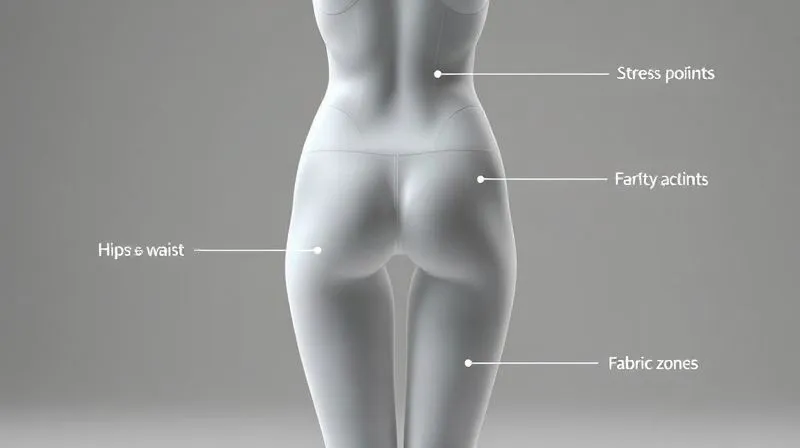
Effective design for inversions demands a deep understanding of human anatomy and biomechanics. Body mapping is the technique of identifying areas of high stress, movement, and heat generation on the body to strategically place seams, panels, and varying compression zones. For leggings, this means recognizing how the waist, hips, and lower abdomen behave when inverted.
The goal is to create a 'second skin' effect that moves with the body, not against it. This involves precision in pattern grading and considering how different body types will interact with the garment's design. It's about anticipating every bend, twist, and lift.
Engineering the Unyielding Waistband: More Than Just High-Rise
The waistband is the frontline defense against rolling. While a high-rise design is often preferred for yoga, height alone doesn't guarantee stability. The construction, materials, and finishing of the waistband are far more critical.
I've seen companies simply extend a basic waistband, thinking more fabric means more hold. This is a rookie mistake. A poorly constructed high-rise can fold and roll even more dramatically than a mid-rise, simply because there's more material to buckle.
Key Insight: A truly inversion-proof waistband is a meticulously engineered component, not just an extension of the pant leg. It requires a multi-faceted approach to achieve unwavering stability.
Multi-Layered Waistband Construction
The most effective waistbands for inversions typically employ a multi-layered construction. This isn't just about adding bulk; it's about creating a stable, supportive structure that distributes pressure evenly and resists folding.
- Outer Fabric Layer: The primary face fabric, chosen for aesthetics and initial compression.
- Inner Support Layer (Power Mesh/Elastic): A crucial hidden layer, often a high-denier power mesh or a firm, wide elastic band. This provides the core structural integrity and targeted compression.
- Interlining/Stabilizer (Optional): In some premium designs, a thin, non-stretch interlining might be fused between layers to prevent vertical stretch and enhance shape retention.
- Topstitch/Reinforcement: Strategic topstitching or bar tacking at key stress points to prevent layers from shifting or rolling independently.
This layered approach allows for varied tension and support, creating a 'grip' without constriction. The inner layer, in particular, should have excellent recovery properties to maintain its shape over time and repeated wear.
Strategic Seaming and Reinforcement
Seam placement and type play a vital role in waistband stability. Flatlock seams are standard in activewear for comfort, but for waistbands, the way these seams are integrated can prevent rolling. A well-designed waistband might feature:
- Contoured Seams: Angled seams that follow the natural curves of the body, providing a more anatomical fit than straight seams.
- Reinforced Top Edge: A double-folded or elasticized top edge that resists curling.
- Bar Tacks: Small, dense stitches used at the ends of seams or stress points to prevent unraveling or tearing, crucial where the waistband meets the main legging body.
Case Study: How 'Zenith Active' Conquered Waistband Roll
Zenith Active, a mid-sized activewear brand I consulted with, faced consistent customer complaints about their premium yoga leggings rolling down during inversions. Their initial design used a single-layer, high-rise waistband with standard flatlock seams. By implementing the multi-layered waistband strategy described above, incorporating a high-recovery power mesh inner band, and introducing contoured seams that mimicked the natural curve of the lower back and hips, they saw a dramatic improvement. Beta testers reported 'unprecedented stability' during handstands and headstands. This resulted in a 25% increase in customer satisfaction scores for their yoga legging line and a significant reduction in returns related to fit issues, proving that thoughtful engineering directly impacts user experience and brand loyalty.
Fabric Selection: The Unsung Hero of Stability and Comfort
Beyond the waistband's construction, the primary fabric itself is a critical determinant of inversion performance. It needs to provide support, allow freedom of movement, and manage moisture effectively.
I often tell clients that you can have the best waistband design in the world, but if your fabric lacks the necessary characteristics, it will still fail. The fabric needs to act as a cohesive unit with the waistband, not as a separate, less stable component.
Compression & Support: The Right Balance
The right level of compression is key. Too little, and the leggings won't stay put; too much, and they become restrictive and uncomfortable, potentially hindering blood flow. Moderate, graduated compression is ideal.
According to studies on athletic performance, such as those published in the Medicine & Science in Sports & Exercise journal, targeted compression can enhance proprioception and muscle support, which indirectly contributes to stability during complex movements like inversions. For leggings, this means a fabric that provides a gentle, firm hug without digging in.
Moisture Management and Breathability
Sweat can exacerbate slippage, both against the skin and between fabric layers. High-performance yoga apparel must effectively wick moisture away from the body to keep the wearer dry and comfortable. Fabrics engineered with capillary action properties pull sweat to the surface where it can evaporate quickly.
Breathability, often achieved through specific knit structures or perforations, prevents overheating, which also contributes to overall comfort and focus during an intense inversion practice.
| Fabric Type | Key Properties | Inversion Performance |
|---|---|---|
| Nylon/Spandex Blend | Excellent stretch & recovery, durability, moisture-wicking | High stability, moderate compression, good shape retention |
| Polyester/Spandex Blend | Good moisture-wicking, wrinkle resistance, vibrant color retention | Moderate stability, less compression, can be prone to slippage if too slick |
| Recycled PET/Spandex | Eco-friendly, similar properties to polyester, good hand feel | Variable, depends on blend ratio and knit structure, often good for general activewear |
| Cotton/Spandex Blend | Soft, breathable, natural feel | Low stability, poor recovery, high likelihood of rolling down, not recommended for inversions |
Pattern Making Mastery: Crafting the Ergonomic Fit
Even with the best fabric and waistband construction, a flawed pattern can undermine everything. Pattern making is where the two-dimensional fabric becomes a three-dimensional garment that conforms to the body's complex movements.
I consider pattern makers to be the unsung heroes of activewear. Their ability to translate design intent into a functional, comfortable, and stable garment is paramount, especially when designing yoga leggings that prevent rolling down during inversions.
Gusset Design: The Crucial Crotch Panel
While not directly related to the waistband, a well-designed gusset is critical for overall comfort and preventing leggings from shifting during inversions. A gusset is a panel of fabric sewn into the crotch area, typically diamond or triangular in shape.
A properly sized and shaped gusset:
- Allows for a full range of motion without restriction.
- Prevents camel toe.
- Reduces stress on seams in a high-movement area, indirectly helping the entire garment stay in place by reducing tugging from below.
A common error is to omit the gusset or use one that is too small, leading to discomfort and an increased likelihood of the leggings shifting uncomfortably.
Contouring and Graduated Compression Panels
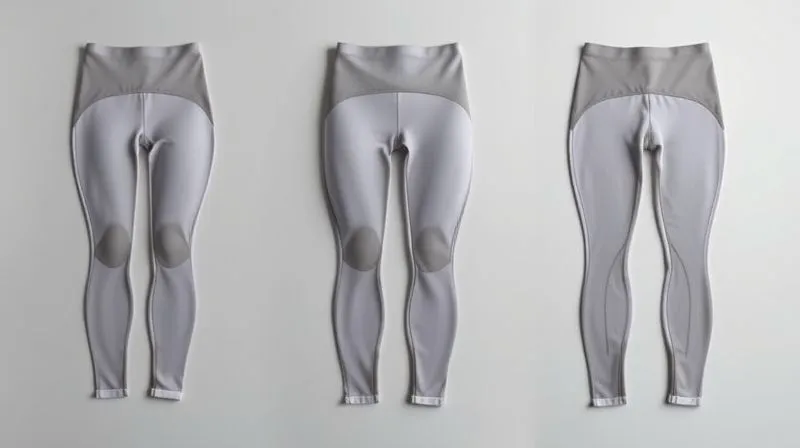
Advanced pattern making utilizes strategic paneling to achieve a contoured fit and graduated compression. Instead of a simple tube of fabric, high-performance leggings are often constructed from multiple panels cut to specific shapes.
- Side Panels: Can be used to create a flattering silhouette and provide extra stability along the hips.
- Inner Thigh Panels: Designed to minimize chafing and offer targeted compression.
- Back Yoke: A curved panel across the lower back that helps the waistband sit smoothly and prevents gaping.
Graduated compression, where the compression is tighter in some areas (e.g., ankles) and looser in others (e.g., hips), can be achieved through both fabric choice and panel design, guiding blood flow and providing targeted support where it's most needed for stability.
The Role of Finishing Touches: Details That Define Performance
Often overlooked, the small finishing details can make a significant difference in how a legging performs during inversions. These are the elements that elevate a good design to a great one.
I always emphasize to my design teams that the 'last mile' of product development—the finishing touches—is where true excellence is forged. It's about perfecting every element to ensure unwavering performance.
Elastic Integration and Silicone Grippers
While the internal power mesh provides core stability, some designs benefit from strategically placed elastic or silicone grippers. These should be used judiciously to avoid creating uncomfortable pressure points or restricting movement.
- Encased Elastic: A thin strip of elastic sewn into the very top edge of the waistband, fully encased within the fabric, can provide an extra layer of non-slip security without being visible or feeling restrictive.
- Silicone Grippers: Small silicone strips or dots applied to the inner surface of the waistband can provide a subtle, skin-friendly grip. They must be carefully tested to ensure they don't cause irritation or leave marks, especially for sensitive skin.
The key is subtle integration. The goal is to enhance stability, not to create a rigid, uncomfortable band.
Quality Control and Durability Testing
No design, however brilliant on paper, is complete without rigorous quality control and durability testing. This is especially true for activewear intended for high-stress activities like yoga inversions.
Testing should go beyond standard fabric abrasion and colorfastness. It must include:
- Stretch and Recovery Cycle Tests: Simulating repeated stretching and relaxing to ensure the fabric and seams maintain integrity over time.
- Dynamic Fit Testing: Having real yogis perform a full range of inversion poses to identify pinch points, slippage, and rolling.
- Seam Strength Testing: Ensuring that flatlock and coverstitch seams can withstand the tension of deep stretches and inversions.
Adhering to industry standards like those outlined by ASTM International for textile testing is crucial for ensuring product longevity and performance. Without robust testing, even the most innovative design can fall short in the real world.
User Feedback & Iterative Design: The Path to Perfection
The journey to designing the perfect inversion-proof legging is rarely linear. It's an iterative process, heavily reliant on listening to the end-user and being willing to refine and redesign.
As an industry specialist, I can't stress enough the value of genuine, constructive feedback. It's the ultimate reality check for any design concept, especially for a niche problem like designing yoga leggings that prevent rolling down during inversions.
Beta Testing with Yoga Practitioners
Before any product hits the market, extensive beta testing with actual yoga practitioners is non-negotiable. These aren't just models; they are experienced yogis who will put the leggings through their paces in various inversion poses, providing invaluable insights.
Encourage testers to provide detailed feedback on:
- Comfort during static poses and transitions.
- Waistband stability during all inversions (headstands, handstands, shoulder stands).
- Fabric feel, breathability, and moisture-wicking properties.
- Any areas of restriction, digging, or chafing.
This qualitative data is often more revealing than any lab test, offering nuanced perspectives on real-world performance.
Data-Driven Adjustments and Refinements
The feedback gathered during beta testing should be systematically analyzed and translated into actionable design adjustments. This might involve:
- Adjusting waistband height or width.
- Modifying the tension of inner elastic layers.
- Tweaking seam placement or panel contours.
- Exploring alternative fabric blends or finishes.
This iterative process, often referred to as 'design thinking,' emphasizes empathy and continuous improvement. As emphasized by organizations like IDEO, a pioneer in design thinking, understanding user needs through continuous feedback loops is central to developing truly innovative and successful products.
Frequently Asked Questions (FAQ)
What is the ideal fabric composition for inversion-proof yoga leggings? In my experience, a blend of 75-80% nylon or polyester with 20-25% high-quality elastane (Lycra/Spandex) offers the best combination of stretch, recovery, durability, and moisture-wicking properties. The higher elastane content is crucial for the compressive hold needed during inversions.
Does waistband height matter more than its construction? While a high-rise waistband is generally preferred for comfort and coverage in yoga, its construction is far more critical than its height. A poorly constructed high-rise can roll down more easily than a well-engineered mid-rise. Focus on multi-layered construction, internal support, and strategic seaming over simple height.
Why is the gusset so important for preventing rolling down? The gusset, while not directly at the waistband, is vital for overall fit and stability. A well-designed gusset allows for unrestricted movement in the crotch area, preventing the leggings from tugging down from the bottom during deep stretches and inversions. This reduces upward tension on the waistband, helping it stay in place.
Are silicone grippers always necessary for inversion-proof leggings? Not always, but they can be a valuable addition for extra security. When used, they should be applied subtly and tested for comfort and skin compatibility. A well-designed waistband with superior fabric and construction might not need them, but for some designs, they offer an extra layer of confidence.
Can sustainable fabrics also be inversion-proof? Absolutely. Many innovative sustainable fabrics, such as those made from recycled PET or bio-based nylons, are now engineered with excellent stretch and recovery properties. The key is to verify the specific blend and performance characteristics, ensuring they meet the technical demands of high-performance activewear for inversions. Sustainability and performance are not mutually exclusive.
Key Takeaways and Final Thoughts
Designing yoga leggings that prevent rolling down during inversions is a nuanced art and science. It demands a holistic approach, moving beyond surface-level aesthetics to delve into the intricate details of material science, ergonomic pattern making, and user-centric design. Here are the critical takeaways:
- Fabric is Foundation: Prioritize high-quality, high-elastane content fabrics with superior four-way stretch and recovery.
- Waistband is King: Engineer multi-layered waistbands with internal support (power mesh, elastic) and strategic seaming.
- Pattern Precision: Utilize body mapping, contoured panels, and well-designed gussets for an anatomical, secure fit.
- Details Matter: Don't underestimate the power of finishing touches like subtle elastic integration and rigorous quality control.
- Iterate with Empathy: Leverage extensive beta testing and user feedback to continuously refine and perfect your design.
As an industry specialist, I've seen firsthand that true innovation in activewear comes from a deep understanding of the user's challenges and a commitment to solving them with thoughtful, data-driven design. By embracing these principles, you can create yoga leggings that not only look fantastic but perform flawlessly, allowing practitioners to find their flow and stability in every inversion, free from distraction. The journey to the perfect legging is challenging, but the reward of empowering movement is immeasurable.
Recommended Reading
- 7 Proven Strategies: Maximize Profit Selling Rare 1970s Vintage Apparel
- 6 Proven Strategies for Quality-First Growth: Scaling Smart Clothing Manufacturing
- Unlock the Secret: How to Pick the Perfect Activewear Size for Growing Kids
- Scale Your Fashion Brand's Repair Program Profitably: 7 Proven Steps
- The Ultimate Guide: How to Authenticate Premium Exotic Leather

Your email address will not be published. Required fields are marked *