

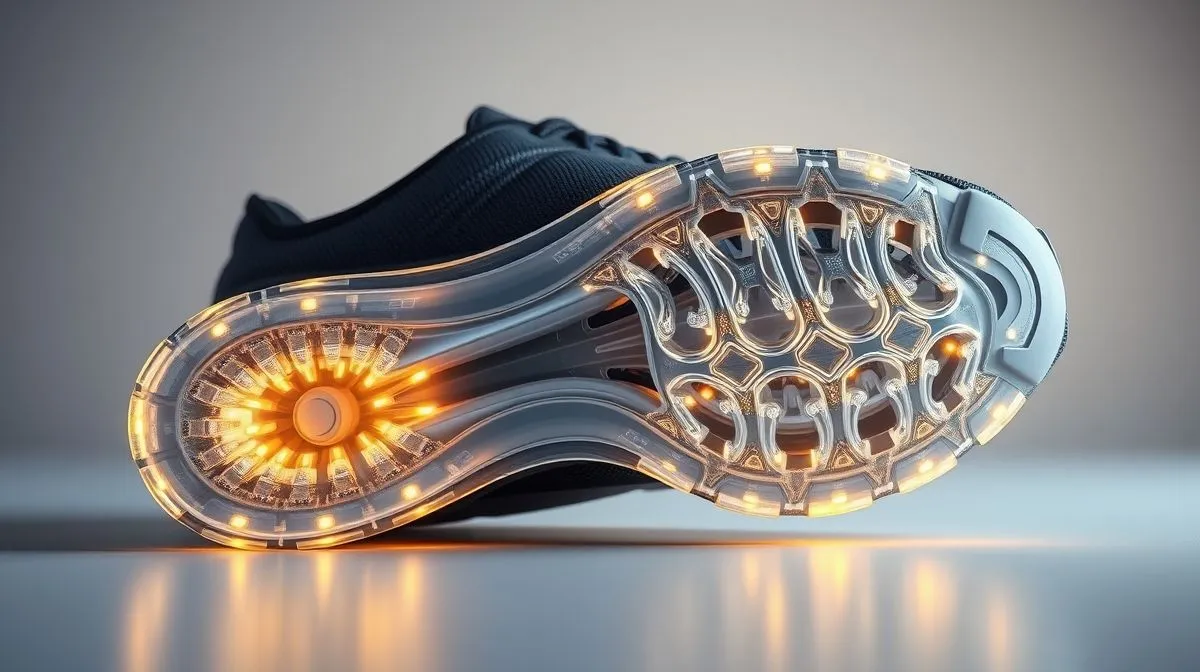
How to Optimize Athletic Footwear Biomechanics for Injury Prevention?
The journey to truly optimize athletic footwear biomechanics for injury prevention is less about chasing the latest trend and more about understanding the intricate dance between your body, your activity, and your gear. In my fifteen years in this industry, I've seen countless athletes, from weekend warriors to elite competitors, sideline themselves due to a fundamental mismatch in this equation.At its core, optimizing footwear biomechanics means ensuring your shoes complement your natural foot function and movement patterns, rather than fighting against them. This isn't just about comfort; it's about managing forces, providing appropriate support, and facilitating efficient movement to minimize undue stress on joints, ligaments, and muscles.
A common mistake I see is individuals buying shoes based solely on brand loyalty or aesthetics. While these factors have their place, they should always be secondary to the shoe's biomechanical suitability for your specific needs. Think of your athletic footwear as a critical piece of engineering designed to interact with your body's own complex machinery.
"The right shoe doesn't just feel good; it makes your body work better, distributing forces intelligently and allowing natural movement without compromise."
Here’s how we break down the process of truly optimizing your athletic footwear for robust injury prevention:
-
Undergo a Professional Gait Analysis: This is non-negotiable. A qualified expert, often in a specialized running or athletic store, will observe your foot strike, pronation (inward rolling of the foot), and overall movement pattern. They utilize video analysis and experienced observation to pinpoint your unique biomechanical needs. For instance, an overpronator requires shoes with enhanced stability features to guide the foot into a more neutral position, preventing excessive inward collapse that can lead to issues like shin splints or patellofemoral pain.
-
Understand Your Foot Type and Arch Profile: Beyond gait, knowing if you have flat feet, high arches, or a neutral arch is crucial. A simple "wet test" at home can give you a basic idea, but a professional assessment is superior. High arches often need more cushioning and flexibility, while flat feet typically benefit from motion control or stability shoes. In my experience, misunderstanding one's own foot type is a leading cause of purchasing inappropriate footwear.
-
Match Footwear to Activity-Specific Demands: This might seem obvious, but it's frequently overlooked. Running shoes are engineered for forward motion and impact absorption; their sole geometry and cushioning are optimized for repetitive linear stress. Court shoes, conversely, prioritize lateral stability, grip, and responsiveness for quick cuts and multidirectional movements. Using a running shoe for vigorous court sports, for example, risks ankle sprains due to inadequate lateral support and a higher center of gravity.
- Example: A marathon runner needs significant heel-to-toe drop and ample cushioning for long-distance impact, while a CrossFit athlete requires a flatter, more stable base for lifting, and flexibility in the forefoot for explosive movements.
-
Prioritize Fit Over Brand or Aesthetics: The shoe must fit perfectly in length, width, and volume. There should be about a thumb's width between your longest toe and the end of the shoe. Your foot should feel secure but not constricted, with no pinching or slipping. Remember, foot size can change throughout the day and over time, so always try shoes on later in the day when your feet are slightly swollen.
-
Evaluate Cushioning and Responsiveness: The ideal balance here is highly individual. Some athletes thrive on maximalist cushioning, absorbing more impact, which can be beneficial for high-mileage runners or those with joint sensitivities. Others prefer a more minimalist approach, favoring ground feel and responsiveness to enhance proprioception and natural foot mechanics. Neither approach is inherently superior; the 'best' choice depends on your body's unique biomechanical response and training goals. Over-cushioning can sometimes reduce proprioceptive feedback, potentially leading to instability for some individuals.
-
Consider the Shoe's Flexibility and Torsional Rigidity: A shoe's flexibility (how easily it bends) and torsional rigidity (how much it resists twisting) are critical. A running shoe should typically bend at the ball of the foot, mimicking natural foot flexion. Excessive rigidity can restrict natural foot movement, while too much flexibility might lack necessary support for certain foot types. Test this in-store: try to twist the shoe and bend it at various points to assess its structural integrity relative to your needs.
-
Regularly Replace Worn-Out Footwear: Even the most perfectly optimized shoe has a lifespan. The cushioning degrades, the outsole wears down, and the support structures break down, altering the shoe's original biomechanical properties. For runners, a general guideline is 300-500 miles, but this varies. For other athletic shoes, look for visible wear on the outsole, creasing in the midsole, or a noticeable decrease in comfort and support. Continuing to train in worn-out shoes is a fast track to injury, as your body loses the designed protection and support.
By diligently applying these principles, you move beyond simply wearing shoes to actively utilizing them as powerful tools for injury prevention and performance enhancement. It’s an investment in your athletic longevity and overall well-being.
Are expensive athletic shoes always better for injury prevention?
It's a pervasive myth, one I've encountered countless times in my fifteen-plus years in this field: the belief that a higher price tag automatically equates to superior injury prevention in athletic footwear. Let me be unequivocally clear: expensive athletic shoes are not inherently better for injury prevention. This is a crucial distinction that often gets lost amidst aggressive marketing and the allure of "elite" technology.
A common mistake I see athletes make is equating cost with quality or, more specifically, with suitability for their unique biomechanics. While premium materials and advanced manufacturing processes can contribute to durability or specialized performance features, they don't guarantee a shoe is the right match for *your* feet and *your* movement patterns.
“The perfect shoe isn't defined by its cost, but by its harmony with your unique biomechanical needs and the demands of your activity.”
Think of it like this: a custom-tailored suit, perfectly fitted to your body, will always look and feel better than an off-the-rack designer suit that's too loose in the shoulders or too long in the sleeves. The designer suit might cost more, but its effectiveness is diminished by a poor fit. Similarly, a shoe that costs $250 but doesn't properly support your arch or accommodate your forefoot width can be more detrimental than a $120 option that fits like a glove.
In my experience, the focus should always be on functional fit and biomechanical suitability, not the retail price. Here’s why chasing the most expensive option can be misleading:
- Over-Engineered Features: Some high-end shoes boast intricate cushioning systems or stability features that, while innovative, might actually interfere with your natural gait if you don't genuinely need them. For instance, an over-supportive shoe for a neutral runner can inhibit natural foot movement and lead to issues like proprioceptive dampening.
- Marketing Hype vs. Real Benefit: The "latest and greatest" technology often comes with a premium. While some advancements are genuinely beneficial, many are incremental improvements or niche solutions that don't translate to universal injury prevention for every athlete.
- Diminishing Returns: There's often a point where increased cost yields minimal additional benefit in terms of injury prevention. Beyond a certain threshold, you're often paying for brand prestige, specialized materials for elite performance (e.g., carbon plates for speed), or aesthetic design, rather than fundamental biomechanical support.
Consider the anecdotal evidence from countless runners. Many report finding their "perfect shoe" in a mid-range model, one that simply feels right and allows them to move naturally, without excessive interference. Conversely, I've worked with athletes who developed shin splints or plantar fasciitis after switching to a much more expensive, heavily cushioned shoe that disrupted their natural foot strike and proprioception.
What truly matters for injury prevention transcends price. It boils down to a few critical factors:
- Precise Fit: Length, width, and volume must be spot-on. No hot spots, no heel slippage, no toe crowding.
- Activity-Specific Design: Running shoes for running, court shoes for court sports, cross-trainers for varied gym work. Each is engineered for different demands and movement patterns.
- Matching Your Biomechanics: Understanding your pronation type (neutral, overpronator, supinator), arch height, and gait cycle is paramount. This often requires a professional gait analysis.
- Appropriate Cushioning and Support: Not too much, not too little. It should complement, not dictate, your natural movement and provide protection without isolating your foot from ground feedback.
- Regular Replacement: Even the best shoe loses its protective qualities as its midsole breaks down and its outsole wears. Knowing when to retire a pair is vital, regardless of its original cost.
So, rather than fixating on the price tag, invest your time and effort into a proper fitting process. Seek out knowledgeable retailers who offer gait analysis and allow you to test shoes. Prioritize comfort, feel, and how the shoe integrates with your body's natural mechanics. That, in my experience, is where true injury prevention begins.
Can custom orthotics truly optimize footwear biomechanics?
The question of whether custom orthotics genuinely optimize footwear biomechanics is one I encounter frequently, and it’s layered with both promise and misconceptions. From my vantage point, after years observing athletes across various disciplines, the answer is a qualified "yes," but only when approached with precision and a deep understanding of individual biomechanics.
True custom orthotics are not merely arch supports; they are meticulously crafted devices designed to address specific structural and functional imbalances in your feet and lower kinetic chain. Their primary role is to redistribute pressure, enhance stability, and improve alignment, thereby optimizing how your foot interacts with your footwear and the ground.
Think of your foot as the foundation of a house. If the foundation is misaligned or unstable, problems will inevitably surface in the walls, roof, and entire structure. Similarly, a foot with biomechanical inefficiencies can lead to compensatory movements and undue stress on the ankles, knees, hips, and even the lower back during athletic activity.
In my experience, the effectiveness hinges entirely on the initial biomechanical assessment. A qualified podiatrist or sports physician will conduct a thorough gait analysis, examining your foot posture, movement patterns, and identifying specific areas of stress or instability. This isn't just about static foot scans; it’s about understanding dynamic function.
For athletes exhibiting excessive pronation (inward rolling) or supination (outward rolling), custom orthotics can provide targeted support to guide the foot into a more neutral and efficient position. This can significantly reduce the strain on ligaments, tendons, and muscles that are otherwise forced to overcompensate.
Beyond correction, they facilitate the foot’s natural shock absorption and propulsion mechanisms. By optimizing the foot's interaction with the ground, they help ensure that the forces generated during impact are dissipated more effectively, reducing the likelihood of common injuries like plantar fasciitis, shin splints, or patellofemoral pain syndrome.
However, a common mistake I see is viewing orthotics as a standalone solution. They are a powerful tool within a comprehensive injury prevention strategy, but they don't negate the need for appropriate footwear selection, a progressive training regimen, strength and conditioning, and proper recovery protocols.
Furthermore, the term "custom orthotic" is sometimes loosely applied. True customization involves a precise mold or 3D scan, followed by the expert interpretation of a practitioner to design a device tailored to your unique needs, materials, and activity levels. Off-the-shelf inserts, while offering some general support, rarely provide the specific biomechanical correction required for optimal athletic performance and injury prevention.
Consider a runner I worked with who suffered from chronic IT band syndrome, despite trying various stability shoes. A detailed biomechanical assessment revealed subtle, yet significant, overpronation in one foot, leading to internal rotation of the tibia and subsequent knee tracking issues. Custom orthotics, designed to gently control that pronation, combined with targeted hip strengthening, completely resolved her pain within months, allowing her to return to pain-free running.
"Custom orthotics, when correctly prescribed and integrated into an athlete's regimen, act as an individualized engineering solution, fine-tuning the body's foundational mechanics to enhance resilience and performance."
So, when should you consider them? If you're experiencing persistent foot, ankle, knee, or hip pain during or after activity that hasn't responded to changes in footwear or training, or if a qualified professional identifies a significant biomechanical imbalance, exploring custom orthotics with a specialist is a highly recommended step. It's about investing in your body's long-term athletic health.
Reading Recommendations:
- 7 Proven Ways to Slash Toddler Outfit Returns: Sizing Solutions
- Elevate Your Presence: 7 Flattering Styles for Boardroom Confidence
- Thrift Store Gold: 7 Quick Ways to Spot Undervalued Vintage Gems
- The Ultimate Guide: How to Authenticate Premium Exotic Leather
- Unlock the Past: How to Construct a Historically Accurate Corset Pattern?
Key Points and Final Thoughts
Having walked these tracks for over 15 years, I can confidently state that optimizing your athletic footwear biomechanics isn't merely about selecting a shoe; it's a foundational pillar of your entire injury prevention strategy. It’s a complex interplay between your foot's unique architecture, your specific activity, and the engineering of the shoe itself, forming a critical link in your **kinetic chain**.
A common, yet incredibly detrimental, mistake I consistently observe is prioritizing brand loyalty or aesthetic appeal over functional biomechanical fit. This often leads to athletes inadvertently introducing subtle, repetitive stressors that compound over time, manifesting as chronic issues like **plantar fasciitis**, **shin splints**, or even knee pain far up the kinetic chain.
Think of your athletic footwear not as an expense, but as a strategic **investment** in your longevity and performance. The upfront cost of a properly fitted, biomechanically sound shoe pales in comparison to the expenses and downtime associated with a preventable injury.
In my experience, one of the most underutilized yet impactful steps an athlete can take is a professional **gait analysis**. This isn't just about running; it applies to all dynamic movements, as a skilled expert can identify subtle pronation or supination patterns, pressure points, and imbalances that no online guide can accurately pinpoint.
For instance, I once worked with a semi-pro footballer plagued by recurring ankle sprains. A detailed gait analysis revealed a slight, uncorrected overpronation during his cutting movements; switching to a stability-focused boot with specific orthotic inserts virtually eliminated his ankle issues, transforming his on-field confidence.
Furthermore, footwear optimization is not a 'one and done' process. The materials degrade, the cushioning compresses, and the outsole wears down, making **regular inspection** and understanding when to replace them as crucial as the initial selection.
Consider your feet the foundation of your entire athletic structure. Just as a skyscraper relies on a meticulously engineered base, your body's ability to absorb impact, generate power, and maintain stability hinges directly on the quality and appropriateness of what you put on your feet.
Ultimately, the journey to master injury prevention through footwear biomechanics is a continuous one, demanding awareness, education, and proactive choices. It’s about listening to your body, understanding the science, and making informed decisions that empower your performance and safeguard your long-term health.
"Your feet are your most vital connection to the ground, your performance, and your health. Treat them with the respect they deserve, and they will carry you further than you ever imagined."




Your email address will not be published. Required fields are marked *