


How to Justify ROI for Fashion Robot Manufacturing Upgrades?
For over two decades in the dynamic world of fashion technology and manufacturing, I've witnessed countless companies grapple with a universal challenge: the perceived high cost of innovation. The allure of advanced robotics in apparel production is undeniable – faster speeds, unparalleled precision, and enhanced sustainability. Yet, the boardroom often balks at the initial capital outlay, demanding a clear, unequivocal answer to the question: "What's the return on investment?"
This isn't just a financial hurdle; it's a strategic one. Many leaders struggle to translate the intricate dance of robotic arms and smart factory systems into tangible, measurable benefits that resonate with financial stakeholders. They see the promise of a leaner, more agile future, but they lack the robust framework to articulate its value in dollars and cents, leading to stalled projects and missed opportunities.
My goal with this definitive guide is to arm you with a comprehensive, step-by-step framework to not only understand but confidently justify the ROI of fashion robot manufacturing upgrades. Drawing from my extensive experience, I'll provide actionable strategies, real-world analogies, and expert insights to help you build a compelling business case that secures the necessary buy-in for your transformative projects.
Understanding the Shifting Sands of Fashion Manufacturing
The fashion industry of today is a far cry from the mass-production model of yesteryear. We're navigating an era defined by hyper-personalization, lightning-fast trend cycles, and an urgent demand for ethical and sustainable practices. Consumers expect bespoke quality at fast-fashion speeds, and global supply chains are more volatile than ever. This complex landscape isn't merely challenging; it's a crucible for innovation.
"In the fashion industry, agility isn't just a competitive advantage; it's a survival imperative. Robotics offers the muscle and the mind to move at the speed of desire, but only if its value is fully understood and articulated."
Traditional manufacturing processes, often labor-intensive and rigid, simply can't keep pace. They struggle with:
- Inconsistent Quality: Human error, fatigue, and skill variations lead to defects.
- Slow Time-to-Market: Manual processes prolong production cycles, missing trend windows.
- Limited Customization: Mass production inherently resists individualization.
- High Labor Costs & Scarcity: Rising wages and a shrinking skilled workforce in many regions.
- Waste & Unsustainability: Inefficient material usage and energy consumption.
- Safety Concerns: Repetitive tasks and hazardous environments for human workers.
Robotic manufacturing isn't just an upgrade; it's a strategic pivot designed to address these core challenges head-on, transforming bottlenecks into pathways for growth and profitability.
Beyond Cost Savings: Unpacking the Multifaceted Value of Robotics
The most common mistake I've observed in ROI justification is focusing solely on direct labor cost reduction. While significant, this is merely scratching the surface of what robotics brings to the fashion manufacturing table. True value lies in a holistic appreciation of both tangible and intangible benefits.
Enhanced Quality and Consistency
Robots execute tasks with unparalleled precision and repeatability. Imagine stitching a complex pattern or cutting delicate fabric with micron-level accuracy, 24/7, without fatigue. This translates directly to a dramatic reduction in defects, fewer reworks, and ultimately, a higher-quality finished product that commands better pricing and fosters brand loyalty.
Increased Production Speed and Flexibility
Robots don't take coffee breaks or holidays. They can operate continuously, significantly boosting throughput. More importantly, advanced robotics, especially collaborative robots (cobots) and modular systems, offer immense flexibility. They can be reprogrammed quickly for different designs, fabrics, or batch sizes, enabling true on-demand manufacturing and rapid response to market trends. This agility is gold in fast-moving fashion.
Improved Worker Safety and Ergonomics
Many tasks in apparel manufacturing are repetitive, strenuous, or even hazardous. Robots can take over these roles, from lifting heavy fabric rolls to operating dangerous cutting machinery or performing intricate, monotonous stitching. This not only protects human workers from injury and repetitive strain but also allows them to be upskilled into supervisory, programming, or quality control roles, enhancing job satisfaction and reducing turnover.
Sustainability and Waste Reduction
Precision robotics leads to optimal material utilization. Whether it's nesting patterns for cutting or applying adhesives with minimal excess, robots minimize waste. Furthermore, their consistent operation can reduce energy consumption compared to less efficient manual setups, contributing to a smaller environmental footprint – a crucial factor for modern, ethically conscious fashion brands. 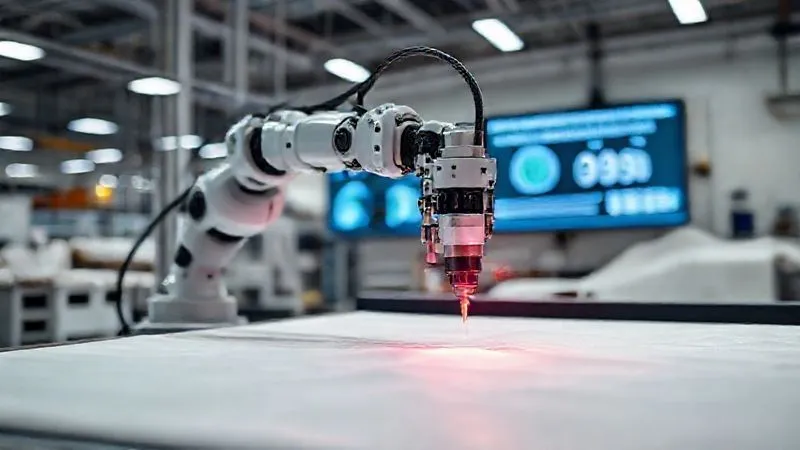
Data-Driven Insights and Optimization
Modern robots are integral parts of the Industrial Internet of Things (IIoT). They generate vast amounts of operational data – production rates, machine uptime, error logs, energy usage, and more. This data is invaluable for identifying bottlenecks, optimizing workflows, predictive maintenance, and making informed strategic decisions, turning your factory into a truly smart operation.
The Core Framework: A 7-Step Approach to ROI Justification
Building a compelling ROI case requires a structured, data-driven approach. Here's the framework I've refined over years, designed to leave no stone unturned.
-
Define Clear Objectives & Key Performance Indicators (KPIs)
Before you even consider a robot, you must articulate what problem you're trying to solve or what strategic advantage you aim to achieve. Is it to reduce lead times by 30%? Increase first-pass yield by 15%? Enable mass customization? Your objectives must be SMART (Specific, Measurable, Achievable, Relevant, Time-bound).
Examples of relevant KPIs for fashion robotics:
- Operational Efficiency: Throughput per hour, machine uptime, OEE (Overall Equipment Effectiveness).
- Quality: Defect rate, rework rate, first-pass yield.
- Cost: Labor cost per unit, material waste percentage, energy consumption.
- Flexibility: Setup/changeover time, ability to handle diverse product lines.
- Safety: Incident rate, lost-time injuries.
- Sustainability: Waste reduction (material, energy), carbon footprint.
-
Conduct a Comprehensive Baseline Assessment
You can't measure progress if you don't know your starting point. This step involves meticulously documenting your current manufacturing performance across all relevant KPIs. Gather data on existing production times, defect rates, labor costs, material waste, energy usage, and any other metric that will be impacted by the robotic upgrade. This baseline will serve as your benchmark for calculating improvement.
Metric Baseline Value Target with Robotics Current Throughput (units/hr) 50 120 Defect Rate (%) 8% 2% Labor Cost per Unit ($) $2.50 $1.00 Material Waste (%) 15% 5% Changeover Time (hrs) 4 0.5 -
Map Out the Robotic Solution & Its Impact
Once objectives are set and baselines established, identify the specific robotic solutions that will achieve your goals. This might involve automated cutting systems, robotic sewing cells, automated material handling, or advanced quality inspection robots. Crucially, project how each solution will impact your baseline KPIs. Work with robotics vendors and engineers to get realistic performance estimates.
Mini Case Study: StitchPro's Smart Factory Transformation
StitchPro, a mid-sized fashion manufacturer specializing in bespoke denim, faced escalating labor costs and a two-week lead time for custom orders, hindering their growth. Their baseline showed a 12% defect rate on complex stitching and a 20% material waste. By investing in a modular robotic sewing cell capable of intricate pattern recognition and automated fabric feeding, they projected a 60% reduction in lead time for custom orders, a 75% drop in stitching defects, and a 10% decrease in material waste. The robots also took over highly repetitive tasks, allowing skilled human operators to focus on quality control and complex finishing, boosting morale and reducing re-training costs.
-
Quantify Tangible & Intangible Benefits
This is where you translate the projected impacts into financial terms. Tangible benefits are direct and measurable:
- Cost Savings: Reduced labor (direct & indirect), lower material waste, decreased energy consumption, fewer reworks/returns, reduced safety incident costs.
- Revenue Gains: Increased production capacity leading to higher sales volume, faster time-to-market enabling premium pricing for trend-driven items, enhanced quality leading to stronger brand reputation and customer loyalty.
Intangible benefits are harder to quantify but equally vital for strategic advantage:
- Improved worker morale & retention.
- Enhanced brand image (innovation, sustainability).
- Greater market responsiveness & competitive edge.
- Better data for decision-making.
- Increased resilience against labor shortages or supply chain disruptions.
While assigning a precise dollar value to intangibles can be challenging, acknowledge them and, where possible, tie them to potential future revenue or cost avoidance. For instance, improved brand image might lead to a 5% increase in customer lifetime value.
-
Calculate Total Cost of Ownership (TCO)
The initial purchase price of a robot is just one piece of the puzzle. TCO provides a holistic view of all costs associated with the robotic system over its entire lifecycle. Neglecting these hidden costs can severely skew your ROI calculation.
Key components of TCO include:
- Initial Investment: Robot hardware, software licenses, grippers/end-effectors, integration costs.
- Installation & Setup: Facility modifications, electrical work, safety guarding, programming.
- Training: For operators, maintenance staff, programmers.
- Maintenance & Repair: Routine servicing, spare parts, emergency repairs.
- Energy Consumption: Powering the robots and associated systems.
- Depreciation: Accounting for the robot's lifespan.
- Insurance: Coverage for the equipment.
- Decommissioning: Costs at the end of the robot's useful life.
For a deeper dive into TCO, I recommend consulting resources from leading industry analysts like Deloitte, who often publish comprehensive guides on this topic. You can find valuable insights on calculating TCO for automation projects here.
-
Perform ROI & Payback Period Analysis
With all your costs and benefits quantified, you can now perform the core financial calculations. The most common metrics are:
- Return on Investment (ROI): This measures the profitability of the investment relative to its cost. The formula is:
ROI = (Total Benefits - Total Costs) / Total Costs * 100%. A higher percentage indicates a better return. - Payback Period: This indicates how long it takes for the cumulative net benefits to equal the initial investment.
Payback Period = Initial Investment / Annual Net Benefits. A shorter payback period is generally preferred. - Net Present Value (NPV) & Internal Rate of Return (IRR): For more complex, long-term investments, these metrics account for the time value of money, providing a more sophisticated financial analysis.
It's crucial to present these calculations clearly, detailing all assumptions made. Sensitivity analysis, showing how ROI changes with varying assumptions (e.g., higher energy costs, lower productivity gains), adds robustness to your justification. For guidance on financial modeling, resources like Investopedia offer excellent foundational knowledge. Explore various ROI calculation methods and their applications here.
- Return on Investment (ROI): This measures the profitability of the investment relative to its cost. The formula is:
-
Develop a Robust Monitoring & Evaluation Plan
The justification doesn't end once the robots are installed. A critical, often overlooked, step is planning how you will continuously monitor and evaluate the actual performance against your projected ROI. This demonstrates accountability and provides valuable data for future investments.
Your plan should include:
- Regular Data Collection: Implement systems to automatically collect data on your chosen KPIs (e.g., ERP systems, MES, robot controllers).
- Performance Reporting: Establish a cadence for reviewing performance (monthly, quarterly) and sharing reports with stakeholders.
- Variance Analysis: Identify any deviations from projected benefits and costs, and investigate the root causes.
- Continuous Improvement: Use the data to make adjustments, optimize robot programming, or identify further areas for automation.
- Post-Implementation Audit: Conduct a formal review after a set period (e.g., 12-18 months) to confirm the actual ROI achieved.
This commitment to ongoing evaluation transforms your ROI justification from a one-time proposal into a living, breathing performance management system. Organizations like the American Society for Quality (ASQ) provide frameworks for continuous improvement that are highly applicable here. Learn more about continuous improvement methodologies to optimize your robotic investments.
Overcoming Common Pitfalls in ROI Calculations
Even with a solid framework, I've seen many promising projects stumble due to avoidable missteps in their ROI analysis. Being aware of these common pitfalls can significantly strengthen your case.
Ignoring Intangible Benefits
As mentioned, focusing solely on direct cost savings overlooks significant value drivers like improved brand reputation, increased employee satisfaction, or enhanced agility. While challenging, try to quantify these where possible, or at least articulate their strategic importance.
Underestimating TCO
The allure of a low initial purchase price can blind teams to the long-term costs of integration, maintenance, training, and software updates. Always perform a thorough TCO analysis.
Lack of Baseline Data
Without accurate pre-implementation data, any claims of improvement are purely speculative. Invest time in establishing a robust baseline before any upgrades begin.
Short-Term Focus Only
Some robotic investments, particularly those enabling advanced customization or new product lines, might have a longer payback period but offer immense long-term strategic advantages. Don't let a purely short-term ROI perspective overshadow future growth opportunities.
Strategic Storytelling: Presenting Your Case to Stakeholders
Even the most meticulously calculated ROI can fall flat if not communicated effectively. Your presentation to the board or executive team isn't just about numbers; it's about telling a compelling story that addresses their concerns and aligns with their strategic vision.
"Data informs, but stories persuade. Frame your ROI analysis not just as a financial report, but as a narrative of innovation, growth, and sustainable competitive advantage."
Here are some tips for impactful communication:
- Know Your Audience: Tailor your message to their priorities. Financial leaders want numbers; operations leaders want efficiency; marketing leaders want brand impact.
- Start with the Problem: Reiterate the pain points you're solving before diving into the solution.
- Highlight Strategic Alignment: Show how robotic upgrades support the company's broader strategic goals (e.g., market leadership, sustainability targets).
- Visuals are Key: Use clear charts, graphs, and even short videos of similar robotic systems in action to illustrate your points.
- Address Risks & Mitigations: Acknowledge potential challenges and how you plan to manage them. This builds trust and credibility.
- Focus on Net Impact: Emphasize the overall positive effect on the business, not just individual metrics.
Effective communication is paramount to securing investment. Resources from leading business publications like Harvard Business Review often provide excellent advice on stakeholder communication strategies. Discover powerful techniques for persuasive communication to win over your stakeholders.
The Future is Automated: Staying Ahead in Fashion Tech
Investing in robotics for fashion manufacturing isn't a one-off decision; it's an entry point into a rapidly evolving ecosystem. The ROI you justify today will pave the way for future innovations, cementing your company's position at the forefront of the industry.
Embracing AI and Machine Learning Integration
The next frontier is integrating artificial intelligence and machine learning with robotics. This enables robots to learn from data, adapt to new designs, predict maintenance needs, and optimize processes autonomously, further enhancing efficiency and flexibility. Imagine robots that can identify fabric defects with superhuman accuracy or automatically adjust stitching parameters based on material variations.
Modular and Scalable Robotic Solutions
Future-proofing your investment means choosing modular, scalable robotic systems. This allows you to start with smaller, manageable upgrades and expand your automation capabilities as your needs grow and technology evolves, minimizing risk and maximizing adaptability. The industry is moving towards 'robot-as-a-service' models, making advanced automation more accessible even for smaller players.
Frequently Asked Questions (FAQ)
What's the typical ROI timeframe for fashion robotics? The payback period for fashion robotics can vary significantly depending on the specific application, scale of investment, and the efficiency of implementation. While some focused applications (like automated cutting) might see payback in 1-2 years, more comprehensive smart factory upgrades could take 3-5 years. The key is to project realistic savings and revenue gains, and to consider the long-term strategic advantages that extend beyond immediate financial returns.
How do small to medium-sized fashion manufacturers justify these upgrades? For SMEs, justifying ROI often requires focusing on specific, high-impact bottlenecks rather than a full factory overhaul. Start with a single robotic cell for a repetitive or high-defect task. Emphasize flexibility, waste reduction, and the ability to compete on quality and speed with larger players. Explore collaborative robots (cobots) which are generally less expensive and easier to integrate, and consider leasing options or 'robot-as-a-service' models to reduce upfront capital expenditure.
What are the biggest risks associated with robot manufacturing upgrades? Key risks include underestimating the Total Cost of Ownership (TCO), lack of skilled personnel for programming and maintenance, integration challenges with existing systems, resistance to change from the workforce, and choosing technology that doesn't align with long-term strategic goals. Mitigate these through thorough planning, comprehensive training programs, phased implementation, and strong change management strategies.
Can robotics truly improve design flexibility and customization? Absolutely. Modern robotics, especially with advanced vision systems and AI, can handle a wider variety of materials and intricate designs with greater precision than manual labor. This enables true mass customization, allowing brands to offer personalized products efficiently. Quick reprogramming capabilities mean rapid changeovers for different styles or batch sizes, significantly enhancing design flexibility and responsiveness to market demands.
How do I measure the impact on brand reputation and customer loyalty? While harder to quantify directly, the impact on brand reputation and customer loyalty can be inferred through several metrics. Monitor customer feedback and reviews (especially regarding quality and consistency), analyze repeat purchase rates, track social media sentiment, and measure Net Promoter Score (NPS). Improved product quality, faster delivery, and a brand image associated with innovation and sustainability (enabled by robotics) will naturally translate into stronger brand equity and loyalty over time.
Key Takeaways and Final Thoughts
Justifying the ROI for fashion robot manufacturing upgrades is more than a financial exercise; it's a strategic imperative for any brand serious about thriving in the modern apparel landscape. It demands a holistic understanding of value, meticulous data analysis, and persuasive communication.
- Think Beyond Labor Savings: Embrace the full spectrum of benefits, from quality and speed to sustainability and safety.
- Build a Data-Driven Case: Establish baselines, project impacts, and quantify both tangible and intangible returns.
- Understand TCO: Account for all costs over the lifecycle of your robotic investment.
- Communicate Strategically: Tailor your message to stakeholders, focusing on their priorities and the strategic narrative.
- Plan for the Long Game: Implement monitoring and evaluation, and consider future-proofing with scalable, AI-integrated solutions.
The future of fashion manufacturing is intelligent, agile, and automated. By mastering the art of ROI justification, you're not just securing funding for a new machine; you're investing in your company's future competitiveness, resilience, and capacity for innovation. Embrace this challenge, and you'll unlock unprecedented opportunities for growth and leadership in the global fashion industry.
Recommended Reading
- 7 Steps: Replicating Complex Costume Damage for Reshoots Consistently
- Unlock Value: Price Unique Thrifted Vintage Designer Pieces Accurately
- 7 Master Steps: Fix Delicate Haute Couture Embellishments Invisibly
- 7 Steps: Predicting Next Season's Eyewear Trends for Launch Success
- Master 5 Steps: Authenticate & Value Rare Vintage Designer Finds Fast





Your email address will not be published. Required fields are marked *