

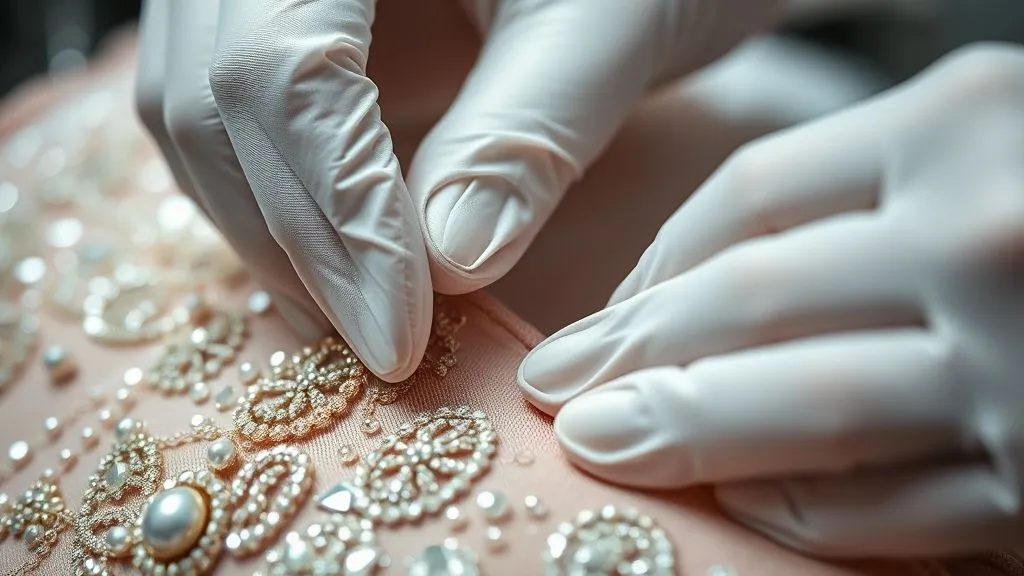
How to Fix Delicate Haute Couture Embellishments Without Trace?
For over two decades immersed in the ethereal world of haute couture, I've witnessed the sheer artistry that goes into every stitch, every bead, every sequin. But I’ve also seen the heartbreak when a cherished garment, a true masterpiece, suffers a tiny, seemingly insignificant flaw – a loose bead, a snagged thread, a missing crystal. The immediate thought is often panic: 'Can this be fixed? And more importantly, can it be fixed without leaving a trace?'
The challenge with haute couture isn't just repair; it's preservation. These aren't just clothes; they're wearable art, imbued with countless hours of handcraftsmanship and often significant emotional and monetary value. A visible repair isn't just an aesthetic compromise; it diminishes the integrity of the original design, a glaring imperfection on what should be flawless. The fear of ruining a piece further often leads to inaction, condemning the garment to a sealed box.
But I'm here to tell you that invisible repair is not merely a myth; it's an attainable skill, a meticulous art form born from deep understanding and patience. In this comprehensive guide, I'll share the very techniques, philosophies, and safeguards I've honed over years working with some of the world's most exquisite garments. We'll delve into the specific challenges of various embellishments and equip you with the knowledge to approach each repair with confidence, ensuring that your delicate haute couture embellishments are fixed without a trace.
Understanding the Uniqueness of Haute Couture Embellishments
Haute couture, by definition, is bespoke. It's not mass-produced; it's meticulously handcrafted for individual clients, often utilizing rare, precious, or custom-made materials. This means that every embellishment, from the most intricate embroidery to the smallest crystal, is integral to the garment's identity.
The diversity of embellishments is staggering: micro-beads of glass or precious metals, hand-painted silk appliqués, intricate lacework, elaborate sequin patterns, and even genuine gemstones. Each material and technique presents its own unique challenges when it comes to repair, demanding a specialized approach that respects its inherent properties.
In my experience, understanding the 'soul' of the garment – the original artisan's intent, the historical context, and the delicate balance of its components – is the first step towards a truly invisible repair. It's about respecting the integrity of the original design and striving to match its perfection.
The true art of haute couture repair lies in making the intervention disappear, honoring the original craft as if no damage ever occurred.
When dealing with these bespoke materials and handcraftsmanship, generic repair methods simply won't suffice. You need to think like a conservator, not just a mender.
The Golden Rules of Invisible Repair: A Pre-Repair Checklist
Before any physical intervention, meticulous planning and preparation are paramount. Rushing this stage is the quickest way to create a visible, regrettable repair.
Rule 1: Assessment and Documentation
I cannot stress this enough: thorough assessment is the foundation of invisible repair. You need to understand precisely what you're dealing with before you even think about touching the garment.
- Examine Under Magnification: Use a jeweler's loupe or a magnifying lamp to inspect the damaged area in detail. Identify the exact type of embellishment, the method of attachment, and the extent of the damage.
- Photograph the Damage: Capture high-resolution images from multiple angles. These serve as a crucial reference during the repair process and as documentation of the garment's condition.
- Note Material and Technique: Identify the fabric type, thread composition, bead material (glass, plastic, metal), sequin type, and the original stitching technique. This informs your material sourcing and repair strategy.
My mantra in couture repair is: "First, do no harm, then understand the damage completely." This principle guides every step.
Rule 2: Material Sourcing and Matching
The success of an invisible repair hinges on the quality and exact match of your replacement materials. This often means going to great lengths to find identical or near-identical components.
- Identical Replacements: Ideally, you'll have original spare materials, often provided with couture garments.
- Vintage Sourcing: For older pieces, this might involve scouring vintage textile markets, specialist suppliers, or even carefully harvesting materials from an inconspicuous part of the garment itself (only as a last resort).
- Custom Creation: In rare cases, especially with unique elements like hand-painted beads or bespoke embroidery, you might need to commission a specialist to recreate the missing component.
Rule 3: Test, Test, Test
Never, ever apply a new technique or material directly to the damaged area without testing. Always practice on a scrap of similar fabric or an inconspicuous area of the garment itself, such as an inner seam allowance.
This allows you to assess color matching, thread tension, adhesive bond, and overall aesthetic integration without risking further damage to the visible portion of the garment. For guidance on textile conservation ethics, I often refer to resources from institutions like the Victoria and Albert Museum, whose conservation department offers invaluable insights into preserving delicate textiles.

Essential Tools and Materials for the Couture Conservator
Investing in the right tools and using appropriate, high-quality materials is non-negotiable for achieving precision and invisibility in haute couture repair. This isn't a task for generic sewing supplies.
Hand Tools for Micro-Detail Work
- Fine-point Tweezers: Essential for manipulating tiny beads, threads, and fabric fibers with extreme precision. Surgical-grade, non-magnetic tweezers are ideal.
- Surgical Scalpels (No. 10 or 11 blades): Used with extreme caution for precisely severing old threads or meticulously trimming frayed edges.
- Various Needle Sizes: A selection of ultra-fine needles, including beading needles (sizes 10-13), curved needles, and sharps, is crucial.
- Magnifying Lamp or Loupe: An LED-lit magnifying lamp or a head-mounted loupe is indispensable for seeing the minute details required for invisible work.
- Thimbles: Essential for protecting your fingers and aiding needle pushing, especially when working with dense fabrics or intricate beadwork.
Threads and Adhesives
Your choice of thread and adhesive directly impacts the longevity and invisibility of your repair. Always prioritize materials that are stable, reversible (if using adhesives), and match the original properties.
| Tool/Material | Purpose | Recommendation |
|---|---|---|
| Fine-point Tweezers | Precise manipulation of tiny elements | Surgical grade, non-magnetic |
| Beading Needles (Size 10-13) | Passing through small bead holes | Flexible, long, extra-fine |
| Magnifying Lamp/Loupe | Detailed inspection and work | LED-lit, adjustable magnification |
| Silk Thread (Gutterman/Au Ver à Soie) | Invisible stitching, strength | Match fiber content and twist |
| Conservation-grade Adhesive | Securing delicate elements (sparingly) | Reversible, non-yellowing, pH neutral |
For threads, I almost exclusively use silk thread, especially from brands like Au Ver à Soie, which offers a vast array of colors and thicknesses, closely mimicking historical threads. Monofilament thread (invisible nylon) can be used sparingly for specific beadwork, but its stiffness and tendency to reflect light differently require careful consideration. For adhesives, only use conservation-grade, reversible, non-yellowing, and pH-neutral options, applied with a toothpick or micro-applicator.
Technique 1: Mastering Micro-Stitching for Fabric and Appliqué Repair
The foundation of any invisible repair in haute couture is the ability to execute stitches that disappear into the fabric's weave, becoming extensions of the original design.
The Slip Stitch and Ladder Stitch for Fabric Tears
When a delicate fabric suffers a small tear or seam separation, these stitches are your allies. The key is minimal thread exposure and precise needle placement.
- Prepare the Edges: Gently align the torn edges, ensuring no fraying threads are visible. If necessary, use a tiny amount of conservation adhesive to stabilize the very edge.
- Anchor the Thread: Secure your matching silk thread (single strand) discreetly within the fabric layers, not on the surface.
- Execute the Slip Stitch: For a clean tear, take a tiny stitch into the fold of one edge, then directly across to the fold of the opposite edge. Maintain even tension.
- Execute the Ladder Stitch: For a seam that has pulled apart, work from the inside, taking small, even stitches parallel to the seam line on opposing sides, creating a 'ladder' that pulls the edges together when gently tightened.
- Hidden Knots: Always finish with a tiny, secure knot buried within the fabric layers, ensuring absolutely no visible bumps or ends.
Securing Loose Appliqués with Couching and Invisible Tack Stitches
Appliqués, whether embroidered, beaded, or cut from fabric, are often attached with incredibly fine stitches. When they detach, re-anchoring them invisibly requires a delicate touch.
First, re-position the appliqué precisely. Then, using a single strand of matching silk thread, work from the underside of the main fabric, bringing the needle up just at the edge of the appliqué. Take a tiny stitch over the appliqué's edge, mimicking an existing embroidery line if possible, and return the needle to the underside. For broader appliqués, use multiple strategically placed invisible tack stitches, always anchoring within the fabric layers and never piercing through the appliqué's decorative surface.
Case Study: Restoring the 'Midnight Bloom' Gown
I once worked on a vintage Chanel gown, the 'Midnight Bloom,' where a hand-cut silk appliqué, shaped like a delicate flower, had partially detached from its tulle base. The challenge was that the appliqué itself was embroidered with tiny seed pearls. By meticulously re-securing the appliqué using a combination of microscopic slip stitches from the reverse side and then employing an invisible couching stitch along the existing embroidery lines, I was able to re-integrate it seamlessly. The key was using a single strand of silk thread dyed to match the tulle, ensuring that each stitch disappeared into the fabric's weave, making the repair utterly undetectable. This resulted in the gown being restored to its original pristine condition, ready for exhibition.
Technique 2: Seamless Beadwork and Sequin Reattachment
Beads and sequins, due to their small size, reflective surfaces, and often intricate patterns, pose unique challenges. Their reattachment must be utterly precise to maintain the garment's original sparkle and flow.
Reattaching Individual Beads and Pearls
When a single bead or pearl comes loose, it leaves a noticeable gap. Reattaching it requires a strong, fine thread and meticulous anchoring.
- Select Your Thread: Use a strong, fine monofilament thread (for maximum invisibility) or a single strand of very fine silk thread that matches the garment's base fabric.
- Anchor Securely: Begin by anchoring your thread firmly within the fabric's internal layers, several millimeters away from the missing bead's location. This ensures the knot is completely hidden.
- Pass Through the Bead: Bring your needle up through the fabric at the exact point where the bead should sit. Thread the replacement bead onto the needle.
- Secure the Bead: Pass the needle back down through the fabric immediately adjacent to where it came up, effectively creating a tiny loop that holds the bead. Repeat this 2-3 times for security.
- Finish with a Hidden Knot: Create a tiny, secure knot buried deep within the fabric layers, trimming the thread extremely close to the knot.
For more insights into historical beading and textile restoration, resources from institutions like the Metropolitan Museum of Art's Conservation Department provide excellent context and technical guidance.
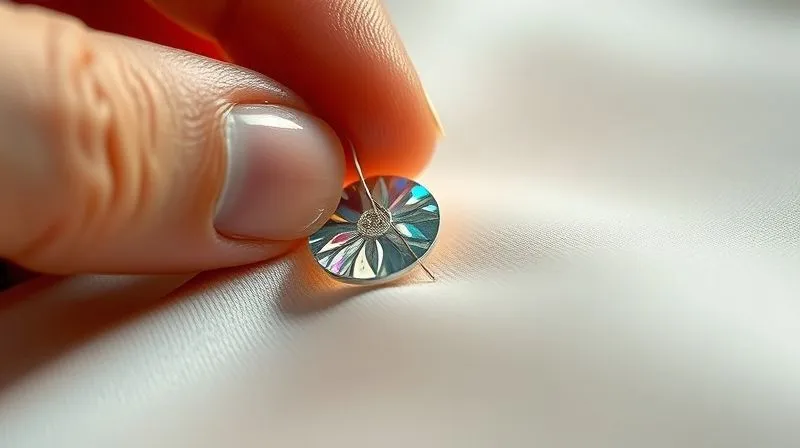
Securing Loose Sequins and Spangles
Sequins can be flat, cupped, or faceted, and their attachment methods vary. Matching the original method is paramount.
- Single Stitch Method: For larger, flat sequins, use a single, fine stitch through the center hole, anchoring the thread discreetly underneath.
- Tiny Bead Anchor: For cupped sequins or those requiring more stability, pass the thread through the sequin, then thread a tiny seed bead onto the needle before passing it back through the sequin and into the fabric. The seed bead acts as an invisible anchor, preventing the sequin from pulling through.
- Edge Stitching: For sequins attached along their edge, use a fine whip stitch, ensuring the thread disappears into the sequin's edge and the fabric.
Technique 3: Restoring Intricate Lace and Embroidered Details
Lace and embroidery are perhaps the most challenging embellishments to repair invisibly, as they are often openwork or feature complex, multi-layered stitching. This requires a deep understanding of their construction and a patient hand.
Mending Delicate Lace Appliqués and Openwork
When lace is torn or has missing sections, it's not simply about sewing it back together; it's about recreating its delicate structure.
- Needle Lace Techniques: For small gaps, you can often recreate the missing lace pattern using fine needle lace techniques. This involves creating a framework of threads and then meticulously buttonhole-stitching or weaving over them to mimic the original openwork.
- Donor Lace: If a section is too large or complex to recreate, carefully source a piece of antique or vintage lace that perfectly matches the original in pattern, fiber content, and color. Integrate it using microscopic whip stitches along existing lace motifs.
- Thread Considerations: Always use a thread that matches the original lace's fiber content (e.g., silk on silk lace, cotton on cotton lace) and its twist and ply.
Repairing Hand Embroidery Flaws
A snagged thread or a missing stitch in hand embroidery can disrupt an entire motif. The goal is to perfectly replicate the original artisan's hand.
This involves identifying the specific embroidery stitch (e.g., satin stitch, French knot, chain stitch) and then meticulously recreating it using matching thread. Pay close attention to the direction of the stitches, the tension, and the way the threads lie. It's a slow, meditative process that demands extreme focus.
Patience is your most valuable tool in haute couture repair. Rushing will always lead to visible flaws. Take your time, step away if needed, and return with fresh eyes.
For detailed historical embroidery techniques, I frequently consult academic texts and specialized journals, often found through organizations like the Textile Society of America, which provides a wealth of resources on textile arts and conservation.
Addressing Crystal and Gemstone Embellishment Challenges
Crystals and gemstones, whether sewn, prong-set, or adhered, require a different set of skills. Their hard, often reflective surfaces mean any repair must be impeccably clean and precise to avoid dullness or visible adhesive residue.
Re-setting Prong-Set Crystals
Many couture pieces feature crystals set in tiny metal prongs. If a crystal is loose or missing, re-setting it requires gentle, specialized tools.
- Identify the Crystal: Ensure you have an identical replacement crystal, matching in size, cut, and color.
- Open Prongs Gently: Using a fine jeweler's tool or a very thin blade, gently and carefully lift the prongs just enough to insert the new crystal. Avoid bending them excessively, as they can break.
- Insert and Close: Place the new crystal into its setting. Then, using a specialized prong-closing tool or the blunt side of a fine blade, gently push the prongs back over the crystal to secure it.
Adhering Flat-Back Rhinestones and Cabochons
For embellishments that are glued, the choice and application of adhesive are critical for an invisible repair.
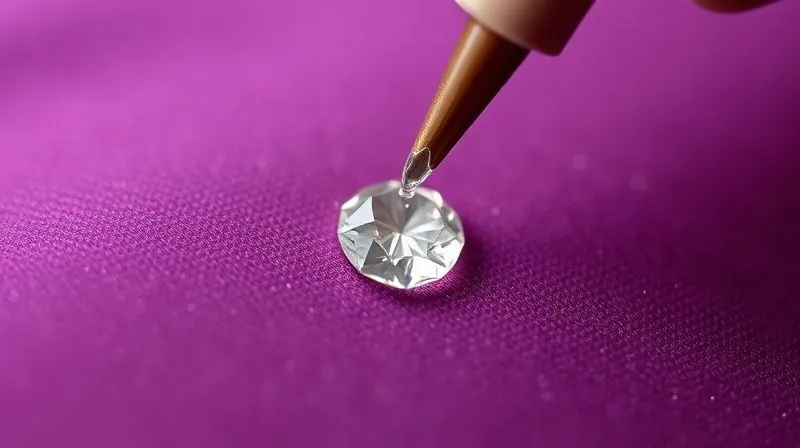
Always use a conservation-grade, reversible adhesive that will not yellow over time or damage the fabric. Apply the tiniest possible dot of adhesive using a toothpick or a micro-applicator directly to the back of the rhinestone, or to the fabric where the rhinestone will sit. Position the rhinestone precisely and allow it to cure completely, ensuring no excess adhesive squeezes out or leaves a visible halo.
The Art of Color Matching and Material Sourcing for Flawless Integration
The true secret to achieving a 'without trace' repair, especially when dealing with missing embellishments, lies in the uncanny ability to match colors and textures perfectly. This is where meticulous sourcing and, at times, custom dyeing come into play.
Dyeing Threads and Fabrics to Perfection
Rarely will you find an off-the-shelf thread or fabric that perfectly matches a vintage couture piece. Custom dyeing is often necessary.
- Natural Dyes: For silk and natural fibers, I often turn to natural dyes, which offer a subtle depth of color that synthetic dyes sometimes lack, making them ideal for blending.
- Fabric Paints: For very small, localized areas or to slightly alter the shade of an existing thread, specialized fabric paints can be carefully applied.
- Test Swatches: Always dye multiple test swatches, comparing them under various lighting conditions (natural daylight, artificial light) to ensure a perfect match.
| Material Type | Matching Strategy | Key Challenge |
|---|---|---|
| Silk Thread | Natural dyes, fabric paints, or sourcing from vintage stock | Achieving exact sheen and fiber twist |
| Seed Beads | Sourcing from vintage bead suppliers, color charts, or custom coating | Matching size, color, finish (lustre, matte, iridescent) |
| Lace | Re-creating patterns with needle lace, sourcing antique lace fragments | Mimicking original weave structure and fiber content |
| Crystals/Rhinestones | Identifying original manufacturer (e.g., Swarovski), searching vintage components | Matching facet cut, color depth, and coating |
Navigating Vintage and Specialist Suppliers
Building a network of trusted suppliers is invaluable. This includes vintage textile dealers, antique button and trim merchants, and even other couture conservators who might have small stashes of rare materials. Online communities and specialized forums for historical fashion and textile arts can also be excellent resources for sourcing hard-to-find components.
Remember, the goal is not just a visual match but also a textural and historical one. The replacement material should feel and age similarly to the original.
Post-Repair Care and Preservation: Ensuring Longevity
Once your delicate haute couture embellishments are fixed without a trace, the next crucial step is ensuring the repair lasts and the garment is preserved for years to come. Repair is only part of the conservation journey.
Gentle Cleaning Techniques
Regular cleaning is not usually recommended for haute couture. When necessary, it must be handled with extreme care.
- Spot Cleaning: For minor blemishes, use distilled water and a micro-fiber cloth, gently dabbing (never rubbing). Always test on an inconspicuous area first.
- Professional Dry Cleaning: If a full clean is absolutely necessary, seek out a dry cleaner specializing in couture and historical garments. They use specialized solvents and techniques that are gentler than standard methods.
- Avoid Home Washing: Never attempt to wash haute couture garments at home, as this can severely damage delicate embellishments and fabrics.
Archival Storage Best Practices
Proper storage is key to preventing future damage and preserving the integrity of both the garment and its invisible repairs.
- Acid-Free Materials: Store garments in acid-free tissue paper and a breathable, acid-free garment bag. This prevents yellowing and degradation of fibers.
- Climate Control: Store in a cool, dark, and dry environment with stable humidity. Extreme fluctuations in temperature and humidity can damage delicate materials.
- Proper Support: For heavily embellished or weighted garments, store them flat in an archival box rather than hanging, to prevent stress on seams and embellishments. Use padded hangers for lighter pieces.
These archival storage and climate control practices are not just recommendations; they are essential for the long-term health of your treasured couture pieces.
Frequently Asked Questions (FAQ)
Q1: Can all embellishments be invisibly repaired? While most can, the degree of 'invisibility' depends heavily on the extent of the damage, the complexity of the embellishment, and the availability of perfectly matching materials. Extremely fragile, disintegrated materials or large missing sections might require a more visible, yet still expertly executed, restoration rather than a truly invisible repair. The goal is always to integrate as seamlessly as possible, minimizing visual impact and preserving structural integrity.
Q2: How do I source matching vintage materials, especially for rare pieces? Sourcing is often the most challenging part of the process. I recommend building strong relationships with specialist vintage textile dealers, antique button and trim suppliers, and even other couture conservators who might have small stashes of rare components. Online forums dedicated to historical fashion and textile arts can also be invaluable. Sometimes, it involves carefully 'harvesting' materials from an inconspicuous area of the garment itself if absolutely necessary and only as a last resort, always prioritizing the overall preservation of the piece.
Q3: What's the difference between professional repair and DIY for haute couture? A professional couture conservator possesses specialized knowledge of historical textile techniques, material science, and conservation ethics. They have access to highly specialized tools and materials, and critically, the years of experience to execute repairs that are structurally sound, aesthetically invisible, and reversible if necessary. DIY, while commendable for minor issues, risks further damage or visible, irreversible repairs without this expertise. For truly valuable or sentimental pieces, professional intervention is always recommended.
Q4: How long does a typical couture embellishment repair take? There's no 'typical' timeframe. A simple reattachment of a few beads might take a couple of hours, while a complex repair involving extensive lace reweaving, intricate embroidery recreation, or custom color matching could span weeks or even months of meticulous work. The time is dictated by the intricacy of the damage, the availability of materials, and the conservator's dedication to achieving a flawless, trace-free result, ensuring the delicate haute couture embellishments are fixed without a trace.
Q5: What are common mistakes to avoid when attempting delicate embellishment repairs? The most common mistakes include using the wrong type of thread (e.g., polyester on silk), inappropriate adhesives that yellow or stiffen over time, applying too much tension which can pucker or distort the fabric, using needles that are too thick for the material, and failing to test techniques on a hidden area first. Rushing the process is also a major pitfall; patience and precision are paramount, as is understanding that not every repair will be 100% invisible, but should always strive for the least impactful intervention.
Key Takeaways and Final Thoughts
- Meticulous Assessment is Crucial: Always begin with thorough documentation and examination of the damage.
- Invest in Quality Tools and Materials: Precision tools and conservation-grade materials are non-negotiable for invisible repairs.
- Master Micro-Stitching and Specific Techniques: Hone your skills in slip stitches, ladder stitches, couching, and precise bead/sequin reattachment.
- Color and Material Matching are Paramount: The true invisibility of a repair hinges on perfectly matching replacement components.
- Proper Post-Repair Care Ensures Longevity: Archival storage and specialized cleaning prevent future damage.
Repairing delicate haute couture embellishments without a trace is a testament to patience, precision, and profound respect for the artisan's original vision. It's an investment in preserving beauty, history, and craftsmanship. Approach each repair not as a chore, but as an opportunity to breathe new life into a treasured piece, ensuring its legacy for generations to come. With these insights and a steady hand, you are now equipped to tackle these challenges and restore your haute couture to its original, breathtaking glory.
Recommended Reading
- 7 Proven Strategies: Ethically Sourcing High-Quality Vintage for Resale
- Unlocking Time: How to Identify Authentic Retro Clothing Eras Like a Pro
- 7 Steps: Translating Brand Vision into Compelling Fashion Magazine Editorials
- 7 Proven Strategies to Slash Unsold Kids' Seasonal Fashion Inventory by 30%
- 7 Layers: What Activewear Truly Protects Against Extreme Wet Cold?



Your email address will not be published. Required fields are marked *