

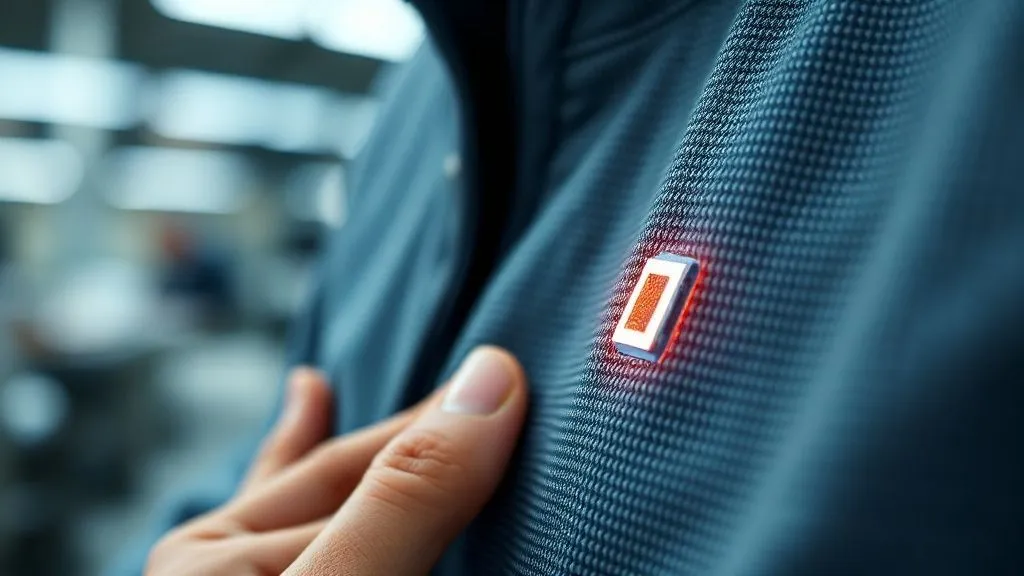
How to integrate responsive textile sensors into durable apparel?
For over 15 years in the textile innovation space, I’ve witnessed firsthand the incredible potential of responsive textiles. Yet, I've also seen brilliant concepts falter, not due to a lack of ingenuity, but because of a fundamental oversight: the critical challenge of integrating delicate electronics into fabrics designed for relentless durability. It’s a tightrope walk between high-tech functionality and real-world resilience, a challenge that many in the industry are still grappling with.
The core problem designers and engineers face is profound: how do you embed sensitive electronic components – sensors, circuits, power sources – into textiles that must withstand harsh environmental conditions, repeated industrial wash cycles, relentless abrasion, and the everyday stresses of active use? Compromise on durability, and your innovative smart apparel becomes a short-lived gimmick. Compromise on sensor performance, and its intelligence is lost. This dilemma often leads to expensive product failures and disillusioned customers.
In this definitive guide, I will share the strategic framework I’ve developed over years of hands-on experience and observation. You'll learn not just theoretical concepts, but actionable strategies, proven integration techniques, rigorous testing protocols, and real-world insights to master the art of integrating responsive textile sensors into truly durable apparel. This isn't just about making smart clothes; it's about making smart clothes that last.
The Durability Dilemma: Why Integration is So Complex
The promise of responsive textiles – fabrics that can sense, react, and adapt – is immense, offering applications from health monitoring and performance tracking to protective workwear. However, the journey from concept to a robust, market-ready product is fraught with challenges. The very nature of textiles (flexible, porous, washable) often conflicts with the inherent properties of electronics (rigid, sensitive to moisture, prone to mechanical stress).
Material Science vs. Electronic Fragility
At its heart, the complexity lies in reconciling two fundamentally different material worlds. Traditional apparel relies on fibers, yarns, and weaves chosen for comfort, aesthetics, strength, and ease of care. Electronics, conversely, are typically built on rigid substrates like silicon, designed for precise electrical performance but highly susceptible to bending, stretching, and moisture ingress. Merging these without sacrificing the integrity of either is a monumental engineering feat.
Consider a simple sensor. In a rigid circuit board, it's soldered securely. In a textile, it's subjected to constant movement, tension, and compression. This dynamic environment can lead to micro-cracks in conductive traces, delamination of layers, or complete sensor failure. The challenge is not just to make it work once, but to make it work reliably over the entire lifespan of the garment, which for durable apparel, can be years.
Environmental Stressors: The Real-World Gauntlet
Durable apparel, by definition, is designed to withstand harsh conditions. This includes industrial washing and drying cycles, exposure to sweat, oils, chemicals, UV radiation, extreme temperatures, and significant mechanical abrasion. Each of these stressors poses a direct threat to integrated electronics. Water and detergents can corrode, high heat can melt, abrasion can wear through protective layers, and UV can degrade polymers.
I've seen countless prototypes fail during basic wash tests, where conductive threads lost their conductivity or encapsulated sensors developed leaks. It’s a humbling reminder that laboratory success doesn't always translate to real-world resilience. This necessitates a proactive, holistic approach to design and material selection, anticipating every potential point of failure from the outset.
Strategic Material Selection: Building the Foundation
The first and arguably most critical step in creating durable responsive apparel is the meticulous selection of materials. This isn't just about choosing a strong fabric; it's about understanding the synergy between the base textile, the conductive elements, the sensors, and their protective layers.
Choosing the Right Substrate: Beyond Basic Textiles
For durable smart apparel, your base textile needs to be more than just comfortable. It must offer inherent resilience, chemical resistance, and often, specific mechanical properties like stretch or breathability. High-performance synthetic fibers such as aramid (e.g., Kevlar), nylon, or polyester blends are often preferred for their strength, abrasion resistance, and dimensional stability. However, the weave structure is equally important; a ripstop or twill weave can offer superior tear resistance compared to a plain weave.
When selecting a substrate, consider its interaction with conductive inks or threads. Does it absorb evenly? Does it maintain conductivity after stretching? Does it withstand the temperatures required for sensor attachment or encapsulation? These questions are paramount to long-term performance.
Sensor Types and Their Respective Durability Profiles
Not all sensors are created equal when it comes to durability. Traditional rigid sensors, while precise, are often the weakest link. The industry is moving towards flexible, stretchable, and even fiber-based sensors to better conform to textile properties. Here’s a brief overview:
- Conductive Yarns/Fibers: These are intrinsically integrated, durable, and offer excellent flexibility. However, their sensitivity might be lower, and signal processing can be complex.
- Flexible Film Sensors: Thin, pliable films with printed electronics. They offer good conformability but require robust encapsulation to protect against abrasion and moisture.
- Encapsulated Rigid Sensors: Standard sensors individually sealed in a protective, flexible polymer. This offers good protection but can create localized stiff points.
- Stretchable Electronics: Utilizing serpentine interconnects or intrinsically stretchable materials. These are designed to deform without breaking, ideal for high-stretch apparel.
The choice heavily depends on the required sensor accuracy, the garment's intended use, and the budget. In my experience, a hybrid approach often yields the best results, combining the strengths of different sensor types.
| Sensor Type | Durability Score (1-5) | Flexibility | Integration Method | Challenges |
|---|---|---|---|---|
| Conductive Yarns | 5 | High | Weaving/Knitting | Signal processing, material cost |
| Flexible Film Sensors | 3 | Medium-High | Lamination/Adhesion | Encapsulation, abrasion resistance |
| Encapsulated Rigid Sensors | 4 | Low-Medium | Pocketing/Overmolding | Bulkiness, localized stiffness |
| Stretchable Electronics | 4 | High | Adhesion/Lamination | Manufacturing complexity, long-term stability |
Advanced Integration Techniques: Embedding Intelligence Seamlessly
Once you've selected your materials, the next challenge is how to physically embed the sensors and conductive elements into the textile without compromising either the fabric's integrity or the electronic functionality. This is where innovative manufacturing techniques come into play.
Encapsulation & Lamination: The Protective Shell
Encapsulation is perhaps the most common and critical technique for protecting sensitive electronics in textiles. It involves enclosing the electronic components in a protective barrier, typically a flexible polymer or resin, to shield them from moisture, chemicals, and mechanical stress. Lamination often goes hand-in-hand with encapsulation, where multiple layers of fabric and encapsulated electronics are bonded together.
- Substrate Preparation: Ensure the textile surface is clean and pre-treated for optimal adhesion.
- Component Placement: Precisely position sensors and conductive traces onto the fabric.
- Encapsulant Application: Apply a flexible, waterproof, and chemically resistant polymer (e.g., silicone, polyurethane, thermoplastic elastomers) over the components. This can be done via screen printing, dipping, or molding.
- Curing/Bonding: Cure the encapsulant using heat, UV light, or chemical reactions. For lamination, apply heat and pressure to bond additional textile layers over the encapsulated electronics.
- Edge Sealing: Critically, ensure all edges are fully sealed to prevent ingress, especially in high-stress areas.
“The true art of durable smart textile integration lies not just in protecting the sensor, but in making that protection an integral, unnoticeable part of the textile itself. Multi-layering with smart material interfaces is key.”
Seamless Integration: Weaving, Knitting, and Printing
Beyond post-production encapsulation, the most advanced methods involve integrating electronics directly during the textile manufacturing process, achieving a truly seamless and often more durable result.
- Smart Weaving/Knitting: Conductive yarns, optical fibers, or even micro-sensors can be directly woven or knitted into the fabric structure. This creates an intrinsically smart textile where the electronics are protected by the surrounding fibers, offering superior flexibility and washability.
- Printed Electronics: Conductive inks, resistive inks, and even semiconductor inks can be screen-printed, inkjet-printed, or gravure-printed directly onto fabric substrates. This allows for flexible circuits and sensors to be created directly on the textile, reducing bulk and improving conformability. Challenges include ink adhesion, stretchability, and long-term stability after washing.
- Embroidered Electronics: Using conductive threads, complex circuits can be embroidered onto fabric. This offers design flexibility and can create robust interconnections, particularly for low-power applications.
Designing for Longevity: From Concept to Production
Durability isn't an afterthought; it must be a core design principle from the very first sketch. Integrating responsive textiles requires a holistic design approach that considers the entire product lifecycle.
Modular vs. Fully Integrated Systems: A Design Decision
One of the earliest and most critical design decisions is whether to opt for a fully integrated system or a modular one. Each has distinct advantages and disadvantages for durability:
- Fully Integrated Systems: Here, sensors and circuits are permanently embedded within the fabric.
- Pros: Maximum comfort, seamless aesthetics, potentially higher durability if well-encapsulated.
- Cons: Difficult to repair or replace components, potential for complete garment failure if one component breaks, complex manufacturing.
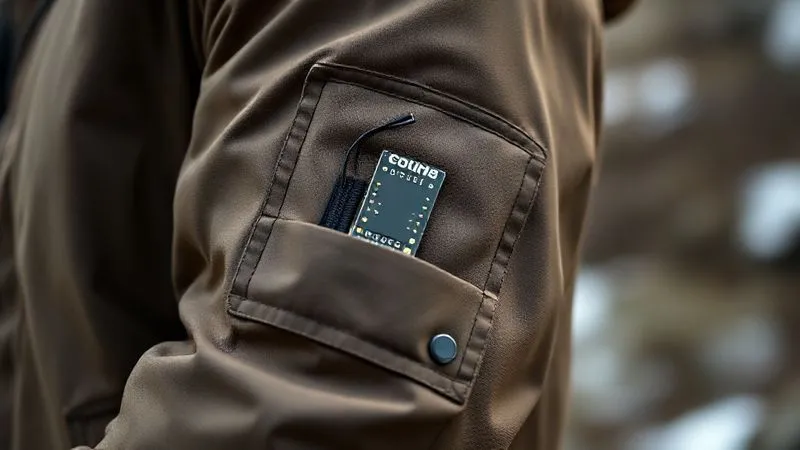
- Modular Systems: Electronics are housed in removable, durable modules that connect to the textile via robust, washable connectors (e.g., snap buttons, magnetic clasps, conductive fabric patches).
- Pros: Easy repair and replacement of electronics, simplified washing of the garment, upgradability.
- Cons: Potential for bulkiness or discomfort, visible electronic components, connector durability is critical.
In my experience, for highly durable apparel like workwear or military applications, a modular approach often provides a better balance of functionality, repairability, and overall product lifespan, especially when dealing with expensive or complex sensor arrays.
Strain Relief and Connectivity: Preventing Failure Points
Regardless of the integration method, connectivity – how sensors communicate with each other and with external devices – is a major vulnerability. Wires and conductive traces are prone to breaking under repeated bending, stretching, or abrasion. Implementing effective strain relief is paramount.
- Serpentine Traces: Designing conductive paths in a wavy or serpentine pattern allows them to stretch and flex without breaking, distributing mechanical stress.
- Flexible Interconnects: Using highly flexible, braided, or coiled conductive threads instead of rigid wires for connections between components.
- Reinforced Connection Points: Areas where sensors connect to a central processing unit or external interface should be heavily reinforced with robust stitching, overmolding, or flexible potting compounds to prevent detachment or breakage.
- Smart Routing: Strategically placing conductive elements in areas of the garment that experience minimal stress during movement.
Rigorous Testing Protocols: Ensuring Real-World Resilience
No matter how well you design and integrate, the true test of durability comes from rigorous, real-world simulation. Without comprehensive testing, you're merely guessing at your product's longevity. This is where the rubber meets the road, or rather, where the smart textile meets the washing machine and the abrasion tester.
Accelerated Aging and Environmental Stress Testing
Standard textile testing is a good start, but responsive textiles require additional, specialized protocols. You need to simulate years of wear and tear in a compressed timeframe:
- Washability Testing: This is non-negotiable. Subject samples to repeated industrial wash and dry cycles (e.g., 50-100 cycles) while continuously monitoring sensor functionality and connectivity. Test for delamination, corrosion, and changes in electrical resistance.
- Abrasion Resistance: Use standard textile abrasion tests (e.g., Martindale, Taber) but specifically monitor the integrity of encapsulated sensors and conductive traces.
- Flex and Stretch Cycling: Simulate garment movement by repeatedly bending, stretching, and twisting the fabric with integrated electronics. This is crucial for evaluating flexible and stretchable circuits.
- Temperature and Humidity Cycling: Expose samples to extreme temperature swings and high humidity to test material stability and encapsulation integrity.
- UV Exposure: For outdoor apparel, accelerated UV testing is vital to ensure polymers and conductive materials don't degrade.
According to a recent study published by the Nature Nanotechnology journal on Smart Textiles, the most common failure modes for integrated electronics in textiles are mechanical fatigue and moisture ingress, underscoring the importance of these specific tests.
Standardization and Certification: Meeting Industry Benchmarks
To build trust and ensure market acceptance, adhering to industry standards is crucial. Organizations like ASTM International and ISO provide established methods for textile testing. While specific standards for smart textiles are still evolving, applying relevant sections of existing textile and electronics standards is a strong starting point.
Furthermore, seeking third-party certification can significantly boost credibility. This demonstrates that your product has been independently verified to meet certain performance and durability benchmarks, which is invaluable for penetrating new markets and reassuring consumers or industrial clients.
Lifecycle Management & Repairability: Sustainable Smart Apparel
Durability isn't just about initial resilience; it's about the entire lifespan of the product, including its maintenance, potential for repair, and eventual end-of-life. A truly durable responsive textile solution considers these aspects from the design phase.
User Care and Maintenance: Empowering the End-User
Even the most durable smart apparel requires proper care. Clear, concise, and easy-to-understand care instructions are vital. This might include specific washing temperatures, drying methods, and warnings against harsh chemicals. For modular systems, instructions on how to remove and reattach electronic components are crucial.
In my experience, providing a simple diagnostic interface (e.g., an LED indicator, a companion app) that can tell the user if a sensor is functioning correctly can significantly extend the perceived lifespan and user satisfaction. Proactive maintenance is always better than reactive repair.
Repairability and End-of-Life Considerations
The ability to repair or upgrade components directly contributes to a product's longevity and sustainability. This is where modular design truly shines. If a sensor fails, only that module needs to be replaced, not the entire garment. This reduces waste and cost.
For fully integrated systems, repair is much more challenging, often impossible. Therefore, the focus shifts to designing for extreme robustness from the outset. At the end of a smart garment's life, consider how the electronic components can be separated from the textile for recycling or safe disposal. This is a growing area of concern for the sustainability of e-textiles.
Case Study: Bio-Wear Innovations' Smart Workwear
Bio-Wear Innovations, a startup specializing in protective workwear, faced significant challenges integrating biometric sensors into their industrial safety jackets. Their initial prototypes, using rigid, encapsulated sensors, consistently failed after 15-20 industrial wash cycles due to delamination and connector corrosion. Their churn rate for smart products was unacceptably high, threatening their market entry.
By adopting a modular design, as I've outlined above, they pivoted to removable, ruggedized sensor packs that connected via robust, IP67-rated magnetic connectors embedded in reinforced textile pockets. The textile itself was a high-performance, aramid-blend fabric, specifically chosen for its chemical and abrasion resistance. They also implemented serpentine conductive traces within the garment to distribute strain.
This strategic shift, combined with rigorous wash and abrasion testing (simulating 100+ cycles), led to a dramatic increase in product lifespan. Their new smart jackets now consistently withstand over 75 industrial washes with full sensor functionality, reducing warranty claims by 80% and earning them a reputation for unparalleled durability in smart workwear. This resulted in a 30% increase in market share within their niche in just two years.
The Future Landscape: Emerging Technologies and Best Practices
The field of responsive textiles is advancing rapidly. Staying ahead means understanding the emerging technologies and continually refining best practices.
Self-Healing Materials and Advanced Encapsulants
Imagine a textile that can repair micro-cracks in its conductive pathways or reseal small punctures in its encapsulation layer. Self-healing polymers and coatings are no longer science fiction; they are an active area of research and hold immense promise for the next generation of ultra-durable smart textiles. These materials could dramatically extend product lifespans and reduce maintenance needs.
Furthermore, research into advanced encapsulants that are not only waterproof and flexible but also breathable and stretchable will revolutionize how electronics are protected, allowing for even greater comfort and seamless integration. For more on this, I recommend exploring recent publications in materials science, such as those found on ScienceDirect's Composites Part A.
AI-Driven Design and Predictive Maintenance
Artificial intelligence is beginning to play a significant role in optimizing the design process. AI algorithms can analyze vast datasets of material properties, stress points, and failure modes to predict optimal integration strategies and material combinations, significantly shortening development cycles and improving durability from the outset. This is a game-changer for complex textile-electronic systems.
Beyond design, AI can enable predictive maintenance. By analyzing real-time sensor data from deployed garments, AI can identify patterns indicating potential component failure before it occurs, allowing for proactive repair or replacement. This not only extends the life of individual garments but also optimizes fleet management for industrial applications.
Frequently Asked Questions (FAQ)
What are the biggest challenges in washing smart textiles? The primary challenges are moisture ingress leading to corrosion or short circuits, mechanical stress from agitation and spinning causing component damage or delamination, and chemical degradation from detergents affecting conductive materials or encapsulants. High temperatures in drying can also damage electronics.
Can responsive textiles be recycled? Recycling responsive textiles is a significant challenge due to the composite nature of textile fibers and embedded electronics. Separating these materials effectively and economically is difficult. However, ongoing research is focusing on designing for disassembly and developing new materials that are more easily recyclable or biodegradable at their end-of-life. Modular designs offer a better pathway for component recycling.
What's the difference between embedded and attached sensors for durability? Embedded sensors are integrated directly into the fabric structure (e.g., woven, printed), offering high comfort and often better protection from surface abrasion. Attached sensors are added to the surface or within pockets of the garment. Embedded sensors can offer superior durability if their integration method is robust, as they are shielded by the textile. Attached sensors, especially modular ones, offer better repairability and easier washing, which can contribute to overall product longevity by allowing electronic components to be protected or replaced.
How do flexible electronics contribute to apparel durability? Flexible electronics are designed to bend, stretch, and conform to the textile, reducing the mechanical stress points that rigid components would create. This inherent flexibility prevents cracking in conductive traces, delamination from the fabric, and breakage of components under garment movement, significantly enhancing the durability and lifespan of smart apparel.
What impact does stretching have on sensor performance and lifespan? Stretching can significantly impact sensor performance and lifespan. It can cause changes in electrical resistance, leading to inaccurate readings, or even micro-fractures in conductive pathways, leading to complete failure. Designing with serpentine traces, using intrinsically stretchable conductive materials, and ensuring proper strain relief are critical to mitigate these negative impacts and maintain both performance and durability under stretch.
Key Takeaways and Final Thoughts
Integrating responsive textile sensors into durable apparel is a complex, multidisciplinary challenge, but one that is entirely surmountable with a strategic, holistic approach. After years in this field, I can distill the essence of success into these critical actionable points:
- Prioritize Durability from Day One: It's not an add-on; it's a foundational design principle.
- Strategic Material Selection: Choose base textiles, sensors, and encapsulants that work in harmony, not conflict.
- Master Integration Techniques: Leverage advanced methods like encapsulation, lamination, smart weaving, and printing to embed intelligence seamlessly and robustly.
- Design for Longevity: Consider modularity, strain relief, and smart routing to prevent common failure points.
- Implement Rigorous Testing: Go beyond standard textile tests; simulate real-world environmental and mechanical stressors.
- Plan for Lifecycle Management: Empower users with care instructions and design for repairability or responsible end-of-life.
The future of fashion and functional textiles lies in this convergence of material science and electronics. By embracing these strategies, you're not just creating smart apparel; you're building trust, delivering genuine value, and pushing the boundaries of what's possible in wearable technology. The journey is challenging, but the rewards – truly durable, high-performance responsive textiles – are well worth the effort. Let's build the future, one resilient thread at a time.
Recommended Reading
- Unlock the Future: 7 Steps to Sustainable, High-Performance Functional Textiles
- Why Your Automatic Watch Stops: A Desk Job Fix & 7 Solutions
- 7 Pillars: Preserving High-End Fashion Exclusivity in Digital Spaces
- Elevating Couture: 7 Proven Strategies for Fine Art Gallery Recognition
- Unlock Effortless Style: Your Guide to Contemporary Men's Relaxed Fit Tailoring


Your email address will not be published. Required fields are marked *