

How to improve post-consumer recycling of mixed synthetic blends?
For over two decades in the textile innovation space, I've witnessed firsthand the incredible advancements in fiber science, creating materials that offer unparalleled performance, comfort, and aesthetics. Yet, I've also seen a persistent, thorny problem plague our industry: the lamentable fate of post-consumer mixed synthetic blends.
The very ingenuity that brings us stretchy activewear, durable outdoor gear, and wrinkle-resistant everyday apparel—often a symphony of polyester, cotton, nylon, spandex, and more—becomes a colossal bottleneck at the end of its life. These blended fabrics, once celebrated for their functionality, are currently the textile industry's recycling Achilles' heel, largely destined for landfill or incineration due to the complexity of separating their constituent parts.
In this definitive guide, I will share my deep insights and practical frameworks on how to improve post-consumer recycling of mixed synthetic blends. We'll explore cutting-edge technologies, strategic design shifts, and collaborative ecosystem approaches that are not just theoretical but are actively shaping a more circular future for textiles. Prepare to uncover actionable strategies that can transform this challenge into a profound opportunity for sustainability and innovation.
The Intricacies of Mixed Synthetic Blends: Why They're a Recycling Nightmare
To truly understand how to improve post-consumer recycling of mixed synthetic blends, we must first grasp the fundamental challenges. It's not simply a matter of 'shredding and reusing'; the problem lies deep within the molecular structure and chemical properties of these multi-fiber composites.
The Material Science Challenge
Consider a common blend: a polyester-cotton t-shirt. Polyester is a thermoplastic polymer, while cotton is a natural cellulosic fiber. Their chemical compositions, melting points, and solubility characteristics are vastly different. Traditional mechanical recycling, which involves shredding and re-spinning, severely degrades the fiber length and quality of both components, resulting in 'downcycled' materials suitable only for insulation or rags, if even that. Chemical recycling, while promising, often struggles with the precise separation required, as processes optimized for one fiber might destroy another. Nylon-spandex activewear, another ubiquitous blend, presents similar headaches due to the elasticity and chemical resistance of spandex.
"The very properties that make blends desirable for performance often make them impossible for traditional, high-value recycling. We've designed for utility, not for end-of-life."
The Scale of the Problem
According to the Ellen MacArthur Foundation, less than 1% of clothing is recycled into new clothing. A significant portion of this loss is directly attributable to mixed fiber content. This represents not only a monumental waste of resources but also a significant environmental burden, as virgin synthetic fiber production is energy-intensive and often relies on fossil fuels.
Revolutionizing Sorting: The First Critical Step
Before any recycling process can begin, accurate and efficient sorting is paramount. This is where the textile industry has historically lagged, but where significant advancements are now being made.
Advanced Spectroscopic Technologies
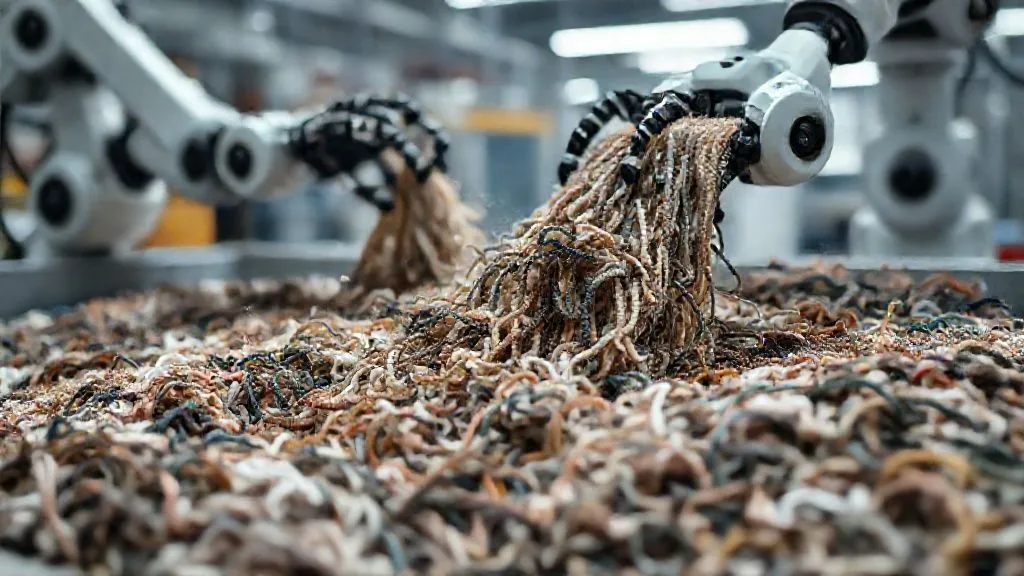
The future of textile sorting lies in automated, high-precision systems. Technologies like Near-Infrared (NIR) spectroscopy, hyperspectral imaging, and even Raman spectroscopy are proving transformative. These systems can identify the exact fiber composition of a garment in milliseconds, allowing for rapid categorization of mixed synthetic blends.
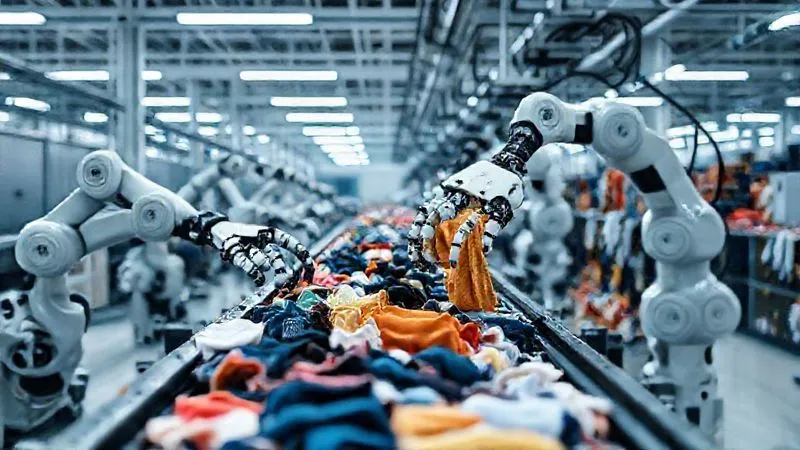
- Initial Scan: Garments are fed onto a conveyor belt, passing under an array of sensors.
- Data Analysis: Each sensor emits light and analyzes the reflected spectrum, creating a unique 'fingerprint' for each fiber type (e.g., polyester, nylon, cotton, elastane).
- Automated Segregation: Based on the spectral data, high-speed air jets or robotic arms sort garments into designated bins for specific fiber blends or single-fiber streams.
- Quality Control: Machine learning algorithms continuously refine the sorting process, improving accuracy over time and minimizing contamination.
These systems are crucial for making mixed synthetic blends viable for subsequent chemical recycling processes.
Mechanical vs. Chemical Recycling: Understanding the Pathways
When considering how to improve post-consumer recycling of mixed synthetic blends, it's essential to differentiate between the two primary recycling methodologies and their applicability to complex materials.
Limitations of Mechanical Recycling for Blends
As I mentioned, mechanical recycling—shredding, carding, and re-spinning—is inherently limited for blends. The different fiber lengths and properties lead to a degraded output. Imagine trying to make a strong rope from a mix of short cotton fibers and long, smooth polyester filaments; the structural integrity is compromised. This typically results in products with significantly lower quality and performance than the original garment, often unsuitable for apparel applications.
The Promise of Chemical Recycling
Chemical recycling, however, offers a paradigm shift. It breaks down polymers to their molecular building blocks (monomers) or oligomers, which can then be repolymerized into virgin-quality fibers. For mixed synthetic blends, the challenge is to selectively dissolve or depolymerize one component while leaving others intact, or to depolymerize all components and then separate the resulting monomers.
| Recycling Method | Applicability to Mixed Blends | Fiber Quality After Recycling | Energy Consumption | Key Challenge |
|---|---|---|---|---|
| Mechanical Recycling | Limited (Downcycling) | Degraded, Shorter Fibers | Moderate | Fiber Separation & Quality Loss |
| Chemical Recycling (e.g., Solvolysis) | High (Upcycling Potential) | Virgin-like Quality Possible | Potentially High, Varies | Selective Separation & Process Efficiency |
| Chemical Recycling (e.g., Hydrothermal) | High (Upcycling Potential) | Virgin-like Quality Possible | Potentially High, Varies | Process Optimization & Cost |
Processes like solvolysis (using solvents to dissolve specific polymers), pyrolysis (heating in the absence of oxygen), and hydrothermal liquefaction (using hot, pressurized water) are at the forefront. For polyester-cotton blends, for example, some processes aim to dissolve the polyester, leaving the cotton, while others chemically break down the cotton, allowing for polyester recovery. This is where innovation truly shines, allowing us to reclaim the inherent value in these complex materials.
Designing for Circularity: Pre-Consumer Intervention
While post-consumer solutions are vital, the most impactful strategies for how to improve post-consumer recycling of mixed synthetic blends often begin at the design stage. As an industry veteran, I've seen countless times how early design choices dictate end-of-life possibilities.
Mono-Material Design Principles
The simplest way to improve recycling is to design products that are easier to recycle. This means minimizing the use of complex blends where possible, or at least using blends that are known to be compatible with emerging recycling technologies. Brands should prioritize:
- Single-Fiber Focus: Designing garments from 100% polyester, 100% cotton, or 100% nylon wherever performance allows.
- Strategic Blending: If blends are necessary, choose compatible pairs (e.g., polyester-polyester blends) or blends where separation technologies are mature (e.g., certain polyester-cotton separation processes).
- Minimizing Trims and Accessories: Buttons, zippers, labels, and embellishments often contain different materials that contaminate recycling streams. Designing for easy disassembly or using mono-material accessories is key.
Traceability and Material Passports
Digital material passports, enabled by blockchain or RFID, can embed information about a garment's composition, manufacturing history, and even its intended recycling pathway. This data is invaluable for sorting facilities, allowing them to precisely identify mixed synthetic blends and direct them to the most appropriate recycling stream. This builds immense trust in the circular economy.
According to a report by the Ellen MacArthur Foundation, designing out waste and pollution, and circulating products and materials, are fundamental to a circular economy for fashion. This starts at the very beginning of the product lifecycle.
Scaling Infrastructure and Investment: The Economic Hurdle
Even with groundbreaking technologies and intelligent design, the vision of improved post-consumer recycling for mixed synthetic blends remains just that—a vision—without significant investment in infrastructure and supportive policy frameworks.
Public-Private Partnerships
Building large-scale chemical recycling facilities is capital-intensive. Governments, industry consortia, and private investors must collaborate to fund the necessary research, development, and commercialization of these advanced plants. This creates shared risk and accelerates progress. I've seen how successful partnerships, like those in the plastics recycling sector, can rapidly scale innovative solutions.
Policy and Regulatory Frameworks
Extended Producer Responsibility (EPR) schemes, where brands and manufacturers are financially responsible for the end-of-life management of their products, are critical. EPR incentivizes companies to design for recyclability and invest in recycling infrastructure. Without clear regulatory drivers, the economic burden often falls disproportionately on recyclers or municipalities. The European Union's push for a circular economy, including textile strategies, serves as a strong example of policy driving change. For more on policy initiatives, see reports from the European Commission on Circular Economy.
Innovations in Fiber Separation Technologies
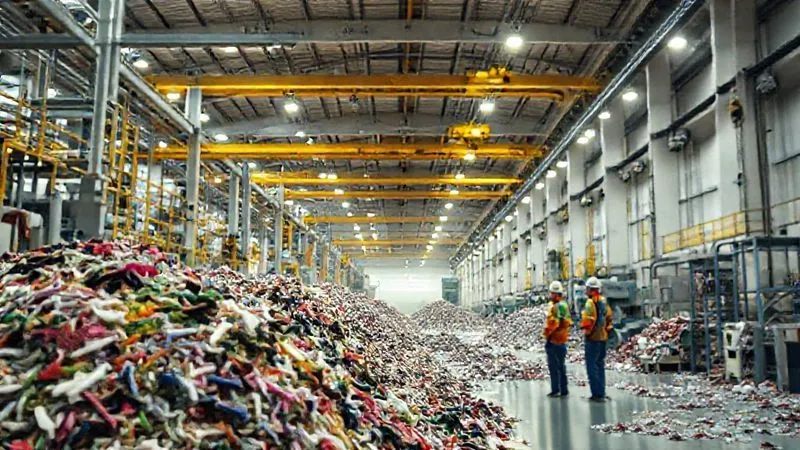
The heart of improving mixed synthetic blend recycling lies in the ability to effectively separate different fibers without significant degradation. This is an area of intense research and development.
Enzymatic Digestion
For blends containing cellulosic fibers (like cotton) and synthetics (like polyester), enzymatic digestion is gaining traction. Specific enzymes can selectively break down cellulose into glucose, leaving the synthetic fibers intact and ready for recovery. This process is generally milder than chemical alternatives and can operate at lower temperatures, potentially reducing energy consumption.
Supercritical Fluid Extraction
This advanced technique uses supercritical fluids (often CO2) to selectively dissolve and extract one polymer from a blend. The fluid, under specific temperature and pressure, acts as a solvent, but when pressure is released, it reverts to a gas, leaving the pure polymer behind. This offers a 'green' solvent alternative with no residual waste, making it highly attractive for high-value synthetic fibers.
Case Study: Project Phoenix's Breakthrough
Case Study: How Project Phoenix Revolutionized Polyester-Cotton Recycling
Project Phoenix, a fictional consortium of textile innovators and chemical engineers, faced the daunting task of recycling vast quantities of discarded polyester-cotton uniforms. Traditional methods yielded only low-grade shoddy. By investing in a novel enzymatic digestion process combined with an optimized solvolysis technique, they achieved a breakthrough. First, enzymes selectively broke down the cotton component into sugars, which were then valorized into bio-ethanol. The remaining polyester was then subjected to a mild solvolysis, depolymerizing it into pure terephthalic acid (PTA) and ethylene glycol (MEG)—the virgin-grade monomers. This resulted in a 95% recovery rate for both components, allowing them to be re-spun into new, high-quality fibers. This not only diverted thousands of tons of waste from landfills but also proved the commercial viability of a truly closed-loop system for a notoriously difficult blend.
Consumer Engagement and Collection Systems
No matter how advanced our recycling technologies become, they are moot if post-consumer textiles don't reach the recycling stream. Consumer behavior and accessible collection infrastructure are foundational to how to improve post-consumer recycling of mixed synthetic blends.
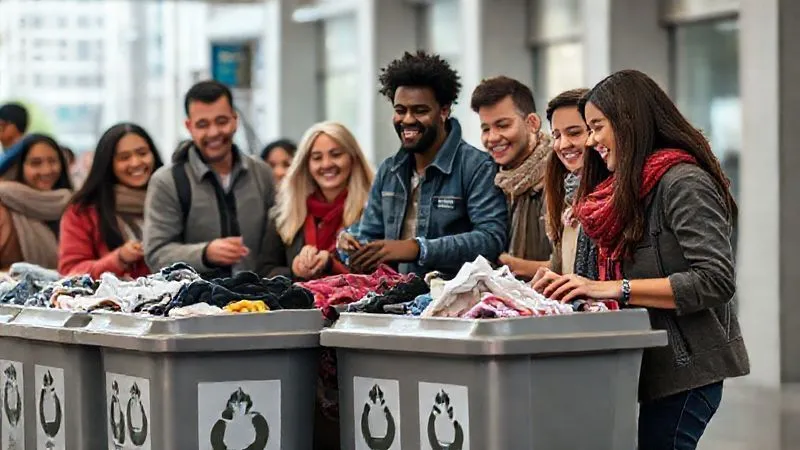
Streamlined Collection Points
Collection must be easy and convenient. This means:
- Retail Take-Back Programs: Brands offering in-store collection bins for used garments.
- Accessible Drop-Offs: More municipal textile recycling bins, clearly marked for 'any textile' rather than just 'donations'.
- Curbside Collection: Piloting programs for textile collection alongside other recyclables.
Education and Awareness Campaigns
Consumers need to understand why their old clothes are valuable and how to properly dispose of them. Clear, consistent messaging can dispel myths about textile recycling and highlight the environmental benefits. Campaigns should emphasize that even worn-out or damaged garments, especially those made from mixed synthetic blends, have value for advanced recycling. For insightful approaches to consumer engagement, I often refer to initiatives like those detailed in the World Resources Institute's reports on textile waste solutions.
The Role of Data and AI in Optimizing Recycling Processes
In our increasingly digital world, data analytics and Artificial Intelligence (AI) are becoming indispensable tools for how to improve post-consumer recycling of mixed synthetic blends. They offer unprecedented opportunities for efficiency and optimization.
Predictive Analytics for Waste Streams
AI can analyze historical data on textile waste composition, collection rates, and seasonal trends to predict future incoming waste streams. This allows recycling facilities to better plan their operations, allocate resources, and optimize their machinery for anticipated material types, including specific mixed synthetic blends. This reduces downtime and increases throughput.
Optimizing Chemical Processes with Machine Learning
Chemical recycling processes are complex, involving precise control of temperature, pressure, solvent concentrations, and reaction times. Machine learning algorithms can monitor these parameters in real-time, identifying optimal conditions for maximum separation efficiency and monomer yield. This not only improves the quality of recycled output but also minimizes energy consumption and chemical waste, making the process more sustainable and cost-effective. As marketing guru Seth Godin often says, "The systems that work are the systems that are measured." AI provides that measurement at an unprecedented scale.

Collaboration Across the Value Chain: A Unified Approach
No single entity can solve the complex problem of recycling mixed synthetic blends alone. True progress on how to improve post-consumer recycling of mixed synthetic blends requires unprecedented collaboration across the entire fashion and textile value chain.
Textile Manufacturers and Recyclers
Manufacturers need to work hand-in-hand with recyclers to understand the limitations and opportunities of existing and emerging recycling technologies. This feedback loop can inform material selection and product design, ensuring that what is produced can genuinely be recycled. Recyclers, in turn, can provide insights into the quality and quantity of post-consumer materials available.
Brands and Retailers
Brands are the direct link to consumers and hold significant power in driving demand for recycled content. By committing to using recycled fibers and investing in take-back programs, they create market pull for recycled mixed blends. Retailers can facilitate collection and educate consumers. Organizations like the Fashion for Good initiative exemplify how industry collaboration can accelerate sustainable innovation.
Frequently Asked Questions (FAQ)
Question: Why are mixed synthetic blends so difficult to recycle compared to single-fiber textiles?
Answer: The primary difficulty lies in the inherent differences in chemical composition, physical properties (like melting points and solubility), and molecular structure of the various fibers within the blend. Traditional mechanical recycling processes degrade the quality of mixed fibers, while chemical recycling requires precise separation methods that are challenging to scale for diverse blends without damaging one component while processing another. This complexity leads to high processing costs and technical hurdles.
Question: What is the most promising technology for separating polyester from cotton?
Answer: Currently, a combination of targeted chemical and enzymatic processes shows the most promise for polyester-cotton separation. Chemical solvolysis can selectively dissolve polyester, leaving cotton intact, or vice versa depending on the specific solvent and conditions. Enzymatic digestion can break down the cellulosic (cotton) component, leaving the polyester. Hybrid approaches that combine these methods, often following advanced automated sorting, are proving most effective in yielding high-quality, reusable materials from both components.
Question: How can consumers contribute to improving the recycling rate of their synthetic clothing?
Answer: Consumers play a crucial role. First, look for clothing made from single-fiber materials when possible, or blends known to be recyclable (e.g., specific polyester blends). Second, utilize available textile collection points, whether they are retail take-back programs, municipal bins, or specialized textile recycling services, rather than discarding clothes in general waste. Even worn-out or damaged items are valuable for recycling. Finally, advocate for brands to adopt circular design principles and support policies like Extended Producer Responsibility.
Question: What role does policy play in scaling up mixed blend recycling?
Answer: Policy is absolutely critical. Government regulations, such as Extended Producer Responsibility (EPR) schemes, mandate or incentivize brands to take responsibility for the end-of-life of their products, including mixed synthetic blends. This creates a financial and regulatory driver for investment in recycling infrastructure and sustainable design. Policies can also fund research, standardize collection systems, and create market demand for recycled content through procurement targets or tax incentives, accelerating the transition to a circular textile economy.
Question: Is chemical recycling truly sustainable, given its energy and resource demands?
Answer: While chemical recycling processes can be energy-intensive and require specific chemicals, their sustainability profile is generally considered superior to producing virgin synthetic fibers, especially when powered by renewable energy. The key is to optimize these processes for efficiency, minimize chemical use, and ensure closed-loop systems for solvents. The ability to produce virgin-quality materials from waste, reducing reliance on fossil fuels and diverting textiles from landfill, offers significant environmental benefits that outweigh the current energy demands, which are also continuously being improved through technological advancements.
Key Takeaways and Final Thoughts
The journey to truly circular mixed synthetic blends is complex, but the path forward is becoming clearer. Based on my extensive experience, here are the most critical takeaways:
- Innovation in Sorting: Automated spectroscopic sorting is the non-negotiable first step, enabling the precise categorization needed for advanced recycling.
- Embrace Chemical Recycling: This is the most promising pathway for upcycling mixed blends into virgin-quality fibers, moving beyond mere downcycling.
- Design for Disassembly: Brands must adopt circular design principles, prioritizing mono-materials or easily separable blends from the outset.
- Invest in Infrastructure & Policy: Scaling requires significant capital investment, driven by public-private partnerships and robust EPR policies.
- Foster Collaboration & Education: The entire value chain, from designers to consumers, must collaborate and be educated to create a functioning circular system.
The textile industry stands at a pivotal moment. The challenge of post-consumer mixed synthetic blends, once a symbol of our linear economy's failures, is now a powerful catalyst for innovation. By embracing these strategies—from advanced sorting and chemical recycling to thoughtful design and collaborative ecosystems—we can transform this problem into a cornerstone of a truly sustainable and circular fashion future. The technology exists, the expertise is growing, and with collective will, we can unlock the immense value currently buried in our landfills.
Recommended Reading
- Ultimate Guide: How to Style Fashion Lookbook Outfits
- 5 Crucial Steps: How to Prevent Greenwashing in Organic Kids Apparel Sourcing
- 7 Proven Steps: Stop Micro-Pavé Diamonds Falling from Custom Jewelry
- Mastering Authentication: 5 Steps to Profitable Luxury Vintage Resale
- 7 Proven Strategies: Banish Uninspired Fashion Content Ideas Forever



Your email address will not be published. Required fields are marked *