

How to Fix Inaccurate Virtual Try-On Sizing for Apparel?
For over 15 years, navigating the intricate landscape of fashion technology, I've witnessed firsthand the incredible promise and the frustrating pitfalls of virtual try-on (VTO) solutions. Many retailers rush to adopt VTO, envisioning a future of seamless online shopping and reduced returns. However, a common and often devastating oversight quickly derails these ambitions: inaccurate sizing.
The problem is pervasive. Customers are promised the ability to 'try on' clothes virtually, only to receive garments that fit nothing like the digital representation. This disconnect leads to immense frustration, inflated return rates, damaged brand reputation, and ultimately, lost sales. It's a critical flaw that undermines the very foundation of virtual commerce and erodes customer trust.
But here's the good news: the challenge of inaccurate virtual try-on sizing for apparel is not insurmountable. In this definitive guide, I'll share five expert strategies, born from years of industry experience and deep dives into cutting-edge research, to systematically identify and rectify these sizing discrepancies. You'll gain actionable frameworks, real-world insights, and the knowledge to transform your VTO experience from a liability into a powerful asset.
The Root Causes of Virtual Try-On Sizing Inaccuracy: A Deep Dive
Before we can fix a problem, we must truly understand its genesis. Inaccurate virtual try-on sizing isn't a single flaw; it's often a complex interplay of issues across the entire VTO pipeline. From my perspective, having advised numerous brands on their digital transformation journeys, these are the primary culprits.
1. Inadequate 3D Garment Digitization
The journey of a physical garment to its digital twin is fraught with potential for error. Many VTO solutions rely on quick, low-fidelity digitization processes that fail to capture the nuances of fabric drape, elasticity, and precise measurements. If the digital garment itself isn't an exact replica of its physical counterpart, no amount of sophisticated avatar technology can compensate for that fundamental inaccuracy.
The Issue: Poor fabric drape simulation means a structured jacket might appear baggy, or a stretchy dress might look rigid. Inaccurate measurements at the digitization stage lead to the digital garment having different dimensions than the physical one, even before it's 'worn' by an avatar. This is often where the first critical error in the sizing chain occurs.
2. Imperfect Body Scan & Avatar Generation
The digital body, or avatar, is the canvas upon which the virtual garment is displayed. If this canvas is flawed, the resulting fit will be equally problematic. Generic avatars, based on limited body types or statistical averages, simply cannot represent the vast diversity of human shapes and sizes. This leads to a 'one-size-fits-all' digital body trying on a garment, resulting in a 'fits-no-one' virtual experience.
The Issue: Many VTO systems generate avatars based on a few input measurements (height, weight) or rely on pre-set models. This often overlooks critical individual differences in posture, limb length ratios, and body proportions. The result is an avatar that doesn't accurately reflect the user's unique physique, making any try-on inherently unreliable.
3. Disconnected Sizing Data & Fit Logic
Even with perfect digital garments and accurate avatars, the system needs intelligent logic to match them. Relying solely on a manufacturer's static size chart (e.g., 'Medium = 30-inch waist') is often insufficient. Apparel sizing is notoriously inconsistent across brands and even within a single brand's product lines. Furthermore, the intended fit of a garment (e.g., slim fit, relaxed fit, oversized) and the fabric's stretch properties must be factored in, which static charts rarely convey effectively.
The Issue: Many VTO systems lack sophisticated algorithms that consider the garment's design intent, fabric properties, and how different body shapes might interact with specific cuts. They might simply overlay a digital garment onto an avatar based on simple measurement comparisons, ignoring the complex realities of garment construction and human anatomy. This leads to recommendations that are technically 'correct' by measurement but practically 'incorrect' in terms of actual fit and comfort.
Strategy 1: Elevating 3D Garment Digitization to Ultra-Precision
In my experience, the foundation of accurate virtual try-on lies in the digital twin of the apparel itself. If your digital garments aren't pixel-perfect representations of their physical counterparts, you're building on shaky ground. This isn't just about scanning a garment; it's about creating a living, breathing digital replica.
A. High-Fidelity Material & Draping Simulation
The way fabric falls, stretches, and interacts with light is crucial for a realistic VTO experience. Generic 3D models often miss these nuances. To fix this, we need to invest in advanced material properties and draping physics.
- Physically Based Rendering (PBR) Textures: Utilize PBR workflows to accurately represent how light interacts with fabric surfaces. This includes detailed maps for color (albedo), roughness, metallic properties, and normal maps for surface texture, ensuring the digital fabric looks and feels real.
- Advanced Fabric Physics Engines: Employ sophisticated simulation software that models fabric elasticity, stiffness, weight, and friction. This allows the digital garment to drape and move realistically on the avatar, responding to gravity and body contours in a manner consistent with the physical garment.
- Tension Maps and Pressure Points: Incorporate data that shows how the fabric stretches or pulls at different points on the body. This is critical for identifying areas where a garment might feel tight or loose, providing visual cues for fit accuracy.

B. Rigorous Digital Pattern & Measurement Validation
The digital pattern is the blueprint for the garment. Any inaccuracies here will propagate through the entire VTO process. I always advocate for a multi-stage validation process.
“The devil is in the details, and in virtual try-on, those details are the precise measurements and material properties. Overlooking them is a guaranteed path to customer dissatisfaction.”
- CAD Integration: Ensure your 3D garment creation software is seamlessly integrated with your Computer-Aided Design (CAD) pattern-making systems. This direct link minimizes manual data entry errors and ensures the digital pattern matches the physical one.
- 3D Pattern Validation: Before rendering, validate the digital pattern in a 3D environment using virtual mannequins. Check for symmetry, seam alignment, and overall proportional accuracy. Many advanced software solutions offer tools for this, identifying errors before they reach the VTO stage.
- Expert Review & Comparison: Have experienced pattern makers or garment technologists review the 3D digital garment alongside its physical counterpart. This human eye for detail can catch subtle discrepancies that automated systems might miss, particularly concerning style, cut, and intended fit.
According to a Deloitte report on digital fashion, investing in high-fidelity digital assets is paramount for building trust and reducing returns in e-commerce.
Strategy 2: Mastering Body Scan & Avatar Generation for True Representation
Once you have a perfect digital garment, the next crucial step is ensuring it's tried on by an equally perfect digital representation of the customer. Generic avatars are a relic of the past; personalized, accurate avatars are the future of VTO.
A. Advanced 3D Body Scanning Technologies
The most reliable way to generate an accurate avatar is through high-precision 3D body scanning. While not every customer will have access to a body scanner at home, retailers can offer this service in-store or partner with scanning providers.
- Structured Light Scanners: These devices project patterns onto the body and use cameras to capture the deformation, creating highly accurate 3D models and measurements.
- Lidar and Photogrammetry: While more complex for consumer use, these technologies offer robust data collection for creating highly detailed body models. Lidar is increasingly found in smartphones, hinting at future accessibility.
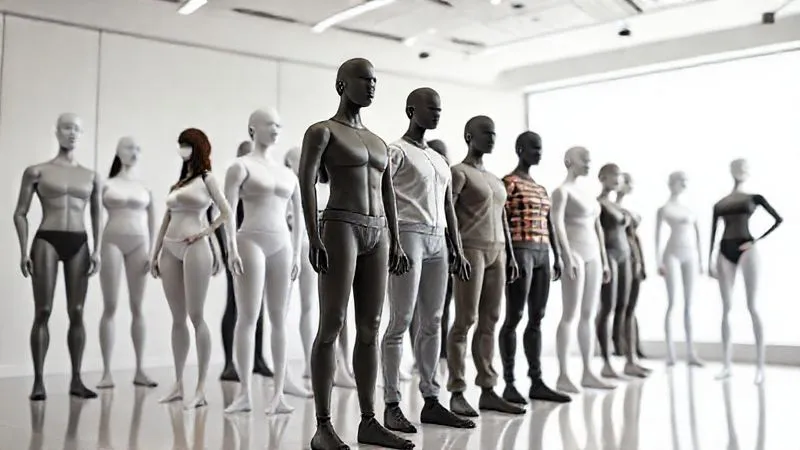
- Diverse Body Shape Libraries: For users who opt out of scanning, leverage comprehensive libraries of diverse body shapes. These should be far more granular than simple S, M, L, offering variations in torso length, hip-to-waist ratios, and shoulder width, informed by anthropometric data.
B. Parametric Avatars & Dynamic Adjustments
A parametric avatar is one that can be dynamically adjusted based on specific measurements. Instead of choosing from a few pre-set models, the avatar reshapes itself to match the user's unique dimensions.
“Personalization in VTO isn't a luxury; it's a necessity. A parametric avatar is your customer's digital twin, and its accuracy is directly proportional to their confidence in your sizing recommendations.”
This allows for a truly personalized try-on experience, where the digital garment interacts with an avatar that mirrors the user's actual body. Future iterations will likely include posture and gait analysis to further enhance realism.
Strategy 3: Integrating AI-Powered Sizing Logic & Fit Recommendation Engines
Even with perfect digital assets, the magic of VTO happens when intelligent systems connect the garment to the body. Static size charts are a relic; dynamic, AI-powered fit recommendations are the gold standard.
A. Leveraging Machine Learning for Predictive Fit
Machine learning (ML) algorithms can analyze vast datasets to predict how a garment will fit a specific individual, going far beyond simple measurement comparisons. This is where true predictive power comes into play.
- Historical Sales & Returns Data: Train ML models on past purchase data, specifically focusing on returns due to sizing issues. Identify patterns between customer body types (or self-reported measurements) and the fit outcome of various garments.
- Customer Feedback & Reviews: Integrate natural language processing (NLP) to analyze customer reviews and feedback related to fit. Look for common phrases like 'runs small,' 'too tight in the shoulders,' or 'perfect fit.'
- Garment Attributes & Fabric Composition: Feed the ML model detailed information about each garment, including its material composition (e.g., cotton, elastane percentage), weave, intended fit (e.g., relaxed, slim), and construction details.
“AI isn't just about showing a garment on an avatar; it's about predicting how that garment will *feel* and *fit* on a unique individual, leveraging insights from millions of data points.”
B. Hybrid Sizing Models: Combining Data & User Input
The most robust VTO systems combine the power of AI with crucial user input. This hybrid approach ensures both accuracy and personalization.
| Feature | Traditional Sizing (Size Charts) | AI-Powered VTO Sizing |
|---|---|---|
| Data Source | Static manufacturer measurements | Dynamic user data, historical purchases, returns, body scans, garment attributes |
| Recommendation Logic | Generic measurement comparison | Personalized, predictive, considers intended fit and fabric properties |
| Accuracy | High variability, inconsistent | Continuously improving, high precision for individual users |
| User Input | Manual self-measurement | Minimal (auto-detection, preferences, optional tweaks) |
| Learning Capability | None | Self-learning, adapts and improves over time with new data |
| Impact on Returns | High due to poor fit | Significantly reduced through accurate recommendations |
This approach allows users to input their preferences (e.g., 'I prefer a slightly looser fit') which the AI can then factor into its recommendations, leading to a truly tailored experience. As marketing guru Seth Godin often says, true customer experience is about understanding and serving individual needs, not just averages.
Strategy 4: Implementing User Feedback Loops & Continuous Calibration
A virtual try-on system is not a 'set it and forget it' solution. It's a living, evolving entity that requires constant feedback and calibration to maintain and improve accuracy. This iterative process is crucial for long-term success.
A. Post-Purchase Fit Surveys & Data Collection
The most valuable data comes directly from your customers' post-purchase experiences. I've seen this mistake countless times: brands implement VTO but fail to close the feedback loop. This is critical for understanding where the system is succeeding and, more importantly, where it's failing.
- Targeted Surveys: After a customer receives their apparel, send a short, targeted survey asking about the fit accuracy, specifically in relation to the VTO experience. Ask questions like: 'Did the garment fit as expected based on the virtual try-on?' 'Were there any areas where the fit was different?'
- Specific Fit Areas: Design surveys to pinpoint specific areas of fit (e.g., 'Too tight in the chest,' 'Sleeves too long,' 'Waist felt just right'). This granular data is invaluable for pinpointing where your 3D garments or avatar models might need adjustment.
- Incentivize Feedback: Offer small discounts or loyalty points for completing fit surveys. This significantly increases participation rates and the volume of actionable data.
B. A/B Testing Virtual Try-On Algorithms
Just as you'd A/B test website layouts or marketing copy, you should A/B test different VTO algorithms and parameters. This allows for data-driven optimization.
- Hypothesis Formulation: Develop specific hypotheses, e.g., 'Changing the fabric elasticity parameter for denim by 5% will reduce returns for jeans by 2%.'
- Controlled Experiments: Run A/B tests where different groups of users are exposed to slightly varied VTO algorithms or garment rendering parameters.
- Measure Key Metrics: Track key performance indicators (KPIs) such as conversion rate, return rate (specifically for sizing issues), and customer satisfaction scores for each group.
- Iterate & Optimize: Based on the results, implement the changes that lead to improved accuracy and user experience. This continuous loop of testing and refinement is the bedrock of a truly accurate VTO system.
Case Study: Aura Apparel's VTO Calibration Success
Aura Apparel, a mid-sized sustainable fashion brand, launched a VTO feature that initially promised much but delivered inconsistent sizing. Their return rate for VTO-influenced purchases hovered around 25%, largely due to fit discrepancies. Recognizing the issue, I worked with them to implement a robust feedback loop and A/B testing framework.
They started by integrating detailed post-purchase fit surveys, capturing specific feedback on areas like shoulder width, sleeve length, and torso fit. This data was then fed back into their AI-driven sizing engine, recalibrating the algorithms for specific garment types and body shapes. Simultaneously, they A/B tested subtle adjustments to fabric drape simulation parameters for their core denim line. Within six months, Aura Apparel achieved a 15% reduction in sizing-related returns for VTO-influenced purchases and an 8% increase in conversion rates for those who used the VTO feature. This demonstrated the profound impact of continuous calibration.
This iterative approach, championed by many in the tech world, is critical. As Harvard Business Review often highlights, customer feedback is a goldmine for product improvement, and VTO is no exception. Understanding and acting on customer feedback is paramount for building trust.
Strategy 5: Enhancing User Experience & Transparency in the Virtual Fitting Room
Beyond the technical accuracy, the user's perception and interaction with the VTO system significantly impact its success. Trust and clarity are paramount. Even if your system is 99% accurate, a lack of transparency can erode user confidence.
A. Clear Fit Confidence Scores & Disclaimers
Manage customer expectations by providing transparency about the system's confidence level for a particular fit recommendation. No VTO system is 100% perfect, and acknowledging this builds trust.
- Fit Confidence Score: Display a visual indicator (e.g., a percentage, a color-coded bar) that shows how confident the system is in its fit recommendation for a specific garment on the user's avatar. This could be based on the availability of data for that garment type, the accuracy of the user's body measurements, and historical performance.
- Contextual Disclaimers: Include subtle disclaimers where appropriate, explaining potential variations. For example, 'Fit may vary slightly based on individual body proportions and preferred styling.' This sets realistic expectations and prevents disappointment.
- Explain the 'Why': For less confident recommendations, briefly explain why. 'We have limited data on this specific fabric type, so fit may vary.' This educates the user and prevents them from feeling misled.
B. Interactive Fit Adjustments & Visualizations
Empower users to fine-tune the fit themselves or explore different sizing options directly within the virtual fitting room. This hands-on approach increases engagement and satisfaction.
- Interactive Sliders: Allow users to adjust sliders for specific garment attributes (e.g., 'tightness,' 'length,' 'sleeve width') and see the real-time visual impact on the avatar. This gives them a sense of control and helps them visualize how different sizes might look.
- Comparison Mode: Offer a feature to compare different sizes side-by-side on the avatar, or even compare the 'recommended' fit with a 'looser' or 'tighter' option.
- Heat Maps for Fit: Implement visual overlays on the avatar that highlight areas where the garment might be tight (red), loose (blue), or just right (green). This provides intuitive, at-a-glance feedback on fit.
According to research published by Forbes Technology Council, interactive and transparent user experiences are key drivers for VTO adoption and satisfaction.
Frequently Asked Questions (FAQ)
Question: How much does it cost to implement these VTO fixes, and is it worth the investment? The cost can vary significantly depending on your existing VTO infrastructure, the scope of integration, and the level of precision you aim for. Investing in high-fidelity 3D garment digitization, advanced body scanning technologies, and robust AI recommendation engines can range from tens of thousands to hundreds of thousands of dollars. However, the ROI is often substantial, driven by reduced return rates (which can cost retailers billions annually), increased conversion rates, enhanced customer loyalty, and a stronger brand reputation. In my view, it's a critical investment for any brand serious about future-proofing its e-commerce strategy.
Question: What's the biggest challenge in achieving perfect VTO sizing, and how can we mitigate it? The biggest challenge is the inherent variability of the human body and the subjective nature of 'fit.' There's no single 'perfect' fit for everyone; some prefer looser, some tighter. Mitigating this involves a multi-pronged approach: combining highly accurate objective data (body scans, garment measurements) with subjective user preferences (interactive sliders, preferred fit options). Continuous feedback loops are essential to refine the system's understanding of diverse fit preferences.
Question: Can existing VTO systems be upgraded, or do I need to invest in a completely new solution? In most cases, existing VTO systems can be significantly upgraded and improved without requiring a complete overhaul. Many solutions are modular, allowing for the integration of better 3D garment assets, more sophisticated AI engines, or advanced body scanning modules. The key is to conduct a thorough audit of your current system to identify its weakest links and prioritize upgrades that offer the most impact. Start with the foundational elements like garment digitization, as improvements there will cascade through the entire system.
Question: How do I measure the ROI of improved VTO accuracy? Measuring ROI involves tracking several key metrics before and after implementing improvements. Focus on: 1) Return Rate: Specifically, returns attributed to sizing or fit issues. 2) Conversion Rate: For users who engage with the VTO feature. 3) Average Order Value (AOV): Confident shoppers might purchase more. 4) Customer Satisfaction Scores: Surveys measuring satisfaction with the fit and VTO experience. 5) Customer Lifetime Value (CLTV): Improved satisfaction leads to repeat purchases. A comprehensive dashboard tracking these KPIs will clearly demonstrate the financial benefits.
Question: What role does fabric elasticity play in VTO accuracy, and how is it simulated? Fabric elasticity is paramount. A rigid digital simulation of a stretchy garment will lead to gross inaccuracies. Advanced VTO systems use complex physics engines that model the material's elastic properties, including its stretch percentage, recovery, and stiffness. This data is often obtained through physical testing of fabric samples and then translated into digital parameters. The simulation accounts for how the fabric deforms and conforms to the body, making the virtual try-on visually and functionally realistic.
Key Takeaways and Final Thoughts
Addressing inaccurate virtual try-on sizing for apparel is not merely a technical challenge; it's a strategic imperative for any fashion brand looking to thrive in the digital age. Having spent years in this fascinating intersection of fashion and technology, I can tell you with conviction that the brands that master VTO accuracy will be the ones that win customer loyalty and market share.
- Precision is Paramount: Start with ultra-high-fidelity 3D garment digitization and accurate body scanning.
- AI is Your Ally: Leverage machine learning for predictive, personalized fit recommendations.
- Listen to Your Customers: Implement robust feedback loops and continuous calibration.
- Transparency Builds Trust: Empower users with clear confidence scores and interactive adjustments.
- It's an Ongoing Journey: VTO is not a one-time deployment but an iterative process of refinement and innovation.
By meticulously implementing these five strategies, you're not just fixing a problem; you're elevating your entire customer experience, fostering unparalleled trust, and unlocking the true potential of virtual try-on. The future of fashion is digital, and an accurate, engaging VTO experience is your brand's most powerful differentiator. Embrace these changes, and watch your brand flourish.
Recommended Reading
- 5 Proven Steps: Differentiating Playful Kids Fashion in a Crowded Market
- 7 Proven Strategies: Turn Social Media Fashion Followers into Clients
- Cracking the Code: 7 Metrics to Measure Luxury Magazine ROI Effectively
- Why Does Activewear Retain Odor? 7 Solutions for Freshness
- Mastering Bespoke Jewelry Pricing: 7 Steps to Profit & Sustainability





Your email address will not be published. Required fields are marked *