

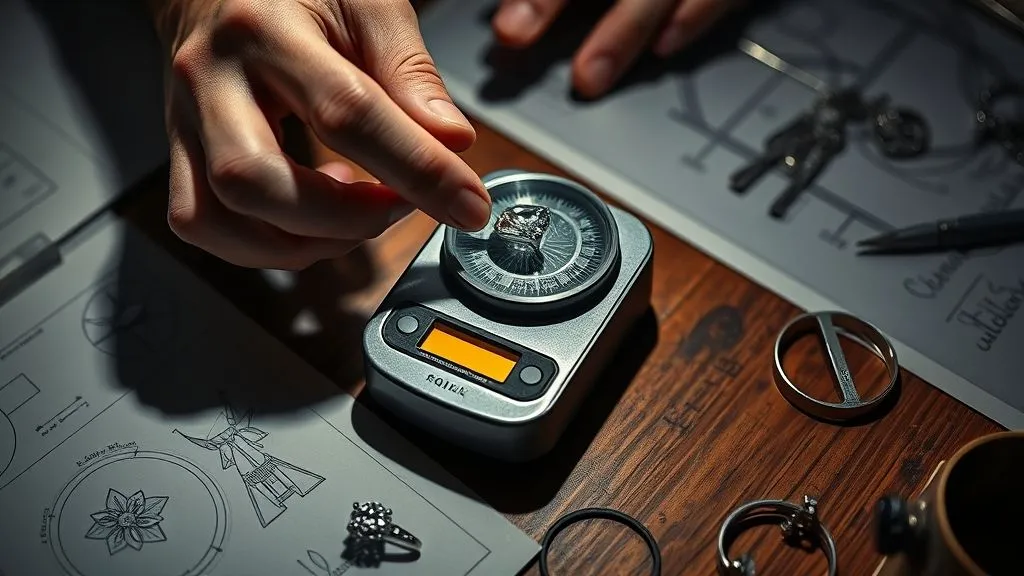
How to price complex bespoke jewelry commissions profitably?
For over two decades in the intricate world of bespoke jewelry design, I've witnessed a recurring, heartbreaking scenario: exceptionally talented designers creating breathtaking pieces, only to find themselves barely breaking even, or worse, operating at a loss. The passion is undeniable, the craftsmanship impeccable, but the business acumen, particularly around pricing, often lags. I’ve personally navigated the treacherous waters of underpricing my early commissions, driven by a desire to please and a fear of losing a sale, only to realize the true cost was far greater than just materials – it was the erosion of my time, my energy, and ultimately, my business’s sustainability.
The challenge of pricing bespoke jewelry is inherently complex. It’s not simply about calculating the cost of gold and gems. We’re dealing with the alchemy of transforming raw ideas into tangible heirlooms, a process laden with artistic vision, meticulous handcraftsmanship, client-specific iterations, and the sheer uniqueness of a one-of-a-kind creation. How do you quantify the hours spent sketching, the intellectual property embedded in a unique design, the years of skill development, or the emotional value a client places on a piece that will tell their story?
This article isn’t just another guide; it’s a deep dive into a proven framework I’ve refined over years, designed to empower you to price your complex bespoke jewelry commissions not just fairly, but profitably. We’ll move beyond guesswork, exploring actionable strategies, dissecting costs often overlooked, valuing the intangible aspects of your artistry, and building a pricing model that ensures both your creative fulfillment and your financial success. Prepare to transform your approach and reclaim the true value of your extraordinary work.
The Foundation: Understanding Your True Costs (Beyond Materials)
One of the most common pitfalls I've observed designers tumble into is a superficial understanding of their costs. They meticulously track metal and stone purchases, but often neglect the myriad other expenses that contribute to a piece’s true cost. To price profitably, you must first establish an unshakeable foundation of cost awareness. This isn't just about accounting; it's about respecting the resources – tangible and intangible – that go into every unique creation.
Direct Costs: Gemstones, Metals, Components, and Specialized Labor
These are the easiest to track, yet still require precision. Beyond the raw weight of gold or platinum and the carat weight of diamonds, consider the specific cut, clarity, and origin of each gemstone. Are you using ethically sourced materials? Is there a premium for specific alloys or finishes? Don't forget findings, clasps, settings, and any specialized outsourced labor like stone setting, engraving, or complex casting that you don't perform in-house. Obtain multiple quotes where possible and always factor in a buffer for slight fluctuations in material prices, especially for precious metals. A comprehensive understanding of gemology is crucial for accurate valuation here.
Indirect Costs: Overheads & Operational Expenses
This is where many designers falter. Indirect costs are the silent, constant drain on your resources that aren't directly tied to a single piece but are essential for your business to function. Think about your studio rent, utilities, insurance, marketing efforts, website hosting, software subscriptions (CAD, accounting), professional development courses, tool maintenance, photography equipment, shipping supplies, and even the cost of your coffee! These need to be allocated across your projects. A common method is to calculate your total monthly overheads and divide by your estimated productive hours or number of commissions to arrive at an hourly overhead rate. This rate, when added to your direct labor cost, gives a much clearer picture.
The Hidden Cost: Your Time & Expertise
Your time is your most valuable asset, and your expertise is what sets you apart. Yet, these are frequently undervalued. This isn't just about the hours spent at the bench; it includes time for client consultations, design conceptualization, sketching, CAD modeling, sourcing materials, administrative tasks, marketing, and continuous skill development. Every hour you spend contributing to your business, whether directly on a piece or indirectly, has a value. Calculate a fair hourly rate for yourself, reflecting your skill level, experience, and what you would earn in a comparable senior role. This rate should not just cover your living expenses but also compensate you for your years of training and unique artistic vision.
| Cost Category | Example Items | Notes |
|---|---|---|
| Direct Materials | Gold, Platinum, Diamonds, Sapphires, Clasps | Track per-gram/carat, include findings & consumables. |
| Outsourced Labor | Stone Setting, Engraving, Specialized Casting | Get clear quotes, build in buffer for revisions. |
| Overhead Allocation | Rent, Utilities, Insurance, Marketing, Software | Calculate monthly total, divide by productive hours/pieces. |
| Your Design & Bench Time | Consultation, Sketching, CAD, Fabrication, Finishing | Assign an hourly rate reflecting skill, experience, and profit. |
Valuing the Intangibles: Design, Rarity, and Emotional Resonance
Beyond the tangible costs, bespoke jewelry carries immense intangible value. This is where your artistry truly shines, and it’s critical that your pricing reflects this unique contribution. Clients seek bespoke not just for a piece of jewelry, but for a story, a connection, a unique expression of their identity or their love. This emotional and artistic value commands a premium, and you must confidently articulate and price it.
Intellectual Property and Design Exclusivity
Every unique design you create is your intellectual property. While formal patents might be rare in jewelry, the originality of your design, the specific aesthetic, and the innovative techniques you employ are valuable assets. When a client commissions a bespoke piece, they are often paying for the exclusive right to that design, or at least the assurance that it won't be mass-produced. This exclusivity holds significant value. Consider whether you retain the rights to the design for future adaptation (e.g., a limited edition collection) or if the client is paying for full, irrevocable exclusivity. This should be explicitly discussed and factored into your design fee.
The Artisan's Signature and Rarity
Your signature style, your reputation, and the rarity of your hand-crafted pieces contribute significantly to their perceived value. As renowned marketing guru Seth Godin often says, "The market doesn't pay you for what you do; it pays you for who you are." If you have a distinctive aesthetic, a waiting list, or have won awards, these are indicators of high demand and unique value. Clients are not just buying a product; they are buying a piece of your artistry, a connection to a specific narrative or brand ethos. This scarcity and personal touch justify a higher price point than mass-produced alternatives.
Case Study: Elevating Value Through Narrative – The ‘Stardust’ Pendant
A designer I mentored, ‘Elara,’ struggled to price a complex pendant commission. The client wanted a piece symbolizing their journey, incorporating various birthstones and a unique starburst motif. Elara initially priced it based on materials and labor, around $3,500. After implementing a value-based approach, she focused on articulating the design’s narrative: how each stone represented a milestone, how the starburst was a proprietary technique she developed, and how the piece would be a unique heirloom. She presented this as a ‘Stardust’ pendant, a wearable story. By emphasizing the exclusivity, the emotional resonance, and her unique artistic interpretation, she confidently raised the price to $6,000. The client, understanding the deeper value, enthusiastically accepted, leading to a 70% increase in profit margin for Elara and a truly satisfied client who felt their story was perfectly captured.
Crafting Your Pricing Model: Fixed, Hourly, or Value-Based?
Choosing the right pricing model is paramount. There isn't a one-size-fits-all solution for bespoke jewelry; the ideal approach often depends on the project's complexity, your business model, and your client's expectations. Each model has its merits and challenges, and understanding them is key to profitable pricing.
The Fixed-Price Model: Clarity and Predictability
This is often preferred by clients for its clear upfront cost. It works best for projects where the scope is well-defined, and you have significant experience estimating all aspects. To make this profitable, you must be meticulous in your initial costing, including ample buffers for unforeseen challenges or minor design tweaks. It requires comprehensive pre-design work and detailed contracts to manage scope creep. The benefit is that if you're efficient, your hourly rate effectively increases.
The Hourly Rate Model: Fair Compensation for Time
Charging by the hour ensures you're compensated for every moment spent on a project. This is particularly useful for highly experimental or open-ended commissions where the design process might be iterative and unpredictable. However, clients can be wary of open-ended hourly billing, fearing ballooning costs. Transparency is crucial here: provide estimated hour ranges, regular updates, and clear communication about any deviations. This model truly highlights the value of your time and skill.
The Value-Based Model: Pricing for Impact and Uniqueness
This is arguably the most sophisticated and potentially most profitable model for bespoke jewelry. Instead of pricing based solely on cost-plus-markup, you price based on the perceived value the piece delivers to the client. This includes the emotional significance, the artistic merit, the exclusivity, and the storytelling potential. It requires excellent client communication skills to articulate this value effectively. While more abstract, it allows you to capture a larger share of the client's willingness to pay for something truly unique and meaningful. It’s about selling transformation, not just materials and labor.

Actionable Steps for Choosing Your Model:
- Assess Project Scope: Is it a standard custom piece or a highly experimental design? Fixed price suits the former, hourly/value-based the latter.
- Understand Client Expectations: Are they budget-conscious and seeking predictability, or are they seeking ultimate customization and willing to invest in the process?
- Evaluate Your Experience: Are you confident in estimating complex projects? Newer designers might start with hourly, then transition to fixed or value-based as expertise grows.
- Consider Your Brand Positioning: A luxury brand specializing in unique heirlooms will naturally lean towards value-based pricing.
- Combine Models: For very complex pieces, you might use a fixed design fee, then an hourly rate for specific fabrication stages, and a value-based premium for the overall artistic concept.
The Art of the Consultation: Setting Expectations and Educating Clients
The initial consultation is far more than just taking an order; it's a crucial stage for building trust, understanding the client's vision, and, critically, setting realistic expectations around process, timeline, and pricing. A well-executed consultation can prevent misunderstandings and ensure a smoother, more profitable commission.
Transparent Communication About Process and Value
From the very first meeting, articulate your design process clearly. Explain the stages: initial concept, sketching, CAD rendering, material sourcing, wax modeling, casting, setting, and finishing. Educate the client about the craftsmanship involved, the time investment, and the unique skills you bring. This transparency helps them appreciate the journey and the value embedded in the final piece. Don't shy away from discussing the complexities; instead, frame them as part of the bespoke experience that justifies the premium. According to a study published in the Harvard Business Review, transparency in pricing builds stronger customer relationships and reduces perceived risk.
Qualifying the Client and Their Budget
It's perfectly acceptable, and indeed professional, to inquire about a client's budget range early in the process. This isn't being pushy; it's about ensuring alignment. Knowing their budget helps you guide them towards appropriate materials, design complexity, and even manage their expectations if their vision far exceeds their financial comfort zone. Frame it as: "To best tailor options for you, could you share a general budget range you have in mind?" This allows you to present solutions that are both desirable and feasible, saving time for both parties.
Presenting Pricing with Confidence and Justification
When you present your quote, do so with confidence. Break down the costs where appropriate (e.g., design fee, material estimate, labor estimate) so the client understands the components. Don't just state a number; justify it. Refer back to the unique design elements, the quality of materials, the hours of expert craftsmanship, and the emotional significance you discussed. Use visual aids like sketches or CAD renderings to reinforce the design's complexity and beauty. Remember, you are selling value and expertise, not just a commodity.
Factoring in Complexity: Design Iterations, CAD, and Production Challenges
Complex bespoke jewelry commissions are rarely linear. They involve intricate design iterations, advanced technical processes like CAD/CAM, and often unforeseen production challenges. Failing to account for these complexities in your pricing is a surefire way to erode profitability.
Managing Design Iterations and Scope Creep
Clients often change their minds or request multiple revisions. While collaboration is essential, uncontrolled iterations can quickly consume your time and resources. I always recommend clearly defining the number of included design revisions (e.g., 2-3 rounds of sketches/CAD adjustments) in your initial agreement. Any additional revisions beyond this limit are then subject to an agreed-upon hourly rate. This manages client expectations and ensures you are compensated for extra work, preventing 'scope creep' from eating into your profit margins.
The True Cost of CAD/CAM and Prototyping
Computer-Aided Design (CAD) and Computer-Aided Manufacturing (CAM) are indispensable tools for complex jewelry, allowing for precision and intricate detail. However, they come with significant costs: software licenses, powerful hardware, specialized training, and the time invested in creating detailed 3D models. Similarly, prototyping (e.g., wax prints, resin models) adds to the cost but is crucial for client approval and ensuring accuracy before committing to precious metals. Factor these costs – both financial and time-based – into your pricing. If you outsource CAD, ensure you mark up the service appropriately; if you do it in-house, account for your hourly rate and software depreciation.

Anticipating and Mitigating Production Challenges
Complex designs often present unique manufacturing hurdles. A delicate pave setting, an unusual stone cut, or an innovative mechanism can add significant time and risk. Build a contingency buffer into your quotes – typically 10-15% of the total labor and material costs for highly complex pieces. This buffer covers unexpected issues like a casting flaw, a stone breaking during setting, or the need for an extra finishing step. It's not about overcharging; it's about prudent risk management to protect your profitability and ensure you don't absorb unforeseen expenses.
Profit Margins & Business Sustainability: More Than Just a Number
A profit margin isn't just a percentage; it's the lifeblood of your business. It allows you to reinvest in new tools, pursue professional development, market your brand, provide for your family, and ultimately, ensure your passion for jewelry design remains a sustainable career. Without healthy profit margins, even the most artistically successful business will eventually falter.
Defining Healthy Profit Margins for Bespoke Jewelry
What constitutes a 'healthy' profit margin varies by industry and business model. For bespoke luxury goods, margins typically need to be robust to cover high overheads, specialized skills, and the limited volume of production. While a general retail markup might be 2.0x-2.5x, bespoke often requires a higher multiplier on direct costs, or a significant design fee, to account for the unique value proposition. Aim for a net profit margin that allows for growth, not just survival. This means consciously setting a profit target for each commission, rather than hoping some money is left over.
Reinvestment and Growth
Profit isn't just money in your pocket; it's fuel for your future. A portion of your profits should be strategically reinvested into your business. This could mean upgrading to a new laser welder, attending an advanced stone-setting workshop, hiring a marketing consultant, or developing a new collection. These investments enhance your capabilities, expand your market reach, and ultimately allow you to command even higher prices for your elevated work. Consider setting aside a percentage of each commission's profit specifically for business development.
Market Positioning and Brand Perception
Your pricing also communicates your brand's position in the market. Underpricing can inadvertently signal lower quality or less expertise, attracting clients who are primarily price-sensitive rather than value-driven. Conversely, confident, well-justified pricing positions you as a luxury artisan, attracting clients who appreciate genuine craftsmanship and are willing to pay for it. Your pricing strategy should align perfectly with your desired brand image and target demographic. As a leading voice in the luxury sector once stated, "Price is not just a number; it's a statement of value and positioning."
Negotiation & Justification: Confidently Defending Your Value
Even with a robust pricing strategy, you will inevitably encounter clients who question your quote or attempt to negotiate. This isn't a sign that your pricing is wrong; it's an opportunity to confidently reaffirm the value of your work. Effective negotiation isn't about giving in; it's about educating and finding mutually beneficial solutions.
Strategies for Handling Price Objections
When a client expresses concern about the price, avoid immediately lowering it. Instead, pause, listen actively to their specific concerns, and then reiterate the value. Ask clarifying questions: "What specifically about the quote concerns you?" or "Is there a particular element you feel is misaligned with your expectations?" This helps pinpoint whether it's a budget issue, a perceived lack of value, or a misunderstanding. Offer alternatives if necessary, such as adjusting material choices (e.g., 14k gold instead of 18k, lab-grown diamonds instead of natural), simplifying design elements, or spreading payments. The goal is to find a solution that works for both parties without devaluing your work.
The Power of "No" and Setting Boundaries
"Your value as an artisan is not determined by the lowest price you're willing to accept, but by the highest quality and unique experience you consistently deliver."
Sometimes, the most profitable decision is to politely decline a commission. If a client consistently attempts to drive down your price to a point where you cannot be profitable or where the project no longer aligns with your brand standards, it’s okay to say no. Taking on underpriced work not only impacts your bottom line but also diverts resources from potentially more profitable and fulfilling projects. Setting clear boundaries around your pricing respects your time, skill, and business model.
Documenting Agreements and Milestones
Once pricing and design details are agreed upon, ensure everything is meticulously documented in a formal contract. This should include the final design specifications, material choices, total price, payment schedule (deposit, progress payments, final payment), number of revisions included, estimated timeline, and policies for changes or cancellations. A clear contract protects both you and the client, minimizing disputes and providing a clear reference point throughout the commission. This professionalism reinforces your authority and trustworthiness.
Continuous Refinement: Analyzing & Adapting Your Pricing Strategy
The market for bespoke jewelry is dynamic, with fluctuating material costs, evolving design trends, and shifting client expectations. A truly profitable pricing strategy is not static; it requires continuous analysis, adaptation, and refinement. This iterative process ensures your prices remain competitive, fair, and most importantly, profitable.
Post-Project Review and Profitability Analysis
After each complex commission is completed, conduct a thorough post-mortem. Review your initial cost estimates against the actual costs incurred. How accurate were your material estimates? Did you underestimate your time? Were there unexpected challenges that ate into your buffer? Analyze the actual profit margin achieved. This data is invaluable for refining your future pricing. Identify patterns: Are certain design elements consistently more time-consuming or costly than anticipated? Are you consistently underestimating a particular type of labor?
Monitoring Market Trends and Competitor Pricing
Stay informed about the broader jewelry market. Are precious metal prices rising? Are certain gemstones becoming more scarce or popular? What are other bespoke designers in your niche charging for similar levels of complexity and craftsmanship? While you shouldn't blindly follow competitors, understanding the market landscape allows you to position your pricing strategically. If your prices are significantly lower than peers with similar quality and reputation, you might be leaving money on the table. Conversely, if they're much higher, ensure your unique value proposition clearly justifies it.
Gathering Client Feedback
Don't be afraid to ask clients for feedback on their experience, including their perception of value and pricing. A simple post-commission survey or conversation can provide profound insights. Did they feel the price was fair for the value received? Was the pricing structure clear? This qualitative data, combined with your quantitative analysis, provides a holistic view, enabling you to fine-tune your approach for future commissions. This commitment to improvement underscores your professionalism and dedication to both craft and client satisfaction.
| Review Item | Action | Impact |
|---|---|---|
| Actual vs. Estimated Material Costs | Adjust future material buffers or sourcing strategies. | Improved accuracy, reduced cost overruns. |
| Actual vs. Estimated Labor Hours | Refine hourly rate calculations; identify efficiency gains. | Fairer compensation, optimized production time. |
| Client Feedback on Pricing Clarity | Simplify quote presentation; enhance value articulation. | Better client understanding, reduced objections. |
| Market Trend Alignment | Adjust pricing for demand shifts, material cost changes. | Competitive positioning, sustained profitability. |
Frequently Asked Questions (FAQ)
Q1: How do I account for my intellectual property (IP) in the pricing of bespoke jewelry? Accounting for IP involves more than just a direct cost. It's about valuing the originality of your design, your unique aesthetic, and the years of skill development that allow you to create something truly novel. For a bespoke piece, you can include a specific 'design fee' that covers your creative process, conceptualization, and the exclusivity of the design for that client. If you retain rights to adapt the design for future, non-client-specific collections, this should be clear in your agreement. For highly innovative or complex designs, this fee can be a significant portion of the total price, reflecting the true intellectual investment.
Q2: What if a client thinks my price is too high for a bespoke piece? When faced with price objections, avoid immediately lowering your price. Instead, listen carefully to understand their specific concern. Is it a budget limitation, or do they not perceive the full value? Confidently reiterate the value proposition: the quality of materials, the meticulous craftsmanship, the uniqueness of the design, the story behind it, and your expertise. Offer alternatives like adjusting material choices (e.g., a different grade of gemstone or metal alloy) or simplifying design elements to meet their budget, while still delivering a beautiful, bespoke piece. Sometimes, the issue isn't the price itself, but the client's understanding of what goes into a truly custom creation.
Q3: Should I charge for initial design consultations for bespoke jewelry? This is a strategic decision. Many designers offer a complimentary initial consultation (e.g., 30-60 minutes) to understand the client's vision and assess the project's feasibility. However, for more in-depth design work, detailed sketching, or CAD renderings requested before a commitment, I highly recommend charging a non-refundable design fee. This fee compensates you for your time and expertise, filters out non-serious inquiries, and demonstrates the value of your design services. This fee can then often be credited towards the final commission cost if the project proceeds.
Q4: How do I adjust my pricing for different market segments or luxury tiers? Pricing for different luxury tiers involves adjusting your cost structure, material choices, and the perceived value. For a lower-tier bespoke piece, you might use more accessible gemstones, simpler designs, or slightly less precious metals, focusing on craftsmanship and customization. For ultra-luxury, you'd incorporate rare gems, highly intricate designs, advanced techniques, and emphasize exclusivity, brand heritage, and an unparalleled client experience. Your profit margins should also be adjusted to reflect the higher service levels and unique value proposition of each tier. The key is consistency within each segment.
Q5: What role does brand reputation play in pricing bespoke jewelry commissions? Brand reputation is a monumental factor in pricing bespoke jewelry. A strong, established reputation built on quality, unique design, exceptional client service, and ethical practices allows you to command premium prices. Clients are not just buying a piece; they are buying into your brand's story, prestige, and assurance of excellence. Investing in consistent branding, marketing, public relations, and maintaining impeccable standards directly contributes to your ability to price profitably. A reputable brand signifies trust, artistry, and a guarantee of lasting value, all of which justify a higher price point.
Key Takeaways and Final Thoughts
Successfully pricing complex bespoke jewelry commissions isn't about guesswork or simply adding a standard markup. It's a strategic blend of meticulous cost accounting, confident valuation of your unique artistry, astute client communication, and continuous business analysis. This journey requires you to step beyond being just a designer and embrace your role as a savvy business owner.
- Know Your True Costs: Account for every direct, indirect, and time-based expense, leaving no stone unturned.
- Value the Intangibles: Price for your design IP, artistic signature, and the emotional resonance of your unique creations.
- Choose Your Model Wisely: Select a fixed, hourly, or value-based model that aligns with the project, client, and your brand.
- Educate and Communicate: Transparently explain your process and justify your pricing with confidence during consultations.
- Account for Complexity: Build in buffers for iterations, CAD/CAM, and unforeseen production challenges.
- Prioritize Profitability: Ensure your margins support business sustainability, growth, and reinvestment.
- Defend Your Value: Confidently handle objections, offer alternatives, and know when to politely decline.
- Continuously Refine: Analyze post-project data, monitor market trends, and gather client feedback to adapt your strategy.
Embrace these principles, and you'll transform your approach to pricing, moving from anxiety to empowerment. Your exquisite craftsmanship deserves to be recognized and compensated fairly. By mastering the art of profitable pricing, you not only secure your own financial future but also elevate the entire bespoke jewelry industry, ensuring that true artistry can thrive. Go forth, design with passion, and price with purpose!
Recommended Reading
- Mastering Durability: 7 Solutions for Bio-Engineered Textile Fibers
- 5 Master Strategies: Fusing Sportswear & Streetwear DNA Seamlessly
- 7 Crucial Steps: How to Verify Ethical Labor in Slow Fashion Supply Chains
- The Ultimate Secret: How to Properly Prevent Pilling on Yoga Leggings
- Revive Your Fashion Blog: 5 Steps to Predict Emerging Trends & Stay Relevant

Your email address will not be published. Required fields are marked *