


How to fix a poorly fitting suit before a crucial client meeting?
For over two decades in the demanding world of menswear and executive styling, I've witnessed firsthand the subtle yet profound impact of a well-tailored suit. More often than I care to admit, I've also seen the inverse: the quiet anxiety, the diminished confidence, and the palpable distraction that an ill-fitting suit can cast over an otherwise brilliant professional. It’s a common pitfall, one that can creep up on even the most meticulous among us.
Imagine this: the morning of your most crucial client meeting. The stakes are sky-high, the presentation is polished, and your mental game is strong. You reach for your trusted power suit, only to find a sleeve has mysteriously stretched, a pant hem has come undone, or a jacket now feels uncomfortably tight around the shoulders. Panic sets in. That perfectly planned day threatens to unravel, not because of your strategy, but because of a sartorial malfunction.
But here's the good news: a poorly fitting suit doesn't have to derail your success. In this definitive guide, I'll share my insider strategies, borne from years of experience dressing executives and navigating last-minute fashion crises. We’ll delve into actionable, expert-backed solutions to address common suit fit issues, ensuring you walk into that client meeting not just prepared, but impeccably presented, radiating confidence and authority, even when time is of the essence. This isn't about magic; it's about smart, strategic fixes.
The Silent Killer: Why a Poorly Fitting Suit Undermines Your Authority
In business, first impressions are everything. Before you utter a single word, your appearance has already spoken volumes. And when it comes to formal wear, particularly a suit, the fit communicates more than any brand label ever could. A suit that bunches, sags, or pulls doesn't just look sloppy; it subtly, yet powerfully, erodes your perceived competence and authority.
I've always told my clients that a suit is your armor. It should empower you, not imprison you. When a jacket's shoulders extend past your natural frame, it makes you appear smaller, less substantial. When trousers puddle around your ankles, it suggests a lack of attention to detail. These aren't just aesthetic flaws; they're psychological cues that can inadvertently chip away at your professional gravitas, making your meticulously prepared pitch seem less impactful. It's the silent killer of confidence, both yours and your client's perception of you.
“Confidence is 90% preparation and 10% presentation. But that 10% can make or break the 90%.”
Common fit issues that can silently sabotage your image include:
- Shoulders: Too wide, creating a droopy, ill-defined silhouette.
- Sleeves: Too long, obscuring your shirt cuffs and making your arms appear shorter.
- Jacket Waist: Too loose, losing the crisp, tailored silhouette; or too tight, causing unsightly pulling.
- Lapels: Gaping away from your chest, indicating poor chest fit.
- Trouser Hem: Puddling excessively on your shoes, or conversely, too short, creating a 'high-water' look.
- Trouser Waist: Requiring a belt to stay up, or digging in uncomfortably.
Pre-Meeting Panic: Diagnosing Your Suit's Specific Malfunction
Before you can fix the problem, you need to accurately diagnose it. A poorly fitting suit isn't a monolithic issue; it's a collection of specific points of failure. Take a moment, step in front of a full-length mirror, and objectively assess the damage. This quick, critical self-assessment is the first, crucial step in figuring out how to fix a poorly fitting suit before a crucial client meeting.
Jacket Issues: Shoulders, Sleeves, and Gaping
Your jacket is the cornerstone of your suit. Its fit dictates your overall silhouette and presence.
- Shoulder Fit: Does the shoulder pad extend beyond your natural shoulder bone? If so, it's too wide. If it pulls and creases at the top, it's too narrow. For an emergency, too wide is generally more manageable than too narrow.
- Sleeve Length: With your arms relaxed at your sides, does the jacket sleeve cover your shirt cuff entirely? Ideally, about a quarter to half-inch of your shirt cuff should be visible. Too long makes you look sloppy; too short can feel juvenile.
- Lapel/Chest Gaping: Do your lapels stand away from your chest when buttoned? This indicates the jacket is either too tight across the chest or poorly cut. A slight gap is acceptable, but a significant one is a tell-tale sign of a poor fit.
Trouser Troubles: Hem, Waist, and Break
Trousers, while often overlooked, are vital for a polished look.
- Hem Length: This is perhaps the most common trouser issue. Are your trousers pooling around your shoes (too long)? Or do they sit well above your ankle, exposing your socks (too short)? The ideal 'break' (the crease formed where the pant leg meets the shoe) is minimal to none for a modern, sharp look.
- Waist Fit: Can you comfortably fit two fingers into your waistband? If it's looser, it's too big. If it's a struggle to button, it's too small.
- Seat/Thigh Fit: Do you see horizontal pulling lines across your seat or thighs? Too tight. Is there excessive fabric bagging? Too loose.
Vest/Waistcoat Woes (If Applicable)
If your suit includes a vest, ensure it complements the jacket and trousers.
- Length: A vest should just cover your waistband, with no shirt visible between the two.
- Gapping: Does the vest gape around the armholes or pull across the chest?

Emergency Toolkit: Your Last-Minute Suit Survival Kit Essentials
Every seasoned professional, especially one who travels or frequently attends important meetings, should have a discreet emergency kit. Think of it as your sartorial first-aid box. Having these items on hand can make all the difference in how to fix a poorly fitting suit before a crucial client meeting.
- Safety Pins (various sizes): Your best friend for temporary adjustments.
- Double-Sided Fashion Tape: Indispensable for hems, lapels, and minor gapping.
- Small Sewing Kit: A needle, black and navy thread, and a few spare buttons for quick repairs.
- Lint Roller: Essential for a pristine appearance, especially with dark suits.
- Wrinkle Release Spray: A quick mist can de-crease minor wrinkles.
- Stain Remover Pen: For those inevitable coffee or food mishaps.
- Shoe Polish & Cloth: Never underestimate the impact of polished shoes.
- Collar Stays: To keep your shirt collar crisp and sharp.
Rapid Response: On-the-Spot Fixes for Common Suit Ailments
Now, let's get down to the practical, immediate solutions. These are the tricks I've taught countless clients over the years – methods that can quickly and effectively address how to fix a poorly fitting suit before a crucial client meeting.
Fix 1: The Shoulder Sag & Sleeve Length Cheat
Problem: Your jacket shoulders are too wide, causing a droopy look, or your sleeves are too long, hiding your shirt cuffs. This is a common issue when borrowing a suit or if your weight has fluctuated.
Solution: For slightly wide shoulders, a very thin, stiff piece of cardboard (like from a shirt package) or even a folded business card can be discreetly inserted under the shoulder pad to give it a bit more structure, though this is a very advanced and risky move. The more practical fix is for sleeve length.
- For Excessively Long Sleeves: Carefully fold the excess fabric of the jacket sleeve inward, creating a temporary cuff. Aim for about 1/4 to 1/2 inch of shirt cuff showing.
- Secure with Tape: Use double-sided fashion tape to secure the fold on the inside of the sleeve. Apply a few small pieces around the circumference to keep it stable. Ensure the tape isn't visible.
- Safety Pin Option: If you don't have tape, a small safety pin, placed horizontally and discreetly on the inside seam of the sleeve, can hold the fold. Be very careful not to pierce the outer fabric.
Fix 2: Taming the Trouser Hem: The Temporary Cuff
Problem: Your trousers are too long, creating a messy 'puddle' around your shoes, which looks unprofessional and can even be a tripping hazard.
Solution: This is one of the easiest and most impactful temporary fixes. A crisp hem instantly elevates your look.
- Determine Ideal Length: Put on your dress shoes. Stand straight and determine where you want the hem to fall – typically just touching the top of your shoe, with a minimal 'break' or no break at all for a modern aesthetic.
- Fold and Secure: Fold the excess fabric inward, towards the inside of the trouser leg, until you reach your desired length.
- Apply Fashion Tape: Use strong double-sided fashion tape along the inside of the folded hem. Press firmly to secure. For extra security, apply multiple strips around the entire hem.
- Safety Pin Alternative: If tape isn't available, use small safety pins placed horizontally on the inside of the hem, at the side seams and possibly the front/back, to hold the fold. Again, ensure they are invisible from the outside.
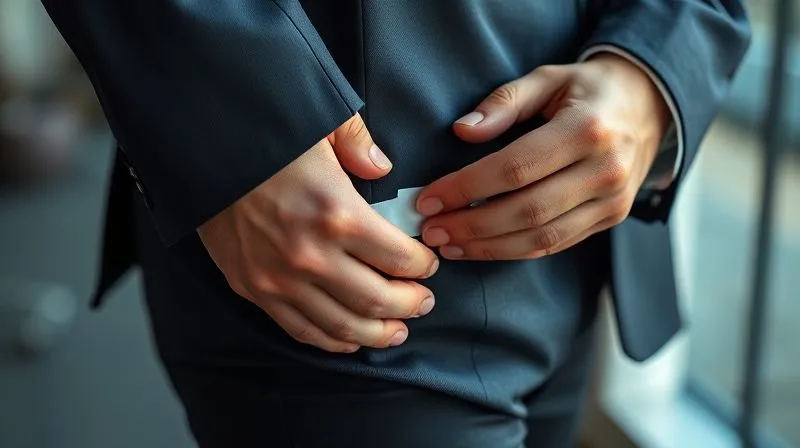
Fix 3: The Gaping Jacket & Waist Snugger
Problem: Your jacket lapels gape away from your chest, or the jacket feels too loose around your waist, losing its tailored shape.
Solution: This requires a bit of finesse but can significantly improve your jacket's silhouette.
- For Gaping Lapels: If the lapels are gapping, it's often due to the chest being slightly too tight or the cut being off. A temporary fix is to use double-sided fashion tape to gently adhere the lapel edge to your shirt or undershirt, just enough to prevent it from flaring out. Be subtle and use small pieces.
- For a Loose Waist: This is trickier without a tailor. If the jacket is only slightly loose, you can sometimes use a large safety pin on the inside seam at the back, pulling the fabric slightly inwards. This is a very temporary and often visible fix if not done perfectly, so use with extreme caution and only if absolutely necessary for minimal looseness.
- Alternative for Waist: A better, albeit more involved, option is to wear a well-fitting waistcoat or vest underneath. This can create a smoother silhouette and subtly take up some of the slack in the jacket, making it appear more fitted.
Fix 4: Button Emergency: The Quick Re-stitch or Substitute
Problem: A button has come loose or, worse, fallen off your jacket or waistcoat. This is a common and highly visible issue.
Solution: If you have a small sewing kit, this is your moment to shine. If not, creative improvisation is key.
- The Quick Re-stitch (if possible): If you have a needle and thread (matching the suit color, ideally), re-sew the button. Use a simple cross-stitch pattern, passing the needle through the button holes and fabric multiple times. Knot securely on the inside. This is the most professional fix.
- The Paperclip/Safety Pin Hack: If no sewing kit is available, find a small paperclip or a sturdy safety pin. Thread it through the button holes and then through the fabric where the button should be, twisting it securely on the inside to hold the button in place. This is a last-ditch effort and will likely be visible upon close inspection, so use it for less critical buttons or if the button is completely missing.
- The Hidden Button Swap: If a crucial front button is missing, consider borrowing one from a less visible part of the suit, like an inside pocket button or a cuff button if it matches.
Fix 5: The "Too Tight" Illusion: Strategic Layering & Posture
Problem: Your suit feels uncomfortably tight, restricting movement and causing wrinkles, perhaps due to a recent weight gain or a suit that has subtly shrunk.
Solution: While you can't magically expand fabric, you can minimize the appearance of tightness and maximize comfort through smart choices.
- Thin Undershirt: Wear the thinnest possible undershirt or skip it altogether if climate permits. Every millimeter counts.
- Posture is Paramount: Stand tall. Slouching will exacerbate tightness across the back and shoulders. Good posture naturally makes a suit appear to fit better and projects immense confidence.
- Strategic Buttoning: If your jacket is too tight when fully buttoned, consider leaving the bottom button undone (a standard sartorial rule anyway) or, if desperate, unbuttoning completely when seated.
- Minimize Movement: Avoid exaggerated movements that highlight the tightness. Move gracefully and deliberately.
“Good posture is the best accessory. It can make an average suit look better, and a great suit look phenomenal.”
Beyond the Fix: Projecting Confidence with Imperfection
Sometimes, despite your best efforts, a suit might still have a minor flaw. This is where your overall presence becomes paramount. A client meeting isn't just about the clothes; it's about your message, your demeanor, and your unwavering confidence. Remember that your suit is a tool, not the entire workshop. Your professionalism, preparation, and passion will always outweigh a minor sartorial hiccup.
Case Study: David's Diplomatic Disaster Averted
David, a senior consultant, was flying to negotiate a critical deal. His luggage, including his tailored suit, arrived late, leaving him with only a backup suit that, unbeknownst to him, had a slightly too-long left sleeve and a small tear in the lining. With just an hour before the meeting, he applied the 'Temporary Cuff' fix with fashion tape and used a tiny safety pin to secure the lining. Knowing he couldn't achieve perfection, he focused intensely on his presentation. He walked into the meeting, made eye contact, and delivered his pitch with such conviction and clarity that the minor suit imperfections were utterly overshadowed. The deal was closed successfully. David later told me, "The fixes gave me enough peace of mind to focus on what truly mattered: my message. My confidence came from my preparation, not just my attire."
“The most perfectly tailored suit in the world cannot compensate for a lack of confidence. Conversely, a confident individual can elevate even a slightly imperfect garment.”
When to Call it Quits: Recognizing Unfixable Flaws
While these emergency fixes are powerful, it's crucial to understand their limitations. Some issues are simply beyond a last-minute patch-up. Knowing when to pivot to a backup option or even consider a different outfit is part of being a strategic professional. Major structural issues, such as shoulders that are grossly too wide or too narrow, a jacket that cannot button at all, or trousers that are impossibly tight in the seat and thighs, are often unfixable on the fly.
In such extreme cases, your best bet is a well-fitting, albeit less formal, backup outfit. A crisp blazer, a sharp pair of tailored trousers, and a well-ironed shirt can often project more professionalism than a severely ill-fitting suit. Always have a backup plan, especially when traveling or for high-stakes events. It’s a lesson I learned early in my career: preparation isn't just about the meeting; it's about anticipating every variable, including your wardrobe.
| Issue | Quick Fix | Professional Tailoring |
|---|---|---|
| Sleeve Length Too Long | Fashion tape/safety pins for temporary cuff | Hemming sleeves from the cuff or shoulder |
| Trouser Hem Too Long | Fashion tape/safety pins for temporary cuff | Proper hemming with blind stitch |
| Jacket Waist Too Loose | Subtle safety pin (risky), wear vest | Taking in side seams/center back seam |
| Lapels Gaping | Fashion tape to shirt | Adjusting chest/shoulder fit |
| Shoulders Too Wide/Narrow | Minimal adjustment, mainly posture | Major recutting, often costly/complex |
| Buttons Missing/Loose | Re-stitch, paperclip, borrow from hidden area | Re-sewing with proper technique |
The Long-Term Game: Investing in Proper Fit for Future Success
While these emergency tactics are lifesavers, they are just that: emergencies. The true solution to 'how to fix a poorly fitting suit before a crucial client meeting?' lies in prevention. Investing in proper fit is not an expense; it's an investment in your personal brand, your confidence, and ultimately, your professional trajectory. A well-tailored suit, one that truly fits your unique physique, speaks volumes about your attention to detail and respect for your craft.
I always advise my clients to foster a relationship with a skilled tailor. A good tailor is an invaluable asset, understanding not just measurements but also how fabric drapes and moves. Regular maintenance, including minor adjustments as your body changes, ensures your suits are always client-meeting ready. Remember, off-the-rack suits are designed for a generic body type; tailoring makes it uniquely yours. Learn more about understanding suit measurements and what to ask your tailor at Art of Manliness' Suit Fit Guide.
Key aspects of investing in proper fit:
- Know Your Measurements: Understand your chest, waist, sleeve, and inseam measurements.
- Buy for the Shoulders: When buying off-the-rack, prioritize shoulder fit. Other aspects are easier to alter.
- Build a Relationship with a Tailor: Find a trusted professional who understands your style.
- Regular Checks: Periodically try on your suits to ensure they still fit well. Bodies change over time.
- Quality Over Quantity: A few perfectly fitting suits are far more valuable than a closet full of ill-fitting ones.

Frequently Asked Questions (FAQ)
Q1: Can I really fix a suit without any sewing skills? Absolutely! Many of the emergency fixes I've outlined, particularly those involving fashion tape or safety pins, require no sewing skills at all. They are designed for rapid, temporary solutions when a tailor isn't an option. The key is precision and discretion in application. While a re-stitched button is ideal, even a paperclip can save the day in a pinch.
Q2: How do I prevent these last-minute disasters from happening again? Prevention is key. Firstly, always try on your suit a few days before a crucial event, not the morning of. Keep a well-stocked emergency kit (as detailed above) in your office or travel bag. Most importantly, invest in regular tailoring and maintenance for your suits. Bodies change, and fabrics can shift, so periodic checks and adjustments by a professional tailor are invaluable.
Q3: What's the most common suit fitting mistake people make? In my experience, the most common mistake is neglecting the shoulder fit. Many men buy jackets that are too wide in the shoulders, thinking 'bigger is better,' or hoping a tailor can easily fix it. Shoulder alterations are complex and expensive. Always buy a jacket that fits perfectly in the shoulders first; sleeve length and waist can be altered much more easily and affordably.
Q4: Is it better to have a suit slightly loose or slightly tight for an emergency fix? Generally, it's easier to temporarily 'take in' a suit that is slightly loose than to effectively 'let out' a suit that is too tight. With a loose suit, you can use pins or tape to create a more fitted silhouette. A suit that is too tight will restrict movement, create unsightly pulling, and is much harder to conceal. When in doubt, err on the side of slightly loose.
Q5: Are rental suits harder to fix than owned suits? Yes, often. Rental suits are designed for a broader range of body types and are less likely to offer the nuanced fit of a tailored garment. They also tend to be made of more durable, sometimes stiffer, fabrics which can be less forgiving for temporary adjustments. Furthermore, altering a rental suit is usually prohibited, so your emergency fixes must be completely non-damaging and reversible.
Key Takeaways and Final Thoughts
Navigating the unexpected challenge of a poorly fitting suit before a high-stakes client meeting can be daunting, but it doesn't have to be a catastrophe. With the right tools, a clear diagnosis, and these expert-approved, rapid-response strategies, you can confidently address most common fit issues and ensure you present your best self.
- Diagnose Quickly: Identify the specific fit issue before attempting a fix.
- Stock Your Kit: An emergency suit survival kit is non-negotiable for professionals.
- Master the Basics: Learn the rapid fixes for sleeves, hems, and minor gapping.
- Prioritize Confidence: Your demeanor and preparation can often overshadow minor sartorial flaws.
- Invest Long-Term: Regular tailoring and proper suit care prevent future emergencies.
Remember, the goal isn't just to look good; it's to feel good, to feel empowered, and to have nothing distracting you from delivering your A-game. A well-fitting suit is a cornerstone of professional presence, and knowing how to swiftly mitigate fit issues is a skill every industry specialist should possess. Walk in prepared, walk in polished, and walk in with the unwavering confidence that you are ready to conquer that meeting. For further reading on business etiquette and professional presentation, I recommend consulting resources like Harvard Business Review or Forbes Leadership sections.
Recommended Reading
- Slash Casual Womenswear Returns: 7 Fit Fixes to Boost Profit
- Unlock the Secret: How to Pick Cute Outfits for Active Kids That Last!
- Beyond Aesthetics: 7 Ways to Inject Narrative into Fashion Editorials
- 7 Proven Ways to Prevent Sensory Overload from Kids' Clothing Tags
- Beat the Shine: The Ultimate Makeup Guide for Oily Skin This Summer





Your email address will not be published. Required fields are marked *