

How to Direct Non-Models for Authentic Street Style Poses?
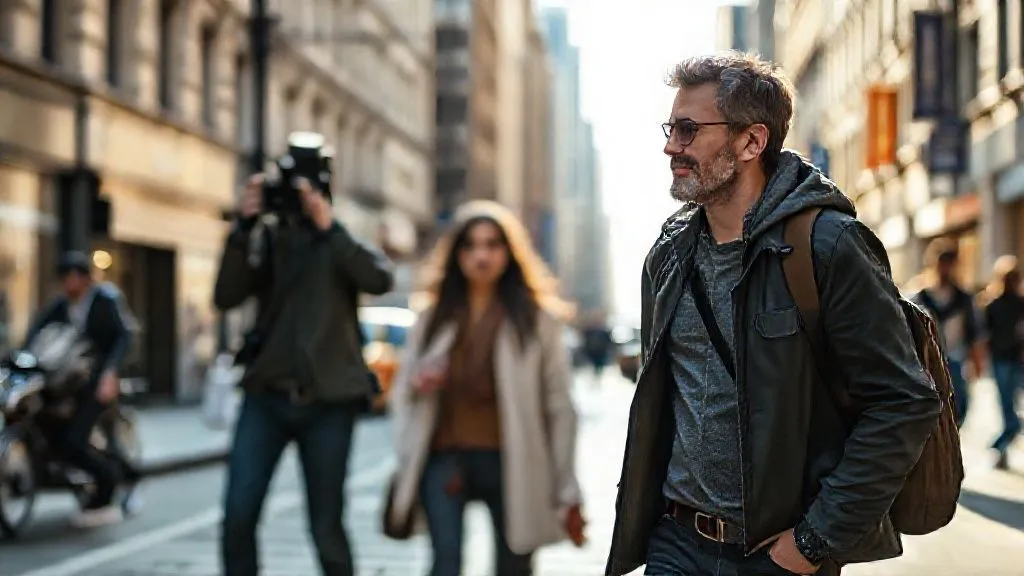
For over two decades immersed in the dynamic world of fashion photography, particularly in the raw, unpredictable realm of street style, I've seen countless aspiring photographers grapple with a fundamental challenge: how to direct non-models for authentic street style poses. It's a common hurdle, often leading to stiff, self-conscious subjects and images that, while technically sound, lack the genuine spontaneity that defines truly compelling street fashion.
The pain point is palpable. You spot someone with incredible style, approach them with excitement, and then, as soon as the camera comes up, their natural swagger evaporates. Their shoulders tense, their smile becomes forced, and their movements rigid. The very authenticity that drew you to them in the first place seems to vanish, leaving both you and your subject feeling a little awkward and disappointed.
But what if I told you there's a proven methodology, a blend of psychological insight and practical direction, that can transform these interactions? In this definitive guide, I'll share the frameworks, actionable techniques, and expert insights I've honed over years of capturing the essence of street style. You'll learn not just what to say, but how to truly connect, guide, and elicit those coveted natural, authentic poses that elevate your street photography from good to unforgettable.
Building Instant Rapport: The Foundation of Natural Poses
Before you even think about camera settings or framing, the single most crucial element in directing non-models for authentic street style poses is building instant rapport. A comfortable subject is a natural subject. This isn't about being their best friend; it's about establishing trust and a relaxed atmosphere in a very short timeframe.
Breaking the Ice: First Impressions Matter
Your initial approach sets the tone for the entire interaction. I've seen photographers make the mistake of being too direct or overly technical from the get-go. Instead, think of yourself as a friendly, appreciative observer.
- Start with genuine compliments: Don't just say 'I like your outfit.' Be specific: 'That jacket is incredible, the way it pairs with your boots is fantastic.' This shows you've truly noticed them.
- Introduce yourself clearly: 'Hi, I'm [Your Name], a street style photographer. I was really struck by your look and was wondering if I could take a couple of quick photos?'
- Explain your purpose briefly: 'I'm documenting interesting fashion on the streets for my blog/portfolio, and your style really stands out.' This legitimizes your request.
- Gauge their comfort level: Pay attention to their body language. Are they open, or do they seem hesitant? Adjust your approach accordingly. If they're busy or uncomfortable, respect that.
- Offer a quick exit: Make it clear they can say no, and that it won't be a long commitment. 'It'll only take a minute or two, no pressure at all if you're in a rush.'
Remember, you're asking for their time and their likeness. A respectful, appreciative approach is key. As Harvard Business Review emphasizes, trust is built on credibility, reliability, and intimacy – even in brief encounters.
Creating a Safe and Comfortable Space
Once they agree, it's your job to maintain that sense of ease. I often compare this to a conversation; you want it to flow naturally, not feel like an interrogation. Keep a light, friendly dialogue going. Ask them about their day, where they found a particular item, or what inspires their style. This humanizes the experience and shifts their focus away from the camera.
The camera can feel like a spotlight, making people freeze. Your voice, your smile, and your genuine interest are the tools that dim that spotlight and let their true self shine through.
Avoid rushing. Give them a moment to settle in. Some people need a minute to adjust to the idea of being photographed. Be patient, reassuring, and always positive.
Mastering the Art of Subtle Direction: Beyond "Smile!"
The most common mistake I see photographers make is direct, literal posing instructions. 'Stand here,' 'Put your hand on your hip,' 'Smile.' While sometimes necessary, these often lead to unnatural, forced results. The secret to authentic street style is subtle, evocative direction.
The Power of Storytelling Prompts
Instead of telling them *what* to do, tell them *what to think* or *what to feel*. This taps into their imagination and natural body language. For example, instead of 'Look at the camera and smile,' try:
- 'Imagine you're waiting for a friend who's just a little late. You're looking down the street, maybe a little impatient but still cool.'
- 'Walk towards me like you've just heard your favorite song playing from a cafe down the block.'
- 'Pretend you're checking your phone for a quick moment, but keep that confident energy.'
- 'Think about your favorite part of this outfit and how it makes you feel when you wear it.'
These prompts give them a scenario to inhabit, allowing their body to respond naturally, rather than forcing a pose. It's about evoking a mood or an action that translates into an authentic posture.
Movement and Interaction: Dynamic Posing
Static poses rarely capture the essence of street style, which is inherently dynamic. Encourage movement. Ask them to walk, to turn, to adjust their bag, to interact with their surroundings. I often say, 'Just keep moving, do what feels natural, and I'll capture the moments.' This takes the pressure off them to hold a perfect pose.
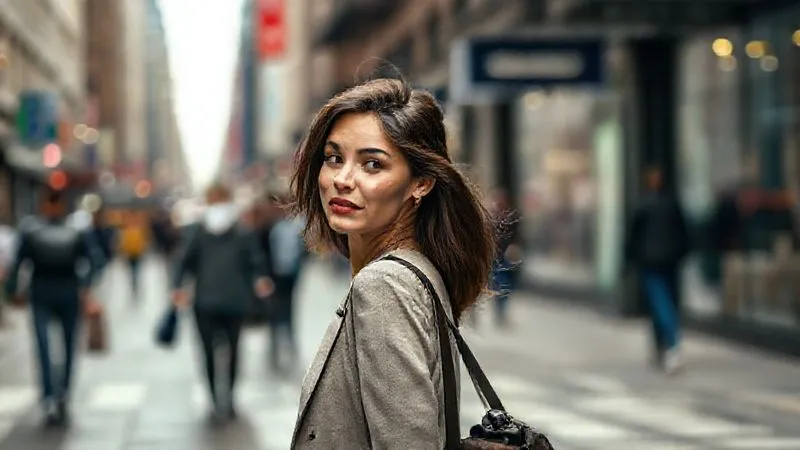
- The 'Walk-By': Ask them to walk past you, looking generally forward, maybe a quick glance towards the camera as they pass.
- The 'Adjust': Ask them to adjust their scarf, tuck their hair behind their ear, or check their watch. These small, everyday actions look incredibly natural.
- The 'Lean': Suggest they lean against a wall, a lamppost, or a railing. This provides support and often creates a relaxed, casual posture.
Focus on capturing the transitions between movements – these are often where the most genuine expressions and natural body language emerge. This is where the magic of authentic street style photography truly happens.
Leveraging Environment and Context for Authenticity
Street style photography isn't just about the person; it's about their interaction with the urban landscape. The environment is your co-director, providing cues and context that enhance authenticity.
Finding the Right Backdrop: More Than Just a Wall
Don't just stick your subject against the first blank wall you see. Look for elements that complement their style or add visual interest without distracting. This could be a vibrant mural, an interesting architectural detail, a busy market, or a quiet, tree-lined street. Ask your subject to interact with these elements.
- 'Can you lean against that textured wall?'
- 'Let's try a few shots with that vintage bike in the background.'
- 'Walk along this colorful street, maybe glance into that shop window.'
These interactions make the photos feel less staged and more like a captured moment from their day. The environment provides a natural stage for their poses.
Incorporating Props and Everyday Objects
People naturally feel more comfortable when they have something to do with their hands. Encourage them to use items they already have: a coffee cup, a phone, a handbag, sunglasses, or even a book. These aren't just props; they're extensions of their personality and everyday life.
For instance, 'Can you take a sip of your coffee and look out at the street?' or 'Adjust your sunglasses as if the sun just came out.' These small actions help them forget the camera and fall into a more natural rhythm.
| Interaction Type | Effect on Pose | Example Prompt |
|---|---|---|
| Environmental Lean | Relaxed, casual, grounded | Lean against that brick wall, hands in pockets. |
| Object Use (Phone) | Engaged, thoughtful, natural hand placement | Check your phone as if you just got a text, looking curious. |
| Movement (Walking) | Dynamic, energetic, authentic stride | Walk towards me, looking slightly to the side. |
| Observation | Pensive, contemplative, natural gaze | Look across the street as if you're waiting for something interesting to happen. |
The Psychology of the Candid Shot: Making Them Forget the Camera
The holy grail of street style photography is the truly candid moment, even when you're directing. This requires a bit of psychological finesse, making your subject forget they're being photographed.
The "Distraction Technique" Explained
This is one of my go-to methods. Once you've established a comfortable rapport, start taking test shots or even talk them through a pose, but then shift your focus slightly. For example, you might say, 'Okay, great! Now, just for a moment, look over there [point to a distant, non-threatening object], thinking about what you're having for dinner tonight.' While they're genuinely distracted by their thoughts, you quickly capture a few frames.
Another variation is to have them do a simple, repetitive action, like walking back and forth a few times. After the first couple of passes, they often relax, and you can capture more natural expressions during the subsequent passes. The key is to break their focus on the lens.
Anticipation and Timing: Capturing the In-Between Moments
As a photographer, your job isn't just to direct; it's to observe. The most authentic moments often happen in the 'in-between' – the split second before they fully complete a movement, or the brief pause after a laugh. These are the moments where self-consciousness drops.
Patience is not just a virtue in street photography; it's a strategic tool. Wait for the breath, the glance, the subtle shift that reveals true character. The best shots are often those you didn't explicitly ask for.
Keep your camera ready and your finger on the shutter. Shoot in bursts if your camera allows. It's better to have too many frames and edit down than to miss that one perfect, fleeting expression.
Feedback and Refinement: Guiding Without Over-Posing
Once you start shooting, your direction shifts from broad prompts to subtle refinements. This iterative process is crucial for achieving the best results without making your subject feel like a puppet.
Positive Reinforcement: Boosting Confidence
Constantly tell your subject what you like. 'That's it, that head tilt was perfect!' or 'Love the way you just adjusted your bag, keep that natural movement!' Positive feedback builds their confidence and encourages them to continue offering natural expressions and movements. It also makes them feel like a valued collaborator, not just a subject.
Avoid negative feedback like 'Don't do that.' Instead, reframe it: 'Could you try this instead?' or 'Let's try a different angle for that.' Keep the energy light and encouraging.
Subtle Adjustments: The Art of Nuance
Sometimes, a slight tweak can make all the difference. Instead of saying, 'Straighten your back,' you might say, 'Imagine there's a string pulling you gently upwards from the top of your head.' Instead of 'Put your hand on your hip,' try 'Just casually rest your hand where it feels natural.' These subtle cues guide them without making them feel overly posed.
I often demonstrate a movement myself, not for them to mimic perfectly, but to convey the *feeling* or *energy* I'm looking for. This visual cue can be far more effective than verbal instructions alone.
Case Study: Maria's Transformation from Stiff to Street Style Star
How I Helped Maria Unleash Her Inner Model
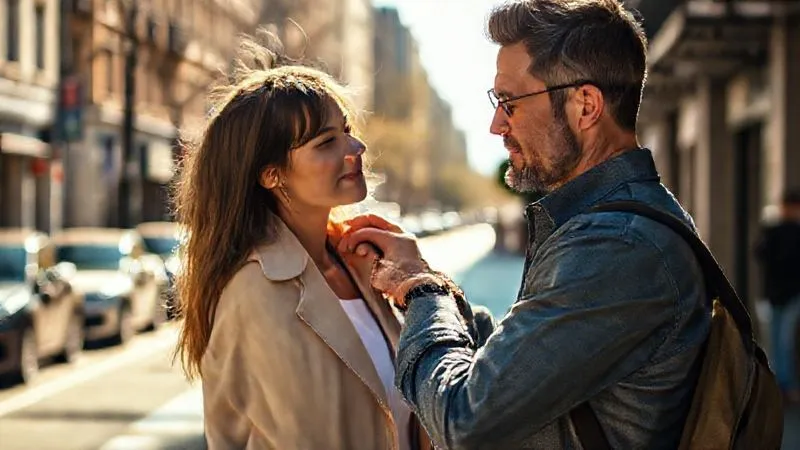
I recall a session with Maria, a vibrant young woman with an incredibly unique, eclectic style. When I first approached her, she was thrilled but instantly froze once the camera was pointed her way. Her shoulders were hunched, her smile was rigid, and her movements were hesitant. She was clearly uncomfortable, and the photos were showing it.
I started by putting my camera down for a moment. 'Maria,' I said, 'your style is so expressive. What's the story behind that amazing vintage coat?' We chatted for a few minutes about her love for thrift stores and how she mixes eras. This immediately relaxed her. Then, instead of asking her to pose, I used a storytelling prompt: 'Imagine you're walking to meet a friend at your favorite cafe, and you're just a little early, so you're enjoying the walk and the city around you.' I then encouraged her to walk slowly, glance at shop windows, and even adjust her scarf as if it were a bit chilly.
During her walk, I noticed she had a habit of nervously touching her hair. Instead of correcting it, I encouraged it: 'That's a great gesture, Maria, keep that natural movement!' I also used the distraction technique, asking her to look at a distant building and 'think about the best dessert you've ever had.' While she was genuinely lost in thought, I captured several frames of her looking pensive and completely unselfconscious.
The result? The first few shots were stiff, but within 10 minutes, Maria was moving fluidly, her expressions were genuine, and her unique personality shone through every frame. We captured a series of truly authentic street style poses that perfectly showcased her style and spirit. This experience reinforced my belief that understanding human behavior and employing empathetic, subtle direction is far more powerful than any technical camera trick when working with non-models.
Technical Considerations: Gear, Light, and Angles for Authenticity
While directing is paramount, your technical choices also play a significant role in enhancing the authenticity of your street style images. The right gear and approach can make your subjects feel more at ease and help capture their true essence.
Choosing the Right Lens for Street Photography
I typically opt for prime lenses in the 35mm to 50mm range (on full-frame). These focal lengths are close to the natural human field of vision, making the resulting images feel more intimate and less distorted than wider or telephoto lenses. A prime lens also forces you to move and interact more with your subject and environment, which can lead to more dynamic compositions.
- 35mm: Excellent for environmental portraits, capturing the subject within their context.
- 50mm: Ideal for tighter portraits, offering beautiful background separation and a classic, natural perspective.
Using a fast prime (e.g., f/1.4 or f/1.8) allows you to shoot in lower light and create that desirable shallow depth of field, isolating your subject from a busy background without making them feel overly exposed.
Harnessing Natural Light for Depth and Mood
Street style thrives on natural light. Avoid harsh midday sun if possible, as it creates unflattering shadows. The 'golden hour' (shortly after sunrise or before sunset) provides warm, soft, directional light that's incredibly flattering. Overcast days also offer beautiful, diffused light that minimizes harsh shadows and highlights skin tones evenly.
Always try to position your subject so that the light illuminates their face and outfit effectively. Backlighting can create dramatic halos, but ensure there's enough fill light on their front to avoid silhouetting. Understanding how light falls and shapes your subject is critical for creating depth and mood.
Perspective Play: Unique Angles for Impact
Don't just shoot from eye level. Experiment with different angles to add dynamism and interest to your photos. Shooting slightly from above can make a subject appear more grounded and can emphasize their outfit from head to toe. Shooting from a lower angle can make them appear more powerful and statuesque.
Get down on one knee, climb a few steps, or shoot through elements like railings or windows to add layers and a sense of voyeurism that enhances the 'street' feel. A unique perspective can transform an ordinary pose into an extraordinary image, making it feel less like a posed portrait and more like a stolen moment.
Ethical Considerations: Respect and Consent in Street Photography
As an experienced industry specialist, I cannot overstate the importance of ethics. When you're approaching strangers to photograph them, you're entering their personal space. Respect and consent are non-negotiable pillars of this practice.
Building Trust: Always Ask Permission (When Appropriate)
While some street photographers prefer a purely candid, 'shoot first, ask later' approach, when you are *directing* non-models, permission is paramount. You are engaging them, asking for their time, and guiding their actions. Therefore, always ask for their explicit consent before you begin shooting.
Clearly state what you intend to do with the photos (e.g., 'for my blog,' 'for a project'). If you plan to submit them to publications or use them commercially, you absolutely *must* obtain a signed model release. Transparency builds trust, and trust is the foundation for authentic interaction.
The Fine Line: Candid vs. Invasive
Even with permission, be mindful of how your subject feels. If they seem uncomfortable at any point, offer to stop. Never push or coerce. The goal is to capture their authentic style, not to make them feel exploited or objectified. Maintain a friendly, professional demeanor throughout the entire process.
Remember that you are a guest in their day. Treat them with the same respect you would want to receive. This ethical approach not only protects you legally but, more importantly, fosters a positive reputation and genuinely enjoyable interactions.
| Consideration Area | Best Practice | Ethical Pitfall to Avoid |
|---|---|---|
| Initial Approach | Politely introduce yourself, state purpose, ask for permission. | Taking photos without asking, being overly aggressive. |
| During Shoot | Maintain friendly dialogue, provide positive reinforcement, respect personal space. | Making subject uncomfortable, giving negative feedback, over-directing. |
| Post-Shoot | Thank them sincerely, offer to share photos (if agreed), obtain model release for commercial use. | Using images commercially without consent, sharing unflattering photos. |
| General Respect | Prioritize subject's comfort over 'the shot'. | Objectifying or exploiting subjects for personal gain. |
Common Pitfalls and How to Avoid Them
Even with the best intentions, it's easy to fall into traps that undermine your efforts to capture authentic street style poses. Recognizing these pitfalls is the first step to avoiding them.
Over-Directing: The Authenticity Killer
This is perhaps the biggest mistake. You want to guide, not dictate. If you're giving a constant stream of highly specific instructions ('Move your left foot forward, tilt your head exactly 15 degrees, now look at that specific spot'), you're going to get a robot, not a person. The beauty of street style is its inherent imperfection and spontaneity.
My advice: Give a general direction, then let them interpret it. Observe how they respond, and only offer slight, gentle refinements. Trust their natural instincts. As marketing guru Seth Godin often reminds us, the best leaders empower others, not micromanage them.
Ignoring Body Language Cues
Your subject's body language is a constant stream of feedback. Are their shoulders tensing up? Are they avoiding eye contact? Are they fidgeting? These are all signals that they might be uncomfortable or unsure. A good director reads these cues and adjusts their approach instantly.
If you see signs of discomfort, take a brief pause. Reassure them. Change your prompt. Maybe even shift to a different location or angle. Being attuned to their non-verbal communication is critical for maintaining a relaxed atmosphere.
The Rush to Perfection: Embracing Imperfection
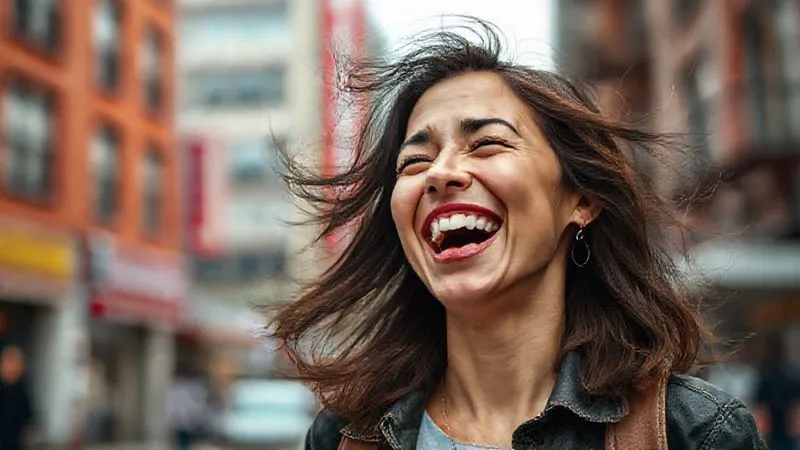
Street style isn't about perfectly polished, studio-quality shots. It's about capturing a moment, a vibe, an attitude. Sometimes, a slightly messy hair strand, a candid laugh mid-sentence, or an imperfectly buttoned jacket adds more character and authenticity than a 'perfect' pose.
Don't be afraid of the 'imperfections' – they often make the photo real and relatable. Embrace the raw, unpolished nature of street photography. Your goal is to capture their style and personality, not to create a flawless fashion editorial.
Frequently Asked Questions (FAQ)
Q: What if someone says no to being photographed? A: Always respect their decision immediately and gracefully. A simple 'No problem at all, thanks for your time!' is sufficient. Never push or try to convince them. There are plenty of other stylish people out there. Maintaining a positive attitude, even after rejection, is key for your own morale and reputation.
Q: How do I handle awkward silences during the shoot? A: Awkward silences can make subjects uncomfortable. Keep a light, continuous dialogue going. You don't need to talk constantly, but offer frequent positive feedback, ask open-ended questions about their style or interests, or even make observations about the surroundings. Sometimes, a simple 'You're doing great!' is enough to fill the space and reassure them.
Q: Should I show them the photos on my camera during the shoot? A: I generally advise against it during the actual shooting process. Showing them photos can make them overly self-conscious or critical, leading to more stiffness. It's better to keep their focus on the present moment and your direction. You can offer to send them a few final edited shots afterward if they're interested.
Q: How long should a street style shoot with a non-model typically last? A: Keep it brief and respectful of their time. For non-models, 5-10 minutes is usually ideal to capture a good range of shots without making them feel burdened. If they're particularly enjoying it and have time, you can extend it slightly, but always be mindful of their schedule. Efficiency and a quick turnover are appreciated.
Q: What's the best way to get natural eye contact from a non-model? A: Instead of directly asking them to 'look at the camera,' try a more conversational approach. Say 'Look at me for a second, just like we're chatting,' or 'Give me a quick glance.' Sometimes, asking them to look *just past* your shoulder can also create a softer, more natural gaze. Capture those moments quickly, as direct eye contact can feel intense for non-models.
Key Takeaways and Final Thoughts
- Rapport is paramount: Prioritize building comfort and trust through genuine compliments and clear communication.
- Direct subtly, not overtly: Use storytelling prompts and encourage natural movement rather than rigid poses.
- Leverage the environment: Integrate surroundings and everyday objects to add authenticity and provide natural actions.
- Embrace the candid: Employ distraction techniques and anticipate 'in-between' moments to capture genuine expressions.
- Provide positive, gentle feedback: Boost confidence and make subtle adjustments without over-directing.
- Be ethically sound: Always ask for permission, respect boundaries, and prioritize your subject's comfort.
- Focus on connection: Your ability to connect with people is as important as your photographic skill.
Mastering how to direct non-models for authentic street style poses is not just about technical skill; it's an art of human connection, empathy, and subtle guidance. It requires you to be a photographer, a psychologist, and a storyteller all at once. By applying these expert techniques, you'll not only capture stunning, genuine street style images but also create memorable, positive experiences for everyone involved. Step out with confidence, engage with genuine interest, and let the authenticity of the street be your muse. Your next iconic shot is just a conversation away.
Recommended Reading
- Unlock Your Star Style: How to Choose Celebrity Eyewear for Your Face Shape
- Unlock Unpaid Editorial: Luxury Fashion's Strategic Guide
- 7 Steps: Verify Sustainable Jewelry Material Sourcing Claims Effectively
- 7 Steps to Reliably Verify Vintage Designer Handbag Authenticity
- 7 Proven Steps: Authenticate Rare Designer Vintage from Thrift Stores


Your email address will not be published. Required fields are marked *