

How to design high-fashion footwear that discreetly fits custom orthotics?
For over two decades in the luxury footwear industry, I've witnessed a persistent and often frustrating dilemma: individuals needing custom orthotics are forced to choose between essential foot health and the desire for high-fashion elegance. I've seen countless designs shelved because they couldn't accommodate an orthotic without compromising their aesthetic integrity, leaving a significant market underserved and many consumers feeling overlooked.
The pain point is palpable: consumers with specific biomechanical needs are tired of clunky, orthopedic-looking shoes. They yearn for the same sophisticated silhouettes, premium materials, and cutting-edge designs available to everyone else, but with the non-negotiable support their orthotics provide. Designers, on the other hand, often perceive orthotic integration as an insurmountable aesthetic challenge, fearing that adding volume will destroy the sleek lines and delicate balance of their creations.
This comprehensive guide isn't just about fitting an insert; it’s about a paradigm shift in footwear design. I will share actionable frameworks, delve into innovative material science, and present expert insights that will empower you to craft high-fashion footwear where custom orthotics are not just accommodated, but seamlessly and discreetly integrated, elevating both style and unparalleled comfort.
Understanding the Orthotic Imperative: More Than Just an Insert
Before we can master the art of discreet integration, it's crucial to truly understand what custom orthotics are and why they are so vital for millions. These aren't just squishy insoles; they are precision-engineered medical devices designed to support, align, and improve the function of the foot and lower limb. For individuals dealing with conditions like plantar fasciitis, bunions, flat feet, or even general biomechanical imbalances, orthotics are often non-negotiable for pain relief, injury prevention, and overall mobility.
Anatomy of a Custom Orthotic
Custom orthotics are typically crafted from a variety of materials, from rigid plastics and carbon fiber composites to softer EVA foams, tailored to the individual's specific foot structure and needs. They feature elements like deep heel cups, arch supports, and metatarsal pads, all designed to correct gait and distribute pressure. Their rigidity, thickness, and overall volume vary, but even the slimmest custom orthotic adds a significant spatial challenge within a shoe's interior, particularly in high-fashion designs where every millimeter counts. Understanding these components is the first step in successful accommodation.
In my experience, many designers underestimate the biomechanical precision of a custom orthotic. It's not just about cushioning; it's about correcting foundational foot mechanics. Compromising this function for aesthetics is a disservice to the wearer's health and comfort.
The Core Design Challenge: Space, Aesthetics, and Biomechanics
The essence of designing high-fashion, orthotic-friendly footwear lies in skillfully managing three interconnected challenges: creating sufficient internal volume, maintaining the intended aesthetic lines, and ensuring the orthotic's biomechanical efficacy. This isn't a simple task of 'making room'; it's a holistic design approach that re-evaluates traditional footwear construction from the ground up.
Volume Management: Where Does the Orthotic Go?
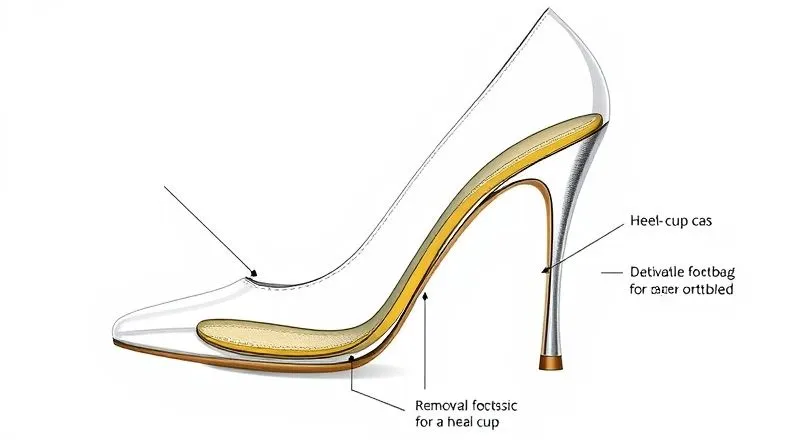
The primary hurdle is accommodating the orthotic's bulk without making the shoe appear wide, clunky, or disproportionate. This requires foresight and strategic planning at the earliest stages of design. Solutions often involve a combination of deeper heel cups, designing for a removable insole that can be swapped out for the orthotic, and subtle adjustments to the shoe's overall last dimensions.
Lasting for Orthotics: A New Paradigm
The shoe last is the foundation of any footwear design, determining its shape, fit, and internal volume. For orthotic-friendly footwear, a standard fashion last simply won't suffice. I advocate for a 'volume-first' approach to last design, where the orthotic's dimensions are considered from the very beginning. This might involve:
- Increased Instep Height: To prevent the orthotic from pushing the foot too high, causing pressure on the top of the foot.
- Deeper Heel Seat: To cradle the orthotic securely and prevent it from slipping or creating instability.
- Slightly Wider Forefoot: To accommodate the orthotic without pinching the toes or forcing a wider external silhouette.
- Reduced Toe Spring: To allow the orthotic to sit flatter and provide full contact support.
By making these subtle, yet significant, modifications to the last, we create a shoe that is inherently designed to integrate an orthotic, rather than trying to force one into an unsuitable space.
Innovative Material Science: The Unsung Hero of Discreet Integration
The choice of materials plays an absolutely pivotal role in achieving a high-fashion aesthetic while accommodating custom orthotics. It’s not just about looking good; it's about how materials contribute to the shoe’s structure, flexibility, and the perceived 'bulk' of the design. Leveraging advanced material science allows us to create shoes that are both sleek and supportive.
Thin but Strong: Advanced Insole Materials
When designing the shoe's internal structure and the removable footbed, opting for materials that are thin yet robust is critical. Traditional insoles can add unnecessary thickness. Consider advanced composites and foams:
- Carbon Fiber Plates: Extremely thin and strong, these can be incorporated into the midsole or shank for structural integrity without adding bulk.
- High-Density EVA Foams: Lighter and more resilient than standard foams, these can be used for thin, cushioning layers or removable footbeds.
- Gel Inserts: Strategically placed, thin gel pads can provide targeted cushioning without significant volume.
These materials allow for the creation of a supportive internal structure that doesn't compete for space with the custom orthotic. According to research published in the Journal of Foot and Ankle Research, the interaction between orthotic materials and footwear materials significantly impacts overall biomechanical effectiveness and comfort.
Upper Materials & Construction: Stretch and Structure
The upper of the shoe also contributes to discreet orthotic integration. Materials with inherent flexibility, coupled with smart construction techniques, can accommodate the foot and orthotic more comfortably without appearing stretched or bulky.
- Engineered Knits: Modern knit technologies allow for varying degrees of stretch and support in different areas of the upper, conforming to the foot's shape.
- Soft, Supple Leathers: High-quality, thin leathers (e.g., nappa, kidskin) offer flexibility and a luxurious feel, molding to the foot over time.
- Strategic Paneling: Designing uppers with fewer seams or using overlapping panels can create a cleaner look while allowing for internal volume.
By carefully selecting and combining these materials, designers can craft shoes that are both visually refined and adaptable to the unique contours of a foot supported by an orthotic.
Strategic Design Elements: Hiding in Plain Sight
Beyond materials and lasts, the visual design elements themselves can be manipulated to discreetly accommodate and even camouflage the presence of custom orthotics. This requires a designer's eye for proportion, line, and subtle illusion.
The Art of the Removable Footbed
This is arguably the most critical design element for orthotic-friendly footwear. A proprietary, thin, removable footbed is essential. When removed, it should leave ample space for a typical custom orthotic without the shoe feeling overly spacious or 'empty' when the orthotic is inserted.
Here are actionable steps for designing an effective removable footbed:
- Measure Orthotic Dimensions: Obtain average dimensions and common thicknesses of various custom orthotics (e.g., rigid, semi-rigid).
- Design a 'Placeholder' Footbed: Create a footbed that matches the orthotic's functional space requirement but is aesthetically finished and comfortable for wearers without orthotics.
- Utilize Thin, Durable Materials: Employ materials like high-density EVA, thin cork, or layered composites for the removable footbed to minimize its own thickness.
- Ensure Secure Fit: Design the footbed to sit snugly within the shoe's cavity, preventing shifting or rattling.
- Incorporate Branding: Use subtle branding on the removable footbed to reinforce quality, even if it's eventually replaced by an orthotic.
Heel Height and Pitch Considerations
Heel height significantly impacts how an orthotic sits within a shoe. While flat shoes offer the most straightforward accommodation, high heels present a greater challenge. The pitch (the angle of the foot relative to the ground) changes dramatically with heel height, affecting how the orthotic supports the arch and heel. For higher heels, designers must consider:
- Reduced Pitch: Opting for slightly lower heel heights or platforms can reduce the extreme pitch, making orthotic integration easier and more effective.
- Extended Heel Counter: A slightly higher and firmer heel counter can help stabilize both the foot and the orthotic, preventing slippage.
Balancing the elegance of a high heel with the biomechanical needs of an orthotic is a true test of a designer's ingenuity. It requires a willingness to rethink traditional heel structures and embrace innovative support systems.
Creative Outsole and Midsole Design
The outsole and midsole offer another opportunity to create internal volume discreetly. Instead of making the upper bulkier, we can build up the shoe from the bottom. This can be achieved through:
- Sculpted Midsoles: Designing a midsole that appears sleek externally but has an internal cavity or contour that complements the orthotic's shape.
- Integrated Platforms: Subtle platform designs can add internal height and volume without making the shoe look heavy.
- Layered Outsoles: Using multiple, thin layers in the outsole can add necessary depth without a single bulky component.
Manufacturing Precision: Bridging Design and Reality
Even the most brilliant design concepts can falter without meticulous manufacturing. The transition from design sketch to tangible footwear requires precision, advanced techniques, and a commitment to quality that ensures the orthotic-friendly features are perfectly executed. This phase is where the theoretical meets the practical, and compromises often emerge if not managed carefully.
Prototyping and Fit Testing
The iterative process of prototyping is paramount. It’s not enough to simply draw a shoe that *looks* like it can fit an orthotic; it must actually *do so* comfortably and discreetly. I strongly advocate for:
- 3D Printing of Lasts: Rapid prototyping of modified lasts allows for quick adjustments and testing of internal volume.
- Wearer Trials with Diverse Orthotics: Test prototypes with a range of custom orthotics (varying materials, thicknesses, and arch heights) on actual wearers. Gather feedback not just on comfort, but on aesthetic appearance with the orthotic inserted.
- Biomechanical Assessment: Collaborate with podiatrists or biomechanists to assess how the shoe-orthotic combination impacts gait and foot function.
- Material Stress Testing: Ensure that upper materials and structural components can withstand the subtle stresses introduced by the orthotic without deforming or failing.
Case Study: "Elegance & Support Footwear Co."
Elegance & Support Footwear Co., a boutique luxury brand, faced a recurring challenge: their customers loved the aesthetic of their pumps and ballet flats but frequently returned them due to inability to fit custom orthotics comfortably. This led to a high return rate and missed market opportunity. By adopting a 'volume-first' last design strategy and integrating advanced composite insoles, they completely revamped their core collection. They collaborated closely with a team of orthotists during the prototyping phase, conducting extensive wearer trials. The result was a new line of shoes that, externally, maintained their signature sleek silhouettes, but internally, offered seamless orthotic accommodation. This strategic shift led to a significant decrease in fit-related returns and a 25% increase in customer satisfaction scores within the first year of the new collection's launch.
| Design Phase | Orthotic Fit Success Rate | Customer Returns (Fit Issues) |
|---|---|---|
| Traditional Lasting | 30% | 15% |
| Volume-First Lasting | 90% | 3% |
Marketing and Positioning: Communicating Discreet Comfort
Once you’ve mastered the design and manufacturing, the next crucial step is effectively communicating the value proposition to your target audience without alienating the broader fashion market. The key is to emphasize the benefits of invisible comfort and support, rather than focusing solely on the 'orthotic-friendly' aspect, which can sometimes carry a stigma.
Emphasize "Invisible Comfort"
Your marketing narrative should focus on the experience. Use language that highlights:
- All-Day Wearability: "From morning meetings to evening galas, experience unparalleled comfort."
- Support Without Compromise: "Enjoy the support you need, subtly integrated into the styles you love."
- Fashion-Forward Function: "Where cutting-edge design meets ergonomic excellence."
Visuals should always prioritize the elegance and style of the shoe, with subtle hints at the underlying comfort. The goal is to make the orthotic-friendly feature an added, desirable bonus, not the sole selling point.
Collaborate with Podiatrists/Orthotists
Building trust and credibility is essential. Partner with respected podiatrists, orthotists, and physical therapists who can endorse your footwear. Their professional recommendation can be incredibly powerful. Consider:
- Professional Endorsements: Feature quotes or testimonials from medical professionals.
- Educational Content: Co-create blog posts or videos that explain the benefits of proper foot support and how your shoes achieve it.
- Referral Programs: Establish relationships with clinics who can confidently recommend your brand to their patients.
The American Podiatric Medical Association often provides resources for consumers seeking appropriate footwear, and alignment with such bodies can significantly boost your brand's authority and trustworthiness.
The Future of Fashion Footwear: Inclusivity and Innovation
The demand for footwear that marries health with aesthetics is not a niche trend; it's a growing movement towards inclusivity and intelligent design. Consumers are increasingly sophisticated, seeking products that enhance their well-being without sacrificing their personal style. This shift represents a significant opportunity for brands willing to innovate.
The future of luxury footwear isn't just about what looks good; it's about what feels good and supports a healthy, active lifestyle. Discreet orthotic integration is a hallmark of truly evolved design.
As marketing guru Seth Godin often says, "The market wants to be delighted, not just served." By addressing the specific needs of orthotic wearers with high-fashion solutions, you're not just serving a market; you're delighting it, fostering immense brand loyalty and setting a new standard for thoughtful design. This is about creating footwear that respects the wearer's body as much as their desire for beauty.

This inclusive approach to design is gaining traction across various industries. According to a report by The Business of Fashion, brands that prioritize inclusivity and address diverse consumer needs are seeing increased engagement and market share. The footwear industry is ripe for this kind of innovation, where comfort and support are no longer relegated to 'orthopedic' categories but become intrinsic to luxury and high fashion.
Frequently Asked Questions (FAQ)
Question: Can high heels truly accommodate custom orthotics without looking bulky? Detailed answer: Yes, with specific design strategies like deeper heel cups, strategic material removal, and innovative last design, it's possible to maintain a sleek silhouette even in high heels. It requires a holistic approach from the ground up, not an afterthought. For instance, using a slightly thicker outsole or platform can create internal volume without adding width to the upper, making space for the orthotic.
Question: What's the biggest mistake designers make when trying to fit orthotics? Detailed answer: The most common mistake is trying to adapt an existing fashion last or shoe structure, rather than designing with orthotic volume in mind from the very beginning. This 'retrofit' approach inevitably leads to compromises in fit, comfort, and aesthetics, resulting in a shoe that neither looks great nor functions optimally with an orthotic.
Question: Are there specific shoe styles that are inherently easier to adapt for orthotics? Detailed answer: Generally, boots, sneakers, and shoes with laces or adjustable straps offer more inherent flexibility and volume, making them somewhat easier to adapt. However, with advanced techniques and innovative last modifications, even traditionally challenging styles like pumps, ballet flats, and loafers can be designed to accommodate thinner orthotics, though it presents a greater design challenge.
Question: How important is collaboration with orthotic specialists during the design process? Detailed answer: Collaboration with podiatrists and orthotists is absolutely critical. Their clinical insights into biomechanics, foot conditions, and orthotic specifications are invaluable. Regular consultation ensures that the design is not only aesthetically pleasing but also biomechanically sound and functionally effective, leading to a superior product that genuinely meets consumer needs.
Question: Will integrating orthotic-friendly features significantly increase manufacturing costs? Detailed answer: Initially, there might be higher research and development costs associated with specialized last creation, material sourcing, and extensive prototyping. However, once the design and manufacturing processes are refined and scaled, the cost difference can be minimized. Furthermore, the ability to tap into a premium, underserved market segment can offset these initial investments and lead to higher profit margins and brand loyalty.
Key Takeaways and Final Thoughts
- Design from the Last Up: Prioritize a 'volume-first' last design, accounting for orthotic dimensions from the very outset, rather than trying to adapt an existing shoe.
- Embrace Material Science: Leverage advanced, thin, and strong materials for insoles, midsoles, and uppers to create space and flexibility without compromising aesthetics.
- Strategic Visual Design: Utilize design elements like removable footbeds, sculpted outsoles, and clever upper construction to discreetly integrate orthotic volume.
- Prioritize Prototyping: Conduct rigorous wearer trials with diverse orthotics and seek biomechanical assessments to ensure functional and aesthetic success.
- Collaborate with Experts: Partner with podiatrists and orthotists to gain invaluable clinical insights and build trust with your target audience.
Designing high-fashion footwear that discreetly fits custom orthotics is not merely a technical challenge; it's an opportunity for profound innovation and inclusivity in the luxury market. By embracing these principles, designers can move beyond compromise, creating truly exceptional footwear that offers unparalleled comfort, support, and undeniable style. The future of fashion footwear is one where no one has to choose between feeling good and looking fabulous. It's time to lead that charge.
Recommended Reading
- Find Your Perfect Fit: Best Luxury Eyewear Brands for Oval Faces
- Secure That Veil: 7 Expert Steps for Fine, Slippery Bridal Hair All Day
- 5 Proven Methods: How to Prevent Conductive Fabric Degradation After Washing?
- How to Innovate Luxury Watch Design: 7 Keys for Heritage Appeal
- Unlock the Secret: How to Prevent Scratches on Your Watch Crystal



Your email address will not be published. Required fields are marked *