

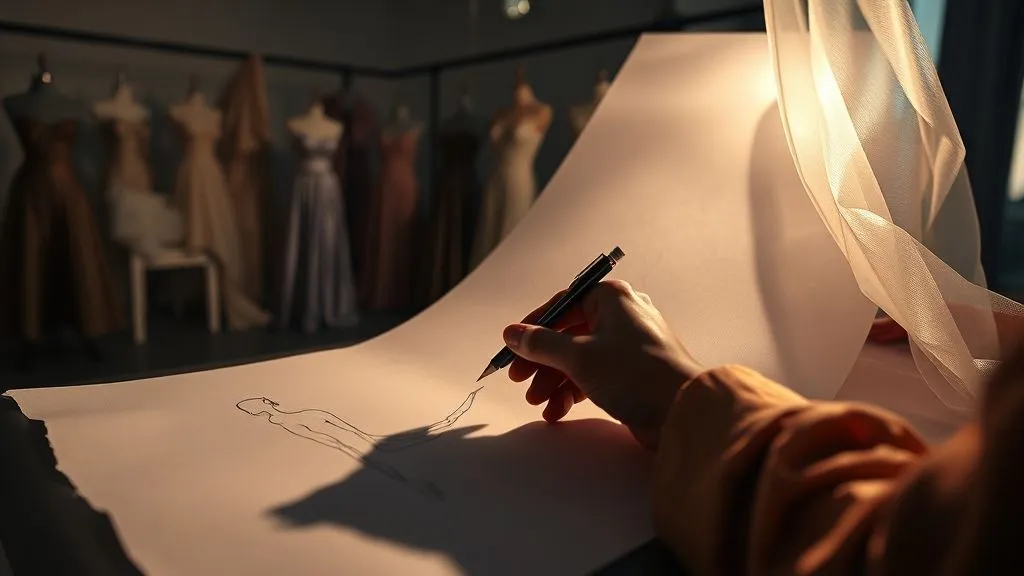
How to Conceptualize Unique Haute Couture Silhouettes That Redefine Form?
For over two decades in the exclusive world of haute couture, I've had the privilege of witnessing – and contributing to – moments where fashion truly transcended clothing to become art. I've seen countless designers grapple with the immense pressure to innovate, to create something genuinely novel, something that doesn't just adorn the body but redefines its very perception. The allure of the new, the desire to leave an indelible mark on the fashion landscape, is a powerful driving force.
Yet, the blank canvas of a new collection can often feel daunting. The challenge isn't merely to design a beautiful garment; it's to break free from conventional forms, to challenge established proportions, and to articulate a fresh aesthetic vision. Many struggle with moving beyond variations of existing silhouettes, fearing that true experimentation might lead to impracticality or, worse, a lack of cohesive vision. This stagnation, this creative block, is a problem I've seen hinder even the most talented individuals.
This article isn't just a guide; it's a mentorship distilled from years of experience. I'm going to share a systematic framework, a conceptual toolkit, if you will, that will empower you to conceptualize unique haute couture silhouettes that genuinely redefine form. We'll delve into actionable strategies, draw inspiration from diverse fields, and explore the technical mastery required to bring these visionary shapes to life. Prepare to transform your approach to design, moving from mere creation to true innovation.
Deconstructing the Canvas: Understanding Form and Void
Before we can redefine form, we must first understand it. In my experience, many designers jump straight to sketching without truly analyzing the foundational elements of a silhouette. It's not just about the outer line; it's about the interplay of mass and space, the tangible and the intangible.
The Anatomy of a Silhouette
Every silhouette, no matter how complex, can be broken down into fundamental elements: line, shape, volume, and texture. The external contour is merely the most obvious expression. True mastery lies in understanding how internal structures, fabric manipulation, and even the wearer's movement contribute to the overall perceived form. Think of it as an architectural blueprint for the body.
Negative Space as a Design Element
One of the most profound lessons I've learned is the power of negative space. The areas *around* the garment, the voids and absences, are just as crucial as the solid forms. By consciously designing these spaces – through cut-outs, strategic openings, or gaps created by exaggerated volume – you can create a dynamic dialogue between the body and the garment, making the void an active participant in the silhouette's narrative.
To begin conceptualizing truly unique forms, I advocate for a multi-layered analytical approach:
- Analyze Existing Forms: Select 5-10 iconic haute couture silhouettes from different eras. Don't just admire them; deconstruct them. Sketch their underlying geometric structures, identify their primary lines (A-line, hourglass, column), and note how volume is distributed.
- Identify Their Voids: For each analyzed silhouette, consciously outline the negative space created around the body. Where does the fabric pull away? Where does it cling? How does this interplay contribute to the form's character?
- Isolate Key Elements: Can you abstract a single line, a particular curve, or a specific volume from these forms that resonates with you? How might you exaggerate, invert, or multiply this element to create something new?
- Experiment with Draping in Reverse: Instead of draping fabric to fit a body, try draping it to *create* a specific negative space. What happens when you focus on the void first, allowing the fabric to fall where it must?
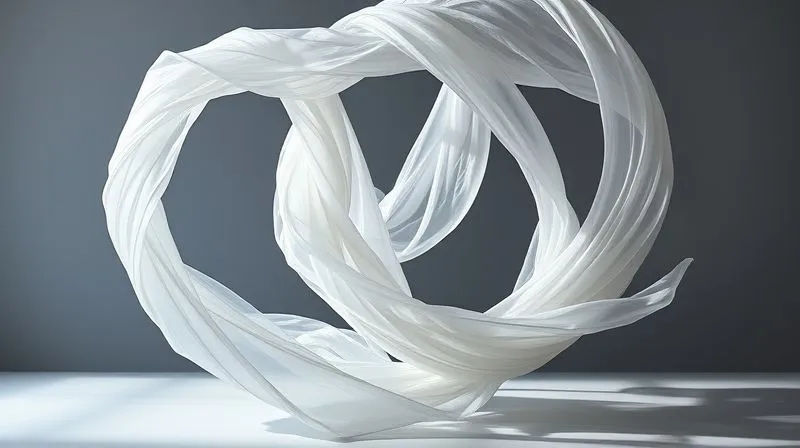
"A silhouette is not just a shape; it's a perception, a dialogue between material and emptiness, light and shadow. The truly innovative designer understands that the unseen is often as powerful as the seen."
Drawing Inspiration Beyond the Obvious: Cross-Disciplinary Muses
Innovation rarely happens in a vacuum. The most revolutionary silhouettes I've encountered often draw their genesis from outside the traditional confines of fashion. To truly redefine form, you must broaden your gaze, seeking inspiration in fields that challenge conventional notions of structure, movement, and aesthetics.
Architecture and Industrial Design
These disciplines offer a wealth of structural principles. Think about the cantilevered forms of Zaha Hadid, the deconstructivist angles of Frank Gehry, or the elegant functionality of industrial design objects. How do these structures manage weight, create tension, or articulate space? Their methods of construction, material science, and aesthetic philosophies can be directly translated into garment design, inspiring new ways to build, support, and shape fabric.
Nature's Organic Structures and Biomorphism
From the intricate geometry of a snowflake to the fluid movement of water, nature is an endless fount of inspiration. Biomorphism, the design philosophy that draws on biological forms, can lead to incredibly unique and harmonious silhouettes. Consider the protective shells of insects, the branching patterns of trees, or the delicate membranes of fungi. These offer lessons in growth, adaptation, and inherent structural integrity that can inform truly organic and innovative forms.
Conceptual Art and Performance
Artists like Issey Miyake famously drew from performance art and sculpture. Conceptual art challenges perceptions and often prioritizes idea over aesthetic. How can a silhouette convey a narrative, evoke an emotion, or comment on society? Performance art, with its emphasis on movement and interaction, can inspire forms that come alive on the body, transforming with every gesture.
Case Study: "The Chrysalis Collection" by Atelier Lumina
Atelier Lumina, a fictional haute couture house, faced the challenge of creating a collection that felt both futuristic and deeply rooted in natural forms. The lead designer, Elara Vance, was initially struggling with overly literal interpretations of natural elements. My advice to her was to look beyond direct mimicry and instead study the *principles* of natural growth and architectural tension. She spent weeks visiting botanical gardens, sketching the structural resilience of seed pods and the elegant decay of fallen leaves, alongside studying the suspended tension in brutalist bridge designs. By abstracting these observations, she developed "The Chrysalis Collection," featuring voluminous, cocoon-like silhouettes that were rigid yet fluid, with internal frameworks inspired by insect exoskeletons and external drapes reminiscent of unfurling petals. The collection redefined 'feminine form' by encasing it in protective, sculptural beauty, achieving critical acclaim for its innovative use of volume and material engineering, directly influenced by this cross-disciplinary approach.
For further exploration into how architecture influences fashion, I highly recommend delving into the works featured by institutions like the Metropolitan Museum of Art's costume exhibitions, which frequently showcase these intersections.
The Art of Material Alchemy: Fabric as Sculptural Medium
In haute couture, fabric is never just a textile; it is the primary medium through which form is sculpted. The choice of material is paramount, dictating not only the drape and movement but also the very possibility of a silhouette. To truly redefine form, you must engage in what I call "material alchemy" – understanding how to manipulate, engineer, and even invent fabrics to achieve your sculptural vision.
Beyond Drape: Engineering Stiffness and Rigidity
While fluid drapes are beautiful, truly unique and architectural silhouettes often require a departure from softness. This involves engineering stiffness. Techniques like extensive interlining, traditional boning, and innovative internal frameworks (think crinolines, bustles, or even 3D-printed internal supports) become crucial. Moreover, exploring new materials like laser-cut neoprene, bonded silks, or even metallic weaves can provide the necessary rigidity without sacrificing luxury or comfort.
Weight, Texture, and Light Interaction
The weight of a fabric influences how it falls and holds its shape. Heavy brocades and duchesse satins naturally lend themselves to more structured forms, while lighter organzas and chiffons can create ethereal, voluminous effects through layering and internal scaffolding. Texture, too, plays a vital role, influencing how light interacts with the surface and defines the contours of the silhouette. A highly textured fabric can obscure sharp lines, while a smooth, reflective surface will emphasize every angle and curve.
Understanding the interplay of these properties is key to translating your conceptual silhouette into a tangible garment. Here's a brief guide to how different material properties can influence form:
| Material Property | Effect on Silhouette | Example Use |
|---|---|---|
| High Rigidity (e.g., Silk Gazar, Neoprene) | Sharp, architectural lines; self-supporting structures; exaggerated volume that holds shape. | Sculptural sleeves, dramatic capes, structured skirts. |
| Fluid Drape (e.g., Silk Charmeuse, Chiffon) | Soft, flowing lines; body-hugging or ethereal, cascading forms; relies on underlying structure or body. | Bias-cut gowns, layered translucent effects, soft gathers. |
| Heavy Weight (e.g., Brocade, Duchesse Satin) | Voluminous, grand forms; holds pleats and folds well; luxurious, substantial presence. | Ball gowns, structured coats, historical reinterpretations. |
| Reflective Surface (e.g., Lamé, Polished Satin) | Emphasizes curves and angles; creates a sense of movement and drama through light play. | Statement pieces, evening wear, futuristic designs. |
As you can see, the fabric isn't merely a covering; it's an active participant in shaping the design. I always encourage designers to spend time in textile archives, experimenting with how different materials behave and how they might be engineered to achieve unprecedented forms. For insights into cutting-edge textile innovation, resources like the Material ConneXion library offer invaluable perspectives on new material possibilities.
Innovative Pattern-Making: Challenging the Two-Dimensional Blueprint
Traditional pattern-making is a two-dimensional art, focused on translating a 3D vision onto flat fabric panels. To create truly unique haute couture silhouettes, you must challenge this conventional approach, thinking beyond the flat pattern piece and embracing more experimental, three-dimensional methods. This is where the magic truly happens.
Three-Dimensional Draping and Moulage
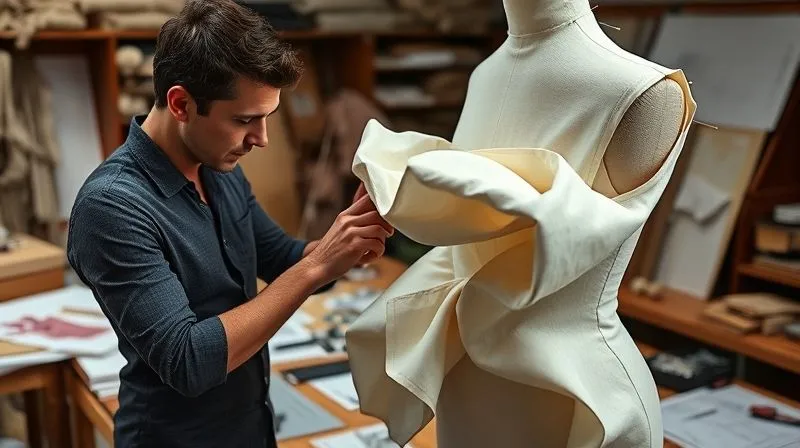
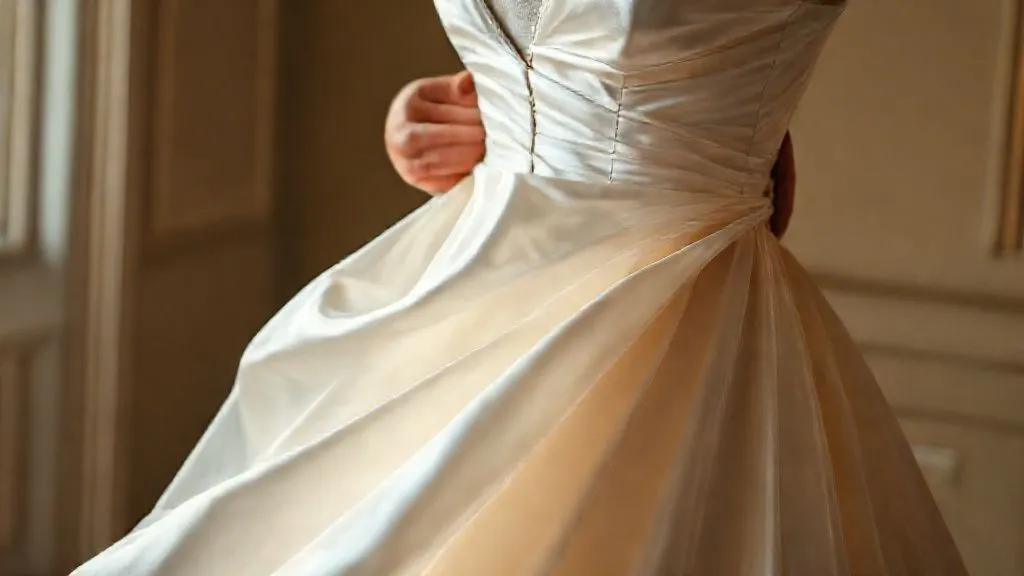
Moulage, or draping directly on a dress form, is an ancient technique that remains indispensable for conceptualizing complex forms. It allows for immediate interaction with the fabric's behavior, facilitating the creation of organic curves, unexpected volumes, and intricate folds that are difficult to achieve on a flat pattern. I often advise designers to start with draping, allowing the fabric to guide the initial concept, rather than forcing a pre-conceived sketch onto it. This direct, tactile process can reveal entirely new possibilities for silhouette definition.
Parametric Design and Digital Fabrication
The digital revolution has opened new frontiers. Parametric design software allows designers to generate complex, non- Euclidian forms that respond to predefined parameters. These digital patterns can then be translated into physical fabric through laser cutting, 3D printing, or other digital fabrication methods. This approach enables the creation of highly intricate, geometrically precise, and often unconventional silhouettes that would be impossible with traditional pattern-making. It’s about leveraging technology to push the boundaries of form.
Deconstruction and Reconstruction Techniques
Sometimes, innovation comes from dismantling and reassembling. Deconstruction involves taking apart existing garments or traditional pattern blocks and reconfiguring them in new ways. This might mean shifting seams, exaggerating darts into sculptural elements, or creating new openings and closures that disrupt the expected form. It's about questioning the fundamental rules of garment construction and rebuilding them with a fresh perspective.
Here are some actionable steps for experimental pattern-making:
- Start with a "No Rules" Toile: Instead of a precise pattern, begin by roughly draping large pieces of inexpensive fabric (muslin, calico) onto a dress form. Focus on creating volume, tension, and specific negative spaces without worrying about seams or traditional construction. Pin, cut, and pleat intuitively.
- Explore Geometric Transformations: Take a basic pattern block (e.g., a sleeve or bodice). Experiment with cutting it into geometric shapes (triangles, circles), then reattaching them in unexpected ways. What happens when a square becomes a three-dimensional protrusion, or a circle dictates a new opening?
- Integrate Internal Structures: Conceptualize the internal framework *before* the outer fabric. How can boning, wire, or other rigid materials create a foundation for a gravity-defying shape? Drape directly onto this internal skeleton.
- Digital-Physical Hybrid: Use 3D modeling software to generate abstract forms, then project these forms onto a 2D plane to create unconventional pattern pieces. Print these out and test them in fabric, iterating between digital and physical until the desired silhouette is achieved.
Volume Manipulation: Exaggeration, Compression, and Suspension
Volume is perhaps the most immediate and impactful tool for redefining a silhouette. It allows you to dramatically alter the body's perceived shape, creating a powerful visual statement. The mastery of volume goes beyond simply adding fabric; it involves a nuanced understanding of how to exaggerate, compress, and even suspend material to create a unique dialogue with space.
Architectural Pleating and Origami Folds
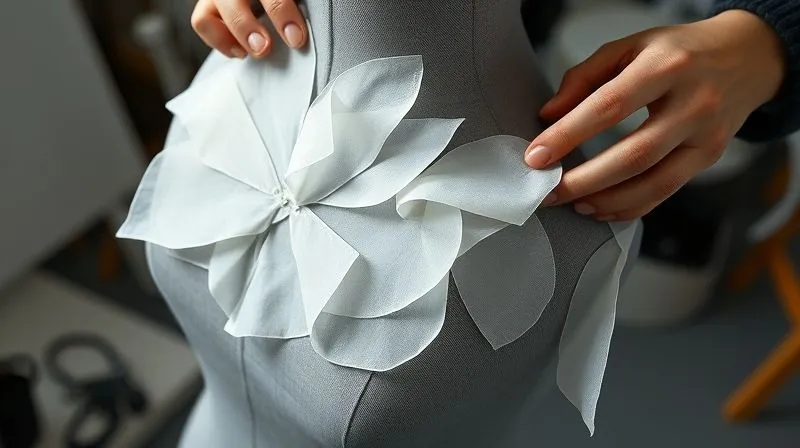
Pleating, when elevated to an art form, can transform flat fabric into architectural wonders. Think of the precise, geometric folds of origami, or the intricate, engineered pleats seen in historical costumes that create immense volume from a surprising amount of fabric. These techniques allow for controlled expansion and contraction, creating dynamic, sculptural forms that shift and change with movement. It’s about building structure through repetition and precise folding.
Inflatable Structures and Internal Frameworks
For truly avant-garde and gravity-defying silhouettes, designers often turn to internal frameworks or even inflatable structures. Crinolines, bustles, and panniers are historical examples, but modern haute couture pushes this further with lightweight metals, carbon fiber, or even air-filled compartments. These internal supports create immense, often exaggerated volumes that stand independent of the body, allowing the fabric to float or extend in unexpected ways.
The Illusion of Weightlessness: Transparency and Suspension
Paradoxically, immense volume can also be made to appear weightless. By utilizing sheer, translucent fabrics like organza, tulle, or chiffon in multiple layers, or by creating large, suspended forms that seem to float around the body, you can achieve a sense of ethereal grandeur. This involves careful engineering to maintain the volume while allowing light to pass through, creating an illusion of lightness despite the scale.
"Volume isn't just about size; it's about presence. It's about how a garment commands space, how it interacts with the wearer's movement, and the emotional response it evokes."
Narrative and Concept: Infusing Meaning into Form
A truly unique haute couture silhouette is never just a shape; it's a statement, a story, a philosophy made tangible. The conceptual strength behind a design is what elevates it from mere clothing to a piece of art that can redefine form and evoke profound emotion. Without a compelling narrative, even the most innovative shape can feel hollow.
Storytelling Through Silhouette
How does your silhouette communicate? Does it evoke vulnerability or strength? Does it suggest movement or stillness? A specific concept – perhaps a historical event, a philosophical idea, or a personal experience – can serve as the guiding force for your formal exploration. For instance, a silhouette inspired by the concept of "protection" might manifest as an armored, sculptural form, while "liberation" might inspire fluid, deconstructed shapes.
Cultural and Historical Reinterpretations
The vast archive of fashion history and global cultural attire offers endless starting points. However, the key is not to replicate, but to reinterpret. How can a traditional Japanese kimono sleeve be deconstructed and exaggerated to create a modern, architectural form? How can the restrictive corsetry of the past be re-imagined as an external, sculptural element that celebrates rather than constrains the body? This approach bridges heritage with innovation.
The Designer's Personal Philosophy
Ultimately, the most authentic and unique silhouettes emerge from a designer's personal vision and philosophy. What do you want to say with your work? What values do you hold? This introspection can lead to a distinctive aesthetic language that is uniquely yours, making your forms instantly recognizable and imbued with deeper meaning. This is the essence of true authorship in haute couture.
Here’s how a conceptual narrative can directly influence silhouette development:
| Conceptual Narrative | Silhouette Interpretation | Key Elements |
|---|---|---|
| The Unfurling Bloom | Layered, organic curves; internal supports mimicking petals; voluminous, yet delicate forms that appear to open and close. | Petal-like ruffles, cascading drapes, concealed structural wiring. |
| Urban Armor | Sharp, angular lines; exaggerated shoulders and hips; rigid, protective forms that create a strong, almost impenetrable presence. | Architectural panels, metallic embellishments, structured internal padding. |
| Ephemeral Echoes | Translucent, multi-layered forms; deconstructed elements; silhouettes that suggest movement and memory, almost disappearing. | Sheer overlays, frayed edges, asymmetrical cuts, floating elements. |
To deepen your understanding of how narrative shapes fashion, consider exploring critical essays and books on fashion theory, such as those found in academic journals or major university presses. A great starting point would be to research designers known for their conceptual approach, like Rei Kawakubo of Comme des Garçons, and understand the philosophical underpinnings of their work.
Prototyping and Iteration: The Iterative Dance of Creation
Conceptualizing a unique silhouette is only half the battle; bringing it to life requires relentless prototyping and iteration. In my career, I've seen brilliant ideas falter at this stage due to a lack of patience or an unwillingness to embrace the iterative process. This is where the vision truly meets reality, and where the most significant refinements occur.
From Toile to Final Garment: Embracing Failure
The toile, or muslin mock-up, is your most valuable tool. It allows you to test hypotheses, identify structural flaws, and refine proportions without the expense of precious couture fabrics. I always advise designers to make multiple toiles for a single silhouette, each one addressing specific challenges or exploring different variations. Embrace "failures" in the toile stage; they are not setbacks but critical learning opportunities that inform the next iteration. It's an ongoing conversation between your vision and the material.
Feedback Loops and Refinement
Once a toile begins to take shape, seek objective feedback. This could be from trusted mentors, fellow designers, or even by simply observing how the form behaves on a human body in motion. Pay close attention to how the silhouette interacts with the body's natural lines, how it moves, and whether it effectively communicates your intended concept. This feedback is invaluable for identifying areas for refinement, from adjusting a curve by a mere millimeter to completely re-engineering a volume.
The process is cyclical: conceive, prototype, evaluate, refine, repeat. It is this iterative dance that transforms an abstract idea into a perfectly realized, unique haute couture silhouette.
Cultivating a Visionary Mindset: Beyond Trends
To consistently conceptualize unique haute couture silhouettes that redefine form, one must cultivate a mindset that transcends fleeting trends and embraces a long-term vision. This is about establishing yourself not just as a designer, but as a true visionary, an artist who shapes the future of fashion.
Embracing Disruption and Avant-Garde Thinking
True innovation often begins with a willingness to disrupt. This means questioning established norms, challenging conventional beauty standards, and daring to present something entirely new. Avant-garde thinking isn't about being shocking for shock's sake; it's about pushing boundaries, exploring uncharted territory, and expanding the very definition of what fashion can be. It requires courage and conviction in your unique perspective.
The Role of Intuition and Experimentation
While frameworks and systematic approaches are crucial, never underestimate the power of intuition. Sometimes, the most groundbreaking ideas emerge from a gut feeling, an unexpected impulse to try something unconventional. Foster an environment of constant experimentation in your studio. Dedicate time to play with materials, drape without a clear goal, and allow serendipity to guide your creative process. Many of my most successful innovations began as accidental discoveries during such experimental sessions.
Building a Signature Aesthetic
Ultimately, the goal is to develop a signature aesthetic, a unique design language that is instantly recognizable as yours. This isn't about creating a single style, but about developing a consistent philosophy that informs every silhouette you create. It's the thread that connects your collections, showcasing your evolving vision for how to conceptualize unique haute couture silhouettes that redefine form. This signature is built through persistent self-reflection, continuous experimentation, and an unwavering commitment to your artistic integrity.
"The greatest designers don't follow trends; they create them. They possess the rare courage to look inward, to trust their unique voice, and to translate that into forms that resonate deeply and reshape our understanding of beauty."
Frequently Asked Questions (FAQ)
How do I avoid creating something "costume-like" instead of couture when experimenting with extreme silhouettes? This is a common concern. The key lies in refinement and balance. While experimentation can lead to extreme forms, haute couture demands a level of sophistication, impeccable craftsmanship, and an inherent understanding of the body, even when distorting it. Focus on luxurious materials, precise execution, and ensure there's an underlying elegance or conceptual clarity. A costume often lacks the meticulous finishing and nuanced material choice that defines couture. Ask yourself: does this form elevate the wearer or simply make a spectacle?
What's the best way to start when feeling overwhelmed by a blank canvas and the pressure to innovate? When faced with a blank canvas, I always advise starting with a concept, not a silhouette. Begin by exploring a theme, an emotion, a piece of art, or a philosophical idea that genuinely excites you. Let this abstract concept guide your material research, your color palette, and only then, your initial experiments with form through draping or abstract sketching. Breaking down the problem into smaller, conceptual chunks can alleviate the initial overwhelm and provide a clear direction for your silhouette exploration.
How important is wearability in redefining haute couture silhouettes? Wearability in haute couture is a nuanced concept. It's not about everyday practicality, but rather about the garment's relationship with the body and its ability to be "worn" for its intended purpose (e.g., a runway, a red carpet, a private event). While some avant-garde forms may push the boundaries of movement, a couture silhouette should still allow the wearer to inhabit it with grace and confidence. The goal is to redefine form, not to render the body immobile or uncomfortable. It's a balance between artistic vision and the human element.
Can digital tools truly replace traditional draping for unique forms? No, I believe digital tools are powerful *enhancements*, not replacements, for traditional draping. While parametric design and 3D modeling can generate incredibly complex and precise forms, the tactile understanding of how fabric behaves, the intuitive manipulation of material, and the serendipitous discoveries that occur during physical draping are irreplaceable. The most innovative approaches often combine both: using digital tools for initial conceptualization and complex patterning, then refining and humanizing those forms through hands-on draping and tailoring.
How do I balance innovation with the heritage and traditions of haute couture? Balancing innovation with heritage is the perennial challenge and the hallmark of a truly great haute couture designer. It requires a deep respect for the traditions of craftsmanship, quality, and the savoir-faire that define couture, while simultaneously pushing its boundaries. You can draw inspiration from historical techniques or silhouettes, then deconstruct, reinterpret, or exaggerate them. The "heritage" isn't a cage; it's a rich foundation upon which to build something new. The key is to understand the rules so profoundly that you know precisely how to break them elegantly and meaningfully.
Key Takeaways and Final Thoughts
Conceptualizing unique haute couture silhouettes that redefine form is an endeavor that demands courage, curiosity, and relentless dedication. It's a journey from the abstract to the tangible, requiring a systematic yet intuitive approach. As a veteran in this niche, I've seen that true innovation isn't accidental; it's the result of a deliberate, multi-faceted process.
- Deconstruct and Rebuild: Analyze existing forms and their negative spaces to understand the foundational elements of silhouette.
- Broaden Your Horizons: Seek inspiration beyond fashion, particularly in architecture, nature, and conceptual art.
- Master Material Alchemy: Understand how fabric properties dictate form and learn to engineer textiles for sculptural impact.
- Innovate Pattern-Making: Embrace 3D draping, digital tools, and deconstruction to challenge traditional blueprints.
- Manipulate Volume with Intent: Utilize exaggeration, compression, and suspension to create dramatic and meaningful forms.
- Infuse Narrative: Ground your silhouettes in compelling concepts and personal philosophies to give them depth and meaning.
- Embrace Iteration: Prototype relentlessly, learn from every "failure," and refine your vision through continuous feedback.
The path to redefining form in haute couture is challenging, but immensely rewarding. It calls for a visionary mindset, a willingness to experiment, and an unwavering commitment to your artistic voice. Trust your intuition, challenge the status quo, and remember that every stitch, every cut, and every fold is an opportunity to articulate a new vision of beauty. Go forth and sculpt the future of fashion; the canvas awaits your audacious touch.
Recommended Reading
- Unlock the Future: 7 Steps to Sustainable, High-Performance Functional Textiles
- Unlocking Mass Digital Fashion: 7 Strategies for Scalable Production
- Unlock the Secret: How to Choose Formal Wear for a Summer Wedding with Style
- 5 Pillars: Updating Heritage Luxury Appeal for Modern Consumers
- The Ultimate Guide: How to Store Handmade Jewelry to Prevent Damage?

Your email address will not be published. Required fields are marked *