

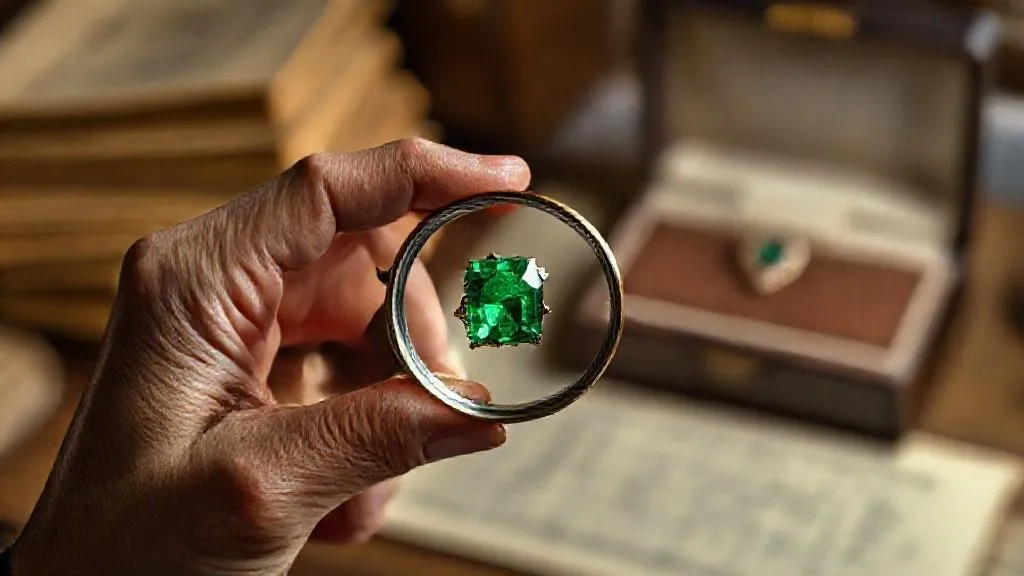
How to Authenticate Vintage Haute Joaillerie Pieces for Resale Value?
For over two decades navigating the intricate world of haute joaillerie, I've witnessed both the exhilarating discovery of a priceless, authenticated masterpiece and the heartbreaking disappointment of a misattributed or counterfeit piece. The allure of vintage luxury jewelry is undeniable, a tangible link to history and unparalleled artistry. Yet, beneath the sparkle lies a complex landscape where authentication is paramount, especially when considering resale value.
The challenge for collectors and sellers alike is profound. Without rigorous authentication, a piece's true worth remains speculative, risking significant financial loss or, worse, inadvertently trading in fakes. The market is rife with sophisticated reproductions and clever alterations, making it increasingly difficult for the untrained eye to discern genuine vintage haute joaillerie from lesser imitations. This uncertainty can erode trust and severely depress potential resale value.
This guide is born from my deep experience in this niche, designed to equip you with a definitive, expert-level framework. We'll delve into the essential steps, from meticulous provenance research to advanced gemological analysis, providing actionable insights and real-world strategies. My goal is to empower you to confidently authenticate your vintage haute joaillerie, ensuring its true value is recognized and maximized in the competitive resale market.
The Foundation: Understanding Haute Joaillerie & Its Value Drivers
Before we embark on the authentication journey, it's crucial to establish a clear understanding of what truly defines haute joaillerie and the intrinsic factors that drive its value. This isn't merely about expensive materials; it's about artistry, history, and unparalleled craftsmanship.
Defining Haute Joaillerie vs. Fine Jewelry
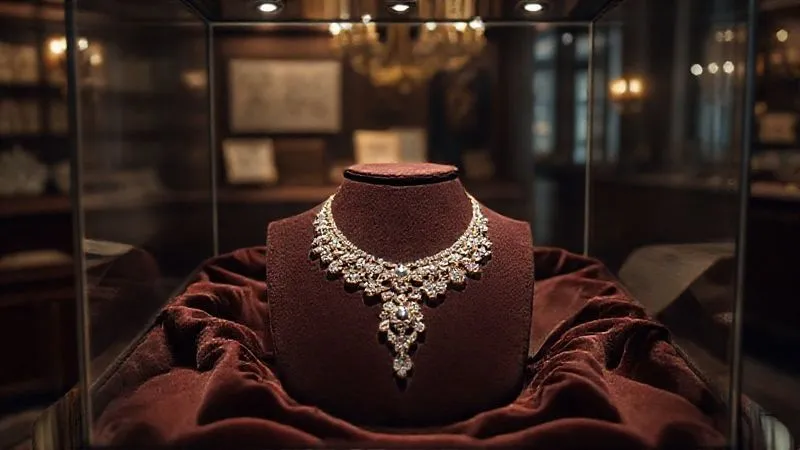
While all haute joaillerie is fine jewelry, not all fine jewelry is haute joaillerie. The distinction lies in exclusivity, design originality, and the meticulous handcraftsmanship involved. Haute joaillerie pieces are often one-of-a-kind or produced in extremely limited editions, showcasing exceptional gemstones, innovative designs, and hours of artisanal labor. They are typically created by renowned houses like Cartier, Van Cleef & Arpels, Tiffany & Co., or Boucheron, often for specific clients or exhibitions. Fine jewelry, while valuable and well-made, is generally more mass-produced and focuses more on material value than unique artistic expression.
Key Value Determinants: Brand, Rarity, Condition, Provenance
The resale value of vintage haute joaillerie is a complex interplay of several critical factors. The brand name is often the first indicator; pieces from historical maisons with undisputed reputations command higher prices. Rarity, whether due to limited production, unique design, or the use of exceptional stones, significantly boosts value. The condition of the piece – its state of preservation, absence of damage, and original integrity – is paramount. Finally, and arguably most critically, provenance – the documented history of ownership and origin – can elevate a piece from valuable to priceless. A well-documented history, especially one linked to notable figures or significant events, adds layers of historical and cultural value.
Step 1: The Art of Provenance Research
Provenance is the soul of vintage haute joaillerie. It's the documented history of ownership, a narrative that not only confirms authenticity but also significantly enhances a piece's resale value. In my experience, a strong provenance can increase a piece's value by 20-50% or even more, transforming it from a beautiful object into a historical artifact.
- Gather Existing Documentation: Start with any paperwork accompanying the piece – original receipts, appraisals, certificates, old photographs, or letters. Even seemingly minor details can be critical clues.
- Delve into Archival Records: Major jewelry houses maintain extensive archives. If you suspect a piece is from a specific maison, contacting their heritage department can yield invaluable insights. They often have records of sales, designs, and even client commissions.
- Consult Auction House Catalogs: Prestigious auction houses like Sotheby's and Christie's have meticulously documented sales histories. Searching their past catalogs can reveal if your piece, or a similar one, has been sold before, providing a documented chain of ownership.
- Research Previous Owners: If you know the immediate past owner, inquire about their acquisition history. For older pieces, genealogical research or historical society records might provide context, especially if the piece belonged to a notable family.
- Examine Period Publications: Fashion magazines, society pages, and art journals from the era when the piece was created might feature similar designs or even the specific piece being worn by a prominent individual.
Case Study: How a Lost Provenance Reclaimed its Value
I once worked with a client who inherited what appeared to be a stunning Art Deco diamond and sapphire bracelet. It was beautiful, but without any paperwork, its potential resale value was capped. Through diligent provenance research, tracing faint inscriptions and cross-referencing auction records from the 1930s, we discovered it had been commissioned by a prominent European socialite from Cartier. The bracelet had been featured in a society column of Vogue Paris. This discovery not only authenticated the piece as genuine Cartier but also added a rich historical narrative. The documented provenance, including its original owner and public appearance, increased its appraised value by nearly 70%, securing a significantly higher price at auction.
Step 2: Scrutinizing Signatures & Hallmarks
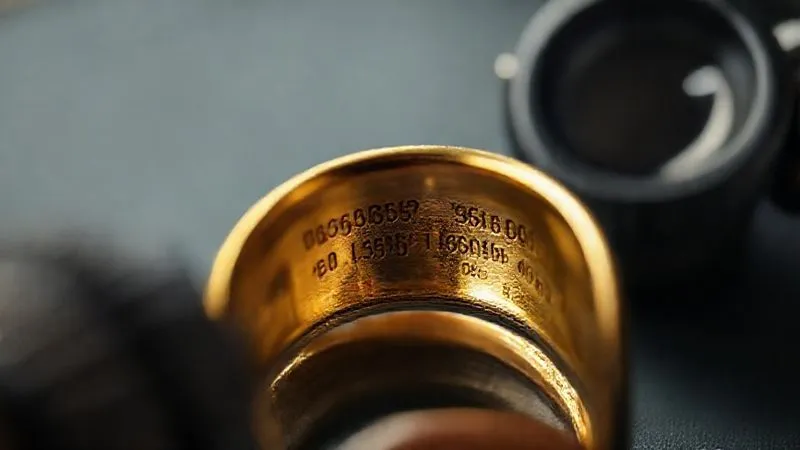
The tiny marks etched into a piece of jewelry are often its most direct form of identification. These signatures and hallmarks are the 'fingerprints' of its creator and origin, and understanding them is a cornerstone of authenticating vintage haute joaillerie.
Identifying Maker's Marks & Stamps
Every reputable jewelry house, and even individual master jewelers, employed specific maker's marks or signatures. These can be full names, initials, symbols, or a combination thereof. For vintage pieces, these marks must be period-appropriate. For example, a Cartier piece from the 1920s will have a different signature style or font than one from the 1960s. Counterfeiters often use incorrect fonts, placements, or even entirely wrong marks. I always recommend comparing the mark on your piece with documented examples from trusted sources, such as official brand archives or comprehensive reference books on jewelry hallmarks. The clarity and precision of the mark itself are also telling; genuine marks are typically sharp and clearly defined, not blurry or uneven.
Decoding Assay Marks & Purity Stamps
Beyond the maker's mark, pieces of fine jewelry, especially those sold internationally, carry assay marks and purity stamps. An assay mark indicates that the metal has been tested and verified for its fineness by an independent authority, often a government assay office. Purity stamps denote the metal's fineness, such as '750' for 18k gold, '950' for platinum, or '925' for sterling silver. These marks vary significantly by country and era. For instance, French pieces might have an eagle's head for 18k gold, while British pieces use a leopard's head. It's vital to research the specific hallmarks relevant to the country of origin and the period of your piece. Inconsistencies or the absence of expected marks can be red flags. According to the Gemological Institute of America (GIA), understanding these marks is critical for both authenticity and material valuation. GIA on Jewelry Hallmarks
Step 3: Gemstone Analysis – The Heart of the Matter
The gemstones are often the focal point of haute joaillerie, and their authenticity and quality are paramount to resale value. This step requires a trained eye and, ideally, professional gemological equipment.
Expert Gemological Assessment (Color, Clarity, Cut, Carat)
Evaluating gemstones goes beyond simple visual appeal. For diamonds, the 4 Cs (Color, Clarity, Cut, Carat) are universally recognized standards. For colored gemstones like rubies, sapphires, and emeralds, factors such as origin, saturation of color, and presence of inclusions (internal characteristics) are crucial. An expert gemologist can identify these nuances, distinguishing between a fine Burmese ruby and a lower-quality Thai ruby, for example, or a natural emerald from a synthetic one. They can also assess the quality of the cut, which significantly impacts a stone's brilliance and overall aesthetic. A precise, period-appropriate cut is a strong indicator of authenticity in vintage pieces.
Identifying Treatments and Enhancements
Many gemstones undergo treatments to enhance their appearance, such as heat treatment for rubies and sapphires, or oiling for emeralds. While some treatments are widely accepted and disclosed, others, especially undisclosed or irreversible ones, can significantly impact a stone's value. A gemologist uses specialized equipment (microscopes, spectroscopes) to detect these treatments. For vintage pieces, knowing whether a stone has been treated, and the nature of that treatment, is essential for accurate valuation. Undisclosed treatments in older pieces can be a major point of contention and devaluation. As Forbes often highlights, transparency in gemstone treatments is key to maintaining market trust and value. Forbes on Gemstone Transparency
| Characteristic | Natural Gemstone | Treated Gemstone |
|---|---|---|
| Color | Often shows subtle variations, zones of color | More uniform, intense color; sometimes unnatural hues |
| Clarity | Unique inclusion patterns (fingerprints, crystals) | May show residue from fillers, altered inclusion appearance |
| Luster/Brilliance | Specific to the gem's inherent properties | Can be enhanced or dulled depending on treatment |
| Fluorescence | Specific reactions under UV light (may vary) | May show unusual or absent fluorescence |
| Price Impact | Highest value, especially for untreated fine quality | Value reduced, varies with type and stability of treatment |
Step 4: Metal Purity & Craftsmanship Evaluation
The metal that cradles the gemstones is more than just a setting; it's a testament to the era's metallurgical practices and the jeweler's skill. Evaluating both the metal's purity and the overall craftsmanship is vital for authentication.
Testing Metal Composition
While hallmarks provide an initial indication, independent testing can confirm the metal's purity. For vintage pieces, common metals include platinum, various karats of gold (18k, 14k), and sometimes silver. Modern testing methods like X-ray fluorescence (XRF) offer non-destructive analysis to accurately determine the metal composition and karatage. Discrepancies between the stated purity (by hallmark) and the actual composition can indicate a fake or a heavily altered piece. It's not uncommon for less scrupulous vendors to try to pass off lower karat gold as 18k, or even gold-plated pieces as solid gold, drastically impacting the real value.
Assessing Construction Techniques (Hand-Setting, Finishing)
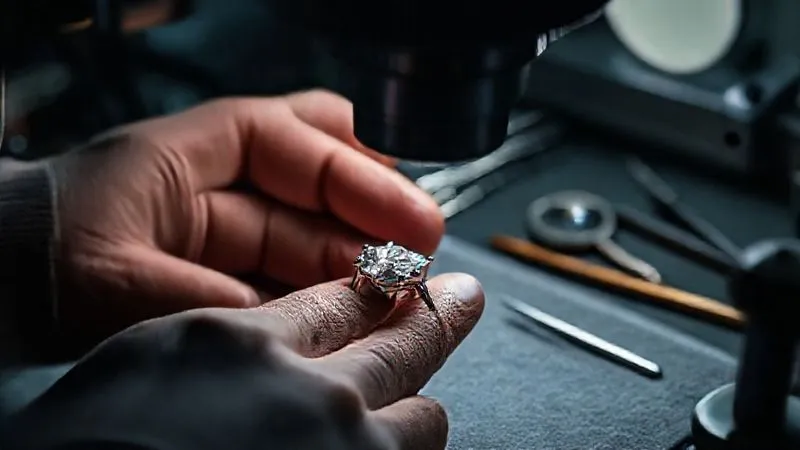
Haute joaillerie is defined by its meticulous construction. Examine the piece under magnification for signs of hand-finishing. Are the settings precise and even? Are the prongs uniformly shaped and securely holding the stones without excess metal? Look for hand-engraving, intricate milgraining, and seamless soldering. Machine-made pieces, even high-quality ones, often lack the subtle imperfections and unique character of hand-finished vintage haute joaillerie. For example, in a truly vintage piece, the back of a setting might show slight tool marks, indicating artisanal work, rather than the perfectly smooth, uniform finish of a modern casting. This attention to detail in craftsmanship is a hallmark of genuine luxury. Christie's Guide to Jewellery
Step 5: The Role of Design & Period Authenticity
The aesthetic language of a piece of haute joaillerie speaks volumes about its origin. Understanding the design characteristics of specific historical periods is an indispensable tool in authentication.
Style Characteristics of Eras (Art Deco, Belle Époque, etc.)
Each era in jewelry history boasts distinct design elements, preferred motifs, and material combinations. For instance, the Belle Époque (roughly 1890-1915) is characterized by delicate, lacy designs, often in platinum, featuring bows, garlands, and naturalistic themes, frequently adorned with diamonds and pearls. The subsequent Art Deco period (1920s-1930s) ushered in bold geometric patterns, contrasting colors (often black onyx with diamonds, or sapphires with emeralds), and a sleek, architectural aesthetic. Recognizing these stylistic signatures is critical. If a piece purportedly from the Art Deco era exhibits flowing, organic forms typical of Art Nouveau, it immediately raises a red flag regarding its authenticity or dating.
Identifying Period-Appropriate Materials & Techniques
Beyond design, the materials and techniques used must align with the period. For example, platinum became widely used in the early 20th century due to its strength and ability to hold diamonds securely in delicate settings; prior to that, silver or gold were more common. The type of cuts used for gemstones also evolved; old mine cuts and old European cuts predominated before the brilliant cut became standard. Furthermore, specific setting techniques, such as invisible settings, were pioneered by certain houses (e.g., Van Cleef & Arpels) at particular times. A piece claiming to be from the 1900s but featuring an invisible setting, which was developed much later, is almost certainly a misrepresentation. This historical context is vital for discerning genuine vintage pieces from later reproductions or pastiches.
Step 6: Condition Assessment & Restoration History
The physical state of a vintage haute joaillerie piece significantly impacts its value and often reveals clues about its history. A thorough condition assessment is more than just noting wear and tear; it's about understanding its journey.
Evaluating Wear & Tear (Patina vs. Damage)
Genuine vintage pieces will inevitably show some signs of age. This can manifest as a beautiful patina – a soft, aged sheen on the metal that adds character and authenticity. However, excessive wear, deep scratches, dents, or signs of improper care constitute damage. Distinguishing between a charming patina and detrimental damage requires an experienced eye. A piece with significant damage, such as heavily abraded facets on gemstones, bent prongs, or cracks in the metal, will see its resale value diminished. The integrity of the original design and structure is paramount. A piece that has been worn and cherished will have different wear patterns than one that has been deliberately distressed to appear old.
Detecting Repairs & Alterations (Impact on Value)
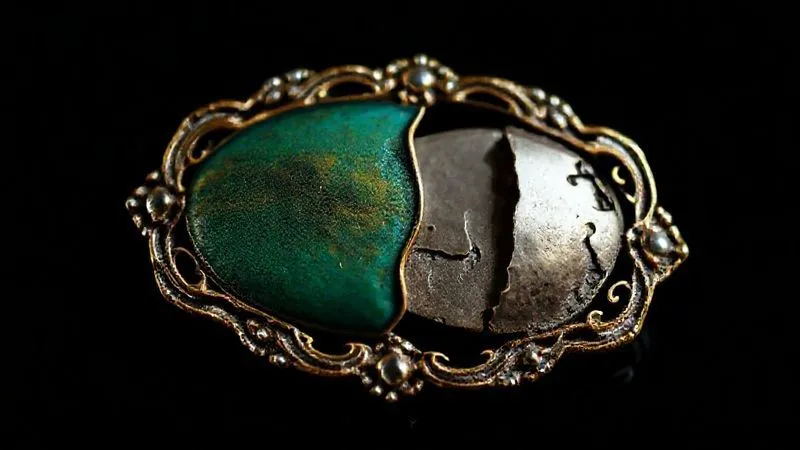
Many vintage pieces have undergone repairs or alterations over their lifespan. While some minor, professional repairs (e.g., re-tipping a prong) are acceptable and don't significantly devalue a piece, extensive or poorly executed repairs can be detrimental. Look for mismatched solders, visible tool marks, or the addition of non-original elements. Alterations, such as changing a ring's size multiple times, converting a brooch into a pendant, or replacing original stones with different ones, can severely impact a piece's authenticity and collector's value. The goal is always to find a piece that is as close to its original state as possible. Even seemingly minor alterations can disrupt the artistic integrity and historical value that collectors seek. Sotheby's on Spotting Fake Jewels
Step 7: The Indispensable Role of Independent Appraisal & Certification
Even with extensive personal research, the final and most critical step in authenticating vintage haute joaillerie for resale value is securing an independent, expert appraisal and, where appropriate, gemological certification. This provides an objective, authoritative stamp of approval.
Choosing a Qualified Appraiser
Not all appraisers are created equal. For haute joaillerie, you need an appraiser specializing in antique and period jewelry, preferably one with strong gemological credentials (e.g., GIA Graduate Gemologist) and affiliations with professional appraisal organizations (e.g., American Society of Appraisers, National Association of Jewelry Appraisers). A qualified appraiser will conduct a thorough examination, document all characteristics, and provide a detailed report that includes their expert opinion on authenticity, period, materials, and estimated market value. They are your trusted third party, providing an unbiased assessment.
GIA, HRD, SSEF, AGL Certifications
For significant gemstones, particularly diamonds, rubies, sapphires, and emeralds, obtaining a reputable gemological laboratory certificate is non-negotiable for maximizing resale value. Labs like the Gemological Institute of America (GIA), HRD Antwerp (HRD), the Swiss Gemmological Institute (SSEF), and the American Gemological Laboratories (AGL) are recognized globally for their rigorous, unbiased grading and identification. These certificates provide detailed information on a stone's characteristics, including its identity (natural vs. synthetic), treatments, and quality grade. A certified stone instills confidence in potential buyers and often commands a premium in the market, making the cost of certification a worthwhile investment.
| Certification Body | Specialty | Recognition |
|---|---|---|
| GIA (Gemological Institute of America) | Diamonds (4 Cs), colored stones, pearls | Global standard, highly trusted for diamonds |
| HRD Antwerp | Diamonds (4 Cs), colored stones | Strong European presence, respected for diamond grading |
| SSEF (Swiss Gemmological Institute) | Colored stones (origin reports), natural pearls | Leader in origin determination for high-value colored gems |
| AGL (American Gemological Laboratories) | Colored stones (quality and origin), connoisseur reports | Known for in-depth, nuanced colored stone analysis |
Navigating the Resale Market: Maximizing Your Investment
Once your vintage haute joaillerie is authenticated and documented, the next step is to strategically navigate the resale market to achieve its maximum value. This involves choosing the right venue and presenting your piece impeccably.
Auction Houses vs. Dealers vs. Online Platforms
The choice of sales channel significantly impacts your outcome. Auction houses like Sotheby's and Christie's are ideal for truly exceptional, highly authenticated pieces, especially those with strong provenance. They offer global reach and competitive bidding, but also charge significant seller's premiums. Reputable vintage jewelry dealers offer a more direct sale, often providing immediate payment, but they will buy at a wholesale price to account for their profit margin. Online luxury platforms (e.g., 1stDibs, Vestiaire Collective) can offer a broader market, but require excellent photography, detailed descriptions, and often involve consignment models and fees. Each option has its pros and cons, and the best choice depends on the specific piece, its value, and your selling timeline.
Presentation and Documentation for Sale
Regardless of the chosen channel, presentation is key. Professional, high-resolution photographs from multiple angles are essential. But even more critical is the accompanying documentation. Present a complete package: your appraisal report, gemological certificates, any provenance documents, and a detailed narrative about the piece. This transparency and thoroughness build immediate trust with potential buyers. As industry experts often emphasize, a well-documented piece sells itself, commanding higher prices because all doubts regarding its authenticity and value have been proactively addressed. A buyer is investing not just in a beautiful object, but in its verified history and intrinsic worth.
Frequently Asked Questions (FAQ)
Can I authenticate a haute joaillerie piece myself, or do I always need an expert? While you can perform initial research on hallmarks, design, and provenance, definitive authentication for resale value almost always requires an experienced expert. A professional gemologist and appraiser possesses the specialized tools, knowledge, and historical context to provide an objective, authoritative assessment that buyers trust. Self-authentication carries significant risk and rarely yields maximum resale value.
What if a vintage haute joaillerie piece has no visible hallmarks or signatures? The absence of hallmarks is not an automatic disqualifier, especially for very old pieces or those from certain regions. In such cases, the authentication process leans heavily on provenance research, expert analysis of craftsmanship (identifying specific artisan 'hands'), period design congruence, and rigorous gemological assessment. An expert can often attribute a piece based on stylistic signatures and construction techniques, even without explicit marks.
How much does professional authentication and appraisal typically cost? The cost varies widely based on the complexity of the piece, the number of gemstones, the required research, and the appraiser's experience. It can range from a few hundred dollars for a single, straightforward piece to several thousand for complex, historically significant items requiring extensive research and multiple lab certifications. Consider it an investment that protects and enhances the value of your asset.
Does restoration always devalue a vintage haute joaillerie piece? Not necessarily. Professional, sympathetic restoration that maintains the piece's original integrity and uses period-appropriate techniques can sometimes enhance its value by improving its condition and stability. However, poor quality, extensive, or inappropriate restorations (e.g., replacing original stones with modern ones) will almost certainly devalue a piece, as it detracts from its originality and historical authenticity.
What is the biggest mistake sellers make when trying to authenticate vintage haute joaillerie for resale? The biggest mistake is relying solely on online research or unqualified opinions. Without a comprehensive, multi-faceted approach involving expert gemological analysis, thorough provenance research, and an independent appraisal, sellers risk misrepresenting their piece, underpricing it, or worse, inadvertently selling a fake. Trusting assumptions over verified facts is a costly error in this market.
Key Takeaways and Final Thoughts
- Provenance is King: A documented history of ownership is the single most powerful tool for authenticating and maximizing the resale value of vintage haute joaillerie.
- Expert Eyes are Indispensable: While your research is crucial, the final arbiter of authenticity and value will always be a qualified gemologist and appraiser. Their objective assessment is non-negotiable.
- Detail Matters: From the tiniest hallmark to the most subtle nuance in craftsmanship, every detail contributes to the story and authenticity of a piece. Be meticulous in your examination.
- Certification Builds Trust: For significant gemstones, investing in reputable lab certifications (GIA, SSEF, etc.) provides undeniable proof of quality and origin, instilling confidence in buyers.
- Strategic Selling: Choose your resale platform wisely, ensuring your piece is presented with impeccable documentation and professional photography to attract the right buyers at the right price.
The journey of authenticating vintage haute joaillerie is a fascinating blend of historical detective work, scientific analysis, and artistic appreciation. By diligently following these expert-backed steps, you transform uncertainty into confidence, ensuring that your treasured pieces not only retain their historical integrity but also command their true, maximized value in the discerning resale market. This isn't just about selling jewelry; it's about preserving heritage and securing an investment for the future. Approach each piece with the respect and rigor it deserves, and the rewards will follow.
Recommended Reading
- Bridal Boutique's Guide: 7 Proven Strategies to Clear Unsold Gowns Fast
- Shrinking a Fragile Vintage Gown: 7 Expert Steps to Multi-Size Alterations
- 5 Steps to Guarantee Quality in Outsourced Fashion Photo Retouching
- 7 Proven Strategies: Beat Fashion Styling Creative Block Fast
- 7 Agile Strategies: Rapidly Adapt Activewear Designs to Emerging Trends

Your email address will not be published. Required fields are marked *