

How to Overcome Creative Block in Fashion Styling Concepts Fast?
For over 15 years navigating the dynamic currents of fashion photography and styling, I've witnessed firsthand the exhilarating highs of conceptual brilliance and the crushing lows of creative stagnation. It's a universal truth in our field: every stylist, no matter how seasoned, will eventually stare blankly at a brief, feeling the well of ideas run dry. That paralyzing moment when inspiration evades you, and the pressure of deadlines mounts, can be truly isolating.
This isn't merely a minor inconvenience; a creative block in fashion styling can derail entire productions, strain client relationships, and, most importantly, chip away at your passion for the craft. You're not alone in feeling this frustration, the gnawing question of 'how do I get past this?' echoing in your mind. It's a problem I've seen countless talented individuals grapple with, and it often stems from exhaustion, overthinking, or simply a lack of structured approaches to ideation.
But here's the good news: creative blocks are not permanent impasses. They are often signals, nudges to shift your perspective or refine your process. In this definitive guide, I'll share expert-level, actionable frameworks, proven techniques, and mindset shifts that I and many of my successful peers have employed to not just overcome, but *leapfrog* over creative blocks in fashion styling concepts, ensuring you can reignite your vision and deliver compelling work, fast.
Deconstructing the Creative Block: Why It Happens in Fashion Styling
Before we can conquer creative block, we must first understand its anatomy. In the high-stakes world of fashion styling, where trends evolve at lightning speed and originality is paramount, the pressure to constantly innovate is immense. This relentless demand can often be the very catalyst for the creative paralysis we dread.

I've observed that creative blocks in styling rarely emerge from a lack of talent, but rather from a confluence of factors unique to our industry. Recognizing these triggers is the first step towards building resilience and developing effective coping mechanisms.
The Pressure Cooker of Deadlines and Client Expectations
Imagine a tight deadline looming, a demanding client brief in hand, and the expectation to conjure a groundbreaking concept out of thin air. This pressure often leads to overthinking, where every initial idea is immediately scrutinized and dismissed as 'not good enough.' The fear of failure or not meeting expectations can freeze the ideation process entirely, turning what should be a fluid creative flow into a rigid, self-critical loop.
The Paradox of Abundance: Too Many Choices
Ironically, having an overwhelming array of choices – from endless fabric swatches and accessory options to a vast digital archive of inspiration – can be just as paralyzing as having too few. This phenomenon, often called 'analysis paralysis,' makes it difficult to commit to a single direction. Stylists might spend hours sifting through options, feeling lost in a sea of possibilities rather than finding a clear path.
Comparisonitis: The Silent Killer of Originality
In the age of Instagram and Pinterest, constant exposure to the work of other talented stylists can be a double-edged sword. While it offers inspiration, it also fosters 'comparisonitis' – the unhealthy habit of constantly measuring your own work against others. This can lead to feelings of inadequacy, a fear of not being unique enough, and ultimately, a suppression of your authentic creative voice. As Seth Godin often says, "The cost of being wrong is less than the cost of doing nothing." We often let comparison lead us to do nothing.
The "Idea Incubator" Method: Structured Brainstorming for Breakthroughs
When the blank page feels intimidating, a structured approach can often be the key to unlocking fresh concepts. I call this the "Idea Incubator" method, and it's designed to systematically break down the brief, expand your mental frameworks, and cross-pollinate ideas from unexpected sources. It’s about creating a fertile ground for ideas to grow, rather than waiting for lightning to strike.
- Deconstruct the Brief with Precision: Don't just read the brief; dissect it. Identify keywords, target demographics, desired mood, budget constraints, and logistical limitations. Create a mind map or list of core requirements. What is the *narrative* the client wants to tell? What *emotion* should the images evoke? Understanding these deeply is crucial.
- Mood Boarding Beyond Aesthetics: Move beyond simply collecting pretty pictures. Your mood board should be a story arc. Include textures, colors, historical references, art, architecture, and even abstract concepts. Think about the *feeling* of the shoot, the *character* of the model, the *world* you're creating. Use it to build a conceptual framework, not just a visual one.
- Cross-Pollination Technique: Look Outside Fashion: This is where true innovation often sparks. If you're styling for a futuristic brief, look at scientific journals, industrial design, or even ancient mythology for unexpected parallels. If it's a romantic editorial, delve into classical literature, botanical gardens, or culinary arts. How can principles from these unrelated fields be translated into fashion elements or styling techniques?
- "What If?" Scenarios: Push Boundaries and Challenge Assumptions: Once you have a foundational idea, start asking "what if?" questions. What if the shoot was entirely monochrome? What if the model was a different age/gender/body type than expected? What if we shot in a completely unconventional location? What if we used props in an entirely new way? This exercise pushes you beyond obvious solutions and into truly original territory.
"Creativity is not just about wild ideas; it's about connecting seemingly disparate dots in novel ways. A structured approach often liberates, rather than constrains, the truly innovative." This is a principle I've lived by throughout my career; sometimes, the most rigid framework can lead to the most fluid and inventive results.
Embracing Constraints: Your New Creative Ally
It's a common misconception that boundless resources equate to boundless creativity. In my experience, the opposite is often true. Constraints – whether they be budget limitations, specific location requirements, or a narrow theme – can be incredibly powerful catalysts for innovative styling concepts. When the usual options are removed, your mind is forced to think laterally, to find ingenious solutions within defined parameters.
Case Study: How Elara Vance Transformed a Tight Budget
Elara Vance, a talented but emerging stylist, was tasked with an editorial for a new sustainable fashion magazine. The budget was exceptionally tight, limiting access to high-end designer pieces and elaborate locations. Instead of seeing this as a roadblock, Elara embraced it. She focused on sourcing vintage pieces, collaborating with local artisans for custom accessories made from recycled materials, and utilizing natural light in an abandoned botanical garden. Her concept revolved around 'Rebirth and Renewal,' transforming forgotten elements into breathtaking beauty. The resulting editorial was lauded for its originality, resourcefulness, and powerful narrative, proving that true style isn't about expense, but about vision.
The Power of Scarcity in Concept Generation
When you have fewer options, each choice becomes more deliberate and meaningful. This scarcity forces you to consider the intrinsic value and versatility of each garment or accessory. It encourages upcycling, DIY solutions, and a deeper exploration of textures and silhouettes rather than relying on brand names. This approach often leads to more authentic and memorable styling, as every element serves a distinct purpose within the overall concept.
| Constraint Type | Creative Opportunity |
|---|---|
| Budget | Upcycling, DIY, Found Objects, Local Artisans |
| Location (e.g., small studio) | Utilize natural light, unique angles, minimalist aesthetic, narrative focus |
| Theme (e.g., 'Monochromatic') | Deep dive into textures, silhouettes, tonal variations, subtle contrasts |
| Limited Garments | Layering, deconstruction, styling versatility, focus on accessories |
The "Sensory Immersion" Technique: Reconnecting with Inspiration
As visual creatives, we often default to visual inputs for inspiration: images, videos, art. However, a powerful way to overcome creative block is to engage all your senses. Our brains are wired to connect sensory experiences with emotions and memories, which can be a goldmine for unique styling concepts. This technique helps to bypass the analytical mind and tap directly into deeper wells of intuition and feeling.
- Auditory Inspiration: Music, Soundscapes, Podcasts: Curate playlists that evoke specific moods or eras. Listen to classical music for timeless elegance, electronic for futuristic vibes, or folk for earthy narratives. Explore soundscapes of nature, bustling cities, or historical events. How does the rhythm, tone, or lyrics translate into a styling choice, a pose, or even the flow of a garment?
- Tactile Exploration: Fabric, Textures, Materials: Physically engage with different materials. Close your eyes and feel the roughness of raw silk, the coolness of metal, the softness of cashmere. How does a texture make you feel? Can that feeling be translated into a garment’s silhouette, an accessory’s material, or the overall mood of a shot? This direct interaction can spark unexpected ideas for layering or contrast.
- Olfactory Triggers: Scents Evoking Moods and Memories: Our sense of smell is powerfully linked to memory and emotion. Diffuse essential oils (e.g., sandalwood for warmth, peppermint for crispness, rose for romance) or visit places with distinct aromas like a flower market, an old bookstore, or a coffee shop. What stories do these scents conjure? How can you translate that intangible feeling into a visual concept?
- Taste & Story: Food Experiences, Cultural Narratives: Engage with diverse cuisines. The colors, textures, and cultural significance of food can be incredibly inspiring. Consider a dish’s origin, its preparation, or the ceremony of eating it. Can the boldness of a spice blend inspire a color palette, or the delicate layers of a pastry inform a draped silhouette?
As renowned photographer Annie Leibovitz once said, "I think that you have to be open to the unexpected." The Sensory Immersion Technique is precisely about opening yourself to these unexpected connections that lie beyond the purely visual realm.
Digital Detox & Analog Rediscovery: Unplugging to Recharge
In our hyper-connected world, it's easy to fall into the trap of endless scrolling for inspiration. While digital platforms are invaluable resources, constant consumption without creation can lead to burnout and creative fatigue. A crucial step in overcoming creative block is to intentionally unplug and reconnect with analog forms of inspiration and ideation. This allows your mind to rest, process, and generate original thoughts without the constant influx of external stimuli.
The Benefits of Physical Mood Boards and Sketching
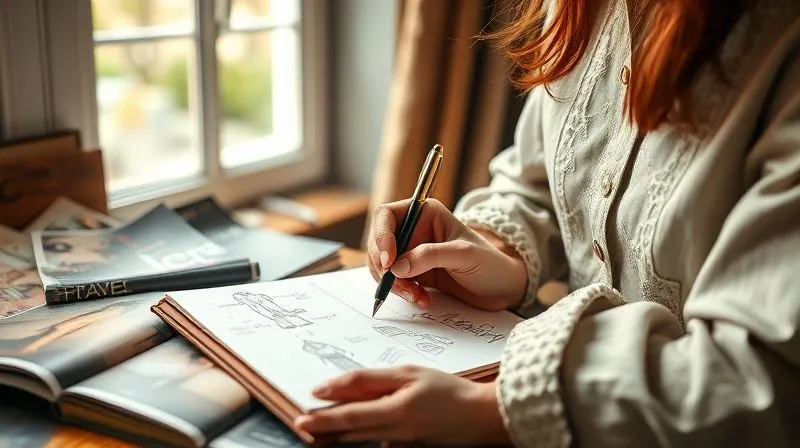
There's a distinct tactile and cognitive benefit to working with physical materials. Cutting out images from magazines, pinning swatches of fabric, and sketching ideas by hand engages different parts of your brain than digital work. This physical interaction can foster a deeper connection to your concepts, allowing for serendipitous discoveries that might be missed on a screen. It slows down the process, encouraging more thoughtful consideration of each element.
Walking as a Catalyst for Ideas
Often, the best ideas strike when you're not actively trying to think of them. Taking a walk, especially in nature or a vibrant urban environment, can be incredibly effective. The gentle rhythm of walking, combined with new visual and auditory inputs, allows your subconscious mind to work its magic. It’s a form of active meditation that can help dislodge mental blocks and bring clarity. According to a Harvard Business Review article on the power of breaks, stepping away from demanding tasks can significantly boost problem-solving abilities.
Collaborating for Fresh Perspectives: The Power of Diverse Minds
Creative work, especially in fashion, is rarely a solitary endeavor. When you find yourself stuck, one of the most effective strategies is to seek input from others. Different perspectives, skill sets, and backgrounds can illuminate blind spots and spark ideas you might never have considered on your own. Collaboration isn't just about delegating; it's about co-creation and leveraging collective intelligence.
- Cross-Disciplinary Brainstorming: Involve Non-Stylists: Invite people from entirely different fields to a brainstorming session. A graphic designer might offer unique insights into composition and color theory. A writer could help articulate a narrative that informs your styling. Even friends or family outside the industry can offer fresh, unbiased viewpoints. Their 'naivety' can be a powerful asset, challenging industry norms.
- Peer Review and Constructive Critique: Fresh Eyes on Your Work: Share your initial concepts, however rough, with trusted peers. Ask for honest, constructive feedback. Sometimes, all it takes is another pair of eyes to point out a logical flaw, suggest an alternative, or simply affirm that you're on the right track. Be open to criticism, viewing it as an opportunity for refinement, not a personal attack.
- Mentorship and Reverse Mentorship: Learning from All Levels: If you have a mentor, reach out to them for guidance. Their years of experience can provide invaluable strategies for overcoming blocks. Conversely, consider 'reverse mentorship' – seeking insights from junior stylists or those new to the industry. Their fresh, unfiltered enthusiasm and grasp of emerging trends can be incredibly energizing and inspiring.
| Role | Contribution to Styling |
|---|---|
| Photographer | Lighting implications, compositional impact, narrative framing, technical feasibility |
| Hair & Makeup Artist | Character development, mood enhancement, textural interplay, color palette expansion |
| Set Designer/Prop Stylist | Environmental context, storytelling through objects, scale and proportion, spatial dynamics |
| Creative Director | Overall vision alignment, strategic direction, conceptual refinement, market relevance |
Cultivating a Resilient Creative Mindset: Beyond the Block
Overcoming a specific creative block is one thing, but cultivating a resilient creative mindset is a long-term strategy that helps prevent them from taking root in the first place. This involves ongoing practices that nurture your inner artist, embrace continuous learning, and foster a healthy relationship with your creative process. It's about building a sustainable foundation for consistent inspiration.
The Practice of Creative Journaling
Dedicate a notebook solely to your creative thoughts. This isn't just for ideas; it's for observations, feelings, questions, and even frustrations. Write down what inspires you, what challenges you, and what new things you've learned. Journaling helps to externalize thoughts, providing clarity and a tangible record of your creative journey. It's a safe space for unfiltered exploration.
Embracing Failure as Feedback
One of the biggest inhibitors of creativity is the fear of failure. In fashion styling, not every concept will be a hit, and that's perfectly normal. Instead of viewing 'failed' ideas as setbacks, reframe them as valuable data points. What did you learn? What didn't work, and why? This mindset shift transforms potential discouragement into actionable insights for future projects. As a Forbes article on creative habits highlights, resilience and learning from mistakes are hallmarks of highly creative individuals.
Continuous Learning and Inspiration Sourcing
Never stop learning and seeking out new sources of inspiration. This goes beyond fashion magazines. Explore art history, anthropology, current events, psychology, and different cultures. Visit museums, watch documentaries, read books outside your usual genre. The more diverse your mental database, the richer your potential for unique connections and original concepts. Platforms like Vogue's trend reports can offer insights, but deeper, more personal exploration is key.
Frequently Asked Questions (FAQ)
Question: How do I know if it's a creative block or just a bad idea? A creative block is typically a feeling of emptiness or paralysis, where no ideas come, or every idea feels impossible to execute. A 'bad idea' is an idea that simply doesn't meet the brief or resonate, but you're still generating other ideas. If you're generating, you're not blocked. If you're stuck, try the techniques above. Often, a 'bad idea' can be the stepping stone to a brilliant one if you keep exploring its permutations.
Question: Can AI tools help overcome creative block in styling? Yes, cautiously. AI tools like ChatGPT or Midjourney can generate initial concepts, mood board ideas, or even descriptive scenarios. They can act as a springboard, offering unexpected combinations of words or visuals. However, they lack human intuition, empathy, and the nuanced understanding of fashion's cultural context. Use them to *kickstart* your thinking, but always infuse your unique human touch and refine the output with your expert eye and personal vision. Don't let AI replace your creative process, but rather augment it.
Question: What if my client brief is too restrictive and leaves no room for creativity? Even the most restrictive briefs have pockets of opportunity. Focus on the core message the client wants to convey and then look for subtle ways to inject your creativity. This could be through an unexpected accessory choice, a unique model pose, an innovative lighting setup, or a fresh interpretation of a classic silhouette. Sometimes, working within tight constraints can push you to be even more ingenious. Communicate openly with the client about your creative interpretations to ensure alignment.
Question: How important is personal style in overcoming blocks? Extremely important! Your personal style and aesthetic preferences are your unique signature. When you're blocked, reconnecting with what genuinely excites you, what colors, textures, or eras you naturally gravitate towards, can be incredibly liberating. It reminds you of your inherent creative strengths and helps you filter out the noise of external trends, allowing you to build concepts that feel authentic and inspiring to you, which in turn shines through in your work.
Question: Is it okay to revisit old concepts or ideas I've previously discarded? Absolutely! In fact, it's highly recommended. An idea that didn't fit a previous brief or wasn't fully developed might be perfect for a new project. Context changes, your skills evolve, and trends cycle. What seemed unfeasible before might now be cutting-edge. Keep an archive of your 'discarded' ideas and revisit them periodically. You might find a forgotten gem that, with a fresh perspective, becomes your next breakthrough concept.
Key Takeaways and Final Thoughts
- Creative block is a common, but surmountable, challenge in fashion styling.
- Understand the root causes: pressure, overchoice, and comparison.
- Employ structured brainstorming like the "Idea Incubator" to generate fresh concepts.
- Embrace constraints as catalysts for innovation, not limitations.
- Engage all your senses through the "Sensory Immersion" technique for deeper inspiration.
- Prioritize digital detox and analog rediscovery to recharge your creative mind.
- Leverage collaboration for diverse perspectives and constructive feedback.
- Cultivate a resilient creative mindset through journaling, embracing 'failure,' and continuous learning.
Remember, your creativity is a muscle. It needs to be exercised, rested, and nourished. Don't let a temporary creative block define your capabilities. By implementing these expert strategies, you're not just overcoming an obstacle; you're evolving your process, strengthening your artistic resilience, and ensuring your unique vision continues to shine brightly in the ever-changing landscape of fashion. Keep pushing, keep exploring, and most importantly, keep believing in your inherent ability to create magic.
Recommended Reading
- The Ultimate Guide: How to Get Your Fashion Photos Published in Top Magazines
- 7 Design Features: Preventing Rapid Wear in Kids' Everyday Apparel
- 7 Key Challenges in 3D Body Scanning for Custom Fit & How to Overcome Them
- Unlock Your Worth: The Ultimate Guide to Negotiating Rates for Fashion Blog Collaborations
- 5 Critical Reasons Your Activewear Prototypes Fail Breathability Tests



Your email address will not be published. Required fields are marked *