

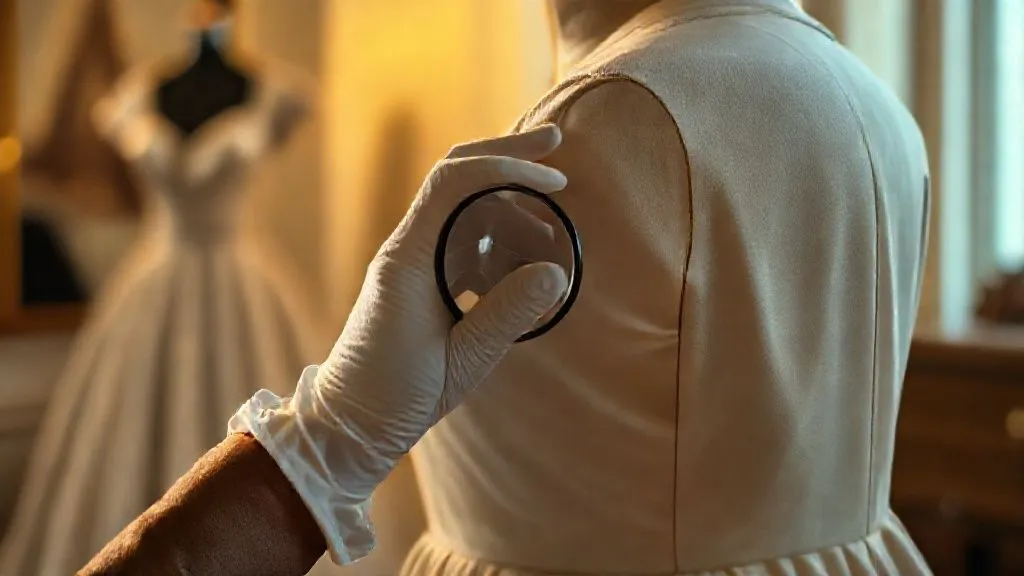
How to Authenticate 1950s A-line Dress Silhouettes from Reproductions?
For over two decades immersed in the captivating world of vintage fashion, I've witnessed the evolution of collecting, the rise of the digital marketplace, and, regrettably, the increasing sophistication of reproductions. There’s a distinct thrill in discovering a genuine piece of history, especially something as iconic as a 1950s A-line dress. Its elegant simplicity, flattering cut, and timeless appeal make it a coveted item for collectors and fashion enthusiasts alike.
However, this desirability has led to a significant challenge: distinguishing authentic mid-century treasures from clever modern imitations. It's a problem that can lead to costly mistakes, disappointment, and a diminished appreciation for true vintage craftsmanship. Many come to me asking, "Is this the real deal?" after falling for a convincing, yet ultimately inauthentic, piece. The frustration of investing time and money into what you believe is a genuine article, only to discover it's a reproduction, is a sentiment I've seen far too often.
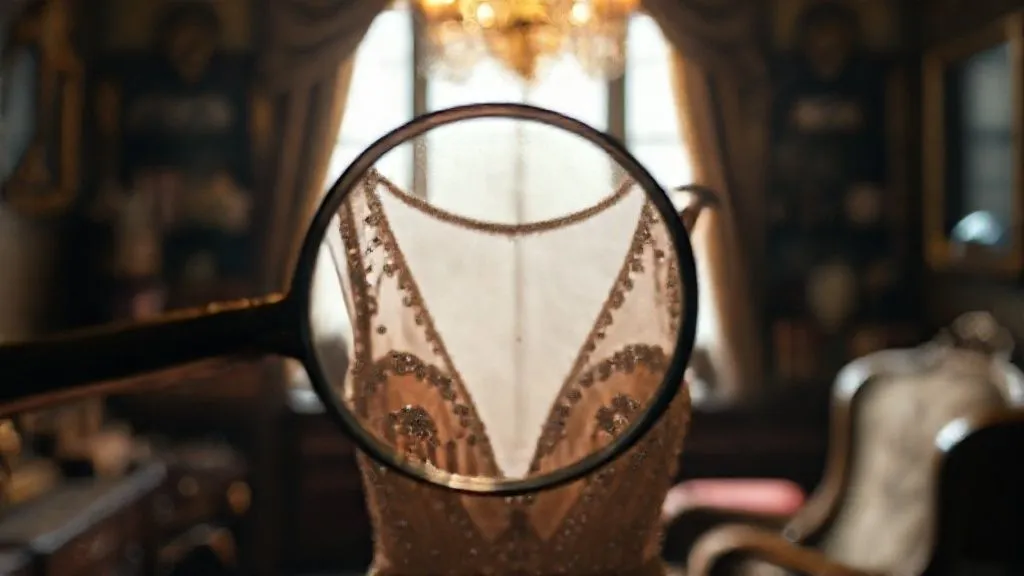
This comprehensive guide is designed to equip you with the expert knowledge and discerning eye needed to confidently answer that question. I’ll share the frameworks, the subtle tells, and the often-overlooked details that, in my experience, separate the genuine 1950s A-line dress silhouettes from reproductions. We’ll delve into fabrics, construction, hardware, and the intangible elements that speak volumes about a garment’s true vintage pedigree. By the end, you’ll possess an arsenal of actionable steps to safeguard your vintage investments and cherish authentic history.
Understanding the True 1950s A-line Silhouette: More Than Just a Shape
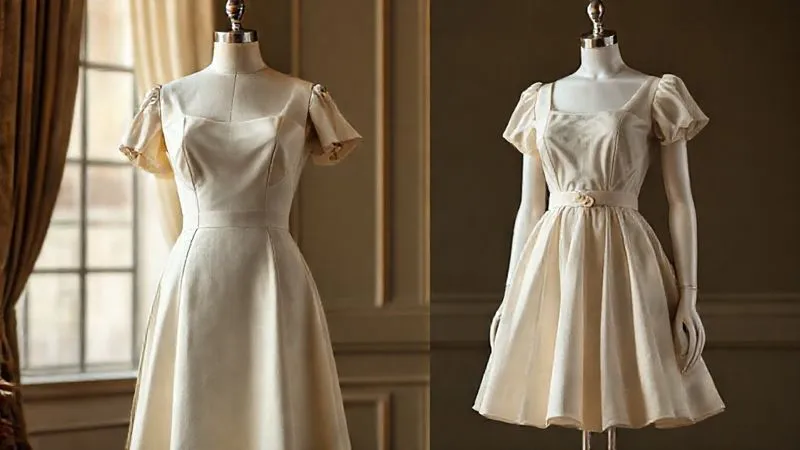
When we talk about the 1950s A-line dress silhouette, it's crucial to understand that it wasn't a static, monolithic concept. While Christian Dior introduced the "A-Line" collection in 1955, the general A-line shape, characterized by a fitted bodice that gradually flares out from the waist or hips to the hem, had been gaining traction throughout the decade. It offered a sophisticated alternative to the full-skirted New Look and the more restrictive sheath dresses.
An authentic 1950s A-line typically features a defined waistline, often accentuated with a belt or subtle darting, flowing into a skirt that widens gently but purposefully. The hemline usually falls anywhere from just below the knee to mid-calf, adhering to the era's standards of modesty and elegance. The shoulders are often natural or slightly padded to create a structured yet feminine line. Reproductions often miss these subtle nuances, either making the "A" too exaggerated, too narrow, or placing the waistline in a more contemporary position.
One key differentiator lies in the balance. A true 1950s A-line creates a harmonious, elongated effect, designed to flatter the figure without clinging. Modern reproductions, even those attempting historical accuracy, often betray their origins through subtle shifts in proportion—perhaps a slightly higher or lower waist, a less defined bodice, or a skirt that flares too abruptly or too minimally. The overall "feel" of the drape and how it moves with the body is a critical, albeit harder to articulate, aspect of authenticity. I've found that genuine pieces possess a certain grace that's difficult for modern manufacturing to replicate. They were designed for a different posture, a different way of moving, reflecting the societal norms and aesthetic values of the time.
The Fabric Story: Textiles of the Mid-Century vs. Modern Blends
The very fiber of a dress can tell you volumes about its age. Authenticating 1950s A-line dress silhouettes from reproductions often begins with a tactile examination of the fabric. The 1950s was a fascinating time for textiles, bridging the natural fibers of previous decades with the advent of new synthetics. Common natural fibers included crisp cottons (often woven with a finer hand than today's mass-produced cottons), luxurious silks, and various weights of wool, from gabardine to bouclé. Rayon, a semi-synthetic, was also incredibly popular for its drape and versatility, often mimicking silk or wool.
The true game-changers were the early synthetics like nylon, Dacron (polyester), and Orlon (acrylic). While these might sound familiar, their early formulations and weaves were distinctly different from their modern counterparts. Early polyesters, for instance, often had a heavier, less fluid hand than today's lightweight, often shiny polyesters. They also lacked the stretch and complex blends we now take for granted. You won't typically find spandex or elastane in 1950s garments, unless it's in very specific foundational garments, certainly not in the main fabric of a dress.
"The way a fabric ages, its natural wear, and its inherent texture are like fingerprints of time. Modern fabrics, even when dyed or treated to look old, rarely capture the authentic feel and drape of mid-century textiles."
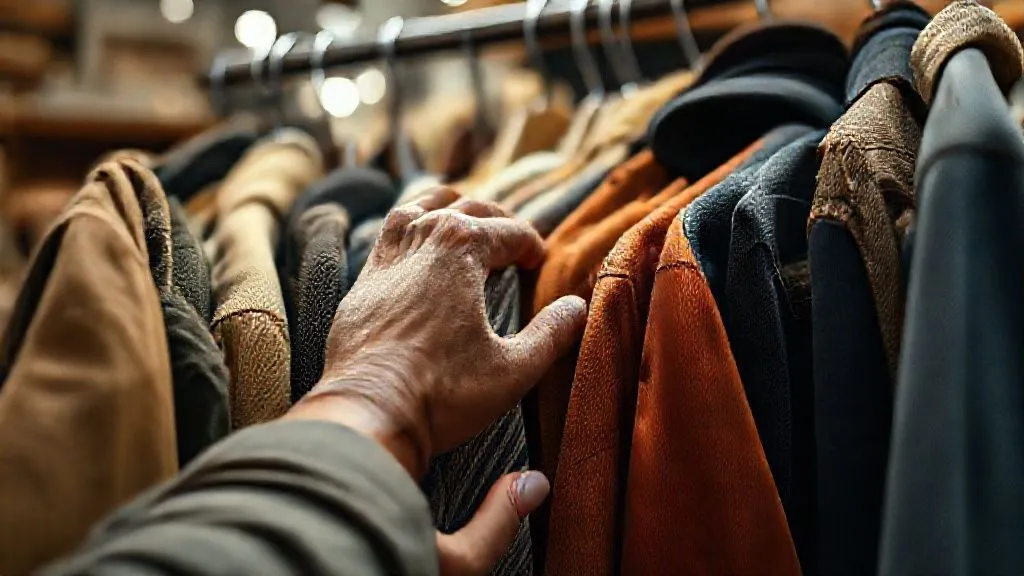
To identify authentic fabric, I always advise feeling for the weight, the weave, and the drape. Does it feel substantial? Is the weave consistent? Does it have a natural 'give' without being stretchy? Look for subtle imperfections in natural fibers that are less common in modern, perfectly uniform weaves. Reproductions frequently use contemporary polyester blends that feel slick, thin, or overtly synthetic, often with a subtle sheen that wasn't common in most everyday 1950s dress fabrics. Even cottons used in reproductions can feel coarser or be of a lower thread count than their vintage counterparts. Examining the interior of the garment, where the fabric might be less worn, can offer clearer insights into its original quality. For a deeper dive into historical textile identification, the Smithsonian Magazine offers excellent resources on textile history.
Construction Clues: Seams, Zippers, and Finishing Techniques
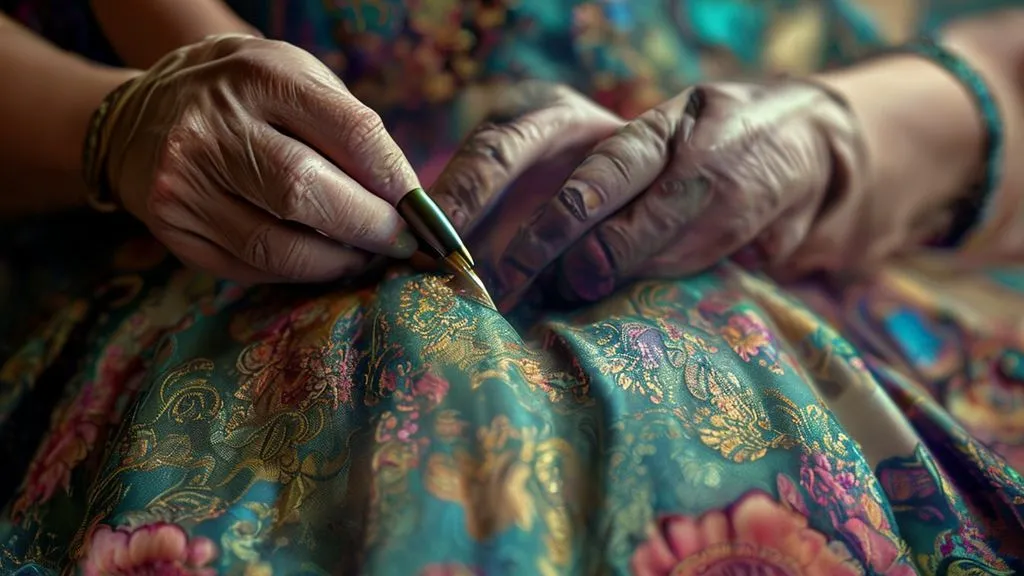
The construction of a garment is perhaps the most telling indicator of its age. 1950s dresses, even ready-to-wear, often exhibited a level of craftsmanship that is rare in today's fast fashion. When you're trying to determine how to authenticate 1950s A-line dress silhouettes from reproductions, pay meticulous attention to the interior finishing.
Seam Finishing: A Window to the Past
In the 1950s, common seam finishes included pinked seams (raw edges cut with pinking shears to prevent fraying), overcast seams (hand-stitched or machine-stitched zigzag over the raw edge), and sometimes French seams, particularly on higher-quality or sheer fabrics. You'll rarely find serged seams (overlocked edges) in early to mid-50s garments, as commercial sergers became widespread later in the decade and into the 60s. Reproductions almost exclusively use modern serged seams, which are fast and efficient but visually distinct.
Zippers: A Dated Detail
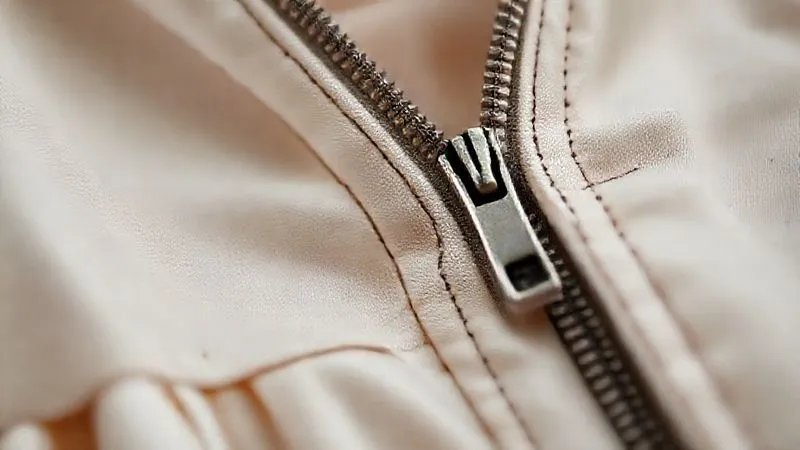
Zippers are a critical dating tool. In the 1950s, zippers were almost exclusively made of metal. Brands like Talon, Crown, Conmar, and C&C were dominant. Look for the brand name stamped on the pull tab or the slider. Plastic zippers, while invented in the 1930s, did not become widely used in clothing until the late 1960s and 70s. The length and placement of zippers also matter; side zippers were very common, particularly in A-line dresses, to maintain a clean front silhouette, though center back zippers also existed. A plastic zipper is an immediate red flag for a true 1950s piece.
Hemlines and Linings
Hemlines in 1950s dresses were typically generous, often hand-stitched with a blind hem or machine-stitched with a single line of stitching. They were usually at least 2-3 inches deep to allow for alterations. Linings, if present, were often made of rayon, acetate, or a fine cotton, and were meticulously hand-stitched or machine-stitched in place, often fully enclosing seams. Reproductions often have narrow, machine-stitched hems and cheaper, less carefully integrated linings, or no lining at all where one would historically be present.
Hardware and Embellishments: Buttons, Buckles, and Beyond
The smaller details on a dress—buttons, buckles, and any decorative elements—are often overlooked but provide invaluable clues for authentication. These components can be surprisingly difficult for reproductions to perfectly mimic, as the materials and manufacturing processes have changed significantly over the decades. When examining a potential 1950s A-line, consider the materials, the quality, and the method of attachment for all hardware.
Materials Matter
For buttons and buckles, typical 1950s materials included Bakelite (though less common by the mid-50s, still present), Lucite (a type of acrylic, very popular for its clarity and ability to be molded into interesting shapes), mother-of-pearl, various metals (often brass or steel, sometimes covered in fabric), and early plastics that had a distinct weight and feel compared to modern lightweight plastics. Glass buttons were also used, offering a beautiful luster. Reproductions often use cheap, lightweight plastic buttons that lack the depth, heft, or specific finishes of their vintage counterparts. Even metal buttons on reproductions can feel flimsy or have a different plating quality.
Attachment Methods
Buttons were almost always sewn on securely, often with a shank or through two or four holes. Buckles were typically robust and functional, designed to last. Any embellishments, like embroidery or appliqué, would have been done with a certain level of craftsmanship, either by hand or by early specialized machines, often with threads and techniques specific to the era.
Case Study: The Case of the "Authentic" Bakelite Buttons
I once encountered a client who was convinced they had found a rare 1950s A-line dress complete with original Bakelite buttons. The dress itself had a few authentic-looking features, but the buttons felt... too perfect. Upon closer inspection, the buttons, while mimicking Bakelite's appearance, lacked the tell-tale "hot water test" odor (a faint phenolic smell when rubbed vigorously and quickly heated under hot water, a method to test true Bakelite). They also felt slightly lighter than genuine Bakelite of that size. It turned out the dress was a well-made reproduction, and the buttons were modern plastic, cleverly molded and dyed. This highlights how one seemingly small detail can unravel an entire authentication claim.
Common 1950s Button Characteristics:
- Lucite: Often clear, translucent, or marbled, sometimes with carved details.
- Covered Buttons: Fabric-covered buttons matching the dress material were very popular.
- Metal Buttons: Solid, often with a slight patina, rarely shiny chrome.
- Pearlized Buttons: Plastic buttons with a mother-of-pearl effect, distinct from true mother-of-pearl.
Label Logic: Deciphering Brands, Care Tags, and Union Marks
Labels are often the first place collectors look, but they can also be the easiest to fake or misinterpret. A thorough understanding of 1950s labeling conventions is essential for authenticating 1950s A-line dress silhouettes from reproductions.
Original Brand Labels
Genuine vintage dresses will typically have one or more labels. The main brand label will usually be sewn into the neckline or side seam. Brands like "Vera Maxwell," "Claire McCardell," "Jonathan Logan," "Lilli Ann," or department store labels like "Saks Fifth Avenue" or "Lord & Taylor" were prominent. Researching these brands and their typical styles and label designs from the 1950s can be incredibly helpful. Reproductions might use generic "vintage style" labels or even attempt to copy well-known brands, but often miss the specific font, material, or stitching of the original.
Care Tags: A Modern Anomaly
Crucially, detailed care instruction tags (like "Machine wash cold, tumble dry low, do not bleach") were not common in the 1950s. If a garment has a modern, multi-symbol care tag, it is almost certainly a reproduction. Earlier garments might have very simple instructions like "Dry Clean Only" or "Wash by Hand," if any at all. Fabric content labels also became more standardized later than the 1950s, so their absence or simplicity is often a good sign.
Union Labels: Dating with Precision
Union labels, particularly from the International Ladies' Garment Workers' Union (ILGWU), are incredibly valuable for dating. These labels changed design over the decades, and knowing these changes can pinpoint a garment's age within a narrow window. Look for the "bug" label, often sewn into a side seam or lining. The presence of a specific ILGWU label design can confirm a 1950s origin, while its absence doesn't necessarily mean it's not vintage, but its presence is a strong indicator.
| Union Label Type | Approximate Date Range | Notes |
|---|---|---|
| ILGWU R-prefix (blue on white) | 1940s-1955 | Early designs, 'R' for Registered |
| ILGWU 'AFL-CIO' (blue on white/red) | 1955-1963 | Post-merger, often with a specific bug symbol |
| ACWA (Amalgamated Clothing Workers of America) | 1930s-1970s | Less common for women's dresses, but present for some manufacturers |
| No detailed care tag | Pre-1970s | Modern care tags are a strong indicator of reproduction |
For an authoritative guide on vintage labels and their dating, I often refer collectors to resources like the Vintage Fashion Guild's Label Resource, which is an invaluable tool for precise identification.
The Tell-Tale Signs of Age and Wear: Patina vs. Artificial Distress
A truly authentic vintage garment carries the marks of its history. These aren't flaws to be hidden, but rather a testament to its journey through time. Understanding the difference between genuine patina and artificially induced distress is crucial when learning how to authenticate 1950s A-line dress silhouettes from reproductions.
Genuine Patina
Authentic 1950s dresses will often show subtle signs of age and wear consistent with their use over decades. This might include:
- Gentle Fading: Uniform, soft fading, particularly on exposed areas like shoulders or the upper bodice, from sunlight exposure.
- Minor Discoloration: Slight yellowing in areas like underarms (due to perspiration) or along folds, which can sometimes be carefully cleaned.
- Subtle Repairs: Small, period-appropriate mends or reinforcements, often done by hand, indicating the garment was valued and cared for.
- Natural Creasing/Softening: Fabrics will soften and develop natural creases in areas of movement, like elbows or the waistline.
- Loss of Crispness: Over time, even sturdy fabrics will lose some of their original crispness, acquiring a softer drape.
Artificial Distress
Reproductions, in an attempt to look "vintage," sometimes employ artificial distressing techniques. These often look forced, uniform, and unnatural:
- Uniform Fading: Too perfect or symmetrical fading across the garment, lacking the randomness of natural sun exposure.
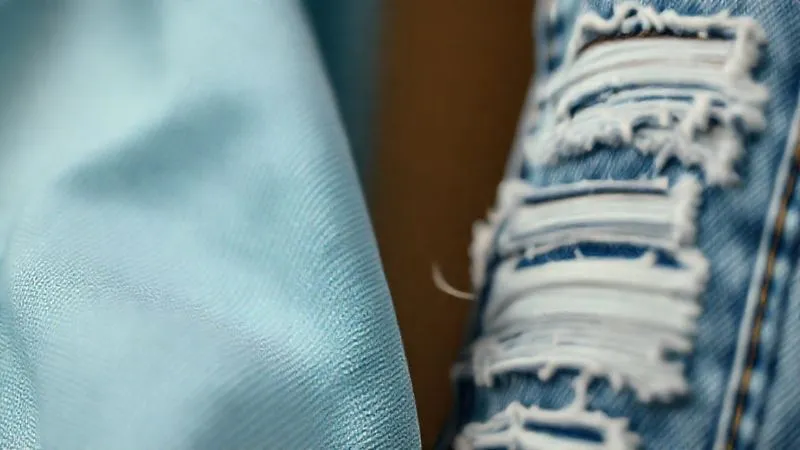
- Pre-worn Holes or Tears: Deliberately created holes or frayed edges that look manufactured rather than organically worn.
- "Vintage Washes": Fabrics treated with chemicals to give them a faded or softened look that feels artificial to the touch.
- Overly "Antiqued" Hardware: Metal components that are uniformly tarnished or scratched in a way that doesn't reflect natural wear patterns.
"A truly authentic vintage garment whispers its age; a reproduction often shouts it. Listen for the whispers, for they carry the true stories."
Beyond the Garment: Provenance and Contextual Clues
While the physical attributes of a dress are paramount, sometimes the story behind it, or its "provenance," can offer invaluable support in authenticating a 1950s A-line dress. This is where the detective work truly begins, moving beyond the stitches and into the realm of history and context.
The Power of Provenance
If a seller can provide a compelling backstory—perhaps the dress belonged to a specific individual, comes with old photographs of it being worn, or has documentation from an estate sale—this adds a layer of credibility. While not foolproof (stories can be fabricated), strong provenance, especially with verifiable details, significantly bolsters a claim of authenticity. I've often seen pieces accompanied by family photos from the era, showing the very garment in question, which offers undeniable proof of its vintage status.
Seller Reputation and Expertise
The source of your vintage purchase is just as important as the item itself. Experienced and reputable vintage dealers, both online and in brick-and-mortar stores, invest heavily in their knowledge and their reputation. They stand by their items and are often transparent about any potential issues or repairs. A seller who can confidently discuss the history of the garment, its specific features, and its place in fashion history is far more trustworthy than one who offers vague descriptions or cannot answer detailed questions. Always research a seller's reviews and their return policy. A good dealer will understand the nuances of how to authenticate 1950s A-line dress silhouettes from reproductions and will be able to articulate why they believe a piece is genuine.
The "Feel" and Overall Impression
This is a more subjective, yet powerful, aspect that seasoned collectors develop. After handling hundreds, even thousands, of vintage garments, you begin to recognize an intangible "feel" that genuine pieces possess. It's a combination of the fabric's drape, the weight, the way it hangs, and even the subtle scent of aged materials. Reproductions, no matter how well-made, often lack this particular gravitas. It's the difference between looking at a photograph of a historical artifact and holding the artifact itself—the sensory experience is entirely different. Engaging with vintage fashion communities can also deepen your understanding; online forums like those found on The Fashion Spot's Vintage Discussion Forum offer a wealth of collective knowledge and peer insights.
Common Pitfalls and Expert Tips for the Astute Collector
Even with a keen eye, the world of vintage authentication presents its challenges. Over my years in the industry, I've observed several common pitfalls that new and even experienced collectors fall into. Avoiding these can save you time, money, and heartache.
Beware the "Frankenstein" Dress
One of the trickiest reproductions isn't a full fake, but a "Frankenstein" garment—a dress made from genuine vintage fabric, or incorporating vintage elements (like buttons or a zipper) into a newly constructed dress. While technically using vintage components, the overall garment is not an authentic 1950s dress. This requires a sharp eye for construction techniques, as the seams and finishing will likely be modern, despite the vintage materials. Always examine the entire garment as a cohesive unit, not just its individual parts.
Over-Restoration Can Mask Authenticity
Sometimes, a genuine vintage dress can be so heavily restored or altered that its original character and authentic details are obscured or replaced with modern materials. A dress might have had its original metal zipper replaced with a plastic one, or an entire lining redone with contemporary fabric. While repairs are often necessary for preservation, extensive alterations can dilute the authenticity. Look for signs of older stitching lines, fabric discoloration around repairs, or inconsistencies in materials.
Focus on the Details, But See the Whole Picture
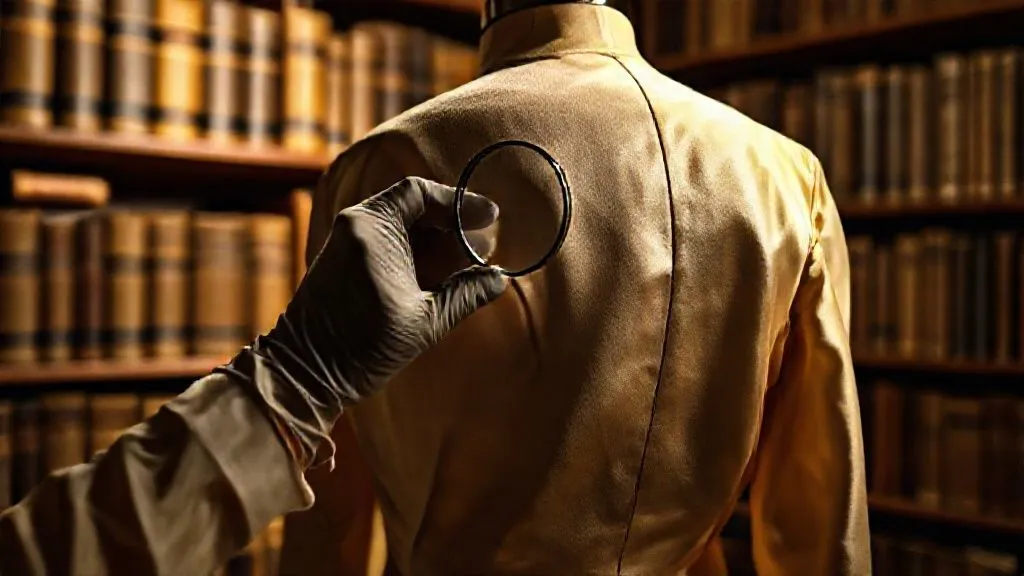
It's easy to get lost in the minutiae of a single detail, like a zipper or a label, and miss the broader context. While these details are critical, it's the combination of authentic features—the fabric, the construction, the hardware, the labels, and the overall feel—that truly confirms a garment's vintage status. No single factor is a definitive proof or disproof; it's the confluence of evidence that builds a strong case for authenticity.
Expert Tips for Your Authentication Journey:
- Invest in Reference Books: Build a library of books on 1950s fashion history, textile identification, and vintage label guides.
- Join Online Communities: Engage with experienced collectors in forums and social media groups. Share photos and ask for opinions, but always cross-reference.
- Visit Reputable Vintage Stores: Handle genuine vintage garments in person. Feel the fabrics, examine the construction, and train your eye.
- Start Small: Begin your collection with less expensive pieces where the stakes are lower, allowing you to learn and refine your authentication skills.
- Ask for High-Resolution Photos: When buying online, always request detailed, clear photos of seams, labels, zippers, and fabric texture.
- Trust Your Gut (After Training It): Your intuition, honed by experience, will become an invaluable tool. If something feels "off," it probably is.
Frequently Asked Questions (FAQ)
Question: Can an authentic 1950s A-line dress be completely unworn or "deadstock"? Yes, absolutely. While rare, it's possible to find "deadstock" vintage garments that have never been worn and still have their original tags. These pieces are highly prized. However, even deadstock pieces will exhibit the fabric, construction, and labeling characteristics of the era. The lack of wear should not be confused with modern manufacturing.
Question: How reliable are union labels for dating a vintage dress? Union labels, particularly from the ILGWU, are extremely reliable for dating because their designs changed at specific, documented intervals. If you can identify the exact design of the union label, you can often pinpoint the manufacturing period to within a few years. It's one of the strongest objective pieces of evidence for authentication, provided you know the label's history.
Question: What if a dress has no labels at all? Does that automatically mean it's a reproduction? Not necessarily. Many homemade dresses, custom-made pieces, or even some smaller boutique items from the 1950s might have never had labels, or the labels could have been removed over time. In such cases, you must rely entirely on the other authentication factors: fabric, construction, zippers, hardware, and silhouette. The absence of a label simply means you have to be extra vigilant with your other checks.
Question: Are all metal zippers from the 1950s? No. While plastic zippers weren't common in 1950s dresses, metal zippers continued to be used for decades afterward and are still used today. The key is to look for specific metal zipper brands (Talon, Crown, Conmar, C&C) that were prevalent in the 1950s, and to consider the style and weight of the zipper, as well as its integration into the garment's construction. A generic, lightweight metal zipper might still be a modern replacement or part of a reproduction.
Question: How do I properly care for an authentic 1950s A-line dress once I've authenticated it? Caring for vintage is crucial for its longevity. Always err on the side of caution. Most 1950s dresses are best dry-cleaned by a reputable cleaner experienced with vintage textiles, or carefully hand-washed if the fabric is known to be stable (like sturdy cotton). Avoid harsh chemicals, direct sunlight for extended periods, and hanging heavy dresses on thin hangers that can distort the shoulders. Store them in breathable garment bags in a cool, dark, dry place.
Key Takeaways and Final Thoughts
The journey to confidently authenticate 1950s A-line dress silhouettes from reproductions is both a science and an art. It demands patience, keen observation, and a deep appreciation for the historical context of fashion. As I've always told my mentees in the vintage world, it's about learning to read the subtle language of textiles, stitches, and design intentions that collectively tell a garment's true story.
- Holistic Examination: Never rely on a single factor. Authenticity emerges from the confluence of fabric, construction, hardware, labels, and overall silhouette.
- Material Knowledge is Power: Familiarize yourself with 1950s textile compositions and the distinct feel of vintage fabrics versus modern blends.
- Construction Reveals All: Pay close attention to seam finishes, zipper types (metal, brand names!), and hemming techniques.
- Details Speak Volumes: Buttons, buckles, and embellishments offer specific clues about manufacturing era and quality.
- Labels as Timelines: Understand vintage brand labels, the absence of modern care tags, and the dating power of union labels.
- Embrace Patina, Shun Artificial Distress: Learn to distinguish genuine age and wear from forced "vintage" aesthetics.
- Source Matters: Purchase from reputable sellers and seek out provenance whenever possible.
Developing this discerning eye takes time and practice, but it is an incredibly rewarding endeavor. Each authentic 1950s A-line dress you identify and acquire is not just a piece of clothing; it's a tangible link to a bygone era, a testament to craftsmanship, and a unique expression of style. Trust your cultivated instincts, continue to learn, and you will build a collection that is genuinely rich in history and value. Happy hunting!
Recommended Reading
- The Ultimate Guide: How to Choose Effective Anti-Aging Eye Cream?
- Unveiling the Secrets: How Intricate Embellishments Are Crafted in Haute Couture
- Ultimate Guide: Best Casual Shoes for Wide Feet Men
- Beyond the Hype: 7 Strategies to Preserve Conductive Fabric Performance in Wearables
- Unlock the Secret: How to Properly Wash Sustainable Activewear Fabrics for Longevity

Your email address will not be published. Required fields are marked *