

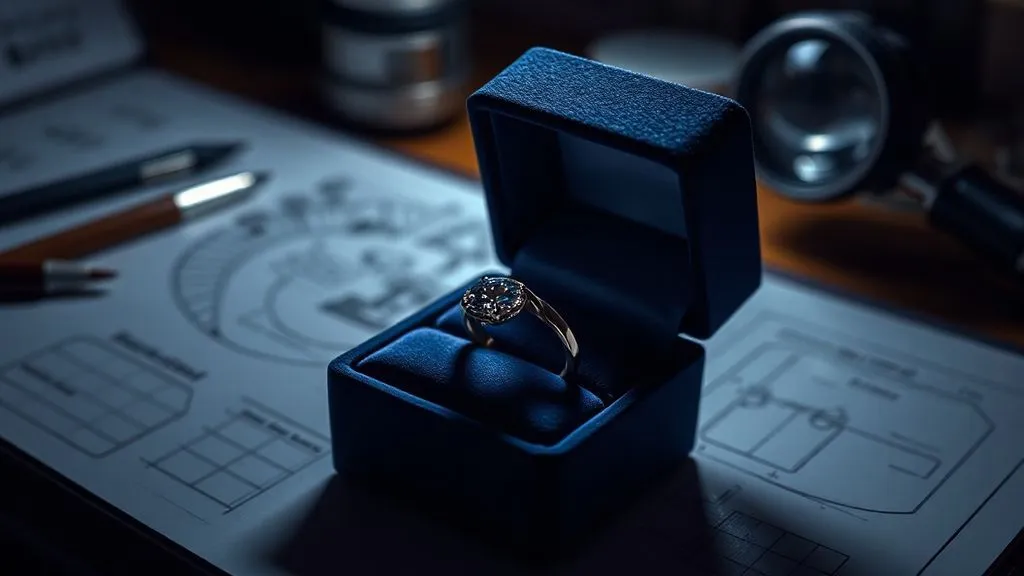
What to do when a client rejects their custom engagement ring?
For over two decades in the intricate world of bridal fashion, specifically bespoke engagement rings, I've witnessed firsthand the incredible joy of a perfect reveal – and the profound disappointment when a client rejects their custom engagement ring. It's a gut-wrenching moment for any jeweler, a culmination of hours of design, craftsmanship, and emotional investment, only to be met with a 'no'.
This isn't just a minor hiccup; it’s a significant blow to your business, your reputation, and frankly, your confidence. The pain point is palpable: wasted resources, potential financial loss, and the looming threat of negative word-of-mouth in an industry built on trust and dreams. It’s a scenario that every custom jeweler dreads, yet few are truly prepared to navigate with grace and strategic efficacy.
Today, I'm going to share a definitive, expert-level framework, drawn from my extensive experience, to not only address the immediate crisis of a rejected custom engagement ring but also to transform these challenging situations into opportunities for growth, stronger client relationships, and refined business processes. You'll learn actionable steps, communication strategies, and preventative measures that promise to turn potential failures into remarkable successes.
The Initial Shock: Navigating the Immediate Aftermath
When a client expresses dissatisfaction, especially outright rejection, for a piece as personal as a custom engagement ring, the first few moments are critical. Your immediate reaction sets the tone for everything that follows. I’ve seen jewelers react with defensiveness, frustration, or even despair, and these responses almost always escalate the situation negatively.
Emotional Intelligence and Professional Poise
My first piece of advice is always to cultivate an immediate sense of calm. Take a deep breath. Remember, this isn't necessarily a personal attack on your skill, but a mismatch between expectation and reality for the client. Your role is to be the professional expert, the problem-solver, not to internalize their disappointment. Maintain a calm demeanor, offer empathy, and avoid any blame. Use phrases like, "I understand this isn't what you envisioned, and I want to make sure we get this right for you." This immediately shifts the focus to resolution.
Documenting the Rejection: The First Critical Step
Before any solutions are discussed, it's paramount to meticulously document the client's specific concerns. This isn't about building a case against them; it's about gathering precise data to inform your next steps. Ask open-ended questions: "Could you please describe exactly what isn't meeting your expectations?" or "What specific elements of the design are not working for you?" Document every detail: the date, time, specific complaints, and the client's emotional state. This record will be invaluable for internal review and any potential rework.
"The moment of rejection is not the end of the journey, but a pivotal fork in the road. Your response here determines whether you drive away a client or forge a deeper, more resilient relationship." - Industry Veteran Insight

Deconstructing the Disappointment: Root Cause Analysis
Once the initial shock has passed and you've documented their feedback, the real work begins: understanding why the client rejected their custom engagement ring. This requires a forensic approach, digging beyond surface-level complaints to uncover the true divergence between their vision and your creation.
Revisiting the Consultation: Where Did We Diverge?
In my experience, 90% of rejections stem from a breakdown in communication during the initial design consultation or subsequent approval stages. Pull out all your notes, sketches, CAD renderings, wax models, and email correspondence. Compare these against the client's current complaints. Was there a detail overlooked? Was a subtle nuance misunderstood? Perhaps a change was requested verbally but not documented? This deep dive helps you pinpoint the exact moment or detail where the disconnect occurred. It’s not about finding fault, but identifying process weaknesses.
The Power of Visual Aids and Prototypes
Many jewelers underestimate the power of comprehensive visual aids during the design process. A 2D sketch, while a good start, can rarely convey the full volumetric reality of a ring. I advocate for extensive use of 3D CAD renders, photorealistic mock-ups, and whenever feasible, physical wax or resin prototypes. These tools are invaluable for managing client expectations and catching potential issues long before the final metal is cast. A client can better visualize the scale, proportion, and wearability, significantly reducing the chances of a final rejection. As GIA often emphasizes, clarity in communication, especially visual, is paramount in gemology and jewelry design.
| Feedback Category | Client Complaint Examples | Potential Root Cause |
|---|---|---|
| Design Aesthetic | Too bulky, stone setting too high, not delicate enough | Misinterpretation of style notes, lack of comparable visual examples |
| Fit/Comfort | Ring feels uncomfortable, band too wide, doesn't sit right | Incorrect sizing measurement, overlooked anatomical considerations |
| Material/Finish | Metal color isn't right, finish looks dull | Discrepancy in metal sample vs. final product, lighting conditions during viewing |
| Proportion/Scale | Stone looks too small/large, halo is overwhelming | Inadequate 3D rendering, inability to visualize scale from 2D sketches |
Crafting a Solution-Oriented Dialogue
Once you've identified the potential root causes, the next step is to engage the client in a constructive dialogue focused on solutions. This isn't just about offering options; it's about rebuilding trust and demonstrating your commitment to their satisfaction.
Active Listening: Beyond the Surface-Level Complaint
Re-engage with the client, but this time, armed with your internal analysis. Start by reiterating your understanding of their initial concerns. Then, probe deeper using active listening techniques. Sometimes, a client's initial complaint ('I don't like it') masks a more specific, underlying issue ('It doesn't feel like *my* ring,' or 'It looks different than what I saw online'). Ask clarifying questions, paraphrase their statements to ensure you've understood, and allow them to speak without interruption. "So, if I understand correctly, the primary concern is the height of the stone setting, and you'd prefer a lower profile for everyday wear, is that right?" This confirms understanding and makes them feel heard.
Presenting Options: Empowering the Client
Based on your root cause analysis, present a clear, concise menu of viable solutions. This empowers the client and shifts them from a state of dissatisfaction to one of active participation in the resolution. Options might include:
- Minor Adjustments: Reshaping claws, polishing, slight modifications to the band.
- Significant Rework: Re-setting the stone, redesigning a portion of the piece, or even a full remake if justified.
- Alternative Stone/Design: If the core issue is the stone choice or overall aesthetic that cannot be salvaged.
- Store Credit/Exchange: As a last resort, if no design solution is feasible.
Clearly explain the implications of each option regarding cost, timeline, and what elements (if any) might be non-recoverable. Be transparent about additional charges if the rework falls outside the original scope due to new client requests, but also be prepared to absorb costs if the fault lies with your process.
Case Study: How "Eternal Gems" Turned Rejection into Loyalty
Eternal Gems, a bespoke jeweler, faced a critical situation when a client rejected their custom engagement ring, citing the halo as "too chunky" and not reflecting the delicate aesthetic discussed. Their initial CADs were approved, but the client struggled to visualize the final piece. Instead of arguing, the owner, Sarah, revisited her consultation notes. She realized the client had referenced a very specific, ultra-fine halo design from a competitor's image, which Eternal Gems' standard CAD software struggled to render with absolute precision at that scale.
Sarah immediately scheduled a follow-up, presenting two options: a minor adjustment to thin the existing halo (at a reduced cost to the client, absorbing some labor) or a full remake with a new ultra-fine wire halo, utilizing a more advanced rendering software to show the exact new dimensions. She also offered a temporary loan ring for their engagement trip. The client chose the full remake, appreciating Sarah's transparency and proactive solutions. Not only did the client love the second ring, but they became a vocal advocate for Eternal Gems, praising their "unwavering commitment to perfection." This resulted in two more custom orders from their friends.
Remake or Refine? Strategic Pathways Forward
Deciding whether to simply refine the existing piece or undertake a full remake is a pivotal strategic decision. It hinges on the severity of the client's dissatisfaction, the feasibility of modifications, and the financial implications for your business.
The Cost-Benefit Analysis of a Rework
Before committing to a rework, conduct a thorough internal assessment. What is the actual cost of modifying the ring versus melting it down and starting anew? Consider labor, material loss (especially if stones need to be removed and reset, risking damage), and the opportunity cost of tying up your bench time. Sometimes, a full remake, while initially sounding drastic, can be more efficient and cost-effective than trying to "fix" a fundamentally flawed piece, especially if the structural integrity or aesthetic balance would be compromised by extensive modifications. Always factor in the intangible cost of client dissatisfaction and potential negative reviews if you deliver a subpar "fix."
Setting Clear Expectations for the Next Iteration
If you proceed with a rework, clarity is absolutely paramount. Define the scope of work explicitly. Create new sketches, CADs, or prototypes that incorporate the client's revised feedback. Get a fresh, written approval on these new designs before any work commences. Establish a revised timeline and communicate any potential additional costs transparently. This new agreement should be as formal as the original one, ensuring both parties are fully aligned. This step is crucial for preventing a second rejection.
The Financial & Reputational Impact: Mitigating Losses
Beyond the immediate design challenge, a rejected custom engagement ring carries significant financial and reputational risks. Proactive measures and clear policies are your best defense.
Understanding Your Contractual Obligations
Your contract with the client is your legal safeguard. It should clearly outline your policy on custom orders, design approvals, revisions, deposits, and what happens in the event of rejection. Does your contract specify a non-refundable deposit for custom work? Are there fees for design changes after initial approval? A robust, legally sound contract is not just a formality; it's a critical tool for managing expectations and protecting your business. If you don't have one, or if it's vague, consult with legal counsel specializing in small business or retail law immediately. The Gemological Institute of America (GIA) often highlights the importance of ethical business practices, which includes clear contractual agreements.
For further reading on best practices for contracts in custom work, you might find resources from the Jewelers Vigilance Committee (JVC) invaluable.
Building a Strong Refund and Exchange Policy
While custom work is inherently difficult to resell, having a clear policy for rejections is essential. This policy should be transparently communicated at the outset. For example, some jewelers offer store credit for the metal value if a full remake is not feasible, retaining a portion of the labor fee. Others might offer to repurpose the stones into a different piece. The key is consistency and fairness. A well-defined policy helps manage client expectations and provides a clear framework for handling difficult situations, preventing ad-hoc decisions that could lead to inconsistencies or perceived unfairness.
Turning Rejection into Refinement: Enhancing Your Process
Every rejection, though painful, is a valuable data point. It's an opportunity to scrutinize and strengthen your internal processes, ultimately making your business more resilient and client-centric.
Post-Mortem Analysis: Learning from Every Incident
After resolving a rejection, conduct an internal post-mortem. Gather your design team, sales staff, and bench jewelers. Review the entire lifecycle of that specific project: from initial consultation to final delivery (or rejection). Ask:
- What went wrong?
- Where did communication break down?
- Were our visual aids sufficient?
- Could we have asked different questions?
- Was the client's feedback truly understood at each stage?
- How can we prevent this specific issue from recurring?
Document these findings and implement specific changes to your workflow. This continuous improvement mindset is what separates good jewelers from truly exceptional ones.
Investing in Advanced Design Tools and Communication Training
The bridal fashion industry is constantly evolving. Investing in cutting-edge 3D CAD software, photorealistic rendering capabilities, and even virtual reality (VR) tools can significantly bridge the gap between a client's imagination and your physical creation. Furthermore, ongoing training for your staff in active listening, empathetic communication, and conflict resolution is paramount. Great communication skills are as vital as masterful craftsmanship in the custom jewelry business. As Forbes often highlights, customer experience is a key differentiator in luxury markets, and this includes seamless communication.
Cultivating Client Loyalty Beyond the Sale
A rejected custom engagement ring doesn't have to spell the end of a client relationship. In fact, handling such a challenge with grace and professionalism can often forge a deeper, more enduring loyalty than a perfectly smooth transaction.
The Power of Exceptional Service Recovery
Service recovery is the process of turning a dissatisfied customer into a loyal one. When you successfully resolve a rejection, you've demonstrated your commitment, flexibility, and problem-solving prowess. This experience, if handled expertly, can be more powerful than a flawless initial transaction. Clients remember how you made them feel when things went wrong. A client who has seen you go above and beyond to rectify an issue is far more likely to become a brand ambassador, sharing their positive resolution story with friends and family. This is invaluable in an industry driven by personal recommendations.
Reputation Management in the Digital Age
In today's interconnected world, one negative review can have a disproportionate impact. Conversely, a story of exceptional service recovery can be a powerful testament to your brand's integrity. Encourage satisfied clients, especially those who experienced a challenge, to share their positive experiences online. Proactively monitor review sites and social media. Respond professionally to all feedback, positive or negative. Your ability to publicly address and resolve issues speaks volumes about your commitment to customer satisfaction and builds trust within the broader community. A strong online reputation is your most valuable asset.
Understanding the nuances of online reputation management is crucial for any modern business. Resources like Harvard Business Review frequently publish articles on this topic.
Frequently Asked Questions (FAQ)
What if the client's rejection is completely unreasonable or goes against the approved design? This is where your meticulous documentation and robust contract become your shield. If the client approved CADs and wax models, and the final product matches those approvals, you have a strong case. Politely but firmly reiterate the approved design stages. Offer options for rework at an additional cost, clearly explaining that the requested changes fall outside the initial agreement. In extreme cases, if no resolution is possible, your contract should stipulate the non-refundable nature of custom deposits and the finality of approved designs, protecting your time and materials.
How do I prevent rejections from happening in the first place? Prevention is always better than cure. Invest heavily in your initial consultation process. Use multiple visual aids: sketches, 3D CADs, photorealistic renders, and physical wax/resin prototypes. Encourage clients to take their time reviewing approvals. Implement a multi-stage approval process with clear sign-offs at each critical juncture. Most importantly, foster open, honest communication, asking probing questions to truly understand their aesthetic and functional needs. Don't be afraid to gently guide or educate clients if their vision is impractical or structurally unsound.
Should I offer a full refund if a client rejects their custom engagement ring? Generally, a full refund for a custom piece is not advisable, as the item is tailored and often unsellable to another client. Your contract should clearly state your refund policy for custom work. Most jewelers retain a non-refundable deposit to cover design time and initial material costs. If a remake is not possible and the client is unwilling to accept other solutions, you might offer store credit for the metal value or allow them to keep the stones for a future project, minus any labor costs. The goal is to minimize your loss while offering a fair resolution.
How do I handle the emotional toll of a rejection as a jeweler? It's completely normal to feel disheartened when a client rejects your custom engagement ring. Acknowledge these feelings, but don't let them fester. Talk to a mentor, a colleague, or even a business coach. Use the experience as a learning opportunity to refine your craft and processes, rather than internalizing it as a personal failure. Remember your successes and the countless happy clients you've served. Maintaining a healthy work-life balance and having a strong support system is crucial for resilience in this emotionally charged industry.
What if the client threatens negative reviews or legal action? Remain calm and professional. Document all communication. Reiterate your attempts to resolve the issue according to your established policies and contract. If threats escalate, cease direct communication and involve legal counsel immediately. Do not engage in arguments or make promises you cannot keep. If a negative review is posted, respond professionally and factually, offering to resolve the matter offline, without admitting fault. A well-managed response can often mitigate the damage.
Key Takeaways and Final Thoughts
- Proactive Communication is King: Most rejections stem from a breakdown in understanding. Over-communicate and use abundant visual aids.
- Document Everything: From initial consultation to final approval, every detail should be recorded and signed off.
- Empathy and Professionalism: Your immediate reaction to a rejection sets the tone for recovery. Remain calm, listen actively, and focus on solutions.
- Clear Policies and Contracts: A robust legal framework protects your business and manages client expectations.
- Learn and Adapt: Every rejection is a valuable lesson. Use post-mortem analysis to refine your processes and prevent future issues.
- Service Recovery Builds Loyalty: Successfully resolving a rejection can deepen client trust and turn a dissatisfied customer into a loyal advocate.
Navigating the challenge of a client rejecting their custom engagement ring is undeniably tough, but it is far from insurmountable. By adopting a strategic, empathetic, and process-driven approach, you not only resolve the immediate problem but also fortify your business against future challenges. Embrace these moments as opportunities to demonstrate your unwavering commitment to excellence and client satisfaction. Your ability to turn potential failure into a testament of your dedication will ultimately define your legacy in the beautiful, intricate world of bridal fashion.
Recommended Reading
- Transforming Tradition: 7 Steps to Modernize Your Bridal Gown Fit
- 5 Smart Steps: Transitioning Professional Attire to Evening Events Instantly
- 7 Pillars: Proving Ethical Sourcing & Defeating Greenwashing Claims
- 7 Essential Steps: How to Safely Restore Delicate Vintage Lace Wedding Dresses
- 7 Pillars: Justifying Premium Pricing for Unique Luxury Eyewear Frames




Your email address will not be published. Required fields are marked *