

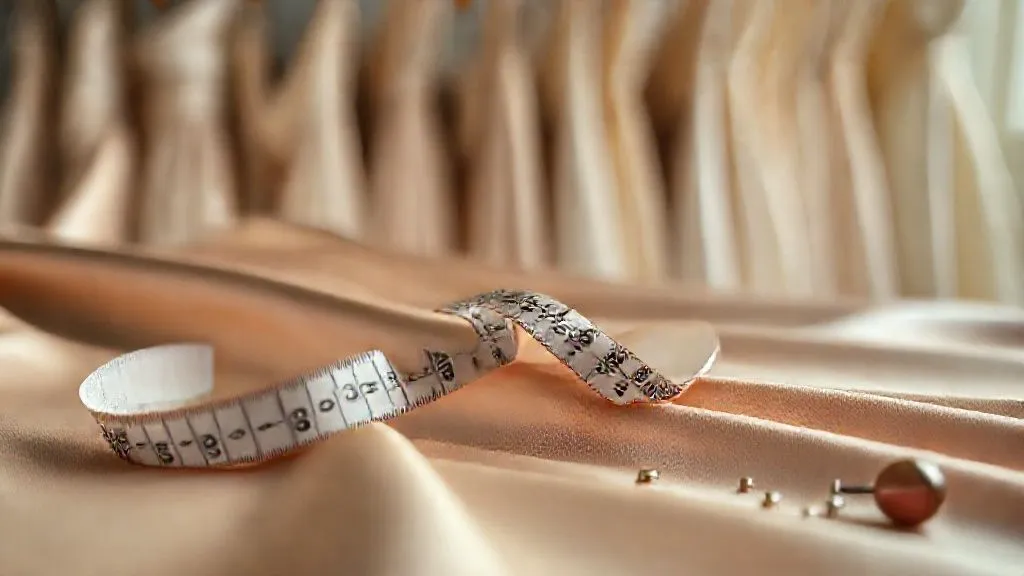
For over 15 years in the intricate world of bridal fashion, I've witnessed the joy and the occasional jolt of pre-wedding planning. One recurring stressor, a seemingly minor detail that can balloon into a major headache, is the bridesmaid dress fitting. I've seen countless bridal parties grapple with ill-fitting gowns, last-minute alterations, and the sheer panic that ensues when a dress simply doesn't fit right.
The truth is, bridesmaid dress sizing issues aren't just an inconvenience; they can dampen the excitement of the wedding journey, add unnecessary financial strain, and even cause friction within the bridal party. From inconsistent sizing charts across brands to the logistical nightmare of coordinating measurements for a geographically dispersed group, the challenges are manifold and often underestimated. The problem isn't a lack of effort, but often a lack of a clear, actionable strategy.
But what if I told you there's a definitive, proactive strategy to sidestep these pitfalls entirely? In this comprehensive guide, I'll share my battle-tested, 6-step framework, honed over years of experience, to ensure every bridesmaid feels confident and comfortable in her gown. We'll delve into actionable techniques, leverage expert insights, and even peek into real-world scenarios to equip you with the knowledge to achieve a seamless, stress-free bridesmaid dress experience. This isn't just about avoiding problems; it's about creating beautiful memories and ensuring your bridal party shines.
Step 1: The Foundation – Early Planning & Crystal-Clear Communication
In bridal fashion, time is your most valuable currency, especially when dealing with a group. The moment you start thinking about bridesmaid dresses, you've already begun the race against the clock. My first piece of advice, forged in the crucible of countless wedding seasons, is to initiate planning much earlier than you think is necessary.
"Procrastination is the enemy of a perfect fit. Start early, communicate clearly, and leave no room for assumption."
Why Early Planning is Non-Negotiable
Many brides underestimate the lead time required for bridesmaid dresses. It's not like picking up an outfit off the rack for a casual event. These are often made-to-order garments, frequently from designers with international production schedules.
- Manufacturing Lead Times: Most bridesmaid dresses take 3-5 months to produce. Custom colors or specific fabrics can extend this.
- Shipping Delays: Unforeseen shipping issues, customs delays, or even just slow transit times can add weeks to the process.
- Alteration Window: You'll need a minimum of 6-8 weeks for alterations. This is crucial for achieving that perfect, tailored fit.
- Contingency Planning: What if a dress arrives damaged, or a bridesmaid's size changes unexpectedly? An early start provides the buffer you desperately need.
By aiming to have dresses ordered at least 6-8 months before the wedding, you create a stress-free timeline that accommodates all these variables.
Establishing Clear Communication Channels
Your bridal party is a team, and like any team, they need a clear playbook and captain. Designate a single point of contact for all dress-related queries, usually yourself or a trusted maid of honor. This prevents miscommunication and ensures everyone receives consistent information.
- Dedicated Group Chat: Create a specific chat (WhatsApp, GroupMe, etc.) just for dress discussions.
- Centralized Document: Share a Google Doc or spreadsheet with all crucial information: chosen dress style, color, designer, ordering deadlines, expected costs, and, most importantly, the exact measurement instructions.
- Regular Updates: Provide periodic updates on the ordering process, even if it's just to say, "No news yet!" This keeps everyone informed and reduces anxiety.
Transparent and consistent communication is the bedrock of preventing bridesmaid dress sizing issues before they even begin.
Step 2: Demystifying Sizing Charts – A Critical First Step
This is where many bridal parties stumble. The biggest myth I've encountered is the belief in a universal "size 8" or "size 12." In reality, clothing sizes are as varied as the designers themselves. Understanding this fundamental truth is key to navigating the sizing maze.
Understanding Brand-Specific Sizing
I cannot stress this enough: bridal sizing is different from street sizing. You might be a size 6 in your favorite jeans, but a size 10 or 12 in a bridesmaid dress. This isn't a reflection of your body; it's simply a different measurement standard. According to experts like Alvanon, a global fit consultancy, there's no industry-wide standardization for clothing sizes, leading to significant discrepancies between brands.
- Always Consult the Specific Chart: Every designer, and sometimes even different styles from the same designer, will have its own unique sizing chart. Do not assume.
- Focus on Measurements, Not Numbers: Teach your bridesmaids to ignore the size number and focus solely on their actual body measurements as they compare to the chart.
- Reviewing Vendor Guidelines: If ordering from an online retailer, meticulously review their specific measurement guides and sizing recommendations. Some may even have virtual fit assistants.
The Pitfalls of 'Street Size' vs. Bridal Size
One of the most common mistakes is for bridesmaids to order their "usual" size without consulting the designer's chart. This almost always leads to a dress that is either too small or uncomfortably tight. Bridal gowns and bridesmaid dresses are often constructed with less stretch and more structured silhouettes, demanding precise measurements.
Actionable Steps for Chart Comparison:
To avoid this pitfall, I recommend a systematic approach:
- Obtain All Relevant Sizing Charts: Before placing any orders, gather the exact sizing chart for the chosen dress designer and style.
- Distribute the Charts Clearly: Share these charts with your bridesmaids, highlighting that they *must* use these specific charts, not their regular clothing sizes.
- Explain the Discrepancy: Take a moment to educate your bridal party about the difference between street sizing and bridal sizing to manage expectations and prevent emotional distress over a "larger" size number.
- Create a Comparison Matrix: If considering multiple designers, create a simple table comparing how each designer's chart translates to actual body measurements. This can be particularly insightful.
Step 3: Precision is Power – The Art of Accurate Measurements
Once you understand the sizing charts, the next critical step is obtaining accurate body measurements. This is arguably the most important stage in preventing bridesmaid dress sizing issues. Even the best sizing chart is useless if the input data is flawed.
DIY vs. Professional Measurements: Weighing the Options
While DIY measurements are possible, I always advocate for professional measurements whenever feasible. The minimal cost typically outweighs the potential heartache and expense of ordering the wrong size.
- Professional Measurements (Recommended):
- Pros: Taken by experienced individuals (tailors, bridal salon consultants) who know exactly where to measure, how to hold the tape, and what posture to use. Reduces human error significantly.
- Cons: Requires a visit to a tailor or salon, which might be inconvenient for geographically dispersed bridesmaids.
- DIY Measurements:
- Pros: Convenient, can be done at home.
- Cons: High risk of error if not done correctly. Common mistakes include measuring too loosely/tightly, incorrect posture, or measuring the wrong part of the body.
If professional measurements aren't an option for all bridesmaids, provide extremely detailed instructions for DIY measurements.
How to Take Accurate Body Measurements (If DIY is Necessary)
For DIY measurements, precision is paramount. Here's my step-by-step guide, which I've shared with countless brides over the years:
- Gather Your Tools: You'll need a flexible, non-stretchable tailor's measuring tape and a pen and paper. Avoid using a metal construction tape measure.
- Dress Appropriately: Bridesmaids should wear the undergarments (bra, shapewear) they intend to wear with the dress. This ensures the most accurate fit.
- Stand Correctly: Stand upright with feet together, arms relaxed at your sides. Do not suck in or puff out.
- Get Help: It's nearly impossible to measure yourself accurately. Have a friend or family member take the measurements.
- Measure Multiple Times: Take each measurement at least twice to ensure consistency.
- Key Measurements: Focus on these critical areas as they correspond directly to most sizing charts:
- Bust: Measure around the fullest part of your bust, typically across the nipple line. Keep the tape horizontal and snug but not tight.
- Waist: Find the smallest part of your natural waist, usually 1 inch above your navel. Bend to the side to locate the natural crease. Keep the tape snug.
- Hips: Measure around the fullest part of your hips and rear, ensuring the tape is level all around.
- Hollow-to-Hem (for length): If ordering a standard length, measure from the hollow of your throat (at the base of your neck, where your collarbones meet) straight down to where you want the hem to fall. Crucially, wear the shoes you plan to wear with the dress.
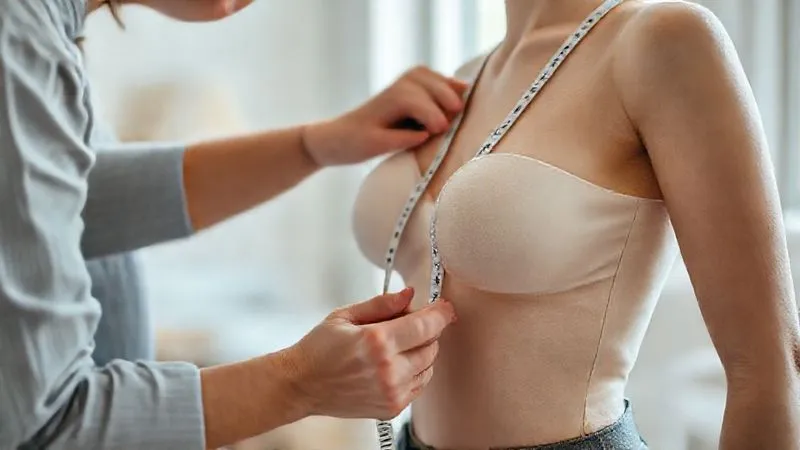
Record all measurements clearly and compare them directly to the designer's sizing chart. Do not round up or down aggressively.
| Measurement | Instructions | Tips |
|---|---|---|
| Bust | Measure around the fullest part of your bust, keeping the tape horizontal. | Wear the bra you plan to wear. Don't pull too tight. |
| Waist | Measure around the smallest part of your waist, usually 1 inch above the navel. | Bend to the side to find your natural waistline. Keep tape snug but not digging in. |
| Hips | Measure around the fullest part of your hips and rear. | Stand with feet together. Ensure the tape is level all around. |
| Hollow-to-Hem | Measure from the hollow of your throat (at the base of your neck) straight down to where you want the hem to fall. | Wear the shoes you plan to wear. Have someone else measure for accuracy. |
Step 4: Strategic Sizing Decisions – When in Doubt, Size Up!
After collecting precise measurements and comparing them to the designer's chart, you'll inevitably encounter situations where a bridesmaid's measurements fall between two sizes. This is a common scenario, and how you handle it can make or break the fitting experience.
The Golden Rule of Bridesmaid Dress Sizing
My golden rule, refined over years of experience, is simple: Always size up if measurements fall between two sizes. It is infinitely easier for a skilled tailor to take a dress in than it is to let it out. When a dress is too small, there's often very little seam allowance to work with, making the alteration costly, difficult, or sometimes even impossible.
"It's far easier to take a dress in than to let it out. Always prioritize comfort and the ability to alter without compromising the dress's integrity."
Consider the cost implications: taking in a dress is generally a more straightforward and less expensive alteration than letting one out, which often requires adding fabric or completely recutting seams.
Considering Body Changes & Alteration Capabilities
Life happens. Bridesmaids might experience slight weight fluctuations, or in some cases, pregnancy, between the time of ordering and the wedding day. Sizing up provides a crucial buffer for these potential changes. A dress that is slightly too large offers flexibility; a dress that is too small offers only stress.
Furthermore, understand the limitations of alterations. While skilled tailors can work wonders, they are not magicians. A dress that is several sizes too small cannot be magically expanded. Conversely, a dress that is a size or two too big can almost always be beautifully tailored to fit perfectly.
Step 5: Leveraging Technology & Virtual Consultations
In our increasingly connected world, technology offers valuable tools to streamline the bridesmaid dress sizing process, especially for bridal parties spread across different cities or even countries. While not a replacement for physical measurements, these tools can augment your strategy.
Virtual Fitting Rooms and AI Sizing Tools
Many online bridal retailers now offer virtual fitting rooms or AI-powered sizing tools. These can be helpful for initial style visualization and providing a preliminary size recommendation based on entered measurements or even body scans from photos.
- Utility: Can help bridesmaids visualize how a style might look on their body shape and provide a starting point for size selection.
- Limitations: These tools are only as accurate as the data input and the algorithms. They cannot account for nuances in body shape, fabric drape, or personal fit preferences. Always cross-reference their recommendations with the actual designer's sizing chart.
Use these as a guide, but always prioritize the hard data of actual measurements against the designer's specific chart.
Organizing Virtual Measurement Parties
For bridesmaids who cannot get professional measurements or are geographically distant, a virtual measurement party can be a surprisingly effective solution. I've seen this work wonders for many of my clients.
- Schedule a Group Video Call: Pick a time when all bridesmaids can connect via Zoom, Google Meet, or FaceTime.
- Pre-Send Instructions: Before the call, send each bridesmaid the detailed measurement instructions (from Step 3) and emphasize they need a flexible tape measure and a helper.
- Live Guidance: During the call, you (or a designated, experienced person) can guide each bridesmaid through the measurement process, offering real-time feedback and ensuring correct technique.
- Shared Document: Have a shared online document where measurements can be immediately entered and verified.
This approach minimizes errors from solo DIY measurements and ensures everyone feels supported and confident in their numbers.
Step 6: The Alteration Buffer – Budgeting & Timeline
Even with the most meticulous planning and precise measurements, alterations are almost always a necessary part of achieving the perfect bridesmaid dress fit. It's crucial to factor this into both your budget and your timeline to prevent last-minute stress.
Why Alterations Are Almost Always Necessary
Off-the-rack or even made-to-order dresses are created to standard size charts, not to the unique contours of an individual's body. No two bodies are exactly alike, and minor adjustments are often needed to achieve a truly flattering and comfortable fit.
- Length Adjustments: This is perhaps the most common alteration, ensuring the hem falls perfectly with the chosen shoes.
- Strap Adjustments: Straps often need to be shortened or tightened for proper support and fit.
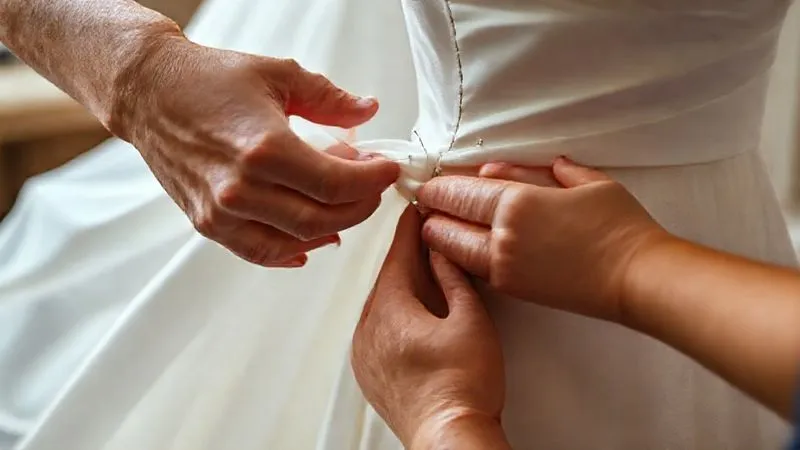
- Bodice Nips & Tucks: Taking in the waist, bust, or hips slightly creates a more custom, tailored silhouette.
- Minor Repairs: Occasionally, a small seam might need reinforcement or a button resewn.
Viewing alterations as an integral part of the dress-fitting process, rather than an unexpected hassle, shifts your mindset and prepares you for success.
Budgeting for Alterations: A Non-Negotiable Expense
Many bridal parties overlook the cost of alterations, leading to unexpected expenses. I always advise brides to communicate this cost expectation to their bridesmaids upfront.
According to Brides.com, alteration costs for bridesmaid dresses can range anywhere from $50 to $300+, depending on the complexity of the work, the fabric, and the tailor's rates. Factor this into your overall bridesmaid dress budget and ensure everyone is aware.
Case Study: How Emily Ensured Perfect Fits for Her Bridesmaids
Emily, a meticulous bride from Seattle, faced the daunting task of coordinating bridesmaid dress orders for a party scattered across three states and one in Canada. Faced with the challenge of preventing bridesmaid dress sizing issues, she implemented a strict 6-month timeline. First, she selected a designer known for comprehensive sizing charts and consistent fit, making her research a priority.
She then mandated professional measurements for all bridesmaids, offering to reimburse a portion of the cost to encourage compliance. For her bridesmaid abroad, she arranged a virtual consultation with a local tailor in their city to guide the measurement process, ensuring accuracy despite the distance. By ordering dresses based on the largest individual measurement (following the 'size up' rule) and allowing a generous 8-week buffer for alterations, Emily ensured every dress arrived with ample time for adjustments. The result? A perfectly coordinated, comfortable bridal party, all without a single sizing panic, allowing everyone to focus on celebrating her big day.
Step 7: Final Checks & Dress Rehearsals
You've planned meticulously, measured accurately, and budgeted for alterations. The final step in preventing bridesmaid dress sizing issues is to ensure everything comes together perfectly in the days and weeks leading up to the wedding.
The Importance of a Final Fitting
I always recommend a final fitting for all bridesmaids, ideally 1-2 weeks before the wedding. This allows for any last-minute, minor tweaks and ensures comfort. At this fitting, bridesmaids should bring the exact shoes and undergarments they will wear on the wedding day. This is crucial for verifying hem length and overall silhouette.
- Verify Comfort: Ensure they can move, sit, and dance comfortably.
- Check for Snags/Damage: A final inspection can catch any issues that might have occurred during storage or transport.
- Address Last-Minute Concerns: Sometimes, a bridesmaid might have a minor concern that can be quickly addressed.
Dress Rehearsal: More Than Just Logistics
A full dress rehearsal, where bridesmaids wear their complete outfits (dresses, shoes, accessories), is invaluable. This isn't just for practicing walking down the aisle; it's a final opportunity to see how the dresses look and feel in motion.
- Visual Cohesion: See how the entire bridal party looks together.
- Practicality Check: Identify any potential wardrobe malfunctions or discomfort before the actual day.
- Photographic Preview: Get a sense of how the dresses will photograph.
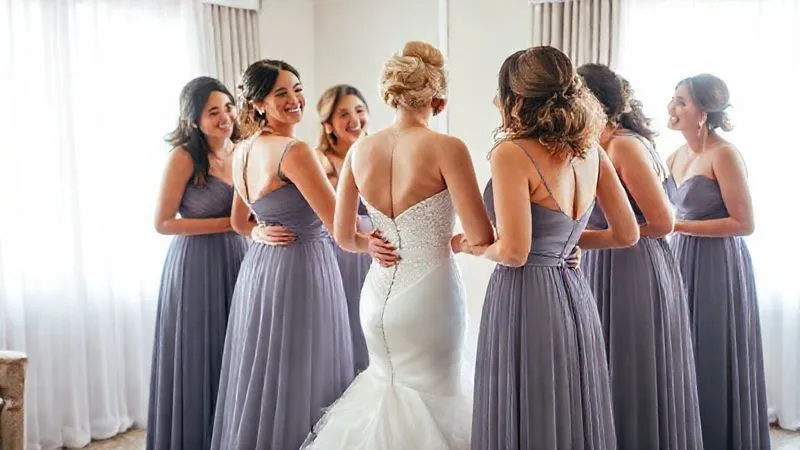
Taking these final steps ensures that all your hard work in preventing bridesmaid dress sizing issues culminates in a flawless presentation on the wedding day.
Frequently Asked Questions (FAQ)
Q: What if a bridesmaid's measurements fall between two sizes? A: This is a classic dilemma and one of the most common bridesmaid dress sizing issues. My expert advice, almost without exception, is to size up. It is significantly easier and less costly for a skilled tailor to take a dress in than to attempt to let it out. Fabric allowance for letting out is often minimal, if existent at all, and can sometimes compromise the dress's structure or fabric integrity. Always err on the side of a larger size to ensure there's enough material to work with for a perfect, comfortable fit.
Q: Is it okay for bridesmaids to order different sizes from the same brand? A: Absolutely, and it's highly recommended! Each bridesmaid should order the size that corresponds to her individual measurements according to the specific brand's sizing chart. Do not try to force a uniform "street size" or make assumptions that everyone will be the same size. The goal is a perfect, flattering fit for each person, not a matching size tag. Embracing individual sizing is a key strategy to prevent bridesmaid dress sizing issues.
Q: How far in advance should we order bridesmaid dresses to avoid sizing issues? A: I typically recommend ordering bridesmaid dresses at least 6-8 months before the wedding date. This generous timeline accounts for manufacturing lead times (which can be 3-5 months, especially for custom colors or styles), shipping, and crucially, a dedicated 6-8 week window for alterations. Rushing this process significantly increases the risk of stress, costly express shipping fees, and hurried, potentially imperfect, alterations. Early ordering is a cornerstone of any effective strategy to prevent bridesmaid dress sizing issues.
Q: What if a bridesmaid is pregnant or planning to become pregnant before the wedding? A: This requires careful planning and open communication. If early in pregnancy, consult with the bridal salon or designer about maternity sizing options or specific styles that can accommodate a growing bump (e.g., empire waist, A-line, or styles with more stretch). Ordering a larger size and planning for extensive alterations closer to the wedding date is often the best approach. Some brands also offer "bump friendly" styles that are designed with this in mind. Discussing this with the bridesmaid and the vendor early allows for proactive, stress-free solutions.
Q: Can online sizing tools or virtual try-on apps truly prevent sizing issues? A: While online sizing tools and virtual try-on apps have certainly advanced, they should be used as supplementary guides, not definitive solutions. They can offer a good starting point or help visualize styles, but they cannot replicate the precision of professional, physical measurements or the nuance of a skilled tailor's eye. Always cross-reference their suggestions with the brand's official sizing chart and, ideally, professional measurements. They are a helpful resource but not a foolproof strategy to prevent bridesmaid dress sizing issues.
Key Takeaways and Final Thoughts
Navigating the world of bridesmaid dress sizing can seem daunting, but as an experienced industry specialist, I've seen firsthand how a well-structured approach can transform potential headaches into a seamless, joyful experience. The key to answering 'What's the best strategy to prevent bridesmaid dress sizing issues?' lies in a combination of proactive planning, meticulous attention to detail, and clear communication.
- Start Early & Communicate Clearly: Proactive planning and open dialogue are your strongest allies in managing expectations and timelines.
- Master the Sizing Chart: Understand that bridal sizing differs from street sizing; always consult the specific designer's chart.
- Prioritize Accurate Measurements: Invest in professional measurements or follow meticulous DIY steps to ensure precise data.
- Size Up When in Doubt: Alterations are almost always inevitable; make them easier and more affordable by having ample fabric to work with.
- Budget for Alterations: Consider this a standard, non-negotiable part of the bridesmaid dress expense.
- Don't Skip the Final Fitting: Ensure perfection and comfort with a pre-wedding dress rehearsal and final fitting.
In my extensive experience, preventing bridesmaid dress sizing issues isn't about luck; it's about a well-executed strategy and empowering your bridal party with the right information. By adopting these proven steps, you're not just avoiding potential wedding day mishaps; you're contributing to a smoother, more joyful experience for everyone involved. A confident, comfortable bridal party truly enhances the magic of your special day. Embrace these strategies, and let the focus remain where it should be: on celebrating love, friendship, and creating unforgettable memories, free from sizing worries.
Recommended Reading
- Safeguard Digital Fashion: 5 Blockchain Strategies for Design Rights
- Chafing Crisis? 7 Design Principles for Specialized Activewear
- 7 Steps to Regain Customer Trust After Beauty Product Efficacy Complaints
- Scaling Haute Couture: 7 Strategies to Preserve Artisan Quality
- 7 Strategies: How Fashion Brands Can Profit from Garment Repair Services


Your email address will not be published. Required fields are marked *