

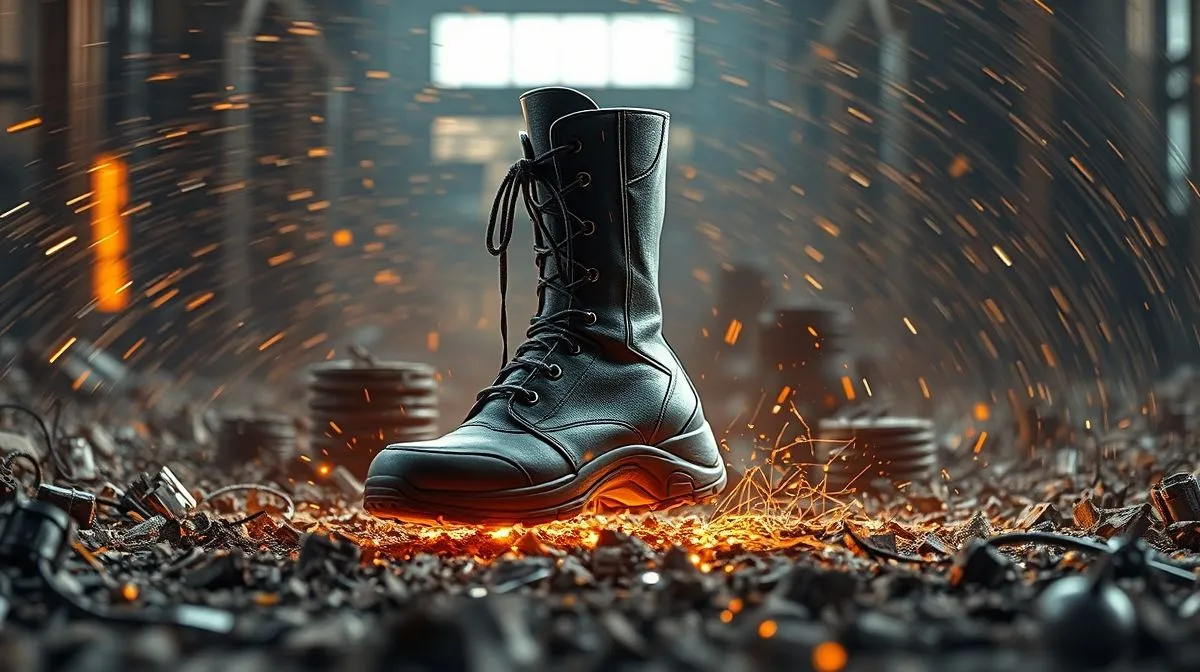
What are the key manufacturing challenges for innovative boot styles?
In my fifteen years navigating the intricate world of footwear manufacturing, I've seen countless innovative boot designs emerge from the drawing board, only to face formidable challenges on the factory floor. The leap from a brilliant concept to a mass-producible product is never simple, but for truly innovative styles, these hurdles become significantly steeper.
The core problem, in my experience, lies in the fact that innovation often demands a departure from established processes, materials, and machinery. This necessitates a fundamental re-evaluation of every step in the manufacturing journey.
"Innovation in boot design isn't just about a new aesthetic; it's about rewriting the manufacturing playbook, often from scratch, and that's where the real test of a product's viability begins."
Let's delve into the key manufacturing challenges that innovative boot styles frequently encounter:
-
Novel Material Integration and Compatibility: Innovative boots frequently leverage new, high-performance, or sustainable materials that have never been combined in traditional footwear. This presents a unique set of challenges.
- For instance, integrating a flexible, conductive e-textile for smart features with a rigid, waterproof membrane and a durable leather upper requires specialized bonding agents and stitching techniques. Their different thermal expansion rates and adhesion properties can lead to delamination or compromised functionality under stress.
- A common mistake I see is underestimating the complexity of combining materials like bio-based polymers with traditional rubber or EVA. Their chemical compositions often demand entirely new adhesive formulations or welding processes, which can take months of R&D to perfect.
-
Complex Geometries and Construction Methods: Modern boot designs often feature intricate, asymmetrical shapes, multi-component uppers, or integrated features that defy conventional lasting and assembly techniques. This moves beyond the capabilities of standard patterns and molds.
- Consider a boot designed with an integrated exoskeleton structure or a unique, wrap-around lacing system that is molded directly into the upper. Lasting such a design, ensuring proper fit, and achieving consistent tension across all elements becomes an engineering feat. Traditional lasting machines, designed for simpler, symmetrical forms, simply aren't equipped for this.
- In one project, we had to develop custom 3D-printed lasts for an asymmetrical boot upper, which then required entirely new pattern engineering software and highly skilled operators to translate the 3D model into flat pattern pieces that could be sewn without puckering or distortion.
-
Specialized Tooling and Process Adaptation: Factories are typically optimized for specific production flows and machinery. Introducing an innovative boot often means these setups are insufficient, requiring significant investment in new tooling or even entirely new production lines.
- For example, a direct-injection molded sole with multi-density zones and integrated cushioning elements demands custom molds that are far more complex and expensive than those for standard cup soles. These molds require precision engineering to ensure material flow and consistent density across different areas.
- In my experience, a brand introducing a boot with an advanced thermal-welded upper might need to invest in new ultrasonic welding machines, specialized jigs, and a clean-room environment, completely disrupting their traditional stitching-based assembly line. This capital outlay can be a major barrier, particularly for startups.
-
Skilled Labor and Knowledge Transfer: The human element is critical. Innovative manufacturing processes often outpace the existing skill sets of a factory's workforce. Traditional shoemakers, while incredibly skilled, may lack expertise in new technologies or materials.
- Assembling a boot with integrated electronics, such as pressure sensors or micro-heaters, isn't just a matter of stitching; it requires a delicate blend of traditional craftsmanship and electronics assembly knowledge. Training existing staff in these new disciplines, or recruiting specialists, is a substantial undertaking.
- I've seen factories bring in external consultants for months to train teams on new bonding techniques for advanced composites, or on operating sophisticated 3D knitting machines for seamless uppers. This knowledge transfer is crucial, but it's also time-consuming and costly, often extending the production timeline significantly.
Understanding the Root of the Problem: Why Do Manufacturing Challenges for Innovative Boot Styles Happen?
In my fifteen years navigating the intricate world of footwear manufacturing, I've observed a recurring theme: true innovation often collides head-on with established production norms. The root of manufacturing challenges for innovative boot styles isn't simply about difficulty; it's about a fundamental disconnect between novel design aspirations and conventional factory capabilities.
A common mistake I see brands make is underestimating the ripple effect of even a seemingly small design change. When you introduce a new material, a complex construction method, or an unconventional aesthetic, you're not just changing a component; you're often asking a factory to rethink its entire workflow, tooling, and even its labor skill set.
The core problem isn't the innovation itself, but the lack of an integrated strategy that bridges the gap between creative vision and manufacturing reality from the very outset.
One primary culprit is the **unfamiliarity with novel materials and construction techniques**. Factories thrive on repetition and established processes. When an innovative boot design calls for materials like advanced composites, bio-based leathers requiring specific bonding agents, or intricate multi-layer laminations, existing machinery and standard operating procedures often fall short.
- Material Properties: A new synthetic might demand different cutting speeds, heat tolerances for lasting, or specialized adhesives that traditional leathers don't. This necessitates new equipment or extensive calibration.
- Complex Assembly: Designs featuring internal bootie constructions, external exoskeletons, or seamless bonding methods require re-engineering the assembly line and often, new jigs and fixtures.
- Finishing Challenges: Achieving a consistent finish on novel textures or intricate debossed patterns can require specialized post-production treatments or manual labor, impacting scalability and cost.
Another significant hurdle stems from the **skill gap within the manufacturing workforce**. Many factories possess highly skilled artisans proficient in traditional boot-making. However, these skills don't always directly translate to handling advanced manufacturing processes or unfamiliar materials.
For instance, bonding a new type of waterproof membrane flawlessly requires a different touch and understanding than stitching a traditional leather upper. In my experience, I’ve seen production lines grind to a halt because operators lacked the specific training or experience with a new adhesive’s curing time or the precise pressure needed for a heat-welded seam.
The third critical root cause is often a **disconnect between design intent and manufacturing feasibility**. Designers, driven by aesthetics and performance, sometimes create concepts without a deep understanding of the practical limitations of mass production. This isn't a criticism of creativity; rather, it highlights the essential need for early and continuous collaboration.
Failing to engage manufacturers early in the design process can lead to prototypes that are beautiful but simply unscalable or prohibitively expensive to produce. I've witnessed countless hours lost trying to adapt a complex stitching pattern designed for a single prototype into a jig-based, high-volume production method, only to realize it was fundamentally impossible without a complete redesign.
Finally, **supply chain fragility for specialized components** plays a crucial role. Innovative boot designs often rely on unique hardware, advanced sole compounds, or proprietary textile blends. Sourcing these components can introduce significant risk.
Unlike standard components with multiple suppliers, novel elements might come from a single, often smaller, vendor. This creates vulnerabilities related to lead times, quality control, minimum order quantities, and potential disruptions, all of which can severely impact production schedules and costs.
How do material innovations impact boot production?
Material innovation stands as both the engine of progress and a formidable manufacturing hurdle in the boot industry. In my fifteen years overseeing production lines, I've witnessed firsthand how a groundbreaking textile or polymer can redefine performance, yet simultaneously demand a complete overhaul of established processes.
The initial impact is felt in design and engineering. Traditional pattern-making and CAD models, optimized for leather or conventional synthetics, often fall short when dealing with multi-layered composites or highly elastic membranes. You're not just swapping one material for another; you're fundamentally altering the boot's structural dynamics.
Next, consider the supply chain complexities. Sourcing innovative materials often means engaging with specialized, smaller-batch suppliers, far removed from the high-volume tanneries we've relied on for decades. This can lead to increased lead times, higher minimum order quantities (MOQs), and a greater need for rigorous supplier vetting.
A common mistake I see is underestimating the inherent risk. Relying on a single, novel material source without robust contingency plans can bring production to a screeching halt if an unforeseen issue arises with that supplier.
The manufacturing floor itself undergoes a significant transformation. For instance, advanced composites or highly abrasion-resistant fabrics often cannot be cut efficiently with traditional die-cutting presses. They require precision laser or waterjet cutting systems, which demand different tooling, calibration, and operator skills.
Perhaps the most profound impact is on joining techniques. Many innovative materials resist conventional stitching due to their delicate structure, impermeability, or self-sealing properties. Here, we pivot towards sophisticated methods like:
- Ultrasonic welding: Ideal for thermoplastic films and non-woven synthetics, creating seamless, waterproof bonds without needles.
- High-frequency (RF) welding: Used for bonding PVC, PU, and other materials, particularly in waterproof applications, by generating heat directly within the material.
- Advanced adhesive bonding: Employing specific chemical formulations and curing processes that are material-specific, often requiring climate-controlled environments.
Each of these methods requires specialized machinery, strict process controls, and a highly trained workforce, moving beyond the familiar realm of needle and thread.
This brings us to tooling and workforce investment. Integrating new materials isn't merely about buying a different roll of fabric; it's about re-tooling production lines, investing in new jigs, molds, and machinery. More critically, it requires extensive retraining for your team, transforming traditional bootmakers into skilled technicians operating advanced equipment.
Quality assurance protocols must also evolve. The metrics for testing the durability, flexibility, and waterproofness of a traditional leather boot are vastly different from those required for a graphene-infused textile or a bio-based polymer. New materials often necessitate bespoke testing methodologies to validate their unique performance claims.
Despite these hurdles, the payoff for mastering material innovation is immense. It allows you to create boots that are lighter, more durable, more sustainable, or offer unprecedented performance characteristics like enhanced breathability or thermal regulation. This isn't just about incremental improvement; it's about market differentiation and competitive advantage.
For example, embracing recycled PET materials for uppers or bio-based foams for midsoles doesn't just reduce your environmental footprint; it resonates deeply with a growing segment of environmentally conscious consumers. It’s a strategic move, not just a technical one.
The true innovation isn't just in the material itself, but in the manufacturing ingenuity applied to bring its potential to life. Ignoring the production implications of novel materials is a sure path to innovation graveyard.
What are common quality control issues in innovative footwear?
In my fifteen years navigating the intricate world of footwear manufacturing, I've seen firsthand how innovation, while exciting, often introduces a new layer of complexity to quality control. It's no longer just about consistent stitching or flawless leather; we're dealing with unprecedented material combinations and integrated technologies that demand a paradigm shift in our QC approach. A primary challenge I consistently encounter is the **material integration paradox**. Innovative boots often fuse disparate materials—think cutting-edge composites with bio-based polymers, or smart textiles with traditional leathers. While individually high-performing, their interaction points become critical failure zones. In my experience, the adhesion and bonding between these novel, often chemically diverse, substrates are a common source of delamination and structural weakness. Here are some specific issues related to material integration:- Incompatible bonding agents: A glue designed for rubber might fail catastrophically when applied to a new, hydrophobic performance fabric.
- Differential expansion/contraction: Materials with varying thermal properties can stress bond lines, leading to separation in extreme temperatures.
- Surface preparation inconsistencies: Novel surfaces might require specific, often complex, preparation methods that are difficult to scale consistently in production.
"Innovation without meticulous quality control is merely a prototype on a grand scale. The true test of a novel boot isn't just its groundbreaking design, but its unwavering reliability when it matters most."Finally, achieving **aesthetic consistency** with innovative materials and processes can be surprisingly difficult. Transparent or translucent components might highlight internal imperfections that would be hidden in opaque designs. The finish on a new type of synthetic upper might show subtle variations in texture or color that are outside acceptable tolerances, yet are inherent to the new material's production method. This often necessitates a re-evaluation of what constitutes an acceptable aesthetic standard for truly innovative products.
How can designers collaborate better with manufacturers for new boot styles?
In my experience, the most significant hurdle for innovative boot styles often isn't a lack of creative vision, but a disconnect between that vision and manufacturing reality. Designers frequently work in a vacuum, presenting a "finished" concept that, while stunning, proves impossible, impractical, or prohibitively expensive to produce at scale. To bridge this gap, designers must actively cultivate a collaborative partnership with their manufacturing counterparts from the earliest conceptual stages. This isn't about stifling creativity; it's about empowering it through informed decision-making.A common mistake I see is designers approaching manufacturers with fully rendered designs, asking for a quote. This is akin to asking a chef to cook a meal from a picture without knowing the available ingredients or kitchen equipment. Instead, the process should be an evolving dialogue.
Early engagement is paramount. Bringing manufacturing expertise into the conceptual phase is not a bottleneck; it's an accelerator. Manufacturers can offer invaluable insights into:
- Feasibility of complex geometries or constructions.
- Optimal material choices considering durability, cost, and processability.
- Potential tooling requirements and their associated costs and lead times.
- Ways to simplify a design without compromising its aesthetic or functional intent.
Designers must also embrace a deeper understanding of Design for Manufacturability (DFM). This involves speaking the manufacturer's language, understanding their processes, and appreciating the nuances of their machinery and skilled labor. It's not enough to simply draw a stitch line; one must consider the type of machine required, the thread tension, and the operator's dexterity.
"Innovation thrives at the intersection of imagination and practical execution. A designer's vision, when grounded in manufacturing reality, becomes truly groundbreaking."
Consider a designer aiming for a seamless, minimalist boot upper. Without early collaboration, they might specify a material that cannot be effectively heat-welded or formed with existing equipment, leading to costly re-design or tooling investments. A manufacturer, brought in early, could suggest an alternative material with suitable properties or a slightly modified construction technique that achieves a similar aesthetic with less complexity.
The iterative prototyping phase is where this collaboration truly shines. It should be a continuous feedback loop, not a one-way submission. I often advise joint review sessions where designers and production managers dissect prototypes together.
- Initial Sample Review: Focus on construction, fit, and primary aesthetic. Identify major red flags.
- Material & Component Validation: Test material performance, adhesion, and component integration.
- Process Optimization: Discuss how design elements impact assembly time, waste, and quality control.
- Cost Engineering: Explore design modifications that can reduce material usage or simplify production steps without sacrificing core values.
A designer who understands the properties of different leathers – their stretch, temper, and cutting yield – or the intricacies of sole molding can create designs that are not only beautiful but also inherently efficient to produce. This knowledge transforms a designer from a mere artist into an architect of footwear, building with an awareness of the structural and material constraints.
Ultimately, fostering better collaboration boils down to building strong, respectful relationships. It's about mutual education and shared problem-solving. When designers view manufacturers not just as vendors but as extensions of their design team, the potential for truly innovative, manufacturable, and commercially successful boot styles becomes limitless.
Reading Recommendations:
- The Ultimate Guide: How to Preserve Haute Couture Runway Masterpieces Forever
- Ultimate Guide: How to Style Fashion Lookbook Outfits
- Boost Your Tee Drops: 7 Proven Ways to Ignite Streetwear Hype Now
- The Unseen Culprit: Why Does Your Activewear Still Smell After Washing?
- Verify Vintage: 7 Steps to Ethically Authenticate Apparel for Profit
Key Points and Final Thoughts
After decades in this industry, I've seen countless brilliant boot designs falter not from a lack of vision, but due to underestimating the manufacturing complexities involved. The seven hurdles we've explored are not roadblocks, but rather critical checkpoints that, when navigated skillfully, pave the way for true innovation to flourish. A common mistake I see, especially with startups or even established brands venturing into new territory, is the belief that design can be finalized in a vacuum, separate from manufacturing realities. In my experience, this siloed approach almost guarantees costly delays, redesigns, and ultimately, a compromised product. The most successful innovative boot projects I've been involved with always featured a tightly integrated team from day one. This **cross-functional collaboration** is non-negotiable, ensuring that design feasibility, material sourcing, and production capabilities are all considered concurrently."Innovation in footwear isn't just about what you design, but how meticulously you plan to bring that design to life, one stitch and one component at a time."Successful navigation of these manufacturing hurdles hinges on several key principles: * **Embrace Design for Manufacturability (DFM) Early:** Integrate manufacturing engineers and material scientists into the design process from the very first sketch. This proactive approach identifies potential production bottlenecks and cost drivers before they become ingrained. * **Prioritize Material-Process Synergy:** Never underestimate the symbiotic relationship between novel materials and the processes required to manipulate them effectively. For example, integrating advanced waterproof-breathable membranes wasn't just about sourcing the membrane; it demanded developing entirely new lamination techniques and seam-sealing technologies to maintain integrity and performance at scale. * **Invest in Prototyping and Testing Iteratively:** Moving from concept to commercial viability requires a rigorous cycle of prototyping, testing, and refinement. Each iteration provides invaluable data, allowing for adjustments that optimize both performance and production efficiency. * **Forge Strong Supplier Partnerships:** Your suppliers are not merely vendors; they are extensions of your manufacturing capability. Cultivate deep relationships built on trust and mutual understanding, especially when pushing the boundaries with new materials or complex assemblies. * **Scalability is Not an Afterthought:** A brilliant prototype is a work of art; reproducing that perfection across 10,000 units is a science. Plan for **scalable production** from the outset, considering tooling, labor, and quality control mechanisms that can operate consistently at volume. Ultimately, bringing an innovative boot to market is an arduous journey, but the reward – a product that truly stands apart and delights its wearers – is immense. Approach these hurdles with respect, armed with knowledge, and a collaborative spirit. That, truly, is the secret sauce to transforming visionary concepts into tangible, market-leading footwear.


Your email address will not be published. Required fields are marked *