

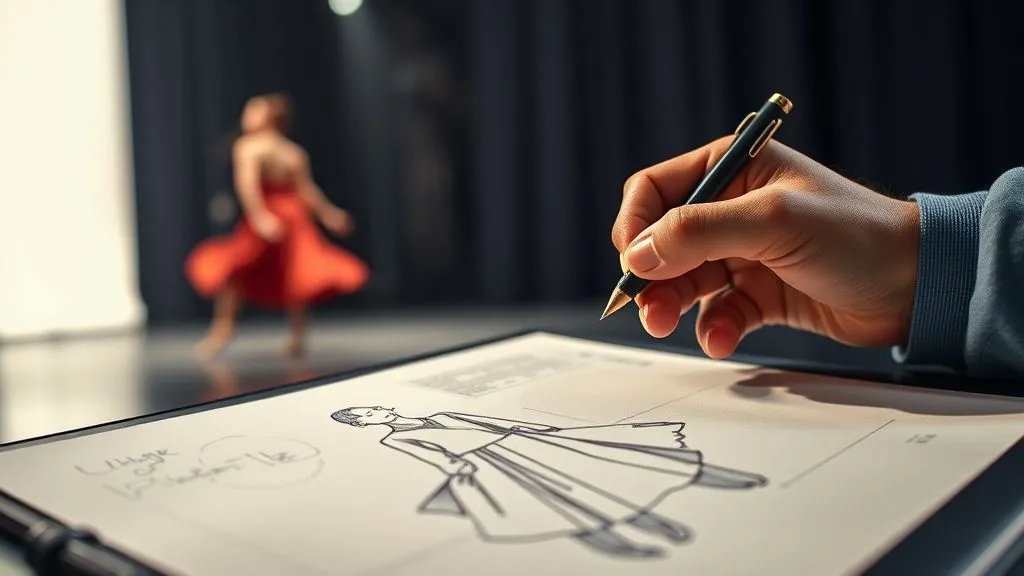
Urgent: How to sketch dynamic costume drape for actor movement?
For over two decades in the demanding world of costume design, I've seen countless brilliant concepts fall flat because their initial sketches lacked one critical element: the breath of life, the promise of movement. It's a common oversight, yet one that can derail a production, leading to ill-fitting garments, restricted performances, and ultimately, a compromised artistic vision.
The problem isn't a lack of talent; it's often a disconnect. Designers pour their souls into the silhouette, the embellishments, the color palette, but the fabric's interaction with a moving body – the very essence of a theatrical costume – often remains static on paper. This leads to costumes that look stunning in a still photo but become a liability when an actor leaps, twirls, or engages in intense emotional expression.
This article isn't just a guide; it's a deep dive into the practical, expert-level strategies I've honed over years of trial and error, working with everything from ballet to Shakespeare. You'll learn not just *what* to draw, but *how* to visualize and execute dynamic drape, transforming your sketches into living blueprints for unforgettable performances.
Understanding the Actor's Body in Motion: Anatomy and Kinesiology Basics
Before you even think about fabric, you must understand the canvas it drapes upon: the human body in motion. A costume isn't a static sculpture; it's an extension of the actor's physicality. Ignoring this fundamental principle is like designing a bridge without understanding gravity.
In my experience, many designers focus on anatomical accuracy for a static pose, but overlook the kinetic energy. Think about the joints: elbows, knees, hips, shoulders. These are pivot points where fabric will bunch, stretch, or flow. The spine's curve during a bend, the extension of a limb during a reach – each movement dictates how fabric behaves around it.
Actionable Step: Observe, Analyze, Internalize.
- Study Kinesiology: Spend time understanding basic human anatomy and the mechanics of movement. Resources like 'Anatomy for Artists' books or even dance anatomy guides are invaluable. Understand muscle groups and how they contract and relax.
- Live Observation: Watch actors, dancers, or even everyday people move. Pay close attention to how their clothes react. Where do wrinkles form? Where does the fabric pull taut? Where does it billow?
- Gesture Drawing: Practice quick, expressive gesture drawings that capture the *essence* of movement rather than precise form. This trains your eye to see energy and flow.
Understanding these underlying mechanics allows you to anticipate fabric behavior. For instance, a tightly fitted sleeve will crease differently at the elbow than a loose, flowing one. A skirt will ripple differently depending on the leg's extension and speed.
Fabric Psychology: The Science of Drape and Material Properties
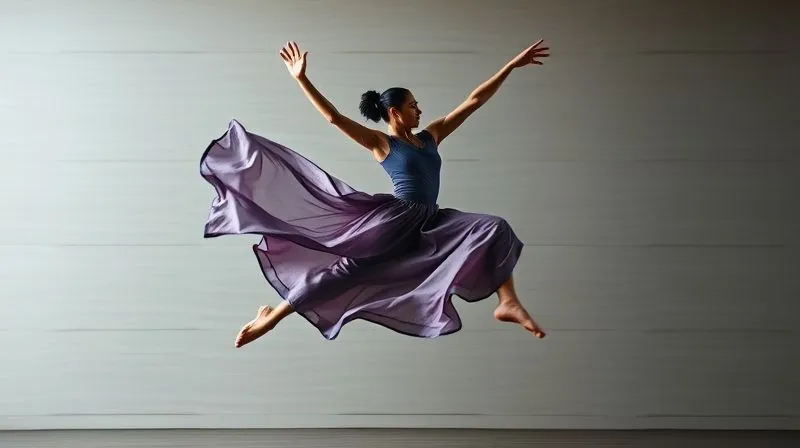
Every fabric has a personality. Silk whispers, linen crinkles, wool drapes with gravitas, and chiffon dances. As a costume designer, you are a psychologist of textiles, understanding their inherent tendencies and how they will respond to stimulus – in this case, actor movement.
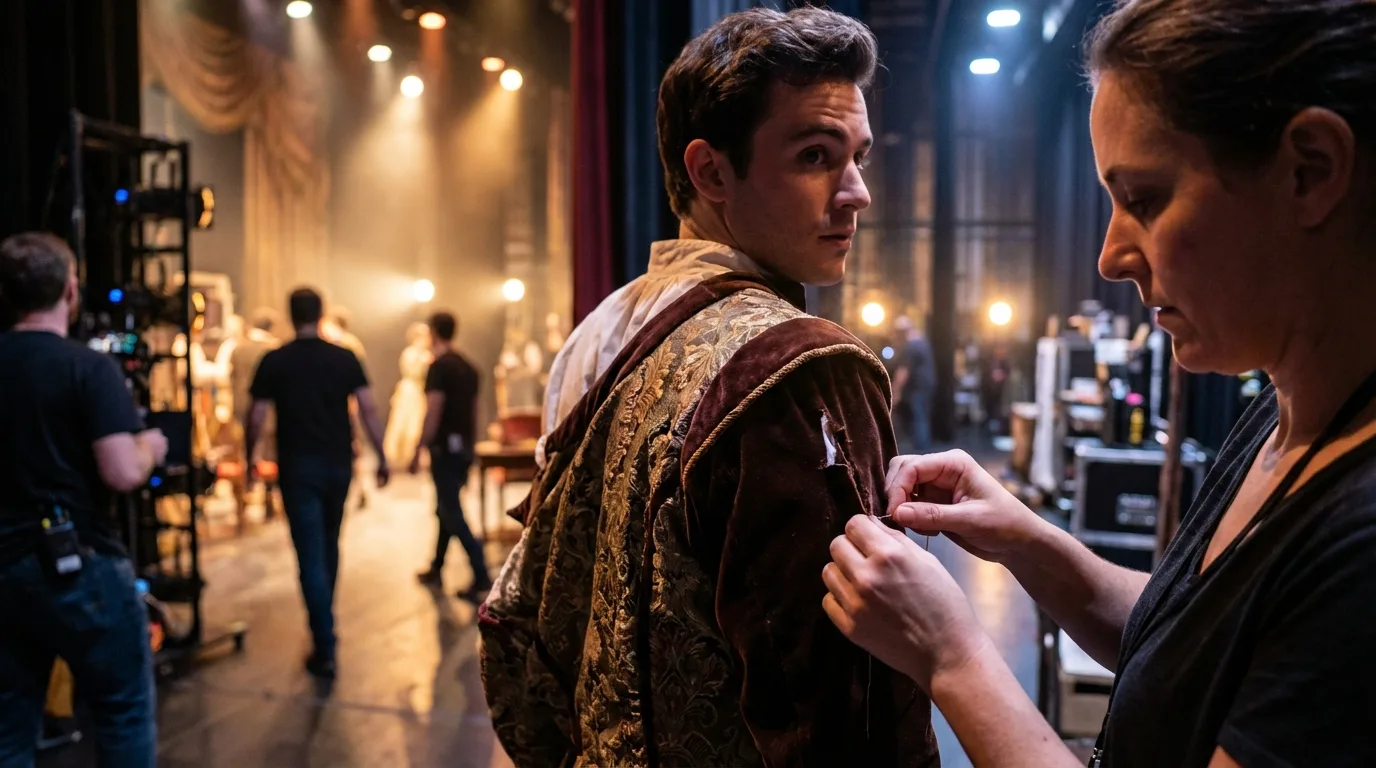
The key to dynamic drape is knowing your materials. Fabric weight, fiber content, weave, and finish all contribute to how it will fall, fold, and stretch. A heavy brocade will create sculptural, architectural folds, while a lightweight georgette will billow and cling. Failing to account for these properties in your sketch is a recipe for disappointment.
Key Fabric Characteristics for Dynamic Drape:
- Weight: Heavy fabrics create fewer, larger folds. Light fabrics create many small, intricate folds.
- Stiffness/Softness: Stiff fabrics hold their shape more; soft fabrics collapse and cling.
- Elasticity: How much the fabric stretches and recovers. Crucial for form-fitting garments.
- Surface Texture: Smooth fabrics reflect light differently than textured ones, affecting how folds are perceived.
| Fabric Type | Weight | Drape Characteristics | Movement Impact |
|---|---|---|---|
| Silk Chiffon | Very Light | Flowing, ethereal, many soft ripples, clings to body in motion, catches air. | Exaggerates fluid motion, ideal for dance, creates a 'floating' effect. |
| Wool Gabardine | Medium-Heavy | Structured, clean, fewer and larger folds, holds shape well, less cling. | Adds gravitas, movement is more contained, shows defined creases at joints. |
| Cotton Voile | Light | Crisp, soft folds, slight body, doesn't cling as much as chiffon, breathes. | Gentle movement, can be gathered for volume, retains some shape during motion. |
| Heavy Brocade | Very Heavy | Architectural, sculptural, stiff, stands away from the body, few deep folds. | Emphasizes power and stillness, movement is grand and deliberate, fabric moves as a single unit. |
Expert Insight: Always sketch for the *moment after* the pose, not just the pose itself. Anticipate the next movement and let your fabric lines hint at that kinetic energy. This is where a static sketch truly comes alive.
The 'Action Line' Principle: Capturing Momentum, Not Just Pose
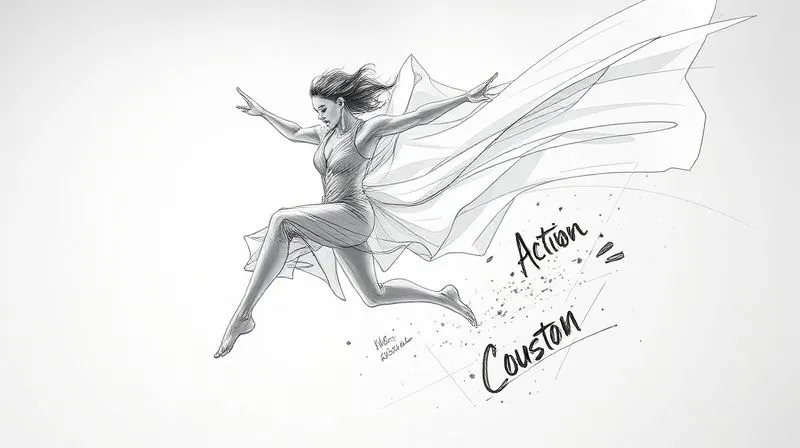
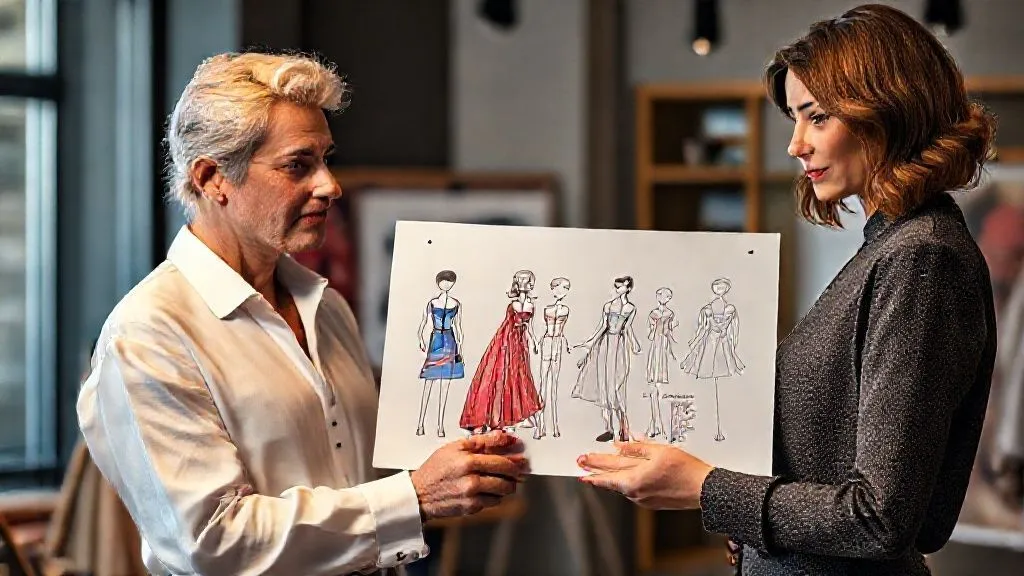
When I teach young designers, one of the first things I emphasize is the 'action line.' This isn't just about drawing a figure; it's about drawing the *energy* of the figure. An action line is an imaginary line that conveys the main thrust or curve of a pose, guiding the eye through the movement.
Think of it as the invisible force driving the actor. Once you establish this dynamic line, your fabric folds and drapes should echo and reinforce it. They shouldn't fight the movement; they should amplify it. If an arm is reaching upwards, the fabric in the sleeve should show that upward pull, not just hang limply.
Steps to Incorporate Action Lines:
- Start with the Gesture: Before any detail, draw a very loose, quick line or curve representing the overall movement of the figure. Is it a gentle sway, a forceful lunge, a dramatic twist?
- Extend the Energy: Let the fabric lines flow from this action line. If the actor is spinning, the skirt fabric should curve in a spiral, showing the centrifugal force.
- Vary Line Weight: Use thicker, bolder lines for areas of tension or compression, and lighter, flowing lines for areas where fabric is released or billowing.
This technique prevents your sketches from looking stiff. As costume historian Janet Arnold often demonstrated, understanding period garments involved understanding how they moved with the body, not just how they looked on a mannequin. This principle holds true for any era or style.
Layering and Weight: How Multiple Fabrics Interact Dynamically
Costumes are rarely monolithic. They are often composed of multiple layers, different fabrics, and varying weights. The true challenge – and the true artistry – lies in showing how these layers interact not just visually, but dynamically, as the actor moves.
Imagine a queen's gown with a heavy velvet overskirt, a silk underskirt, and a delicate chiffon train. Each layer will move differently. The velvet will swing with a slow, deliberate cadence. The silk will ripple and slide beneath it. The chiffon will float and trail, catching the air. Your sketch must convey this complex symphony of movement.
Visualizing Layer Interaction:
- Understand Gravity's Pull: Heavier layers will pull lighter layers down, or constrain their movement.
- Anticipate Friction: Where fabrics rub against each other, they might bunch or create subtle creases.
- Acknowledge Air Resistance: Lighter, looser fabrics will be more affected by air currents created by movement.
Case Study: The 'Whispering Willow' Gown for a Ballet
I once worked on a ballet where the lead dancer's gown, dubbed 'Whispering Willow,' was critical to conveying her character's ethereal nature. The initial sketches, while beautiful, showed the silk and organza layers as separate, static entities. When the dancer moved, the costume felt heavy and disjointed.
By applying dynamic layering principles, I revised the sketches to emphasize how the lightweight organza top layer would lift and 'whisper' with every port de bras, while the silk underlayer would flow smoothly, creating a waterfall effect during pirouettes. I focused on drawing the *gaps* and *overlaps* that occur during movement, rather than just the individual fabric pieces. This resulted in a costume that became a true partner in the performance, enhancing the dancer's grace and the audience's enchantment.
Lighting's Role: Highlighting Form and Flow in Your Sketches
A costume sketch isn't just a flat representation; it's a blueprint for a three-dimensional object that will exist under specific lighting conditions. Lighting doesn't just illuminate; it sculpts. It defines form, creates mood, and, crucially for our discussion, emphasizes the dynamic qualities of fabric.
When sketching, don't just add generic shading. Think about where your light source is coming from on the stage. Is it a harsh spotlight? A soft, diffused wash? Raking light from the side? Each will interact with the fabric folds differently, creating varying degrees of highlight and shadow that can dramatically enhance the perception of movement.
Using Light to Enhance Drape:
- Highlights: Areas where the fabric stretches taut or catches the light directly will appear brighter. These often occur at the apex of a fold or a stretched surface.
- Mid-tones: The general body of the fabric, receiving indirect light.
- Shadows: Deep creases, areas where fabric bunches, or parts that fall away from the light source will be darker. These shadows are essential for defining depth and movement.
According to lighting designer Ken Billington, 'Light is the brush that paints the stage.' Similarly, understanding light is the brush that sculpts your fabric in a sketch. Don't just draw the lines; draw the light and shadow that bring those lines to life.
From Static Reference to Dynamic Interpretation: A Practice Workflow
You're probably thinking, 'This all sounds great, but how do I actually *do* it?' The transition from observing static references to creating dynamic interpretations is a skill that requires deliberate practice. Here's a workflow I've developed over the years:
- Gather Diverse References: Don't just look at fashion photos. Seek out images of dancers, athletes, historical reenactments, even animals in motion. Look for extreme poses and transitional moments. Video is even better – pause and analyze frames.
- Quick Gesture & Action Lines: Start with a very loose, quick sketch focusing only on the overall gesture and the primary action line of the figure. Forget the costume for a moment.
- Fabric Block-In: Lightly sketch the basic silhouette of the costume, considering the fabric type. Don't add folds yet.
- Anticipate Drape: Now, based on the action line and the fabric's properties, *imagine* where the main folds, stretches, and billows will occur. Use light, confident lines.
- Define Folds & Shadows: Refine these lines, adding definition to the folds. Pay attention to how gravity and motion pull the fabric. Introduce shading to define depth and form, considering your light source.
- Add Detail & Texture: Once the dynamic drape is established, you can add details like seams, embellishments, and subtle texture, ensuring they don't detract from the movement.
- Critique & Iterate: Step back. Does the costume feel like it's moving? Does it enhance the actor's pose? If not, identify why and try again. This iterative process is crucial.
This systematic approach, honed through hundreds of projects, allows you to build complexity from a solid foundation of movement. It's about seeing the unseen forces at play.
Digital Tools vs. Traditional: Enhancing Your Dynamic Sketching
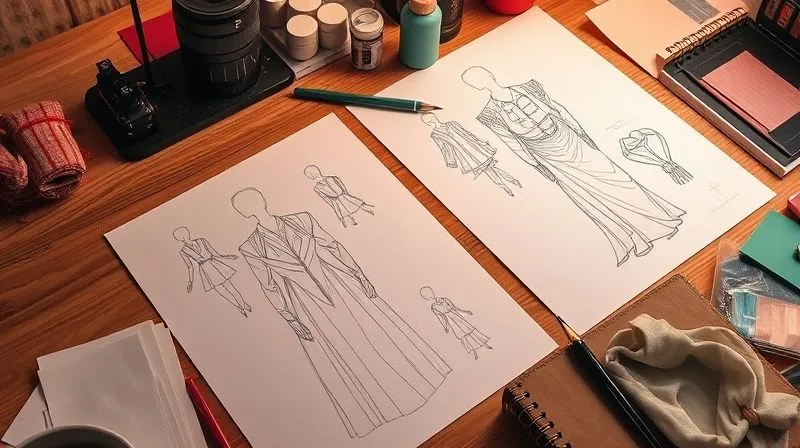
The debate between traditional and digital tools is ongoing, but for dynamic drape, both offer unique advantages. I've embraced both, understanding that the best tool is the one that serves the specific need and my current workflow. The core principles remain the same, but the execution differs.
Traditional Mediums:
- Pencil & Charcoal: Excellent for quick gestures, capturing raw energy, and building up layers of tone for shadows. The tactile nature can be very intuitive.
- Ink & Watercolor: Great for fluid lines and washes that mimic the softness and flow of certain fabrics.
- Pros: Immediate feedback, develops hand-eye coordination, unique textures.
- Cons: Less forgiving for corrections, harder to experiment with different fabric weights digitally.
Digital Mediums (e.g., Photoshop, Procreate, Clip Studio Paint):
- Layers: Allows for non-destructive experimentation with fabric types, colors, and lighting.
- Brushes: Specialized brushes can simulate different fabric textures and drape qualities.
- Liquify/Transform Tools: Invaluable for subtly adjusting fabric flow and anticipating movement without redrawing.
- 3D Modeling/Draping Software: Tools like CLO3D or Marvelous Designer can simulate fabric drape in a virtual environment, offering a powerful way to visualize complex movement before a single stitch is made. While advanced, they are becoming increasingly integrated into professional costume design workflows.
- Pros: Highly flexible, easy to correct, vast array of tools, integrates well with other digital processes.
- Cons: Can feel less intuitive initially, requires hardware and software investment.
Regardless of your chosen medium, the goal is the same: to communicate the dynamic potential of the costume. As textile artist Sheila Hicks once said, 'Fabric is a language.' It's up to us to speak it fluently, in motion.
Common Pitfalls and How to Avoid Them in Dynamic Drape
Even seasoned designers can fall into certain traps when trying to convey movement. Recognizing these common pitfalls is the first step to avoiding them and elevating your dynamic sketches.
Pitfall 1: The 'Mannequin' Syndrome
Problem: Drawing the figure and costume as if it's on a static mannequin, even if the pose is dynamic. The fabric hangs lifelessly, ignoring the kinetic energy of the body beneath.
Solution: Always start with the action. Focus on the core movement first. Ask yourself: 'How would this fabric react if a sudden gust of wind hit it during this pose?' or 'What happens to the fabric when the limb extends fully?' Understanding the history of costume design often reveals how designers of the past grappled with these challenges, inspiring modern solutions.
Pitfall 2: Generic Folds
Problem: Drawing a series of generic V-shaped or U-shaped folds without considering the fabric type, gravity, or specific movement.
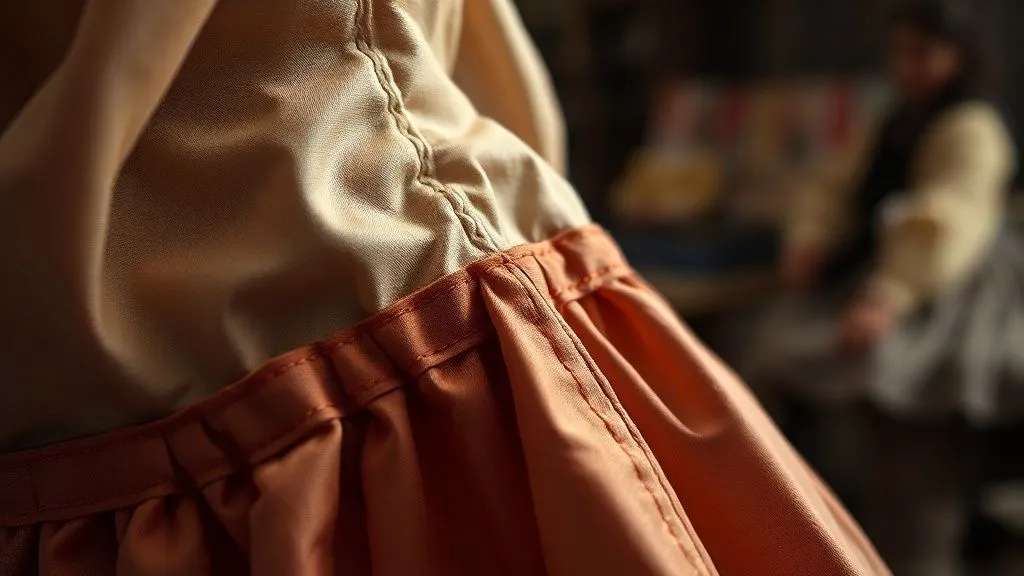
Solution: Observe real fabric. Drape different materials over your own body, a chair, or a mannequin. Study how different fabrics create different types of folds (e.g., pipe folds, spiral folds, diaper folds). Practice drawing these specific fold types until they become second nature. Vogue's archives offer a wealth of imagery for fabric study.
Pitfall 3: Ignoring Negative Space
Problem: Focusing only on the fabric itself and neglecting the shapes created by the air *around* the fabric, especially during dramatic movement.
Solution: The negative space – the gaps and curves formed by the movement of fabric – is just as important as the fabric itself. These spaces often define the flow and energy of the drape. Pay attention to the silhouette created by the garment and the air it displaces. Think of the space as part of the composition.
Pitfall 4: Over-Rendering Detail Too Soon
Problem: Getting bogged down in tiny details, patterns, or embellishments before the fundamental dynamic drape is established.
Solution: Work from general to specific. Establish the overall form and movement first, then the major folds, then the lighting and shadows, and only then add the intricate details. This ensures your foundation is strong. As often advised in art schools, 'don't draw the button before you've drawn the shirt.'
By consciously addressing these common issues, you'll find your dynamic costume sketches become far more convincing and effective, truly serving as a living blueprint for the stage.
Frequently Asked Questions (FAQ)
How do I account for different fabric weights in a single costume? The key is understanding their individual behaviors and how they interact. Heavier fabrics will generally dictate the overall silhouette and create larger, more defined folds, while lighter fabrics will respond more to secondary movements and air currents, creating smaller, more numerous ripples or billows. Sketch the heavier elements first, then layer the lighter fabrics, showing how they might be pulled, lifted, or constrained by the base layer. Practice with real fabric swatches to see these interactions firsthand.
What if the actor's movement isn't fully defined yet? How can I sketch dynamic drape? This is a common scenario in early stages. Focus on the *potential* for movement. Think about the character's personality and the general demands of the role. Will they be agile, regal, frantic? Sketch a range of 'key poses' that represent peak moments of action or emotion, and then imagine the transitions between them. Over-exaggerate the drape slightly in your initial sketches to ensure the costume has enough 'give' for future movement definitions. Reference dance or athletic poses for inspiration on extreme but plausible movements.
Should I use live models or reference photos for dynamic drape? Both are incredibly valuable. Live models, especially those who can move and hold poses, offer the most authentic experience for observing fabric interaction. You can walk around them, see the 3D form, and direct their movement. However, high-quality reference photos and videos (especially slow-motion) are excellent for studying specific moments, capturing extreme poses that might be hard to hold, and analyzing the nuances of fabric flow. I recommend a combination: live models for foundational understanding and photo/video for specific detail and quick studies. The Costume Designers Guild often shares resources on professional practices.
How can I convey texture in a dynamic sketch without making it look stiff? Texture is vital but should not override movement. Instead of drawing every thread, use suggestive lines and shading. For example, for velvet, use soft, rich shadows and subtle highlights to convey its plushness, ensuring these contours follow the dynamic folds. For linen, use slightly sharper, more angular creases. The movement of the fabric itself will often reveal its texture through how light hits its surface and how it breaks into folds. Focus on the overall effect rather than microscopic detail.
Are there specific exercises to improve dynamic drape sketching? Absolutely. Try 'blind contour' drawing of moving figures, forcing you to focus on the continuous line of movement. Do timed gesture drawings (30 seconds, 1 minute) of dancers or athletes, emphasizing the fabric's reaction. Drape various fabrics over your arm and move it, sketching the folds quickly. Experiment with different light sources on draped fabric. And critically, analyze costume photos from film and theatre, not just for the costume itself, but for how it interacts with the actor and the scene. Khan Academy's art history resources can provide context on historical approaches to drapery.
Key Takeaways and Final Thoughts
- Observe & Understand Movement: The actor's body in motion is your primary guide. Study kinesiology and practice gesture drawing.
- Know Your Fabrics: Each textile has a unique 'personality' that dictates its drape. Integrate this understanding into your initial concepts.
- Embrace Action Lines: Let the energy of the pose dictate the flow of your fabric, creating dynamic tension and release.
- Layer with Intent: Visualize how multiple fabrics interact, not just individually, but as a cohesive, moving unit.
- Sculpt with Light: Use highlights and shadows to define form and emphasize the dynamic qualities of your drape.
- Practice Deliberately: Follow a structured workflow from gesture to detail, constantly critiquing and refining.
- Avoid Common Traps: Be aware of static thinking, generic folds, ignoring negative space, and premature detailing.
The art of sketching dynamic costume drape for actor movement isn't just a technical skill; it's a profound act of empathy and foresight. It's about giving your designs the breath of life, ensuring that when they finally grace the stage, they don't just exist, but they *perform*. By integrating these expert strategies into your practice, you'll transform your sketches from static representations into vibrant promises of theatrical magic. Your actors, and your audience, will thank you.
Recommended Reading
- 5 Steps to Measure True Environmental Impact of Fashion Supply Chain?
- 9 Ergonomic Footwear Choices: Stopping Nurse Foot Pain After 12-Hour Shifts
- 7 Steps: Accurately Appraise Rare Vintage Designer Pieces for Insurance
- 7 Ways to Revitalize Your Outdated Tailored Suit (Still Fits!)
- 7 Steps: Bridging Client Vision to Haute Couture Garment Reality

Your email address will not be published. Required fields are marked *