

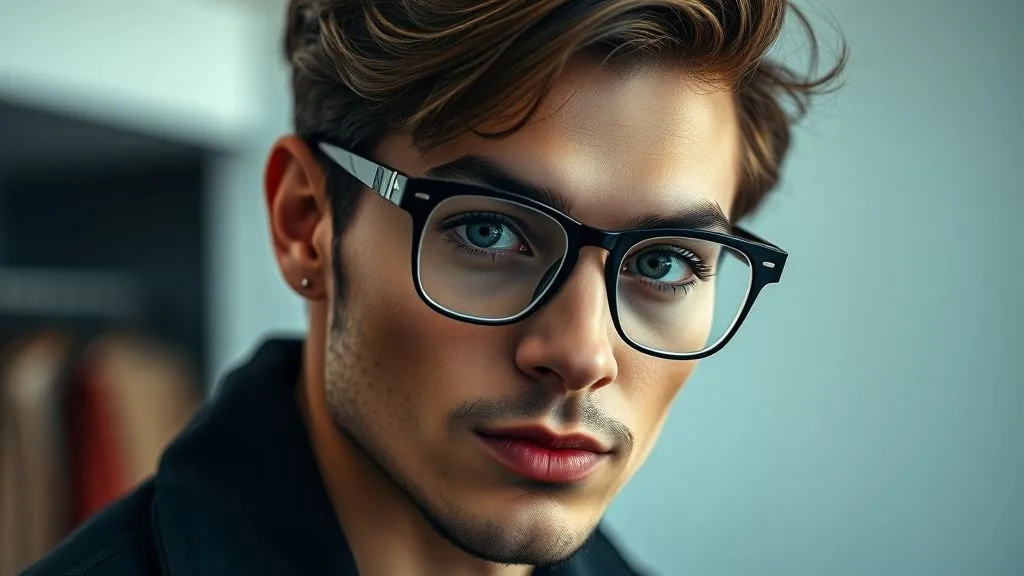
Styling High-Power Prescriptions for Modern Eyewear Fashion?
For over 15 years in the dynamic world of eyewear fashion, I've had the privilege of guiding countless individuals through the sometimes-challenging journey of finding their perfect pair of glasses. What I've seen time and again is a common misconception: that a high-power prescription automatically limits your style choices, relegating you to thick, often unflattering lenses that detract from your personal aesthetic.
Many of my clients, particularly those with significant myopia, hyperopia, or astigmatism, arrive at my studio feeling disheartened. They’ve been told their options are limited, that their lenses will always be thick and heavy, creating a 'coke bottle' effect, or that certain fashionable frames are simply out of reach. This feeling of compromise – sacrificing style for clear vision – is a pain point I understand deeply, and it's one that I've dedicated my career to solving.
But I'm here to tell you that this simply isn't true anymore. With advancements in lens technology, innovative frame designs, and a strategic approach to selection, styling high-power prescriptions for modern eyewear fashion isn't just possible; it's an opportunity to make a powerful, confident statement. In this definitive guide, I'll share the expert frameworks, actionable steps, and insider insights I've developed to help you transform your eyewear into a true fashion asset, no matter your prescription strength.
Understanding the Challenge: Optics Meets Aesthetics
Before we dive into solutions, it's crucial to grasp why high-power prescriptions present a unique challenge. Essentially, the stronger your prescription, the more material is required to create the necessary curvature in the lens to correct your vision. For myopia (nearsightedness), lenses are thicker at the edges and thinner in the center, while for hyperopia (farsightedness), they are thicker in the center and thinner at the edges. Astigmatism further complicates this with varying curvatures across the lens surface.
This increased thickness can lead to several aesthetic and practical issues: heavier glasses that slide down your nose, optical distortions (like eyes appearing smaller or larger), and a noticeable 'ledge' of lens material protruding from the frame. For many, these issues overshadow the primary function of clear vision, leading to self-consciousness and a reluctance to embrace eyewear as a fashion accessory.
The Science Behind Lens Thickness
The key factor influencing lens thickness, beyond the prescription itself, is the material's refractive index. This scientific measurement indicates how efficiently a material bends light. The higher the refractive index, the less material is needed to achieve the same optical power, resulting in thinner, lighter lenses. Standard plastic lenses typically have a refractive index of 1.50. High-index lenses, which we'll discuss next, range from 1.60 to 1.74, dramatically reducing thickness and weight. Understanding this fundamental principle is your first step towards informed eyewear choices.
The Power of High-Index Lenses: Your First Line of Defense
When I work with clients who have strong prescriptions, my first recommendation is almost always high-index lenses. This isn't just an upgrade; it's a foundational shift that immediately addresses the core problem of lens bulk. High-index materials are engineered to bend light more efficiently, allowing for significantly thinner and lighter lenses compared to conventional plastic or glass.
For prescriptions ranging from -4.00 to -6.00, I often suggest a 1.60 or 1.67 index. For prescriptions beyond -6.00, especially those reaching -8.00 or higher, a 1.74 index lens becomes paramount. The difference in thickness and weight is astonishing, making your glasses more comfortable to wear and vastly improving their aesthetic appeal. This technology truly transforms what's possible for high-power wearers, turning what was once a visual burden into a sleek, modern accessory.
"High-index lenses aren't just a luxury; they're a necessity for strong prescriptions, offering unparalleled thinness and lightness that redefine eyewear comfort and style."
Beyond Thinness: Essential Lens Coatings
While high-index material tackles thickness, the complete lens package includes crucial coatings that enhance both vision and durability:
- Anti-Reflective (AR) Coating: This is non-negotiable. AR coatings eliminate distracting reflections from both the front and back surfaces of your lenses, improving clarity, reducing eye strain, and making your eyes more visible to others. For high-index lenses, which naturally reflect more light due to their density, an AR coating is even more critical.
- UV Protection: Essential for eye health, protecting your eyes from harmful ultraviolet rays. Most quality lenses now include this, but always confirm.
- Scratch-Resistant Coating: High-index materials, while thin, can sometimes be softer than standard plastic. A good scratch-resistant coating extends the life and clarity of your lenses.
- Blue Light Filter: Increasingly popular, especially for those spending significant time on digital devices, to reduce eye strain and potential long-term damage.
Strategic Frame Selection: The Art of Disguise and Enhancement
Once you've opted for high-index lenses, the frame becomes your canvas. This is where true styling prowess comes into play. Selecting the right frame can dramatically minimize the appearance of lens thickness and enhance your facial features. It's not just about what looks good on your face; it's about how the frame interacts with your specific prescription.
Material Matters: Lightweight & Durable Options
For high-power prescriptions, frame material is paramount for both comfort and aesthetic. Heavy frames will exacerbate the weight of the lenses, leading to discomfort. I always steer clients towards materials known for their lightness and durability:
- Titanium: Incredibly lightweight, strong, hypoallergenic, and resistant to corrosion. Ideal for those seeking minimalist, sleek designs.
- High-Quality Acetate: A plant-based plastic known for its rich colors, patterns, and ability to be molded into thicker, more substantial designs. While slightly heavier than titanium, its ability to mask lens edges makes it a strong contender.
- Ultem/TR90: Lightweight, flexible, and highly durable. Great for active lifestyles or those prone to dropping their glasses.
Frame Architecture for High Prescriptions
This is arguably the most critical section. The design of the frame itself can work wonders in managing lens thickness. Here are my top actionable steps:
- Smaller Eye Size: This is a golden rule. The smaller the lens opening (eye size) of the frame, the less lens material is required, especially at the edges for myopic prescriptions. A smaller frame also reduces the overall weight of the glasses.
- Thicker Rims: For myopes, a frame with a thicker rim (especially around the outer edges) is incredibly effective at camouflaging the thicker edges of the lenses. Think bold acetate frames or robust metal designs. For hyperopes, a thicker rim helps to contain the central thickness and minimize magnification.
- Rounder or Oval Shapes: These shapes tend to distribute lens thickness more evenly than sharp, angular designs. They also often have a smaller overall lens surface area, which, as discussed, is beneficial.
- Full-Rimmed Designs: While semi-rimless and rimless frames can be stylish, they offer no support or concealment for lens edges. For high prescriptions, full-rimmed frames are almost always the superior choice for both aesthetics and lens protection.
- Consider Frame Color and Finish: Darker, opaque frames can draw attention away from lens thickness, especially for myopic lenses. Matte finishes can also be very forgiving.
- Bridge Fit: A well-fitted bridge ensures the glasses sit correctly on your face, preventing slippage and ensuring the optical center of the lens aligns perfectly with your pupils. This is crucial for optimal vision and comfort, particularly with strong prescriptions where even slight misalignment can cause distortion.
"Never compromise on fit. A perfectly fitting frame not only looks better but ensures optimal vision and comfort, especially for high-power wearers where optical precision is paramount."
| Frame Type | Pros for High RX | Cons | Best For |
|---|---|---|---|
| Full-Rim Acetate | Excellent edge concealment, wide color range, robust aesthetic | Can be heavier than titanium, may feel chunky for some | Myopia, bold fashion statements |
| Titanium Full-Rim | Extremely lightweight, durable, sleek, minimalist appeal | Slightly less edge concealment than thick acetate | Myopia & Hyperopia, minimalist style, comfort-seekers |
| Smaller Eye Size Metal | Minimal lens exposure, very light, discreet | Less fashion-forward for some, limited aesthetic impact | Any high RX, especially for discreet or professional looks |
| Thick-Rimmed Round/Oval | Optimal lens thickness distribution, strong aesthetic statement | May not suit all face shapes or personal styles | Myopia, vintage-inspired or intellectual aesthetics |
Color, Texture, and Personal Branding
Eyewear is no longer just a vision correction tool; it's a powerful accessory that can define your personal brand. For high-power prescription wearers, this aspect is even more critical. By strategically choosing colors and textures, you can ensure your glasses enhance your features and reflect your individual style, rather than drawing attention to the lens thickness.
Choosing Colors to Complement Your Features
The right frame color can illuminate your face, enhance your eye color, and complement your skin tone. As Forbes often highlights in discussions of personal branding, every element of your appearance sends a message. For eyewear:
- Skin Tone: Warm skin tones (peachy, golden undertones) often look best with warm frame colors like tortoise, gold, warm browns, olive green, or deep reds. Cool skin tones (pink, blue undertones) are complemented by cool colors such as silver, black, blue, purple, or gray.
- Hair Color: Consider frames that contrast subtly or harmonize with your hair. Brunettes might opt for rich browns or deep blues; blondes for lighter tortoiseshells or pastels; redheads for greens or coppers.
- Eye Color: Choose colors that make your eyes pop. Blue eyes can be enhanced by brown, gold, or even orange frames. Green eyes sparkle with purple, brown, or forest green. Hazel eyes are versatile but often look stunning with greens, browns, or amber.
Textures and Finishes: Adding Sophistication
Don't underestimate the impact of texture and finish. A matte finish on an acetate frame can offer a sophisticated, understated look, while a glossy finish makes a bolder statement. Patterned acetates, like a subtle tortoise or a marbled effect, can add depth and interest, drawing the eye to the frame's design rather than the lens edges. My experience has shown that these nuanced details are what truly elevate a pair of high-power glasses from functional necessity to genuine fashion accessory.

Beyond the Basics: Advanced Styling Techniques
Once you've mastered the fundamentals of lens choice and frame selection, there are several advanced techniques and considerations that can further refine your eyewear fashion for high-power prescriptions. These insights come from years of observing how subtle details can make a significant difference in both comfort and style.
The Art of Accessorizing Your Eyewear
Eyewear accessories have made a strong comeback, and they're not just for holding your glasses. Modern chains, cords, and even decorative cleaning cloths can add a touch of personality and flair. For those with high prescriptions, a lightweight, stylish chain can also subtly alleviate some of the perceived weight, making your glasses feel less cumbersome. Consider a delicate gold chain for an elegant touch or a leather cord for a more bohemian vibe. It's about integrating your glasses seamlessly into your overall look, as an extension of your jewelry or attire.
Considering Multifocal and Progressive Lenses
If you require multifocal or progressive lenses for presbyopia in addition to your high-power distance correction, frame choice becomes even more critical. Progressive lenses, by their nature, require a certain vertical depth in the frame to accommodate the smooth transition from distance to intermediate to near vision. I always advise clients to choose frames with sufficient vertical height (typically 28-30mm minimum) to ensure comfortable viewing zones without excessive head tilt. Your optician will be able to guide you on the ideal frame dimensions for your specific progressive lens design, ensuring both clear vision and a sleek appearance.
Case Study: Elevating Emily's High Myopia Look
Let me tell you about Emily, a brilliant architect with a -8.50 prescription. For years, she felt her glasses were a burden, opting for chunky, dark plastic frames that, while concealing her thick lenses, often overwhelmed her delicate features. She'd tried thinner lenses, but the frames still felt heavy and dated. When she came to me, her confidence in choosing stylish eyewear was at an all-time low.
Our strategy involved a multi-pronged approach. First, we upgraded her to the highest index 1.74 lenses, which immediately made a noticeable difference in thickness and weight. Next, we focused on frame architecture. Instead of her previous oversized frames, we selected a slightly smaller eye-size, full-rimmed cat-eye frame made from premium, lightweight Italian acetate in a sophisticated, subtle tortoise pattern. The frame's rims were just thick enough to beautifully encapsulate the lens edges, and the upward sweep of the cat-eye shape lifted her features, creating a more elegant and modern silhouette.
The result? Emily's new glasses were significantly lighter, her lenses appeared much thinner, and the tortoise pattern beautifully complemented her warm skin tone and dark hair. She told me, "For the first time, I feel like my glasses are a part of my style, not something I have to hide." This transformation not only boosted her confidence but also allowed her to embrace eyewear as a true fashion statement, even with a very high prescription.
The Role of the Optician: Your Unsung Style Hero
In my experience, one of the most overlooked resources for anyone styling high-power prescriptions is a truly knowledgeable and empathetic optician. They are not merely order-takers; they are licensed professionals with a deep understanding of optics, materials, and facial anatomy. Their expertise is absolutely invaluable in navigating the complexities of strong prescriptions and ensuring your eyewear is both functionally superior and aesthetically pleasing.
A good optician will take precise measurements, recommend the optimal lens index and coatings, and guide you through frame selections that are truly compatible with your prescription. They understand how different frame styles will interact with your lens thickness and can offer expert advice on fit, comfort, and how to balance optical needs with your personal style. Think of them as your personal eyewear stylist and optical engineer rolled into one. Building a relationship with a trusted optician is one of the smartest investments you can make in your vision and your fashion.
"Your optician isn't just fitting lenses; they're curating your vision and your style. Their expertise is invaluable for high-power prescriptions, ensuring both optical precision and aesthetic harmony."
Questions to Ask Your Optician
To ensure you get the best advice and results, here are crucial questions I encourage my clients to ask their optician:
- "Given my prescription, what is the highest index lens you recommend for the thinnest profile?"
- "Can you show me frame styles that are particularly good at concealing lens thickness for my prescription type (myopia/hyperopia)?"
- "What frame materials would you suggest for maximum lightness and durability with my lens choice?"
- "How will this specific frame's eye size and bridge fit impact the final appearance and comfort of my high-power lenses?"
- "Are there any specific lens thinning techniques or edging options that would further improve the aesthetic of my lenses?"
- "What are the best anti-reflective and scratch-resistant coatings for high-index lenses?"
Engaging actively with your optician ensures you leverage their expertise fully, leading to a much more satisfying and stylish outcome. For more detailed information on lens technology, you might find resources from the The Vision Council helpful.
Maintaining Your Vision Fashion Statement
Even the most perfectly chosen and crafted high-power prescription glasses require proper care to maintain their pristine condition and optimal performance. As an expert in eyewear fashion, I often emphasize that maintenance is not just about extending the life of your glasses; it's about preserving the clarity, comfort, and style that you've invested in. Think of it as caring for any other high-value fashion accessory.
Proper Cleaning and Storage
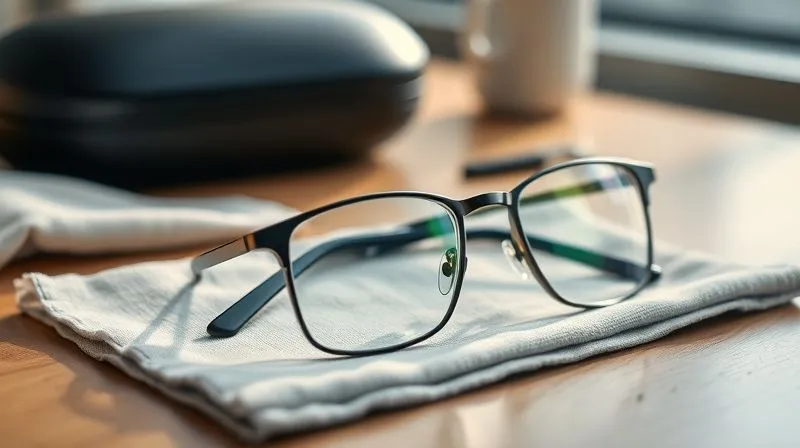
Incorrect cleaning can damage your lenses and coatings over time. Always use a high-quality microfiber cloth specifically designed for eyewear. Avoid paper towels, tissues, or shirt sleeves, as these can scratch your lenses. For a deeper clean, use a lens cleaning spray approved by your optician or simply lukewarm water with a tiny drop of mild dish soap. Rinse thoroughly and dry with your microfiber cloth. When not wearing your glasses, always store them in a sturdy case. This protects them from accidental drops, scratches, and pressure that could bend the frames or damage the lenses.
Regular Check-ups and Adjustments
Over time, frames can loosen, nose pads can wear down, and alignment can shift. These seemingly minor issues can significantly impact the comfort and optical performance of your high-power glasses. A loose frame can cause your glasses to slide, misaligning the optical center of your lenses with your pupils, leading to visual distortion and discomfort. I highly recommend visiting your optician every 3-6 months for a complimentary adjustment and cleaning. They can tighten screws, replace worn nose pads, and re-align your frames to ensure they sit perfectly on your face, keeping your vision clear and your style intact. This proactive approach ensures your investment in stylish, high-power eyewear continues to serve you beautifully.
Understanding how different lens materials and frame designs interact is key. A comprehensive resource on optical materials, such as those found on All About Vision, can provide further technical insights.
Frequently Asked Questions (FAQ)
Question? Can I really wear rimless frames with a high prescription? While technically possible with certain high-index materials (like polycarbonate or Trivex for durability), I generally advise caution. Rimless frames offer no concealment for lens edges, which can be quite thick with high prescriptions, especially for myopes. They also offer less protection for the lenses, making them more prone to chipping. If you are determined, ensure you opt for the highest index, strongest material, and understand the aesthetic compromise. Your optician will be crucial in guiding this choice.
Question? What's the biggest mistake people make when choosing glasses for strong prescriptions? The biggest mistake I've observed is prioritizing purely aesthetic trends over optical functionality and appropriate frame architecture. Choosing oversized, thin-rimmed, or rimless frames for a very high prescription because they are 'in style' will almost always lead to dissatisfaction due to excessive lens thickness, weight, and optical distortion. Always start with what works optically, then find the most fashionable option within those parameters.
Question? Are there specific frame colors that make thick lenses less noticeable? Darker, opaque frame colors (like black, dark brown, navy, or deep burgundy) tend to draw the eye to the frame itself and away from the lens edges, making them less noticeable, especially for myopic lenses. Matte finishes can also be very effective at camouflaging thickness compared to highly reflective glossy finishes. However, ultimately, a well-chosen frame architecture is more effective than color alone.
Question? How often should I update my eyewear style if my prescription is stable? Even with a stable prescription, I recommend considering a style update every 1-2 years. Eyewear fashion, like clothing, evolves. Updating your frames allows you to stay current, refresh your look, and take advantage of new material innovations or frame designs that might offer even better comfort or aesthetics for your high prescription. Plus, having a second pair is always a practical choice!
Question? What are the best options for sports or active lifestyles with high prescriptions? For active lifestyles, I highly recommend specialized sports eyewear. This often involves durable, lightweight materials like TR90 or nylon, wrap-around designs for peripheral vision and protection, and impact-resistant lenses (polycarbonate or Trivex). Many sports frames can be fitted with high-power prescription inserts or direct glazing with high-index, impact-resistant lenses. Discuss your specific activity with your optician for tailored recommendations.
Key Takeaways and Final Thoughts
Navigating the world of eyewear with a high-power prescription doesn't have to mean sacrificing style for clarity. As an industry veteran, I've seen firsthand how the right knowledge and strategic choices can transform a perceived limitation into a powerful fashion statement. Remember, your glasses are an extension of your personality, and with the right approach, they can enhance your confidence and your look.
- Embrace High-Index Lenses: These are your non-negotiable foundation for thin, light, and aesthetically pleasing eyewear.
- Master Strategic Frame Selection: Prioritize smaller eye sizes, thicker rims, full-rimmed designs, and appropriate materials to manage lens thickness effectively.
- Personalize with Color and Texture: Choose frames that complement your features and reflect your unique style, turning your glasses into a true fashion accessory.
- Leverage Expert Guidance: Your optician is your most valuable ally; their expertise in optics and fit is crucial for optimal results.
- Maintain with Care: Proper cleaning and regular adjustments ensure your eyewear remains pristine and performs its best.
Don't let a strong prescription dictate your style. Instead, empower yourself with these insights and confidently choose eyewear that not only provides impeccable vision but also perfectly expresses your modern aesthetic. The world of eyewear fashion is vast and welcoming, even for those with the most demanding optical needs. Go forth and make your vision a statement!
Recommended Reading
- Plantar Fasciitis: 7 Best Comfort Shoes for Nurses' Long Shifts
- Petite Perfection: Your Guide to Classic Wardrobe Essentials
- 7 Expert Steps: Authenticate Original 1970s Designer Denim from Fakes
- 5 Steps to Navigate Customs for High-Value Bridal Attire Shipments
- 7 Expert Steps: How to Source Rare Materials for Screen-Accurate Cosplay


Your email address will not be published. Required fields are marked *