

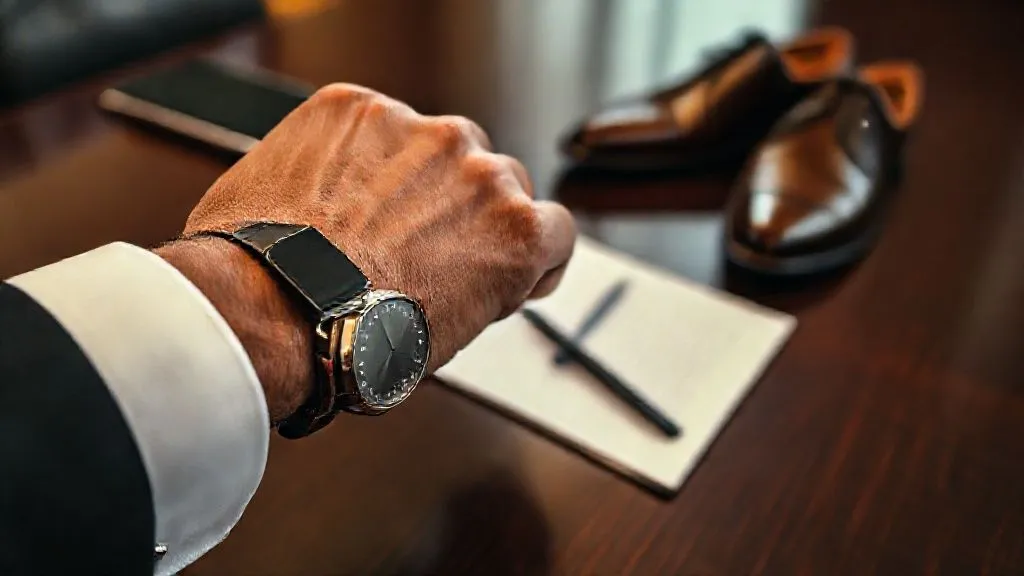
Struggling to match watch, belt, and shoes for board meetings? It's a Common Executive Misstep.
For over two decades in the world of menswear, I've had the privilege of advising countless executives, from aspiring managers to seasoned CEOs. One recurring challenge, often whispered in hushed tones, is the seemingly simple yet profoundly impactful task of coordinating accessories – specifically, the watch, belt, and shoes – for high-stakes board meetings. I've witnessed firsthand how a disjointed ensemble, even with the most expensive suit, can subtly undermine an otherwise powerful presentation.
The truth is, many accomplished professionals find themselves in this exact predicament: struggling to match watch, belt, and shoes for board meetings. It’s not about lacking style; it’s about navigating an often-unspoken set of rules in professional attire, where every detail contributes to your perceived competence and attention to detail. The pressure of the boardroom amplifies this, making a seemingly minor fashion faux pas feel like a major misstep.
But fear not. In this definitive guide, I will share my battle-tested framework, refined through years of experience, to ensure your accessories always speak the language of confidence and cohesion. You’ll learn not just what to do, but why it matters, equipping you with the knowledge to make impeccable choices every time you step into that crucial meeting.
The Unspoken Language of Executive Accessories
Before we dive into the 'how,' let's understand the 'why.' Your accessories are not just functional items; they are powerful non-verbal communicators. In a boardroom setting, where every detail is scrutinized, a mismatched watch, belt, or pair of shoes can send unintended signals. It can suggest a lack of attention to detail, a hurried approach, or even a disregard for the formality of the occasion.
Conversely, a perfectly coordinated ensemble speaks volumes. It conveys meticulousness, professionalism, and an understanding of the subtle nuances of executive presence. It demonstrates that you value the occasion and, by extension, the people in the room. This isn't about vanity; it's about strategic communication.
“True executive style isn't about flashy brands, but about the seamless integration of every element. It's the silent handshake of confidence before you even utter a word.”
I've seen executives walk into a room, and before they’ve even presented a single slide, their presence – or lack thereof – is already established. A cohesive accessory game isn't just about looking good; it's about feeling confident, and that confidence is palpable. It frees your mind to focus on the agenda, not on whether your belt clashes with your watch strap.
Foundation First: Understanding Leather Tones and Textures
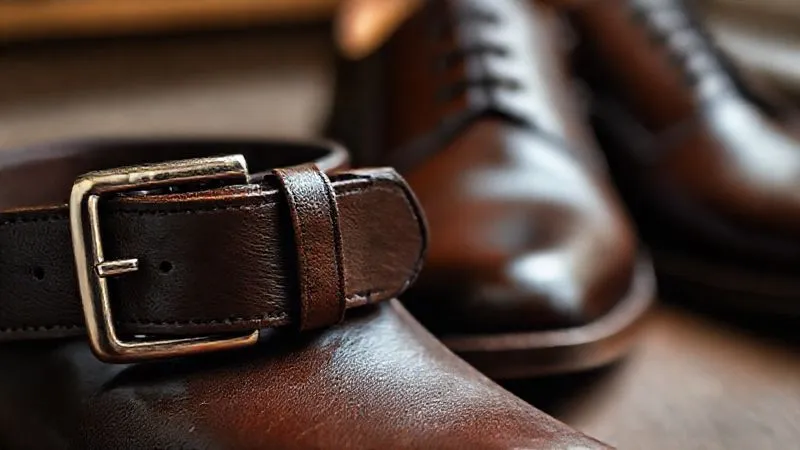
The bedrock of accessory coordination lies in understanding leather. This is where most men stumble. It's not just about color, but also about texture and finish. A casual, pebbled leather belt will never truly harmonize with highly polished, sleek dress shoes, even if they are the same shade of brown.
The Black Leather Rule: Simple & Non-Negotiable
For black leather, the rule is straightforward: all black leather accessories must match in color and ideally in finish. If you're wearing black dress shoes, your belt must be black. Your watch strap, if leather, should also be black. The finish should be consistent – patent leather shoes demand a patent leather belt (though this is rare outside of black tie), while polished calfskin shoes require a polished calfskin belt.
Mastering Brown Hues: The Nuance Game
Brown is where it gets tricky, but also where you can showcase true sartorial discernment. Brown comes in an infinite spectrum of shades: dark chocolate, cognac, oxblood, tan, espresso, chestnut. While an exact color match is the ideal, it's often impractical. The goal with brown is to match the tone and undertone, and to ensure the finishes are complementary. For instance, a rich, dark brown polished shoe pairs well with a belt of a similar dark brown tone, even if it's a shade lighter or darker. Avoid stark contrasts like a light tan belt with dark brown shoes in a formal setting.
Exotic Leathers: When and How to Deploy Them
Exotic leathers like alligator, crocodile, or ostrich add a layer of sophistication, but they demand even more careful consideration. For board meetings, they are generally best used sparingly and with utmost precision. If you opt for an alligator belt, your shoes should ideally be of a similar exotic leather, or at the very least, a very fine, smooth calfskin that doesn't compete with the texture. The color match becomes even more critical here. My advice? When in doubt for a formal board meeting, stick to classic calfskin.
| Leather Type | Matching Strategy | Formality |
|---|---|---|
| Black Calfskin | Exact color and finish match (e.g., polished black shoes, polished black belt, black watch strap) | Highest - Essential for formal board meetings |
| Dark Brown Calfskin | Match tone and finish closely (e.g., dark brown shoes, belt, watch strap). Shades can vary slightly. | High - Versatile for most business settings |
| Mid-Brown/Cognac Calfskin | Match tone and finish closely. Avoid stark contrasts with darker browns. | Moderate - Best for slightly less formal, but still professional, settings |
| Exotic Leathers (e.g., Alligator) | Exact color and texture match, or pair with very subtle, smooth calfskin of the same color. | High-End Niche - Use with extreme care for boardrooms, often better for specific, high-profile events. |
The Golden Rule of Metal: Harmonizing Your Hardware
Once you've mastered leather, the next critical element is metal. This is often overlooked, but it's a powerful indicator of your attention to detail. The rule is simple: all visible metals should match in color and tone. This includes your watch case, belt buckle, and any metal accents on your shoes.
Watch Case & Buckle Synergy
If your watch has a silver-toned case (stainless steel, white gold, platinum), then your belt buckle should also be silver-toned. The same applies to gold-toned metals. This creates a seamless visual flow. This principle extends to cufflinks, tie bars, and even the metal frames of your glasses, though the watch and belt are the most prominent and therefore most critical pairings.
The Subtle Art of Shoe Hardware
Many dress shoes, especially loafers like horsebit loafers, feature metal hardware. This hardware must also align with your watch and belt buckle. If you're wearing silver-buckled loafers, your watch and belt buckle should ideally be silver. This level of detail elevates your entire presentation, moving it from merely 'dressed' to 'impeccably styled.'
I've seen executives with magnificent gold watches, only to pair them with a belt featuring a brushed silver buckle. It's a jarring disconnect that, to the discerning eye, screams 'rushed' or 'uninformed.' According to a study by Harvard Business Review, non-verbal cues, including appearance, significantly impact perceptions of leadership and credibility. Don't let a metal mismatch be your undoing.
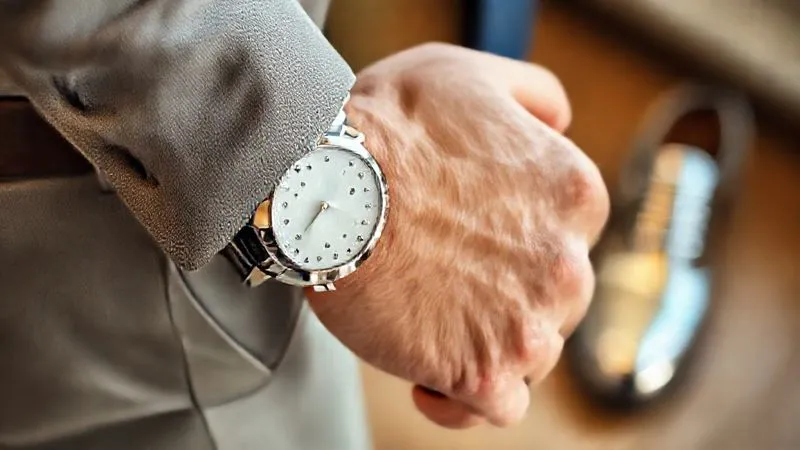
From Casual to Corporate: Decoding Formality Levels
The specific accessories you choose must also align with the formality of the board meeting itself. Not all board meetings are created equal. Is it a quarterly review with the CEO, or a more casual strategic planning off-site?
The Formal Boardroom Ensemble: Precision is Key
For the most formal settings – think annual general meetings, investor presentations, or crucial executive committee meetings – your accessories should reflect the highest degree of polish. This means:
- Shoes: Highly polished, classic lace-ups (oxfords or derbies) in black or dark brown.
- Belt: A slim, sleek leather belt matching your shoes in color and finish, with a refined buckle matching your watch.
- Watch: A dress watch with a leather strap (matching your belt/shoes) or a sophisticated metal bracelet (matching your buckle). Avoid oversized sport watches.
This combination projects unwavering professionalism and respect for the gravity of the occasion.
Smart Casual for Executive Lunches: Calculated Relaxation
If the meeting environment is slightly less formal – perhaps a working lunch with a smaller team, or an internal strategy session – you have a little more leeway, but still within strict professional boundaries. Here, you might consider:
- Shoes: Polished loafers (penny or tassel), or even a very clean, dark suede chukka boot.
- Belt: A slightly wider leather belt, potentially with a subtle texture or a braided leather belt if the overall attire leans very smart casual.
- Watch: A classic field watch, a minimalist design, or even a sophisticated diver's watch on a metal bracelet, provided it's not overly chunky or sporty.
“The greatest mistake in executive style is misinterpreting the dress code. It's always better to be slightly overdressed than underdressed, especially when your reputation is on the line.”
My 5-Step Framework for Flawless Accessory Coordination
To simplify the process and eliminate guesswork, I've distilled my years of experience into a straightforward, actionable 5-step framework. Follow this, and you'll never again be struggling to match watch, belt, and shoes for board meetings.
-
Step 1: Assess the Occasion & Dress Code.
Before you even open your closet, understand the context. Is it a formal board meeting with external stakeholders, an internal weekly check-in, or an informal team retreat? This dictates the overall formality level of your attire, and consequently, your accessories. A truly formal setting demands black or dark brown polished leather with matching metals. A slightly less formal setting allows for more nuanced browns and textures.
-
Step 2: Choose Your Shoes First.
Your shoes are often the anchor of your outfit. They set the tone for formality, color, and texture. Select the shoes appropriate for the occasion. Are they black oxfords? Dark brown loafers? Once chosen, their color, finish, and any metal accents become your primary reference points.
-
Step 3: Select Your Belt (Matching Leather & Metal).
With your shoes chosen, pick a belt that is an exact (for black) or very close (for brown) match in leather color and finish. If your shoes have a polished calfskin finish, your belt should too. Crucially, ensure the belt buckle's metal matches any visible metal on your shoes (e.g., loafer hardware) and the general metal tone you intend for your watch.
-
Step 4: Pick Your Watch (Matching Metal & Formality).
Now, select your watch. If your belt buckle is silver-toned, your watch case should ideally be silver-toned. If it's gold-toned, opt for a gold-toned watch. If your watch has a leather strap, ensure it matches the color and finish of your shoes and belt. If it's a metal bracelet, its formality should align with the overall ensemble – a sleek dress watch for formal settings, a more robust but still refined timepiece for smart casual.
-
Step 5: The Final Mirror Check & Confidence Boost.
Before heading out, take a moment for a full-length mirror check. Look for any glaring mismatches in color, texture, or metal. Does everything flow seamlessly? Does it feel comfortable and authentic to your personal style while respecting the occasion? A cohesive look will not only enhance your external image but significantly boost your internal confidence, allowing you to focus on what truly matters in the meeting.
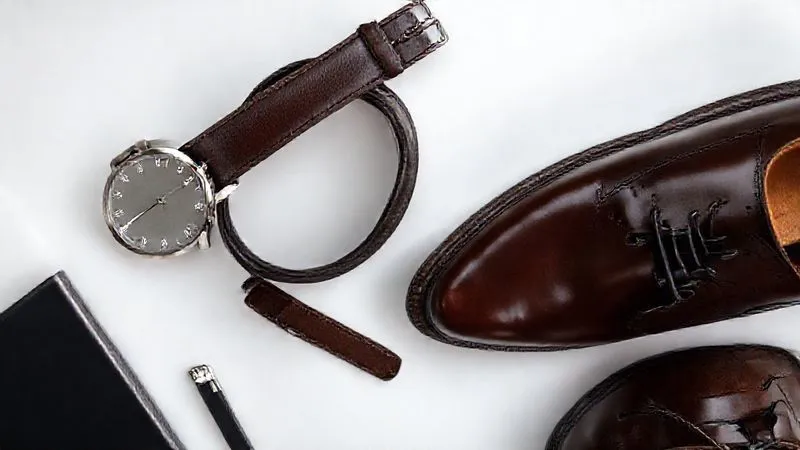
Common Pitfalls and How to Avoid Them: Real-World Scenarios
Even with the framework, certain missteps are common. Let's look at some real-world scenarios and how to navigate them effectively.
Mistake 1: Mismatched Metals
Scenario: An executive wears a beautiful gold watch, a polished black leather belt with a silver buckle, and black oxfords with no visible metal. The gold watch clashes with the silver buckle.
Fix: Always ensure all visible metals are consistent. If your watch is gold, your belt buckle (and any shoe hardware) should be gold-toned. If your preferred watch is silver, invest in a belt with a silver buckle. It's a small detail with a huge impact.
Mistake 2: Ignoring Texture Discrepancies
Scenario: A manager wears sleek, high-shine black dress shoes, but pairs them with a thick, matte, pebbled leather belt. Both are black, but the textures are jarringly different.
Fix: Texture matters as much as color. Polished shoes demand a polished belt. A suede shoe might allow for a brushed or less formal leather belt. For board meetings, stick to smooth, polished leathers for both shoes and belt to maintain a high level of formality and cohesion.
Mistake 3: The 'Too Many Colors' Trap
Scenario: A professional wears a navy suit, tan shoes, a dark brown belt, and a watch with a blue strap. While each item might be nice on its own, together it creates a chaotic and unpolished look.
Fix: Simplify. For formal board meetings, limit your leather colors to one (black) or two (a dominant brown shade and perhaps a slightly lighter watch strap if the overall look is cohesive). Focus on matching your shoes and belt precisely, and then integrate your watch. As Forbes often highlights, a clean, consistent image is crucial for professional credibility.
Case Study: How John Elevated His Boardroom Presence
John, a rising VP at a financial firm, was brilliant but often overlooked for key leadership roles. His mentor pointed out that while his suits were impeccable, his accessories often told a different story. He'd wear a classic silver Rolex, but his brown belt would have a brassy gold buckle, and his shoes were often a different shade of brown than his belt. He was struggling to match watch, belt, and shoes for board meetings without realizing the impact.
By implementing my 5-step framework, John made two key changes:
- He invested in a high-quality black leather belt with a silver buckle to match his existing silver watch and black shoes.
- For his brown suits, he purchased a dark brown polished leather belt with a silver buckle, and a dark brown leather watch strap for a dress watch, ensuring all metals were silver-toned and all leathers were coordinated.
The change was subtle yet profound. Colleagues and senior leadership began to notice his heightened attention to detail. His perceived executive presence soared, and within six months, he was promoted to a Senior VP position, a testament to how even seemingly small details contribute to the larger picture of professional success.
| Common Mistake | Example | Solution |
|---|---|---|
| Mismatched Metal Tones | Gold watch, silver belt buckle | Ensure all visible metals (watch, belt buckle, shoe hardware) are the same tone (silver-toned or gold-toned). |
| Texture Inconsistency | Polished dress shoes, pebbled leather belt | Match the finish and texture of your leathers. Polished with polished, matte with matte (for less formal). |
| Color Clashing (Browns) | Light tan belt with dark brown shoes | For formal settings, match brown shades closely in tone and depth. Avoid stark contrasts. |
Investing in Your Executive Wardrobe: Quality Over Quantity
This discussion wouldn't be complete without addressing the aspect of investment. You don't need a vast collection of accessories. What you need are a few high-quality, versatile pieces that will stand the test of time and consistently elevate your look. Think of your accessories as long-term assets in your personal brand portfolio.
A good quality leather belt, for instance, should be full-grain leather, not bonded or corrected grain. It should have sturdy stitching and a well-crafted buckle. Similarly, a dress watch from a reputable brand, whether it's an automatic or a quartz, will convey a sense of gravitas that a cheap, fashion-forward piece simply cannot. Investing in quality means your accessories will not only look better but also last longer, requiring fewer replacements.
As an industry veteran, I've seen many executives try to cut corners on accessories, only to find themselves replacing them frequently or, worse, presenting a less-than-polished image. A well-chosen, durable watch, belt, and pair of shoes are foundational elements of a truly professional wardrobe. Consider these purchases an investment in your career trajectory, not just an expense.
Beyond the Basics: Personal Style and Subtle Sophistication
While the rules for coordinating watch, belt, and shoes are quite rigid for formal board meetings, there's always room for personal expression once you've mastered the fundamentals. This isn't about breaking the rules, but understanding them so well that you can bend them subtly without sacrificing professionalism.
Perhaps it's a unique watch dial color that complements your tie, or a slightly textured leather on your belt that adds character while still matching your shoes. The key is subtlety and confidence. True style emanates from within, and when your accessories are harmonized, they amplify that inherent confidence, allowing your personality and expertise to shine through unhindered.
Remember, your goal isn't to be a fashion plate, but to present a polished, credible, and trustworthy image. By consistently applying these principles, you'll not only avoid struggling to match watch, belt, and shoes for board meetings but will also cultivate an executive presence that commands respect and attention. As renowned style expert Alan Flusser often notes, dressing well is a form of good manners, and in the boardroom, it's also a form of strategic advantage.
Frequently Asked Questions (FAQ)
Q: Can I ever mix black and brown accessories for a board meeting? A: Generally, no, especially for formal board meetings. The rule of thumb is to keep black with black and brown with brown. While there are advanced style techniques for mixing, they are too risky for high-stakes professional environments where clarity and traditional professionalism are paramount.
Q: What if my watch has mixed metals, like a steel case with gold accents? A: This is a common challenge. In such cases, choose the dominant metal tone of the watch and match your belt buckle to that. If the steel is more prominent, go with a silver-toned buckle. If the gold accents are significant, a subtle gold-toned buckle might work, but exercise caution and ensure it doesn't look overly flashy. Simplicity often wins in the boardroom.
Q: Are braided belts ever appropriate for board meetings? A: For the most formal board meetings, a slim, smooth leather belt is always preferred. A braided leather belt can be appropriate for smart casual executive settings or off-site meetings, provided the leather quality is high and the color matches your shoes. Avoid them for highly formal presentations.
Q: How many sets of accessories do I really need to avoid struggling to match watch, belt, and shoes for board meetings? A: You don't need many. A minimum of two core sets is ideal: one for black shoes (black belt, silver-toned buckle, silver-toned watch) and one for dark brown shoes (dark brown belt, silver-toned buckle, silver-toned or complementary gold-toned watch). Expanding to a cognac/mid-brown set would be a good next step. Focus on quality, not quantity.
Q: What about shoe laces – do they need to match? A: Yes, absolutely. Shoe laces should always match the color of your shoes. Black laces for black shoes, brown laces for brown shoes. This is a fundamental detail that, when overlooked, can disrupt the cohesion of your footwear.
Key Takeaways and Final Thoughts
Mastering the art of matching your watch, belt, and shoes for board meetings is not a trivial pursuit; it's a strategic component of your executive presence. Here are the critical takeaways to remember:
- Consistency is King: Ensure your leather colors (especially black) and metal tones are perfectly aligned.
- Texture Matters: Match the finish and formality of your leathers. Polished shoes demand a polished belt.
- Context is Crucial: Always dress to the appropriate level of formality for the specific meeting.
- Follow the Framework: Choose shoes first, then belt, then watch, ensuring each piece harmonizes with the others.
- Invest Wisely: Prioritize quality over quantity for long-lasting, impactful accessories.
By internalizing these principles, you will move beyond merely avoiding common mistakes. You will project an image of meticulousness, confidence, and professionalism that resonates deeply in any executive setting. Your accessories will no longer be an afterthought but powerful allies in conveying your competence and attention to detail. Step into your next board meeting not just prepared, but impeccably presented, knowing that every element of your attire supports your message of leadership.
Recommended Reading
- Eco-Friendly Kids Clothes: Last Longer & Save You Money!
- 7 Pro Strategies: Banish Stubborn Dullness for Radiant Skin Clients
- 6 Critical Reasons Why Luxury Belt Product Pages Tank Conversions Online
- Wardrobe Malfunction Proof: Stylists' Top 5 Red Carpet Strategies
- Precision Tailoring: How to Fix Subtle Fit Issues in Haute Couture



Your email address will not be published. Required fields are marked *