

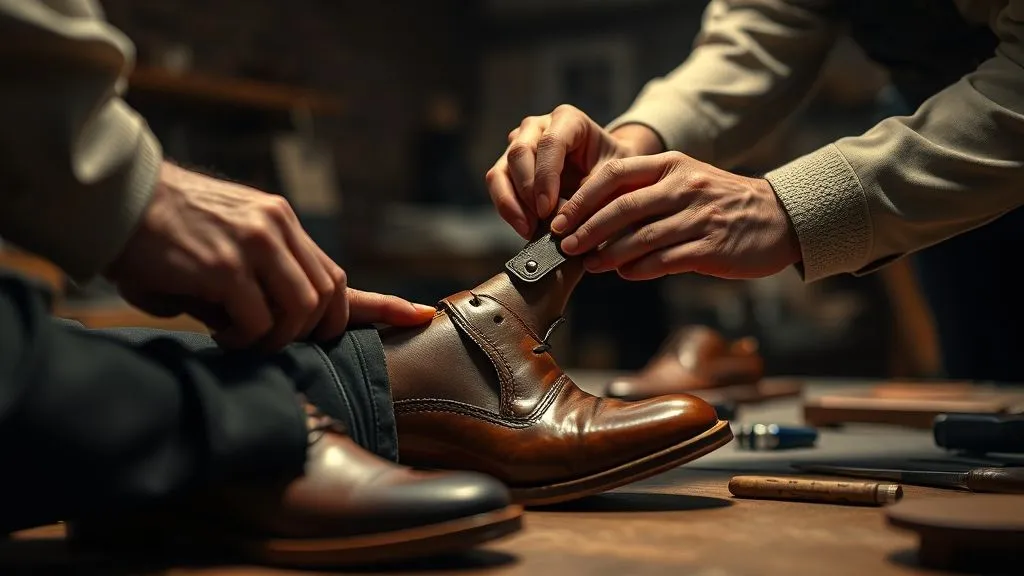
Solving bespoke luxury shoe client dissatisfaction with fit?
For over two decades in the luxury footwear industry, I've witnessed a paradox that continues to perplex both artisans and discerning clients: the profound disappointment when a bespoke shoe, crafted with unparalleled skill and expense, simply doesn't fit right. It's a moment of profound frustration, a feeling of betrayal to the promise of perfection. I've seen the subtle signs in a client's posture, the hesitant walk, the barely concealed grimace – indicators that something, despite all the effort, has gone awry.
The problem isn't always obvious. It's rarely about a glaring size error. More often, it’s the insidious nuances: a pinch here, a slip there, an unexpected pressure point, or a general lack of the 'glove-like' comfort one expects from a custom creation. This isn't just a minor inconvenience; it chips away at the client's trust, devalues the artisan's craft, and can severely impact a luxury brand's reputation. The emotional and financial investment in bespoke footwear is substantial, making any fit imperfection a magnified source of dissatisfaction.
This article isn't just another discussion of bespoke shoemaking; it's a deep dive into the actionable strategies and refined methodologies required for solving bespoke luxury shoe client dissatisfaction with fit. We'll explore advanced assessment techniques, master communication frameworks, optimize the critical fitting stages, and even delve into post-delivery protocols that ensure lasting comfort and unwavering client loyalty. Prepare to elevate your understanding of what truly constitutes a perfect fit.
Beyond the Brannock: The Art of Advanced Foot Assessment
Traditional foot measurement, while foundational, is often insufficient for the exacting demands of bespoke luxury footwear. I've observed countless times how relying solely on length and width measurements from a Brannock device can lead to significant fit discrepancies, especially for clients with unique foot anatomies or specific comfort requirements.
The Limitations of Traditional Sizing
A foot is a complex, dynamic structure, not a static two-dimensional outline. Factors like arch height, instep volume, toe splay, heel bone prominence, and gait mechanics are entirely missed by basic measurements. These subtle variations are precisely what differentiate a merely 'fitting' shoe from a truly 'bespoke' one that feels like a natural extension of the foot. Ignoring them is a common pitfall I've seen even experienced shoemakers fall into, leading directly to client dissatisfaction.
Dynamic vs. Static Measurement
The key to unlocking superior fit lies in understanding the foot both at rest and in motion. Static measurements provide a baseline, but dynamic assessments reveal how the foot behaves under load, how the arch collapses or supports, and how weight is distributed during walking. This comprehensive view is essential for crafting a last that truly mirrors the client's foot in its functional state.
To achieve this, I advocate for a multi-faceted approach to foot assessment:
- Detailed Manual Palpation: Beyond the tape measure, skilled hands can feel bone structure, muscle density, and soft tissue variations. Identify any bunions, hammertoes, or unusual prominences.
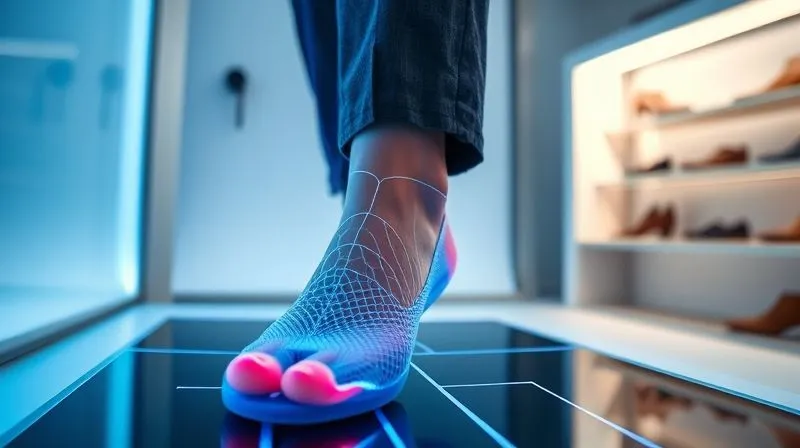
- Pressure Mapping: Utilize digital pressure plates to visualize weight distribution across the sole of the foot. This reveals high-pressure zones that might cause discomfort and guides outsole and insole design.
- 3D Foot Scanning: Employ state-of-the-art 3D scanners to capture a precise, volumetric model of the foot. This data provides exact measurements for every contour, instep height, and ankle circumference, offering an unparalleled level of detail.
- Gait Analysis: Observe the client walking, ideally barefoot and in a well-fitting, neutral shoe. Look for pronation, supination, heel strike patterns, and any compensatory movements. This informs last adjustments to support natural foot mechanics.
- Client Feedback on Existing Footwear: Ask specific questions about their current shoes – what feels good, what causes discomfort, where do they feel pressure? This qualitative data is invaluable.
Mastering the Client Consultation: Setting Expectations and Understanding Needs
The initial consultation is far more than just taking measurements; it's the bedrock of client satisfaction. In my experience, a significant portion of fit-related dissatisfaction stems not from technical errors, but from a misalignment of expectations or a failure to fully understand the client's specific needs and lifestyle. It's about empathy and active listening.
Deep Dive into Lifestyle and Usage
A bespoke shoe for a city banker who walks miles daily will have different requirements than one for a collector worn primarily for special occasions. I always ask detailed questions:
- What is the primary purpose of these shoes?
- How often will they be worn, and for how long?
- What kind of surfaces will they encounter (e.g., carpet, concrete, cobblestones)?
- What are your typical socks like – thin dress socks, thicker wool?
- Do you have any existing foot conditions, past injuries, or current discomforts?
- What is your preference for snugness versus roominess?
These seemingly minor details profoundly impact the last modification, leather selection, and sole construction, directly influencing long-term comfort and satisfaction. Ignoring these factors is a common mistake that can lead to a beautiful shoe that simply isn't practical for the client's life.
The Language of Comfort: Translating Subjective Feelings into Objective Data
Clients often describe comfort in subjective terms: 'It feels tight,' 'It's a bit loose,' 'It rubs here.' An expert artisan must translate these feelings into precise adjustments. This requires a deep understanding of foot mechanics and how different parts of the last influence fit.
"The true measure of a bespoke shoemaker isn't just their ability to craft a beautiful shoe, but their talent for truly hearing and interpreting the unspoken language of a client's foot and translating it into perfect form." - Industry Veteran Insight
I find it incredibly useful to use visual aids during this process, pointing to specific areas on a foot diagram or even a generic last model to ensure we're both talking about the same anatomical point. This collaborative approach empowers the client and ensures their feedback is accurately integrated into the design.
The Critical Role of the Trial Shoe (Toile) and Multiple Fittings
The trial shoe, or 'toile,' is arguably the most critical stage in preventing bespoke fit dissatisfaction. It's a fundamental step that, regrettably, some rush or even skip in an attempt to expedite the process. This is a false economy, as it dramatically increases the risk of costly remakes and client discontent.
Why a Toile Isn't Optional, It's Essential
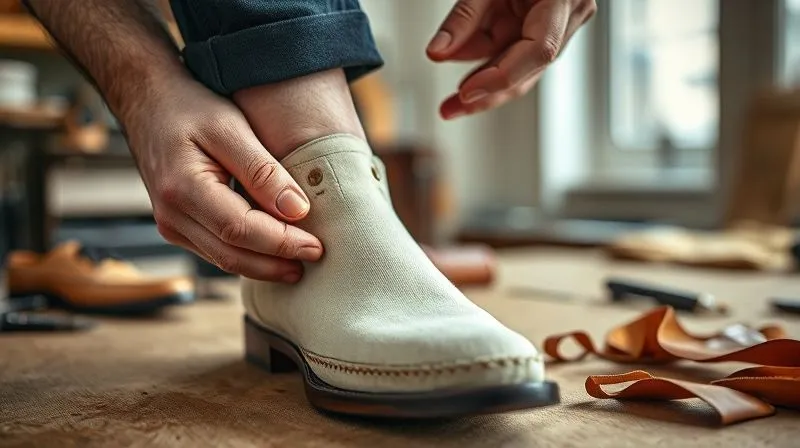
A toile is a preliminary, often unlined, shoe made from inexpensive leather or canvas, constructed over the client's custom last. Its sole purpose is to test the fit before committing expensive materials to the final product. It allows both the client and the shoemaker to identify and resolve any fit issues in a low-risk environment. I've seen toiles reveal everything from subtle pressure points that would have become agonizing in the finished shoe, to unexpected aesthetic preferences for toe box volume.
Without a toile, any fit adjustment on the finished shoe is a compromise, often involving stretching or padding, which can degrade the shoe's integrity and appearance. A properly utilized toile, on the other hand, ensures that the final last and pattern are perfected, guaranteeing a superior outcome.
Iterative Adjustments: The Craft of Perfecting the Last
The toile fitting should be a collaborative, iterative process. It's not uncommon for a client to require two or even three toile fittings. Each fitting provides valuable data, leading to precise modifications of the last.
Here are the steps I recommend for a successful toile fitting:
- Initial Assessment: Have the client wear the toile with the socks they intend to wear with the final shoe. Observe their gait, posture, and expressions.
- Detailed Feedback: Ask open-ended questions: "Where do you feel contact? Where do you feel pressure? Does anything feel loose?" Encourage them to walk, sit, and even stand for extended periods.
- Marking and Observation: Use a fine marker to draw directly on the toile where the client feels discomfort or where there's excess material. Observe how the leather creases and stretches.
- Internal Inspection: Remove the toile and inspect the internal surfaces for any signs of pressure or rubbing.
- Last Modification: Based on feedback and observation, carefully modify the last. This might involve adding or removing leather (padding/rasping), adjusting the instep curve, or refining the toe box shape.
- Re-fitting (if necessary): If significant modifications are made, create a second toile for another fitting. This ensures the changes have the desired effect before proceeding to final construction.
Bridging the Gap: Communication Between Client, Designer, and Maker
In many bespoke operations, there's a distinct separation between the person who consults with the client (often the designer or sales representative) and the person who actually makes the shoe (the artisan). This 'handoff' point is a critical vulnerability where crucial fit details can be lost or misinterpreted, leading to dissatisfaction. Effective communication is the connective tissue that binds the entire bespoke process.
Standardizing Feedback Protocols
To mitigate communication breakdowns, I've implemented standardized protocols for documenting client feedback and last modifications. This involves detailed fitting notes, often accompanied by photographs or even short videos of the client wearing the toile. The notes should be precise, using anatomical terms where possible, and clearly outlining the rationale behind each last adjustment. This ensures that the artisan receives a clear, unambiguous brief.
Visualizing the Fit: Using Technology to Convey Nuance
Beyond written notes, visual aids are incredibly powerful. With 3D foot scans and digital last design, it's now possible to overlay the client's actual foot scan onto the digital last, highlighting areas of potential pressure or looseness. This visual representation can be shared between the client, designer, and artisan, fostering a shared understanding of the fit objectives. According to a study published in the Journal of Foot and Ankle Research, 3D scanning technology significantly improves the accuracy of shoe last design.
Here's a breakdown of common fit issues and their likely causes:
| Fit Issue | Likely Cause |
|---|---|
| Toe box pressure/pinching | Insufficient toe box height or width, incorrect toe spring on last, splay not accounted for |
| Heel slipping/loose | Heel counter too wide, insufficient heel cup depth, instep too high |
| Instep pressure/tightness | Instep height too low, arch curve too flat, excessive instep girth |
| Arch discomfort/lack of support | Last arch not matching foot arch, insufficient arch support in insole |
| General tightness/constriction | Overall last volume too low, material stretch not accounted for, incorrect girth measurements |
Post-Delivery Protocol: Ensuring Lasting Satisfaction and Building Loyalty
The delivery of the finished bespoke shoes is not the end of the client journey; it's merely a new beginning. I've learned that proactive post-delivery engagement is crucial for catching minor issues before they escalate and for solidifying client loyalty. Solving bespoke luxury shoe client dissatisfaction with fit often extends beyond the initial creation.
The Follow-Up: Proactive Problem Solving
Within a week or two of delivery, I always recommend a follow-up. This can be a polite email, a phone call, or even an invitation for a brief check-in at the workshop. The goal is not just to ask if they're happy, but to inquire specifically about the fit during wear. Ask questions like: "Have you worn them for an extended period? How do they feel after a few hours? Do you notice any specific areas of pressure or looseness?" This demonstrates genuine care and provides an opportunity to address any minor concerns promptly.
Minor Adjustments and Break-in Guidance
Even with a perfect toile, some minor adjustments might be necessary once the final leather and construction are complete. Leather has different stretching properties than canvas, and the shoe's structure settles over time. Be prepared to offer minor adjustments such as:
- Stretching: Targeted stretching in specific areas (e.g., across the vamp or toe box) can alleviate localized pressure.
- Padding: Adding subtle padding or inserts can improve heel grip or arch support.
- Sole Adjustments: Minor sole adjustments can sometimes improve balance or gait.
Equally important is providing clear guidance on the break-in period. Many clients, accustomed to ready-to-wear shoes, expect immediate comfort. Educating them on the natural process of leather molding to their foot is vital. As Forbes recently highlighted, the break-in period is part of the bespoke journey.
Case Study: The Resilient Cobbler's Client Recovery
Case Study: How 'The Resilient Cobbler' Reduced Fit Complaints
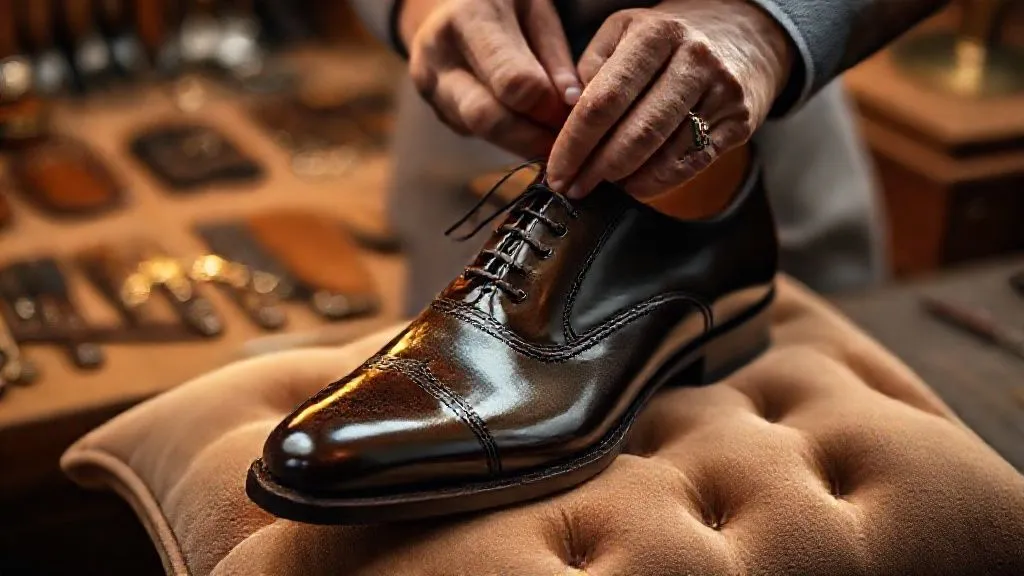
The Resilient Cobbler, a small but renowned bespoke shoemaking atelier, faced a recurring issue: despite rigorous toile fittings, a small percentage of clients still expressed fit dissatisfaction weeks after receiving their final shoes. Their solution? They implemented a mandatory '30-Day Check-In' policy. Every client received a personalized email and phone call 30 days post-delivery, inviting them back for a complimentary fit assessment. During one such check-in, a client mentioned a slight rub on their small toe after wearing their new oxfords for a full workday. The cobbler, instead of dismissing it, offered a targeted stretching service and provided specific break-in advice. This proactive approach not only resolved the minor issue but transformed a potentially dissatisfied client into an ardent brand advocate, who subsequently ordered two more pairs and referred three friends. This demonstrated the power of post-delivery care in solving bespoke luxury shoe client dissatisfaction with fit.
Educating the Client: Understanding Bespoke vs. Ready-to-Wear
A significant factor in client dissatisfaction often stems from a misunderstanding of what 'bespoke' truly entails, especially when compared to the immediate, often cushioned comfort of mass-produced, ready-to-wear footwear. As an industry specialist, I believe a crucial part of our role is to be educators.
The Break-In Period: A Necessary Journey
Unlike ready-to-wear shoes, which are designed for immediate, generic comfort, bespoke shoes are crafted to mold precisely to the individual foot over time. This molding process requires a 'break-in' period. During this phase, the leather, especially in the upper and sole, softens, stretches, and conforms to the unique contours and movements of the wearer's foot. It's a journey, not an instant destination. I always explain that initial snugness or even slight pressure in certain areas is normal and temporary, provided it's not painful or restricting circulation.
I advise clients to:
- Wear their new bespoke shoes for short periods (1-2 hours) initially.
- Increase wear time gradually.
- Use shoe trees consistently to maintain shape and absorb moisture.
- Avoid wearing them for consecutive days during the break-in period to allow the leather to rest and dry.
Material Science: How Leather Adapts and Molds
Understanding the properties of quality leather is key. Full-grain leathers, often used in luxury bespoke shoes, are dense and structured. They resist immediate deformation but, with wear, will beautifully conform to the foot's shape. This isn't a flaw; it's a feature. The leather's ability to 'learn' the foot's nuances is what ultimately provides that unparalleled, personalized comfort.
Explaining the role of the leather, cork filling, and even the steel shank in adapting to their foot over time helps manage expectations. For more on the science of leather, delve into resources like the Leather Research Laboratory.
Leveraging Technology: From 3D Scans to Parametric Design
While bespoke shoemaking is an ancient craft, its future is undeniably intertwined with technology. I've seen firsthand how integrating advanced tools can drastically improve fit accuracy and streamline the process of solving bespoke luxury shoe client dissatisfaction with fit. It's about augmenting, not replacing, the artisan's skill.
Precision Through Digital Footwear Design
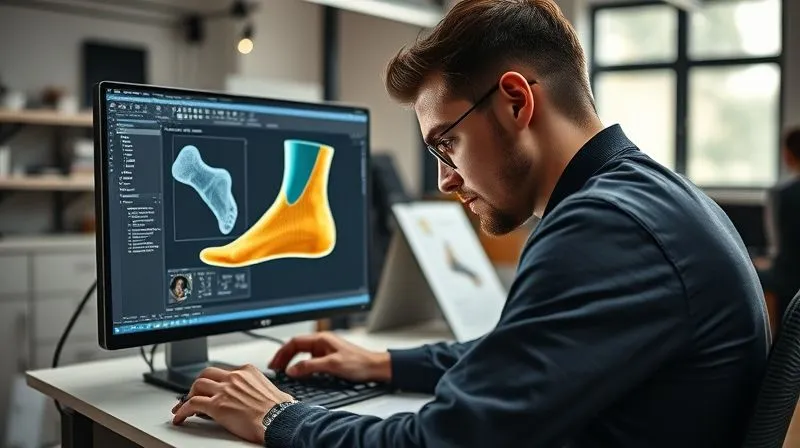
The advent of 3D foot scanning and Computer-Aided Design (CAD) software has revolutionized last making. Instead of relying solely on manual measurements and the artisan's subjective interpretation, a digital last can be created directly from a precise 3D scan of the client's foot. This allows for:
- Exact Volumetric Matching: The last's volume and contours can be precisely matched to the foot, accounting for every bulge and curve.
- Parametric Adjustments: Designers can make precise, measurable adjustments to the digital last (e.g., increasing instep height by 2mm, widening the toe box by 1.5mm) with absolute accuracy.
- Virtual Prototyping: Some advanced software allows for virtual 'fitting' where the foot scan is overlaid onto the digital last, highlighting potential pressure points before any physical material is cut.
Predictive Analytics for Fit Outcomes
Looking ahead, I foresee the integration of predictive analytics. By accumulating vast amounts of 3D foot data, last designs, and subsequent client feedback on fit, AI algorithms could eventually predict optimal last modifications for certain foot types or conditions. This isn't here yet in a widespread sense, but the potential for even greater precision in solving bespoke luxury shoe client dissatisfaction with fit is immense.
For those interested in the cutting edge of digital footwear, research from institutions like the MDPI journal Applied Sciences often features studies on 3D printing and scanning in footwear manufacturing.
Building a Culture of Perfection: Training and Craftsmanship
Ultimately, the success of solving bespoke luxury shoe client dissatisfaction with fit boils down to the human element: the skill, dedication, and continuous learning of the artisans. Technology is a tool, but the mastery of the craft remains paramount.
Investing in Artisan Skills
I've always advocated for continuous professional development for shoemakers. This isn't just about learning new techniques but also refining existing ones. Workshops focusing on advanced last modification, anatomical understanding, and delicate hand-stitching are invaluable. Apprenticeships, where knowledge is passed down through generations, remain the gold standard. A shoemaker who truly understands foot mechanics, leather properties, and the nuances of last making is best equipped to interpret client feedback and translate it into a perfectly fitting shoe.
Quality Control at Every Stage
Fit perfection isn't achieved at the final inspection; it's built into every single stage of the process. From the initial measurement and last carving to the clicking, closing, and lasting, each step must be executed with meticulous attention to detail. Any deviation, however small, can cascade into a fit issue. Implementing rigorous internal quality checks at each major milestone ensures that potential problems are identified and rectified early, long before they become a source of client dissatisfaction.
This commitment to excellence, often ingrained through intensive training at institutions like the Northamptonshire Boot and Shoe Manufacturers Association (NBC) Cordwainers College, is what truly sets apart the exceptional bespoke shoemakers.
Frequently Asked Questions (FAQ)
Is a bespoke shoe supposed to be comfortable immediately, or does it need a break-in period? While bespoke shoes are designed for an optimal fit, they almost always require a break-in period. High-quality leather and traditional construction methods mean the materials need time to soften and mold to the unique contours of your foot. Expect initial snugness; true comfort develops over several wears as the shoe 'learns' your foot. Immediate, cushioned comfort is more typical of mass-produced footwear.
What's the difference between a minor fit adjustment and a complete remaking of a bespoke shoe? A minor fit adjustment involves small, targeted modifications like stretching a specific area, adding subtle padding to the insole or heel, or slightly reshaping a part of the last. A complete remaking, however, means the initial last or pattern was fundamentally incorrect, requiring the entire shoe to be rebuilt from scratch. The goal of the toile fitting is precisely to avoid the need for a complete remake.
How much input should I, as a client, have during the bespoke shoe-making process regarding fit? Your input is absolutely crucial! A good bespoke shoemaker will actively solicit your feedback at every stage, especially during the consultation and toile fittings. You should clearly communicate your comfort preferences, lifestyle needs, and any areas of concern. It's a collaborative process where your subjective feelings are translated into objective design decisions.
Can bespoke shoes accommodate specific orthopedic needs or foot conditions? Yes, bespoke shoemakers are often uniquely skilled at accommodating specific orthopedic needs, bunions, hammertoes, or other foot conditions. This is where their expertise in last modification and advanced assessment truly shines. They can build specific allowances or supports into the last and shoe construction that off-the-rack shoes simply cannot offer, often working in consultation with podiatrists.
What are the most common reasons for bespoke shoe fit dissatisfaction, even with experienced makers? Even with experienced makers, dissatisfaction can arise from insufficient initial assessment (missing subtle foot nuances), poor communication of client expectations, rushing or skipping the critical toile fitting stage, or inadequate post-delivery follow-up. Sometimes, it's also due to a client's misunderstanding of the bespoke break-in process versus immediate ready-to-wear comfort.
Key Takeaways and Final Thoughts
Solving bespoke luxury shoe client dissatisfaction with fit is not a singular solution, but a symphony of precise methodologies, empathetic communication, and unwavering commitment to craftsmanship. As an industry veteran, I've seen that true bespoke excellence hinges on moving beyond conventional practices and embracing a holistic approach.
- Embrace Advanced Assessment: Go beyond basic measurements with 3D scanning, pressure mapping, and gait analysis.
- Master the Consultation: Actively listen to client needs, lifestyle, and comfort language to manage expectations.
- Prioritize the Toile: The trial shoe is non-negotiable for refining the last and preventing costly errors.
- Foster Clear Communication: Standardize feedback protocols between all parties involved in the creation process.
- Implement Post-Delivery Care: Proactive follow-ups and minor adjustments solidify loyalty and catch issues early.
- Educate Your Client: Clearly explain the break-in process and the unique properties of bespoke leather.
- Integrate Technology Wisely: Leverage 3D design and digital tools to enhance precision, not replace skill.
- Invest in Craftsmanship: Continuous training and rigorous quality control are the bedrock of perfection.
By integrating these expert strategies, bespoke luxury shoemakers can not only eliminate client dissatisfaction but also elevate their craft, build enduring client relationships, and reinforce the unparalleled value of truly custom footwear. The pursuit of the perfect fit is an ongoing journey, but one that, when executed with diligence and expertise, yields the most rewarding results for both artisan and client.
Recommended Reading
- Mastering Realistic Digital Twins for Virtual Fashion Showcases: A 7-Step Guide
- 7 Pro Tips: How to Pack Professional Fashion Accessories Without Damage
- 5 Expert Steps: Safely Updating Fragile Vintage Frames with Modern Lenses?
- Clean Vintage Beaded Purses Safely: The Ultimate Care Guide
- 7 Proven Strategies: Minimize Womenswear Seasonal Overstock Markdown Losses

Your email address will not be published. Required fields are marked *