

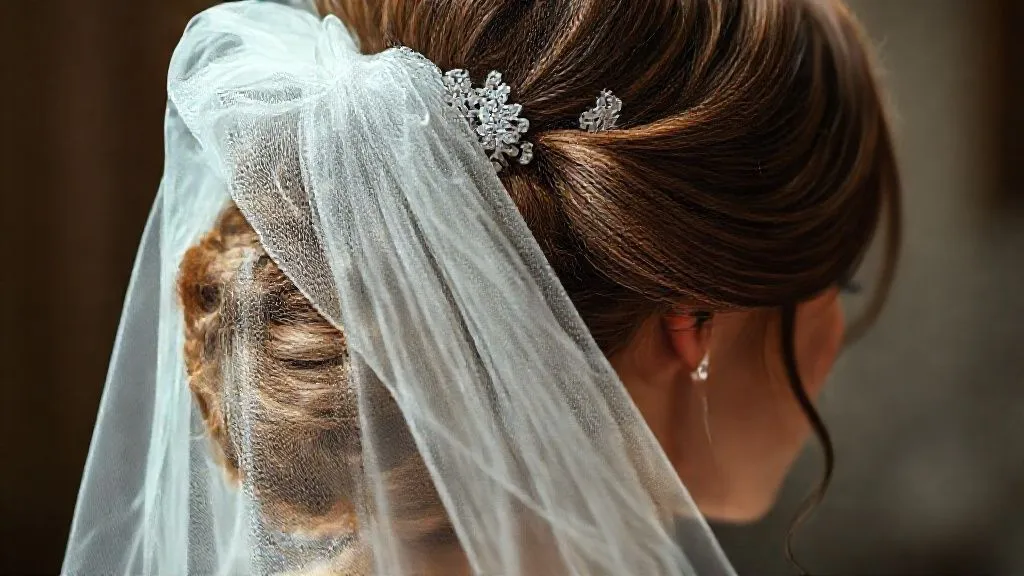
Securing Heavy Bridal Veils Without Damaging Elaborate Updos? Your Expert Guide
For over fifteen years, I've had the distinct privilege of working with countless brides, transforming their dreams into stunning realities on their wedding day. In this magical world of bridal fashion, one common apprehension I've observed, time and again, is the delicate dance between a breathtakingly elaborate updo and the majestic presence of a heavy bridal veil. It’s a challenge that can truly haunt a bride-to-be, overshadowing the joy of her perfect look.
The fear is palpable: the veil, a symbol of tradition and beauty, becoming a destructive force, pulling at meticulously placed pins, collapsing volume, or worse, causing discomfort and distraction throughout the most important day. Brides invest significant time and resources into their hair, only to worry if their chosen veil will compromise its integrity. The struggle to achieve both stunning aesthetics and unwavering security is real, often leading to compromises that no bride should have to make.
But what if I told you there are definitive, expert-backed strategies to ensure your heavy bridal veil remains perfectly in place, from the first step down the aisle to the last dance, all while preserving every intricate detail of your elaborate updo? In this comprehensive guide, I'll share the invaluable insights, actionable techniques, and professional secrets I've gathered over a career dedicated to bridal perfection. We'll explore everything from strategic attachment methods to accessory selection, ensuring your wedding day hair is a masterpiece of both beauty and resilience.
Understanding the Anatomy of a Heavy Veil and an Elaborate Updo
Before we dive into solutions for securing heavy bridal veils without damaging elaborate updos, it's crucial to understand the inherent challenges. Think of it like engineering: you can't build a stable bridge without understanding the forces it needs to withstand. The same principle applies to your bridal hair.
The Physics of Veil Weight Distribution
Heavy veils, particularly cathedral or royal-length designs adorned with intricate lace, beading, or multiple layers of tulle, carry significant weight. This weight, when improperly anchored, exerts a downward and backward pull on the hair. It's not just the static weight; dynamic forces from movement, wind, or even hugs can amplify this pressure.
I've seen many brides underestimate the sheer gravitational pull of a long, embellished veil. The goal isn't just to 'stick' it in; it's to distribute that weight evenly and transfer the load to the strongest parts of the updo, or even directly to the scalp, rather than relying solely on delicate hair strands.
Updo Vulnerabilities: What to Watch Out For
Elaborate updos, while stunning, often involve intricate loops, braids, and pinned sections that can be surprisingly fragile. Areas with significant volume, delicate curls, or sections held by only a few pins are particularly vulnerable. A heavy veil can quickly compromise these structural elements, leading to sagging, shifting, or even complete collapse.
From my experience, the most common points of failure include the crown, where volume is often concentrated, and the nape of the neck, if the veil is attached too low without adequate support. Understanding these weak points allows us to proactively reinforce them, turning potential disaster into unwavering stability.
The Unseen Foundation: Preparing Your Hair for Ultimate Veil Security
The secret to a rock-solid updo and veil combination isn't just about the attachment method; it begins long before the veil even comes out of its bag. It's about building an unshakeable foundation. This preparatory work is often overlooked, but I consider it non-negotiable for securing heavy bridal veils without damaging elaborate updos.
- Pre-Wedding Hair Health: Start with healthy hair. Strong, well-nourished hair holds style better. Avoid harsh chemical treatments close to the wedding date that might weaken strands.
- The 'Second Day Hair' Myth Reimagined: While stylists often recommend not washing hair on the wedding morning, it's not about being 'dirty.' It's about texture. Freshly washed hair can be too soft and slippery. Opt for a wash the day before, using a volumizing shampoo and conditioner, followed by a thorough blow-dry with a texturizing spray.
- Strategic Texturizing: This is paramount. I always recommend incorporating products that add grip and grit without making hair sticky or heavy. Think dry shampoos (even on clean hair), texturizing sprays, and light hold mousses applied at the root.
- Backcombing and Teasing: This isn't just for volume; it creates an internal 'nest' of tangled hair that pins and combs can grip onto. Focus on the areas where the veil will be attached. This provides a crucial anchor point that prevents slippage.
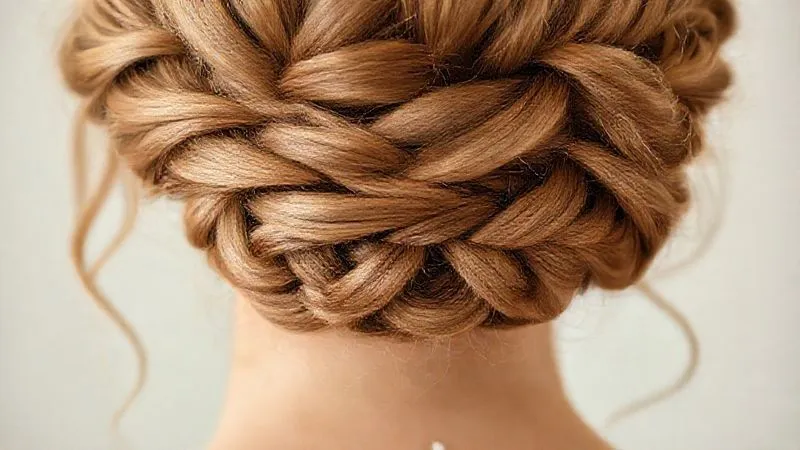
- Creating a 'Pillow' Base: For very heavy veils, sometimes I'll create a small, tightly braided or twisted section of hair, secured flat against the scalp, directly underneath where the veil comb will sit. This acts as an invisible, super-strong anchor.
Case Study: How Amelia's Veil Stayed Flawless
Amelia had a stunning, floor-length lace veil, quite heavy, and an intricate braided updo. During her first hair trial with another stylist, the veil sagged within an hour. The stylist had simply tried to push the comb into her freshly washed, silky hair. For her second trial with me, we focused on preparation. We washed her hair the day before, used a texturizing spray, and I meticulously backcombed the crown where the veil would sit. We also incorporated a small, invisible braided anchor. On her wedding day, despite gusty winds during outdoor photos and hours of dancing, Amelia's veil remained perfectly secure, without a single strand of her updo disturbed. This resulted in a stress-free experience and absolutely breathtaking photos.
Mastering Attachment Techniques: Beyond the Basic Comb
Once your hair is prepped, the actual attachment method becomes the next critical layer of security. This is where expertise truly shines, moving beyond simply pushing a comb into the hair. My approach focuses on creating multiple, redundant anchor points to distribute the veil's weight effectively.
The Double-Comb Method: A Game Changer
For heavier veils, relying on a single comb, even a well-secured one, can be risky. I frequently employ a 'double-comb' or 'support comb' strategy. This involves:
- The Veil's Primary Comb: This is the comb attached to your veil. It's inserted into the hair, typically pointing downwards, into the backcombed or braided base.
- The Support Comb: A second, smaller, and often flatter comb is then inserted above the primary comb, pointing upwards. The teeth of this support comb interlock with the primary comb, creating a 'sandwich' effect. This provides upward resistance, preventing the veil from pulling down and out.
This method significantly enhances stability, especially for cathedral veils. It essentially creates a physical barrier that locks the main comb into place.
Strategic Pinning: The Art of Reinforcement
Bobby pins are your best friend, but only when used correctly. It's not about quantity, but quality and technique. I always use pins that match the hair color and are of professional grade – they have a stronger grip.
- Criss-Cross Pinning: Instead of pushing pins straight in, insert them in an 'X' pattern around the veil comb. This creates tension from multiple directions, locking the comb in place.
- Anchor Pinning: After the comb is in, take small sections of hair from around the comb's base, twist them, and pin them directly into the scalp or another secure part of the updo, effectively 'sewing' the comb into the hairstyle.
- U-Shaped Pins for Volume: For updos with significant volume, U-shaped pins (hairpins) can be used to secure sections of the veil's fabric directly to the internal structure of the updo, providing additional support without adding bulk.
Remember, each pin should be inserted firmly, catching a good amount of hair and preferably anchoring into the scalp or a tightly braided section.
Invisible Braids and Anchors: The Secret Weapons
Sometimes, the most effective solutions are those you can't see. For very heavy veils or extremely delicate updos, I often create invisible anchors:
- Hidden Braided Pad: A small, tight three-strand braid woven from a section of hair where the veil will sit. This braid provides an incredibly strong, dense foundation for pins and combs to grip onto. It's then carefully tucked beneath the main updo.
- Hair Extension Loop: In some cases, for exceptionally heavy veils, a small loop of hair extension (matched to the bride's hair) can be sewn into the updo's base. The veil's comb can then be threaded through this loop, offering unparalleled security. This is a more advanced technique but incredibly effective.
“The true art of securing a heavy veil lies not in brute force, but in intelligent engineering. It’s about understanding the forces at play and counteracting them with multiple, strategically placed anchor points. Think of it as building a strong, invisible scaffolding for your veil.”
Choosing the Right Veil Attachments and Accessories for Support
The type of attachment on your veil can significantly impact its security. Not all combs are created equal, and understanding the nuances can make a world of difference in securing heavy bridal veils without damaging elaborate updos.
Specialized Combs, Clips, and Wires
Most veils come with a standard plastic or metal comb. While these can work for lighter veils, heavier ones often benefit from specific designs:
- Metal Combs with Tightly Spaced Teeth: These offer a superior grip compared to wider-spaced plastic combs. Look for combs with a slight curve that conforms to the head's shape.
- Reinforced Combs: Some veils come with combs that have small loops or holes along their spine. These are ideal for threading extra bobby pins through, creating an even more secure attachment.
- Wire Frame Attachments: For exceptionally heavy, multi-layered, or very long veils, some designers incorporate a flexible wire frame into the veil's base instead of a comb. This frame can be molded to the head and then heavily pinned, distributing weight over a larger area.
When selecting your veil, ask your bridal consultant about the attachment method and if it can be reinforced or customized for added stability.
| Attachment Type | Pros | Cons |
|---|---|---|
| Standard Plastic Comb | Lightweight, affordable, common | Poor grip for heavy veils, can slip easily, causes hair damage if forced |
| Metal Comb (Tightly Spaced) | Stronger grip, durable, less prone to bending | Can be heavier, may require more precise placement |
| Reinforced Comb (with loops) | Excellent for pinning, highly secure, distributes weight better | Less common, may need custom integration |
| Wire Frame Base | Superior weight distribution, moldable to head, ultimate security | Can be bulky, requires expert placement, often custom-made |
| Hairpins/U-pins | Versatile, adds extra security, blendable | Not a primary anchor, can pull hair if misused |
The Role of Hairnets and Bobby Pins
Beyond the primary attachment, secondary tools play a vital role. A fine mesh hairnet, matched to your hair color, can be strategically placed over the updo before the veil is attached. This creates a cohesive, slightly 'sticky' surface that helps hold pins and prevents stray hairs from escaping, adding an extra layer of structural integrity. Bobby pins, as discussed, are indispensable for reinforcing the veil comb and securing any loose sections of the veil's fabric. Always choose pins that are sturdy and have a good grip, avoiding flimsy, easily bent ones.
The Art of Placement: Where Your Veil Sits Matters Most
The precise location where your veil is attached is not just an aesthetic decision; it's a critical engineering choice that directly impacts the stability of your entire bridal look. Incorrect placement can quickly lead to a sagging veil or a damaged updo, even with the best attachment techniques. This is where my experience truly comes into play when helping brides with securing heavy bridal veils without damaging elaborate updos.
Generally, there are three primary placement zones:
- High Crown: Placing the veil higher on the crown of the head can create a dramatic, regal look, adding height and elongating the silhouette. However, this area often has less dense hair and is more prone to movement. If choosing this placement for a heavy veil, extreme care must be taken to create a strong, wide base of backcombing and anchoring.
- Mid-Crown/Back of Head: This is often the most secure and versatile placement. By attaching the veil slightly lower, around the occipital bone (the prominent bone at the back of your skull), you leverage a stronger, denser area of hair. This position also allows for better weight distribution across the broader surface of the updo.
- Low Nape/Under the Updo: While beautiful for certain styles, attaching a heavy veil low at the nape of the neck or underneath the updo can be challenging. It puts direct downward pressure on the updo's lower sections and can be uncomfortable. If this style is desired, the veil must be exceptionally light, or an incredibly robust, integrated anchor must be built into the updo's base.
During a trial, I always test different placements with the actual veil to see how it interacts with the updo's structure and the bride's head shape. A slight adjustment of an inch or two can make all the difference in comfort and security.
Collaborating with Your Bridal Hair Stylist: A Partnership for Perfection
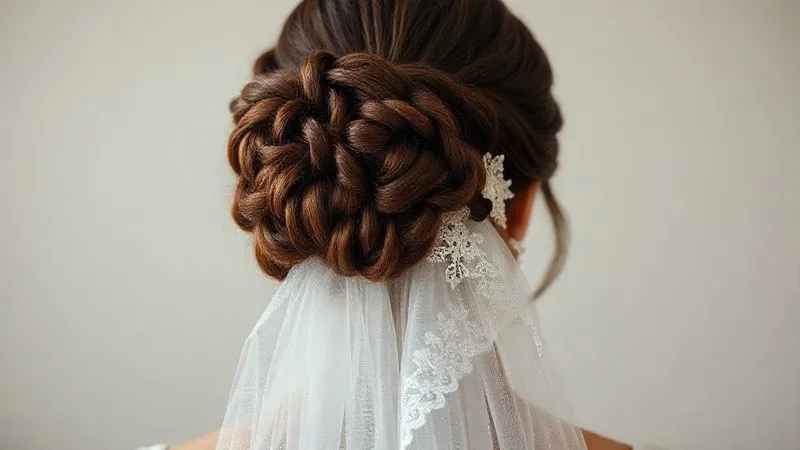
Your bridal hair stylist is your most valuable ally in this endeavor. Their expertise is paramount, and effective communication with them is the cornerstone of securing heavy bridal veils without damaging elaborate updos. I cannot stress this enough: involve your stylist early and often.
Pre-Wedding Consultations and Trials
This is not an optional step; it's essential. During your trial, bring your actual veil, or one of similar weight and length. This allows your stylist to:
- Assess the veil's weight and attachment.
- Experiment with different placements and techniques.
- See how the veil interacts with your chosen updo.
- Identify potential weak points in the hairstyle.
- Adjust the updo's structure to accommodate the veil's demands.
Be open and honest about your concerns. If you feel any pulling or discomfort during the trial, speak up. A good stylist will welcome this feedback and work with you to find a comfortable and secure solution. According to a study published by Harvard Business Review on effective communication, clear and concise dialogue is critical for successful outcomes, and this certainly applies to your wedding day preparations.
What to Discuss with Your Stylist:
- Veil Details: Share photos and physical details of your veil (length, embellishments, attachment type).
- Updo Vision: Provide clear inspiration photos for your desired updo, but be open to minor structural adjustments for veil compatibility.
- Comfort vs. Security: Discuss your priorities. Do you prefer absolute security over slight discomfort, or vice versa? A skilled stylist can balance both.
- Contingency Plans: Ask about what happens if the veil needs to be removed later in the evening. Can it be done easily without ruining the updo?
Day-Of Troubleshooting and Maintaining Veil Integrity
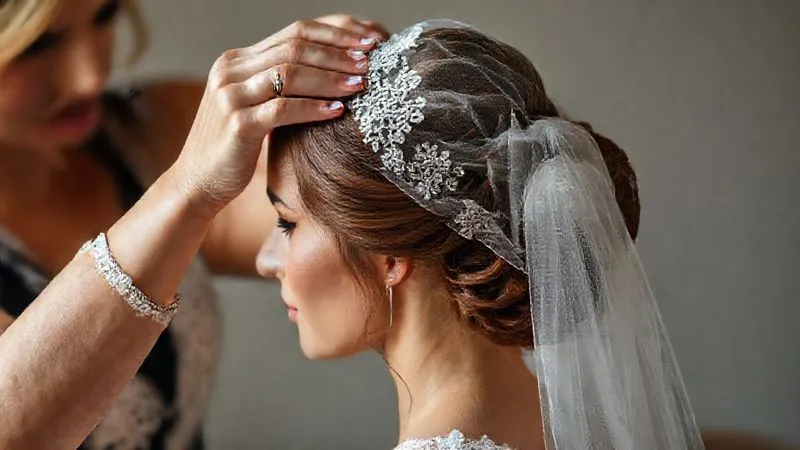
Even with the most meticulous planning and expert execution, the wedding day can bring unexpected challenges. Knowing how to handle minor issues can prevent them from escalating. This is the practical, on-the-ground advice for maintaining your look and ensuring securing heavy bridal veils without damaging elaborate updos holds true throughout the celebration.
- Emergency Kit Essentials: Prepare a small kit with extra bobby pins (matching your hair color), a small comb, and a travel-size hairspray. Designate a trusted bridesmaid or family member to carry it and know how to use it.
- Minimizing Movement: While you want to enjoy your day, be mindful of excessive head movements or sudden jerks, especially during photos or hugs. Explain to your bridal party and partner to be gentle around your veil.
- Wind Management: If you're having an outdoor wedding, wind can be a veil's worst enemy. Discuss wind strategies with your photographer and stylist beforehand. Sometimes, having bridesmaids gently hold the veil during key moments can prevent it from catching the wind and pulling on your updo.
- Veil Removal: Plan with your stylist when and how the veil will be removed. Often, it's after the ceremony and formal photos. Ensure it's done gently, by pulling the veil comb straight out rather than tugging. Your stylist might even provide specific instructions or offer to return to remove it. For tips on managing wedding day stress, Brides.com offers valuable advice that can help keep you calm and focused on enjoying your day.
Remember, your goal is to enjoy every moment. By understanding these practical considerations, you empower yourself and your support team to handle anything that comes your way, keeping your bridal look impeccable.
Frequently Asked Questions (FAQ)
Question: Can I really wear a very heavy cathedral veil with a delicate updo without damage? Absolutely, yes! The key is in proactive planning and expert execution. It requires a robust hair preparation (texturizing, backcombing), employing advanced attachment techniques like the double-comb method or hidden anchors, and meticulous pinning. Your stylist must be experienced in these specific challenges. It's not about the updo being 'delicate' but about building an unseen, strong foundation within and around it.
Question: My hair is very fine and slippery. What extra steps can I take? Fine hair requires even more attention to texturizing. Use dry shampoo or volumizing powder generously at the roots where the veil will be attached. Consider a very tight, small braided anchor section. Some stylists might even use a small amount of backcombing spray or hair powder directly on the comb's teeth for extra grip. Communication with your stylist about your hair type is crucial so they can adjust their techniques accordingly.
Question: Should I choose my veil before or after my updo? Ideally, you should have at least an idea of your veil (or the actual veil) before your hair trial. This allows your stylist to design or adapt the updo with the veil's weight, length, and attachment in mind. If you fall in love with a veil after your trial, schedule another trial or at least a consultation to ensure compatibility. The veil and updo should complement each other structurally, not just aesthetically.
Question: How can I prevent the veil from feeling heavy or causing a headache? Discomfort often stems from the weight not being properly distributed, causing pressure on a small area of the scalp. Ensure the attachment points are spread out and anchored securely into dense hair or a reinforced base. The double-comb method helps distribute pressure. Also, make sure pins are inserted smoothly and not digging into the scalp. If you feel a headache forming, gently try to shift the veil slightly or have your designated helper check for any pulling points, but avoid aggressively pulling it out.
Question: What if my veil only has loops for pins, not a comb? Veils with loops are often designed for maximum flexibility in placement and can be very secure. Your stylist will use a series of bobby pins or U-shaped pins threaded through the loops and then securely anchored into your updo, often in a criss-cross pattern. This allows for a customized fit and excellent weight distribution, as the 'attachment' can span a wider area than a single comb.
Key Takeaways and Final Thoughts
Navigating the world of bridal hair, especially when a heavy veil is part of the vision, can feel overwhelming. But as an industry veteran, I assure you that securing heavy bridal veils without damaging elaborate updos is not just possible; it’s an achievable reality with the right knowledge and preparation. Your wedding day hair should be a source of confidence and joy, not anxiety.
- Preparation is Paramount: Invest in hair health and strategic texturizing to create a strong foundation.
- Master Attachment Techniques: Move beyond basic pinning. Embrace methods like the double-comb, criss-cross pinning, and hidden anchors.
- Choose Wisely: Select veil attachments that support heavier designs, and consider specialized combs or wire frames.
- Strategic Placement Matters: Work with your stylist to find the optimal placement zone for both aesthetics and security.
- Communicate with Your Stylist: Your stylist is your expert. Leverage their knowledge through detailed consultations and trials, bringing your actual veil.
- Be Prepared for the Day: An emergency kit and awareness of potential issues will ensure your look remains flawless.
Your bridal journey is unique, and your wedding day look should reflect that individuality without compromise. By applying these expert strategies, you're not just securing a veil; you're securing peace of mind and the freedom to fully immerse yourself in the magic of your celebration. Trust in the process, trust in your stylist, and step forward with confidence, knowing your exquisite updo and majestic veil will stand the test of every beautiful moment.
Recommended Reading
- The Ultimate Guide: Best Strategies for Copping Streetwear Drops
- Budget Brilliance: 7 Expert Ways to Source Authentic Historical Costume Materials
- Cracking the Code: 7 Ways New Bloggers Land Exclusive Fashion Event Invites
- 7 Steps: Ethically Sourcing Sustainable School Uniforms for Your School
- 7 Smart Strategies: Prevent Historical Inaccuracy in Low-Budget Costumes

Your email address will not be published. Required fields are marked *