


How to Ethically Source Sustainable School Uniforms for Your School?
For over two decades in the kids' fashion industry, I've witnessed firsthand the profound shifts in consumer awareness and, thankfully, in institutional responsibility. What once was a simple procurement decision has evolved into a complex challenge: ensuring the clothes our children wear daily align with our deepest values.
Many schools, driven by a genuine desire to do good, find themselves navigating an opaque global supply chain. They grapple with questions about labor practices, environmental impact, and material origins, often feeling overwhelmed by the sheer scale of the problem. The fear of inadvertently supporting unethical practices or greenwashing is a very real concern for administrators and parent-teacher associations alike.
In this definitive guide, I will share my accumulated expertise to provide a clear, actionable roadmap. You'll learn not just what to look for, but how to implement practical frameworks, leverage expert insights, and build a procurement strategy that ensures your school's uniforms are truly ethical and sustainable, from fiber to fabric, and beyond.
1. Understanding the 'Why': The Imperative for Ethical & Sustainable Uniforms
Before we delve into the 'how,' it's crucial to solidify the 'why.' The decision to pursue ethical and sustainable school uniforms isn't just about compliance; it's a powerful statement of a school's values. It reflects a commitment to social responsibility, environmental stewardship, and the holistic education of its students.
The fast fashion industry, which often includes uniform manufacturing, has well-documented negative impacts. These range from exploitative labor conditions in factories to excessive water usage, chemical pollution from dyeing processes, and massive textile waste. By making a conscious choice, your school can significantly mitigate its contribution to these global challenges.
In my experience, moving towards ethical and sustainable sourcing isn't just about avoiding harm; it's about actively building a positive legacy. It enhances your school's reputation, fosters a deeper connection with environmentally conscious families, and instills valuable lessons in your students about global citizenship and responsible consumption.
Furthermore, there's a growing body of evidence suggesting that consumers, including parents, are increasingly prioritizing sustainability. A Deloitte study revealed that a significant percentage of consumers are willing to pay more for sustainable products. This trend underscores the importance of aligning school policies with community values.

2. Deconstructing 'Ethical' and 'Sustainable': What Do These Terms Truly Mean in Practice?
These terms are often used interchangeably, but they represent distinct, albeit interconnected, facets of responsible production. Understanding the nuances is critical for effective sourcing.
What Does 'Ethical' Encompass?
Ethical sourcing primarily focuses on human rights and fair labor practices throughout the supply chain. This means:
- Fair Wages: Workers are paid a living wage that covers basic needs and provides discretionary income.
- Safe Working Conditions: Factories are free from hazards, with proper ventilation, safety equipment, and emergency protocols.
- No Child Labor or Forced Labor: Strict adherence to international labor laws and conventions.
- Freedom of Association: Workers have the right to form and join trade unions.
- Non-Discrimination: Equal opportunities and treatment regardless of gender, race, religion, or other characteristics.
What Does 'Sustainable' Mean?
Sustainable sourcing centers on minimizing environmental impact and promoting ecological balance. Key aspects include:
- Material Choices: Prioritizing organic, recycled, or innovative low-impact fibers.
- Water Management: Reducing water consumption in cultivation and manufacturing processes.
- Chemical Management: Eliminating harmful dyes and chemicals, ensuring safe wastewater treatment.
- Waste Reduction: Minimizing textile waste, packaging waste, and promoting circularity.
- Energy Efficiency: Utilizing renewable energy sources in production.
A truly responsible uniform aims for both ethical production and environmental sustainability. It’s a holistic approach.
| Criterion | Ethical Sourcing | Sustainable Sourcing |
|---|---|---|
| Fair Wages | Primary Focus | Indirect Impact (via ethical practices) |
| Organic Cotton | Indirect Impact (via responsible farming) | Primary Focus |
| Safe Working Conditions | Primary Focus | Indirect Impact (via responsible operations) |
| Water Conservation | Indirect Impact | Primary Focus |
| No Child Labor | Primary Focus | Indirect Impact |
| Recycled Materials | Indirect Impact | Primary Focus |
3. Mapping Your Supply Chain: The First Crucial Step
You cannot manage what you do not understand. The uniform supply chain, like most apparel, is complex, often spanning multiple countries and involving numerous tiers of suppliers. Your first task is to gain visibility.
Identifying Tier 1, 2, and 3 Suppliers
- Tier 1 (Cut-and-Sew Factories): These are the facilities that assemble the final garments. They are usually the easiest to identify.
- Tier 2 (Fabric Mills): These suppliers produce the fabric, often dyeing and finishing it. They are critical for understanding material origins and chemical use.
- Tier 3 (Fiber Producers/Growers): This includes cotton farms, petrochemical plants for synthetics, or recycled material processors. This is where the raw materials originate, and often the hardest tier to trace.
I've seen schools make the mistake of only vetting their direct uniform vendor, assuming that company has done all the due diligence. That's rarely the case. True transparency requires pushing beyond the first layer.
The Role of Certifications
Certifications act as independent verifications of ethical and sustainable practices. While not a silver bullet, they are invaluable tools for gaining confidence in your supply chain:
- GOTS (Global Organic Textile Standard): The leading standard for organic fibers, ensuring ecological and social criteria throughout the supply chain.
- Fair Trade Certified™: Focuses on fair wages, safe conditions, and community development for farmers and factory workers.
- OEKO-TEX® Standard 100: Guarantees that textiles are free from harmful substances.
- GRS (Global Recycled Standard): Verifies recycled content and ensures responsible social, environmental, and chemical practices in production.
- B Corp Certification: While not specific to textiles, a B Corp certified uniform supplier demonstrates a high standard of verified social and environmental performance, transparency, and accountability.
4. Engaging with Suppliers: Asking the Right Questions and Demanding Transparency
Once you have a clearer picture of potential suppliers, the real work of engagement begins. This isn't just about price; it's about values alignment and verifiable claims.
Key Questions for Manufacturers
When approaching potential uniform suppliers, go beyond the standard questions. I recommend asking:
- "Can you provide a full list of your Tier 1 and Tier 2 manufacturing facilities, including their locations and any relevant certifications?"
- "What specific audits do you conduct at your factories, and how frequently? Can we see redacted audit reports?"
- "What percentage of your materials are certified organic, recycled, or sustainably sourced? Can you provide proof of these certifications?"
- "What is your policy on living wages, and how do you ensure your factories comply?"
- "What measures do you have in place for chemical management and wastewater treatment at your dyeing and finishing facilities?"
- "Do you have a take-back or recycling program for end-of-life uniforms?"
Don't be afraid to ask for evidence. A truly transparent supplier will be ready and willing to share this information. Those who are hesitant often have something to hide.
Building long-term partnerships with suppliers who share your commitment is key. This allows for continuous improvement and deeper collaboration on sustainability initiatives.

5. Material Choices: From Fiber to Fabric, Making Conscious Decisions
The materials chosen for school uniforms have a profound impact on both environmental sustainability and student comfort. This is where informed decisions can make a significant difference.
Organic vs. Conventional Cotton
Conventional cotton is one of the most pesticide-intensive crops globally, demanding vast amounts of water. Organic cotton, on the other hand, is grown without harmful synthetic pesticides, herbicides, or GMOs. It typically uses less water and promotes healthier soil biodiversity. Always look for GOTS certification for true organic integrity.
Recycled Polyester: Pros and Cons
Recycled polyester (rPET) is made from plastic waste, primarily PET bottles, diverting them from landfills and oceans. It significantly reduces the need for virgin petroleum, lowering energy consumption and greenhouse gas emissions. However, it's important to note that rPET is still a plastic and can shed microplastics during washing. Look for GRS certification to ensure genuine recycled content and responsible processing.
Innovative Materials: Hemp, Bamboo, Tencel
Explore newer, more sustainable fibers. Hemp is incredibly durable, requires little water, and improves soil health. Bamboo can be sustainable if processed using closed-loop systems (like Lyocell). Tencel™ (Lyocell) is a cellulosic fiber made from sustainably sourced wood pulp, known for its softness and efficient, closed-loop production process.
Dyeing Processes and Chemical Management
Textile dyeing is a major source of water pollution. Inquire about suppliers' dyeing methods. Look for low-impact dyes, waterless dyeing technologies, or certifications like OEKO-TEX® which ensure chemicals used are not harmful to human health. Responsible wastewater treatment is non-negotiable.
| Material Type | Environmental Benefit | Ethical Benefit | Consideration |
|---|---|---|---|
| Organic Cotton | No pesticides, less water, healthy soil | Often linked to fair farming practices | Can be more expensive than conventional cotton |
| Recycled Polyester (rPET) | Diverts plastic waste, less virgin fossil fuels | None directly | Microplastic shedding, still a synthetic |
| Hemp | Low water, no pesticides, soil regeneration | Durable, long-lasting | Can be coarser, less widely available |
| Tencel™ Lyocell | Sustainable wood source, closed-loop production | Soft, comfortable, good drape | Higher cost, specific care |
6. Beyond Production: Lifecycle Management and Circularity
Sustainable sourcing doesn't end when the uniform is delivered. A truly ethical approach considers the entire lifecycle of the garment, from its creation to its eventual end-of-life.
Durability and Repairability
One of the most sustainable uniforms is one that lasts. Prioritize durability. Ask suppliers about fabric strength, colorfastness, and construction quality. Consider uniforms that are easily repairable, perhaps even offering repair guides or workshops for parents.
End-of-Life Solutions: Recycling Programs, Donation
What happens to uniforms when students outgrow them or they wear out? Work with your supplier or local organizations to establish a uniform take-back program. These collected uniforms can be:
- Donated to families in need.
- Recycled into new fibers (if material composition allows).
- Upcycled into other products.
This closes the loop and prevents uniforms from ending up in landfills.
Case Study: How Evergreen Academy Embraced Circular Uniformity
Evergreen Academy, a K-8 school with 400 students, faced significant uniform waste annually. Inspired by the principles of circularity, they partnered with their uniform supplier to launch a "Uniform Re-wear & Recycle" program. They established collection bins at school events and during enrollment, inviting families to donate outgrown or worn uniforms. Usable uniforms were cleaned and resold at a nominal fee to new families, creating a small fund for school projects and making uniforms more accessible. Heavily worn uniforms were collected by their supplier, who had a partnership with a textile recycling facility that could process the specific uniform blend into insulation material. In its first year, the program diverted over 300 kg of textiles from landfill and saved families an estimated $5,000. This initiative not only reduced waste but also fostered a stronger sense of community and shared responsibility among students and parents.
7. Building a Robust Policy and Engaging Your Community
Implementing ethical and sustainable uniform sourcing requires more than just a purchasing decision; it needs a clear policy and active community engagement to succeed and thrive.
Developing a Clear Procurement Policy
Formalize your commitment. Your school's uniform procurement policy should explicitly state your expectations regarding ethical labor practices, environmental standards, and material sourcing. This document serves as a guide for future purchasing decisions and a clear message to potential suppliers. It should include:
- Minimum certification requirements (e.g., GOTS, Fair Trade).
- Prohibition of harmful chemicals.
- Requirements for supply chain transparency.
- Commitment to living wages.
Communicating Efforts to Parents, Students, and Staff
Your efforts will resonate more deeply if effectively communicated. Highlight your ethical and sustainable uniform choices through:
- School newsletters and websites.
- Parent-teacher meetings.
- Classroom discussions on sustainability.
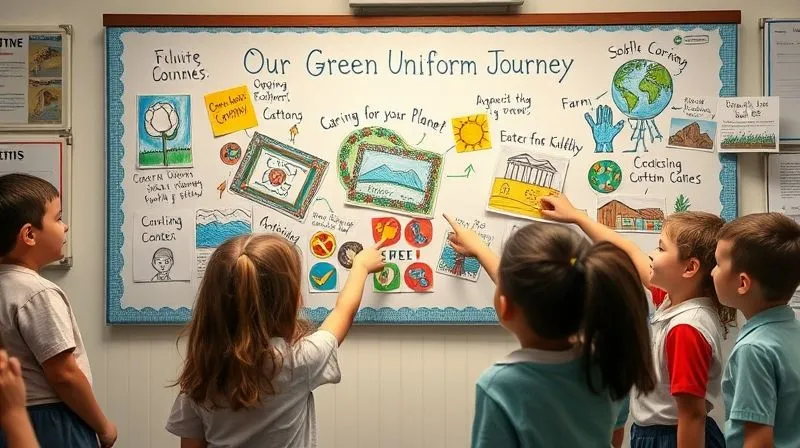
- Visual displays in school common areas.
This transparency builds trust and reinforces the school's values. It also educates the next generation about the importance of responsible consumption.
As Seth Godin often says, "People do not buy goods and services. They buy relations, stories, and magic." Your sustainable uniform story is a powerful one.
8. Measuring Impact and Continuous Improvement
The journey towards full ethical and sustainable sourcing is ongoing. It requires continuous monitoring, evaluation, and adaptation. You can't just set it and forget it.
Setting KPIs (Key Performance Indicators)
To track your progress, establish measurable KPIs:
- Percentage of uniforms sourced from certified suppliers.
- Reduction in water consumption (if data is available from suppliers).
- Amount of textile waste diverted from landfill through take-back programs.
- Feedback from parents and students on uniform quality and comfort.
Regularly review these KPIs and share progress with your school community. This fosters accountability and celebrates successes.
Regular Audits and Reviews
Schedule periodic reviews of your uniform program. This might involve:
- Re-evaluating supplier certifications.
- Seeking updated transparency reports.
- Exploring new sustainable material innovations.
- Gathering feedback from all stakeholders.
The landscape of sustainable fashion is constantly evolving. Staying informed and flexible is crucial. Embrace the opportunity to innovate and improve.
Remember, ethical and sustainable sourcing is not a destination, but a continuous journey of improvement. Every step your school takes, no matter how small, contributes to a more responsible and equitable future.

Frequently Asked Questions (FAQ)
Is it always more expensive to source ethically and sustainably? While initial costs for certified ethical and sustainable uniforms can sometimes be higher, it's crucial to consider the long-term value. These uniforms are often more durable, reducing the need for frequent replacements. Furthermore, the intangible benefits—enhanced school reputation, alignment with community values, and fostering responsible citizenship—often outweigh the marginal cost difference. Look for suppliers who offer transparent pricing and demonstrate value beyond the tag.
How can a small school with limited resources approach this? Even small schools can make a big impact. Start by focusing on one or two key areas, such as prioritizing OEKO-TEX certified materials for student safety, or choosing a supplier with a clear commitment to fair labor even if full supply chain mapping is challenging. Leverage collective buying power if possible, by collaborating with other local schools. Small changes, consistently applied, lead to significant progress.
What certifications should I prioritize? For ethical and sustainable school uniforms, I recommend prioritizing GOTS (for organic textiles), Fair Trade Certified™ (for social equity), and OEKO-TEX® Standard 100 (for chemical safety). If using synthetics, GRS (Global Recycled Standard) is important. These cover the most critical aspects of both social and environmental responsibility.
How do I ensure suppliers aren't greenwashing? Greenwashing is a valid concern. The best defense is to demand verifiable proof for all claims. Ask for specific certifications, audit reports from independent third parties, and detailed information about their supply chain. Be wary of vague terms like "eco-friendly" or "natural" without substantiating evidence. Trust but verify, and if a supplier is evasive, it's a red flag.
What's the biggest challenge schools face, and how do I overcome it? The biggest challenge often lies in navigating the complexity and opacity of global supply chains. Overcoming this requires persistence and a commitment to asking tough questions. Build relationships with suppliers who are genuinely transparent and willing to partner on this journey. Remember that progress, not perfection, is the goal. Start small, learn, adapt, and continually push for greater transparency and responsibility.
Key Takeaways and Final Thoughts
Embarking on the journey to ethically source sustainable school uniforms for your school is a testament to your institution's commitment to a better future. It's a complex undertaking, but one that offers profound rewards.
- Understand the Core: Differentiate between 'ethical' (people) and 'sustainable' (planet) and aim for both.
- Map Your Chain: Gain visibility beyond Tier 1 suppliers to truly understand origins.
- Demand Transparency: Ask specific, verifiable questions and prioritize certified suppliers.
- Choose Wisely: Opt for materials like organic cotton, recycled polyester (GRS), or innovative fibers.
- Think Circular: Plan for durability, repairability, and end-of-life solutions.
- Engage & Educate: Communicate your policy and efforts to foster community buy-in.
- Measure & Improve: Set KPIs and commit to continuous evaluation and adaptation.
I believe that by following these actionable steps, your school can not only provide high-quality uniforms but also model responsible global citizenship for your students. This isn't just about clothing; it's about shaping values, fostering empathy, and investing in a healthier, more equitable world for the generations to come. Your efforts truly make a difference.
Recommended Reading
- 7 Strategies: Managing Unrealistic Creative Demands from Fashion Bloggers
- 6 Proven Strategies for Quality-First Growth: Scaling Smart Clothing Manufacturing
- The Ultimate Guide: How to Find Practical Kids Wear That Lasts & Grows
- Clean Suede Shoes Like a Pro: Avoid Ruining Them! Here's How
- Broadway Costume Design: The Ultimate Guide to Stage Magic!




Your email address will not be published. Required fields are marked *