

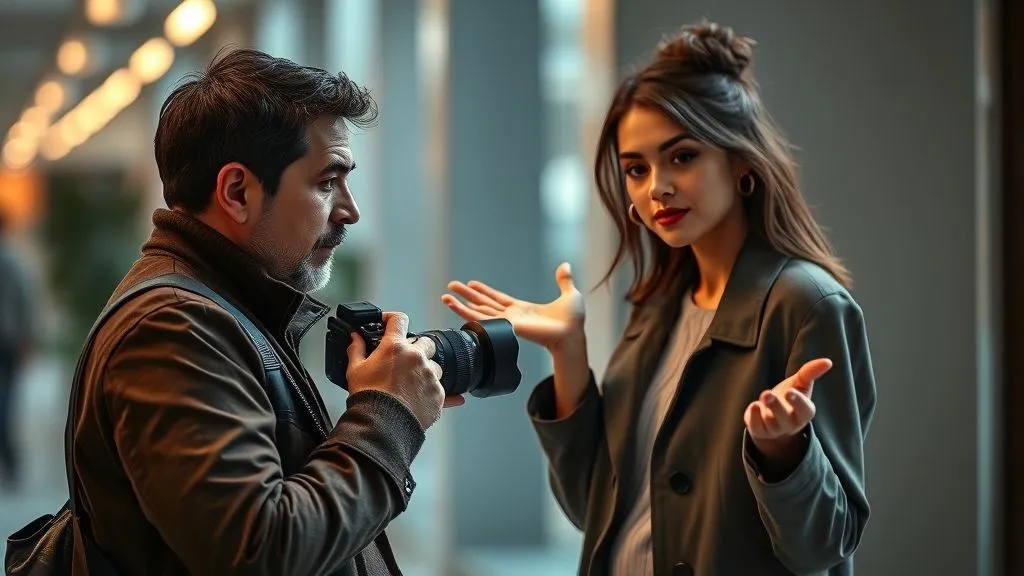
How to Manage Unrealistic Creative Demands from Fashion Bloggers?
For over 15 years in the dynamic world of fashion photography, I’ve witnessed the landscape transform dramatically. The rise of social media and the undeniable influence of fashion bloggers have brought incredible opportunities, but also a unique set of challenges. One of the most persistent and, frankly, exhausting problems I've seen professionals grapple with is the management of unrealistic creative demands from fashion bloggers. It’s a delicate dance between artistic vision, commercial viability, and the practicalities of execution.
Many photographers and creative directors find themselves caught in a cycle of over-promising, under-delivering, or worse, compromising their artistic integrity and financial stability. Bloggers, fueled by aspirational content and often a limited understanding of production realities, can sometimes present requests that are simply not feasible given the time, budget, or technical constraints. This isn't always malicious; it often stems from a lack of clear communication and established boundaries.
This article isn't just a discussion; it’s a strategic roadmap. I'll share actionable frameworks, real-world insights, and battle-tested strategies to help you navigate these complex collaborations. My goal is to empower you to maintain your artistic vision, protect your resources, and foster truly successful, professional relationships when facing unrealistic creative demands from fashion bloggers.
Understanding the Evolving Landscape of Blogger Collaborations
The digital age has democratized fashion, putting powerful visual storytelling tools into the hands of many. Fashion bloggers, once niche enthusiasts, are now bona fide influencers, often commanding significant reach and engagement. This shift means that collaborations are no longer just about providing a service; they are about partnership. However, this partnership often comes with differing perspectives that can lead to friction.
The Blogger's Perspective vs. The Photographer's Reality
From a blogger's viewpoint, their feed is their brand, their canvas, and their livelihood. They are constantly seeking to innovate, to stand out, and to produce content that resonates with their audience. This drive can sometimes translate into highly ambitious, visually complex ideas inspired by high-budget editorial shoots they see in magazines or on major brand campaigns. They might envision elaborate sets, exotic locations, or intricate styling – all without fully grasping the logistical, financial, and time investments required.
As a photographer, our reality is grounded in the tangible: equipment limitations, crew availability, location permits, weather, light conditions, and, crucially, the budget. What seems like a simple request – 'Can we just get a shot with a flying dress?' – can involve complex rigging, specialized equipment, multiple assistants, and significant post-production. The gap between the aspirational and the achievable is where the majority of unrealistic demands take root.
The Rise of Visual Storytelling and Its Demands
Today's audience craves compelling visual narratives. Bloggers understand this intimately, pushing for unique angles, dynamic compositions, and emotionally resonant imagery. This is a positive development for photography as an art form, but it also elevates the bar for production. When a blogger requests a 'cinematic' feel or 'avant-garde' styling, they’re asking for a level of artistry and technical skill that requires careful planning and often, substantial resources. This is where managing expectations becomes paramount.
"Effective collaboration isn't about one side dictating terms; it's about two professionals aligning their expertise to achieve a shared, realistic, and impactful vision."
The Crucial First Step: Mastering the Pre-Production Brief
In my experience, 90% of creative conflicts can be prevented with a meticulously crafted pre-production brief. This document isn't just a formality; it's your blueprint for success and your primary tool for managing unrealistic creative demands from fashion bloggers before they even manifest on set. It serves as a shared understanding, a reference point, and a contractual foundation.
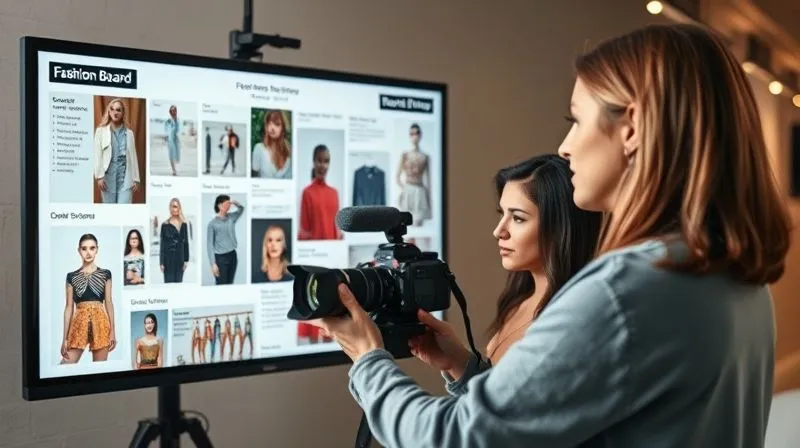
- Initial Discovery Call: Start with a comprehensive conversation. Ask open-ended questions about their vision, inspirations, target audience, and desired mood. Encourage them to share mood boards, Pinterest links, or reference images. Listen actively.
- Develop a Detailed Creative Brief: Translate their ideas into a structured document. This brief should include: rationale, objectives, target audience, key messages, desired mood/tone, specific visual references (with feasibility notes), required shots, and anticipated usage.
- Budget and Timeline Overview: Clearly outline the proposed budget allocation for different elements (e.g., location, styling, MUA, post-production) and a realistic timeline for shooting and delivery. This immediately grounds their vision in reality.
- Identify Potential Roadblocks: Proactively highlight any aspects of their initial vision that might be challenging due to budget, logistics, or technical limitations. Offer alternative, equally compelling solutions.
- Secure Sign-Off: Ensure the blogger reviews and formally approves the brief. This creates accountability and a shared understanding of the agreed-upon creative direction and scope.
By investing time in this initial stage, you establish yourself as a professional who understands their needs but also operates within practical parameters. It also forces both parties to think critically about the project's scope and feasibility.
Setting Crystal Clear Expectations: The Art of Communication
Beyond the brief, continuous, transparent communication is the bedrock of any successful collaboration. It’s about being proactive, not reactive, and ensuring that every stakeholder understands the boundaries, deliverables, and financial implications of their requests. As a seasoned professional, I've learned that ambiguity is the enemy of efficiency and satisfaction.
Defining Scope, Deliverables, and Revisions
One of the most common sources of 'unrealistic demands' is scope creep – the gradual expansion of a project’s requirements beyond what was initially agreed upon. To combat this, you must explicitly define: the number of final edited images, the types of shots (e.g., full body, detail, lifestyle), the number of looks/outfits, and most importantly, the revision policy. How many rounds of edits are included? What constitutes an 'additional revision' and what is the associated cost? These details, though seemingly minor, are crucial.
Budgetary Transparency and Resource Limitations
Don't shy away from discussing budget. It’s a professional conversation. When a blogger proposes an idea that exceeds the agreed budget, articulate why. 'To achieve that specific effect, we'd need a specialized lighting rig and an additional assistant, which would add X to the production cost. Would you like to reallocate funds, or explore an alternative approach?' This frames the discussion around choices and consequences, rather than simply shutting down an idea. Be transparent about what resources are available and what limitations exist, whether it's location access, specific equipment, or personnel.
"Proactive communication isn't just about informing; it's about educating your collaborators on the realities of production, empowering them to make informed decisions."
According to a study published by Harvard Business Review, clear communication is consistently cited as a top factor for project success and client satisfaction. This holds especially true in creative fields where subjective interpretations can easily lead to misunderstandings.
| Phase | Key Communication Point | Goal |
|---|---|---|
| Pre-Production | Creative Brief & Budget Proposal | Shared vision, financial transparency |
| Production (On-Set) | Daily Check-ins & Progress Updates | Real-time adjustments, managing expectations |
| Post-Production | Revision Policy & Delivery Schedule | Clear process for edits, timely delivery |
Navigating the Creative Conflict: Strategies for Constructive Feedback
Despite your best efforts in pre-production and communication, creative conflicts are almost inevitable. The key isn't to avoid them, but to manage them constructively. Your role here is not just as a photographer, but as a creative problem-solver and a diplomatic negotiator.
The "Yes, And..." Approach to Creative Brainstorming
When a blogger presents an unrealistic demand, avoid a blunt 'no.' Instead, employ the 'yes, and...' technique. Acknowledge their creative desire: 'Yes, I love the idea of capturing that dynamic movement with the fabric...' Then, introduce the reality and a solution: '...and to achieve that safely and effectively, we could use a specialized wind machine on set and a high-speed camera, or alternatively, we could simulate the effect in a more controlled environment with a fan and careful posing, which would fit within our current budget and timeline.' This validates their idea while guiding them towards a feasible path.
Presenting Alternatives and Explaining Limitations
Always come armed with alternatives. If their dream location is out of budget, suggest three equally aesthetic but more affordable options. If a specific prop is unavailable, show them how a similar mood or message can be conveyed with a different element. When explaining limitations, focus on the 'why' – 'Because of the available light at that time of day, achieving that ethereal glow would require extensive artificial lighting setup, which wasn't factored into our current plan.' This educates them and demonstrates your expertise, rather than simply stating an impossibility.
Case Study: How 'Chic Captures Studio' Transformed Demanding Clients
Chic Captures Studio, a boutique fashion photography agency, frequently encountered bloggers demanding elaborate, magazine-level productions on influencer-level budgets. Their solution was to implement a 'Creative Alternatives Workshop' during pre-production. Instead of just saying 'no,' they would present 3-5 visually distinct, budget-friendly concepts for every one of the blogger's high-cost ideas. For instance, when a blogger requested a shoot in a Parisian cafe, Chic Captures provided options for local European-style cafes, studio sets with Parisian backdrops, and even styled outdoor street scenes that evoked a similar romantic European feel. This proactive approach not only reduced creative friction but also led to more innovative and budget-conscious outcomes, resulting in a 25% increase in client satisfaction and repeat bookings. The studio became known for its ability to deliver stunning visuals within realistic parameters, turning demanding clients into delighted collaborators.
For further insights into managing difficult conversations, I often refer to articles like those found on Forbes' Leadership section, which frequently cover conflict resolution in professional settings.
The Power of the Written Agreement: Contracts as Your Creative Shield
While conversations are crucial, a legally binding contract is your ultimate safeguard. It formalizes all the discussions and agreements, leaving no room for misinterpretation. This is particularly vital when managing unrealistic creative demands from fashion bloggers, as it provides a concrete reference point for what was agreed upon.
Essential Clauses for Fashion Blogger Contracts
Your contract should be comprehensive and tailored to creative collaborations. Key clauses to include are:
- Scope of Work: A detailed outline of services, including specific shots, number of final images, and agreed concepts.
- Deliverables: What exactly will be provided (e.g., high-res JPEGs, web-optimized images, raw files – or lack thereof).
- Payment Schedule: Clear milestones for payments, including deposits and final balances.
- Revision Policy: Explicitly state the number of included revisions and the cost for additional rounds.
- Timeline: Project start and end dates, delivery deadlines for proofs and final images.
- Cancellation Policy: What happens if either party cancels the project.
- Force Majeure: Clauses for unforeseen circumstances (e.g., natural disasters).
Intellectual Property and Usage Rights
This is a critical, often overlooked, area. As the photographer, you typically retain the copyright to your images. The contract should clearly define the usage rights granted to the blogger. Is it for social media only? For how long? Can they use it for sponsored posts? For their website? Can they sublicense it? Without these explicit terms, you risk losing control over your work and potential future earnings. Always specify that any usage beyond the agreed scope will incur additional licensing fees. This protects your artistic and commercial interests.
Understanding intellectual property rights is fundamental for any creative professional. Resources from organizations like the U.S. Copyright Office offer valuable information on protecting your work.
Managing On-Set Dynamics: Keeping the Vision Grounded
Even with thorough pre-production and a solid contract, the energy and spontaneity of a live shoot can sometimes lead to new, potentially unrealistic, requests. Managing on-set dynamics effectively is crucial for staying on track and delivering the agreed-upon vision.
Time Management and Shot Prioritization
Time is money, and on a fashion shoot, it's a rapidly depleting resource. Before the shoot begins, review the shot list with the blogger and prioritize. 'We have 4 hours, and these 10 shots are our must-haves. We'll aim for these 5 bonus shots if time permits.' This sets a realistic expectation. If a new, time-consuming request comes up during the shoot, gently refer back to the schedule: 'That's a fantastic idea, but it would take us an extra hour to set up, which would mean we'd have to cut three other priority shots. How do you want to proceed?' This puts the decision back on them, highlighting the trade-offs.
Gentle Redirection and Professional Assertiveness
Maintain a professional and positive demeanor, but don't be afraid to be assertive. If a blogger is constantly suggesting complex poses or setups that are not working, gently redirect. 'Let's try this simpler pose first; it will achieve a similar elegant line and ensure we capture the garment beautifully within our timeframe.' Or, 'I understand you love that specific angle, but the light isn't favoring it here. Let's pivot slightly to capture the best possible image given the conditions.' Your expertise is valuable; use it to guide the shoot effectively.

Post-Production Pitfalls: Managing Edits and Revisions
The work doesn't end when the camera clicks its last shot. Post-production is another phase where unrealistic demands can surface, particularly around editing style and revision rounds. This is where your clarity from the contract becomes indispensable.
Establishing a Clear Revision Policy
As mentioned, your contract should explicitly state the number of included revisions. When you deliver the proofs, reiterate this policy. 'You have one round of revisions included. Please consolidate all your feedback into a single list.' This prevents a never-ending cycle of minor tweaks. Define what constitutes a 'revision' – typically minor adjustments like color correction, cropping, or minor blemish removal. Major changes, such as composite images, extensive background manipulation, or complete re-edits, should be clearly classified as additional work and charged accordingly.
The "Less is More" Philosophy for Feedback Cycles
Encourage bloggers to focus on the overall feel and key elements during their revision requests, rather than getting bogged down in minutiae. Sometimes, too many cooks spoil the broth, and excessive feedback can dilute the original creative vision and your artistic integrity. Guide them towards impactful changes that genuinely enhance the images, rather than endless pixel-peeping that adds little value and significantly increases your workload. Remind them of the initial brief and the approved creative direction.
"Your artistic integrity is as valuable as your time. Protect it by setting clear boundaries and valuing your expertise in post-production."
Building Long-Term Relationships: Beyond the Immediate Project
Successfully managing unrealistic creative demands isn't just about surviving a single project; it's about building a reputation for professionalism, clear communication, and delivering exceptional work within realistic parameters. This approach fosters trust and can lead to more fulfilling, long-term collaborations.
Debriefing and Learning from Each Collaboration
After each project, take time for a brief debrief, both internally and, if appropriate, with the blogger. What went well? What could have been smoother? Were there any recurring points of friction? This reflective practice allows you to refine your processes, update your brief templates, and better anticipate challenges in future projects. Learning from each experience is how you evolve as a professional.
Identifying Ideal Collaborative Partners
Not every collaboration will be a perfect fit. Over time, you'll learn to identify bloggers whose creative vision aligns more closely with yours, who respect professional boundaries, and who value your expertise. Don't be afraid to politely decline projects that appear to be a poor fit from the outset, especially if the initial demands are consistently out of sync with your capabilities or pricing structure. Focusing on ideal partners frees you to do your best work and avoid unnecessary stress.
Cultivating strong client relationships is a cornerstone of any successful creative business. Organizations like AIGA (the professional association for design) often provide excellent resources and articles on professional practices and client management within the creative industries.

Frequently Asked Questions (FAQ)
Q: What if a blogger insists on a specific, complex shot that's impossible with the current resources? A: Begin by acknowledging their vision positively: "I love the ambition of that shot!" Then, gently explain the specific technical, time, or budget constraints that make it unfeasible: "To achieve that effect would require specialized equipment we don't have on set today, or an additional 3 hours of setup time, which would push us past our agreed schedule." Immediately follow up with feasible alternatives that capture the essence of their idea: "However, we could achieve a similar dramatic feel by using X technique with our current setup, or by adjusting the pose to emphasize Y." Always offer solutions, not just limitations, and quantify the impact of their original request.
Q: How do I handle a blogger who constantly asks for more deliverables than agreed upon? A: Refer back to your signed contract and the creative brief. Politely remind them of the agreed-upon scope: "As per our contract, we agreed on X number of final edited images. The additional requests fall outside of that scope." Then, offer a clear path forward: "I'd be happy to discuss these additional shots/edits, but they would need to be treated as a separate project or an addendum to our current agreement, incurring additional fees." Be firm but professional. Document all communication.
Q: Is it ever okay to decline a project if the creative demands are too high from the outset? A: Absolutely, yes. Your time, expertise, and mental well-being are valuable. If, during the initial discovery and briefing stages, it becomes clear that the blogger's expectations are fundamentally misaligned with your capabilities, style, budget, or ethical boundaries, it's better to politely decline. Frame it professionally: "Based on your ambitious vision, I don't believe I'm the best fit to deliver exactly what you're envisioning within your proposed parameters, and I want to ensure you find the perfect collaborator." This saves both parties from frustration and potential disappointment down the line.
Q: How can I ensure my creative vision is respected while still collaborating effectively? A: This is a balance. First, ensure your portfolio clearly showcases your unique style and vision so clients know what to expect. In the brief, articulate your artistic approach and how it will enhance their brand. During the shoot, explain your creative choices as you make them: "I'm positioning you here to catch this beautiful directional light, which will give the image a dramatic edge." When presenting proofs, briefly explain why certain shots were chosen or edited in a particular way. By educating your collaborator, you elevate their appreciation for your expertise and make them a more informed partner.
Q: What's the best way to present a revised shot concept when the blogger's original idea isn't feasible? A: Don't just present one alternative; present 2-3 strong, visually distinct options that still achieve the core objective of their original idea. Use visuals (sketches, reference photos, quick mock-ups) to illustrate each alternative. Explain the benefits of each option in terms of feasibility, aesthetics, and impact. For example: "While the original concept of X is challenging due to Y, we could achieve a similar impactful result with Option A, which offers Z benefit, or Option B, which provides W benefit." This demonstrates your problem-solving skills and gives them a choice, empowering them in the revised creative process.
Key Takeaways and Final Thoughts
Navigating the complex world of fashion blogger collaborations, especially when faced with unrealistic creative demands, requires a blend of artistic skill, business acumen, and exceptional communication. It's a journey of continuous learning and refinement, but one that is incredibly rewarding when handled correctly.
- Proactive Communication is Paramount: Address potential issues early through detailed briefs and transparent discussions.
- Set Clear Boundaries: Define scope, deliverables, revisions, and budget explicitly in your contract.
- Educate and Guide: Use your expertise to explain limitations and offer creative, feasible alternatives.
- Be Assertive and Professional: Maintain control on set and in post-production, always referring back to agreed-upon terms.
- Value Your Work: Don't be afraid to charge for additional work or decline projects that are not a good fit.
Remember, you are a skilled professional whose expertise is valuable. By implementing these strategies, you'll not only successfully manage unrealistic creative demands from fashion bloggers but also elevate your collaborations, protect your business, and solidify your reputation as a trusted and capable partner in the vibrant fashion industry. Embrace these challenges as opportunities to refine your craft and strengthen your professional relationships, turning potential friction into creative triumph.
Recommended Reading
- The Ultimate Guide: How to Pick a Perfume That Lasts All Day on Your Skin
- Unlock the Secret: How to Achieve Natural Perfect Skin Beauty Photos
- Uncover the Hidden Impact: How Wartime Rationing Reshaped 1940s Fashion
- Mastering Elegance: Your Ultimate Guide to a Thorough Luxury Fashion Review
- 7 Steps to Ethically Source Sustainable Luxury Fabrics for Bespoke Suits



Your email address will not be published. Required fields are marked *