

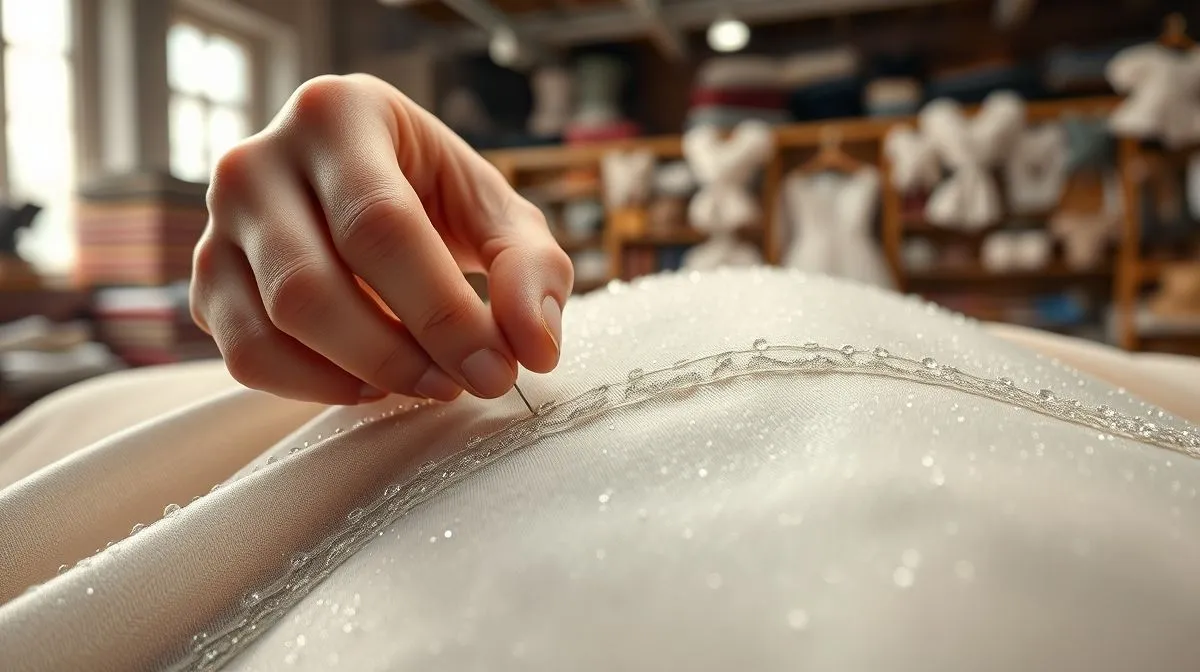
Preventing Quality Erosion When Scaling Custom Haute Couture Atelier?
For over two decades in the rarefied world of haute couture, I've witnessed firsthand the breathtaking artistry of nascent ateliers and the heartbreaking pitfalls faced when they attempt to expand. The dream of growth often clashes violently with the uncompromising reality of artisanal quality, leaving many founders at a crossroads.
The inherent tension is clear: how do you replicate the intimate, painstaking craftsmanship of a bespoke creation across a larger operation without diluting the very essence that defines its luxury? It’s a conundrum that has crippled many a promising luxury brand, transforming bespoke excellence into mass-market mediocrity.
In this definitive guide, I will unveil the seven critical pillars, derived from years of observation and practical experience, that are essential for preventing quality erosion when scaling your custom haute couture atelier. You’ll gain actionable frameworks, real-world insights, and the strategic foresight needed to expand your vision without sacrificing your soul.
The Imperative of Preservation: Why Quality is Non-Negotiable in Couture Scaling
In haute couture, quality isn't merely a differentiator; it's the very foundation of your brand's existence and its market value. Your clients don't just purchase a garment; they invest in a dream, a narrative, and an assurance of unparalleled excellence that only true bespoke craftsmanship can deliver.
Compromising on quality during scaling is akin to building a magnificent edifice on a crumbling foundation. It erodes client trust, damages your coveted brand reputation, and ultimately devalues your entire enterprise. As a report from Bain & Company on the luxury market consistently highlights, discerning clients are willing to pay a premium for authenticity and an unwavering commitment to perfection.
This commitment to uncompromising quality is what allows a couture house to maintain its elite positioning and command premium pricing, even amidst growth. It ensures that every new piece, regardless of increased production, carries the unmistakable signature of your atelier’s artisanal integrity.
Pillar 1: Replicating Craftsmanship Through Standardized Excellence
One of the gravest mistakes I’ve observed is the assumption that artisanal skill cannot be standardized. While the human touch is irreplaceable, the processes that guide it can, and must, be meticulously documented and refined.
Documenting the Undocumentable: Crafting Atelier Manuals
Every unique stitch, every intricate drape, every finishing technique that defines your atelier’s signature must be captured. This isn't about stifling creativity, but about establishing a baseline of excellence that new artisans can adhere to and build upon.
- Create a Master Techniques Compendium: Document every specific technique used, from pattern drafting nuances to specialized embroidery stitches. Use high-resolution photos and detailed diagrams.
- Develop Material Handling Protocols: Outline precise methods for cutting, pressing, and manipulating each fabric type to ensure consistent drape and finish.
- Standardize Quality Checkpoints: Implement rigorous inspection points at every stage of production, with clear criteria for approval, ensuring nothing less than perfection proceeds.
The Master-Apprentice Model Reimagined
Traditional haute couture thrives on the passing down of knowledge. As you scale, formalize this mentorship. Pair experienced artisans with new hires, not just for skill transfer, but for imbuing the atelier's unique philosophy and commitment to excellence.
This structured mentorship ensures that the intangible 'feel' and 'eye' for couture are preserved, even as your team grows. It fosters a shared understanding of quality that transcends written guidelines.
Pillar 2: The Art of Strategic Talent Acquisition & Retention
Your artisans are your most valuable assets. Their skills, dedication, and understanding of your atelier’s aesthetic are the bedrock of your quality. Scaling means expanding this critical human capital without diluting its potency.
Identifying the 'Couture DNA' in New Hires
Beyond technical skills, look for individuals who possess a deep reverence for craftsmanship, an innate sense of aesthetic, and an unwavering patience for perfection. Test their eye for detail, their understanding of luxury materials, and their commitment to the painstaking process.
I always advise my clients to implement practical, hands-on tests during interviews. A candidate might have an impressive resume, but can they truly execute a perfect hand-rolled hem or a seamless invisible zipper?
Fostering a Culture of Meticulousness
Retention is as crucial as acquisition. Create an environment that values precision, celebrates exceptional work, and provides continuous opportunities for skill refinement. Invest in advanced training, even for seasoned artisans, to keep their expertise sharp and their passion ignited.
Case Study: How Atelier Éclat Preserved Its Craftsmanship Talent
Atelier Éclat, a renowned Parisian couture house specializing in bridal wear, faced immense pressure to scale due to skyrocketing demand. Their challenge was maintaining the intricate hand-beading and lace appliqué work that defined their brand. By implementing a two-pronged strategy – formalizing an internal 'Master Craftsman Certification' program and offering equity-sharing options to long-term artisans – they were able to retain their core talent and attract new, highly skilled individuals who aspired to this elite status. Their churn rate among senior artisans dropped by 40% within two years, ensuring their signature quality remained uncompromised even as their output doubled. This approach, as leadership guru Simon Sinek often emphasizes, builds a shared purpose beyond just a paycheck.
Pillar 3: Innovating Without Compromising Tradition: Technology Integration
Technology in couture isn't about replacing the hand; it's about empowering it. Smart integration can enhance precision, consistency, and efficiency, freeing artisans to focus on the most intricate, value-added aspects of their work.
CAD/CAM for Precision, Not Replacement
Computer-Aided Design (CAD) and Computer-Aided Manufacturing (CAM) systems can be invaluable for pattern drafting, grading, and even precise fabric cutting for foundational pieces. This ensures absolute accuracy and consistency in the underlying structure of garments, leaving the artistic flourishes and hand-finishing to your artisans.
I've seen ateliers use 3D body scanning for incredibly precise client measurements, reducing fitting errors and enhancing the bespoke experience. This is innovation serving tradition, not subverting it.
Digital Archiving of Client Profiles and Patterns
As your client base expands, maintaining personalized service becomes a challenge. Digital archives, securely storing client measurements, preferences, previous designs, and fabric choices, enable your team to access comprehensive client histories instantly. This allows for a truly personalized experience at scale, making each client feel uniquely valued.
Pillar 4: The Unyielding Power of a Robust Supply Chain
Your final product is only as good as its raw materials. Scaling necessitates a supply chain that is not just efficient, but rigorously vetted for quality, ethics, and reliability.
Sourcing Ethical and Uncompromising Materials
Expand your network of trusted suppliers. This means more than just finding new vendors; it involves building deep, long-term relationships based on shared values of quality and transparency. Insist on certifications for origin, ethical production, and material purity.
Never compromise on the grade of silk, the quality of lace, or the authenticity of the embellishments. Your clients can discern the difference, and it reflects directly on your brand's integrity.
Building Unbreakable Vendor Relationships
- Conduct Thorough Due Diligence: Visit potential suppliers, inspect their facilities, and understand their quality control processes firsthand.
- Establish Clear Quality Benchmarks: Define precise specifications for every material, and implement a rigorous incoming inspection process for all deliveries.
- Foster Long-Term Partnerships: View your suppliers as extensions of your atelier. Transparent communication and fair dealings build loyalty and ensure priority access to the finest materials, especially when demand increases.
Pillar 5: Client Experience: Scaling Intimacy, Not Just Volume
The hallmark of haute couture is the deeply personal, intimate relationship between the client and the atelier. As you grow, the challenge is to maintain this bespoke intimacy, ensuring every client feels like the sole focus of your creative energy.
Personalized Consultation Protocols
Standardize the client journey, not the client experience. Develop detailed protocols for initial consultations, fittings, and follow-ups that ensure every touchpoint is consistently excellent and profoundly personalized. This includes detailed note-taking, consistent communication frequency, and tailored recommendations.
Empower your client-facing team to anticipate needs and offer proactive, thoughtful service that goes beyond mere transactions. This is where the luxury experience is truly forged.
Post-Delivery Engagement and Feedback Loops
The relationship doesn't end when the garment is delivered. Implement a structured post-delivery follow-up process. Seek feedback on the garment's fit, wearability, and the overall experience. This not only gathers valuable data for continuous improvement but also reinforces the client's sense of being a valued member of your atelier's family.
As customer experience expert Jeanne Bliss often notes, 'You need to make it easy for your customers to do business with you, and then you need to make it a joy.'
Pillar 6: Financial Prudence and Sustainable Growth Models
Rapid, unchecked growth is a common pitfall. Scaling a couture atelier requires a deep understanding of your true costs, a commitment to sustainable investment, and the wisdom to prioritize quality over sheer volume.
Investing in Quality, Not Just Quantity
Resist the temptation to cut corners on materials, artisan wages, or development time to meet higher production targets. Every investment should be viewed through the lens of how it enhances or preserves quality. This might mean investing in more advanced tools, additional training, or simply more time per garment.
Understand that the true cost of haute couture encompasses not just materials and labor, but the meticulous care, the multiple fittings, and the artistic vision that cannot be rushed.
Understanding True Cost of Couture Production
Develop robust financial models that accurately account for every single input, including the significant overhead associated with maintaining an elite atelier. Price your creations to reflect their true value and the painstaking effort involved, rather than merely trying to compete on volume.
Sustainable growth in couture is slow, deliberate, and deeply rooted in financial stability, allowing for the consistent delivery of unparalleled quality.
Pillar 7: Leadership Vision: Steering the Couture Legacy
Ultimately, the founder's vision and the leadership team's unwavering commitment to quality are the guiding stars during scaling. It is the leadership that sets the tone, instills the culture, and makes the difficult decisions that prioritize integrity over expediency.
The Founder's Role in Upholding Standards
As the founder, your personal involvement in quality control, even as you delegate operational tasks, is paramount. Your periodic review of finished pieces, your presence in the atelier, and your communication of the brand's core values reinforce the message that quality is sacrosanct.
You are the guardian of your atelier's legacy, and your commitment to excellence must be visible and unwavering to your entire team.
Empowering a Culture of Continuous Improvement
Foster an environment where feedback is welcomed, mistakes are learning opportunities, and every team member feels empowered to speak up if a quality standard is at risk. Implement regular quality audits and internal reviews, not as punitive measures, but as tools for collective growth and refinement.
“Quality is never an accident; it is always the result of intelligent effort.” – John Ruskin
This philosophy, ingrained from the top down, ensures that the pursuit of perfection becomes a collective endeavor, a shared passion that transcends individual roles.
Frequently Asked Questions (FAQ)
How much growth is too much for a couture atelier? There isn't a fixed number, as it depends on your specific atelier's structure, processes, and the complexity of your designs. However, a good indicator of 'too much' is when your lead times extend unmanageably, your error rate increases, or client satisfaction begins to dip. It’s crucial to scale organically, ensuring your internal capacity for quality control and personalized service can keep pace with increased demand. A controlled growth rate, often between 10-20% annually, allows for proper integration of new talent and systems.
Can technology truly enhance bespoke craftsmanship without diluting it? Absolutely. When used judiciously, technology can be a powerful ally. For instance, advanced CAD software can create hyper-accurate patterns, reducing human error and ensuring consistency in the foundational elements of a garment. 3D body scanning can offer unparalleled precision in client measurements. The key is to leverage technology for tasks that benefit from precision and efficiency, freeing up your master artisans to focus on the unique, irreplaceable handwork and artistic embellishments that define couture. It's about augmentation, not replacement.
What's the biggest mistake ateliers make when trying to scale? The most significant mistake I’ve observed is compromising on the core values of craftsmanship and personalization for the sake of speed or volume. This often manifests as sourcing cheaper materials, rushing production, or diluting the bespoke client experience. This short-sighted approach invariably leads to quality erosion, client dissatisfaction, and ultimately, a damaged brand reputation that is incredibly difficult, if not impossible, to restore in the luxury market. Quality must always be the non-negotiable priority.
How do you measure 'quality' in a subjective field like haute couture? While couture has an artistic element, its quality can be measured through a blend of objective and subjective criteria. Objectively, this includes precision in cutting and stitching, flawless finishing, perfect fit, durability, and adherence to design specifications. Subjectively, it encompasses the emotional response the garment evokes, the luxurious feel of the materials, the fluidity of movement, and the client's overall satisfaction with both the product and the experience. Regular internal audits, client feedback surveys, and meticulous documentation of historical standards are crucial for consistent measurement.
Is it possible to maintain a small, intimate team while scaling? Maintaining a small, intimate team becomes increasingly challenging with significant scaling, but you can preserve the 'intimate feel' within the team. This involves creating smaller, specialized sub-teams or 'pods' within a larger atelier, each maintaining a close-knit dynamic and focusing on specific aspects of the couture process. Emphasis on cross-training, shared values, and a strong, consistent communication culture helps retain the sense of intimacy and shared purpose, even as the overall headcount grows. It's about replicating the 'family' feel, not necessarily keeping the literal headcount small.
Recommended Reading
- Unlock the Secret: How to Prevent Scratches on Your Watch Crystal
- Unlock Profit: How to Avoid Missing Crucial Fashion Trend Shifts?
- Unlock Loyalty: How to Build a Thriving Fashion Blog Reader Community
- Uncover the Truth: Ethical Fashion Influencer Practices Explained for a Better World
- Unlock High-Paying Wearable Art Commissions: 7 Expert Strategies
Key Takeaways and Final Thoughts
- Document Everything: Standardize your unique craftsmanship through meticulous manuals and protocols.
- Invest in Talent: Prioritize strategic acquisition and retention of artisans who embody your atelier’s 'Couture DNA'.
- Smart Technology Integration: Use tech to enhance precision and efficiency, freeing artisans for high-value work.
- Fortify Your Supply Chain: Build strong, ethical relationships with suppliers of uncompromising materials.
- Scale Intimacy: Maintain a deeply personalized client experience through structured protocols and engagement.
- Practice Financial Prudence: Grow sustainably by understanding true costs and investing in quality, not just volume.
- Lead by Example: Your unwavering commitment to quality as a leader is the ultimate safeguard against erosion.
Scaling a custom haute couture atelier is not for the faint of heart. It demands foresight, discipline, and an unshakeable commitment to the very values that define your brand. By meticulously adhering to these seven pillars, you can navigate the complexities of growth, ensuring that every new piece produced carries the same mark of unparalleled excellence as the first. Your legacy, and the future of your exquisite craft, depend on it.





Your email address will not be published. Required fields are marked *